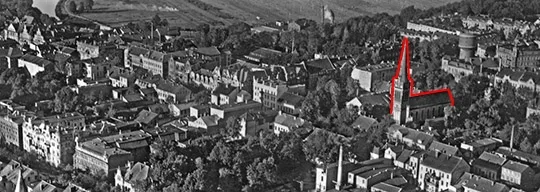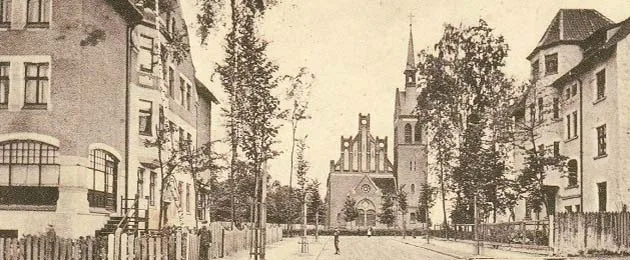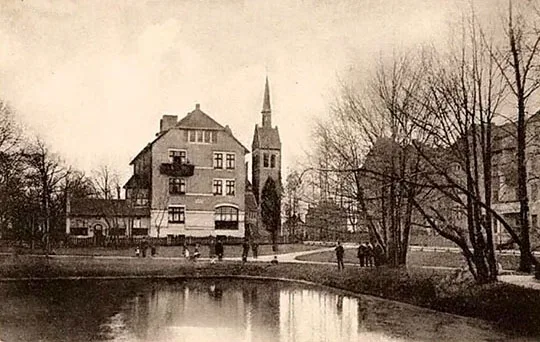
At a parish council chaired by Oskar Stoff, who headed the local congregation, it was decided to build a new, more spacious church. Oskar Stoff managed to acquire a plot of land not far from the chapel, on Schifferdeckerstraße, and secured favourable terms for building the new church.
The design of the church was entrusted to the Königsberg architect and graduate engineer Georg Schönwalder, who also took charge of the construction.
The foundation stone was laid on 2 August 1931. The earthworks, walls, floors and finishing were carried out by the firm "Matz und Laufer". The reinforced concrete work was done by the firm "Wayss und Freytag". The roofing and carpentry were done by the firm "Leo Orschikowski".
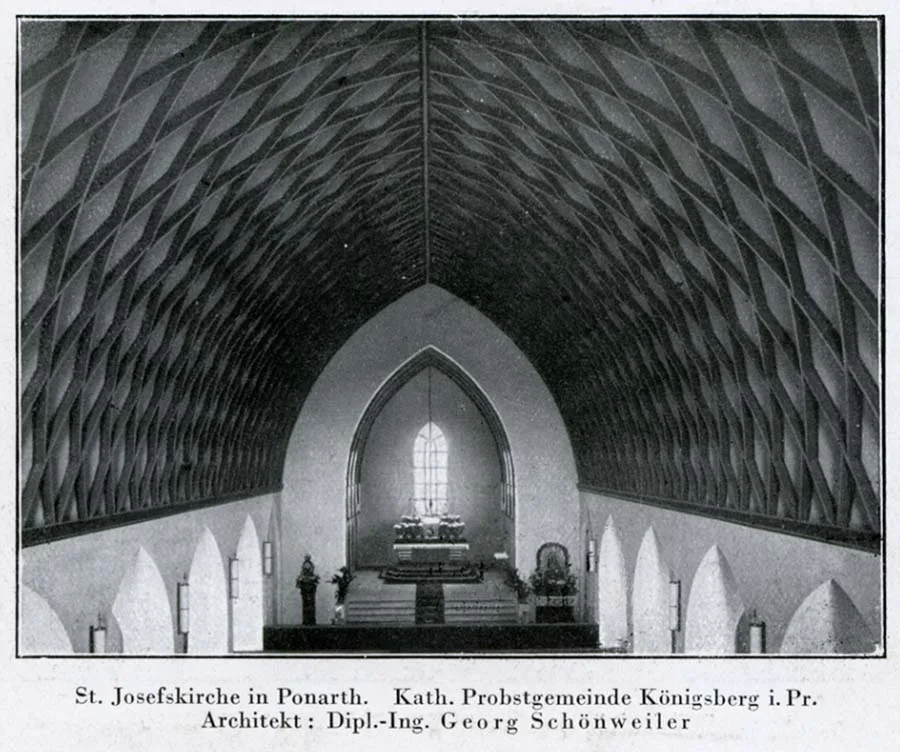
By tradition, the congregation kept the name of St. Joseph for its new church.
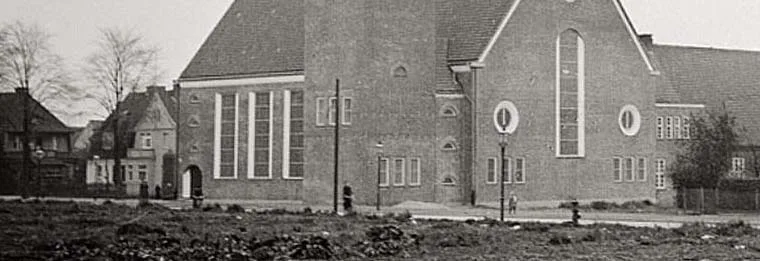
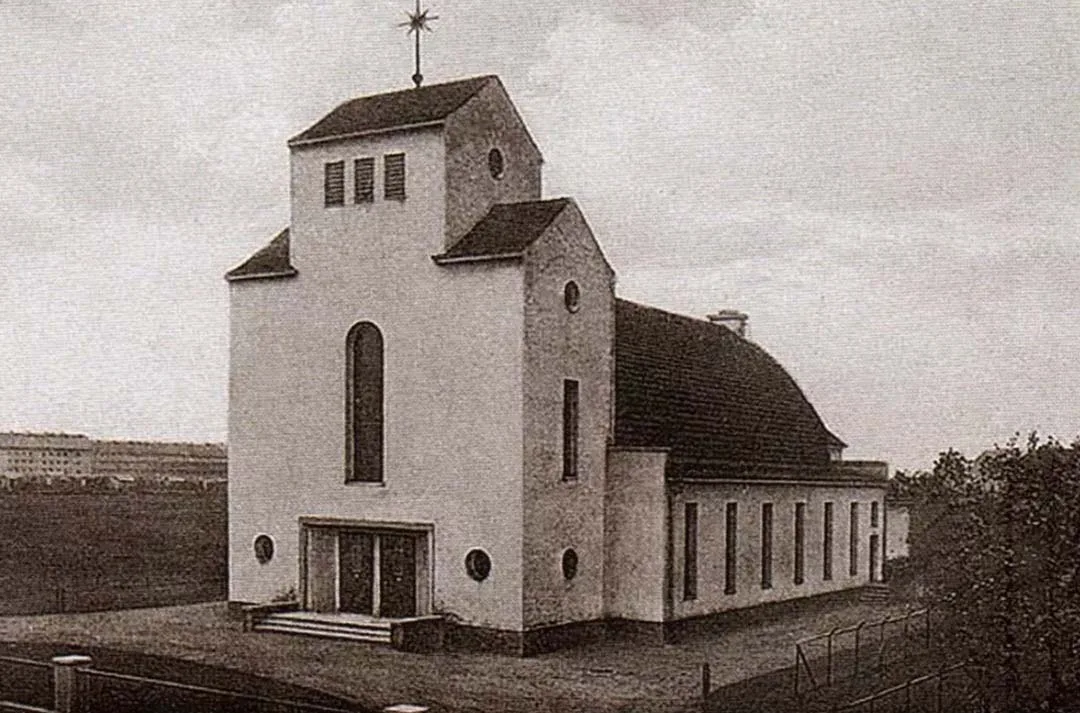
The church was oriented east–west, but whereas traditionally the altar had been placed at the east end, in this case it was built at the west end, with the tower and entrance on the east. The church was built in a style close to Constructivism — modestly and without frills.
The church tower had three storeys and side annexes on both sides. The roofs over the tower and annexes were gabled. The roofs over the nave and altar were oval in shape. A sacristy, where the priest changed his vestments for services, was attached to the altar on the south. The side windows of the church were elongated rectangles; the tower and side annexes also had round windows. Above the entrance door in the tower there was a tall round-arched window.
The church was completed and consecrated in 1933. The main entrance was from Schifferdeckerstraße.
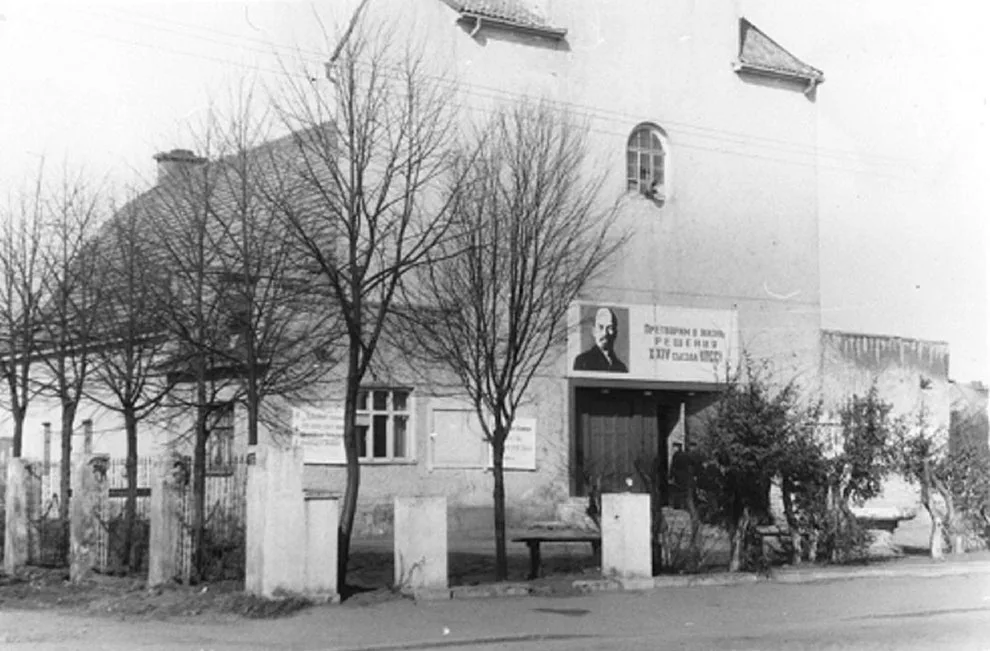
When the fighting in Königsberg ended in 1945, the church was practically intact, except for the upper part of the tower.
After the war the church was used as the Railway Workers' House of Culture and as a cinema. In 1969 the House of Culture moved to a new building, and the church was handed over to Gorpromtorg (the city industrial trade organisation) as a workshop. The building was remodelled many times and as a result has been greatly altered both outside and inside, where two floors were created.
Translated from Russian with the help of AI (Claude, Anthropic), October 2026.