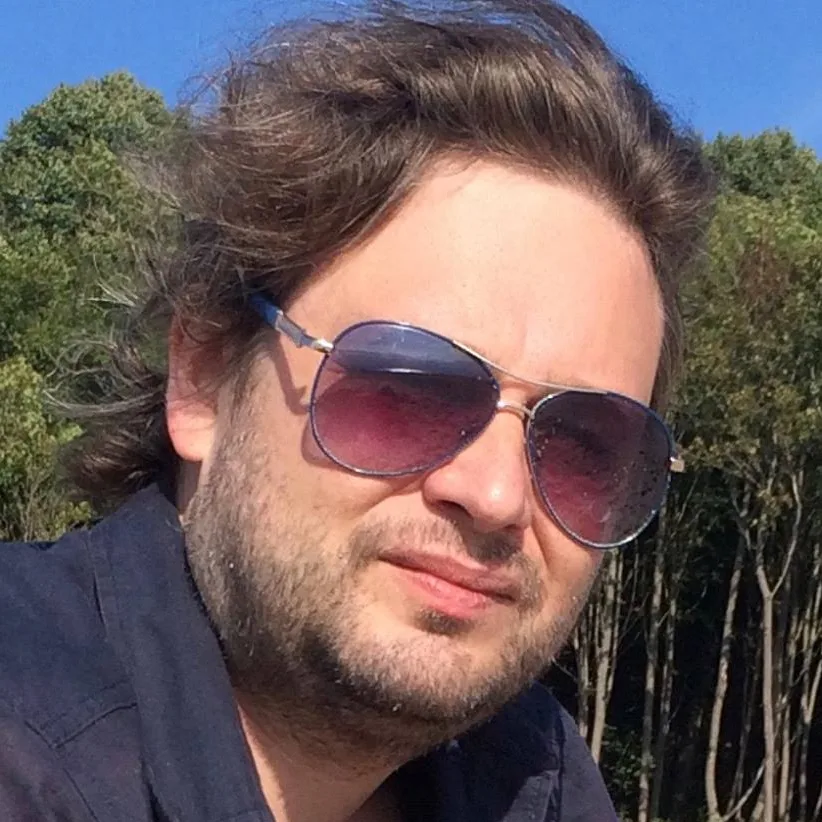
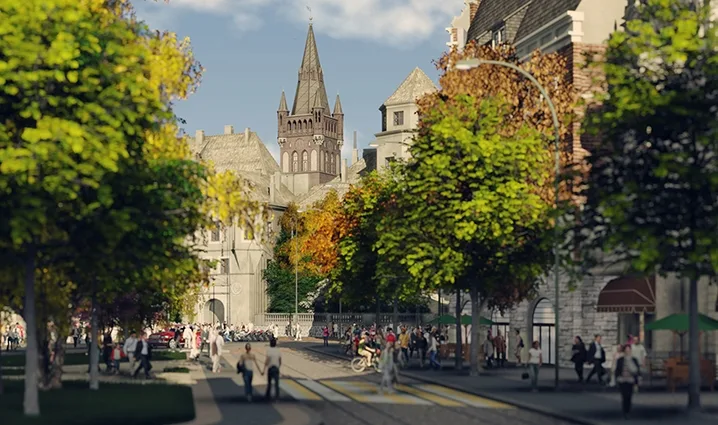
Let us recall that the jury, half of which was made up of local officials, awarded first place and a prize of two million roubles to Anton Sagal, a student at the Polytechnic University of Milan, whose idea is to recreate the best-known parts of the castle and link them with structures built in a contemporary style. (The award ceremony took place yesterday evening, 10 December, in the building of the Kaliningrad Regional Museum of History and Art.)
However, in the online vote Sagal's project came fifth out of six. The winner (and an undisputed one, with a huge lead over the runner-up) was the architect Arthur Sarnitz, who proposed rebuilding the Royal Castle in full together with the surrounding blocks.
That this was no accident was confirmed by the results of a parallel online vote on one of the city's leading news portals. There Sarnitz's victory was even more convincing – he received almost five (!) times as many votes as the contestant in second place.
What does all this tell us? I think it shows that the need to rebuild the Royal Castle is now fully recognised by both society and the authorities. The latter, however, forced to manoeuvre between different groups of the population and wishing to please everyone, preferred to give the main prize to the more cautious Sagal, who did not even dare to propose removing the House of Soviets.
Presumably the members of the jury (at least the professionals among them) understood perfectly well that the Milan Polytechnic student's project was a little raw and not fully thought through. It is no accident that, in awarding Sagal first place, they asked him to rework the façades.
Imagine: a person is declared the winner and then asked to finish his project.
This might be understandable if Anton had no worthy competitors. But that is not the case. Look at the presentation of Sagal's project and the presentation of Sarnitz's.
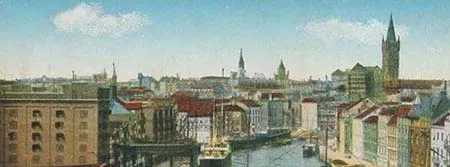
You don't have to be an expert to see that the second is far more thoroughly worked out. Sarnitz not only draws the castle in detail but also shows a perspective for the city's development. And that is not surprising. The architect worked on his project for more than ten years. You could say that for all that time he lived in the castle. He knows every corner of it, every window opening, every lantern.
It seems that Anton, being no fool, understands perfectly well how delicate the situation is, which is why a good part of his public appearances is devoted to explaining why, in fact, he did not propose rebuilding the castle in full. In particular, giving a lecture recently at the Vorota art space, he said something to the effect that a rebuilt Royal Castle would have no historical value. "Here (in the Sackheim Gate – author's note) you can touch the wall and feel the very fabric that has been standing for centuries. A new building has a completely different effect," he said.
Well, it is a fairly common argument. But it does not, alas, convince anyone who has ever been to neighbouring Gdańsk. The Allies bombed Danzig even harder than Königsberg, so after the war not one stone was left standing on another there, and everything had to be rebuilt practically from scratch. Yet strolling along Długi Targ and the other little streets of the old town, you completely forget that the beauty surrounding you was built in the second half of the twentieth century.
Every wall, every stone there radiates the energy of a medieval city.
That is why none of the thousands upon thousands of tourists (many of whom, incidentally, are Kaliningraders) feels cheated. It must be said that Sagal knows all this very well. He admits that the Polish experience has been quite successful, but believes it should not be adopted wholesale, since "we'll never catch up with Gdańsk anyway".
Well, of course we won't catch up if we keep postponing the start on the pretext that we have our own special path. And it is entirely unclear what this special path consists of. In admiring the ugly House of Soviets until the end of time?..
On the other hand, Sagal admits that there is a public demand for Königsberg architecture. But if that demand exists, perhaps it is worth satisfying? And satisfying it fully, not by halves, linking the rebuilt towers of the castle with strange structures that look like huge hangars.
Of course, one can say a great many clever words about how different historical eras should not clash in the architectural environment, how the past is not a model but a source of inspiration, how what matters is the atmosphere and not the exact reproduction of an object.
But none of that will make the House of Soviets and the modernist insertions into the castle any more attractive.
This is, of course, as people like to say nowadays, my value judgement. However, as the online votes have shown, thousands of Kaliningraders hold a similar opinion.
So why did Sagal decide to take this route? Why is he trying to combine the uncombinable? I am far from thinking that the reason is a desire to please the members of the jury, some of whom had publicly said, long before the competition began, that it would be nice to represent all historical eras on the Royal Hill. It is simply that Sagal is a young, talented architect trying to find himself and his own path, to offer something unusual and original, to prove his professional worth.
He himself, it is true, insists that he is "not an artist at all", that he simply uses his knowledge and experience in trying to create in Kaliningrad something it has never had before. Yet creative searching can be seen in his work regardless of how one feels about it.
…And that would be fine – inquisitive youth has always been prone to experiment. The problem, however, is that Sagal's project discredits the very idea of rebuilding the castle. It seems to me (I'll be glad to be wrong) that if it is realised we will get not an architectural symbol of the city but some kind of Disney house with turrets. And then the opponents of rebuilding the castle will rub their hands with glee and say: "Well, you see, you see what came of it?! We told you so, we did warn you!" Really, there's no point in giving them such a good excuse to gloat.
The castle must be rebuilt in full and properly.
Perhaps without trying to get the work completely finished in time for the 2018 World Cup or any other date, using the highest-quality materials possible, and carefully studying foreign (above all Polish) experience. And domestic experience is well worth a look too. After all, Moscow rebuilt the Cathedral of Christ the Saviour, blown up in 1931. And rebuilt it rather well.
And one can experiment in other parts of the city, after all. In Selma, for example…
Translated from Russian with the help of AI (Claude, Anthropic), October 2026.