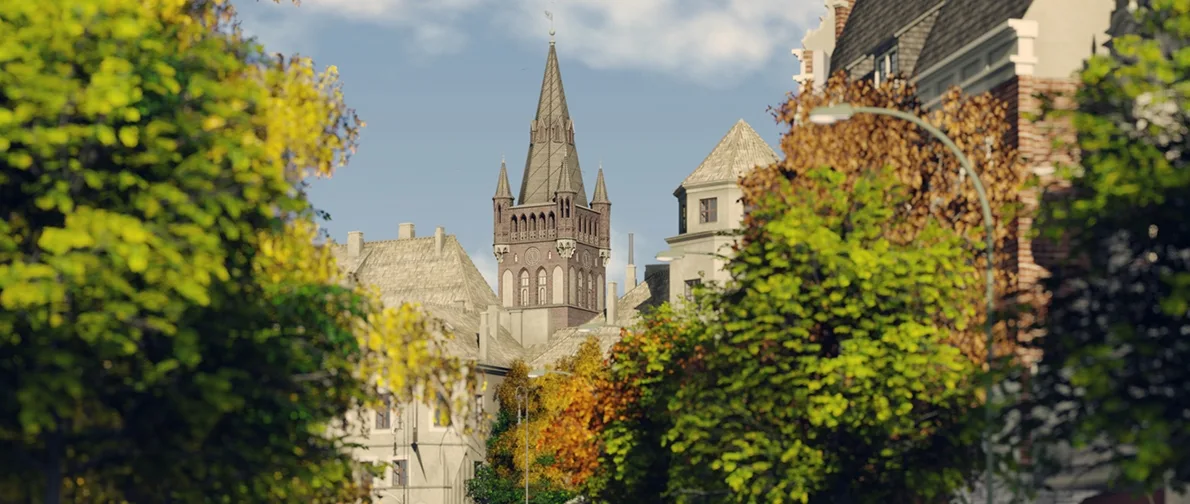
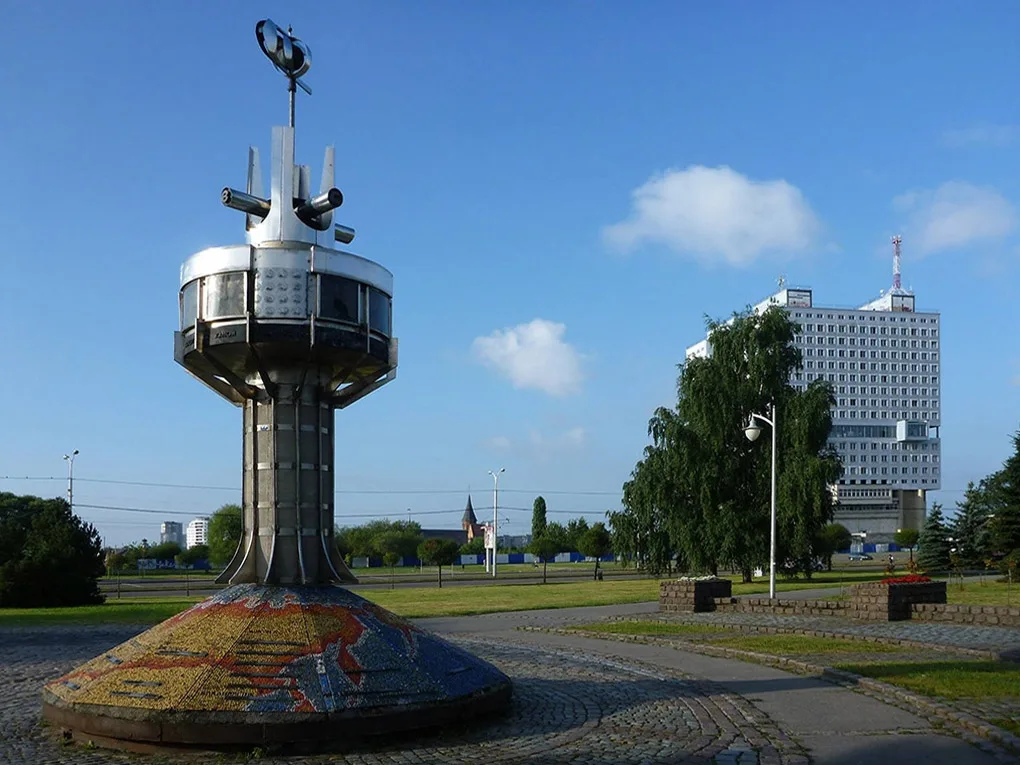
My experience of life tells me that Kaliningrad, like cats on the internet, is liked by everyone — both locals and "incomers". However, if you look closely, you can see that the people in love with Kaliningrad are far from loving the same things in it. Some are crazy about the city's historical heritage, the surviving German buildings, the cobblestones, the tree-lined avenues along the roads, the red roof tiles, the sharp spires of the churches, the villas of Amalienau and Maraunenhof. For others, all of the above has little value. They are more taken with the new neighbourhoods of Selma, the poplars on deserted Kant Island, the House of Soviets, when all is said and done. And both categories of Kaliningrad admirers are, as a rule, unhappy with the current state of affairs in the city.
Those in the first category lament that only fragments of Königsberg have survived; those in the second believe that these fragments get too much attention.
Enough looking back at the past, they say, we need to build a new, modern city.
People argue themselves hoarse over which is better — to rebuild the Royal Castle or to revive the House of Soviets, whether the Fishing Village is good or bad, whether the former Kneiphof should be built up or whether it is better to keep the wasteland there, which for some reason is officially called a park. No one wants to give way, no one wants to hear their opponents. Sometimes one gets the impression that there is no way out of the situation, so tangled, intertwined and even tied up in knots is everything here architecturally — knots that, like the legendary Gordian one, seem utterly impossible to untie and can only be cut. But in fact, given goodwill, a compromise seems entirely achievable.
You just have to look around and see how neighbouring cities are arranged. And they are almost always arranged the same way. They invariably have a historic centre, which may be large and, as they say, genuine, as in Prague, for instance, or may be a very compact "new-build replica", as, for example, in Gdańsk, which most Kaliningraders know well.
This is the heart of the city, its soul. But a soul needs a body. So next to the historic centre there is a business district, and the architecture there is quite different. Bold, modern, sometimes even mischievous in the good sense of the word. Think, for example, of the famous Dancing House in Prague. In other words, European cities are almost always two in one. Everything there is clearly divided — history and modernity, memory and forward movement, tradition and innovation. The two parts of one whole nourish and complement each other, without ever fully merging.
So one could say that European cities live according to one of the fundamental laws of dialectics — the unity and struggle of opposites.
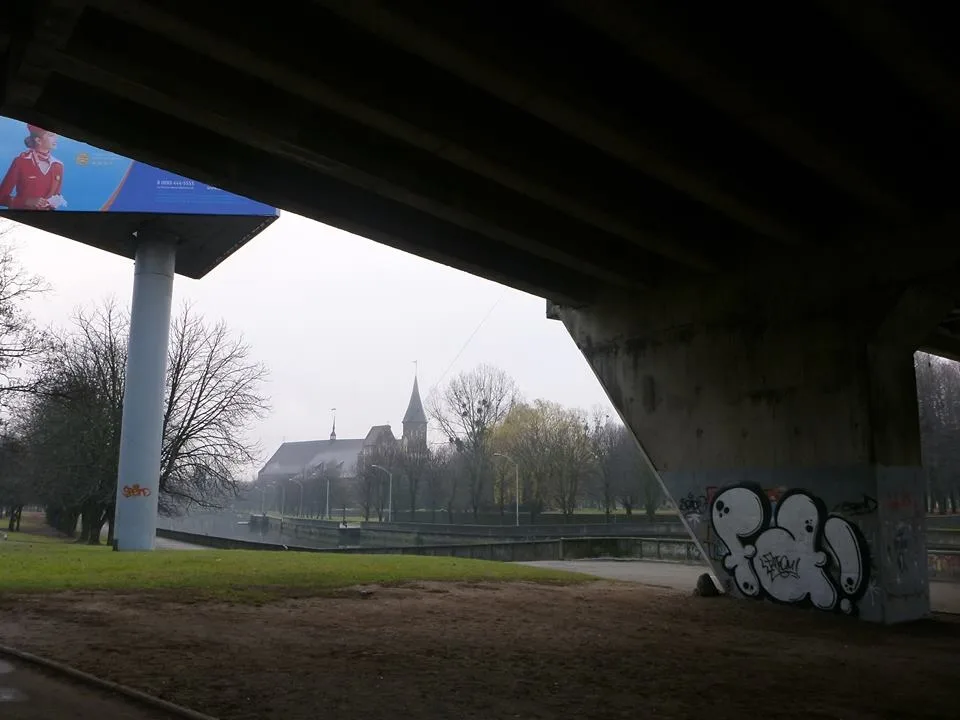
In Kaliningrad things are different. Its architectural appearance is an astonishing cocktail in which old German buildings stand side by side with Soviet aerated-concrete blocks and post-perestroika glass-and-concrete structures. There is no unity, no common style, no harmony. And this produces a feeling of emptiness, of something left unsaid, unfinished. And sometimes a sense of awkwardness, too.
Have you ever seen tour guides telling tourists about the Royal Hill and its surroundings? Oh, it is a marvellous sight! They lead people around the House of Soviets and describe the Royal Castle in detail. Here, they say, stood the west wing, here the east wing, and over there the Haberturm. Further on, beyond that prefab tower block, began the Altstadt, and near that petrol station the Katzbach stream flowed into the Pregel.
People listen attentively and ask questions. Even in this form (that is, in no form at all) the city's historic centre interests them. I have been present at several such tours and have never heard a single word of indignation from the tourists. Along the lines of: why are you showing us one thing and talking about another? I can look at the pictures you are showing on the internet. No, as far as one can judge, everyone liked the tours.
But I, as a local resident, felt ashamed. Ashamed that practically nothing from pre-war times has survived either on the Royal Hill or around it (except perhaps the Castle Pond), ashamed of the empty eye sockets of the House of Soviets, ashamed of the huge car park that appeared on the site of the demolished "Old Tower", ashamed of the desolation and the general lack of comfort.
Some people in Kaliningrad say that the problem of the Royal Hill is that the House of Soviets is dead. They believe that if it were brought back to life, the place would be livelier. Maybe so, I won't argue. But tourists are hardly going to come to this spot specially to look at the House of Soviets. It doesn't interest them in any form — neither alive nor dead.
Like it or not, the most attractive thing in Kaliningrad for tourists is Königsberg. And in particular its historic centre.
People are even prepared to visit a non-existent virtual Royal Castle, but a tour of the House of Soviets is unlikely to interest them, even if it is more alive than all the living. That said, it by no means follows that the House of Soviets is the terror that flaps in the night. In a certain sense it, too, is an architectural monument. A rather interesting example of the Constructivism of the 1960s–70s. Its trouble is that it stands in the wrong place. Somewhere in Selma, or perhaps next to the stadium under construction on Oktyabrsky Island, it would be king, but here it will always be in the shadow of the Royal Castle, regardless of whether the castle is ever rebuilt or not.
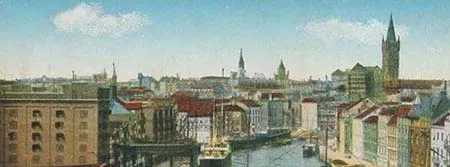
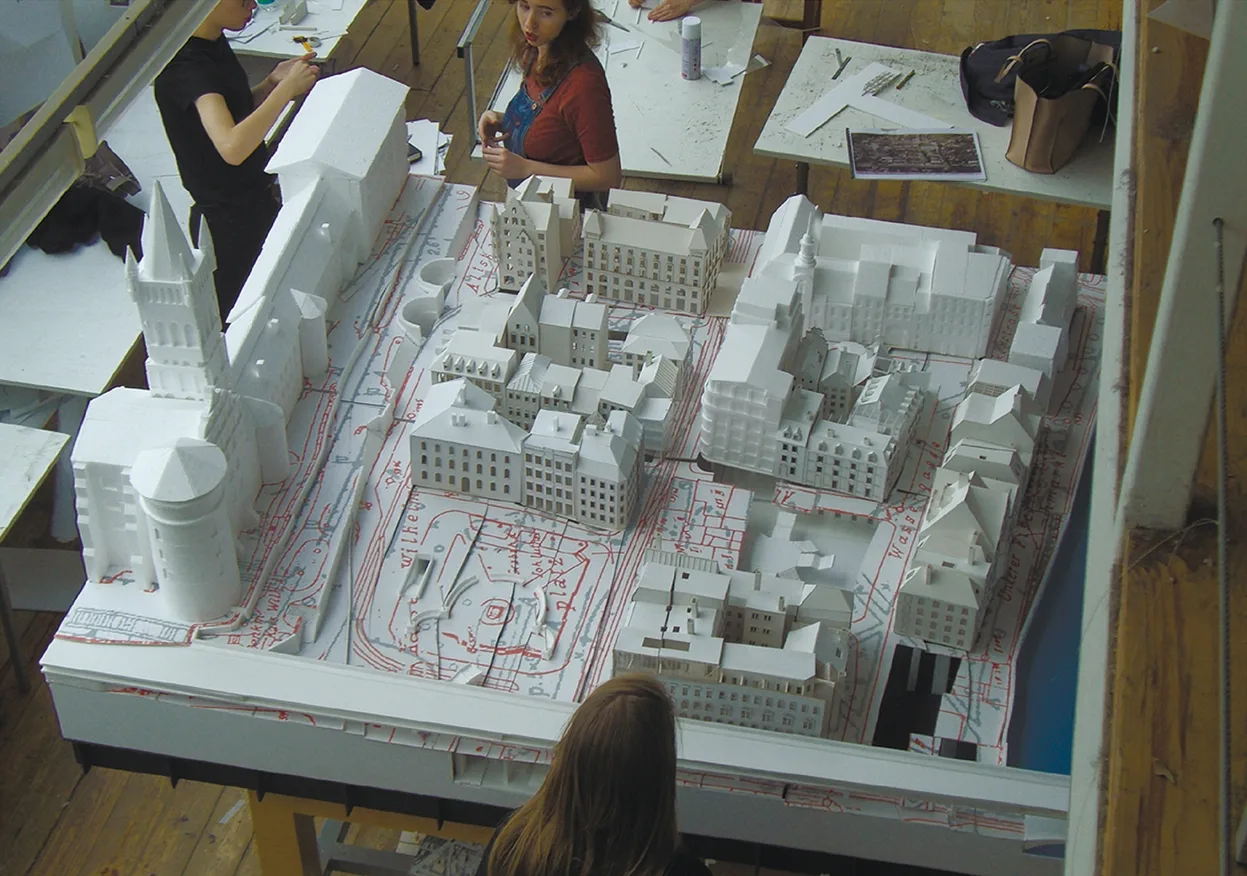
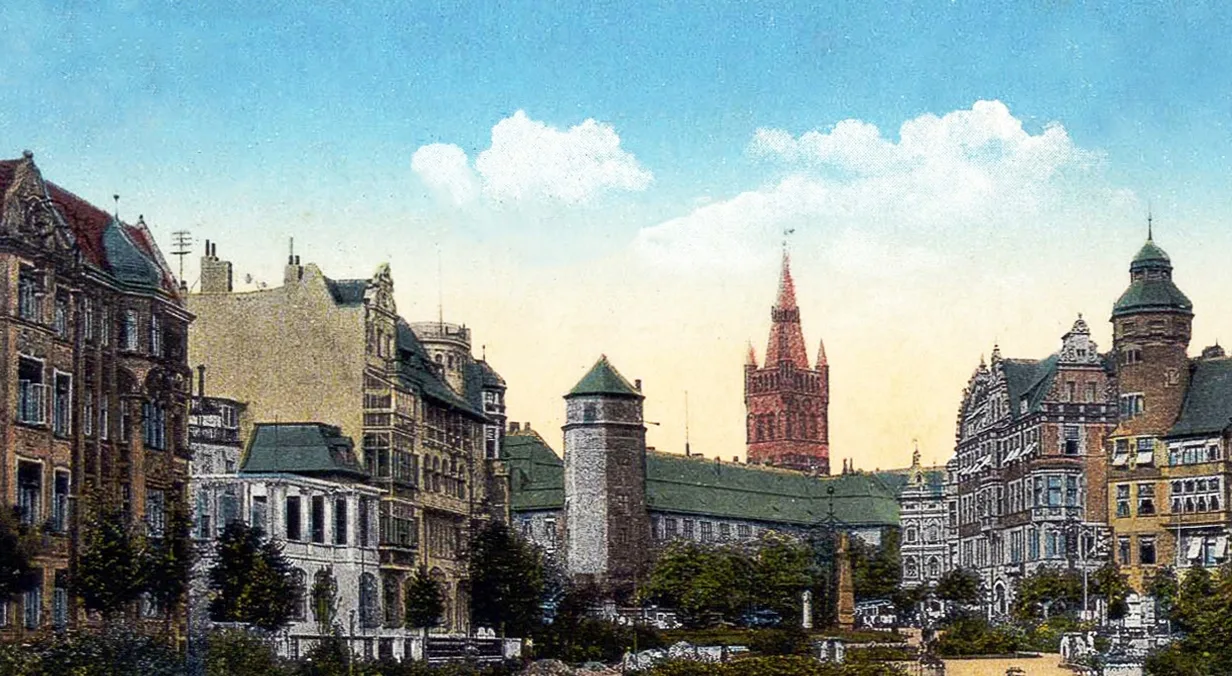
It is hard to say how events will unfold, which view of Kaliningrad's architectural future will prevail, but it would be great if those who take the decisions stopped reinventing the wheel and paid attention to successful European experience. Our city definitely needs a historic centre — restored fully or at least partially. What is meant first and foremost are fragments of the Kneiphof and the Altstadt.
There is no doubt that this project would be a success. After all, even the Khrushchev-era blocks on Leninsky Prospekt remodelled in Hanseatic style were greeted with delight; even the Fishing Village, built, as they say, "after the motifs" of the old town, went down a storm. Clearly there is demand for this kind of architecture.
And this demand comes not only from tourists, many of whom are puzzled as to why Kaliningrad has no district with narrow cobbled streets full of souvenir shops and cafés, but also from many local residents who want to feel at home in their own city just as in any European one.
As for the business district, here too all paths are open. Selma, Oktyabrsky Island or even the end of Moskovsky Prospekt near the ring road could become the site of our Kaliningrad City, where architects could give free rein to their creative energy.
In this way Kaliningrad would gain two poles, two cities forming a single whole. And everyone would be happy — both those who look ahead and those who look back.
The architectural patchwork will not disappear, of course, but with two city centres it will no longer be perceived so acutely and painfully.
Of course, all this is merely dreams, fantasies that may well shatter against harsh reality. After all, the show is run by the financial interests of developers, most of whom want to build ordinary concrete boxes and would happily stick them up everywhere (even on the Royal Hill) if given free rein. But surely a city must have a soul?
Translated from Russian with the help of AI (Claude, Anthropic), October 2026.