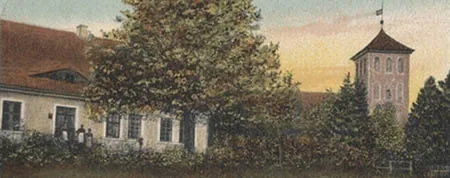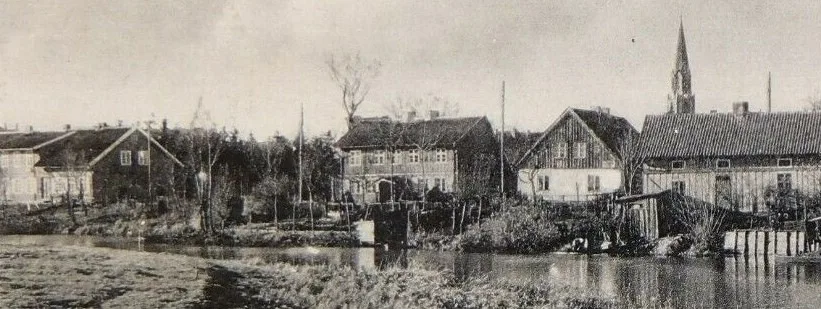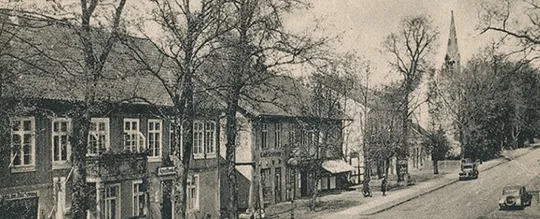
Kaukehmen was known from 1466 as a castle of the Teutonic Order. In 1532 Duke Albrecht of Brandenburg granted the inn at Kaukehmen to Jakob Born, and it was then that a settlement of fishermen and hunters by the castle walls was first mentioned. In 1549 the same Jakob Born received fishing rights.
The parish in Kaukehmen (still as a filial) was established in 1547. In 1549 a wooden church was opened for it. In 1576 the independent parish of Kaukehmen was formed. After the parish was opened, Kaukehmen received the status of a Flecken — the name for large settlements with a church and a market that dominated the surrounding villages but had not received town status. The wooden church was rebuilt in 1576 and 1659; the last rebuilding was carried out under the direction of Reinhard von Halle, the owner of the Kaukehmen estate.
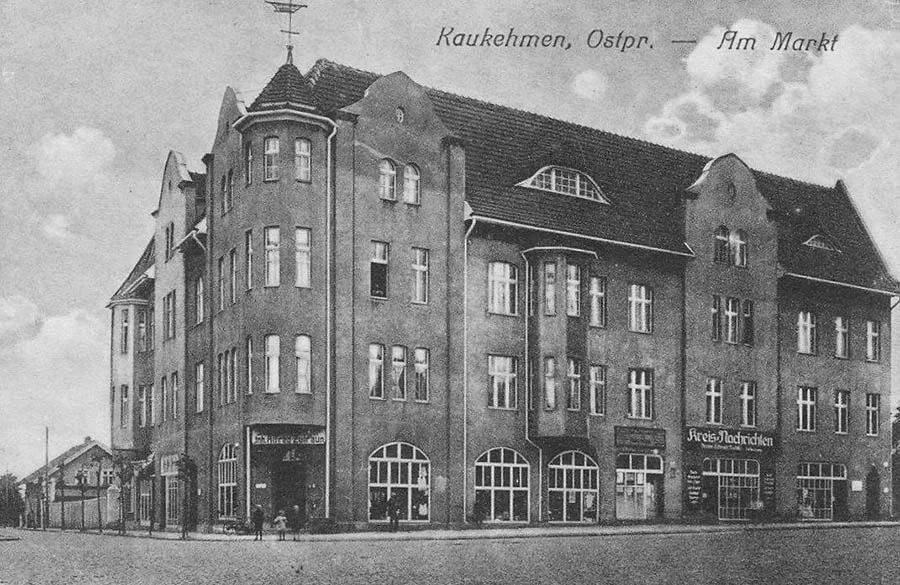
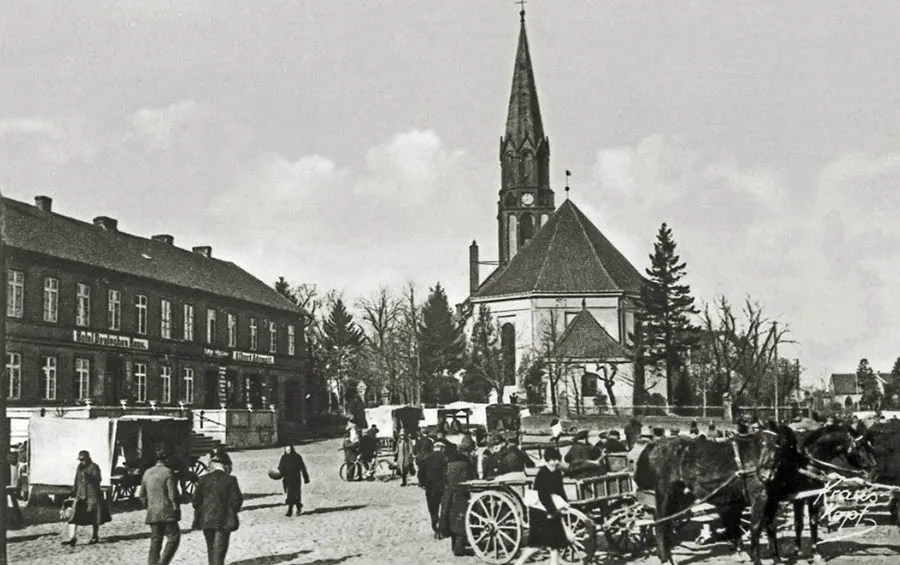 The market square of Kaukehmen.
In 1661 the settlement of Kaukehmen received town rights.
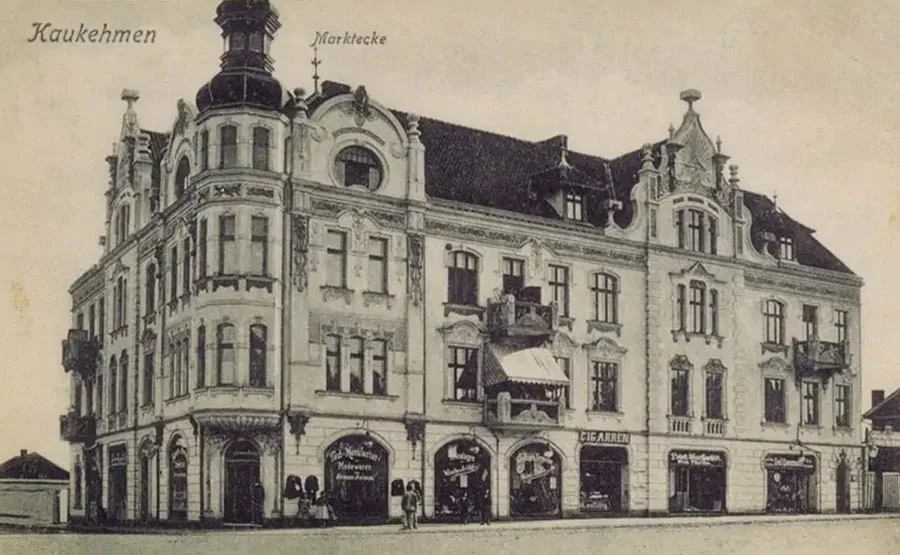
On 18.11.1675 the Kaukehmen estate was acquired by Frederick William, Elector of Brandenburg and Duke of Prussia, for 160,000 thalers.
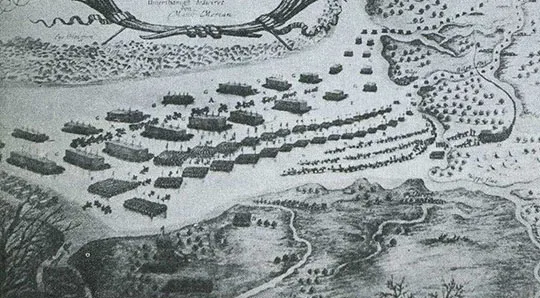
In 1678–79, during the Scanian War (1675–79), the headquarters of the Swedish field marshal Henrik Horn was in Kaukehmen. After the Swedes withdrew, Kaukehmen Castle was used as a hunting lodge by Frederick William. In 1693 a school was opened in Kaukehmen. By 1702 the wooden church in Kaukehmen had become completely dilapidated and dangerous for the parishioners. That same year it was pulled down, and construction of a new brick church began in its place, directed by the court architect Joachim Ludwig Schultheiß von Unfriedt and Paul Lagewald from Trumpeiten (Shanino). The construction, which produced a polygonal brick building without a tower, was completed in 1708.
In 1722 the Amt of Kuckerneese was formed, subordinate to the Hauptamt in Tilsit.
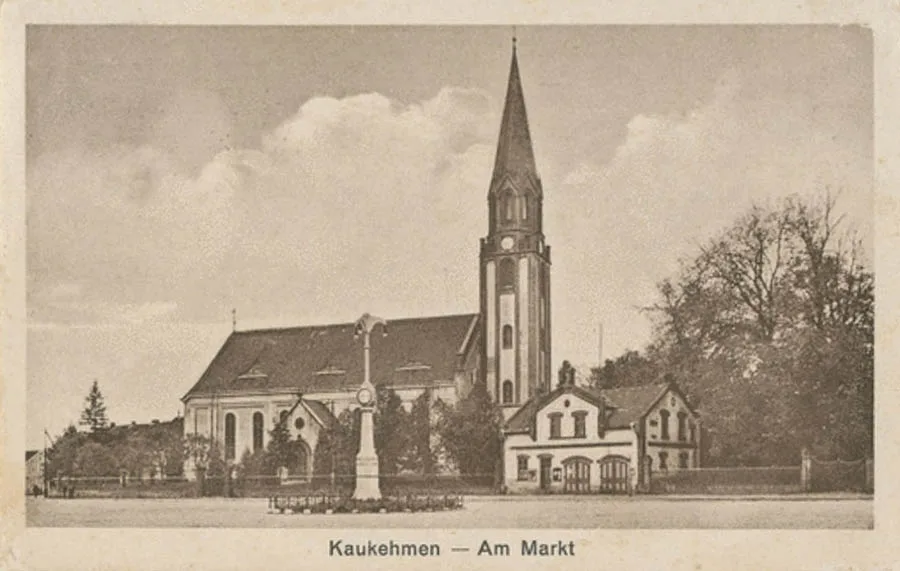 Kaukehmen Church.
In 1758 the Russian army under the command of William Fermor entered Kaukehmen.
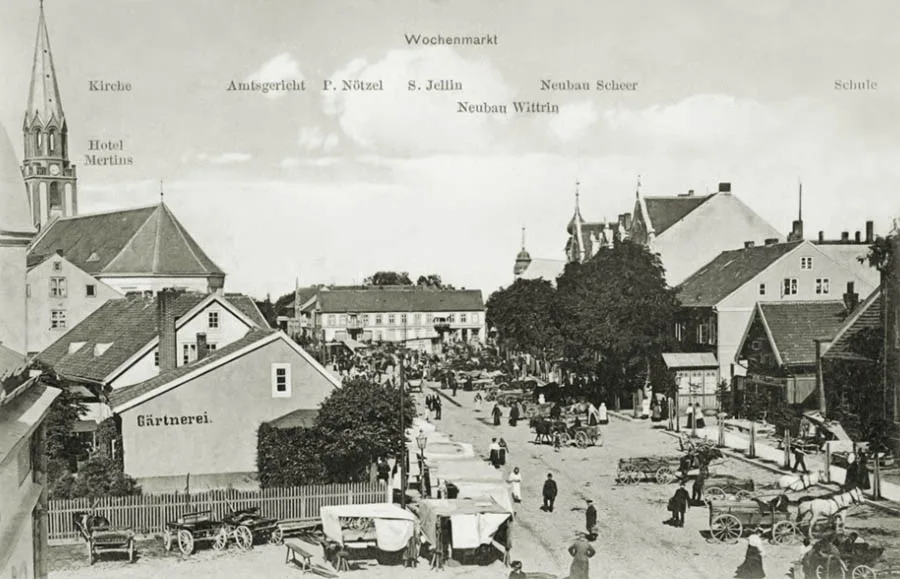 The market in Kaukehmen.
In 1809 the oldest establishment in Prussia for training army horses (Remontedepot) was set up in Kaukehmen.
From 1818 Kaukehmen briefly became the administrative centre of the Kreis, but it was later moved to Heinrichswalde (Slavsk).
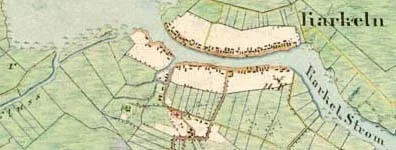
In 1874 Amtsbezirk No. 24 Kaukehmen was established in Landkreis Niederung. It comprised five rural communities: Kaplanischken (Yasnoye, part), Kaukehmen (Yasnoye), Alt Sellen (55°10'43'' N 21°36'01'' E), Kaukehnellen (Yasnoye, part), Kloken (Klyuchi), and two Gutsbezirke: Kuckerneese (Yasnoye) and the Ruß-Kuckerneese Dike (Ruß-Kuckerneeser Deichsozietät). The first head of the Amtsbezirk was a certain Schonn from Kaukehmen, who worked at the mutual aid fund. Residents of Kaukehmen continued to hold the post of head of the Amtsbezirk afterwards: in 1917, for instance, it went to Bangel, a retired gendarmerie officer and serving head of the Amtsbezirk who had moved from Ragnit (Neman) to Kaukehmen. In 1919–33 the post was held by the community leader Kurt Sturies, in 1933–35 by the gardener Friedrich Born, and from 1935 by Sturmbannführer Panneck, who was later replaced by the same Kurt Sturies.
By 1908 some changes had taken place in the Amtsbezirk of Kaukehmen: in particular, the Gutsbezirk of the Ruß-Kuckerneese Dike was dissolved, and the Gutsbezirk of Kaplanischken (Yasnoye, part) was established in its place. On 15.09.1915 the community of Kaukehmen was merged with the community of Kaukehnellen (Yasnoye, part) into a new rural community of Kaukehmen. On 26.05.1916, by decision of a Berlin court, the Gutsbezirk of Kaplanischken was annexed to the Gutsbezirk of Kuckerneese (Yasnoye, part). But as early as 01.11.1917 a considerable part of it (99 ha) became part of the community of Kaukehmen (Yasnoye). On 30.09.1928 the Gutsbezirk of Kuckerneese (Yasnoye, part) was abolished and became part of the rural community of Kaukehmen. The Amtsbezirk of Kaukehmen came to consist of three rural communities: Alt Sellen, Kaukehmen (Yasnoye) and Kloken (Klyuchi). Its composition did not change again until 1945.
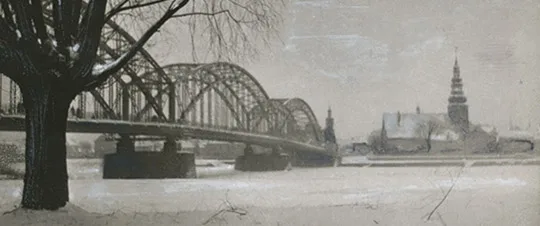
In 1881–84 a tower was added to the church in Kaukehmen. On 27.04.1904 a fire broke out in the church during work on soldering the gutters, and it burned down completely. By 1906 the church had been restored, with an enlarged hall that now had 1,000 seats and 500 standing places. On 09.12.1906 the church was consecrated anew.
In the middle of the 19th century the Kaukehmen school had four classes and could take 250 pupils. By 1900 their number had increased to 350. In 1928–29 a new school (pictured below) was opened, with eight classes and up to 650 pupils.
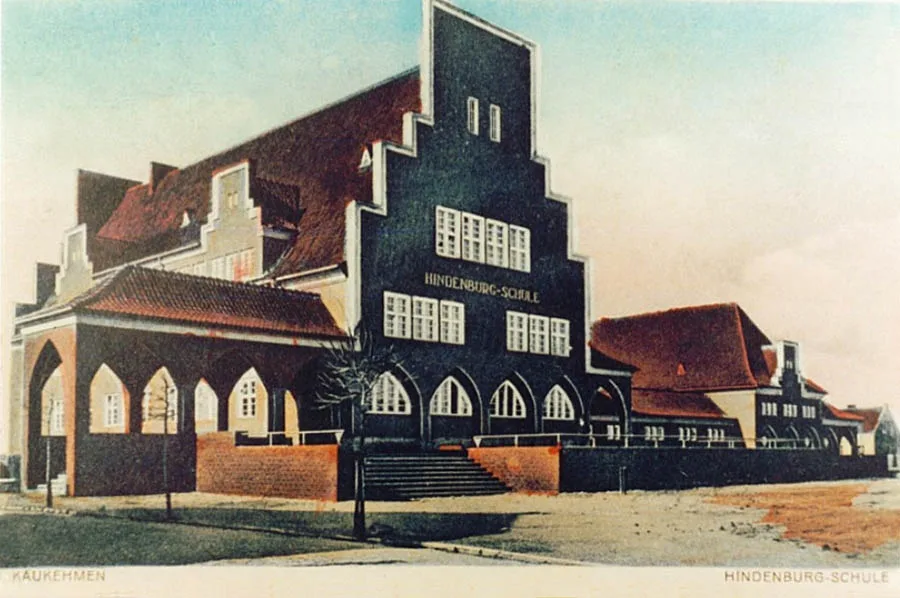 The Kaukehmen school (Hindenburg-Schule).
At the beginning of the 20th century Kaukehmen became the largest locality in Landkreis Niederung.
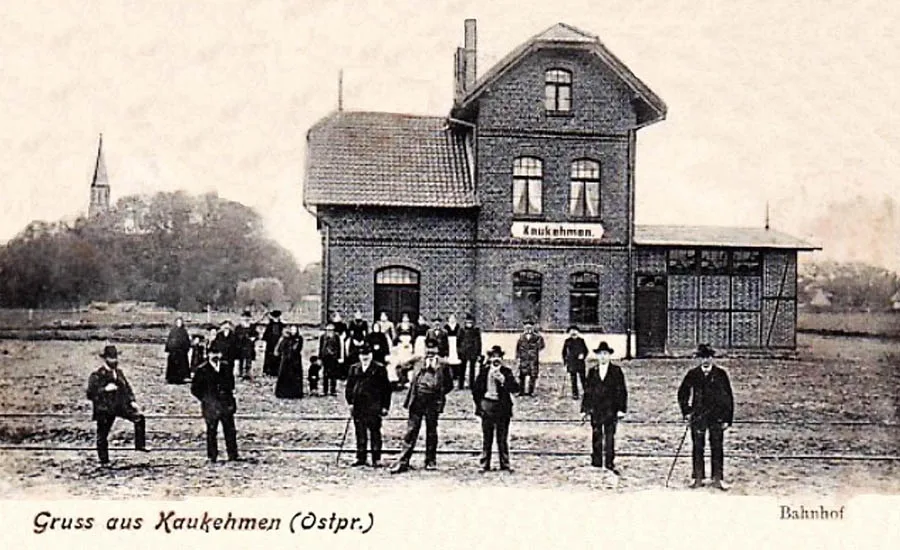 Kaukehmen station.
In 1902 the Groß Brittanien – Karkeln (Shcheglovka – Mysovka) narrow-gauge railway (750 mm) was laid through Kaukehmen. A station (pictured above) was opened on it in Kaukehmen; in Groß Brittanien passengers could change to the train from Königsberg to Tilsit. In 1905 a gasworks was built.
After the end of the First World War the electrification of Kaukehmen began, and by 1924 95% of the houses and farmsteads in the area had electricity.
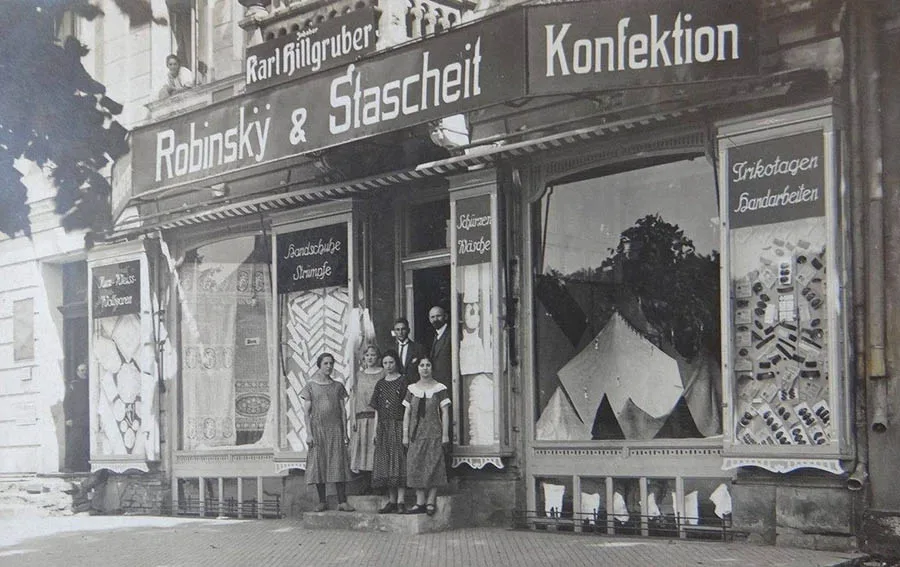
At the beginning of the 1930s Kaukehmen had: 16 grocery shops, six drapery shops, seven bakeries, seven butcher's shops, four shoe shops and nine shoemaker's workshops, three shops selling perfumery, haberdashery and pharmacy goods, six joinery workshops, two tinware makers, three building contractors, two glazier's workshops, five painters and paperhangers, three smithies, two coachbuilders, eight tailors, three saddlers, six hairdressers, four printing works, five bookbinderies and a cooperage; there were branches of several banks, a customs office, a court, a mill, a dairy, two hotels, three cafés and 13 small guesthouses. In the 1930s a 600-seat cinema opened in the town. By 1944 the Kaukehmen church parish had 7,200 parishioners.
During the Second World War the civilian population of Kaukehmen was evacuated deep into Germany starting on 12.10.1944.
On 20.01.1945 Kuckerneese was taken by soldiers of the 149th and 171st Rifle Regiments (182nd Rifle Division under Colonel M.V. Fyodorov, 90th Rifle Corps, 43rd Army). In September 1946 a camp for about 300 German prisoners of war was set up here.
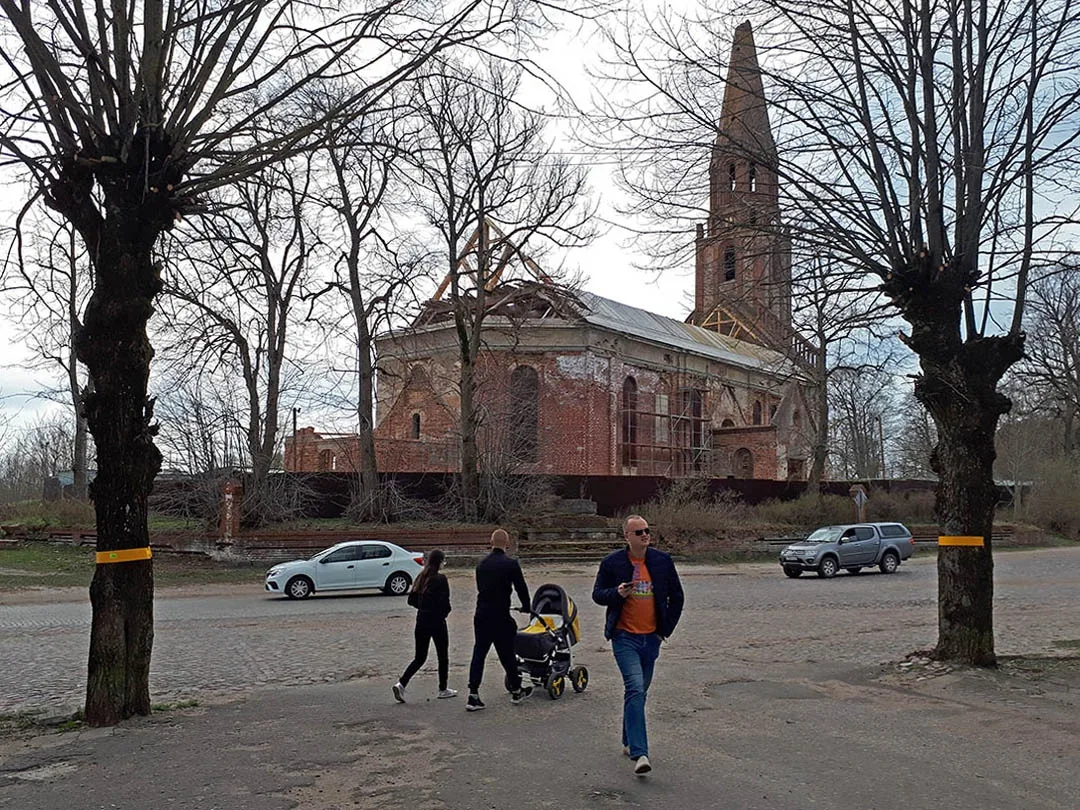
On 17.06.1947 Kaukehmen was renamed the settlement of Yasnoye, and the Yasnoye village council was formed at the same time. Kuckerneese and Kaukehnellen were not officially renamed and became part of Yasnoye de facto. On 05.07.1950 Skuldeinen was merged with the former Allgawischken and renamed Gribki, and at the same time Trumpeiten was merged with Neuhoff and renamed Shanino. In 1950 the Yasnoye village council was divided into the Yasnoye and Levoberezhnoye village councils. In 1972 the settlement of Yasnoye had 241 houses, a school, a hospital and a flour mill. By 1972 Shanino was already shown as part of Yasnoye. No later than 1975 the settlements of Shanino and Gribki were officially struck off the register and incorporated into Yasnoye. All this time the church in Yasnoye was used as a warehouse. In the 1980s its roof collapsed. In 2003 a new school building was built in Yasnoye.
From the 1990s to the present day the population of Yasnoye has been declining. Over these years the settlement has fallen largely into decline: many enterprises have closed, and houses stand abandoned and are being dismantled for their bricks.
In 2020 restoration of the church began in Yasnoye.
Coordinates: 55°10'31'' N 21°32'44'' E (Kaukehmen, centre), 55°10'26'' N 21°33'32'' E (Kuckerneese), 55°10'26'' N 21°32'04'' E (Kaukehnellen), 55°10'59'' N 21°33'04'' E (Kaplanischken), 55°11'31'' N 21°33'29'' E (Kloken), 55°09'50'' N 21°31'58'' E (Skuldeinen), 55°09'27'' N 21°31'24'' E (Trumpeiten).
Sights: the church with the remains of a memorial to those killed in the First World War, old German buildings, a monument to a street lamp, a memorial on the mass grave of Soviet soldiers.
Population: 1985 – 2000, 2002 – 1629, 2010 – 1464, 2012 – 1440 inhabitants.
For reference
Population of the community of Kaukehmen: 1885 – 1665, 1905 – 2056, 1910 – 2222, 1925 – 3302, 1933 – 4262, 1939 – 4510 inhabitants.
Population of Kaukehnellen: 1905 – 694, 1910 – 719 inhabitants.
Population of the Kuckerneese estate: 1905 – 109, 1910 – 135 inhabitants.
Population of Kaplanischken: 1905 – 139, 1910 – 140 inhabitants.
Population of Skuldeinen: 1905 – 128, 1910 – 126, 1925 – 129, 1933 – 126, 1939 – 118 inhabitants.
Population of the community of Groß Trumpeiten: 1905 – 154, 1910 – 127, 1933 – 180, 1939 – 1831 inhabitants.
Kaukehnellen
Kaukehnellen was a village forming a rural community in Landkreis Niederung (from 1938 Elchniederung). The village belonged to the church parish of Kaukehmen (from 1938 Kuckerneese, Yasnoye). In 1874 the community of Kaukehnellen was incorporated into the newly established Amtsbezirk of Kaukehmen (Yasnoye). In 1902 a branch of the Groß Brittanien – Karkeln (Shcheglovka – Mysovka) narrow-gauge railway (750 mm) was laid through Kaukehnellen. On 15.09.1915 the community of Kaukehnellen was merged with the community of Kaukehmen (Yasnoye) into a new rural community of Kaukehmen.
In the pre-war years the village of Kaukehnellen had its own chapel and a railway platform on the narrow-gauge line, and a dairy operated there.
Kuckerneese
Kuckerneese was an estate forming a Gutsbezirk in Landkreis Niederung. The estate belonged to the church parish of Kaukehmen (from 1938 Kuckerneese, Yasnoye). In 1874 the Gutsbezirk of Kuckerneese was incorporated into the newly established Amtsbezirk of Kaukehmen (Yasnoye). On 26.05.1916, by decision of a Berlin court, the Gutsbezirk of Kaplanischken (Yasnoye, part) was annexed to the Gutsbezirk of Kuckerneese. But as early as 01.11.1917 a considerable part of it (99 ha) became part of the community of Kaukehmen (Yasnoye). In 1922 and 1924 the Gutsbezirk of Kuckerneese gradually lost its lands, giving them accordingly to the community of Kaukehmen (In 1928 the Gutsbezirk was abolished, and the estate became part of the communities of Kaukehmen (20 ha) and Kloken (Klyuchi, 35.2 ha).
On 30.09.1928 the Gutsbezirk of Kuckerneese was abolished and incorporated into the rural community of Kaukehmen (Yasnoye). In 1938, during the Nazi renaming of localities in East Prussia, its name came to be used for the whole rural community of Kaukehmen and for the Amtsbezirk of Kaukehmen.
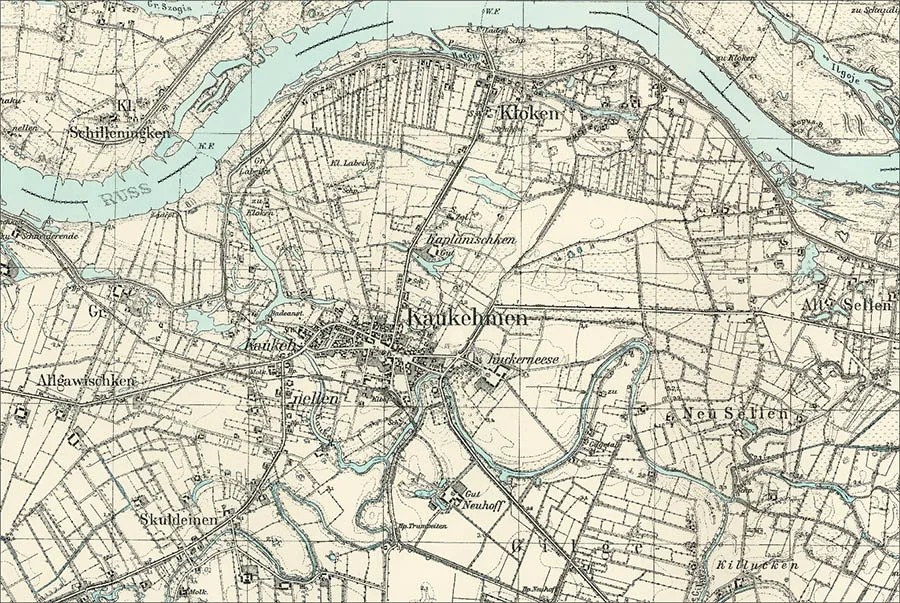
Kaplanischken
Kaplanischken was an estate forming a Gutsbezirk in Landkreis Niederung (from 1938 Elchniederung). The estate belonged to the church parish of Kaukehmen (from 1938 Kuckerneese, Yasnoye). In 1874 the Gutsbezirk of Kaplanischken was incorporated into the newly established Amtsbezirk of Kaukehmen. On 26.05.1916, by decision of a Berlin court, the Gutsbezirk of Kaplanischken was annexed to the Gutsbezirk of Kuckerneese (Yasnoye, part). But as early as 01.11.1917 a considerable part of it (99 ha) became part of the community of Kaukehmen (Yasnoye).
In the pre-war years a brickworks operated in Kaplanischken.
Skuldeinen
Skuldeinen was a village forming a rural community in Landkreis Niederung (from 1938 Elchniederung). The village belonged to the church parish of Kaukehmen (from 1938 Kuckerneese, Yasnoye). In 1874 the community of Skuldeinen was incorporated into the newly established Amtsbezirk of Sausseningken (from 1939 the Amtsbezirk of Milchhof, Cherkasskoye). Arno Gerull, a war invalid from Skuldeinen, held the post of head of the Amtsbezirk in 1928–45. On 12.10.1896 the village of Szaudszen, which had previously formed an independent rural community, was incorporated into the community of Skuldeinen. Subsequently the village of Szaudszen became the central part of the village of Skuldeinen.
In the pre-war years an oil mill and a wind generator operated in Skuldeinen.
Neuhoff
Neuhoff was an estate belonging to the community of Neuhoff in Landkreis Niederung (from 1938 Elchniederung). The estate belonged to the church parish of Kaukehmen (from 1938 Kuckerneese, Yasnoye). In 1874, as part of the community, the Neuhoff estate became part of the newly established Amtsbezirk of Sköpen (Mostovoye). The first head of the Amtsbezirk was the owner of the Neuhoff estate, a certain Born. In 1911 the Elchniederungsbahn narrow-gauge (750 mm) railway was laid next to the estate, and a station was opened on it. On 01.10.1932 the community of Neuhoff (including the Neuhoff estate) was merged with the community of Wietzischken (55°09'27'' N 21°34'00'' E) into a new rural community of Gilgetal.
Groß Trumpeiten
Groß Trumpeiten was a village forming a rural community in Landkreis Niederung (from 1938 Elchniederung). The village belonged to the church parish of Kaukehmen (from 1938 Kuckerneese, Yasnoye). In 1874 the community of Groß Trumpeiten was incorporated into the newly established Amtsbezirk of Sausseningken (from 1939 the Amtsbezirk of Milchhof, Cherkasskoye). On 30.09.1928 the Klein Trumpeiten estate, which until then had formed an independent Gutsbezirk in the Amtsbezirk of Sköpen (Mostovoye), was incorporated into the community of Groß Trumpeiten. Around 1931 the community of Groß Trumpeiten was renamed Trumpeiten.
The church parish of Kaukehmen: Alt Sellen (55°10'43'' N 21°36'01'' E), Baubeln (from 1938 Sommershöfen, Oboyan), Groß Allgawischken (from 1938 Schlichtingen, Gribki), Groß Schilleningken (Didieji Šilininkai, Lithuania), Heinrichsfelde (55°13'06'' N 21°34'26'' E), Kaplanischken (Yasnoye, part), Kaukehmen (Yasnoye), Kaukehnellen (Yasnoye, part), Killucken (55°09'35'' N 21°35'13'' E), Klein Allgawischken (from 1938 Allgau, Ozerki), Klein Schilleningken (Šilininkėliai, Lithuania), Klein Trumpeiten (from 1938 Kleintrumpenau, Vasilkovo, part), Kloken (Klyuchi), Kuckerneese (Yasnoye, part), Leitgirren (Leitgiriai, Lithuania), Liszeiten (from 1938 Lischau, Vishnyovka), Neu Sellen (55°10'12'' N 21°35'12'' E), Neuhoff station (Yasnoye, part), Neusorge (Arbuzovo), Sausseningken (from 1938 Milchof, Cherkasskoye), Sköpen (Mostovoye), Skulbettwarren (55°10'38'' N 21°37'14'' E), Skuldeinen (Gribki), Trumpeiten (from 1938 Trumpenau, Vasilkovo), Usseinen (from 1938 Stellwagen, Dalneye), Warskillen (Kalinovka), Wietzischken (55°09'22'' N 21°34'04'' E).
Modern photograph by Mikhail Ogorodnikov.
Translated from Russian with the help of AI (Claude, Anthropic), October 2026.