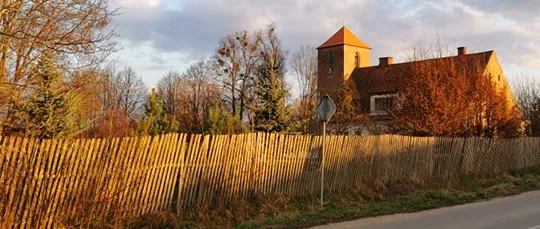
Ilyichyovo (German: Kelladden (from 1938 Waldwinkel), Szerszantinnen (from 1936 Scherschantinnen, from 1938 Kleinwaldwinkel),
Kelladden was founded in 1540. In 1785 it is mentioned as Kellodden. In 1871 it appears in documents under the name Kelladen. In the 19th century Kelladden was a village which from 1818 formed a rural community in the Landkreis Labiau (Polessk). The village belonged to the parish of Laukischken (Saranskoye). In 1871 the village of Kelladden had 71 farmsteads (households), in which 111 families and 1 single man lived. On 9 April 1874 the rural community of Kelladden was included in the newly established Amtsbezirk Laukischken (Saranskoye). In 1890 a two-class school opened in Kelladden, which operated right up to the Second World War. At the beginning of the 20th century an inn opened in Kelladden. On 1 April 1938 the village of Szerszantinnen (part of Ilyichyovo), which had previously formed a separate community, was incorporated into the Kelladden community. In the pre-war years the village had a building firm, a sawmill and three smithies.
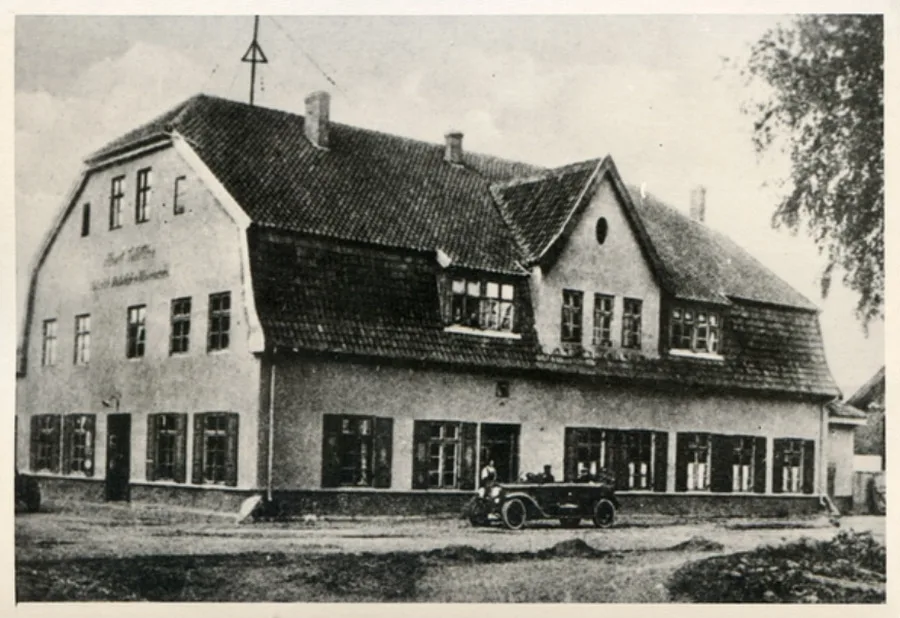 The guest house in Waldwinkel bore the name Tollkühn (Gasthaus Tollkühn).
According to the 1938 census, the Kelladden community had 93 horses, 151 head of cattle and 250 pigs. The main occupations of the population were grain farming, fruit growing and vegetable growing.
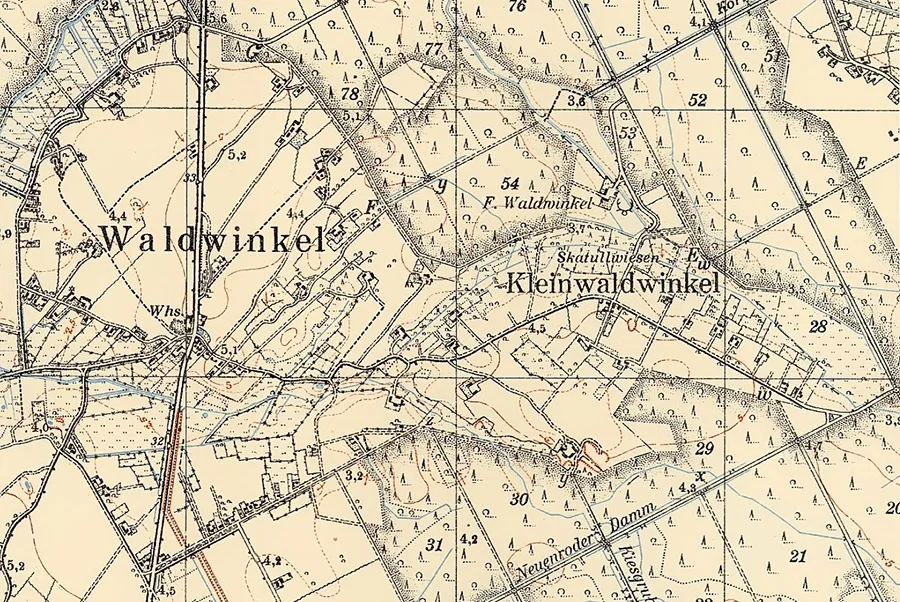
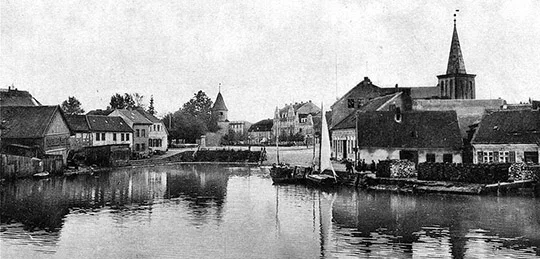
Waldwinkel on a German topographic map of the early 20th century.
Szerszantinnen was a village forming a rural community in the Landkreis Labiau (Polessk). The village belonged to the parish of Laukischken (Saranskoye). In 1871 Szerszantinnen had five farmsteads, in which seven families lived. On 9 April 1874 the rural community of Szerszantinnen was included in the newly established Amtsbezirk Laukischken (Saranskoye). On 1 April 1938 the Szerszantinnen community lost its independence and was incorporated into the Kelladden community (Ilyichyovo).
The Pfeil head forestry formed the forest Gutsbezirk of the same name in the Kreis Labiau (Polessk). In 1871, besides the Pfeil head forestry itself, the forest Gutsbezirk comprised: the Lucknojen forestry (Försterei Lucknojen; from 1938 the Neuenrode forestry, 54°52'04'' N 21°18'45'' E) and the temporarily leased forest colonies (Forst-Zeitpacht-Colonien) Neuheidendorf (part of Razino), Neusussemilken (part of Tarasovka) and Wilhelmsrode (Klimovka). The head forestry itself had one dwelling house, which also served as the office. On 9 April 1874 Amtsbezirk No. 31 Pfeil was established in the Kreis Labiau, comprising the rural community of Lucknojen (from 1938 Neuenrode, Zapovedniki) and the forest Gutsbezirk Pfeil.
At that time the forest Gutsbezirk Pfeil was a huge densely wooded territory.
It comprised the Pfeil head forestry, the Schweizut forestry (Forsthaus Schweizut; from 1938 the Wildhügel forestry), the Sussemilken forestry (Forsthaus Sussemilken; from 1938 the Friedrichsrode forestry), the Juwendt forestry (Forsthaus Juwendt; from 1938 the Grabenwald forestry), and the forest colonies: Wilhelmsrode (Klimovka), Alt Sussemilken (part of Tarasovka), Neu Sussemilken (part of Tarasovka), Alt Heidendorf (part of Razino), Neu Heidendorf (part of Razino) and Eversdorf (part of Tarasovka). In the 1880s the rural community of Alt Sussemilken (part of Tarasovka) separated from the forest Gutsbezirk Pfeil, and on 19 September 1887 the forest colony of Alt Heidendorf (Razino) also left the Gutsbezirk and began to form a separate rural community. Subsequently the territory of the forest Gutsbezirk Pfeil shrank periodically, as forest plots passed to rural communities and other forest Gutsbezirke.
In 1925 the management of the head forestry was taken over by Hans Kramer (1896–1982), one of Germany's best elk specialists. During his tenure considerable work was done on irrigating the forest plots and restoring the elk population. In the Third Reich period Hermann Göring repeatedly visited the Pfeil head forestry.
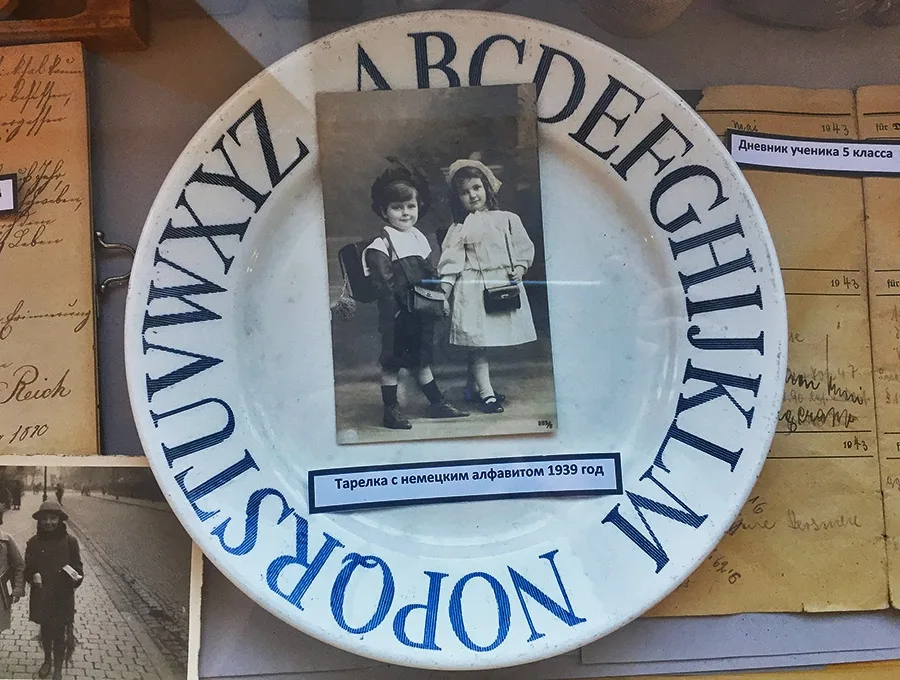 A German alphabet plate from the exhibition of the "Old German School Waldwinkel" museum.
On 22 January 1945 the villages of Kelladden and Szerszantinnen were taken by soldiers of the 126th Rifle Division (Col. F. A. Safronov, 1900–45).
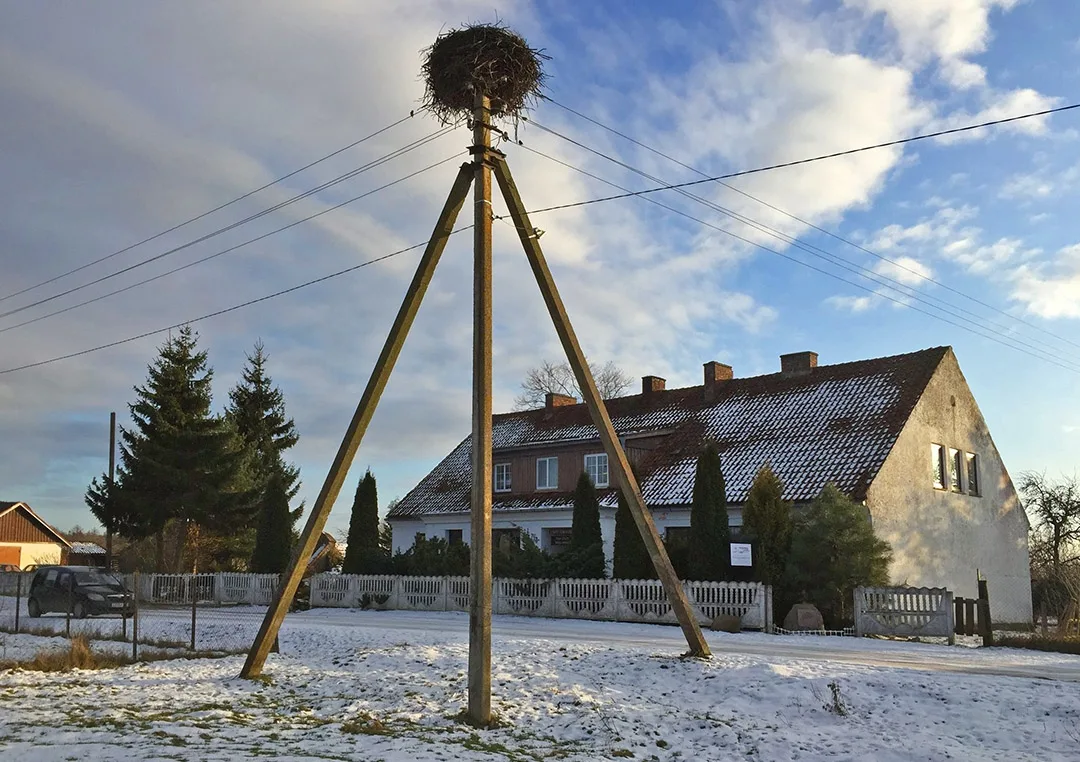
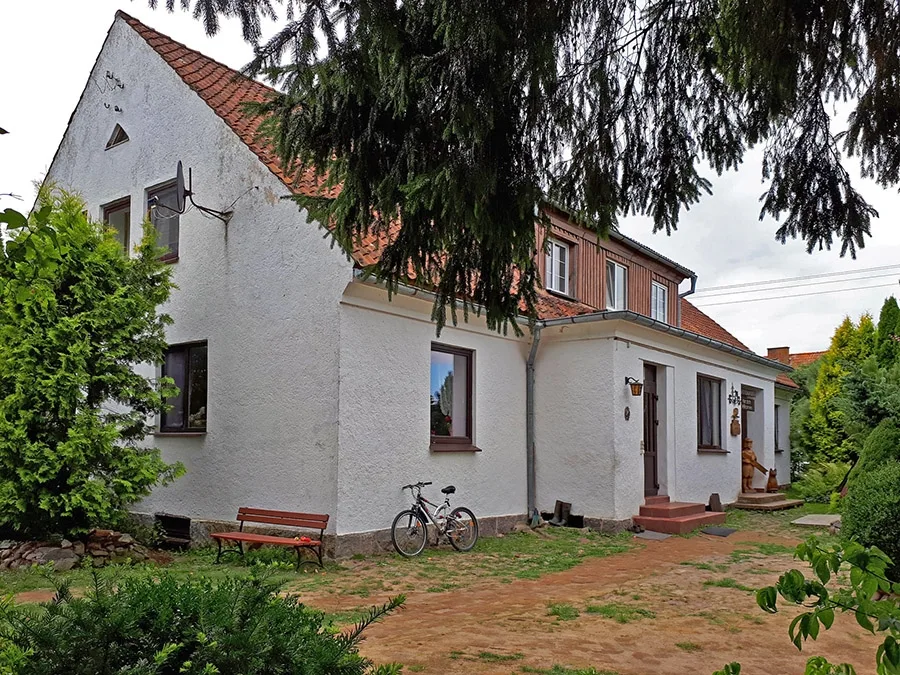 The "Old German School Waldwinkel" museum in Ilyichyovo (2021).
On 31 August 1946 the first settlers arrived in Kelladden. Literally two days later, on 2 September 1946, a Soviet school opened in Kelladden. On 1 April 1947 a telephone line was brought to Kelladden.
On 17 June 1947 Kelladden and Szerszantinnen were merged and renamed the settlement of Ilyichyovo. The Ilyichyovo Village Council was created at the same time. In 1948 the settlement was electrified. In 1949 wired radio began working in the collective farmers' homes. In 1950 a village House of Culture opened in the former inn building. In 1954 the Ilyichyovo Village Council was abolished and the settlement came under the Saranskoye Village Council. In 1973 and 1975 the settlement had 58 houses. In 1977 the school in Ilyichyovo was closed. As of 2011 the settlement had 63 houses (nine of them two-family and one multi-family). At about the same time the settlement's House of Culture was closed. In 2012 a museum opened in the old German school building.
Sights: the "Old German School Waldwinkel" museum (since 2012), the mass grave of Soviet soldiers (125 people, monument 1948), a memorial stone to the head forester Hans Kramer by the museum building (2013).
Population change: 1985 – 190, 2002 – 212, 2010 – 272 inhabitants.
Population change of the Kelladden community: 1867 – 556, 1871 – 561, 1885 – 731, 1905 – 653, 1910 – 629, 1925 – 539, 1939 – 607 inhabitants.
Population change of Szerszantinnen: 1867 – 37, 1871 – 45, 1905 – 82, 1910 – 86 inhabitants.
Population of the Pfeil head forestry: 1905 – 4 inhabitants.
Composition of the population of Kelladden in 1871: all 561 – Evangelical Christians, children under 10 – 152, literate – 164 (40%), insane – 3.
Composition of the population of Szerszantinnen in 1871: all 45 – Evangelical Christians, children under 10 – 12, literate – 14 (42%).
For reference
Population change of the forest Gutsbezirk Pfeil: 1867 – 301, 1871 – 631, 1885 – 826, 1905 – 967, 1910 – 955, 1925 – 861, 1933 – 846, 1939 – 240 inhabitants.
Population of the Lucknojen forestry: 1905 – 8 inhabitants.
Population of the Schweizut forestry: 1905 – 4 inhabitants.
Population of the Sussemilken forestry: 1905 – 6 inhabitants.
Population of the Juwendt forestry: 1905 – 5 inhabitants.
Translated from Russian with the help of AI (Claude, Anthropic), October 2026.