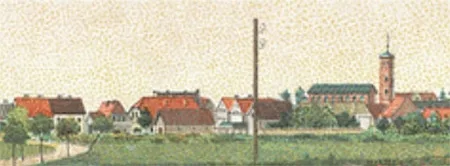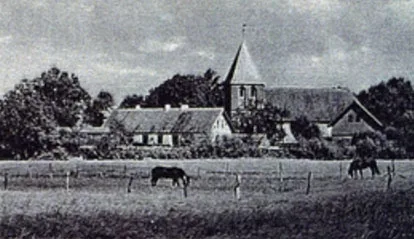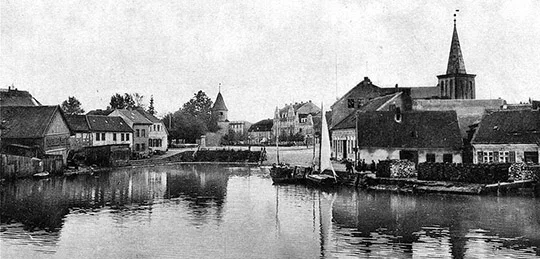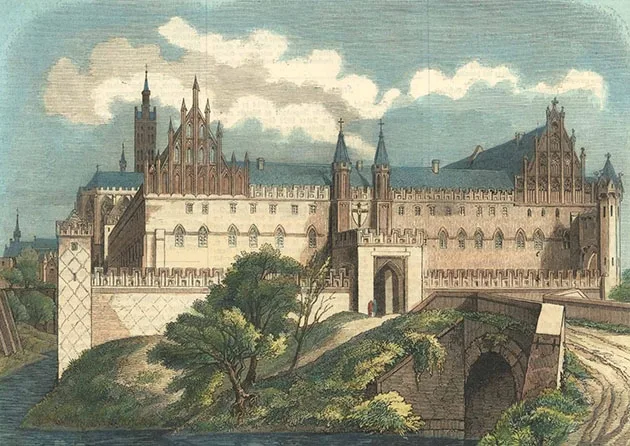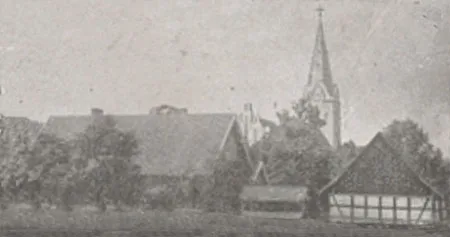
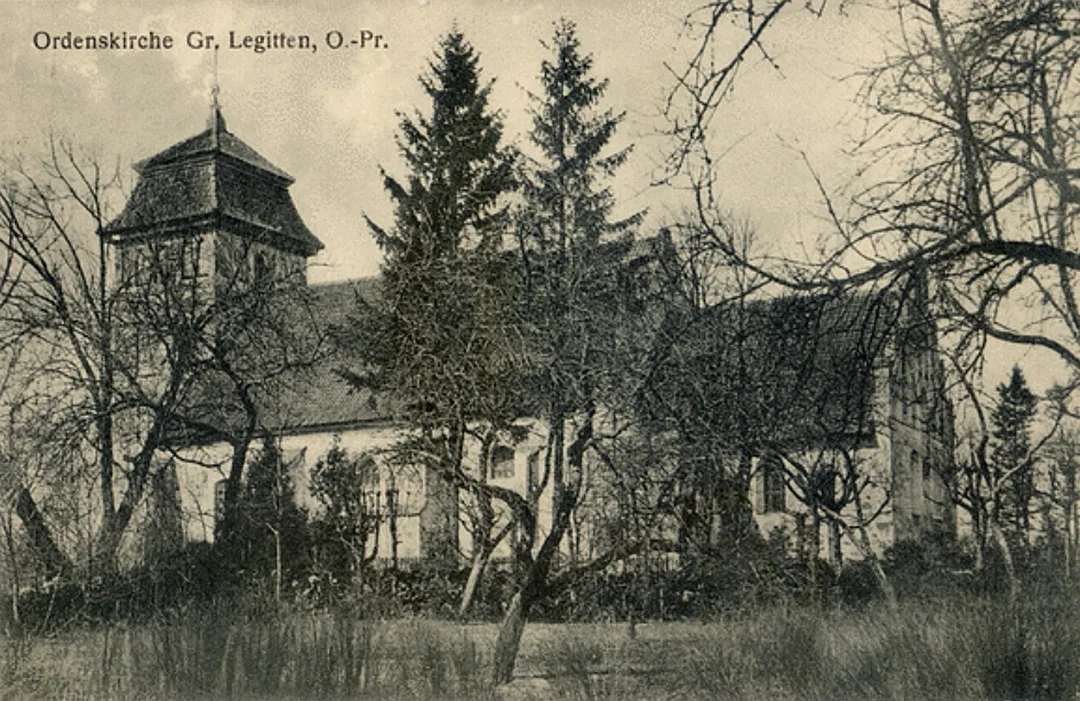
The oldest part is the choir, from around 1400. The nave and tower are from the 15th century. The entrance to the nave, which consists of three bays with star vaults, is through the tower. Behind the pointed triumphal arch stood a medieval crucifix. The handsome large windows are moulded both outside and inside. The pulpit dates from 1698. A pewter chandelier from the 17th century. Altar furnishings from the 17th century.
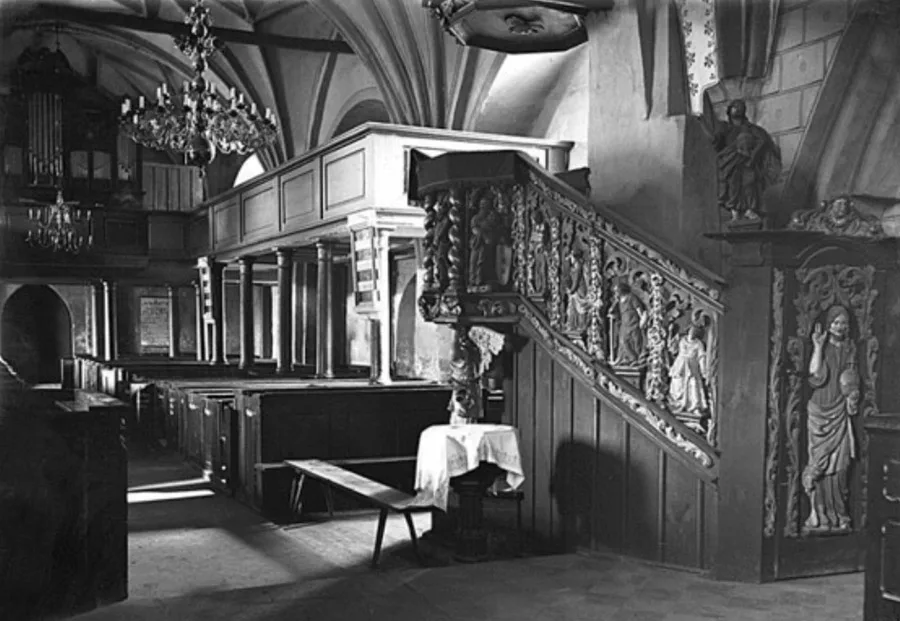
After 1945 the church was intact. It was used as a club, then as a grain dryer. At the end of the 1960s it was abandoned. But until 1975 it still remained intact.
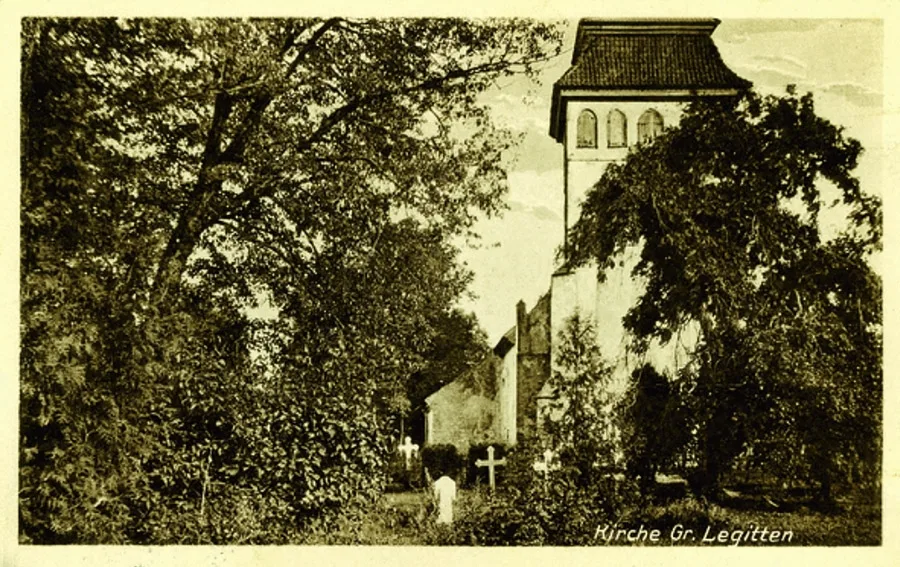
Later, after children lit a fire inside the church, a blaze broke out. The roof of the choir burned down and part of the vault collapsed. The roof of the nave was destroyed, but the vaults survived. The hanger from which the chandelier was suspended also survived. The tower was left without its dome. The porch on the north was falling into ruin. Only fragments of the walls remained of the sacristy.
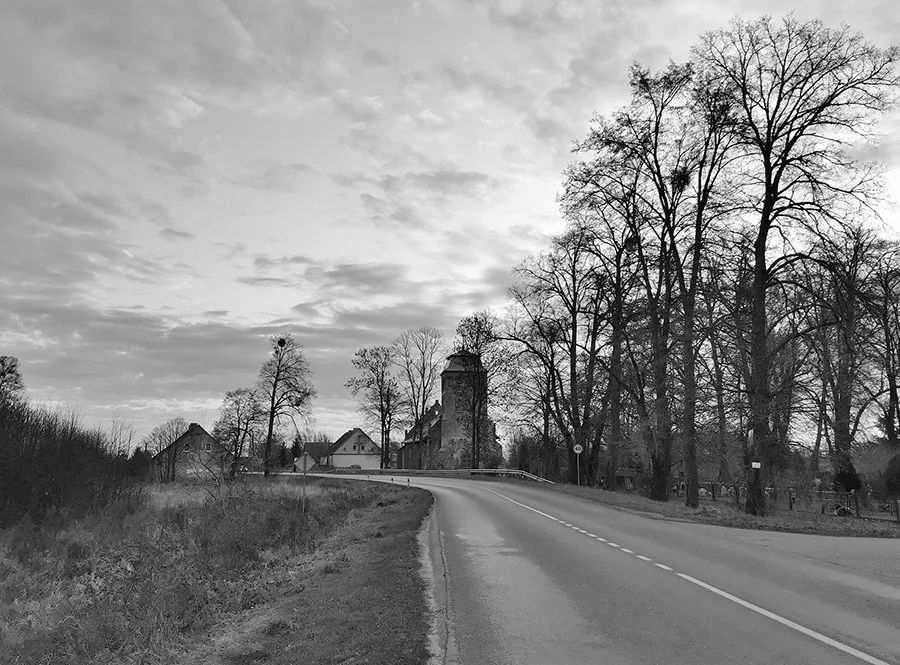
On the north wall there is an interesting memorial to those who fell in the First World War in the form of a soldier pressing a helmet to his chest — without a head. It was torn off when local residents hooked a cable round the sculpture and tried to pull it to the ground with a tractor.
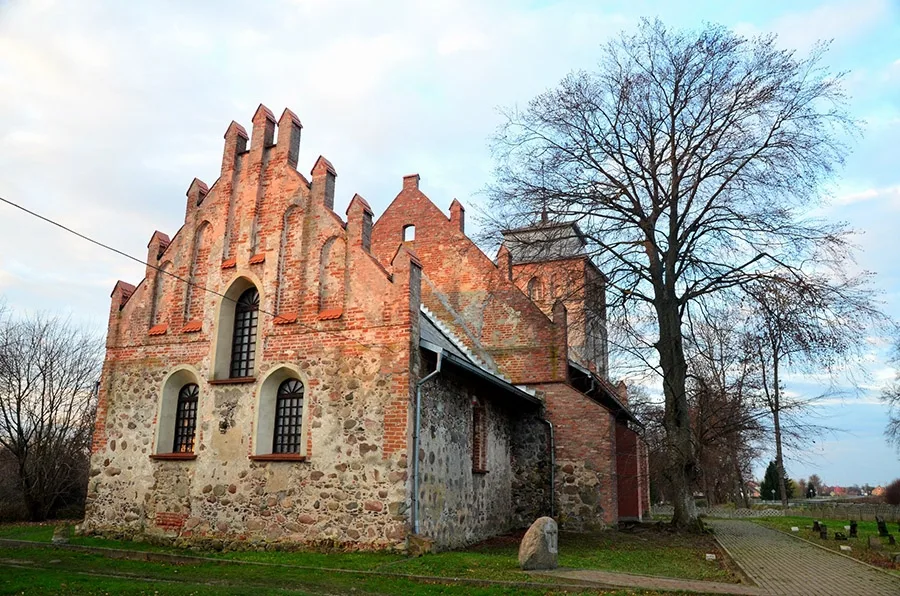
From 1996 to 1998 an appalling conservation job was carried out with German money. A year later the conserved buttresses and other parts of the church began to crumble. In 2004 conservation work was carried out once again on what had already been conserved.
In the 2020s a series of information boards in the church tower presented the history of Lutheranism.
Interior photo: Bildarchiv Ostpreußen, bildarchiv-ostpreussen.de. The two bottom photos: Egidijus Baranauskas.
Translated from Russian with the help of AI (Claude, Anthropic), October 2026.