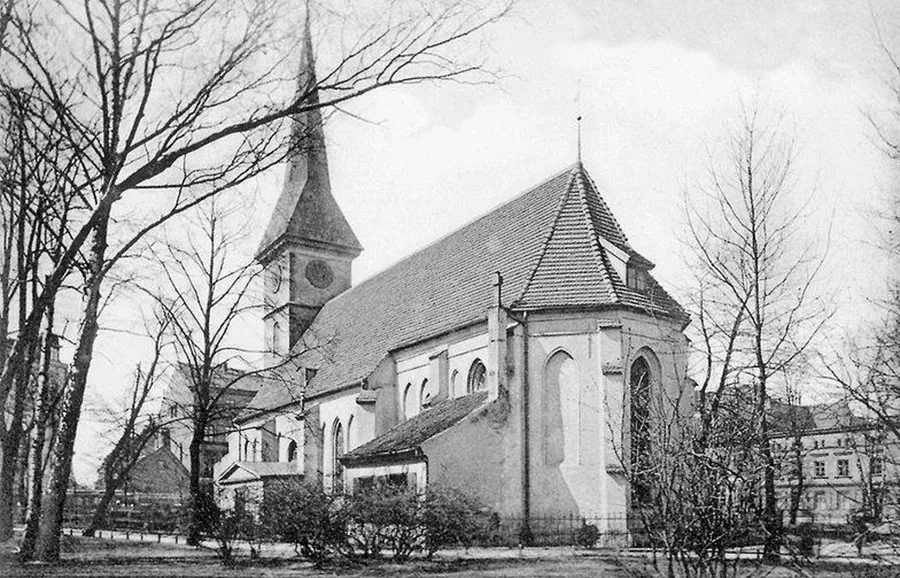
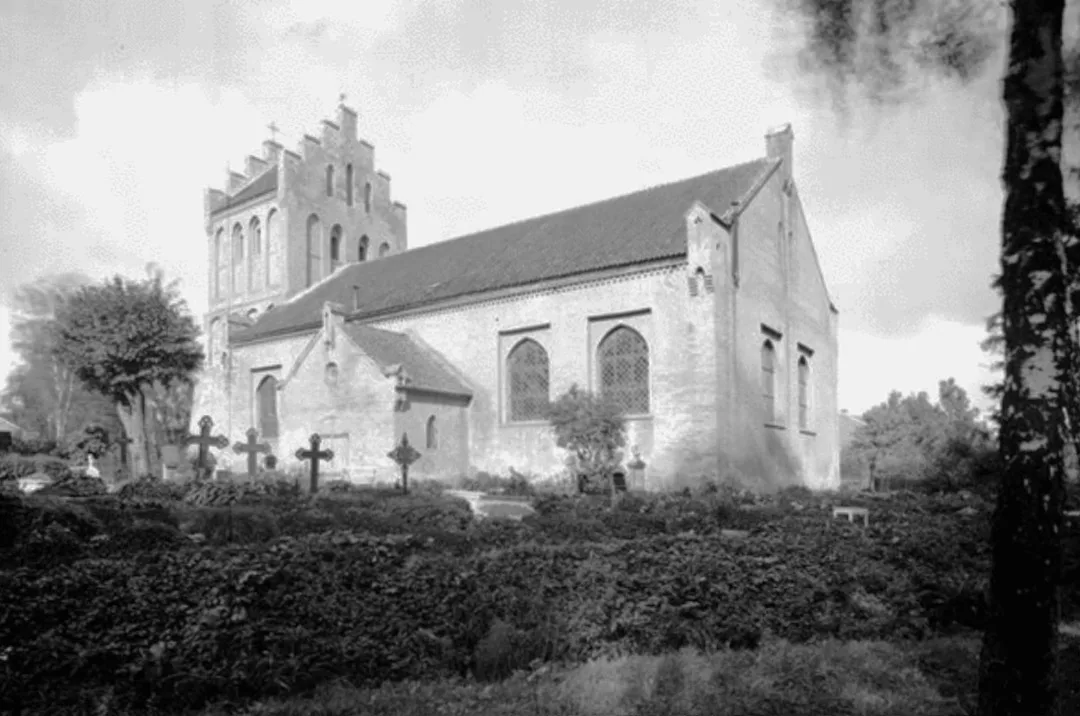
The Seligenfeld church had a single nave and was built of fieldstone and brick, with a tower on the west, which was entered through two doorways in pointed arches with three-quarter ribs; a similar doorway led from the tower into the nave. Its pastor is first mentioned in 1465 (according to other sources, the first pastor is mentioned in 1545).
By the 17th century the church had become badly dilapidated and was in danger of collapsing, so in 1693 it was completely rebuilt by Privy Councillor Kuper, owner of the estates of Awaiden and Speichersdorf (now the settlement of Yuzhny within the city limits of Kaliningrad). The nave and both annexes of the same period were of block masonry, with richly ornamented lancet windows set in tall rectangular blind windows. In 1780 four buttresses were added to the west side of the tower.
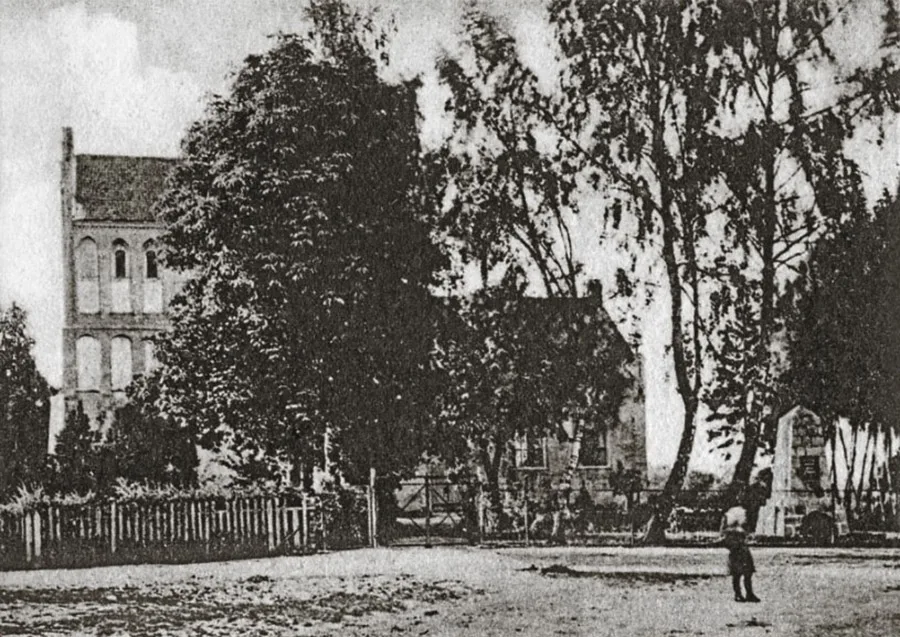
In 1845 the church was struck by lightning and burned down to its walls. It was soon restored in the Neo-Gothic style and consecrated on 8 August 1852. From then on the interior had a flat wooden ceiling on wooden columns.
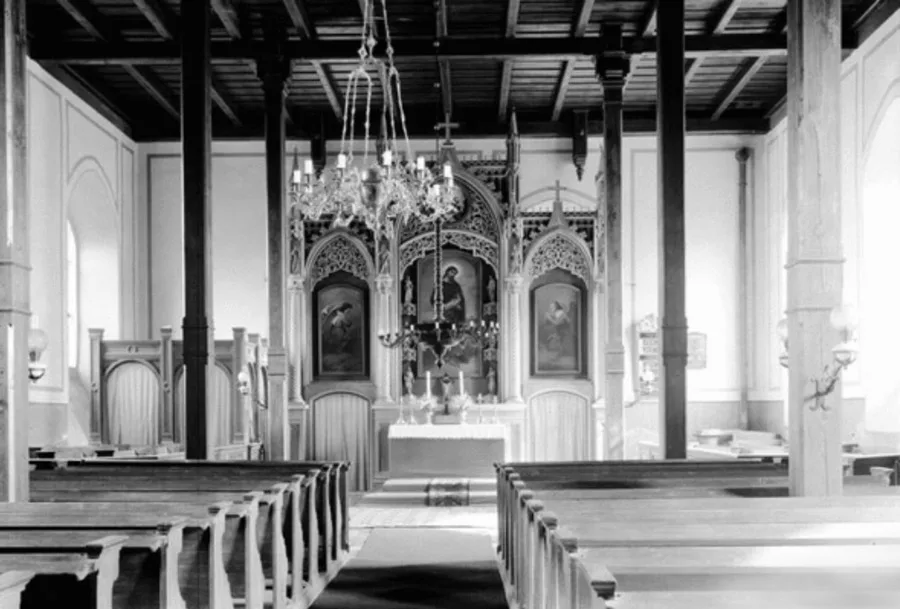
The pulpit, altar and baptismal table were made in the 1850s. A stone holy-water basin stood in the southern part of the tower. The altar plate was 17th-century, of silver gilt. A brass font of the 17th century. A silver font bearing the coat of arms of Constantia Charlotte Kuper dated from the 17th or early 18th century. The organ was new. The church had two bells.
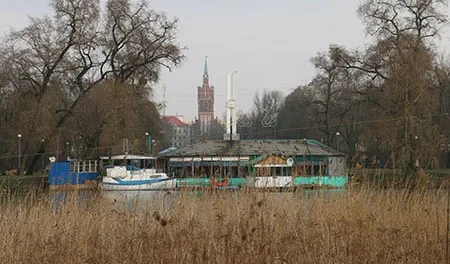
During the battles for Königsberg the church may have been damaged, since in the 1940s–1950s it was dismantled by the military for its bricks. Of the whole village no more than five or six houses remained.
Photos on this page: Bildarchiv Ostpreußen, bildarchiv-ostpreussen.de
Translated from Russian with the help of AI (Claude, Anthropic), October 2026.