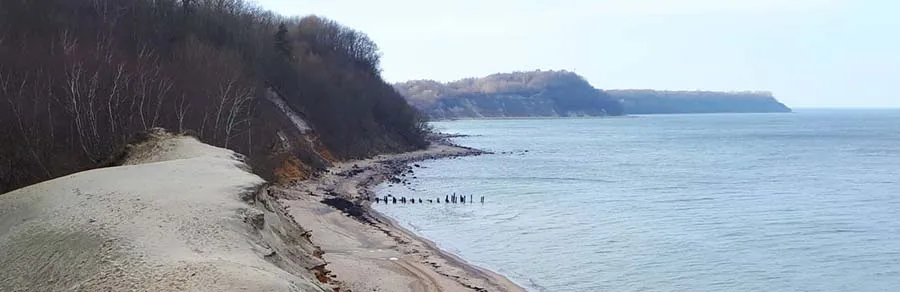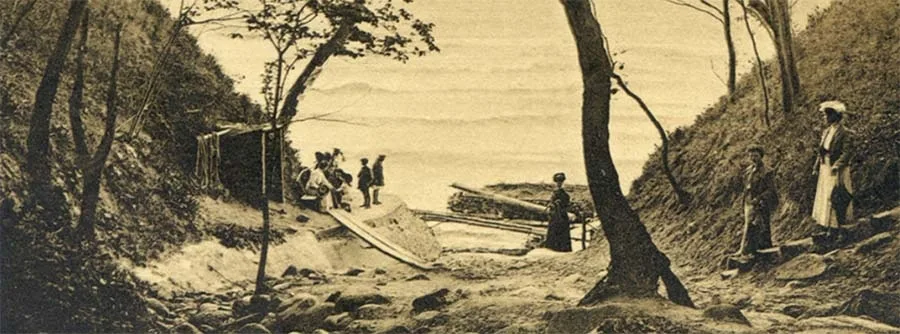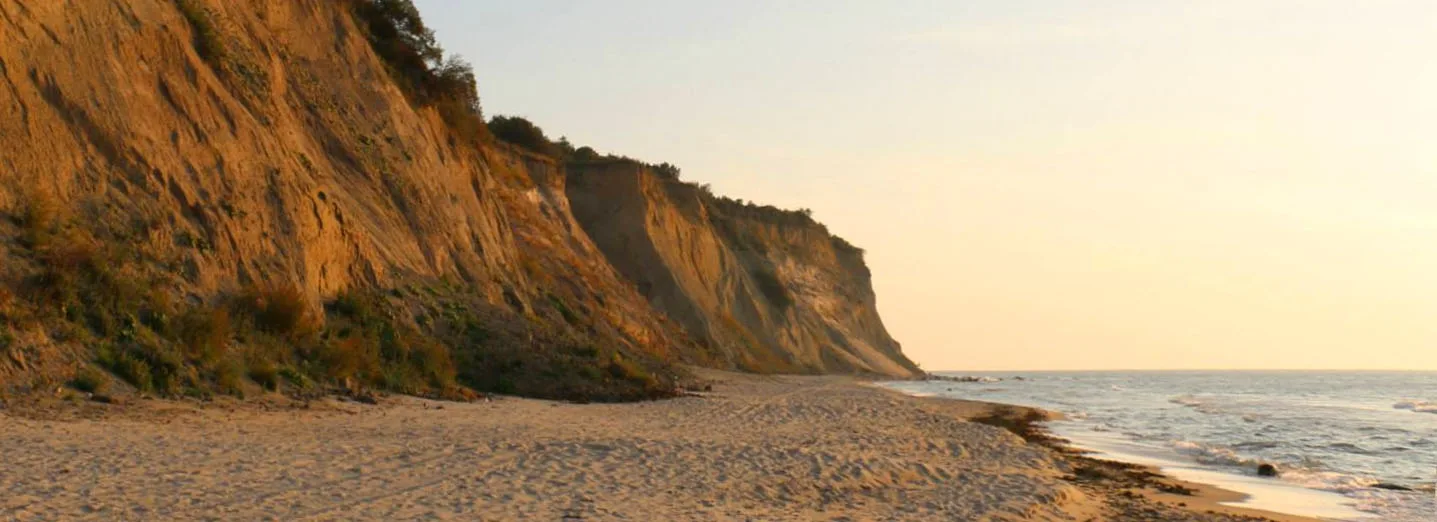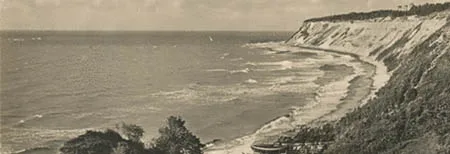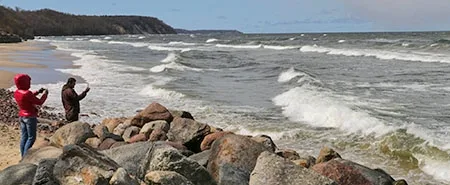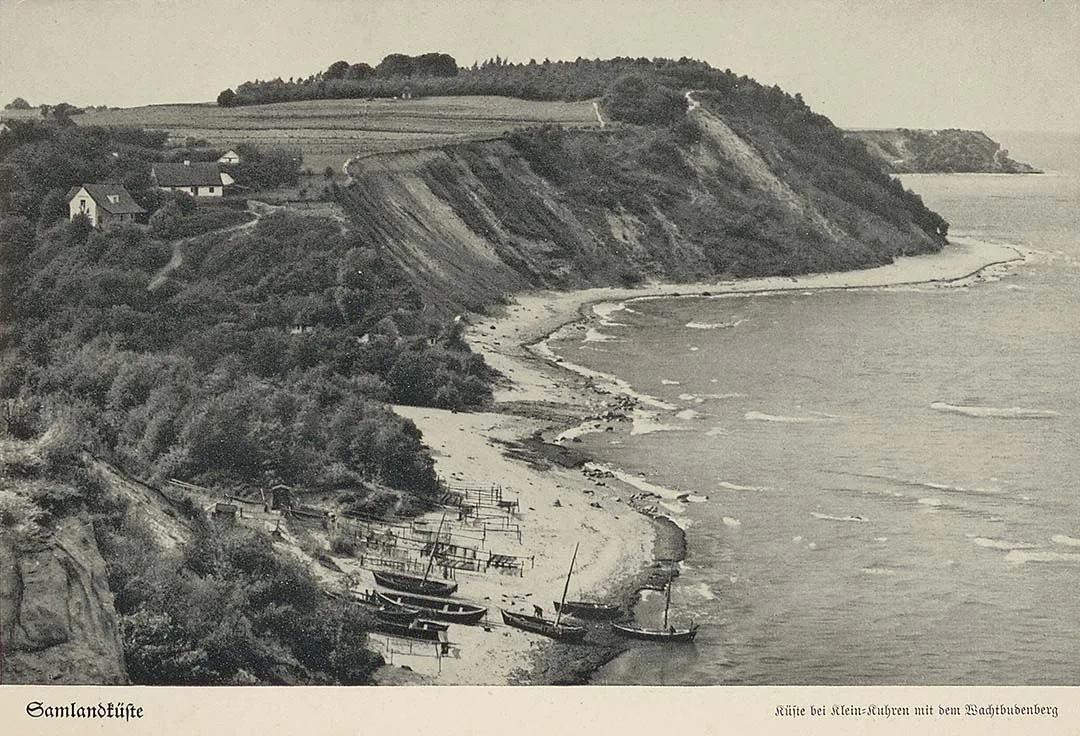
In 1785 Klein Kuhren appears as a royal village (Königliches Dorf) with 12 households. By 1818 the number of households had risen to 14, and the village itself is referred to as a "peasant" village (Bauer-Dorf).
In the 19th century Klein Kuhren was a village which from 1818 formed a rural community in the Kreis Fischhausen (Primorsk; from 1939 part of the Landkreis Samland). The village belonged to the parish of Heiligenkreutz (Krasnotorovka). In 1871 the village of Klein Kuhren had 24 residential houses, in which 40 families lived. On 13 June 1874 the rural community of Klein Kuhren was included in the newly established Amtsbezirk Groß Dirschkeim (Donskoye). At the turn of the 20th century Klein Kuhren was a place where Sami lived. Artists and photographers often came here to capture the local landscapes and the life of the inhabitants.
On 30 September 1928 the abolished Gutsbezirk Finken (Molodogvardeyskoye), consisting of the Finken estate (Molodogvardeyskoye) and the Vorwerk Brüsterort (Mayak), became part of the Klein Kuhren community; however, as early as 28 November 1928 the Finken estate (Molodogvardeyskoye) and the Vorwerk Brüsterort (Mayak) passed to the rural community of Groß Dirschkeim (Donskoye).
The Finken estate was formed on 16 July 1857 through the merger of the noble Vorwerk Finken and the Finken mill.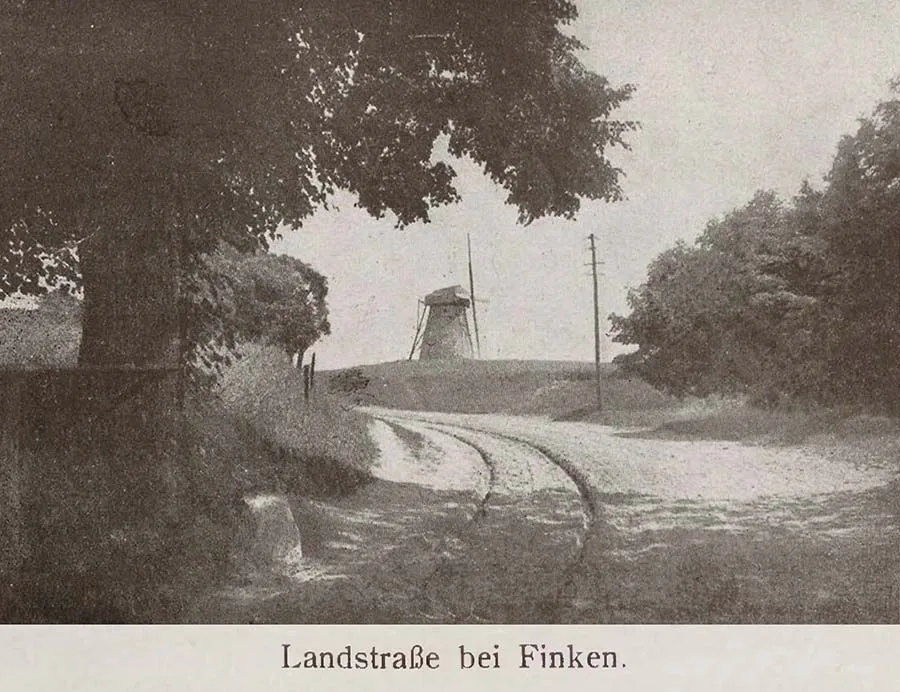
In 1875 Finken was classified as a royal Vorwerk with a mill (Königlich Vorwerk und Mühle), with three households. But as early as 1818 the Vorwerk Finken and the Finken mill are mentioned as two separate settlements, each with two households. Both localities were held in hereditary lease.
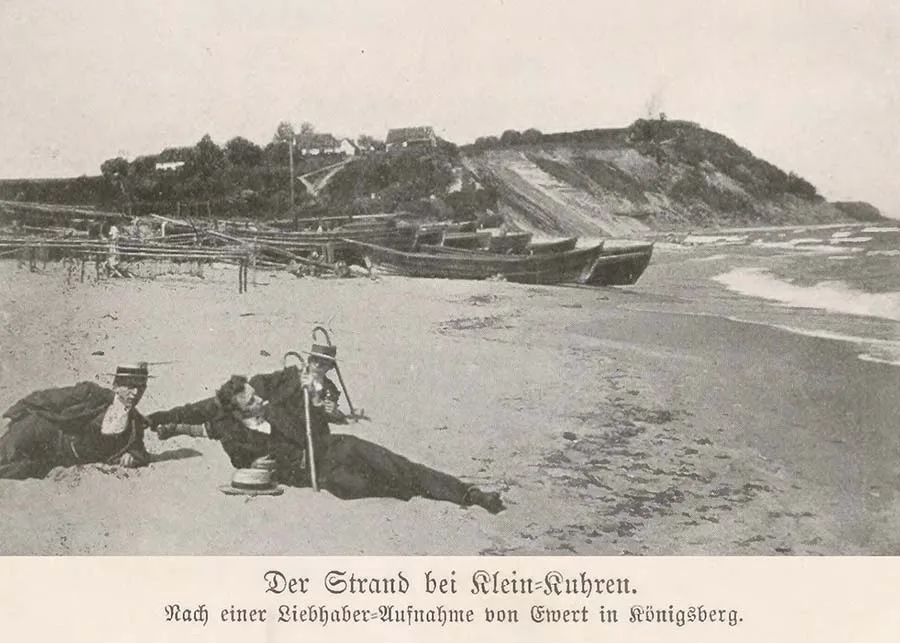
The new Finken estate belonged to the parish of Heiligenkreutz (Krasnotorovka). From 1867 the Finken estate formed a Gutsbezirk in the Kreis Fischhausen (Primorsk; from 1939 part of the Landkreis Samland). In 1871 Finken had five residential houses, in which 15 families lived. During the administrative reform of 1874 the status of the Finken estate remained undetermined for some time. On 13 June 1874 the Finken estate, with the rights of a Gutsbezirk, was included in the newly established Amtsbezirk Groß Dirschkeim (Donskoye) of the Kreis Fischhausen (merged into the Landkreis Samland in 1939). On 2 July 1896 the Gutsbezirk Finken, which also included the Vorwerk Brüsterort (Mayak), was officially created. At the end of the 19th century a windmill operated 0.5 km south-east of the estate. On 30 September 1928 the Gutsbezirk Finken was abolished and incorporated into the rural community of Klein Kuhren (Filino); however, as early as 28 November 1928 the Finken estate (Molodogvardeyskoye) and the Vorwerk Brüsterort (Mayak) passed to the rural community of Groß Dirschkeim (Donskoye).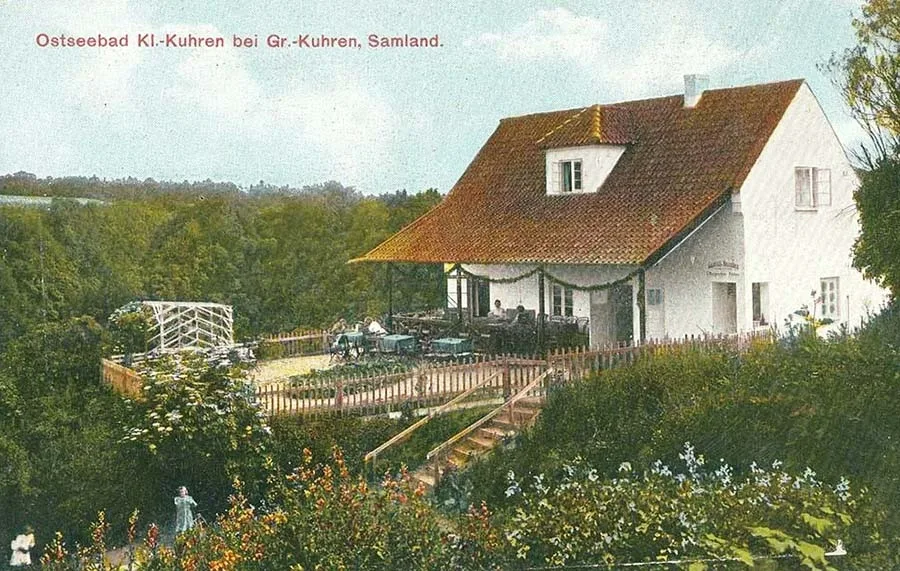
In 1936 the Groß Dirschkeim – Palmnicken (Donskoye – Yantarny) section of railway was completed; it passed through Finken, but no station was provided on it at the estate.
On 17 November 1947 Klein Kuhren was renamed the settlement of Filino. Initially Filino belonged to the Yantarny Village Council. On 5 July 1950 Finken was renamed the settlement of Molodogvardeyskoye and included in the Primorye Settlement Council. In practice, however, part of former Finken belonged to the territory of the settlement of Filino. In 1955 the settlement of Filino had 27 houses, while Molodogvardeyskoye then had three houses. From 1959 the settlement of Filino came under the Povarovka Village Council. In 1971 the Yantarny Bereg holiday centre of the USSR Ministry of Defence was built near Filino, consisting of 20 residential, administrative and technical buildings (abandoned as of 2018). In the 1990s part of the settlement of Molodogvardeyskoye (the former Finken estate) became part of Filino. At the end of the 1990s Filino had about 20 houses (not counting the buildings of the holiday centre). In 2010 the youth forum "Baltic Artek" was held near Filino for the first time. As of 2018 the settlement had 21 houses. In 2023 work began in Filino on setting up a children's holiday camp, which is still continuing (2024).
Sights: two railway bridges (the Northern and the Southern), an old watermill.
Population change: 1984 – 50, 2002 – 41, 2010 – 36, 2012 - 37 inhabitants.
Population change of the Klein Kuhren community: 1818 – 103, 1867 – 177, 1871 – 196, 1885 – 165, 1905 – 147, 1910 – 136, 1925 – 259, 1933 – 236, 1939 – 234 inhabitants.
Population change of the Finken Gutsbezirk: 1818 – 421, 1867 – 86, 1871 – 116, 1885 – 168, 1905 – 138, 1910 – 137 inhabitants.
Composition of the population of Klein Kuhren in 1871: all 196 Protestant Christians, children under 10 – 47, literate – 119 (80%).
Composition of the population of Finken in 1871: all 116 Protestant Christians, children under 10 – 39, literate – 69 (90%).
Translated from Russian with the help of AI (Claude, Anthropic), October 2026.