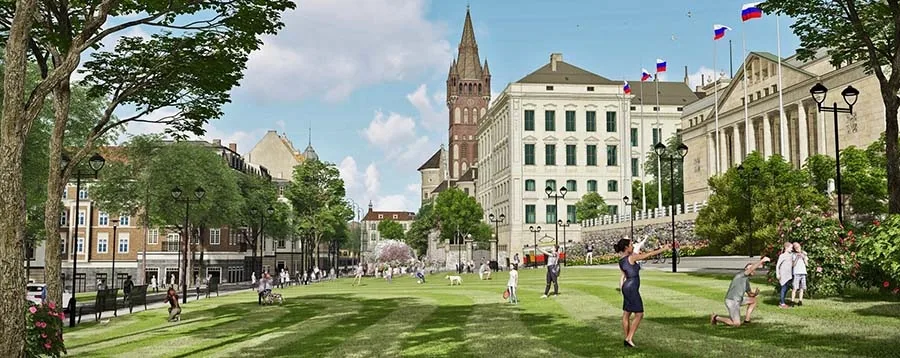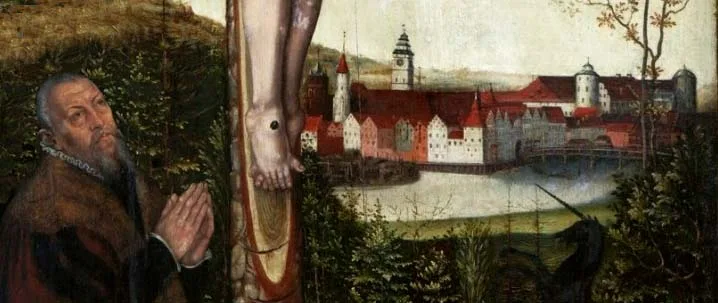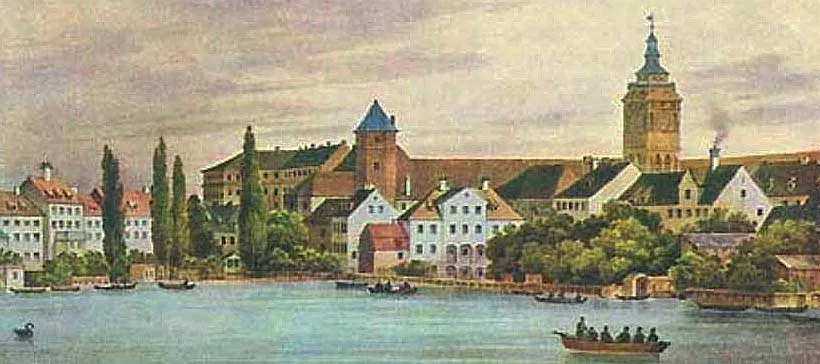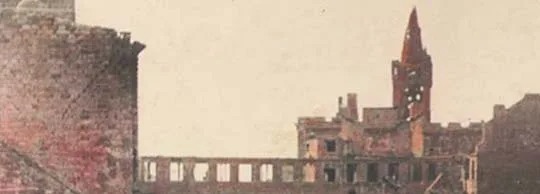
The Castle's familiar silhouette stands in stark contrast to the featureless wasteland that now occupies its site. Strangely enough, that wasteland is also a symbol: a symbol of a vast and fascinating period torn out of the city's history. Fortunately, there is at last hope that dividing history into the "proper" and the "undesirable" will remain in the past for good.
It is no accident that I write the word "Castle" with a capital letter. The Germans themselves did not call it the "Royal" Castle and only very rarely the "Königsberg" Castle. Maps, postcards, books and brochures simply said Das Schloβ, "the Castle", capitalised, as all nouns are in German. And when people in Königsberg said "the Castle", nobody asked which one. That, too, shows how much it meant to the city and its inhabitants.
What, then, is a "castle"?
We all remember from our school lessons on the Middle Ages that a castle was a fortress and the residence of a feudal lord. In fact, the role of a feudal (knightly) castle was much broader: it embodied and affirmed the lord's sovereignty. The political situation in Europe's feudal states and the state of military science at the time were such that, with mighty walls and a small but loyal garrison, a castle's owner could stand up not only to neighbouring knights but even to his overlord.
The defensive concept of a castle was that even after the besiegers had scaled the high, massive walls or broken through the gates and burst into the courtyard, they would still have to storm every tower, cellar and building, and, of course, the citadel (the donjon or Bergfried), expending considerable effort and losing men along the way.
Castles typically had successive lines of defence and allowed local pockets of resistance to be organised. Every staircase was designed to be easier to defend than to storm. Secret doors and passages made it possible to strike the enemy from behind, where he least expected it. Towers became isolated bastions, cellars turned into traps. It often happened that, having taken the walls and outer towers, the attackers got so bogged down besieging the inner buildings that they ran out of money to continue the fighting, and the mercenaries simply went home. That is why castles held out to the very last, hoping the siege would be lifted or help would arrive from outside.
Nor was it any easier to conduct a long siege in the hope that hunger would force the defenders to surrender at the besiegers' mercy. A castle's garrison was usually many times smaller than the enemy army, so while the defenders inside rationed their food and counted the days, outside the walls a huge army had not only to be fed but also housed in temporary quarters, protected by a ditch and a palisade against sorties, and kept in check so that soldiers worn out by the siege did not grow slack on watch or give themselves over to drinking and looting. If a siege dragged on into winter, there were the additional costs of heating the temporary buildings. Sieges were sometimes lifted not only because the treasury was exhausted but also because of epidemics, other wars, revolts, or even the death of the besieging army's commander. A knight's castle was thus a highly effective means of defence, allowing a much stronger enemy to be resisted at little cost in maintaining troops. This is precisely why castles became so widespread in medieval Europe. In France alone there were more than five thousand of them.
There is, however, a significant difference between a feudal castle and a castle of the Order, which is what the Castle in Königsberg was. First, a castle of the Order belonged to a corporation, which is essentially what a military order of knights was. War with the garrison of a neighbouring castle was therefore out of the question, which meant that castles could, and indeed should, be built so that one covered another during a siege. Second, from the very outset the castles in the Prussian lands were designed to face an enemy unversed in the subtleties of siege warfare. During its expansion into the Baltic region the Order was short of funds, and, given the technical and organisational weakness of the Prussians, its castles were built very rationally, without fortification frills or unjustified expense.
It should be noted that the need to build castles in the conquered territories was also stipulated by the rule of the Teutonic Order, under which the brethren could spend the night only in castles and nowhere else. This was intended to ensure that the brothers kept their monastic vows, above all the vow of celibacy.
This is why the network of the Order's castles and fortifications was planned around the average length of a day's ride for a heavily armed knight with his servants and foot soldiers, and the distance between neighbouring castles never exceeded 30 kilometres. The castles had everything the knight-monks needed for daily life: living quarters, a refectory (Remter), an infirmary (Firmarie), a latrine (Danzker), granaries and storehouses, stables and smithies. A well in the castle courtyard was an essential part of the water supply. The living quarters were heated by fireplaces and special stoves with channels in the walls and floors through which hot air circulated. Most castles were built beside a stream, which was dammed to create a castle pond. A mill was built on the dam, and in those days it was almost an obligatory feature of any castle.
On entering the Prussian lands, the knights of the Teutonic Order found that many of the sites best suited for building castles were already occupied by primitive Prussian timber-and-earth strongholds and sanctuaries. Without the slightest hesitation, the Order founded its own castles in their place, making use of the existing ditches and ramparts. One could even say that, as a rule, the knights of the Order did not build their castles from scratch. The two largest commandery* castles in our region, Balga and Königsberg, were no exception.
Speaking of the Order's castles as fortifications, it must be said that, unlike the great castles of Western Europe, they were far from perfect. In Italy or France medieval military engineers piled up whole layers of additional defensive lines and made skilful use of angled walls and towers projecting beyond the walls, so that bows and crossbows could pour flanking fire on an enemy entrenched beneath the castle walls; in Prussia, by contrast, the knights relied above all on natural obstacles, ditches, ramparts and high walls.
The key element in the defence of a castle of the Order was the Parcham, the area between the outer defensive wall (the Parcham wall) and the main wall of the castle. As the Order's military engineers conceived it, an enemy who had fought his way over the outer wall at considerable cost would find himself in an open space exposed to fire from the defenders on the fighting level (usually the second floor).
Stones and logs rained down from the walls onto the attackers' heads, and to finish the job heavily armed warriors would make a sortie and destroy what was left of the besieging force. It was here, in the Parcham, that the main action was meant to unfold, ending in the enemy's utter defeat. Such a simple plan of active defence presupposed that the attackers lacked sophisticated siege technology and that the knights were qualitatively superior in both offensive weapons and protective armour. As a result, castles that coped more or less adequately with Prussian raiding parties proved insufficiently protected when they had to defend themselves against Lithuanian or Polish armies.
From Otakar to the Marshal's castle
It is no secret that the founding of Königsberg Castle is linked with the name of the Bohemian king Otakar II Přemysl. The king himself, however, never saw the castle named in his honour. He was a very energetic man, and straight after giving the Teutonic Knights invaluable military help in subduing Sambia he went home, for he had plenty to do in Bohemia, not least fighting his headstrong barons and strengthening royal power. According to the chronicles, he did not take part in laying the foundations of Königsberg either: by the time the castle was founded, Otakar was already on his way back. Nevertheless, political relations between the Order and the Kingdom of Bohemia remained friendly from then on, right up to the Order's decline.
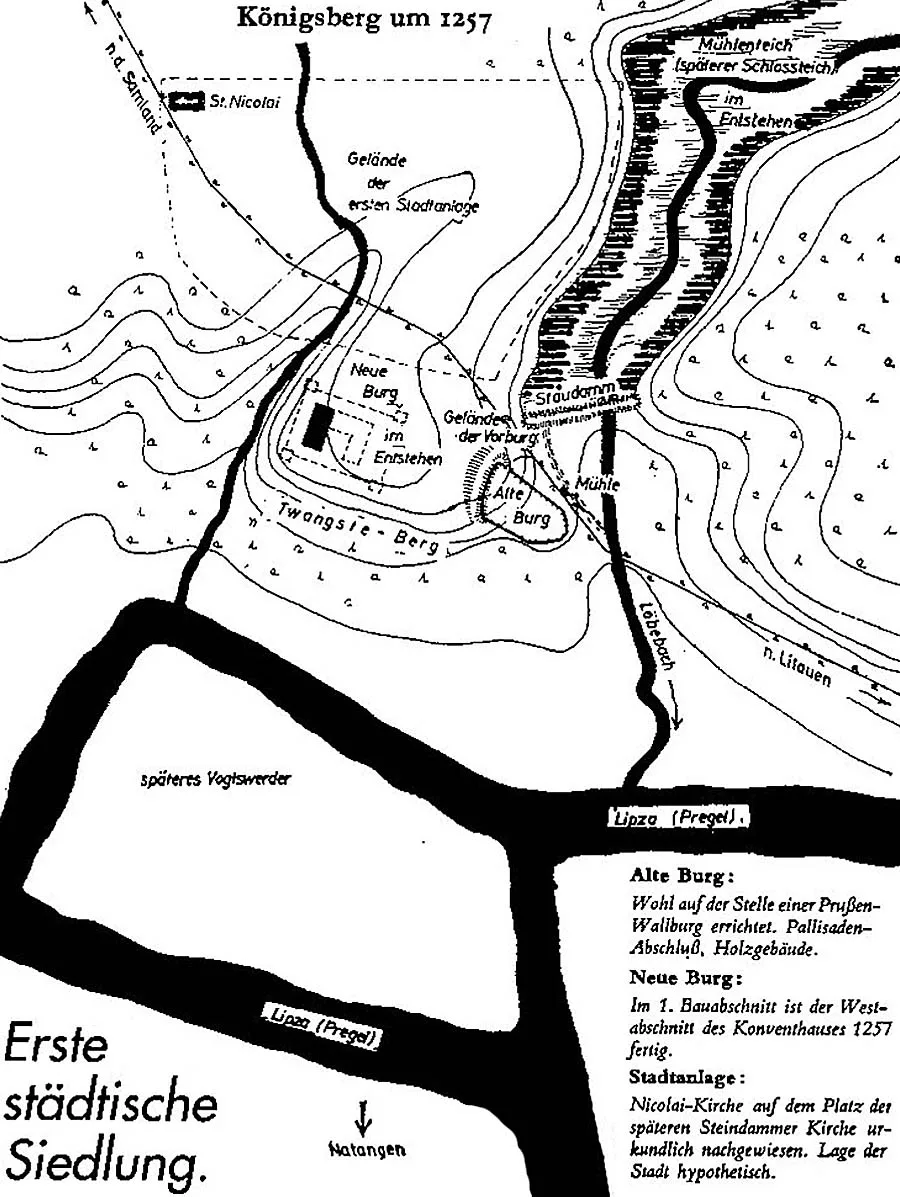
On the other hand, another participant in the Sambian campaigns, Burchard von Hornhausen, the first Komtur of Königsberg Castle, undoubtedly took a direct part in its founding. According to archaeological excavations carried out back in German times, the very first timber-and-earth fortification stood near today's House of Soviets and the footpath on the slope of the King's Hill that leads down to the Moskovsky supermarket.
But by 1257 construction had already begun on a stone castle on the very spot where it would stand for the next 700 years. Very early on, however, the building work was disrupted by an uprising of the local population that broke out in 1260. It was the second Prussian uprising since the Teutonic Knights had begun their conquest of Prussia.
To their surprise, the brethren of the Order discovered that over the years the Prussians had learned a great deal from them, notably how to organise a siege and use siege engines. The knights themselves called this uprising the "apostasy of the Prussians", because those who rose up were baptised Prussians, subjects of the Order's state, some of them even in its military service. This time the knights' castles, until then impregnable to them, fell one after another, all except Balga and Königsberg, which the Prussians stormed in vain and then besieged. The siege of Königsberg lasted two and a half years, and only the possibility of supplying the Castle with provisions along the Pregel allowed the garrison to hold out until military help arrived from the German princes. Immediately after the blockade was lifted in 1263, construction of the stone castle resumed, this time taking into account the lessons of the Prussian siege. The same happened at Balga Castle. Defence was no longer limited to building massive walls: almost every castle now had an outer fortification, the Vorburg. Measures were also taken to protect the territories already won from incursions from outside by building a defensive ring of small castles. The rivers Pregel, Deime and Alle (Lava) were brought under the control of castles. How effective these measures were is shown by the fact that, for as long as they retained any military significance, the castles of Königsberg and Balga were never once taken by an enemy.
Königsberg's highly advantageous geographical position raised it above the Order's other castles. By 1312, at a time when the Order was intensifying its pressure on Lithuania and the Lithuanian army was constantly launching raids in return, Königsberg had become the residence of the Marshal of the Teutonic Order, in effect its military capital.
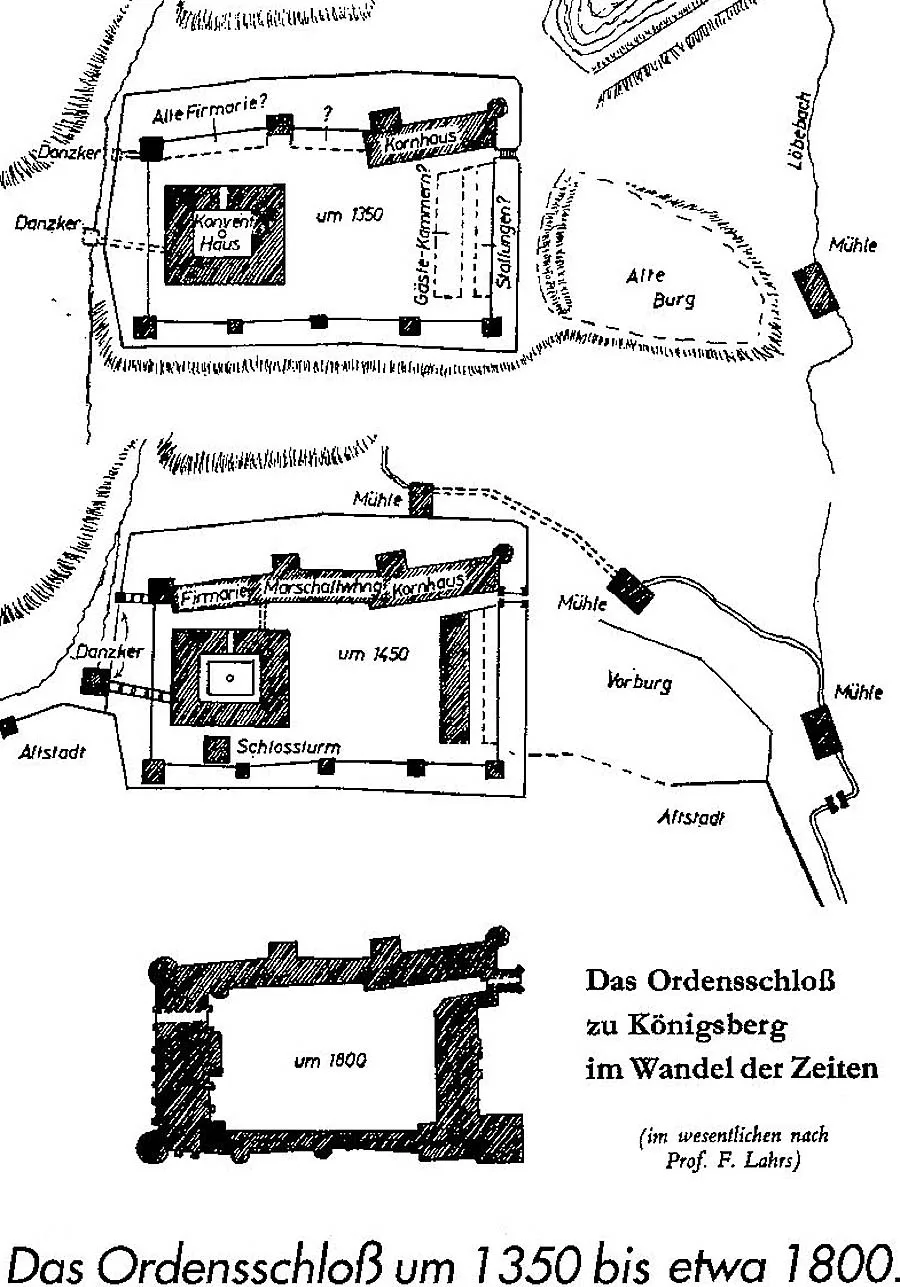
By this time the castle had been transformed accordingly: each of its four corners received a defensive tower, the most prominent of which was the octagonal Oat Tower (the "Haberturm"), which survived until the ruins of the Castle were finally demolished. Two intermediate towers were added on the north side and three on the south. All the towers projected beyond the walls, so that an enemy entrenched right beneath the wall could be caught in flanking fire. The towers were rectangular, since by the fortification canons of the day these were considered more effective than round ones. At the end of the 14th century the great castle tower so familiar to us from photographs was built. Because of its design, this tower was neither a donjon nor a bergfried; it was rather a watchtower, which also served as a bell tower and later housed the city's main clock. The Castle's dansker towers (latrines) rose on the western side, exactly where Leninsky Prospekt runs today.
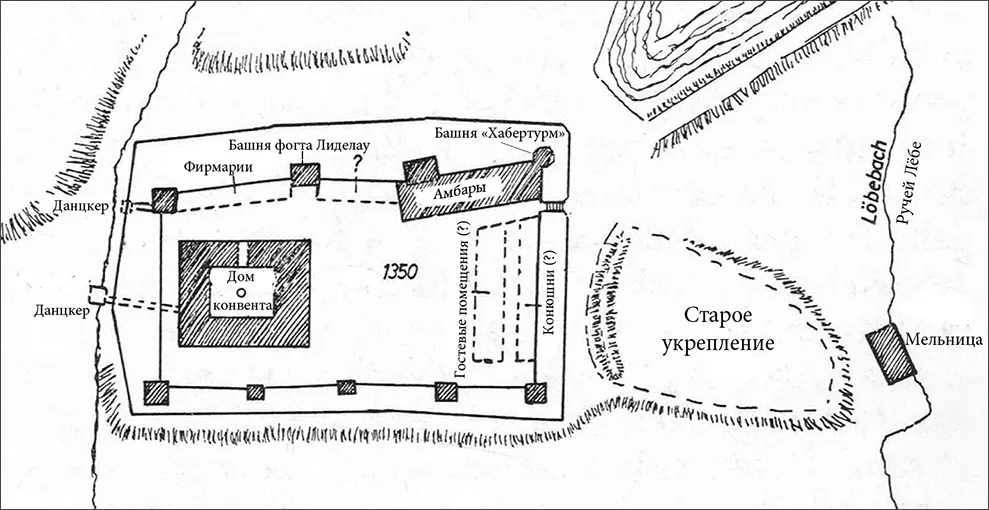 Plan of the Castle in 1350. Reconstruction from Friedrich Lahrs's book "Das Königsberger Schloss".
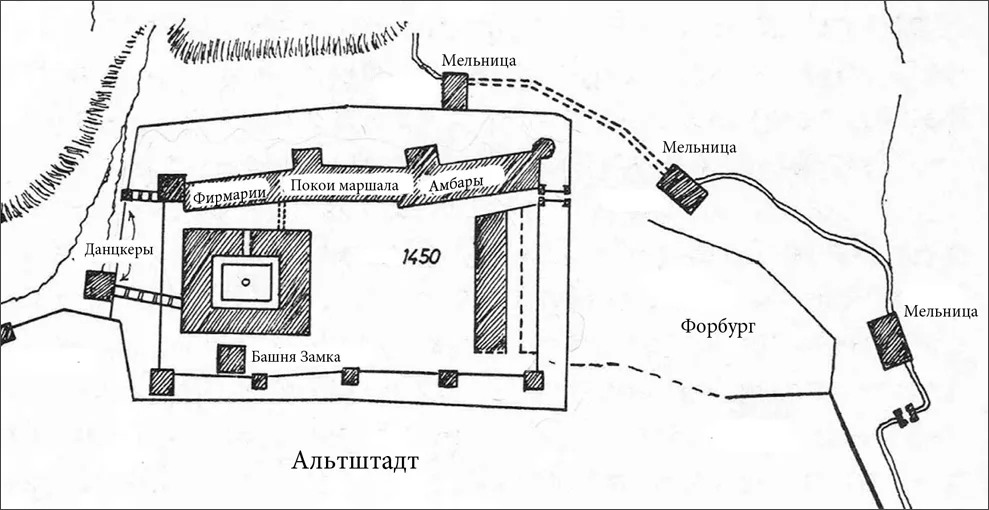 Plan of the Castle in 1450. Reconstruction from Friedrich Lahrs's book "Das Königsberger Schloss".
Back then, though, there was a moat on that spot. The Castle's principal building was the quadrangular convent house (the seat of the knights' chapter). Tellingly, the Castle reached the peak of its development as a fortification precisely during the Order's heyday. But other times were not far off. Firearms, which had made their appearance in Europe, swept from the pages of history not only knightly cavalry but castles as well.
The fortress becomes a residence, a monument, a museum
The very first use of siege artillery in Europe showed that the old forms of fortification, brick walls and towers, could not withstand this new branch of warfare. Stone and later cast-iron balls, fired methodically at point-blank range from so-called breaching batteries, shattered brickwork, smashed embrasures and broke the merlons of the parapets. The castles themselves were wholly unsuited to housing fortress guns: the towers were too cramped, the stairways narrow and awkward, and the wall-walks vulnerable to siege artillery. Earthen ramparts and bastions gradually began to replace castles, and only the inertia of military thinking still occasionally assigned the old stone strongholds the role of a citadel within a ring of bastions. In Prussia this moment came with the emergence of the secular duchy.
The many castles were listed as fortifications for the last time in the Treaty of Kraków, signed in 1525 by the newly created Duke Albrecht. It was Albrecht who began converting the Castle into a ruler's residence, albeit a fortified one, intended above all to protect against poorly armed rebels.
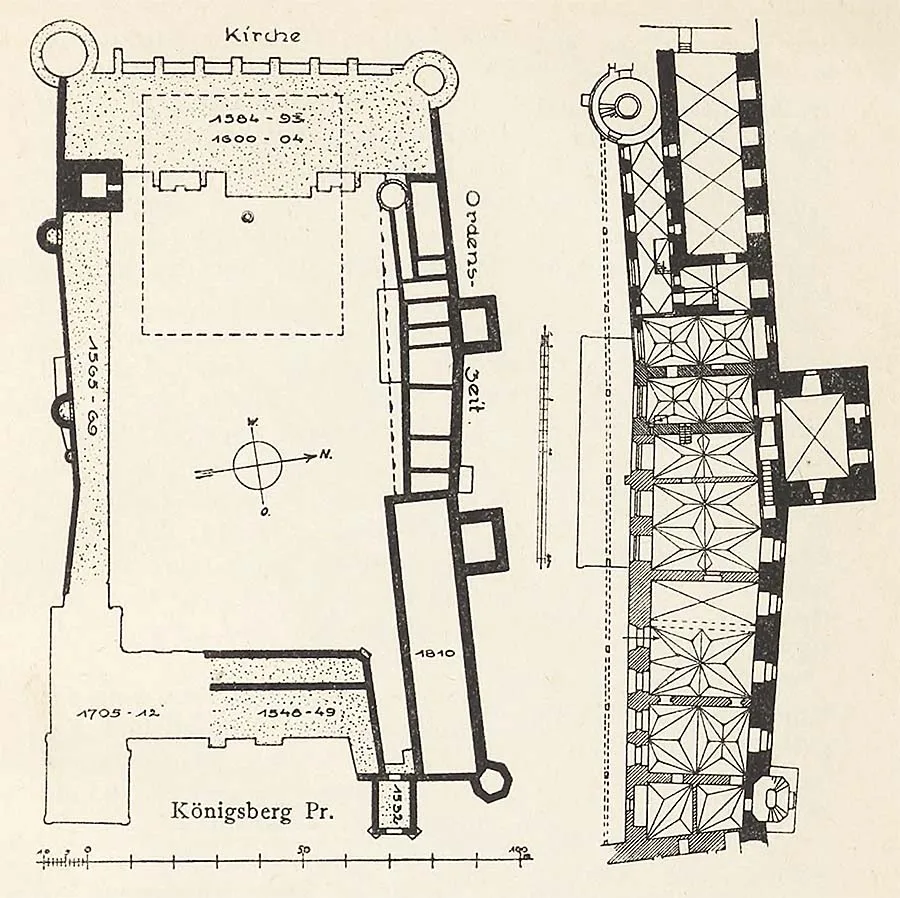
Under the first duke the south wing of the Castle was remodelled (by the architect Andreas Hesse), and the well-known structure designed by the architect Friedrich Nussdorfer was built above the east gate; it was simply called the "Albrechtsbau", the Albrecht building. The greatest changes to the Castle came under the regent Georg Friedrich in 1584–1594. He brought in the architect Blasius Berwart, who demolished what remained of the convent house and erected the west wing with its buttresses and two large round towers, familiar from countless photographs and drawings. The castle church was opened on the second floor of the west wing.
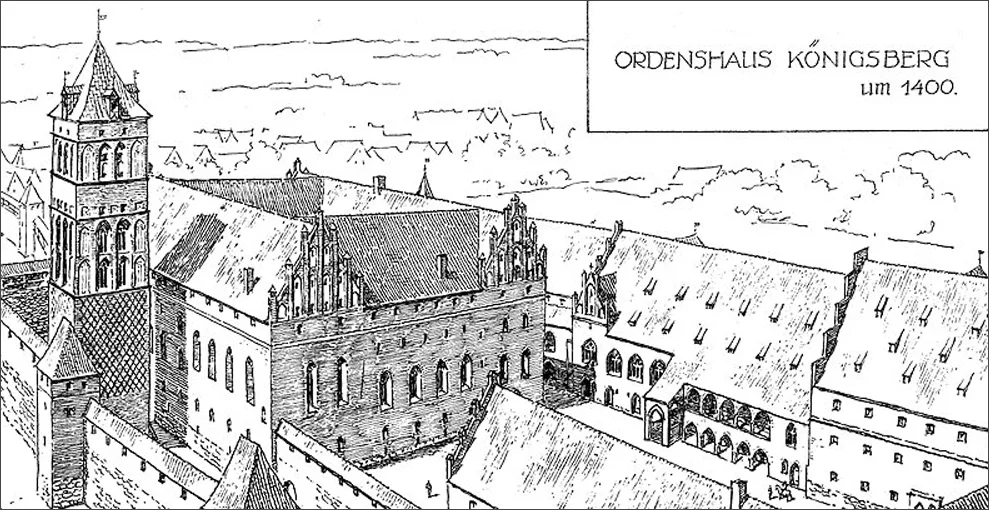 The year 1400. Drawing from Friedrich Lahrs's book "Das Königsberger Schloss".
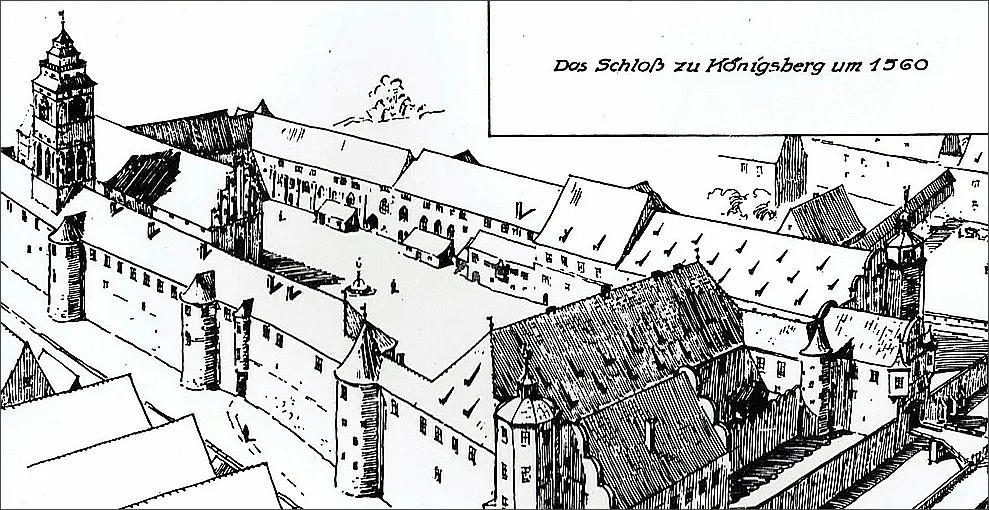 The year 1560. Drawing from Friedrich Lahrs's book "Das Königsberger Schloss".
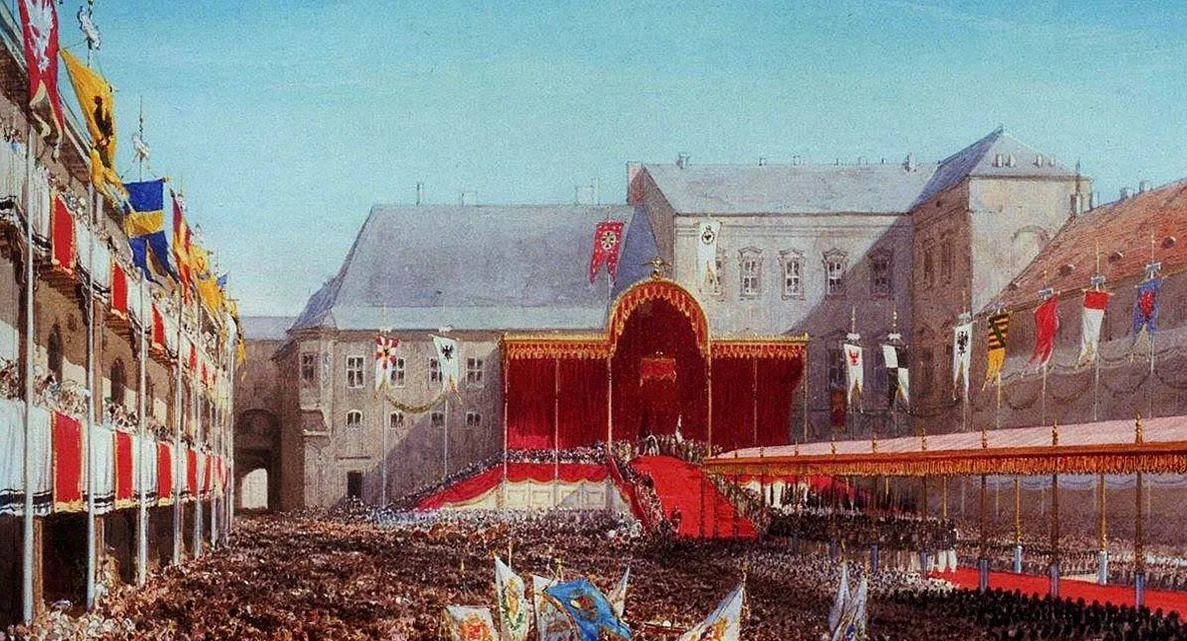
It was the first King in Prussia, Frederick I, who made the Castle a royal one. First, he was crowned there; second, he decreed that it should become his second residence. A plan to rebuild the east wing was drawn up by the architect Schultheiß von Unfried, but it was carried out only in small part. This is how the Baroque "Unfriedbau", the Unfried building, came to stand in the south-east of the Castle. Its construction was completed only during the Russian administration of Königsberg in the Seven Years' War. The last major building work at the Castle was carried out by the architect Schlüter, who in 1864 crowned the main castle tower with a neo-Gothic spire. After that, all changes were local in character: gables were altered, the railings of the retaining walls replaced, sculptures put up. The Castle had finally turned from a fortress into an architectural monument of many eras. In the 20th century its rooms were used mostly as museums, which occupied the entire south wing, part of the west wing and individual rooms in the east and north wings.
Above all, though, the Castle was Königsberg's chief landmark, its ceremonial façade, known and recognised not only by the townspeople but by millions of people all over the world. And, most importantly, it was the city's heart.
"Citadel" or "rotten tooth"
There is not and cannot be any justification for Hitler's fascism. It brought untold misery and suffering not only to the peoples of Europe and to our country, but also to the very society in which it was born, which nurtured it and which it used to establish its terrible ideology. Königsberg Castle is but a tiny grain of sand in the vast, devastating firestorm with which the Second World War, unleashed by Hitler, swept across our planet.
With the coming of the fascists, the Castle met the unenviable fate of serving as a venue for Nazi meetings and National Socialist propaganda exhibitions, and as a storehouse for cultural treasures looted by the Nazis. The crews of the RAF are unlikely to have given this any thought as they dropped incendiary bombs into the darkness of the Königsberg night, but it was this raid of 30 August 1944 that marked the beginning of the end for the Castle. The damage from the bombing was catastrophic: the fire that broke out in the Castle caused severe destruction to the south and east wings. In the north and west wings the roofs and upper floors burned out. A vast number of exhibits from the museums housed in the Castle were lost. The Amber Room, packed into crates in advance and hidden in the cellars, survived by a miracle, but many other treasures vanished forever in the flames. Yet these were far from the last trials that Königsberg Castle was to endure.
In the military documents of the 3rd Belorussian Front the Castle was often referred to as the "Citadel". This was by no means because the military command did not know that the castle had become obsolete as a fortification five centuries earlier.
Soviet propaganda of the time drew historical parallels between the “dog-knights” and Hitler’s invaders. These parallels were groundless from a historian’s point of view, but they made sense to soldiers who looked death in the eye every day.
Nazi propaganda, too, invoked the spirit of the long-departed knights from time to time. Without looking into the substance of historical events, one side made the Teutonic Knights a justification for its criminal plans, and the other had to overthrow those plans along with their symbol. Curiously, some members of the Nazi party leadership in Königsberg genuinely believed that the walls of the Castle offered serious protection against the weapons of the day. In his memoirs, Otto Lasch, the commandant of Königsberg, describes how Gauleiter Koch proposed hauling a gun up the Castle tower to fire on the Russians from there, and later called for the castle to be defended as the city’s last bastion. Neither plan came to anything. The gun simply could not be dragged up the tower, and the group of SS men and policemen defending the Castle tried to abandon it at the first reasonably heavy fire from Red Army units.
Although the Castle was never stormed as such, artillery fire and ground-attack aircraft left it in an even more deplorable state than the British bombing had. Only the old cellars of the Castle could be considered intact. The buildings above ground were reduced to roofless walls riddled with holes and breaches. Immediately after the war, the ruins of the castle were turned into a “quarry” where bricks were “mined” for rebuilding Soviet cities. Finally, in the 1960s, the question of the Castle’s future was put bluntly.
Legend has it that the matter was finally settled by Comrade Suslov, the chief ideologist of the Central Committee of the CPSU. On an official visit to Kaliningrad, he drove past the ruins of the castle and rebuked the local leadership: “Haven’t you pulled out this rotten tooth of fascism yet?!”
After that remark, the opinions of the city’s master plan officials, representatives of the USSR Ministry of Culture and Kaliningrad’s museum staff no longer counted for anything. The Castle was completely demolished by 1969, but its cellars remained accessible to the curious for several more years, until work began on laying out Central Square.
The Heart of the City
For almost 700 years, no one in Königsberg wondered where the city’s heart lay. The answer was obvious: the Castle, and only the Castle. People began to wonder somewhat later, when that heart had finally stopped beating. And it became clear that neither the former city hall (popularly known as the TsG, the Central Grocery, and later the seat of the city administration) nor the DS, the House of Soviets, begun but never finished, could measure up to being the heart of the city. The first is at best its head; the second, a large and ugly wart. Archaeologists have dug up a fragment of the city’s stilled heart, but that has not made it beat again. Must the city go on living without a heart, or will we find the courage to admit that it simply cannot have a better Heart than one that unites History, Culture and Art? I think the answer to that question is not as far off as it sometimes seems.
____________
* A Komturei (commandery) was the smallest administrative unit of the Order. By 1300 the Teutonic Order had some 300 commanderies spread across Europe, from Sicily to the Baltic. As a rule, a commandery consisted of a single castle and the lands immediately surrounding it. Each commandery was headed by a Komtur. The smallest and poorest commanderies could field only a dozen or so armed men, the largest and most powerful more than a thousand.
Translated from Russian with the help of AI (Claude, Anthropic), October 2026.