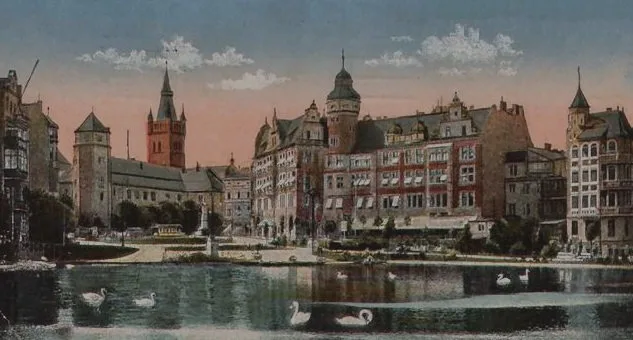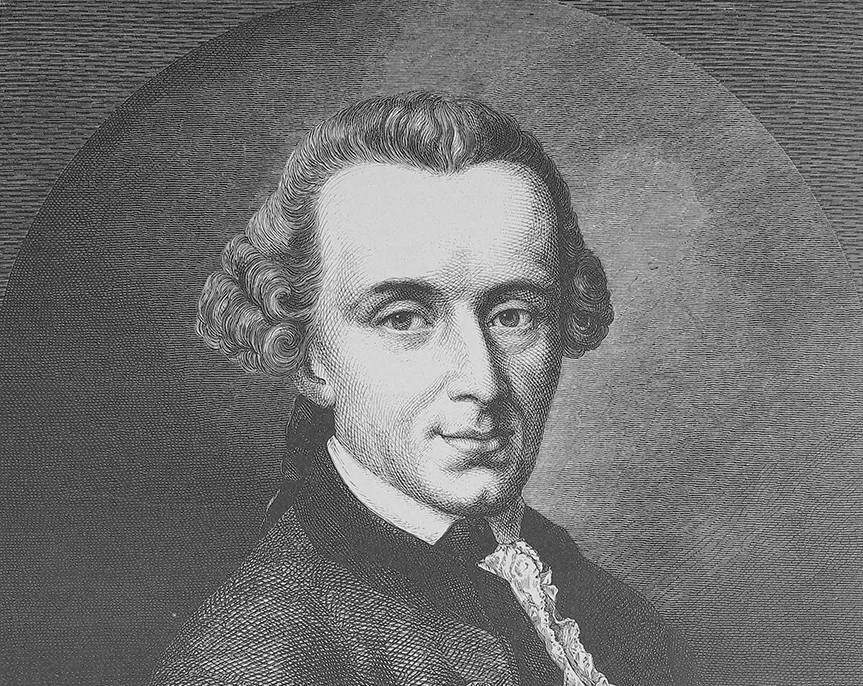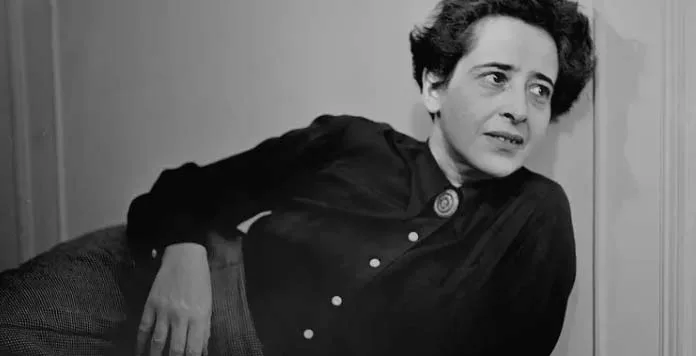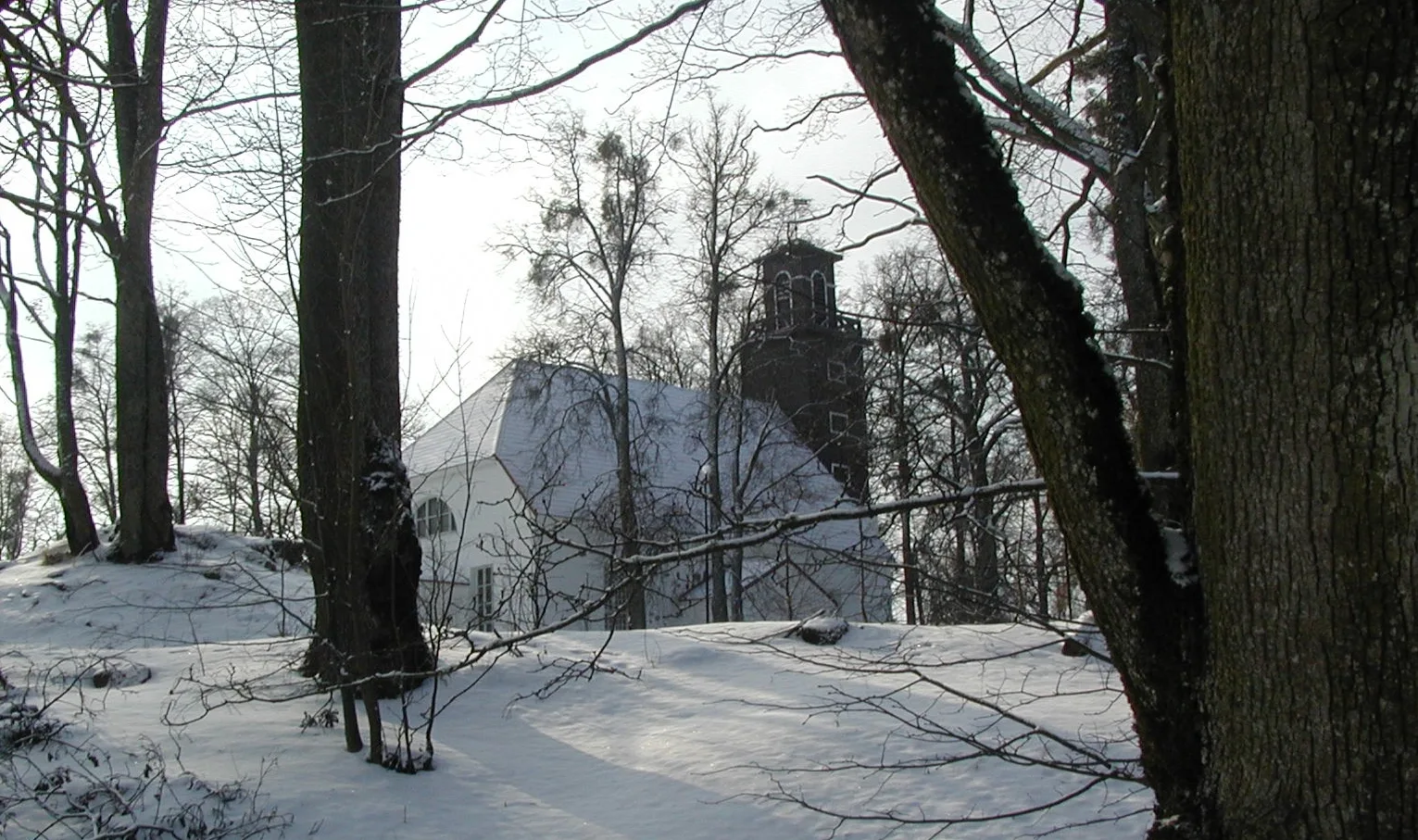
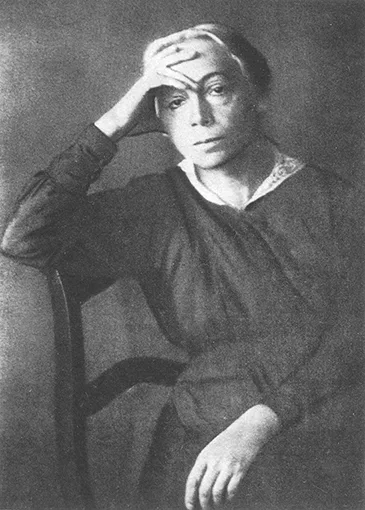
Käthe was born on 8 July 1867 in Königsberg, the fifth child in the family. Her father, Karl Schmidt, had received an excellent legal education but, to everyone's surprise, chose to become a builder. This radical change of outlook was prompted by his marriage to Katharina, daughter of Julius Rupp, a theologian, historian and philosopher of some renown in Königsberg. In 1842 Rupp was appointed a military chaplain and soon became a well-known preacher. In 1844, however, he was stripped of his office for his progressive views. More than once Rupp was fined and even imprisoned. Naturally, the atmosphere in which Käthe grew up shaped her world view. Later she regretted that she had not listened attentively to her grandfather's sermons and that, unlike her brother Konrad, she had never asked him to explain what she did not understand.
Childhood
Käthe had only a vague memory of the room where she drew, but a far clearer one of the gardens and yards where she played with her friends, the little front garden and the big yard that ran right down to the Pregel, the footbridges for rinsing laundry… From the middle yard a path led past the house to Weidendamm street. "The carts and horses my father kept in those days… The bricks that barges brought into our yard and that were then taken by cart to the building site…
Slowly they dragged along one after another, dusty and creaking — wretched nags, clumsy carters." That is how the streets of Königsberg looked to the impressionable girl.
As a child she was constantly tormented by sudden fits — now of stubbornness, now of sadness — which gave way to groundless fear and then to wild howling that frightened the whole family. Her emotional unease was made worse when the family moved from Weidendamm (now Oktyabrskaya Street) to Königstraße (now Frunze Street), into one of the houses her father had built: "In this house my mother, in great suffering, gave birth to her last, beloved child, who at my father's wish was named Benjamin. The boy lived only a year and died, like the first two, of meningitis."
The nine-year-old Käthe took her little brother's death very hard. Her fears grew stronger. She was afraid that her father, her mother and she herself would die. The Schmidt family decided to move again — to Prinzenstraße (now Lazaretnaya Street). Karl gave up building and began preaching in the Free Congregation. The years that followed were even harder for Käthe. She began to have nightmares that greatly worried her parents. She describes one of them in her diary: "In the corner of the nursery lies a big coiled ship's hawser. It begins to stretch, to uncoil and silently to fill the whole room. I want to call my mother and cannot. The grey rope fills everything… That state of objectless fear stayed with me for many years…"
"Talent Obliges"
Grandfather Julius was fond of repeating these words. All the Schmidt children loved to draw. But not all of them drew the way Käthe did. Her father noticed almost at once that his daughter had a gift for drawing and was very keen to "make" an artist of her. He supposed that love would not get in the way of serious creative work for the not particularly attractive Käthe. In 1881 he found her first teacher, the copper engraver Rudolf Mauer, and then moved her to Emil Neide, a monumental painter who taught at the Königsberg Academy of Arts. Since the academy did not admit girls, she had to make do with private lessons.
While Käthe Schmidt could draw from morning till night, things at school were, to put it mildly, not going well: "The headmistress was a consumptive lady, and the teachers were not distinguished by any outstanding qualities." The only lessons the girl enjoyed were history and literature.
After lessons, in the evening hours, Käthe and her sister Lisa loved to wander about the town. The one place their parents forbade them to go was the disreputable Königsgarten. But their route did not always allow them to avoid it. Every day the girls discovered something new: new corners and little streets of Königsberg. They strolled through the Königsgarten with a paper bag of cherries or plums in their hands. "What attracted us most were the streets leading to the harbour, the busiest district of the trading city. We rested in the meadows on the bank of the Pregel and then went back to the port… And how fascinating it was to stand on a bridge over the Pregel when it was raised to let tall ships through," Käthe writes in her diary. "…Again we stand and watch the stevedores, the loading and unloading of the ships… On the decks were the stevedores, in sheepskin coats, their legs wrapped in rags. Russians or Lithuanians, these good-natured people were… And if for a long time my later work drew solely on the life of working people, our wanderings through the cramped working-class districts of the trading city had much to do with it."
Kollwitz later deeply regretted that she had not been able to stay in Königsberg until she had exhausted all the rich material that could have been used.
Käthe's other passion was reading. She adored Goethe. In the evenings the family read aloud, and the house often rang with the poems of Ferdinand Freiligrath, a participant in the revolution of 1848. His poetry gave Käthe material for her art — at 16 she illustrated his poem "The Emigrants". This was young Schmidt's first serious work, and in 1885, at her father's wish, she laid it before her next teacher, Stauffer-Bern, a well-known Swiss artist and great master of engraving who taught in Berlin.
Her Own Path
To find out whether studying at the women's art school would bear fruit, her father let his daughter go to the capital for just one year. Käthe was at her best in drawing. Her teachers said she handled the human body with a freedom that betrayed a mature artist. Painting, on the other hand, did not come to her. Her teacher Stauffer-Bern, who realised at once that colour was a struggle for her, found the key to the talent of the "impetuous girl from Königsberg".
The trial year came to an end. Käthe returned to Königsberg and became engaged to her brother's friend Karl Kollwitz. Her father, seeing a threat to his plans for his daughter, sent her to Munich, where revolutionary life was in full swing. The students were enthusiastic about the work of Émile Zola. The subject of the novel "Germinal" captivated the young woman, and she took it for her own composition of the same name: "For the first time I felt confirmed in my path; great prospects opened up before my imagination, and the night was sleepless with a premonition of happiness… I knew my path now…" So was born the great German artist Käthe Kollwitz.
To Berlin, and Marriage
Soon she had to leave Munich too. Käthe returned once more to Königsberg. During her travels her fiancé had qualified as a doctor and was practising in Berlin. On 13 June 1891 Käthe Schmidt at last became Karl's wife and moved to the capital to join him. The young couple rented a flat at Weißenburger Straße 25. Here Käthe Kollwitz's dream came true as well: she now had her own studio, right next to her husband's surgery. The artist took up etching. But her work was interrupted by the birth of her first child, a son named Hans. Four years later, in 1896, a second son, Peter, was born.
Between the births came exhibitions. She was first introduced to the wider public of the capital by the critic Julius Elias.
Inspired by Hauptmann's play, the young artist was already working on "The Weavers". The work went on for almost five years. Six sheets, six compositions. Each title was short, a single word: "Poverty", "Hunger", "Conspiracy", "March", "Storming", "End". The well-deserved Gold Medal for this series, however, did not come to Kollwitz at once — the king was against it.
In 1902 Kollwitz began work on "The Peasants' War". While working on the cycle she received from the artist Max Klinger the Villa Romana Prize, which allowed gifted people to live and work free of charge in his house in Florence for a whole year. Hans Kollwitz, the artist's son, writes of this journey in his memoirs: "…together with her friend Mrs Stan Harding-Krayl she travelled on foot to Rome through the villages of the Apennines and the deserted Maremma — two women, unaccompanied… Inspired by these wanderings, during the holidays of the following year they made a journey through Thuringia and Franconia. And a year later still, through East Prussia and the Curonian Spit."
From 1909 the subject matter of Käthe Kollwitz's work began to change. She turned more often to the theme of mother and child, and then to the present day. In 1909–1912 came the etchings "Run Over", "Mother with Child in Her Arms" and "Mother – Child – Death". Like a premonition… At the same time Kollwitz made one of her finest self-portraits. And the last one in which she is smiling.
The First World War
The sons were growing up. The elder, Hans, went to Freiberg to study medicine; Peter unexpectedly felt drawn to painting and dreamed of studying… But on 1 August 1914 all their plans collapsed.
A farewell evening. Käthe would never see her son again. On 12 October the regiment in which Peter served was sent to the front. On the night of 22–23 October he was killed.
On 27 August 1916 Kollwitz wrote in her diary: "My irrepressibly contradictory attitude to the war… Where does it come from? From Peter's sacrificial death. … And now the war has gone on for two years, and five million young men have been killed… Is there anything that can justify this?.. Seed corn must not be ground."
In 1919 Käthe Kollwitz became the first woman member of the Prussian Academy of Arts.
The artist worked hard, trying to work through the grief of her loss. After Peter's death she took on a task unlike anything she had done before — a memorial to her son. She wrote: "It is a wonderful goal, and no one has a greater right to make such a memorial than I." But the work did not go well. Käthe could not find a model for the figure of the mother. The solution came unexpectedly: "…I remembered my self-portrait in plaster, which had been standing unopened in the studio for almost three-quarters of a year. I unwrapped it, and it was as if scales fell from my eyes: I saw that my own head could be put to good use…" Almost two decades passed from the first sketches to the completion of the memorial. Only in 1932 would it be installed in the cemetery at Roggevelde in Belgium.
Kollwitz drew herself very often. At least some 90 of her self-portraits are known. To realise her artistic ideas she usually drew on the features of her own face — stern, with sharply prominent cheekbones and a rather heavy chin.
In 1927 a long-cherished dream of Käthe's came true. She and her husband were invited to Moscow, where an exhibition of her work had been held earlier, for the solemn celebration of the tenth anniversary of the October Revolution. Symbolically, Käthe also celebrated her 60th birthday in Moscow. Ten days of happiness. Just months before Hitler's rule was established, she created a poster of workers' solidarity — "We Protect the Soviet Union!" Later the communist greetings and the eulogies in the Soviet press, as well as her own sympathies for the USSR and her public statements, only by a miracle did not land the artist in a concentration camp. Interrogations by the Gestapo, naturally, she did not escape.
On the Eve…
1932. An entry in Kollwitz's diary: "The beginning of the Third Reich… Total dictatorship… Arrests and searches." After an anti-fascist demonstration in Berlin, Käthe signed an appeal for the unity of the left. The consequences were not long in coming. On 15 February Professor Käthe Kollwitz and the German anti-fascist writer Heinrich Mann were asked to resign voluntarily from the Prussian Academy of Arts. In solidarity, the architecture councillor Martin Wagner joined them. Those close to Käthe suffered too: her husband lost his medical practice, and Hans was dismissed from his hospital.
In 1935 a large cycle of lithographs appeared — "Death". It was her last major work and amounted, in effect, to a farewell to art.
At that time in Germany, the assault on anything unconventional was carried out under the banner of the fight against "degenerate art", a label applied to everything that did not glorify the master race and its exploits. While branding "degenerate art", the Nazis were not shy about helping themselves to the works of the "degenerates": Göring, for example, appropriated 14 works confiscated from museums. Among them were 4 Van Goghs, 4 Munchs, 3 Marquets, 1 Gauguin, 1 Cézanne and 1 Signac. At one auction he later received 165,000 Reichsmarks for the paintings he sold…
This whole Munich bacchanalia took place in July 1937. Mentioning the name of the 70-year-old Kollwitz in newspapers and magazines was forbidden. The ban extended to her exhibitions as well. But she did not stop working.
After the "Night of the Long Knives" Käthe created a new work: "Only hands — four clasped hands, since any depiction of a human figure is not customary for gravestones in a Jewish cemetery."
In 1939 came another shock for people of the arts: in Berlin the Nazis burned more than a thousand paintings and nearly four thousand watercolours, drawings and graphic works, among them pre-war works by Otto Dix and well-known sheets by Käthe Kollwitz.
Fate did not bring her together with active fighters of the Resistance. Those who became close to her were people who opposed fascism quietly but stubbornly. Those who "stood with an open umbrella beneath Niagara", as the writer Hauptmann once put it.
Losses
They pursued Käthe Kollwitz one after another. People dear to her passed away. On 19 July 1940 her husband Karl died. On 22 October 1942 her grandson Peter was killed near Rzhev. One after another her contemporaries departed this world. The strength of this frail woman, worn out by grief, visibly waned, Hans Kollwitz writes in his memoirs, and helpless old age came upon her all at once. In 1943 Käthe was evacuated to Nordhausen and then, at the invitation of Prince Ernst Heinrich of Saxony, moved to Moritzburg, where she died on 22 April 1945. Her last words were "Greetings to all".
"She was the most inconvenient artist of an age of decorative art. Her art was a solitary protest against society's lies, but only a few young people today know what courage it took," Arnold Zweig wrote of her.
Sources:
Кэте Кольвиц. Дневники. Письма. Воспоминания современников.
Великие художники XX века. Бoгдaнoвa Г.Б.
Briefe der Freundschaft und Begegnungen. H.Kollwitz.
Кэте Кольвиц. Софья Пророкова (ЖЗЛ).
Sechzig Jahre Freundschaft mit Kaethe Kollwitz. B.Bonus.
Translated from Russian with the help of AI (Claude, Anthropic), October 2026.