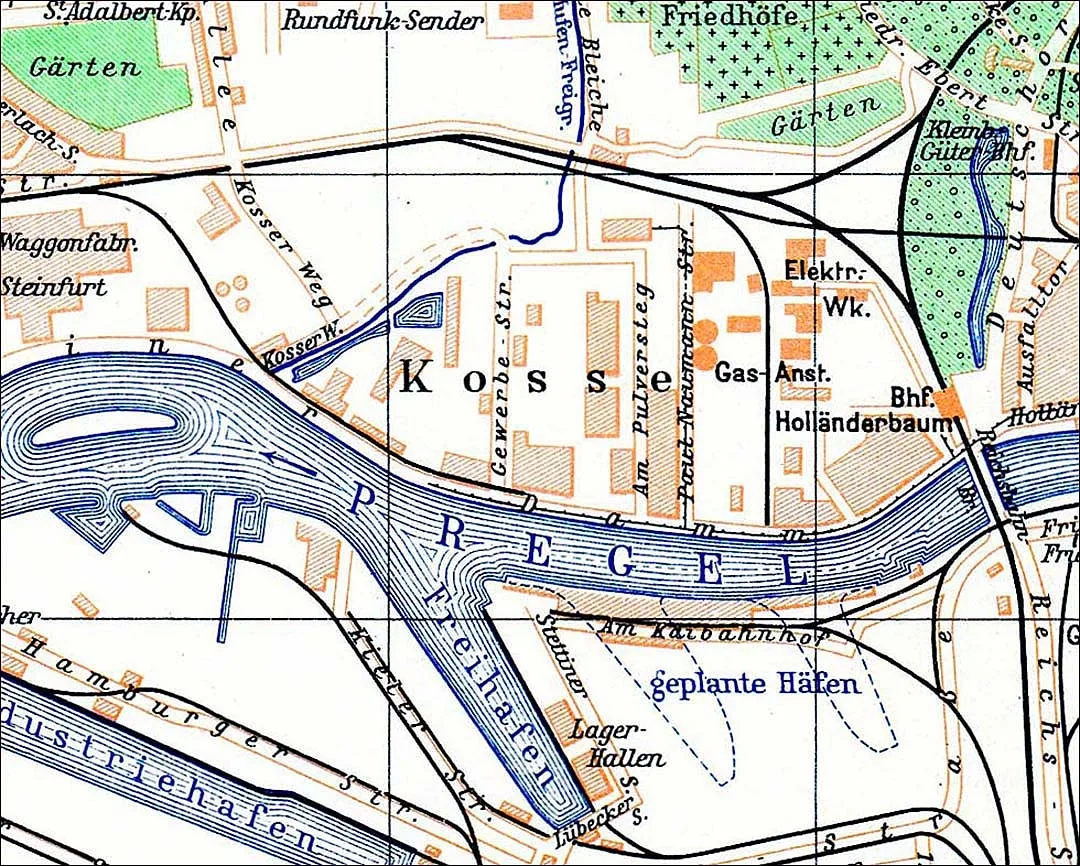
All that is known for certain is that from the days of the Order the village belonged to the town of Altstadt. Such villages were called Kammerdorf, or "treasury village", because they were administered by the town treasurer, the Kämmerer. Since the village lay on the road towards Fischhausen (Primorsk), an inn (Krug) was opened there, where travellers could stop, eat and find a bed for the night. The road along the Pregel was not particularly busy, so the innkeepers did not grow especially rich from it. In general, very little information has survived about what went on in the small village of Kosse right up to the 19th century.
One occasionally comes across the claim that Tsar Peter I spent the night at the Kosse inn in 1712. Detailed chronological records were kept at Peter's court of all the Tsar's movements and stopping places, but the name Kosse does not appear in them. The only record from 1712 of Peter and Catherine spending the night at an inn in Königsberg is dated 18.07.1712, but it does not give the name of the inn.
In 1804 it is noted that Kosse has only one inn.
In the 19th century inns near towns began to turn into something like entertainment complexes, with a restaurant, a hotel, music, promenades and other amusements. They came to be called Etablissements, a word pronounced in the French manner and meaning "establishment". The French influence is plain here: first during Napoleon's occupation of Prussia (1807–12), then the other way round, during the occupation of Paris by the Coalition troops (1814–18). Incidentally, the Russian habit of calling a restaurant an "establishment" (zavedeniye) surely has the same roots. Yet one should not imagine the Prussian "establishments" as dens of iniquity offering "18+" entertainment. On the contrary, such Etablissements were intended, among other things, for family outings.
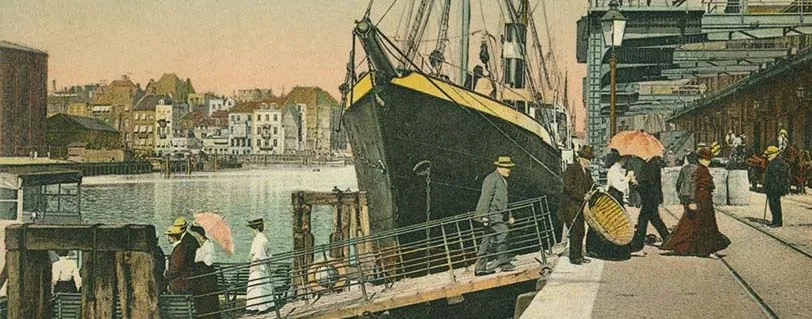
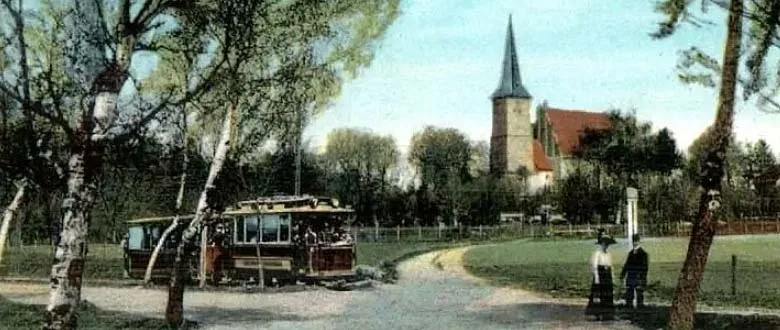
The tradition of whole families going out to the nearby suburbs of Königsberg arose with the development of railway travel, the most democratic form of transport of those years. In 1865 the Königsberg–Pillau (Baltiysk) railway was opened. The station nearest to Kosse was at Neue Bleiche (now the area of Velosipednaya Doroga Street). From there, arriving passengers could stroll down to the bank of the Pregel in 15 minutes along a path beside the Hufen-Freigraben stream (Parkovy Stream). Adults and children in their holiday best came to Kosse above all to walk along the picturesque riverbank, which offered a splendid view of the river and of Königsberg. Only afterwards might such walks in the fresh air end with lunch in a restaurant. Accounts of journeys to Königsberg from those years mention how the children in Kosse and Neue Bleiche waved their handkerchiefs at passing trains and steamers, which touched the travellers.
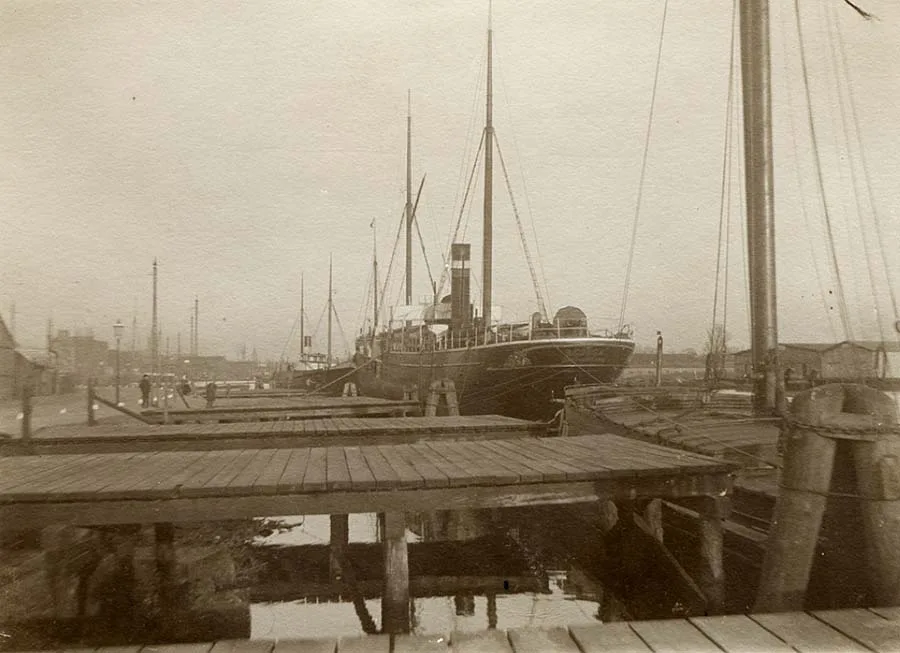 Moorings in Kosse.
In 1871 Kosse is mentioned in the gazetteer of villages and estates as a settlement of two farmsteads in the Landkreis of Königsberg, not belonging to any municipality or Gutsbezirk. Nine families lived in Kosse. The settlement belonged to the parish of the Altstadt Church in Königsberg (Altstädtische Kirche).
As of 1905, a fuel depot (Petroleum-Magazin) and a roller mill (Walzmühle) belonged administratively to Kosse. In those years certain enterprises were treated as settlements, which is why population figures are given for these sites: in 1905, 36 people each lived at the fuel depot and at the roller mill.
On 01.04.1905 Kosse, along with other suburban territories, was incorporated into the municipality of Königsberg. Contemporaries write, to translate literally, that this was when the "Kosse idyll" came to an end, but in fact it had ended a little earlier, when the Königsberg industrialists arrived in Kosse. It was then that a new urban district of Kosse began to take shape (as yet unofficially), starting at the Holländerbaum Gate (Holländerbaum-Tor; today the northern end of the Double-Deck Bridge). It was bounded on the south by the Pregel, on the north by the Pillau railway, and on the west by Kosser Weg (the beginning of Kashtanovaya Alleya). A few enterprises had existed on this territory before: the fuel depot and roller mill mentioned above, and an old powder store (magazine) known since the 19th century. But none of this could compare with Kosse's industrial future.
By the end of the 19th century the gasworks in the Vorstadt could no longer cope with the required volumes of gas production. Moreover, it stood in the very centre of the city, which inevitably affected the environment, even if little attention was paid to it at the time. It was impossible to provide the Vorstadt works with the necessary turnover of hard coal. In choosing a site for the new works, care was taken to avoid the shortcomings of the Vorstadt plant: this time the works was to be located outside the city, in a place with room around it for further expansion, next to the railway, and with the possibility of bringing coal by river in deep-draught barges. The choice fell on an undeveloped plot of land just beyond the Holländerbaum Gate (Holländerbaum-Tor).
It should be noted that although the future works lay in the immediate vicinity of the village of Kosse, the land for it was bought by the municipality from the Amalienau estate. It became part of the urban district of Kosse only after 1905. During the approval process for construction the city authorities ran into opposition from the military: the works site lay in the restricted zone of the city's rampart fortifications, where only light structures that could be demolished in wartime were permitted. Finally, on 19.06.1897, all the conditions of construction were agreed, under which the works had to be at least 330 m from the edge of the rampart. A design competition was held in 1897, but none of the prize-winning designs was recommended for realisation in stone. In the end the master plan of the works was drawn up by the gas administration itself under the direction of the building councillor Dr Ferdinand Krieger (1858–1919).
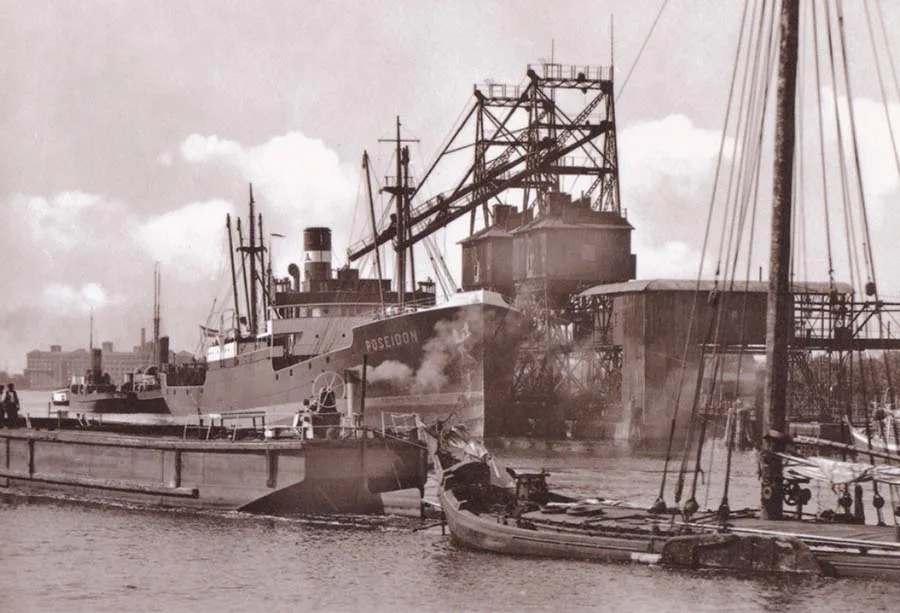 The steamer "Poseidon" at the gasworks quay.
The Kosse gasworks opened in 1902. Its output was in constant demand: at that time the number of street lamps and of gas cookers in Königsberg flats was growing fast.
True, from the 1920s gas street lighting began to lose ground rapidly as the city switched to electric lamps. But the number of houses connected to gas kept growing steadily, and so the production of coke-oven gas more than doubled between 1907 and 1937. The works produced not only coke-oven gas but above all coke itself. In addition, ammonia, benzene, hydrogen sulphide and ethylene could be obtained from coke-oven gas in the course of purifying it. There is, however, a downside to coke and gas production: it is accompanied by periodic emissions of harmful substances into the atmosphere, and coke-oven gas itself is unsafe for household use because of its toxicity. The many stories of whole families being poisoned by gas leaks are connected precisely with coke-oven (town) gas, since it contains a considerable proportion of carbon monoxide. In this respect natural gas (methane) or propane-butane mixtures are much safer.
The next important industrial facility in Kosse, in 1907, was the Kosse power station, the third power station in Königsberg. Building the power plant next to the gasworks was a very sensible decision: a service railway siding already led to the works, and fuel could be brought along it to the power plant too. The first stage of the power station consisted of two identical generators with a combined capacity of only 0.64 MW. Königsberg's power industry in those years was characterised by the use of a large number of low-capacity boilers, steam engines and generators. Thus the three power stations together operated 18 boilers, 15 engines and 22 generators, with a total installed capacity of 3.6 MW. In 1911–14 the Kosse power station was modernised. The steam engines were replaced by turbines. Now this power station alone had three turbine units of 2.5, 4.5 and 8.0 MW (15 MW in total). As a result the low-capacity and outdated power station in Hufen was closed, and the power station on Mühlenberg next to the castle was turned into a traction substation for the tram network.
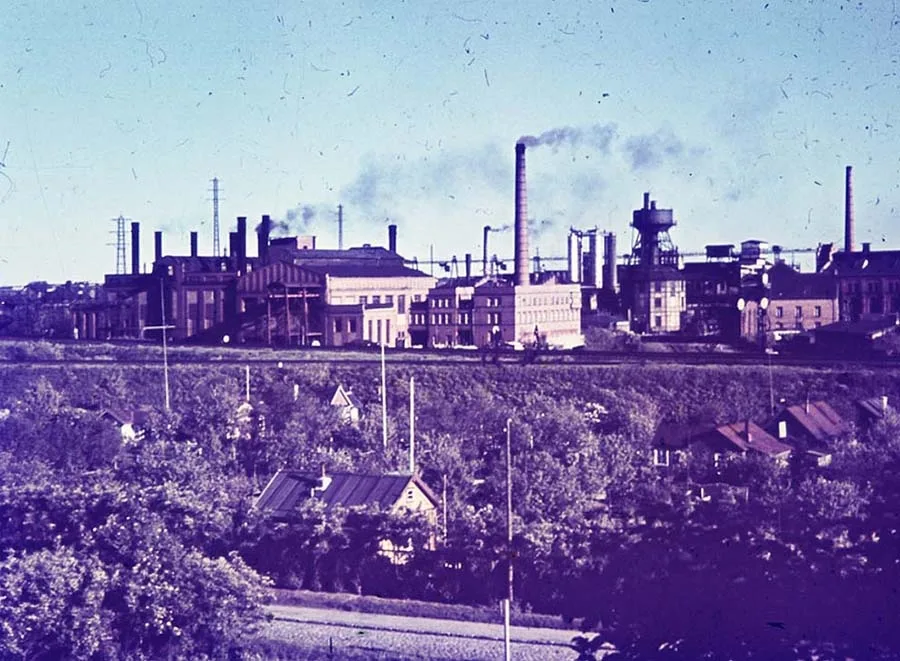 View of the power station in Kosse from the north.
It also made sense to place next to the power station the six-storey Königsberg cold store built in 1913–14, which was at the same time an ice factory. This was reflected in its official name, Königsberger Kühlhaus- und Kristall-Eis-Fabrik.
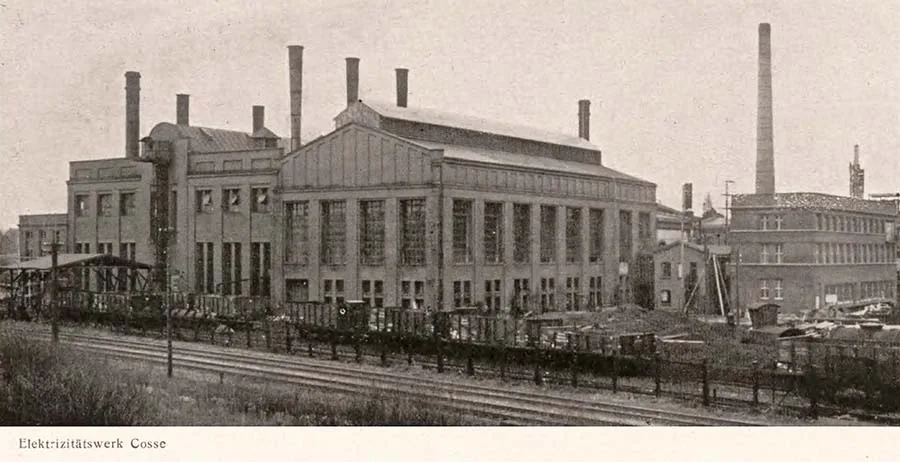
The power station close up.
Unlike the earlier ice houses, which merely preserved the cold thanks to the tons of ice packed into them in winter, the Königsberg cold store was a huge industrial installation working on the same principle as domestic refrigerators. Powerful steam engines drove pumps that circulated an ammonia solution, whose cycle of evaporation and condensation kept the temperature in the store's chambers below zero. There were 22 such chambers, which together could hold 3,100 tons of produce, mostly fish.
It should also be noted that Kosse had a tram depot, built in 1902–05. A service line led to it from Holsteiner Damm (Pravaya Naberezhnaya), and route No. 10 ran along the embankment itself in Kosse. Two huge brick sheds at the tram depot were used for stabling and repairing the rolling stock.
Thus, before the First World War, the new Königsberg district of Kosse became part of a large technology park that also included the enterprises of Rathshof (Vozdushny settlement) and the city-wide transport infrastructure. True, the word "technology park" itself appeared much later, but that does not change the substance.
In 1922–26 the Kosse power station was modernised again. First it received a new electrical substation, which turned it into a central control point allowing operational switching and control of the transmission lines that brought electricity to Königsberg from the hydroelectric plants at Friedland (Pravdinsk) and Groß Wohnsdorf (Kurortnoye settlement). In addition, the power station now became a combined heat and power plant (CHP), supplying the city's residents and industrial enterprises with hot water as well as electricity. Then, in 1925, the lowest-capacity 2.5 MW turbine generator was replaced by a 6.15 MW unit. And finally, in 1926, another 17 MW unit was installed, after which the total capacity of the power station rose to 37.25 MW.
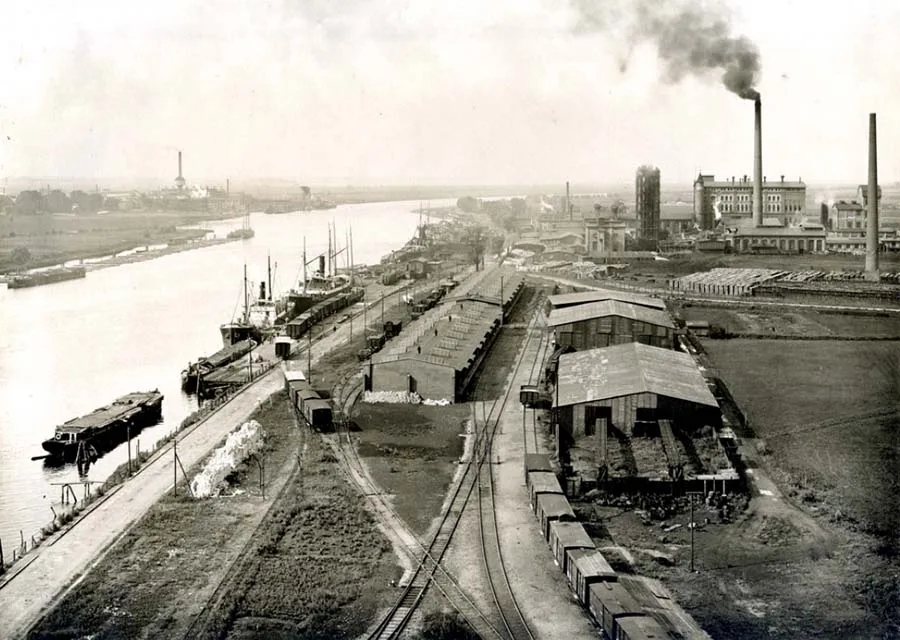 The Pregel at Kosse.
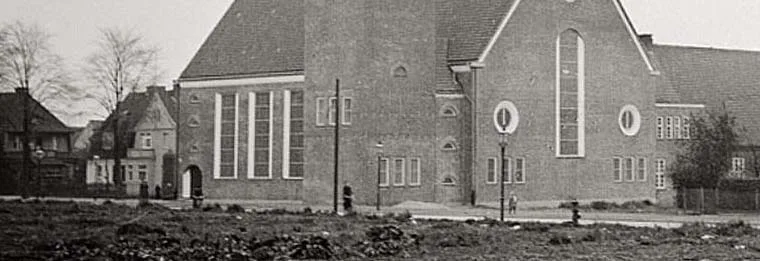
All these years Kosse continued to belong to the parish of the Altstadt Church, which was not very convenient for those residents of Kosse who attended that church regularly. After Rathshof (Vozdushny settlement) built its own church in 1936–37, the people of Kosse became its parishioners, since it was much closer than the Altstadt Church.
The bombing raids of the Second World War did not cause Kosse significant damage. Bombs are recorded as having hit the enterprises' grounds only on 23.06.1941, during the first bombing of Königsberg by Red Army long-range aviation. Several bombs fell on the gasworks then, some of which failed to explode. During the two British raids of 27 and 30 August 1944 no bomb hits on the territory of Kosse were recorded. The district's enterprises kept working until the very start of the assault on the city, and it was the Kosse power plant that supplied Königsberg, besieged from the end of January 1945, with electricity until the beginning of April. During the assault, there was fighting in Kosse, but the most intense battles took place to the west and north of the district. So although the industrial enterprises of Kosse were damaged, the damage was not fatal. In memoir literature that appeared 20–30 years after the capture of Königsberg one occasionally finds claims that the troops were ordered to spare the power station and the gas and pulp works, on the grounds that the city would go to the Soviet Union anyway and these enterprises would serve the Soviet people. But there was no such order. In April 1945 no commander or political officer knew the exact content of the agreements reached at the meeting of the leaders of the anti-Hitler coalition in Yalta. Nor did they know of the plans to hand part of East Prussia over to the USSR. And during the assault the soldiers were more concerned with carrying out their combat tasks and keeping down their own losses than with preserving any buildings. This is a clear case of confabulation, when knowledge about a period acquired after the fact merges and mixes in memory with events that actually took place.
Nevertheless, the Kosse gasworks, power station and cold store came into the hands of the Soviet military administration in a non-working state, and were later restored in their pre-war buildings. Of greatest importance for the survival of post-war Königsberg was the Kosse power station. Work to restore the city's electricity supply began immediately after the end of hostilities. On 25.11.1945 power was supplied to Königsberg from hydroelectric plant No. 3 in Friedland (Pravdinsk) via the power station's main control panel. After this the first unit of the Kosse power station itself was put into regular operation.
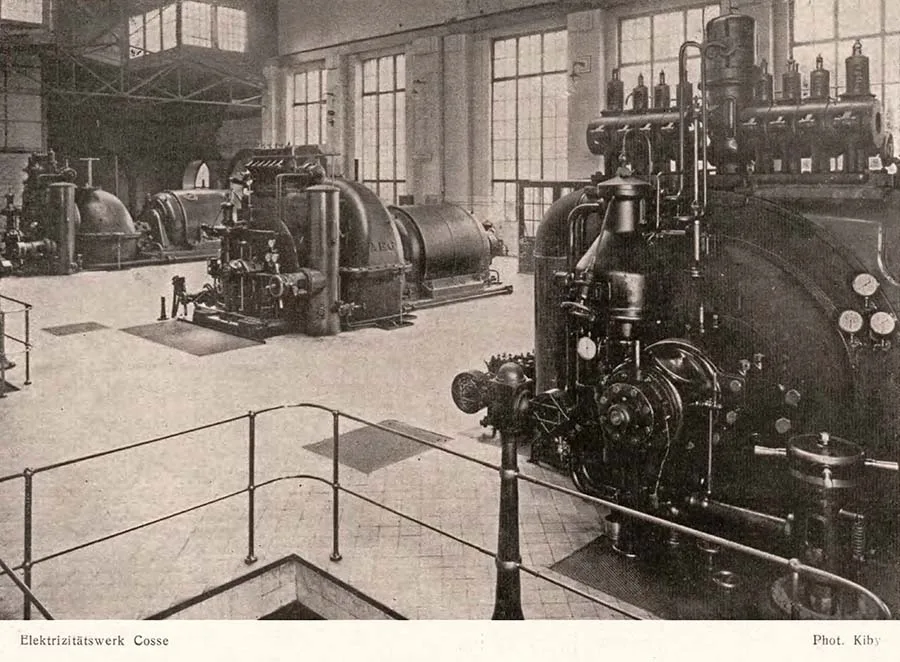 The turbine hall of the power station in Kosse.
The Kaliningrad gasworks was established on 27 August 1946. The German population was drafted in to restore it, as there was a clear shortage of specialists in this field among the new settlers, and those available lacked the proper qualifications. In November it was renamed the coke and gas works.
As was customary at the time, the first output was planned for the 30th anniversary of the October Revolution, 06.11.1947. However, although according to the reports the work teams fulfilled 250–300% of the planned work per shift, the work itself dragged on considerably. Only on 25 August 1951 did the works produce its first coke, and on 5 November of the same year it reached its planned operating level. Those city residents who were lucky enough to be included in the first stage of gas supply could at last replace their wood-burning stoves with gas cookers. Kaliningrad became the 13th city of the RSFSR to receive a mains gas supply. In 1952 the coke and gas works reached an output of 50,000 tons of coke and 21,000 cubic metres of gas a month. Coke was still considered the main product; it went to the steelworks of the Byelorussian SSR and the Soviet Baltic republics. Some of the coke was also used in the Kaliningrad Region itself, where there were small foundries too. The coal for the works came from the mines of the Donbas.
The Königsberg cold store suffered during the war no less than the other enterprises of Kosse. On 27.11.1945 an order was issued for its restoration. The first stage was put into operation on 1 October 1946. But further restoration took much longer and required the complete replacement of the equipment. In 1951 the first Soviet refrigeration unit was put into operation at the plant. But as early as May 1965 Cold Store No. 1 (as it was then called) was shut down for major repairs. The facility itself was repeatedly transferred between various administrations connected with the fishing industry. Only its profile remained unchanged: the storage of frozen fish. It is the only enterprise in Kosse that still operates today and has fully retained its function.
The Kosse power station kept its pre-war name for a surprisingly long time. Only on 22.05.1953 was it renamed Kaliningrad GRES-1 (State District Power Plant No. 1). In 1960 GRES-1 was fitted with a district heating installation and, as before the war, began supplying city consumers with hot water for heating. Incidentally, although GRES-1 and the coke and gas works both ran on hard coal, the coal was different: for the power station it came first from Poland (the Silesian coal basin) and later from the Lviv-Volhynia basin.
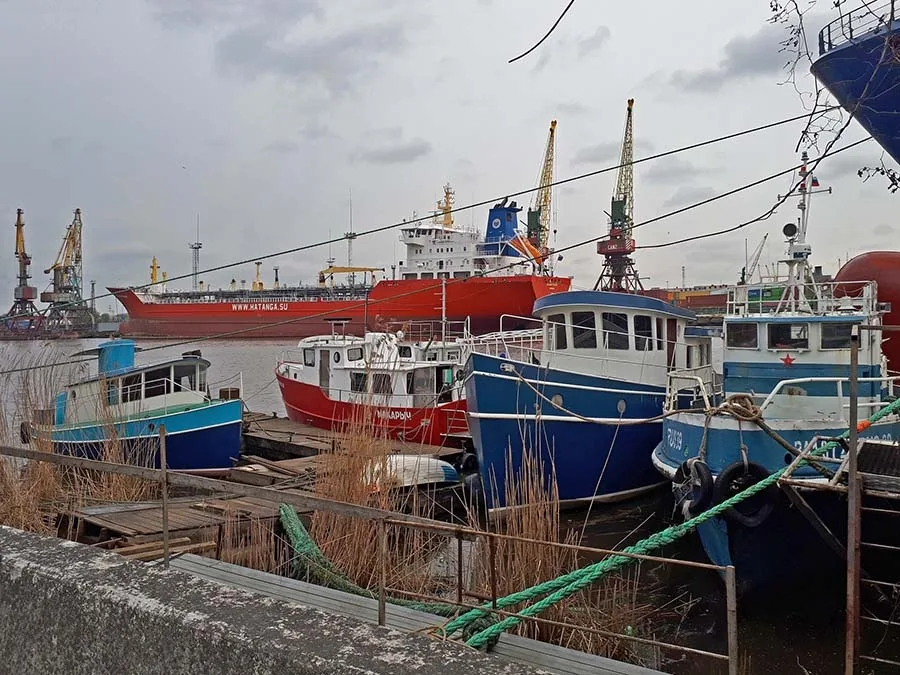 The Pregolya near Kosse before the start of the navigation season.
From 1975, as an economic experiment, the coke and gas works was regularly switched to cheap grades of coal. Such experiments were believed to benefit the national economy, but in practice they produced both low-quality coke and increased gaseous emissions into the atmosphere.
Kaliningrad old-timers must remember well the winter view of Kosse in the late 1970s from the Butterberg hill (Botanicheskaya Street). The coke and gas works sent huge clouds of white smoke into the frosty morning air. The chimney of CHP-1 smoked in a much thinner stream, and its smoke did not spread along the Pregolya but rose high into the sky. But I heard from the grown-ups that it was already impossible to breathe in the neighbourhood and that people lived in houses with their windows permanently shut. In 1978 work began on installing treatment facilities and instruments at the works to monitor emissions of harmful substances into the environment. Even to the eye the emissions from the works decreased considerably, but popular attitudes to having coke and gas production within the city limits remained sharply negative. As an enterprise of the national economy, the coke and gas works until the 1970s ended each reporting period either with a net loss or with a small profit. But in a socialist economy with fixed prices for raw materials and finished products approved by the Ministry of Finance, this did not matter at all. It was enough to issue a new wholesale price list in 1975 for the works to become consistently profitable.
In the early 1970s the Kaliningrad GRES-1 underwent a reconstruction of its equipment that increased its heat output. After this work was completed, on 28 June 1974, GRES-1 was renamed CHP-1. By the mid-1980s generating electricity there had become uneconomic, so by the end of the 1980s it was switched exclusively to producing heat for the city's central heating. The generators were dismantled. The power station also retained the function of the central control room for Kaliningrad's electricity supply.
With the arrival of the transition to a market economy, the coke and gas works, like hundreds of other enterprises in the region, was converted into a joint-stock company in 1993. In the new conditions Koks JSC did not last long and was declared bankrupt in 1995. The enterprise closed, but the environmental problems connected with it did not end. The site turned out to be full of harmful and hazardous substances. At the very end of 2002 a fire broke out in a sulphur purification tank, releasing a plume of harmful substances. The costly remediation of the site was carried out only in 2003–05.
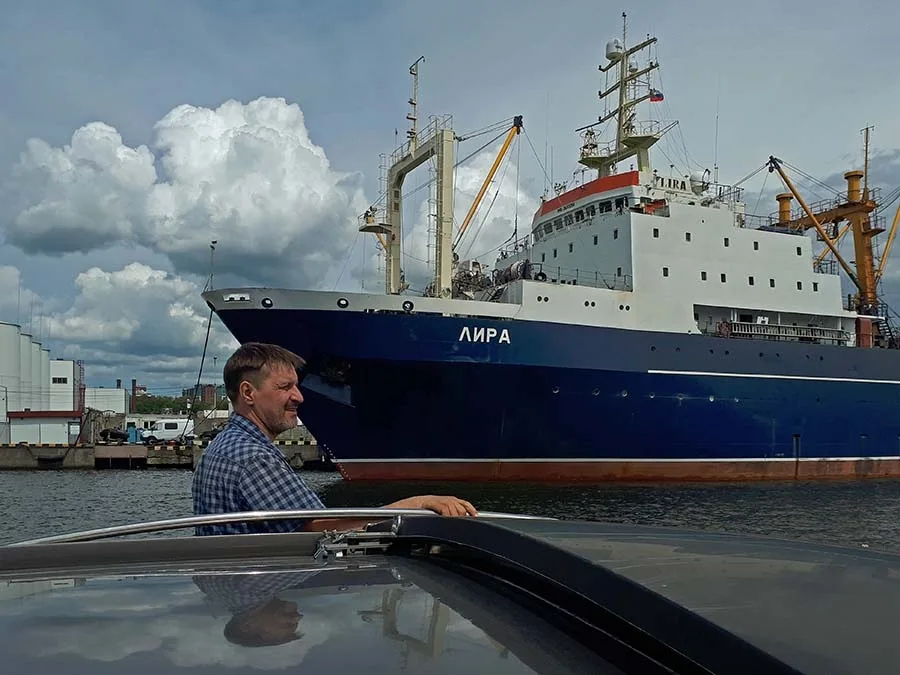 The author of the text, Aleksey Petrushin, and the trawler "Lira" at the quay in Kosse.
Today the industrial potential of the former Kosse does not look as impressive as it did in pre-war and Soviet times. The cold store ("Khladokombinat") still works, and CHP-1 still produces heat and manages the city's power grid. The tram depot was closed around 2010.
The tram line to it was dismantled, but tram tracks have survived on the site itself. For a time it was let to a motorcycle club. On the site of the coke and gas works the Soyuz corporation operates, producing edible fats. The rest of the territory is occupied by numerous wholesale and retail shops, warehouses, car repair shops and so on. None of these businesses is of such importance to the city as the gasworks, the Kosse power station and the cold store once were.
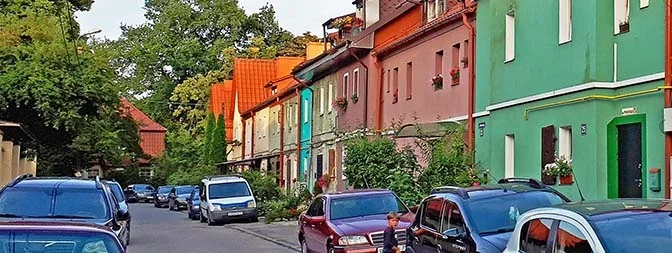
As of 2024, 15 pre-war buildings survive in Kosse, altered to varying degrees in the course of restoration and reconstruction. Of historical interest are the buildings of the tram depot, the cold store and CHP-1. But the last of these is located on a restricted site with no free access.
A brief list of the streets of Kosse in 1928–32
Am Pulversteg has been known since the second half of the 19th century. It took its name from the powder store (magazine) located on it. On 29.07.1948 Am Pulversteg was renamed Metallurgicheskaya Street, but in time this name was lost. Today it is an unnamed driveway running parallel to Magnitnaya Street, 50–60 m to the west of it. No pre-war buildings survive.
Gewerbe Straße appears on maps from the end of the 19th century. It was mainly lined with warehouses and workshops. On 01.08.1946, by order of the city civil affairs administration, it was renamed Remeslennaya Street ("Crafts Street"), a translation of its German name. As of 2024, two pre-war buildings survive on the street.
Kosser Weg, the boundary street of Kosse. It arose on the site of the old road towards Kosse. After the war it was not renamed and in effect became part of Kashtanovaya Alleya. No pre-war buildings survive on it.
Neue Bleiche, a street only the southern part of which belonged to Kosse. It ran on the site of the old road to Kosse along the stream. On 29.07.1948 it was renamed Katushechnaya Street. Later the street as such disappeared, although according to official documents it became part of Velosipednaya Doroga Street. No pre-war buildings remain on it.
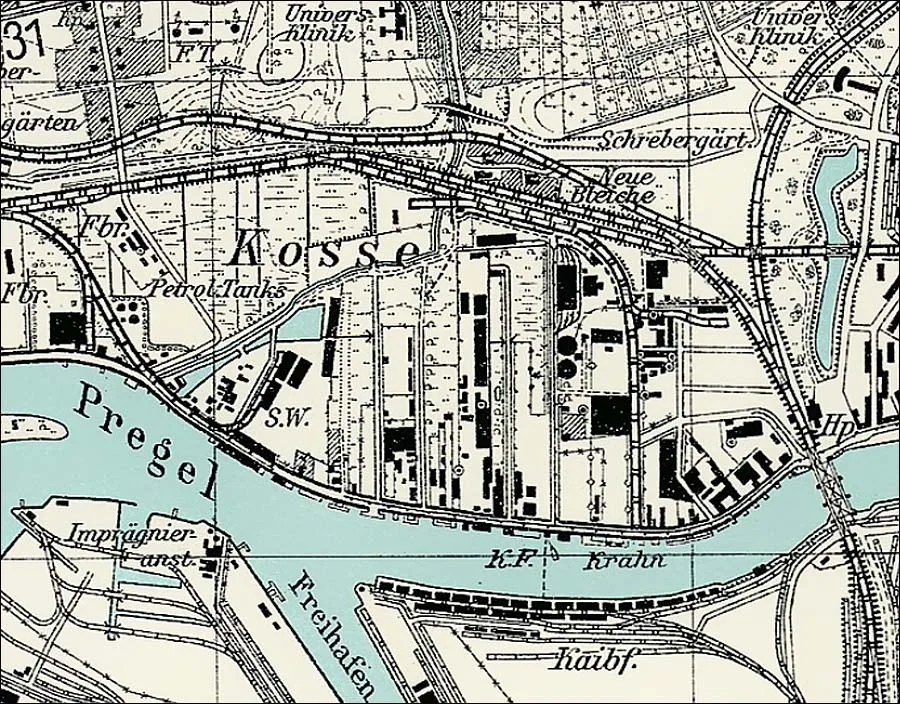
Paul Naumann-Straße appeared on maps in the second half of the 19th century. After the war, on 01.08.1946, it was renamed Magnitnaya Street. Today two pre-war buildings survive on the street, including the tram depot building.
Posseldtstraße, a street laid out in the early 1930s. It linked Gewerbe Straße, Neue Bleiche and Am Pulversteg. After the war it was not renamed. Today it is an unnamed driveway in the industrial zone. There are no pre-war buildings.
Holsteiner Damm arose on the site of the old road along the bank of the Pregel. It took its name from the Groß Holstein estate (Pregolsky settlement), to which it led. On 23.11.1945, by order of the commander of the Special Military District, K. P. Galitsky, it was renamed simply Naberezhnaya (Embankment). From 01.08.1946 its name changed to Pravaya Naberezhnaya (Right Embankment). As of 2024, eight pre-war buildings belong to Pravaya Naberezhnaya, including the building of the Königsberg cold store. But some of these buildings are not on the street itself but deep inside the industrial zone.
Population of Kosse: 1867 – 20, 1871 – 56, 1905 – 409 inhabitants.
Composition of Kosse's population in 1871: Protestant Christians – 46, Catholics – 10, children under 10 – 18, literate – 33 (87%).
Photos on this page: Bildarchiv Ostpreußen / bildarchiv-ostpreussen.de, Mikhail Ogorodnikov.
Translated from Russian with the help of AI (Claude, Anthropic), October 2026.