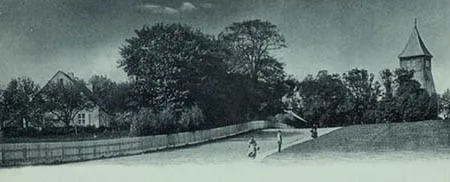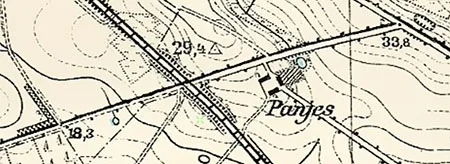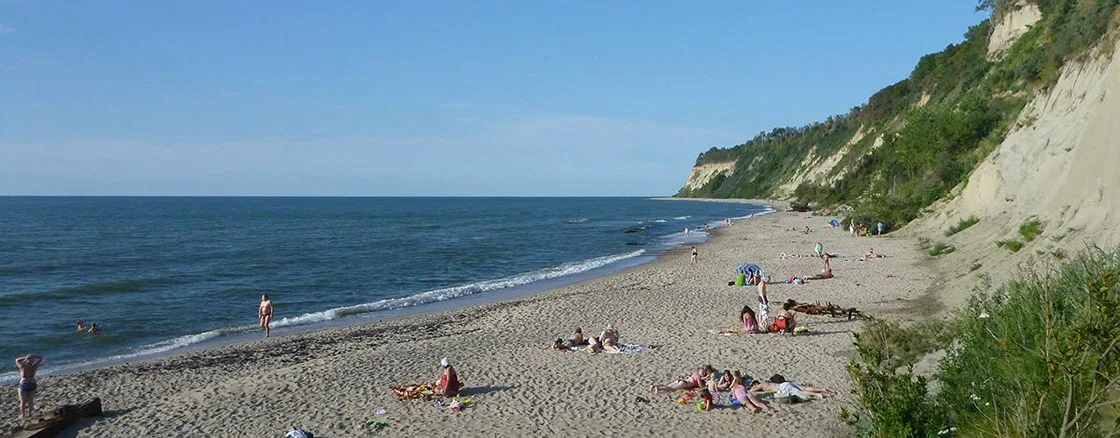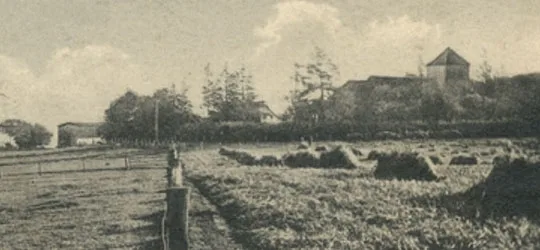
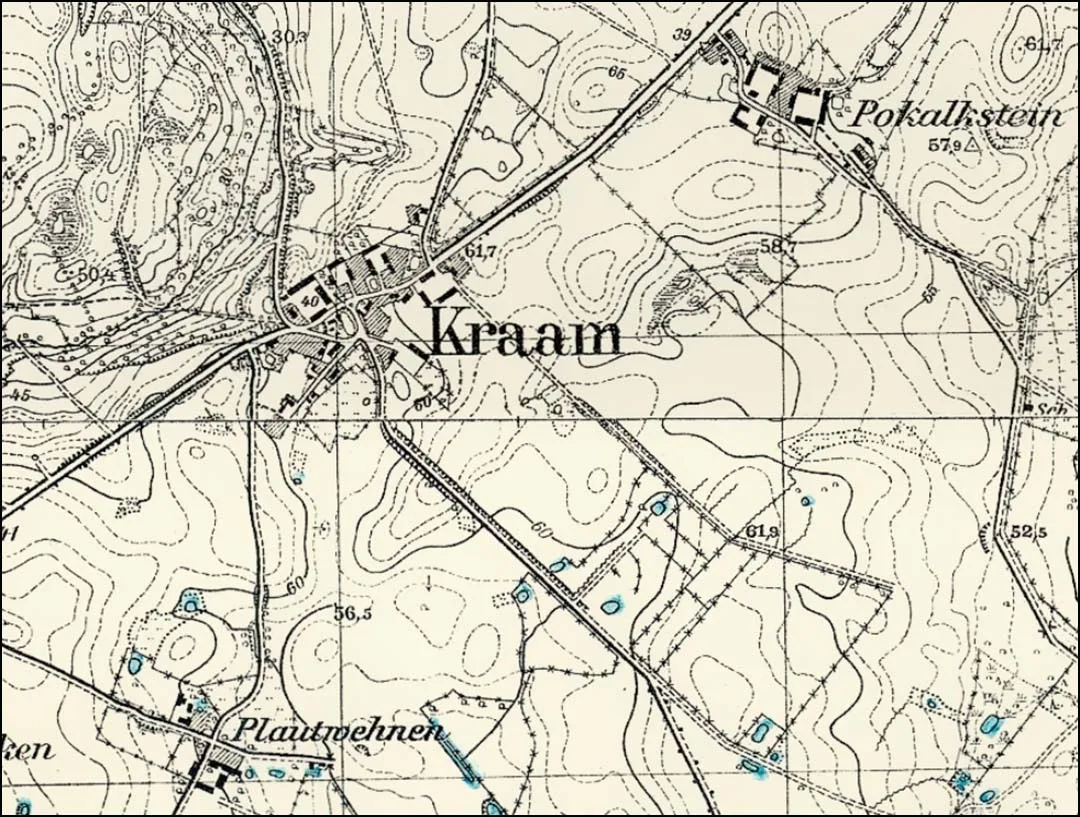
Kraam was founded in 1463 as Krome. Around 1525 it was called Cram, around 1539–40 Crom or Krom, from 1781 Craam, and from 1885 Kraam. Until 1935 the spelling Craam was still used from time to time.
From the 15th century members of the Wenk and Schneege families lived in Kraam. In 1642 the Morr family received a plot of land in Kraam. At the beginning of the 18th century a school was built here.
In 1785 Kraam was a "Kulm" village, that is, a village under Kulm law (Cöllmisch Dorf), with 16 households. The peasants in such villages were called "Kölmer" and belonged to a kind of "peasant elite".
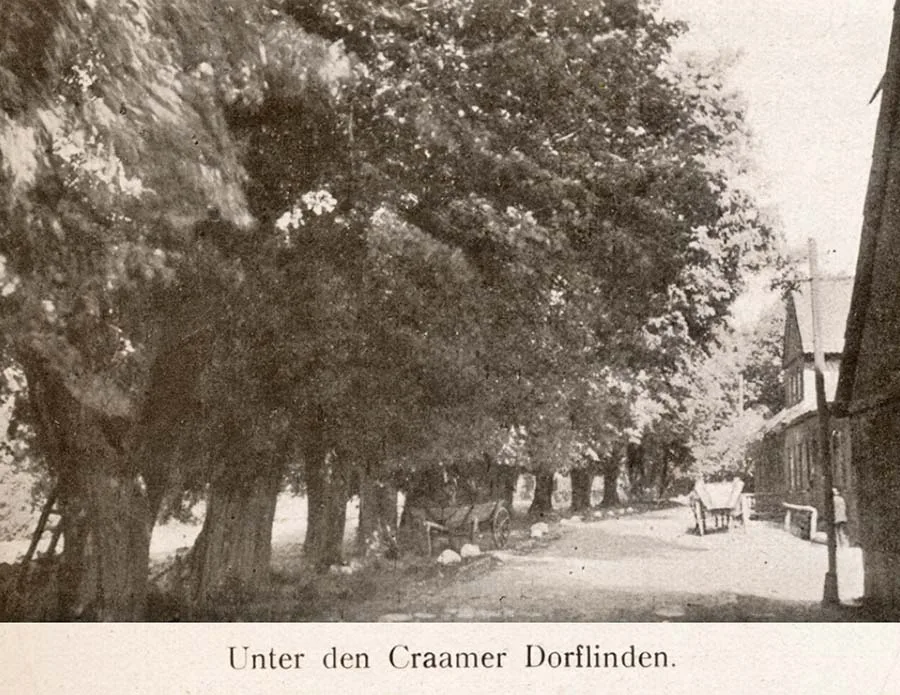
Their property rights to land and other real estate went back to medieval Kulm law. By 1818 Kraam had retained the status of a Kulm village, but the number of households had fallen to twelve.
In the 19th century Kraam was a village which from 1818 formed a rural community in the Kreis Fischhausen (Primorsk; from 1939 part of the Landkreis Samland). The village belonged to the parish of Sankt Lorenz (Salskoye). In 1871 Kraam had 15 residential houses, in which 28 families lived. On 13 June 1874 the rural community of Kraam was included in the newly established Amtsbezirk Sankt Lorenz (Salskoye). On 11 December 1893 the Kraam community was merged with the communities of Plautwehnen (Rakitnoye) and Pokalkstein (Bogatoye) into the new rural community of Kraam (Grachevka).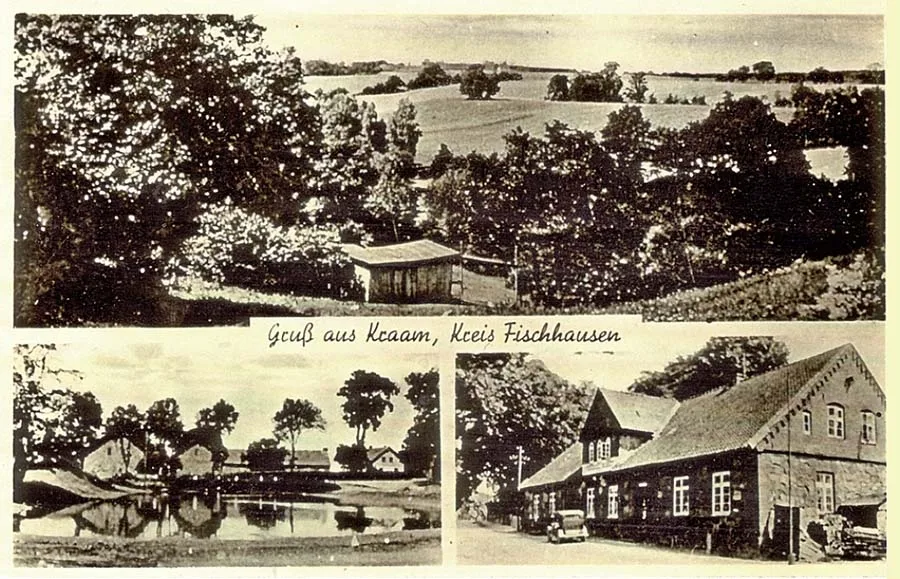
In 1895 this merged community owned 1028 ha of land. Sixty families lived in the community's 24 houses. Of these, 15 houses were in the village of Kraam itself, four belonged to Plautwehnen and another five to Pokalkstein.
By 1905 the Kraam community had 22 residential houses and a school building. Fifty-seven families and two single men lived in these houses. The village of Kraam itself now had 16 houses, Plautwehnen three and Pokalkstein five. Property tax revenue amounted to 7.04 marks per hectare of land, roughly one and a half times less than the average for the Kreis Fischhausen.
On 30 September 1928 the abolished Gutsbezirke of Klycken (Klyukvennoye) and Plinken (Lesenkovo) were incorporated into the Kraam community. In 1936 the old school building in Kraam was demolished, but a new one was opened as early as 1938. Besides classrooms, the building had two flats for teachers.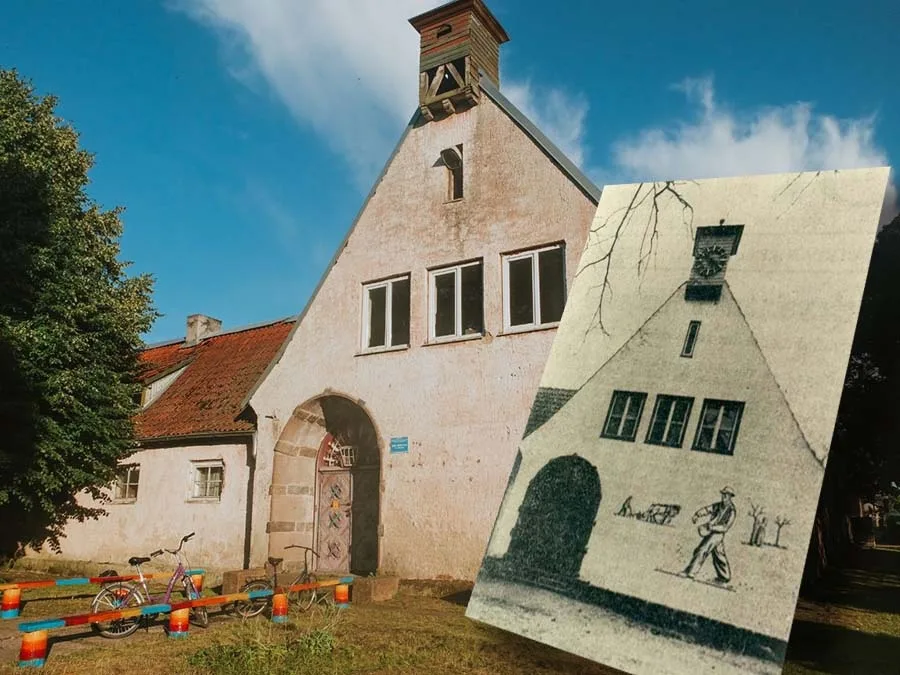
A small tower on the building held a clock with its face turned to the north. Presumably during the Second World War the school wall was decorated with a fresco on an agricultural theme (see above).
On 17 November 1947 Kraam was renamed the settlement of Grachevka. In 1955 the settlement had 27 houses. In 1968 Grachevka became the centre of the Shatrovo Village Council. At the end of the 1990s the settlement had a school. As of 2018 the settlement had a primary school, a kindergarten, a post office, a medical post, a House of Culture and a library. There is a furniture company in the settlement. As of 2020 Grachevka had 98 residential houses. In 2024 the local Grachevka school was housed in two buildings: the primary school (years 1–4) in the settlement of Krasnotorovka, and the general secondary school (years 5–9) in Grachevka. The school serves 39 settlements; in the 2024–25 school year it had 274 pupils.
Sights: archaeological monuments, the old school building (1938, now a club).
Population change: 1818 – 109, 1867 – 176, 1871 – 159, 1885 – 194, 1895 – 191, 1905 – 159, 1984 – 290, 2002 – 495, 2010 – 516, 2012 – 510 inhabitants.
Population change of the Kraam community: 1867 – 176, 1871 – 159, 1885 – 194, 1895 – 308, 1905 – 278, 1910 – 287, 1925 – 512, 1933 – 481, 1939 – 550 inhabitants.
Composition of the population of Kraam in 1871: Protestant Christians – 158, Catholics – 1, children under 10 – 29, literate – 109 (84%). One adult did not take part in the literacy survey.
Photos: bildarchiv-ostpreussen.de.
Translated from Russian with the help of AI (Claude, Anthropic), October 2026.