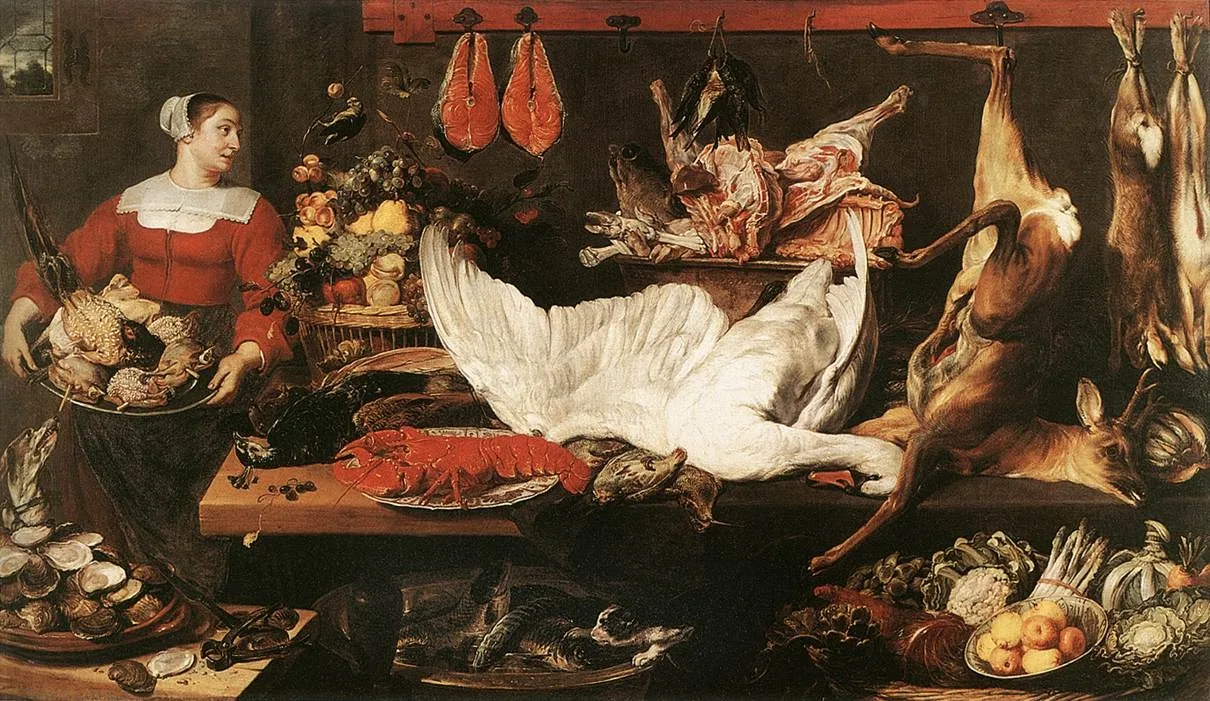
Before the Curonian Spit fell prey to the sands, there was no shortage of food here. Dense forests teeming with all kinds of game kept the Curonians fed in every season.
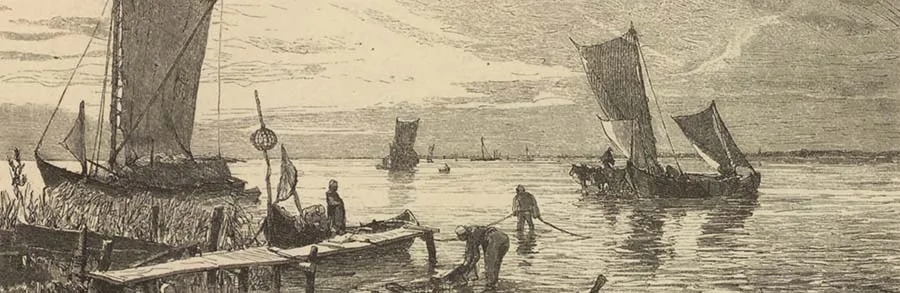
After the Teutonic Order conquered the peninsula in the 13th century, large-scale settlement of the Spit began. Like their predecessors, the new settlers lived by fishing, hunting and wild-hive beekeeping, and supplemented their diet with the eggs of birds, more than a hundred species of which nested here. The Curonian Spit is first mentioned in the Order's records in 1258 under the name Nestland ("Land of Nests"). But as the Order began to decline in the 15th century, the forests on the Spit were ruthlessly felled and burned to make way for fields and pastures, and a great deal of timber went into construction. All this had grave ecological consequences. The sands were set in motion and began to bury entire villages. The only stretch of forest to survive was the woodland between Cranz (Zelenogradsk) and Sarkau (the village of Lesnoy), one of the oldest settlements on the Curonian Spit. From the 16th century onward, only royalty were permitted to hunt here. Naturally, common folk were not allowed to make use of the forest's bounty.
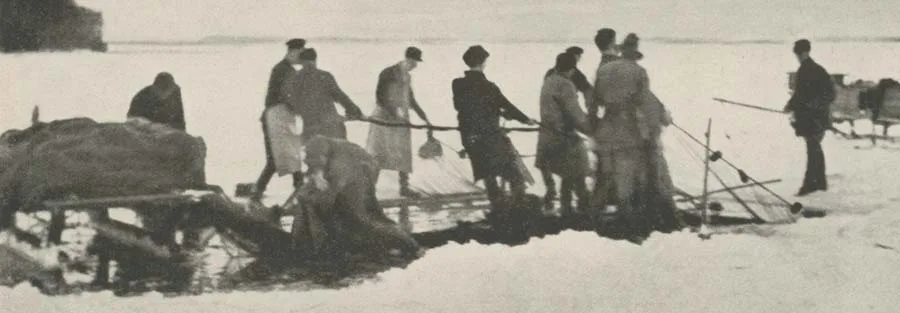
By the 17th century, the once wooded Curonian Spit, so rich in wildlife, had come to look more like a desert (people even began calling it the Prussian Sahara), and every winter the local inhabitants faced a very real threat of famine. To feed their families, the fishermen had to find other ways of replenishing their food stores. Besides, it did no harm to add at least a little variety to their monotonous diet of fish. And so they began hunting crows here. Fortunately, there were plenty of them.
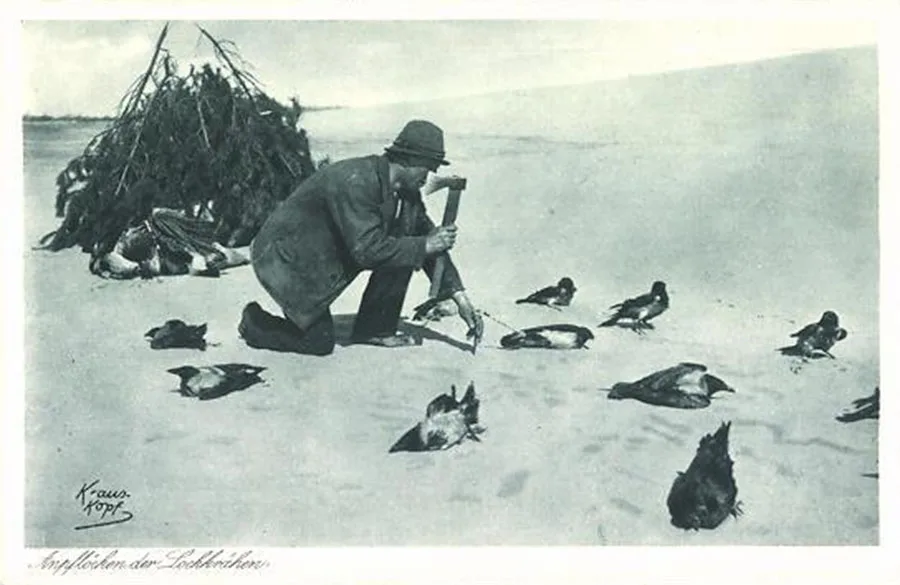
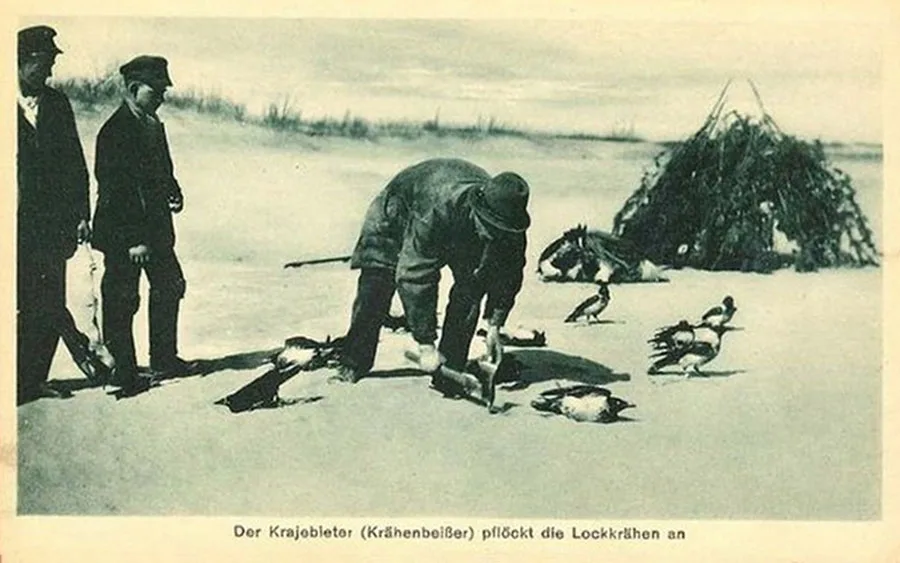
In 1656 a document appeared under which hunters were charged an annual tax of one thaler and six groschen for devices used to catch crows and thrushes. On top of that, a permit (licence) had to be bought from the local forestry office for the site where the trap was set up (such sites were often passed down from generation to generation). The trap consisted of a fishing net concealed under sand and several pegs driven into the ground around it. Previously caught crows were tied to these pegs by their feet. Beans, wheat or fish offal served as bait
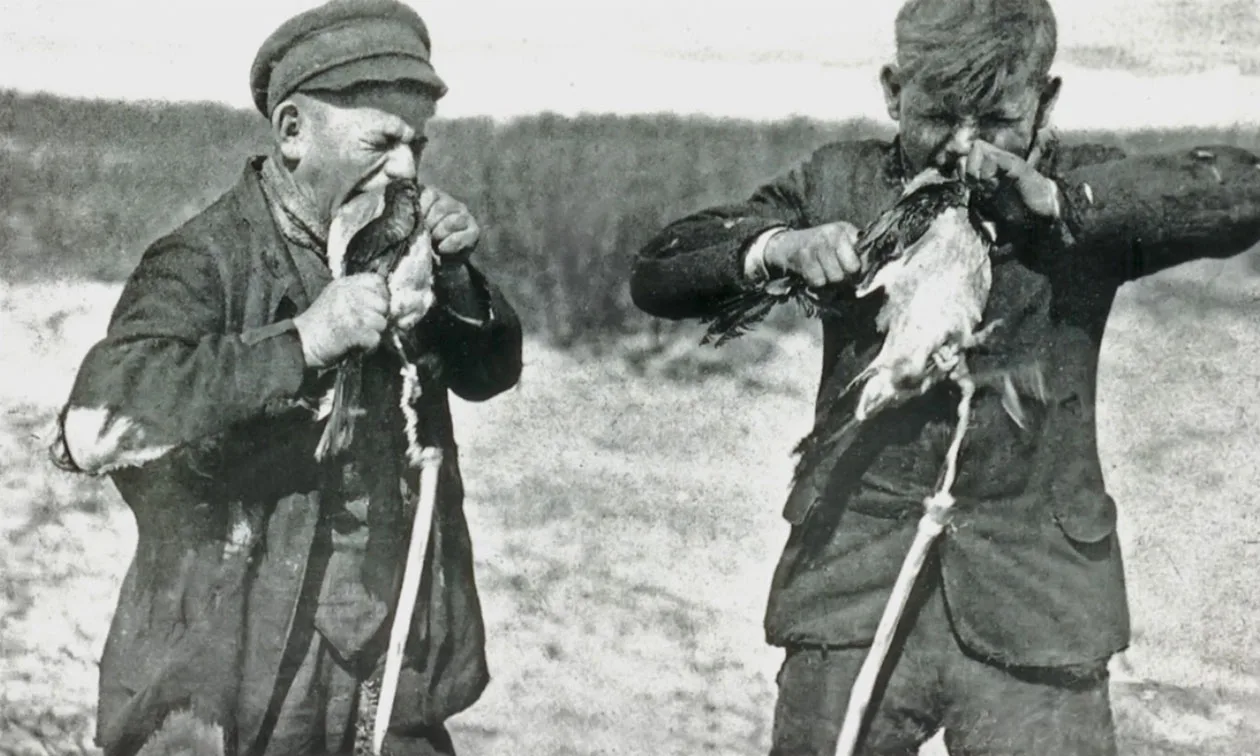
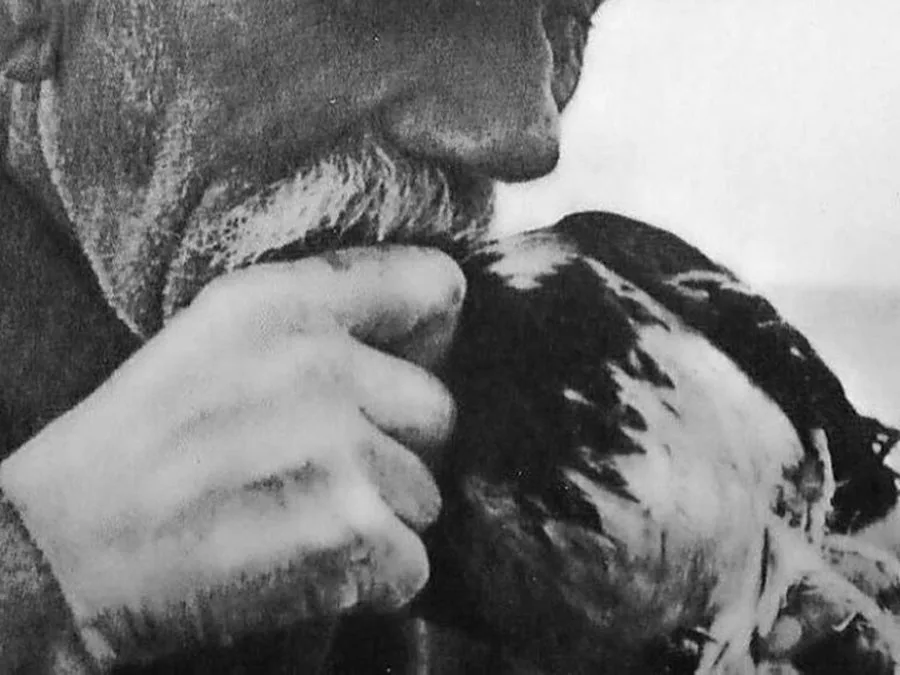
Crows flying over the trap, tempted by the scattered food and seeing their fellows, would boldly land on the ground beside it. Once enough birds had gathered, the hunter, hiding in a hut, pulled a rope and the net came down over them. The birds were killed on the spot, quickly and painlessly, with a bite to the head – which is why the trappers were called "crow biters" (Krähenbeißer or Krajebieter). To disinfect his mouth and avoid catching some avian disease, the hunter would take a swig of schnapps every now and then. So his wife could tell at once whether the hunt had been a success. If her husband came home stone-cold sober, the family would be going to bed hungry.
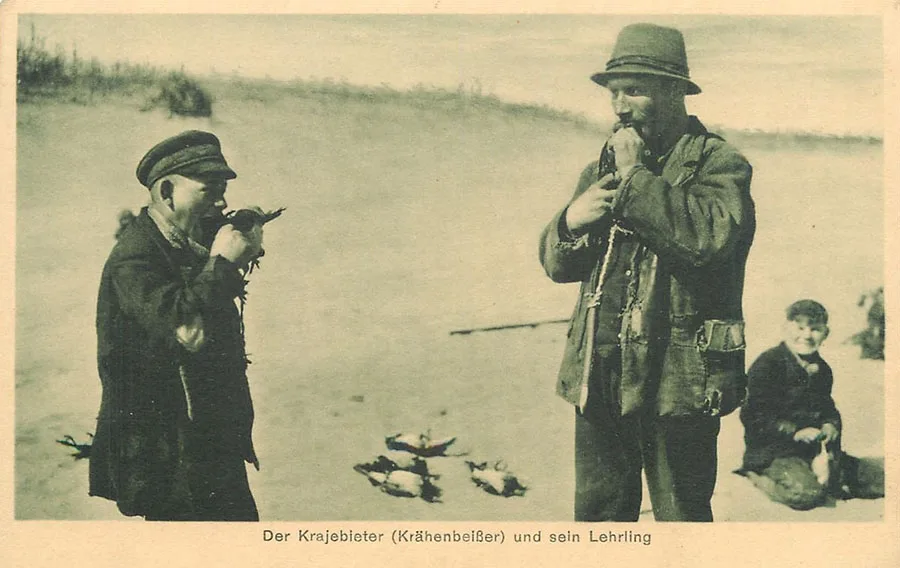
Crows were hunted in autumn, when the ice on the lagoon was still too thin and fishing was impossible, and in spring, when the ice was melting and the winter supplies were running out.
Experienced crow biters brought home 50–100 birds a day. Most of those caught in the nets were hooded crows. At home the birds were plucked, soaked and then salted in barrels for the long winter. They could be boiled, smoked, stewed… Crow meat is tough, so it has to be cooked not for 30 minutes like chicken, but for an hour to an hour and a half. A meal usually consisted of one crow per person, with whatever God provided on the side.
The "Prussian doves" won a wider audience only at the end of the 19th century, when the Königsberg–Cranz railway was built, allowing the people of the Spit to sell crows at the Königsberg markets. This brought a substantial boost to the family budget.
Even once the threat of winter famine could be forgotten for good, crows did not disappear from the Curonians' tables. On the contrary, crow meat grew ever more popular. And soon it found its way onto the menus of expensive restaurants.
Admittedly, the dish was often served under other names – "Curonian Spit doves" (Nehrungstauben) or "Sarkau geese" (Sarkaugänse) – with rice or sauerkraut on the side. Salted crow was considered a truly Königsberg dish and a great delicacy.
The German poet Gert Sattler (Gert O.E. Sattler) wrote in his poem about the crow biters that the birds were killed by having their heads bitten off. The poem provoked a storm of indignation from Armin Toll, who had last hunted crows on the Curonian Spit as a 15-year-old in 1944. "Unbelievable!" he fumed in his article "The Crow Biter. How It Really Was": "The author of these lines does not seem very well informed about the subject of his work ... The last time I went out, 63 crows ended up in my nets. Even so, I did not come home looking like Dracula. It is hard even to imagine how anyone could 'bite off' a crow's head when it has such a long beak. And I don't think any of the 'Krajebieter' ever came back from a hunt in bloodstained clothes. In fact, all you had to do was bite lightly into the crow's skull, and it died instantly and without suffering. You held the bird's beak with one hand and its wings with the other."
Armin was taught to catch crows by his grandfather, who passed on to his grandson not only his experience but also two trapping sites on the shore.
As Toll notes, the crows' plumage was put to use as well. First it was sorted, then processed, after which the down went into pillows and the feathers into mattresses. This painstaking work was always done by the women. They usually gathered on the veranda of a small village inn and, to make the work less tedious, sang songs and generously washed the whole process down with grog. The men, for their part, were not far behind, warming themselves with strong drink after a successful hunt.
Incidentally, the Curonians were not the only ones who ate crow. The Kashubians and the Livonians did not turn their noses up at it either. In Lithuania it was part of the traditional diet.
In the village of Kalnaberžė (Kėdainiai District), for example, every year in early June both locals and guests from neighbouring villages gathered around a large table for a "crow feast". The quickest and, in the opinion of gourmets, tastiest dish is crow meat stewed in beer in a deep fryer. You put the prepared meat in, add spices, and in an hour it's ready. The meat of these birds is also fried, stewed and marinated. The "crow" tradition was upheld by none other than Pyotr Arkadyevich Stolypin, Chairman of the Council of Ministers of the Russian Empire, who owned an estate in this village that his father had won at cards from a bosom friend, a general.
Translated from Russian with the help of AI (Claude, Anthropic), October 2026.