The White Maiden of Kreuzburg Castle
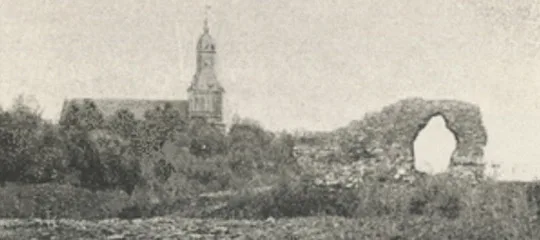
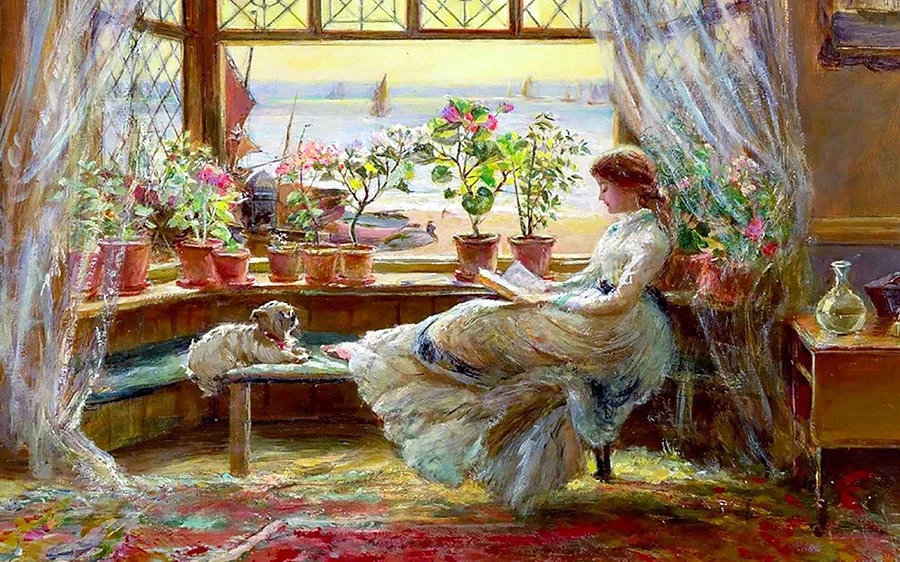
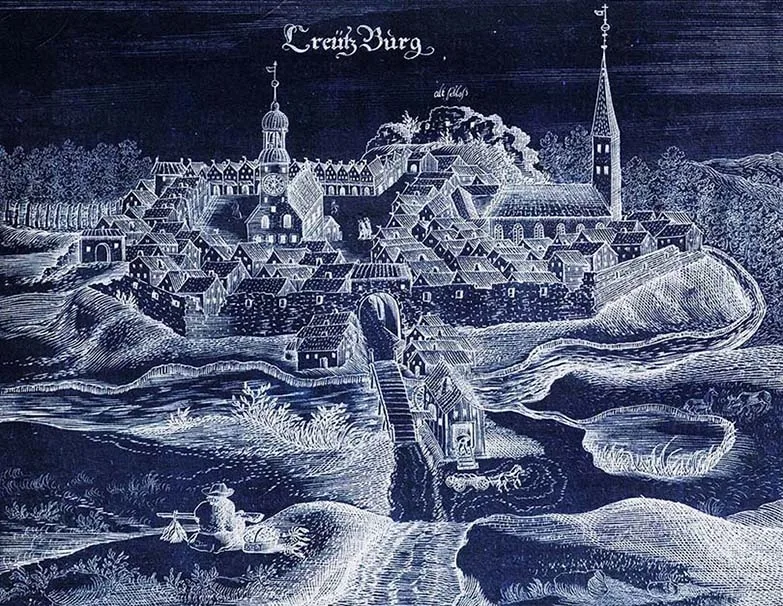
Above Kreuzburg, on a hill, there once towered a castle. Now only ruins remain of it, and people used to say that it was better not to go there — strange things sometimes happened. From time to time a girl in white was seen there; she wanders here and there and hopes for the release of her soul. And beneath the ruins of the castle many priceless treasures are buried. The Lady in White would appear before the children of the poor who, while playing, happened to stray into the half-collapsed cellars of the castle, and pour gold coins into their caps. Joyfully the children returned home with such gifts, and their parents were happy. Other families envied the lucky ones and crawled on all fours through all the vaults in search of gold, but they found only toads and snakes, and never the girl in white who gave such generous gifts.
One evening the shoemakers were celebrating their guild feast and got thoroughly drunk. And two journeymen suddenly decided that it would be quite splendid if they managed to find the White Maiden on the castle hill. After all, they did not lack courage!
And so, staggering on unsteady legs, they began to climb up to the castle ruins. There they did indeed see the Maiden, sitting on a stone. Before her lay a pan full of gold, and in her hands she held a little silver ladle.
The journeymen wished her a good evening in flowery words and, without much ado, asked her for a small alms to live on. The Maiden nodded and asked them to hold up their leather aprons. Then with her ladle she scooped out a heap of gold from the pan for each of them, and the two workmen with difficulty dragged the gold in their aprons back to the inn, where their companions at table — master shoemakers and journeymen — were impatiently waiting for them. At last the two bold youths returned in triumph to their mates, though they began to notice that their heads were growing heavier and heavier, and their aprons lighter and lighter.
At one go they tipped the gold out onto the table their pals had cleared for them, and — what the devil! — where, in fact, had the gold gone? Yellow lizards, green frogs, brown toads, bits of rotten wood… And all this vermin began crawling over the table and even jumping into the beer mugs, which was utterly disgusting..
Both journeymen got a sound beating, for the guild considered the whole story a wicked prank and an insult to all honest shoemaking folk.
The Knights and Nuns of Kreuzburg
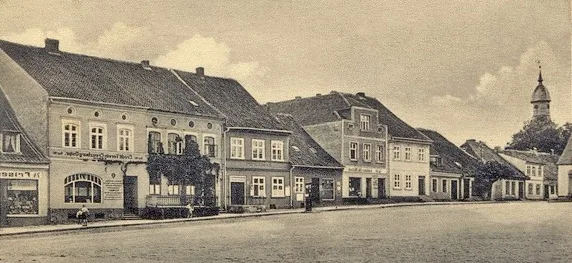
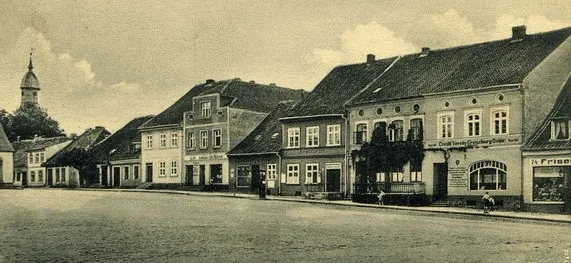
In Kreuzburg, on the old market square, there once stood an ancient town hall. And on the night of every new moon a strange vision could be seen there. As soon as the tower clock struck midnight, down from the top of the hill on which the ruins of the Order castle could still be seen came, one after another, four open, ancient, age-old carriages. Each of them was drawn by four horses — white ones in the first two, and black ones in the third and fourth.
The white horses stepped calmly, while the black ones tore at their harness, reared up, and fiery sparks flew from their nostrils. In each of the first two carriages sat six nuns in white habits. In their hands they held rosaries, but they had no heads. In the other two carriages sat twelve fearsome knights clad in armour, and each held in his hands his own helmeted head.
In dead silence the procession drove three times round the market square, and neither the beat of hooves on the cobbles nor the creak of wheels could be heard. The nuns’ coachmen were little white lambs, and the knights’ were black billy goats. And just like the horses they drove, the goats snorted out showers of fiery sparks.
Then the whole train drove into the old town hall, from which wild, riotous music rang out, and the voices of the nuns and knights could be heard: the men’s loud and hoarse, the women’s gentle and quiet. Drinking songs mingled with the sounds of the organ and with chanted church chorales.
At the single stroke of the bell announcing the end of the first hour after midnight, the carriages with their ghostly passengers drove out of the town hall, circled the square three times again and drove away. And it was eerie and strange to see the veiled heads of the nuns on the shoulders of the knights, and on the nuns the helmeted heads of the knights with their visors lowered.
It so happened that at Whitsun in 1818 both the market square and the old town hall burned to the ground. After the fire only one single old building was left standing there. At the next new moon the knights and nuns appeared again. Each had his or her own head on their shoulders, but this time the carriages drove round the square over the still smoking ashes, over charred beams and rubble — nine times.
The carriages disappeared into the only surviving house, where the night feast was repeated once more. But now it was not so riotous, but gentler and calmer. The solemn sound of the organ and the pious chorales drowned out the wild, unbridled merriment.
When the market square was being rebuilt, the old lopsided building was pulled down to make room for new buildings. And on the next night of the new moon a quiet, gentle and very pleasant melody rang out over the square. It was a delightful chant: Gloria sit Patri, Filio et Spiritui Sancto! ("Glory be to our Father, and to the Son, and to the Holy Spirit").
Since then no one has ever seen either the fearsome knights or the nuns. They no longer appeared in their carriages drawn by white and black horses. They had all found refuge where there is eternal rest and no place for earthly cares.
SOURCES
1. Иоганн Георг Грессе. Книга легенд Прусского государства. (Johann Georg Theodor Grässe. Sagenbuch des Preußischen Staats. 1–2, Band, 1868/71.)
2. Людвиг Бехштейн. Книга легенд. (Ludwig Bechstein. Deutsches Sagenbuch. 1853.)
● Editor’s note: Read on VisitPrussia.com an interview with the translator of German and, in particular, Prussian fairy tales, our regular contributor Tatyana Kolivay, who runs her own blog, where countless other parables, legends and fairy tales in her translations have been published.
Translated from Russian with the help of AI (Claude, Anthropic), October 2026.