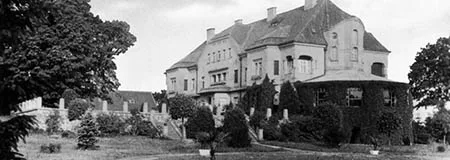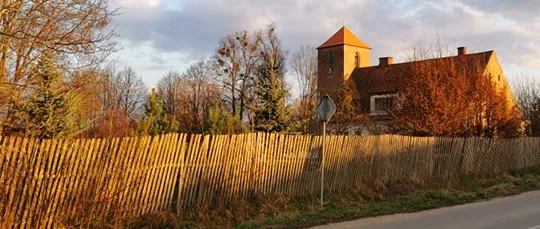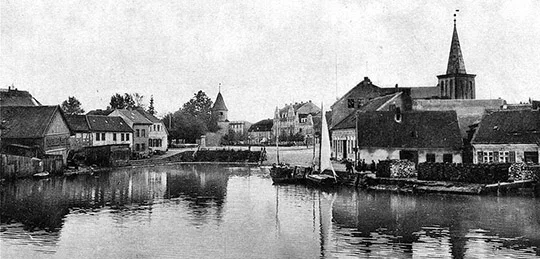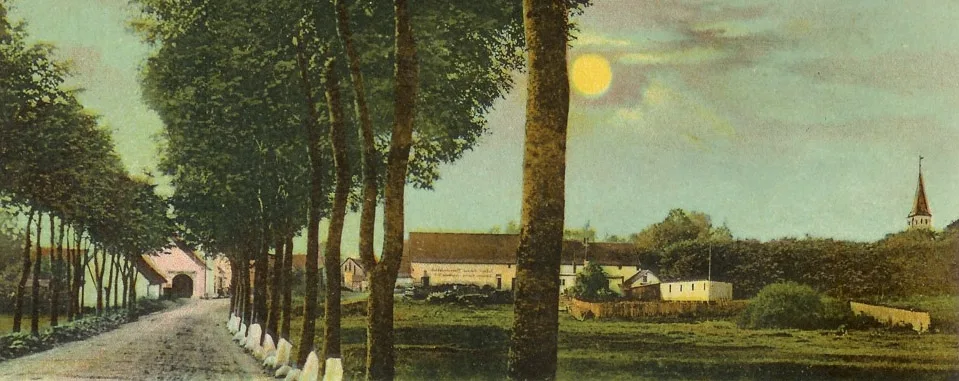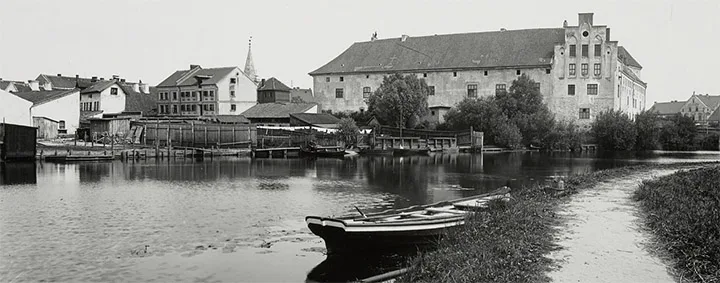
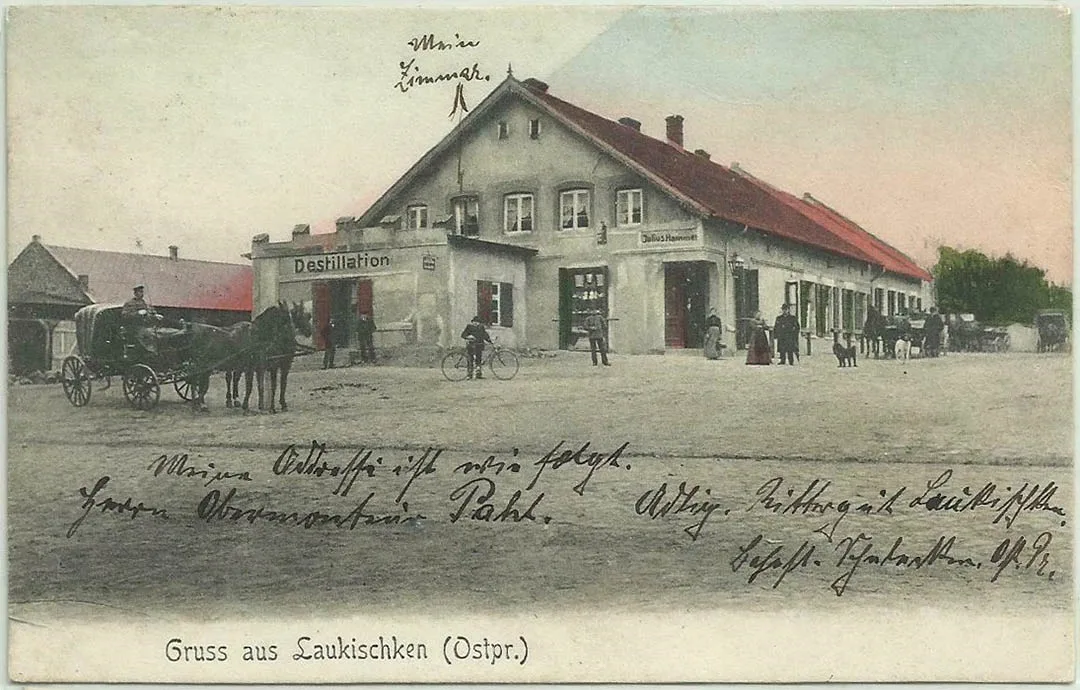
The locality of Lowke is first mentioned in 1258 in documents on the division of lands between the Teutonic Order and the bishop. In 1260 (according to other sources, in 1270) the Order built rampart fortifications here. In 1327 the castle was rebuilt in stone. From 1390 Lauken Castle was the seat of a Kammerer. During the reign of Duke Albrecht of Brandenburg the castle was turned into a hunting lodge. Later the regent George Frederick commissioned the architect Blasius Berwart to rebuild the castle, which was done in 1581–84, after which the castle was named Friedrichsburg. In 1595 the regent John Sigismund made Lauken his hunting residence. Later the castle existed as a knight's estate.
The village of Laukischken grew up as a settlement by Lauken Castle. In the 17th century a wooden chapel was built here. In 1809–12 a church was built in its place, which survives to this day. Before the war Laukischken had a school.
On 22 January 1945 Laukischken was taken by units of the 39th and 43rd Armies. 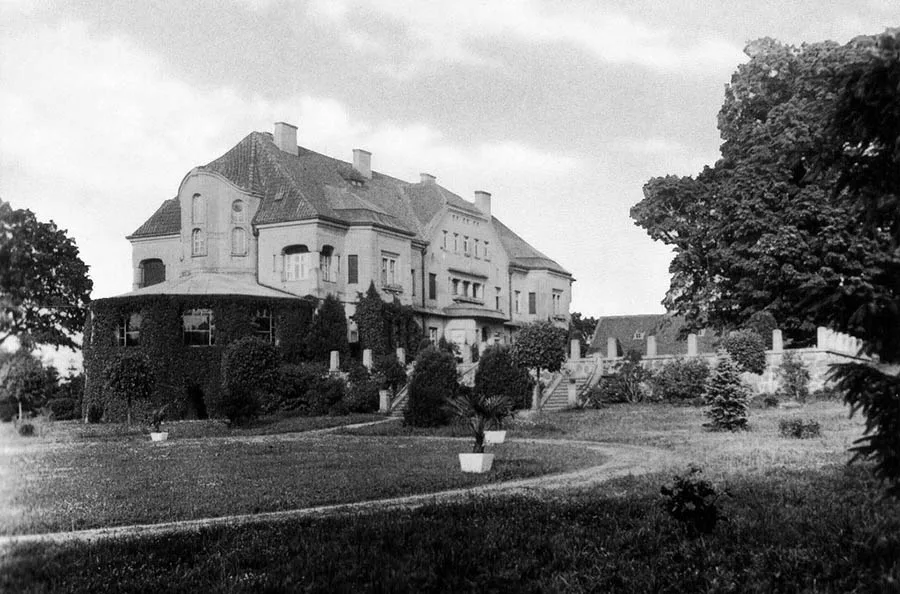
On 28 October 1946 the first settlers arrived in Laukischken. On 17 June 1947 Laukischken was renamed the settlement of Saranskoye, and the Saranskoye Village Council was created at the same time.
The other German settlements surrounding Laukischken were not officially renamed and became part of the settlement of Saranskoye de facto. In 1955 the settlement had 67 houses and a dairy farm, and there was a dairy farm on the territory of former Adlig Paddeim. A cattle yard was located on the territory of Groß Wanneggen. By 1975 the village had 98 houses and 2 dairy farms. By the late 1990s there were no houses left on the territory of former Klein Mühlwalde. As of 2011 the settlement had 172 houses (56 of them two-family and 14 multi-family), 304 households. Main industries: logging (2 enterprises), repair of goods vehicles, production of PVC windows.
Coordinates of the settlement: 54°49'43'' N 21°14'04'' E (Laukischken), 54°49'00'' N 21°13'53'' E (Powangen), 54°49'40'' N 21°15'02'' E (Bartuschen), 54°49'44'' N 21°12'38'' E (Adlig Paddeim), 54°49'19'' N 21°11'35'' E (Leischkidde), 54°48'28'' N 21°14'46'' E (Klein Mühlwalde).
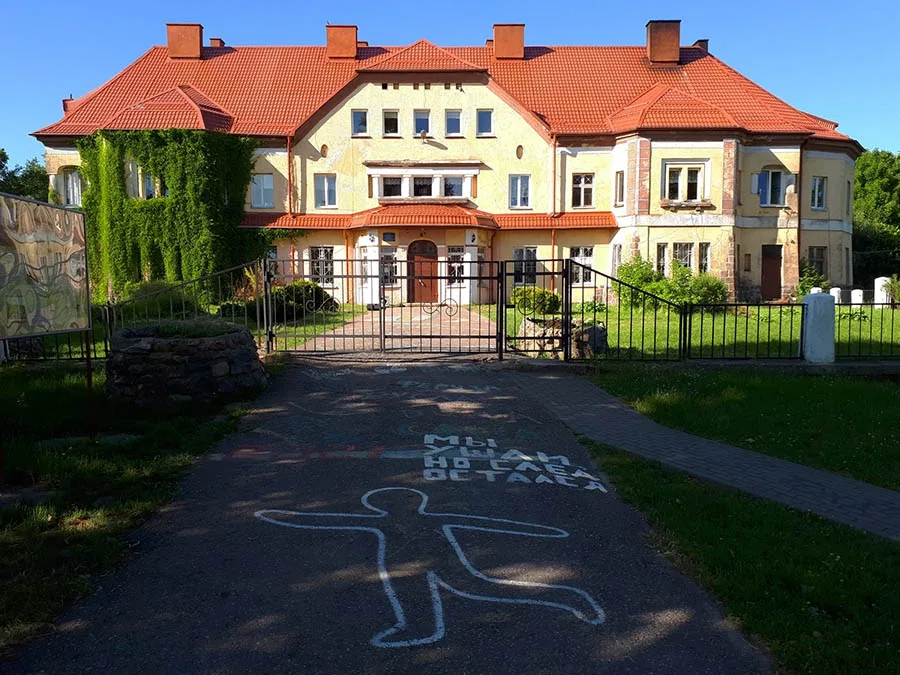
Sights: the church, the school in the building of Friedrichsburg Castle
Population change: 1939 – 824, 2002 – 854, 2010 – 988, 2011 – 1089, 2012 – 1043 inhabitants.
Population change of the Laukischken community: 1905 – 395, 1910 – 416, 1933 – 725, 1939 – 824 inhabitants.
Population of the Vorwerk Powangen: 1905 – 100 inhabitants.
Population of Klein Mühlwalde: 1905 – 9 inhabitants.
Population change of the Bartuschen community: 1905 – 67, 1910 – 76, 1933 – 122, 1939 – 107 inhabitants.
Population change of the Adlig Paddeim Gutsbezirk: 1905 – 235, 1910 – 215 inhabitants.
Population of the Vorwerk Leischkidde: 1905 – 19 inhabitants.
Population change of Groß Wanneggen: 1905 – 35, 1910 – 34 inhabitants.
Population of Klein Wanneggen: 1905 – 7 inhabitants.
Number of residents of the road keeper's house: 1905 – 3 inhabitants.
Population change of Groß Mühlwalde: 1905 – 20, 1910 – 17 inhabitants.
Population of the Vorwerk Balance: 1905 – 60 inhabitants.
For reference
At the end of the 19th century the Adlig Laukischken estate, owned by the von Bieberstein family, formed a Gutsbezirk in the Landkreis Labiau (Polessk) and belonged to the parish of Laukischken. In 1874 the Gutsbezirk Adlig Laukischken became part of the newly established Amtsbezirk Laukischken. On 30 September 1928 the Gutsbezirk Adlig Laukischken was abolished, and the estate was incorporated into the rural community of Laukischken.
By the 19th century Laukischken was a village forming a rural community in the Landkreis Labiau (Polessk). Laukischken church was the parish church for the surrounding villages and estates. In 1874 Amtsbezirk No. 16 Laukischken was established in the Landkreis Labiau, comprising five rural communities: Bartußen (from 1938 Bartelshöfen, part of Saranskoye), Kelladden (from 1938 Waldwinkel, Ilyichyovo), Laukischken (Saranskoye), Permauern (from 1938 Mauern, Lomonosovka), Szerszantinnen (from 1938 Kleinwaldwinkel, part of Ilyichyovo), as well as seven Gutsbezirke: Adlig Laukischken (part of Saranskoye), Groß Mühlwalde (part of Novodvorki), Groß Wanneggen (part of Saranskoye), Klein Wanneggen (part of Saranskoye), Meyerhof (Lomonosovka), Paddeim (part of Saranskoye) and Schelecken (from 1938 Schlicken, Sholokhovo). The heads of the Amtsbezirk in 1874–81 and from 1901 were residents of Laukischken. By 1883 part of the forest Gutsbezirk Pfeil (centred on the forestry office Forstamt Pfeil, part of Lomonosovka), namely the colony of Neu Holland, had also become part of the Amtsbezirk Laukischken. In 1892 the Gutsbezirk Klein Wanneggen (part of Saranskoye) became part of the rural community of Laukischken (Saranskoye). On 30 September 1928 the Gutsbezirk Adlig Laukischken (part of Saranskoye) and the Adlig Paddeim estate (part of Saranskoye) were incorporated into the Laukischken community. The Gutsbezirke Meyerhof (Lomonosovka) and Schelecken (Sholokhovo) were merged into a new rural community of Schelecken. The Gutsbezirke Groß Mühlwalde (part of Novodvorki) and Groß Wanneggen (part of Saranskoye) became part of the rural community of Bartuschen (part of Saranskoye). As a result, the Amtsbezirk Laukischken consisted of six rural communities: Bartuschen (part of Saranskoye), Kelladden (Ilyichyovo), Laukischken (Saranskoye), Permauern (Lomonosovka), Schelecken (Sholokhovo) and Szerszantinnen (part of Ilyichyovo). On 1 December 1935 the Lucknojen community (from 1938 Neurode, Zapovedniki) was included in the Amtsbezirk, and on 1 April 1938 the Szerszantinnen community (part of Ilyichyovo) became part of the Kelladden community (Ilyichyovo).
The Laukischken community also included the road keeper's house (Chausseehaus; 54°50'02'' N 21°14'20'' E), which by the 1930s was already considered disused.
Powangen and Klein Mühlwalde were Vorwerke of the Adlig Laukischken estate and belonged to the Gutsbezirk it formed. The Vorwerke belonged to the parish of Laukischken (Saranskoye). In 1874, as part of the Gutsbezirk, Powangen and Klein Mühlwalde became part of the Amtsbezirk Laukischken. On 30 September 1928, after the Gutsbezirk Adlig Laukischken was abolished, the Vorwerke Powangen and Klein Mühlwalde came to belong to the rural community of Laukischken.
Bartuschen was a village forming a rural community in the Landkreis Labiau (Polessk). The village belonged to the parish of Laukischken (Polessk). In 1874 the Bartuschen community was included in the newly established Amtsbezirk Laukischken. On 30 September 1928 the abolished Amtsbezirke of Groß Mühlwalde (part of Novodvorki) and Groß Wanneggen (part of Saranskoye) were incorporated into the Bartuschen community.
Adlig Paddeim was an estate forming a Gutsbezirk in the Landkreis Labiau (Polessk). The estate belonged to the parish of Laukischken (Saranskoye). Besides the estate itself, the Gutsbezirk also included the Vorwerke Balance (from 1938 Preußenberg, 54°48'07'' N 21°10'35'' E) and Leischkidde (part of Saranskoye). In 1874 the Gutsbezirk Adlig Paddeim was included in the newly established Amtsbezirk Laukischken (Saranskoye). On 30 September 1928 the Gutsbezirk Adlig Paddeim was abolished; the Adlig Paddeim estate became part of the rural community of Laukischken (Saranskoye), and its Vorwerke Balance and Leischkidde part of the rural community of Eichenberg (54°48'30'' N 21°11'24'' E).
Leischkidde was a Vorwerk of the Adlig Paddeim estate (part of Saranskoye) and belonged to the Gutsbezirk it formed. The Vorwerk belonged to the parish of Laukischken (Saranskoye). In 1874, as part of the Gutsbezirk, Leischkidde became part of the Amtsbezirk Laukischken. On 30 September 1928, after the Gutsbezirk Adlig Paddeim was abolished, the Vorwerk Powangen became part of the rural community of Eichenberg.
Groß Wanneggen was an estate forming a Gutsbezirk in the Landkreis Labiau (Polessk). The estate belonged to the parish of Laukischken (Saranskoye). In 1874 the Gutsbezirk Groß Wanneggen was included in the newly established Amtsbezirk Laukischken (Saranskoye). On 30 September 1928 the Gutsbezirk Groß Wanneggen was abolished and incorporated into the rural community of Bartuschen (part of Saranskoye).
Modern photo by Mikhail Ogorodnikov.
Translated from Russian with the help of AI (Claude, Anthropic), October 2026.