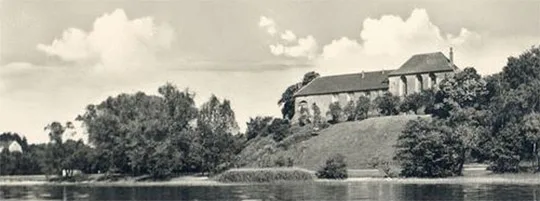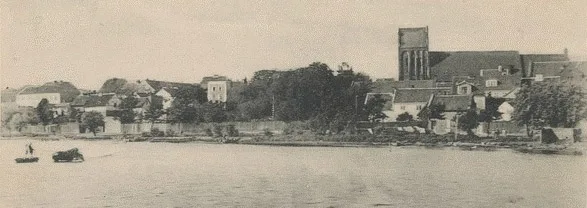
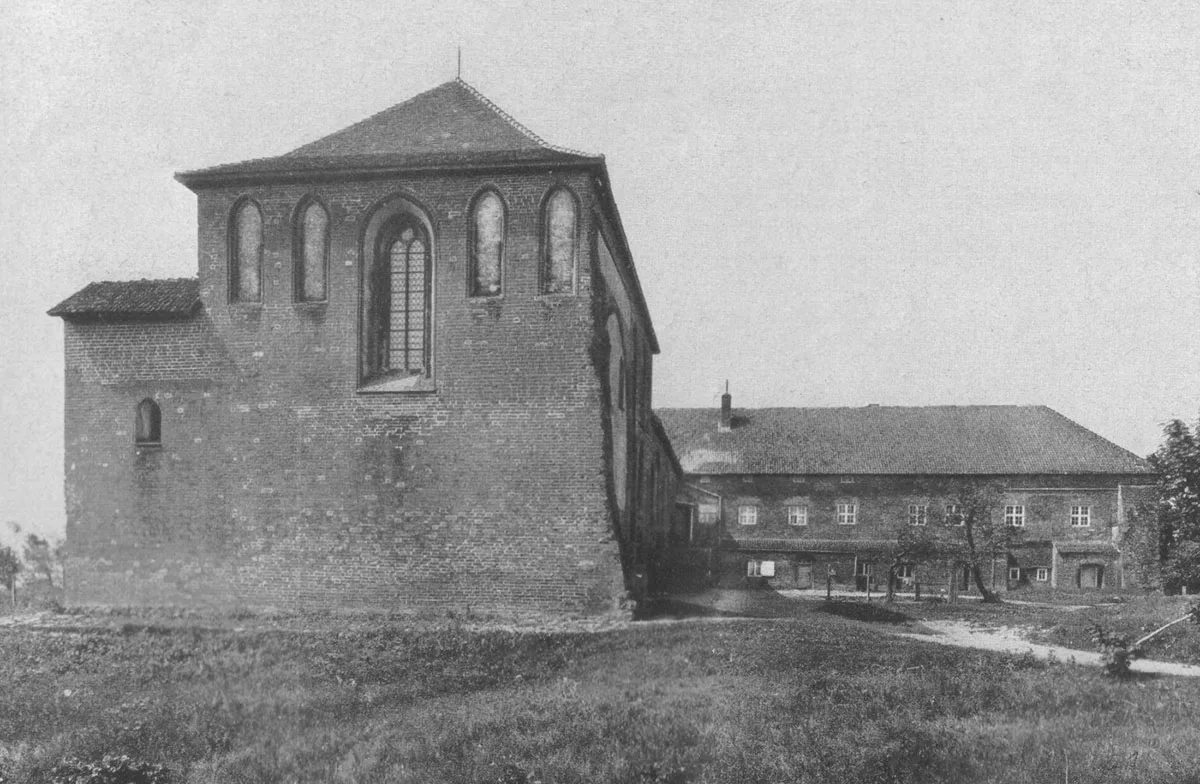
The Order castle of Lochstedt was built in the 13th century on the shore of the Kaliningrad Lagoon (in Poland, Polish Zalew Wiślany, the Vistula Lagoon; dated German Frisches Haff, the "Fresh Lagoon"). It was a standard castle of the second half of the 13th century, comparable to Brandenburg (Ushakovo) or Tapiau (Gvardeysk). The castle chapel was in the eastern part of the south wing. The vaulted nave had three bays: two with cross vaults, and in the chancel a bay with a six-pointed star vault. On the south side there were pointed Gothic windows in deep embrasures. A similar window faced east.
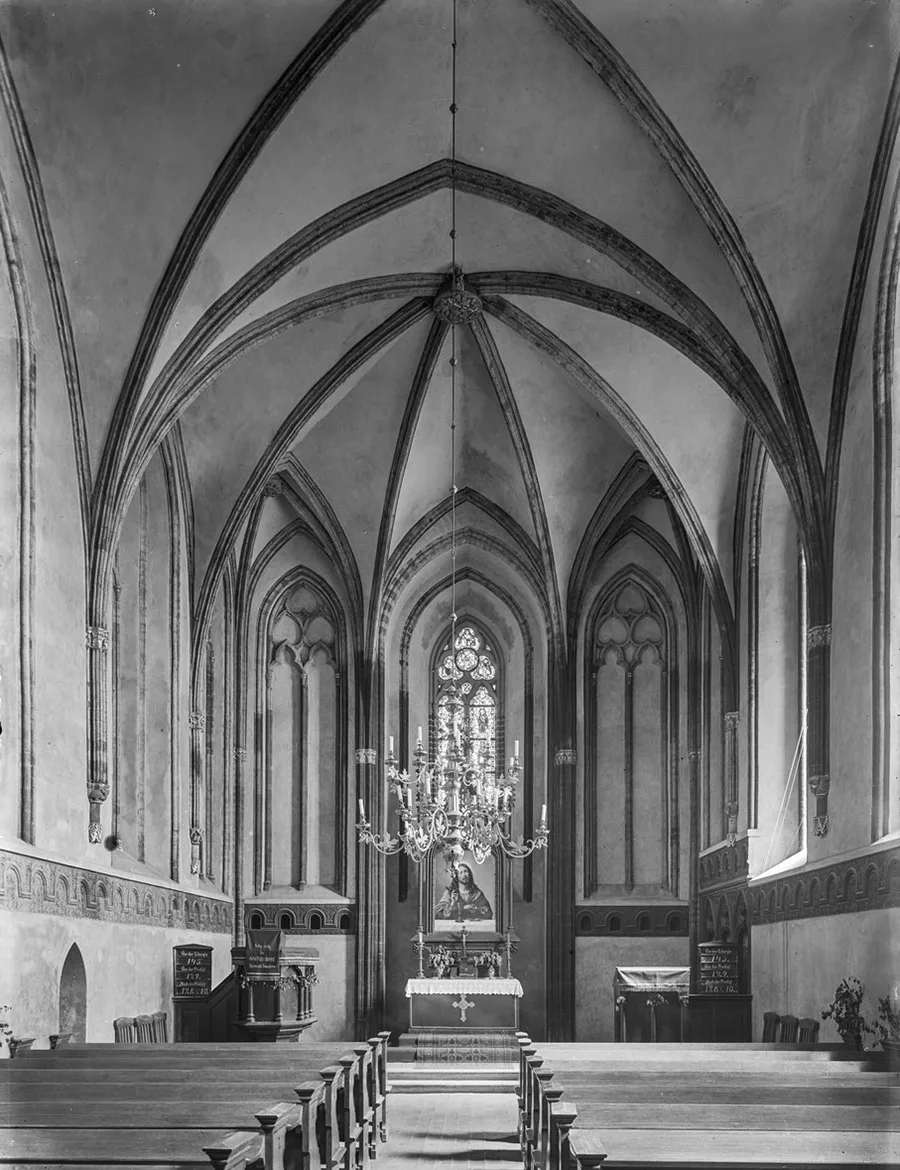
The sacristy held a confessional brought from the Chapel of St Adalbert. The altar was taken to Marienburg and replaced with a newly made one. The organ, the baptismal stone and the pulpit were also replaced with new ones.
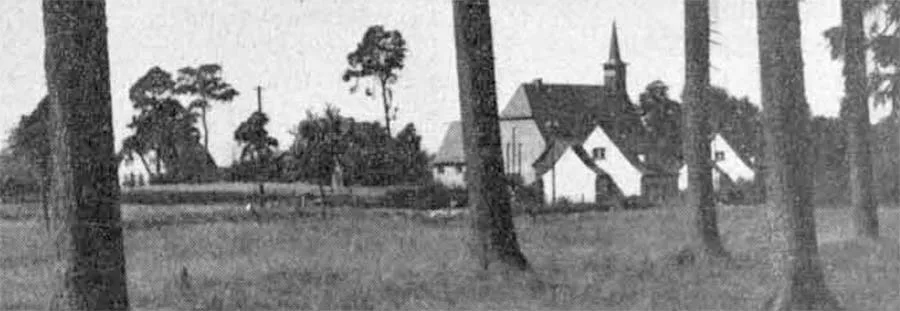
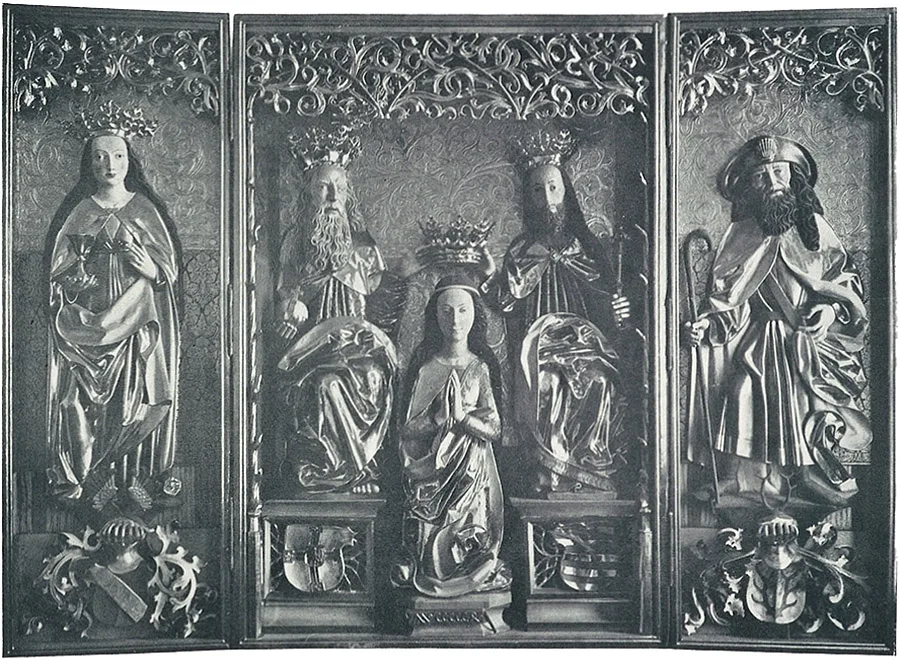 Altar from the Tenkitten chapel, kept for a time in Lochstedt.
In the south-eastern part of the south wing was the castle chapel with tall windows; a small annex adjoined it on the outside. In 1884 the castle was converted into a school, and at that time the chapel was restored in a manner far from faithful to the original. During Steinbrecht's inspection of the castle in 1895, a wall painting was discovered in the "officials' room".
By the early 20th century the chapel clearly needed another repair, which was carried out in 1907.
By the beginning of the Second World War only two wings of the castle remained: the west and the south.
During the fierce fighting in this area in April–May 1945 the castle was badly destroyed. After the war, works by Kristijonas Donelaitis and other documents, which the Germans had moved there, were retrieved from the two-level cellars of the south wing.
In 1987, inspecting the site of the castle, one could still find clearly visible foundations of the castle and its tower. In December 1989 an expedition of the German magazine Der Spiegel searched the castle cellars for the Amber Room. The remains of the foundations were finally destroyed in 1999. Today the castle ruins on the hill above the lagoon are being overgrown by self-sown trees.
Illustrations: Bildindex des Kunst und Architektur
Translated from Russian with the help of AI (Claude, Anthropic), October 2026.