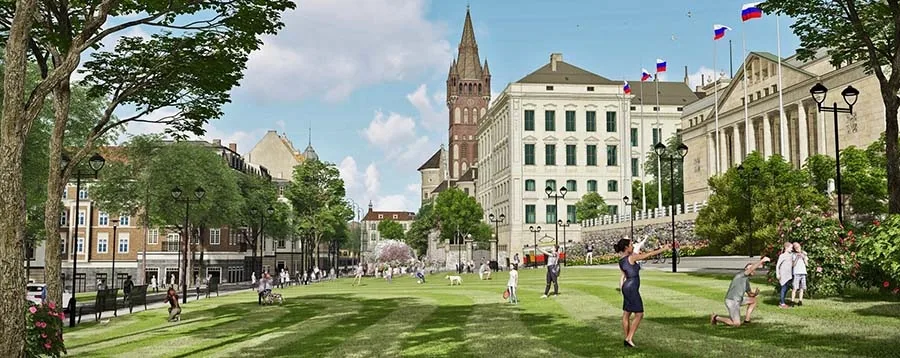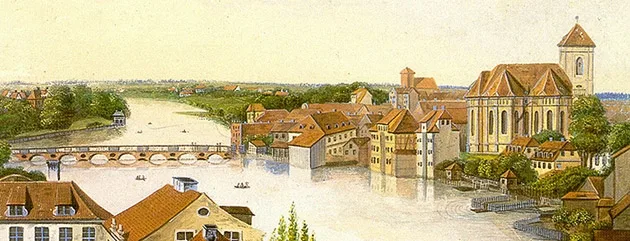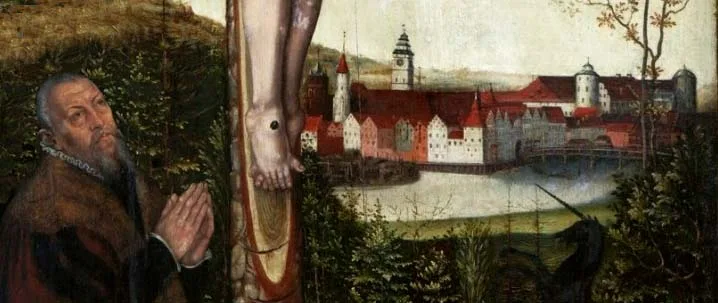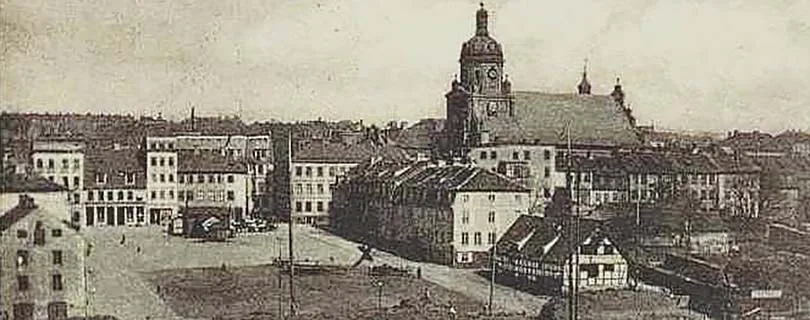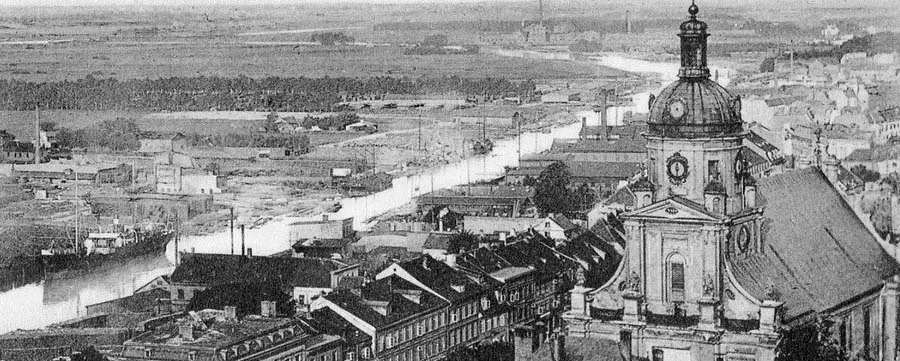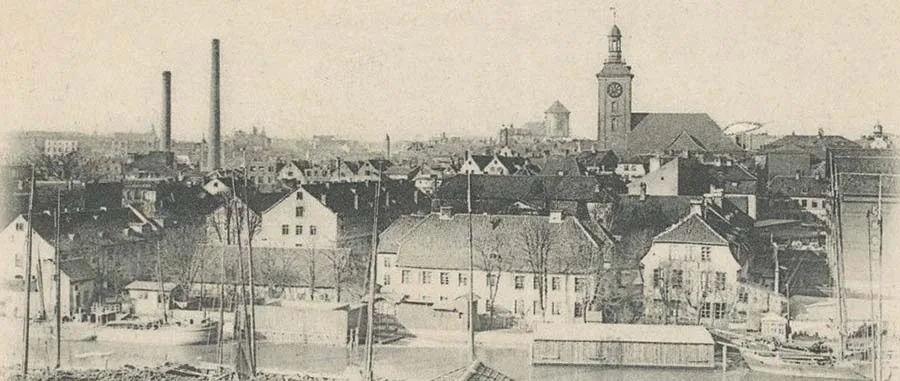
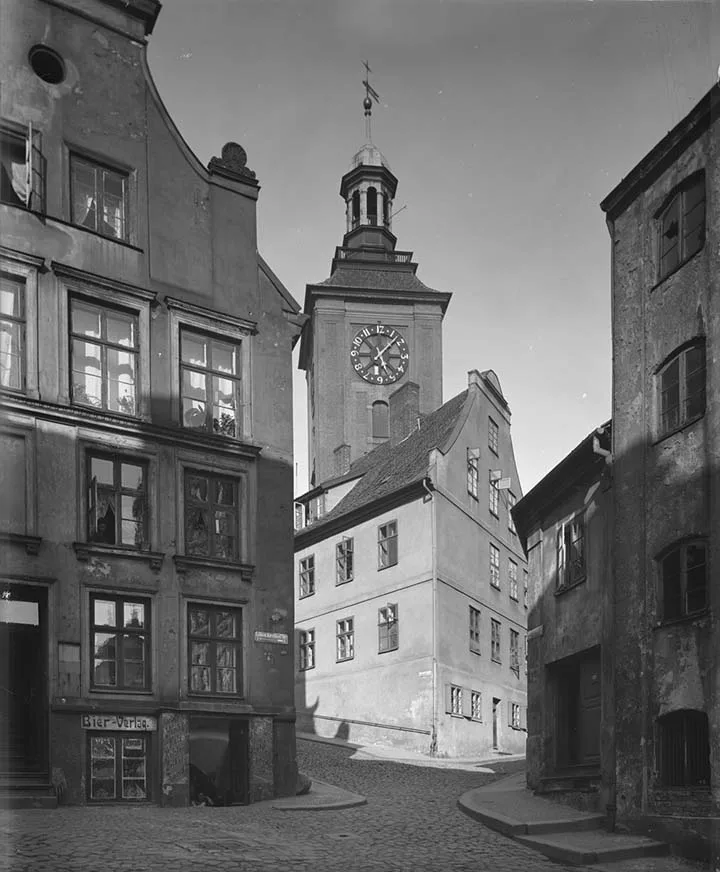
The patron saints of the church were St. Barbara [which is why the church came to be popularly known as the Barbarakirche] and St. John. The tower was rebuilt many times and was completed in 1702 with a gallery and four corner turrets. The church burned down in the great fire of 1764. A new one was built on its site to a design by Johann Ernst Löckel. It was consecrated on 1 December 1776.
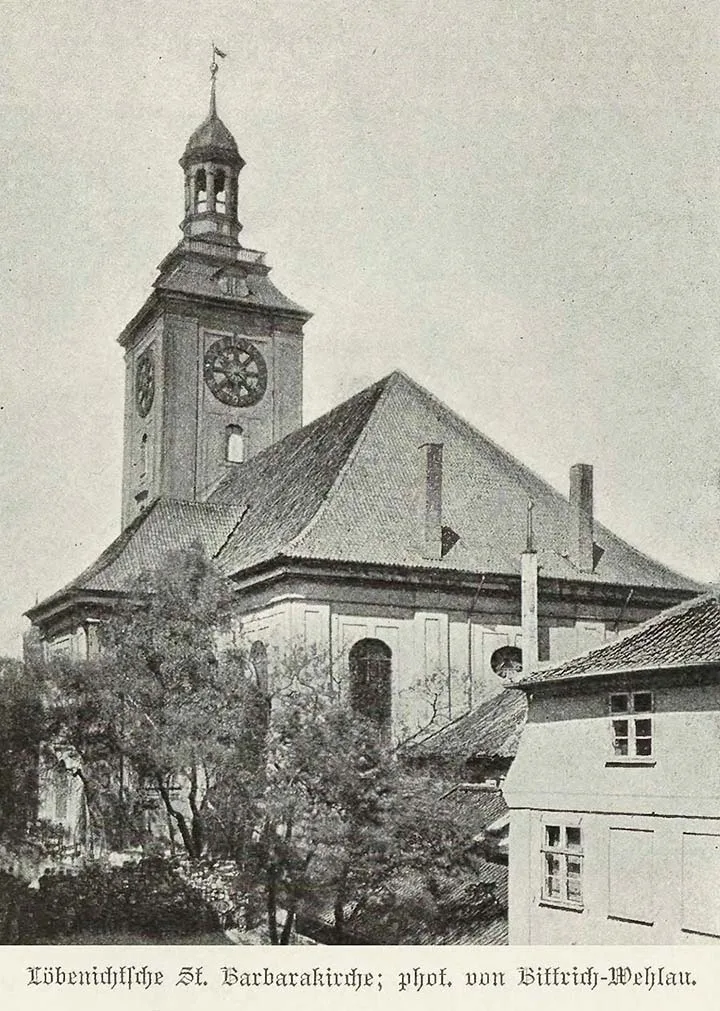
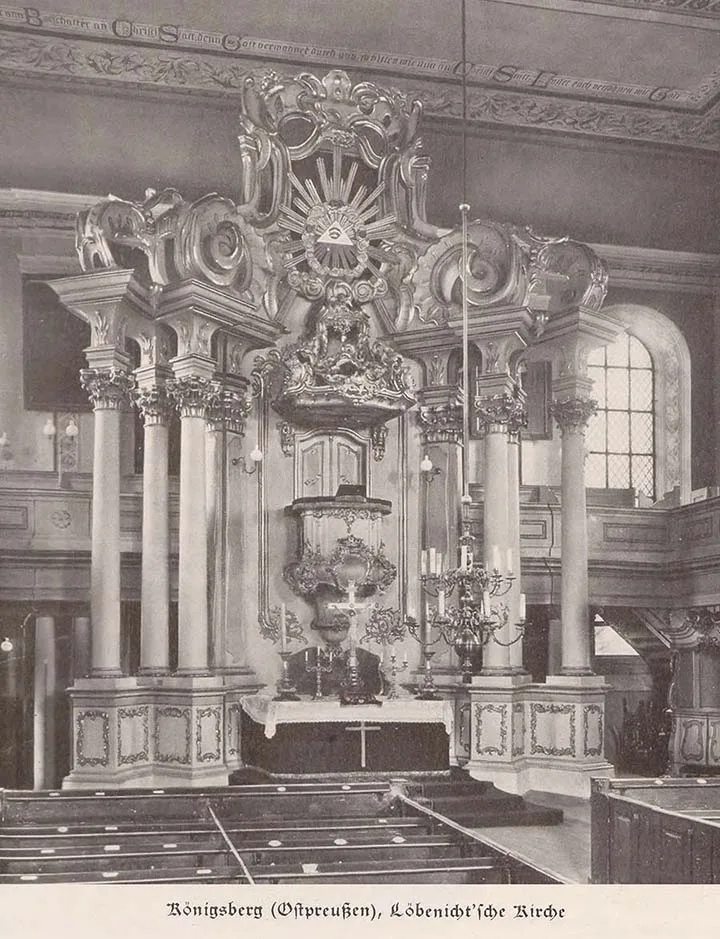
It was a simple building with a tower on the west, a sacristy on the north and a baptismal chapel under shallow arches on the south. Inside, a flat ceiling. Along the walls ran galleries (emporia) supported by columns.
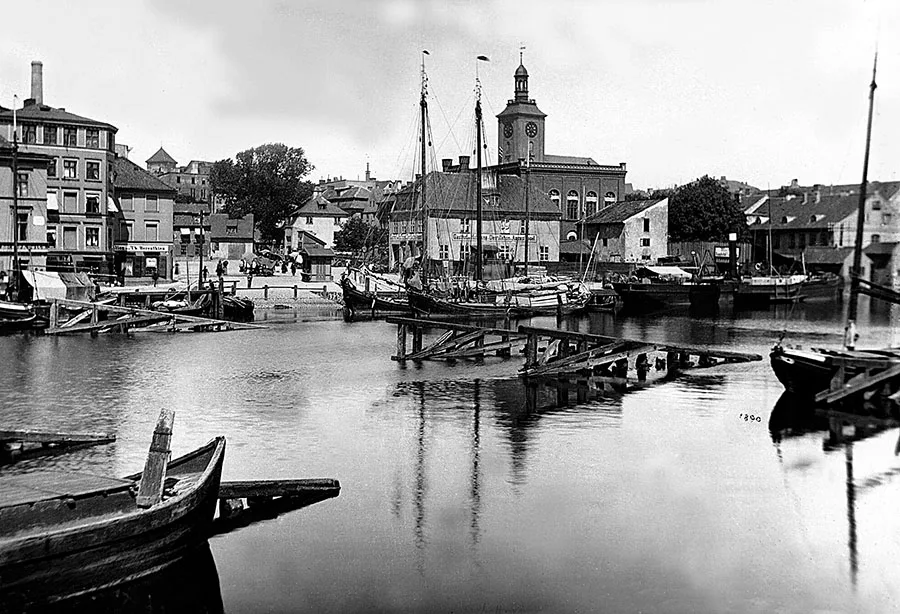 View of St. Barbara from the Pregel.
Notable features of the interior included two confessionals (1780), a portrait of Pastor Kähler (1843) and brass chandeliers (1776). The altar plate was rich: a silver-gilt chalice (1515), engraved wafer boxes (1635), a silver altar candlestick (1640), a font (1685), a baptismal ewer (1686), a brass font (1638) and a gilded silver band (1681). The pulpit and altar were combined into one and made in the workshop of Friedrich Suse.
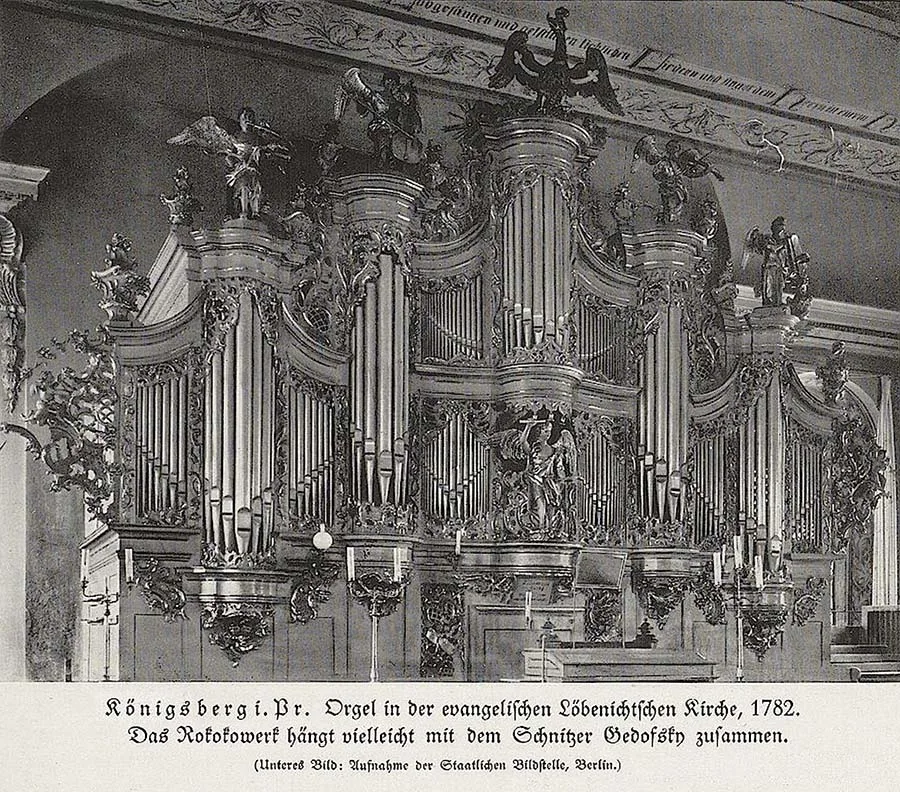
The great organ was consecrated in 1728. After the fire it was renewed in 1782 by the Königsberg master Preuss. The church had four bells.
The Löbenicht Church was damaged in the British air raid of 1944. It suffered further damage during the storming of Königsberg in April 1945. All that remained was the roofless tower, burnt out inside, and fragments of the church walls. After 1945 the tower was dismantled first, and then whatever was left of the walls was gradually taken down. The church was finally demolished in 1970.
By order of the Council of Ministers of the RSFSR of 14 August 1961, the ruins of the Löbenicht Church were removed from the list of architectural monuments to be protected as monuments of national importance, approved by resolution of the Council of Ministers of the RSFSR of 30 August 1960.
_________
In the 1950s, the East Prussian expellees' newspaper Ostpreussen-Warte, published in Göttingen in Lower Saxony, ran a series of short pieces entitled "Königsberg Corners" by Herbert Mühlpfordt, a former Königsberg physician and passionate local historian. Some of them were translated long ago by Tatyana Kolivay and are available on our website; others are still waiting their turn. Below we present an episode of the saga that relates most directly to the Löbenicht Church.
The Löbenicht Church Square
Nowhere on that fateful night was the destruction of Königsberg by British phosphorus bombs as devastating as on the Löbenicht Church Square (Löbenichtsche Kirchenplatz). Instead of an idyllic townscape, any Königsberger who came here was met by the horrifying charred remains of houses and a deathly silence.
An icy shudder and hot tears must have overcome everyone who found themselves here and saw the collapsed walls of the beautiful church and the ruins of the buildings whose chimneys pointed accusingly at the sky.
But those who did not see it, or who are able not to let the terrible picture of destruction overshadow the friendly image of the past in their memory, will agree that there was hardly a more charming place in Königsberg than the square around "St. Barbara on the Hill" (St. Barbara auf dem Berge), as the church built in 1334 in honour of the patron saint of weavers was called.
Four ways led to it.
The first: from Hill Square (Bergplatz), or, as the locals called it, the "Crooked Hill" ("Schiefer Berg"), one had to go down College Lane (Kollegiengasse), along the wall of the Castle School (Burgschule, later Oberrealschule auf der Burg), which in 1892 had inherited the building of the Collegium Fridericianum1 (Friedrichskollegium).
Then, to reach the Löbenicht Church Square, one had to continue south from the corner of College Street (Kollegienstraße) and Upper Hill Street (Oberbergstraße) along Wernerstraße. Until the 1880s it was sometimes called "Stippelgasse" (Stippelgasse) or even "Das Gestippel" (Das Gestippel. A Stippel was a household barrel for collecting water; Gasse means lane).
The second: from the west, along Clothmakers' Street (Tuchmacherstraße) and then steeply up Lower Hill Street (Unterbergstraße). It was the perfect sledging run for the Löbenicht boys!
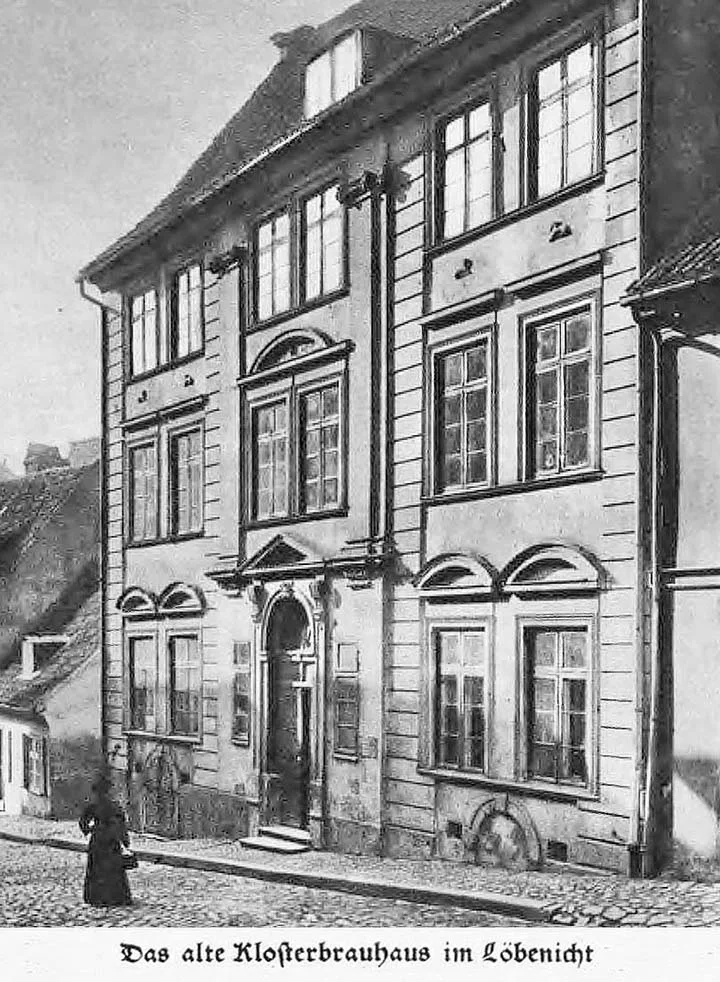
The house of a Löbenicht brewer at 8 Löbenicht Church Street.
On Löbenicht Church Street, which connected Lower Hill Street and Upper Hill Street, stood a handsome house belonging to a wealthy brewer, with two pilasters and a brightly painted Baroque relief depicting some mythological scene.
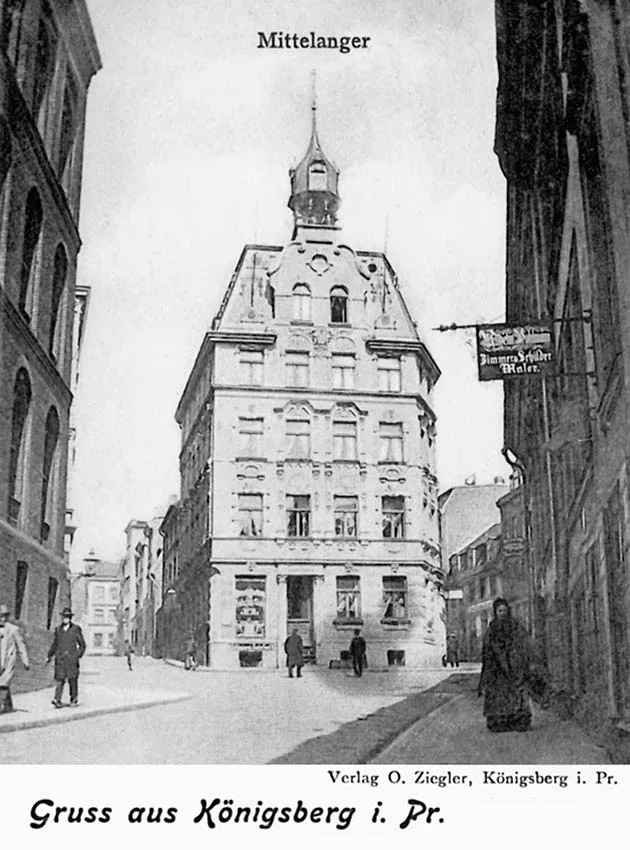
Mittelanger Street in the Löbenicht.
The third led to the Löbenicht Church Square from the Rossgarten Market along Mittelanger Street (Mittelanger). The three Anger streets (Vorder-, Mittel-, Hinter-), now grey and nondescript, bear no resemblance whatsoever to the flowering green meadows that once lay here below the Löbenicht town walls.
The fourth led to the Church Square from the spot on Löbenicht Long Lane (Löbenichtsche Langgasse) where the Sackheim Gate (Sackheimsches Tor), which spanned the street and was demolished in 1752, had stood; it was popularly known as the "Cabbage Gate" (Kohltor). The corner house next to the gate (No. 50) had once been the Löbenicht poorhouse (Löbenichtsches Pauperhaus), and from it a little lane called Paupers' Climb (Paupersteig) rose steeply to the church.
I almost forgot the fifth! Even in our day only a chosen few knew of it!
Opposite No. 12 Löbenicht Long Lane, which bore a memorial plaque recording that the famous writer, dramatist and poet Heinrich von Kleist (Heinrich v. Kleist, 1777–1811) had lived there in 1805, there was a passage between houses 40 and 41, which seemed almost to touch each other. But precisely at that spot there was a narrow wooden door to a semi-basement. Anyone bold enough to open it saw before their astonished eyes an incredibly narrow alley, almost blocked at one point by a buttress; once you had squeezed past it, you could climb up to the Löbenicht Church Square. This passage was called "Herring Alley", and quite rightly so, for only a herring could squeeze past that buttress.
On that terrible August night of 1944 it was probably buried under rubble.
NOTE
1. In 1703 the Collegium Fridericianum, founded shortly before (11.08.1698), acquired the dilapidated mansion of Senior Marshal von Kreytzen, the so-called "Landhofmeistersaal" (Landhofmeistersaal), which was probably built on the foundations of the former Monastery of the Holy Cross (Zum Heiligen Kreuz), which stood next to the Church of the Cross (Kreuzkirche) and the Cross Gate (Kreuztor).
Translated from Russian with the help of AI (Claude, Anthropic), October 2026.