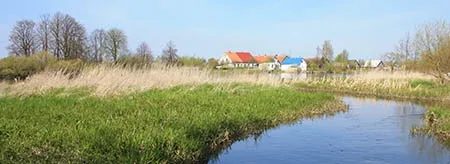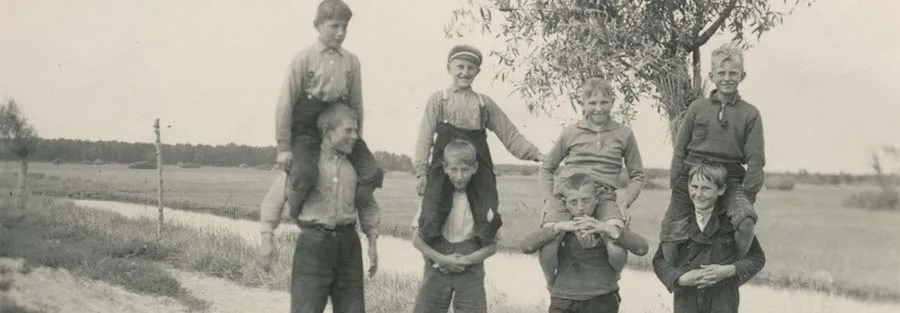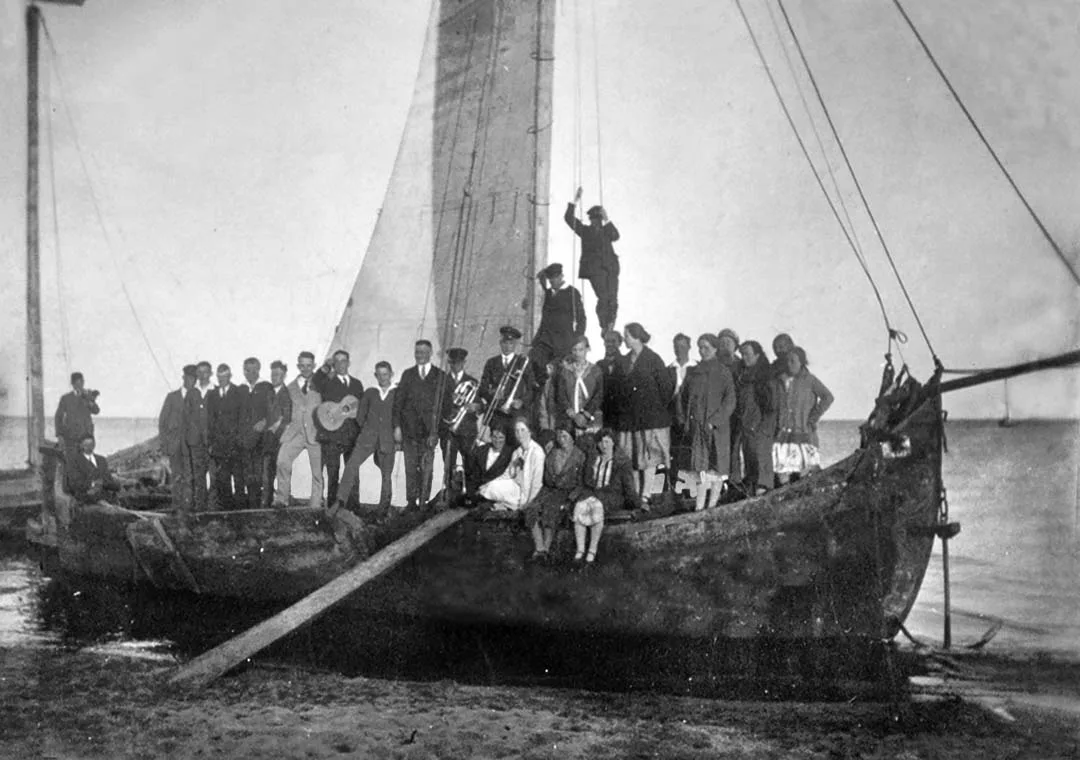
Loye was first mentioned in 1520. In 1542 the village appeared in documents as Loyen, and in 1821 it was recorded as Loie. Loye originally belonged to the parish of Kuntzen on the Curonian Spit. To reach their parish church, the people of Loye had to travel by boat or across the ice of the Curonian Lagoon, which was extremely inconvenient. As a result, in 1570 a parish was established for the inhabitants of the area in Inse (Prichaly).
In 1785 Loye had the status of a royal fishing village (königlich Fischerdorf) with 21 households (1783). Loye belonged to the Amt of Kuckerneese (Yasnoye) in the Kreis of Insterburg (Chernyakhovsk).
After the administrative reform of 1818, Loye was a village forming a rural municipality in the Kreis of Niederung (from 1938 Kreis Elchniederung). Until 1874 the municipality of Loye was part of the Amt of Kuckerneese (Yasnoye). The village belonged to the parish of Inse (Prichaly). In 1818 Loye was classified as a "mixed" village (melirt Dorf), that is, a village where different forms of land ownership coexisted and people of different denominations, nationalities or social groups lived side by side. Most local families did not live by fishing alone or by farming alone, but combined the two.
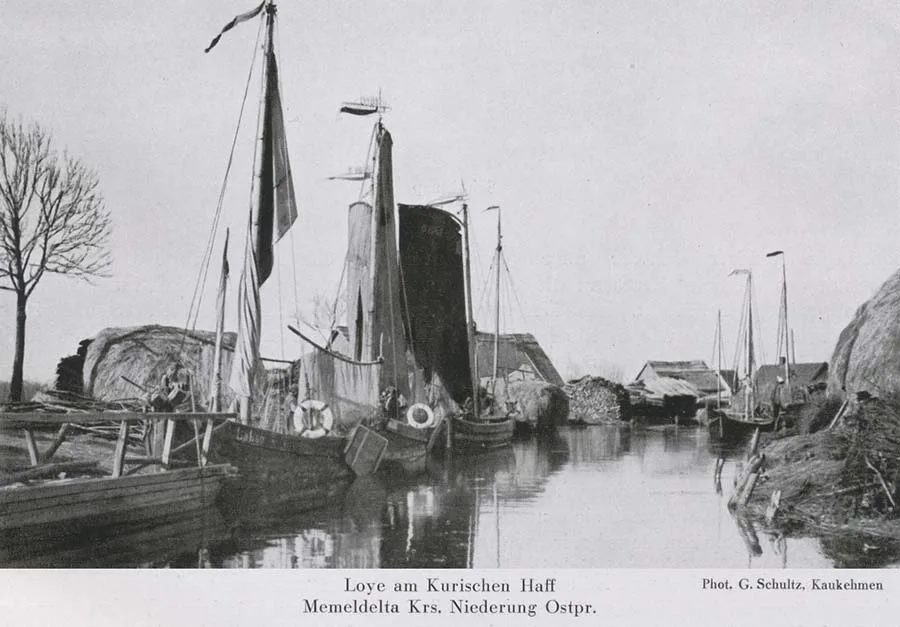
The fishermen of the Curonian coast went out onto the lagoon in flat-bottomed, single-masted boats of a standard type known as kurenkahns (Kurenkahn) or, in the Lithuanian manner, kurėnas.
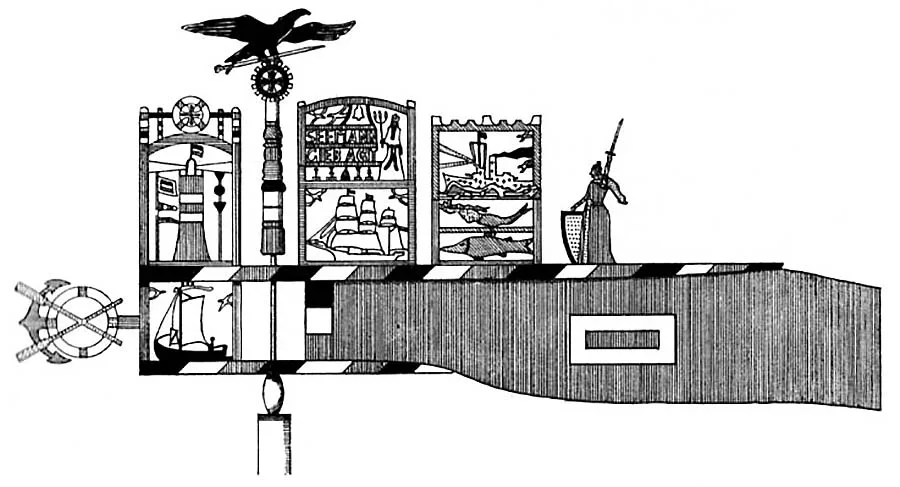 The fishing pennant of Loye.
Such boats are already mentioned in chronicles of the 14th–15th centuries. Over time they grew somewhat larger and the methods used to build them changed, but the shape of the hull and sail remained essentially the same right up to the Second World War, after which the tradition died out. The mast of every boat was adorned with a vane pennant bearing an ornament that showed which village it belonged to. For Loye this was a red rectangle containing a smaller white rectangle, against which sat yet another red rectangle. From 1854 such a pennant became compulsory on every vessel. As for the catch, it consisted mostly of ruffe and smelt. Ruffe, now regarded as a trash fish, was supplied right up to the 20th century to taverns and restaurants, where it was used to make a fish soup traditional in the local cuisine.
In 1871 Loye had 29 dwelling houses, home to 65 families and nine single people. At that time people without families were a great rarity in the countryside — in most villages there were none at all. Only in fishing villages did single people make up a noticeable share of the population, and most of them were women — widows of fishermen who had never come back.
On 26.03.1874 the rural municipality of Loye was incorporated into the newly established Amtsbezirk of Inse (Prichaly).
In 1885 the municipality of Loye owned 197 hectares of land, of which only 15 hectares were arable and 105 hectares were meadows. As 15 years earlier, the village had 29 houses, but the number of households had grown to 82. There were 30 houses, not counting the school building. The population consisted of 82 families, two single men and one single woman.
In 1905 property tax revenue amounted to 16.32 marks per hectare of land, 5.2% above the average for the municipalities of the Kreis of Niederung. Over the previous 10 years there had been no noticeable changes in Loye: the village still had 30 houses and a school, and was home to 82 families and 2 people without families.
On 30.09.1929 the Loye forester's lodge (Forsthaus Loye; 55°08'01'' N 21°12'16'' E) was transferred to the municipality of Loye from the forest Gutsbezirk of Tawellningken, Forst. As of 1925, including the forester's lodge, the municipality of Loye had 38 houses and 79 households. On 01.12.1934 the Loye forester's lodge was again placed under the forest Gutsbezirk of Tawellningken. In the pre-war years Loye had a working school.
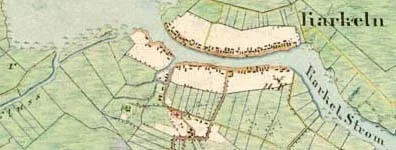
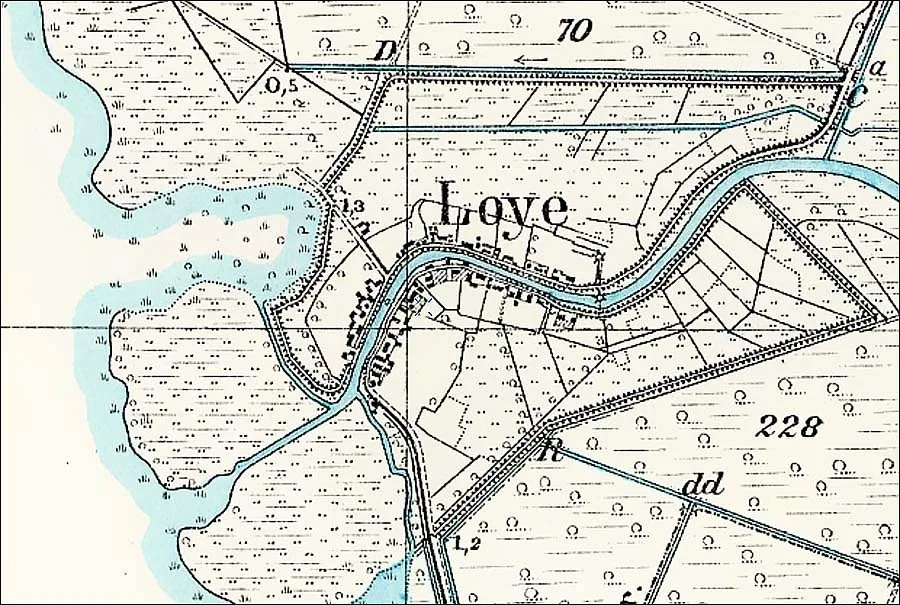 Loye on a topographic map of East Prussia from the early 20th century.
On 17.11.1947 the village of Loye was renamed the settlement of Rybachye, which was initially assigned to the Zalivino village soviet. On 15.10.1948 the Udarnik fishing collective farm was founded in Rybachye.
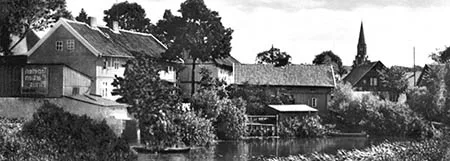
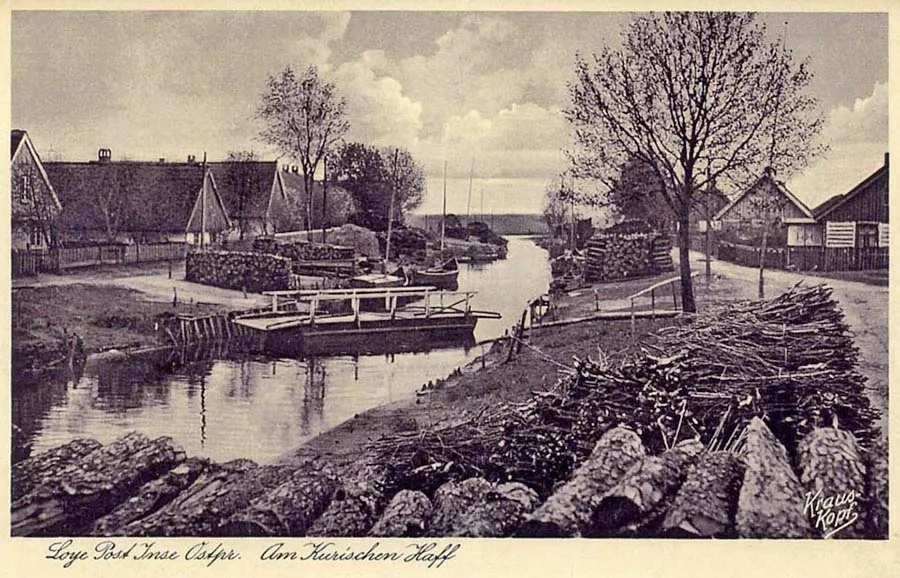 A postcard with a view through the central part of the village.
On 23.02.1954 the Udarnik fishing collective farm was merged into the A.I. Mikoyan fishing collective farm (Prichaly settlement), which was renamed the Prichaly fishing collective farm in 1958. On 27.04.1959, as part of a drive to consolidate fishing enterprises, this collective farm was in turn merged into the Rybak Baltiki fishing collective farm in the settlement of Mysovka. From 12.01.1965, after the Zalivino village soviet was abolished, Rybachye came under the Prokhladnensky village soviet. By 1972, however, only the ruins of buildings remained on the site of the settlement, and it appeared on maps merely as an abandoned locality.
It is widely believed that the exodus of the inhabitants was caused by that very consolidation of fishing collective farms (see above) and by the local authorities' wish to save money on draining the polder lands and on keeping the transport infrastructure of the coastal settlements in proper repair. No later than 1975 the settlement of Rybachye was removed from the official register. On the site of the Loye forester's lodge some outbuildings still stood for a while, but by 1985 nothing was left of them.
Coordinates of the settlement: 55°08'49'' N 21°12'06'' E
Population over time: 1818 – 133, 1852 – 234, 1867 – 266, 1871 – 282, 1885 – 329, 1895 – 350, 1905 – 328, 1910 – 313, 1925 – 334, 1933 – 288, 1939 – 279 inhabitants.
Composition of the population of Loye in 1871: Protestants – 280, Catholics – 2, children under 10 – 55, literate – 154 (68%).
For reference
Population of the Loye forester's lodge over time: 1885 – 8, 1895 – 7, 1905 – 7 inhabitants.
Photo: Bildarchiv Ostpreußen
Translated from Russian with the help of AI (Claude, Anthropic), October 2026.