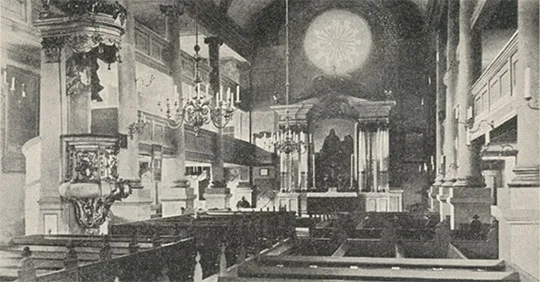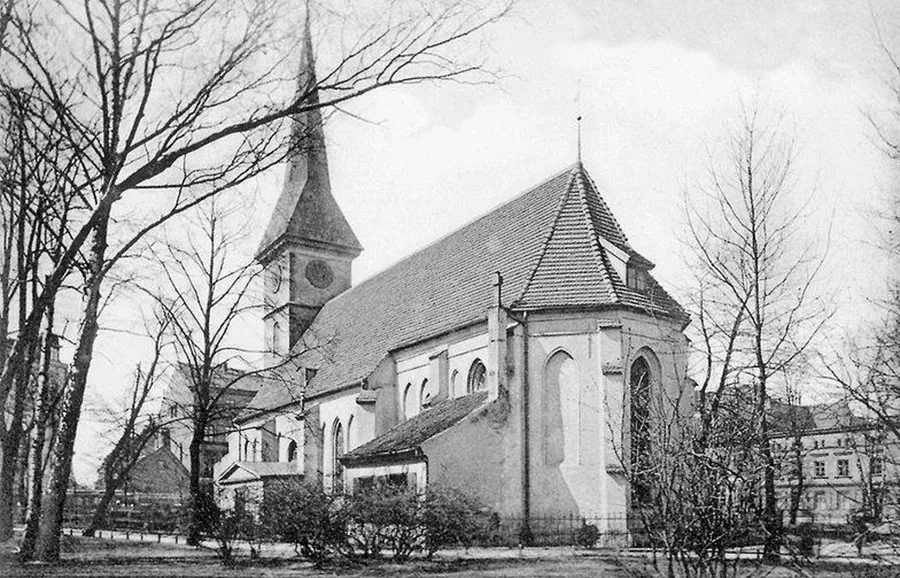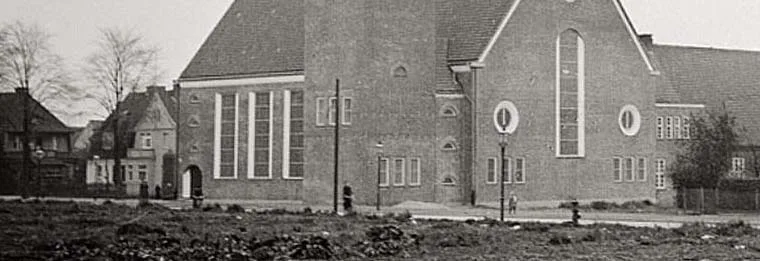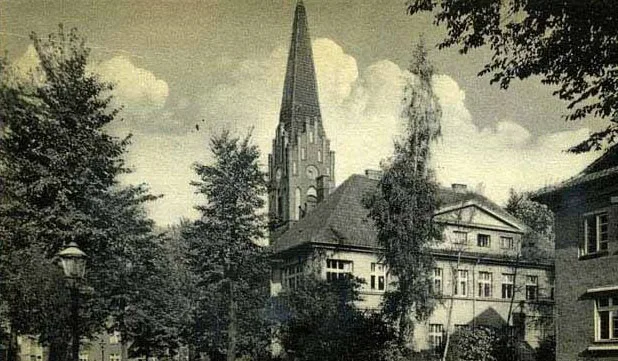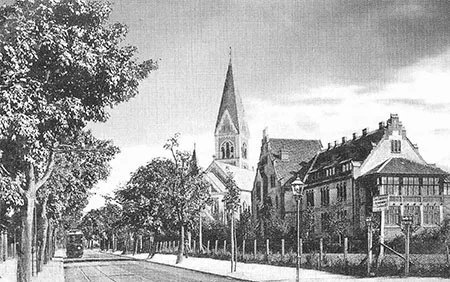
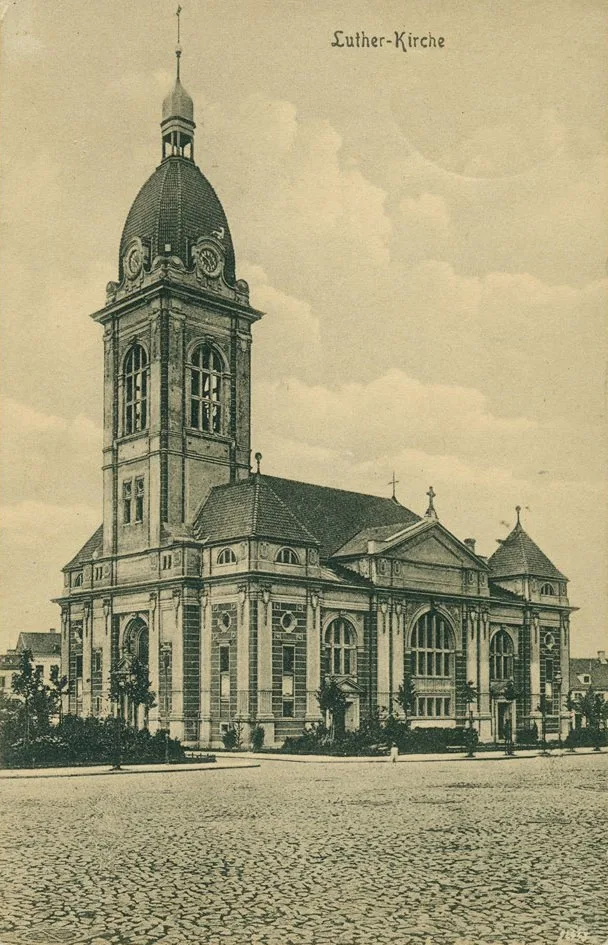
The church was built in the Late Renaissance style with Baroque elements. The tower, built into the church building, was almost 70 m high. On the north and south sides the church had gables and three large round-arched windows each. The church was of considerable size — 30 x 45 m. Its congregation split off from the Haberberg congregation. The first pastor was a man named Konschel. The interior was striking for its unexpected compactness and intimacy. Most of the space was lined with galleries running along the walls, supported by columns imitating marble. The galleries were reached by stone staircases in all four corners. Throughout the interior stood pews for 1,400 people, thoughtfully fitted with places for walking sticks or umbrellas and even with hooks for the parishioners' hats.
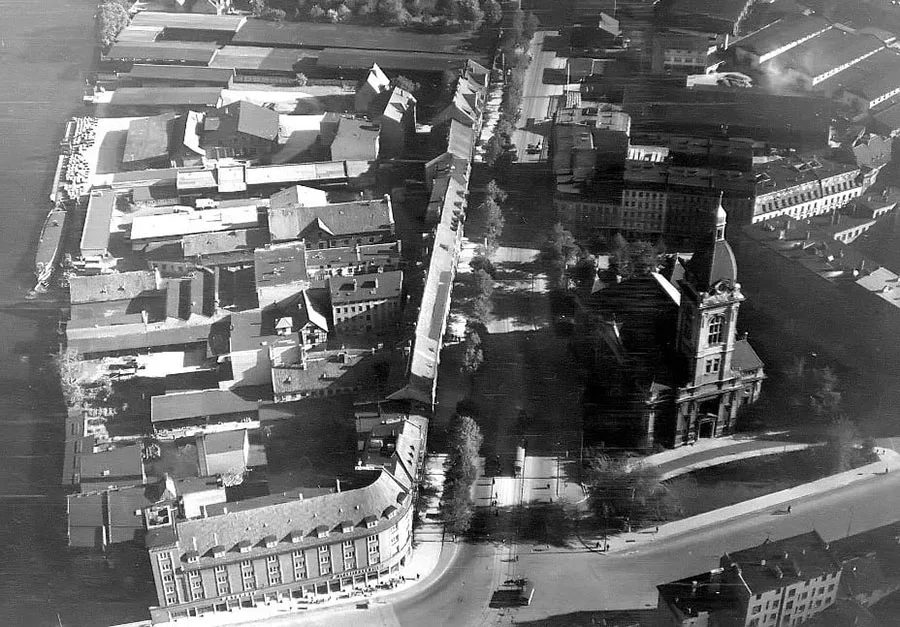
The dome of the hall was 30 metres high and was made of reinforced concrete, the first time this had been used in the churches of East Prussia. The windows had coloured stained glass.
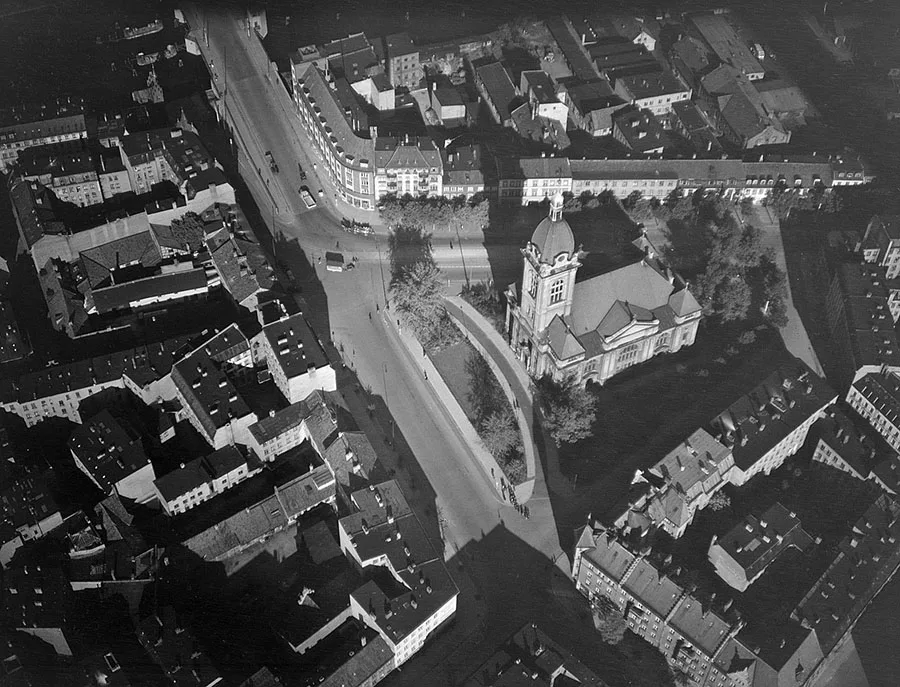
The altar was made of Swedish limestone. The oak pulpit, with modest carving, stood next to the altar. The organ rose behind the altar; it was built by the organ builder Karl Nowak. The church had three bells cast in steel, with bronze plates inserted to soften the sound. The church was heated from the basement, where a boiler made specially for it was installed.
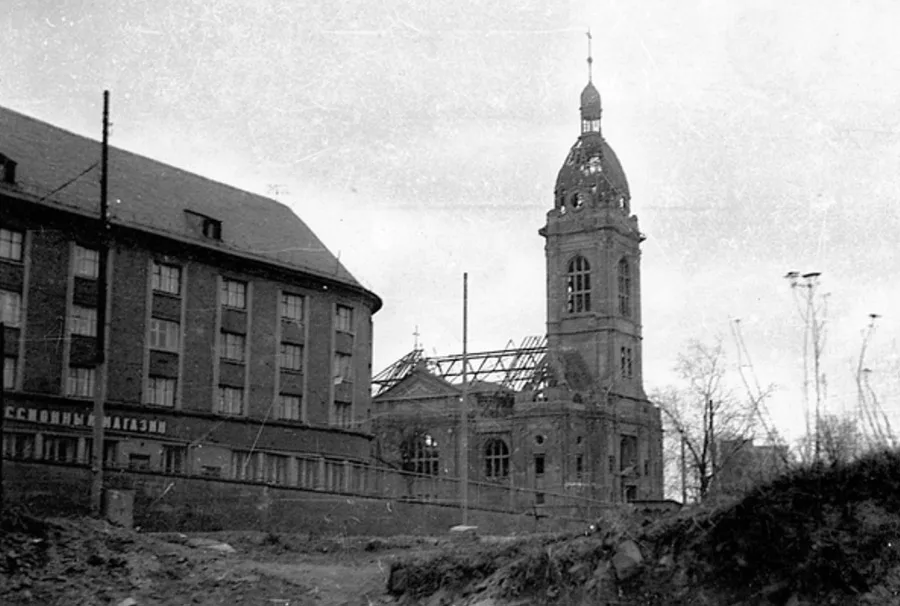
During the battles for Königsberg this church suffered almost no damage.
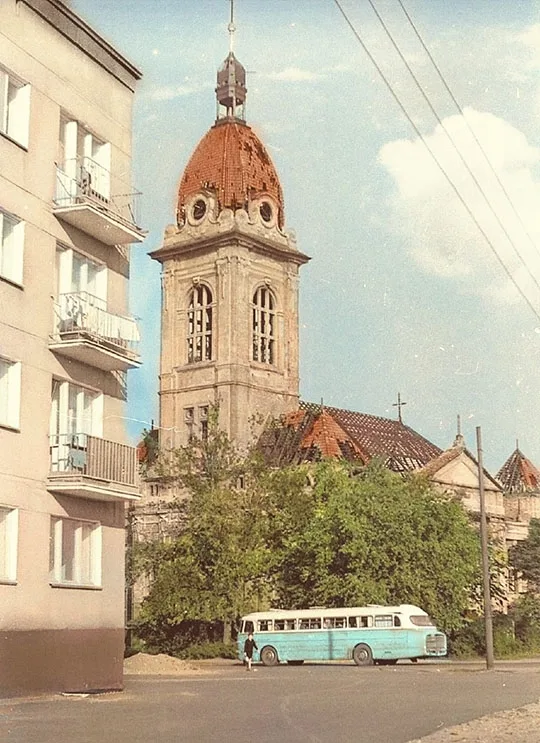
After the war it was hardly used at all and, gradually falling into ruin, stood until May 1976, when it was blown up and the debris removed. A flower bed was laid out on the site of the church. This was the last church in the city to be destroyed by the Party authorities.
Photos on this page: Bildarchiv Ostpreußen, bildarchiv-ostpreussen.de.
Translated from Russian with the help of AI (Claude, Anthropic), October 2026.