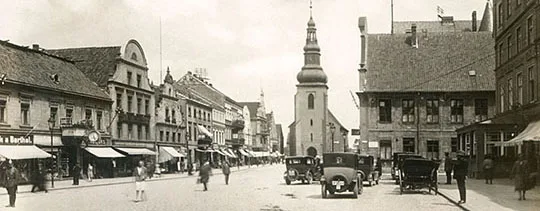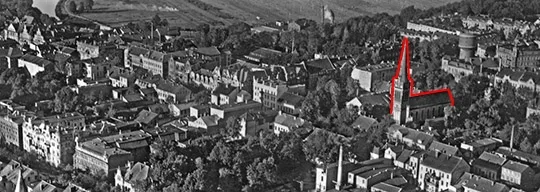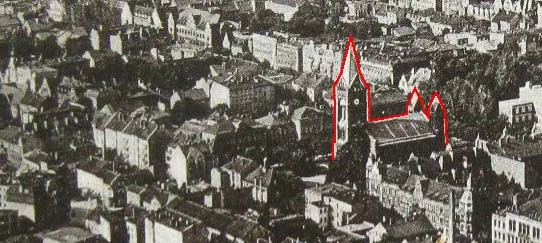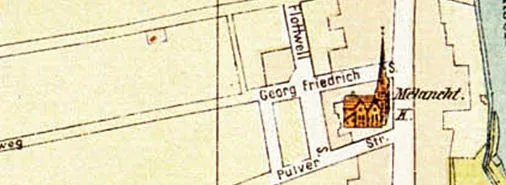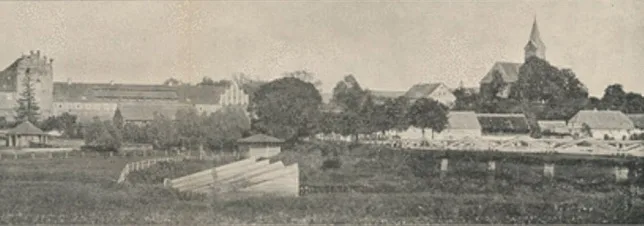
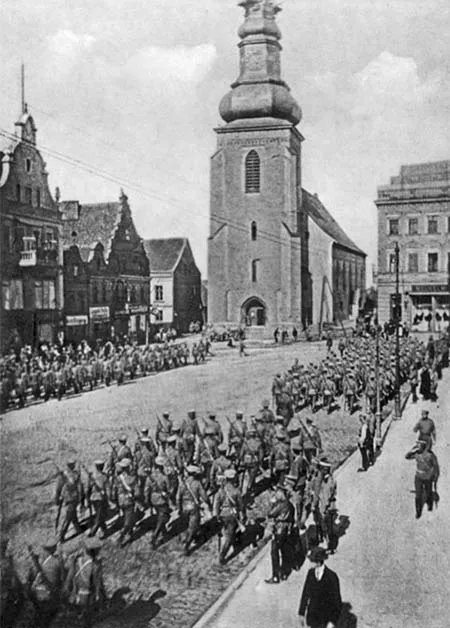
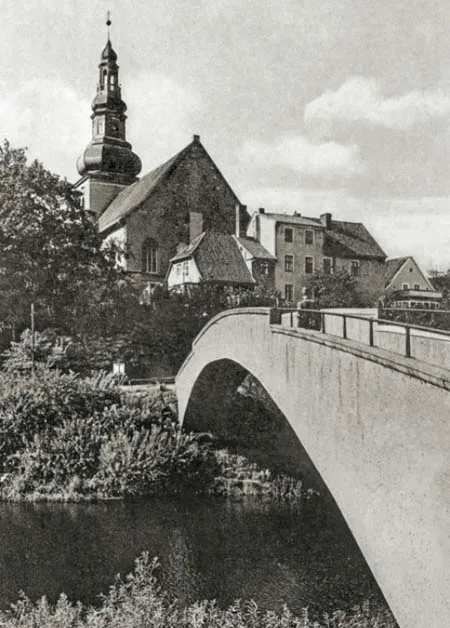
A brick building without a chancel, of the Teutonic Order church type, measuring 38.2 x 18.8 m. A gable roof. On the west wall, a diamond pattern in the brickwork. The tower to the west had diagonal stepped corner buttresses. Pointed-arched windows and doors. According to Hennig's manuscript, 361,400 bricks and 2,920 tonnes of lime were used to build the church.
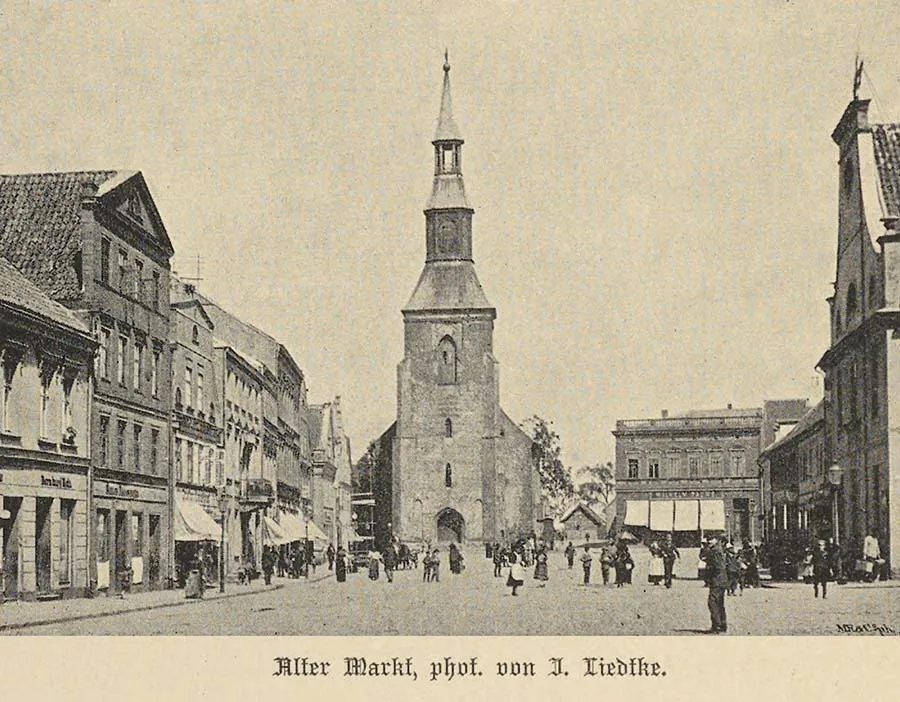
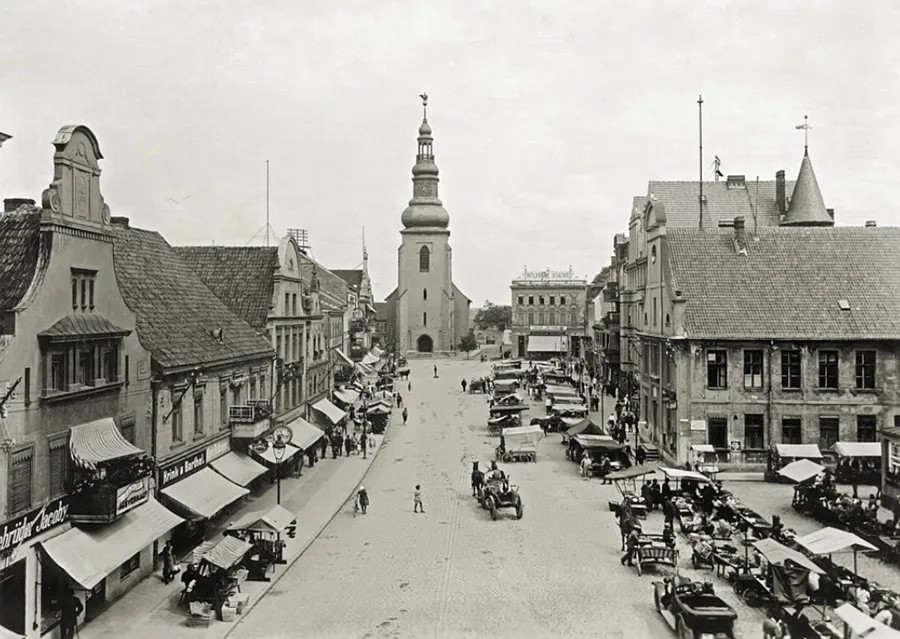
In 1724 the church caught fire but was saved. In 1727 and 1757 the tower was partly rebuilt, and in 1832 a new dome was installed. In 1936–1939 the exterior was restored.
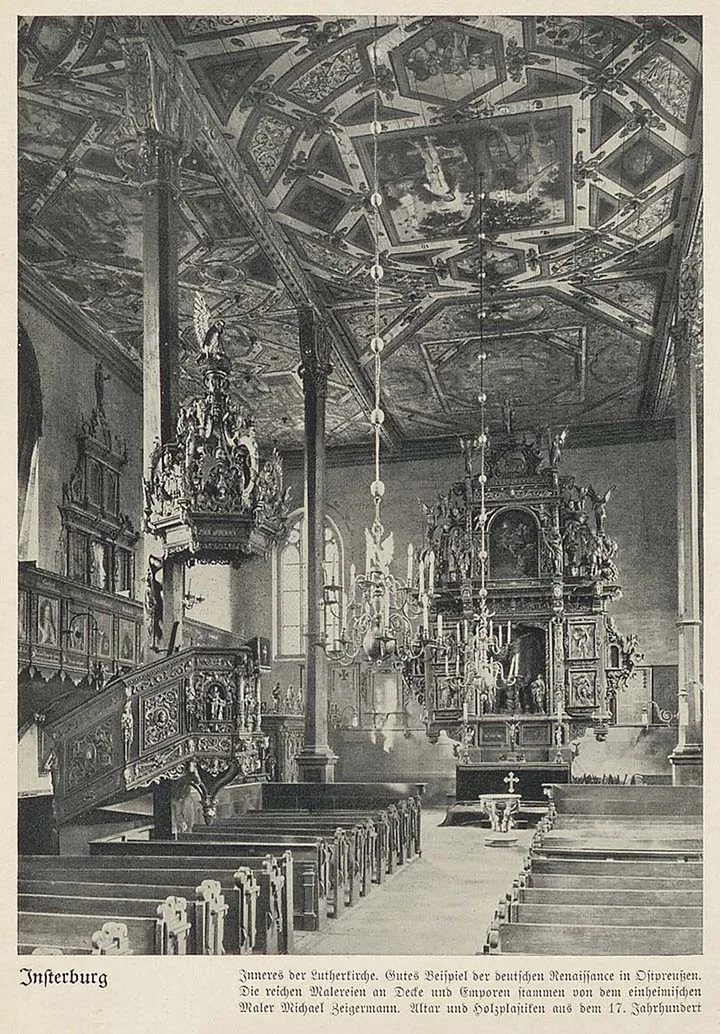
Inside, the church had three aisles. Two rows of slender octagonal wooden columns supported a flat ceiling painted by M. Weigermann in 1644-1653.
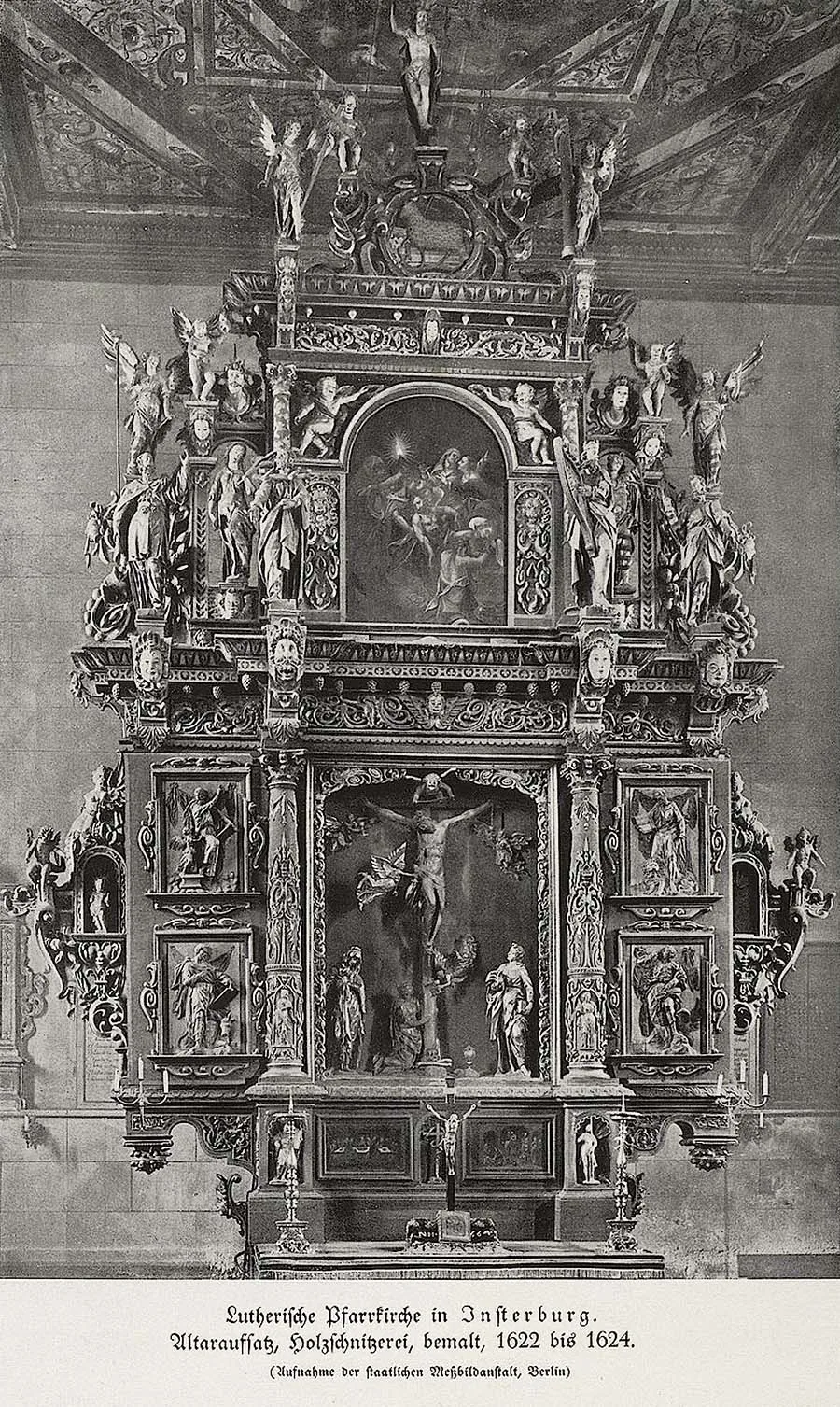
The altar dates from 1622–24. The fine pulpit of 1618 is the work of Philipp Westphal, a master well known in East Prussia. The last organ was built in 1898. The church had three bells.
The church came through the Second World War almost undamaged. After the war it stood until the end of the 1940s, when the tower dome was pulled down.
In the 1950s part of the tower was demolished. The church building was used as a workshop of a woodworking plant.
By 1964 the general condition of the church was satisfactory but neglected. The church needed routine repairs. But the building never got them, and in 1975 it was completely demolished.
Photos: Bildarchiv Ostpreußen, bildarchiv-ostpreussen.de
More information about the church on the website Angrapa.ru.
Translated from Russian with the help of AI (Claude, Anthropic), October 2026.