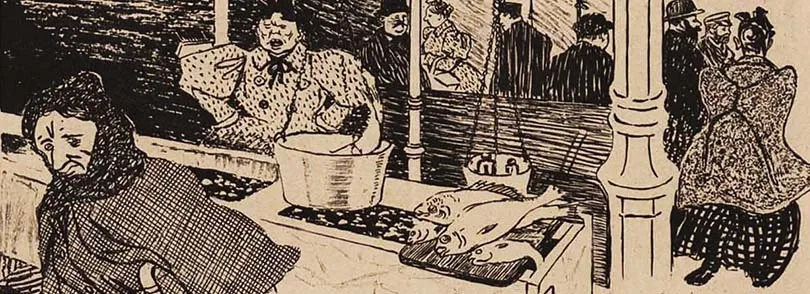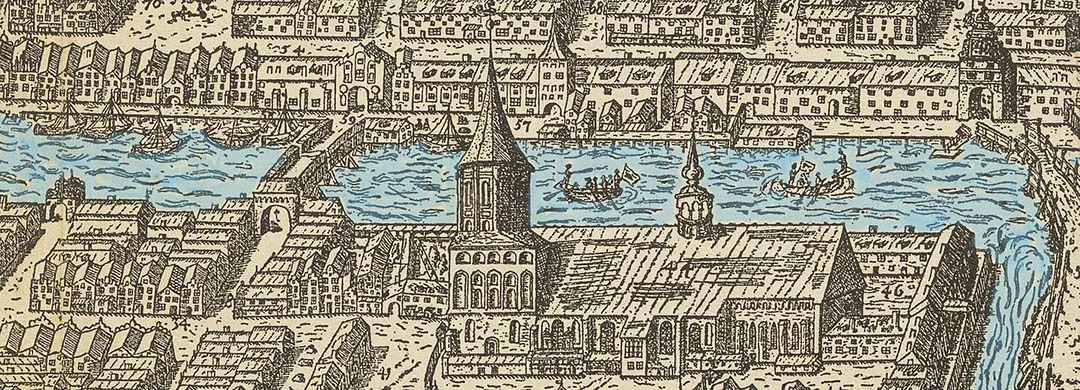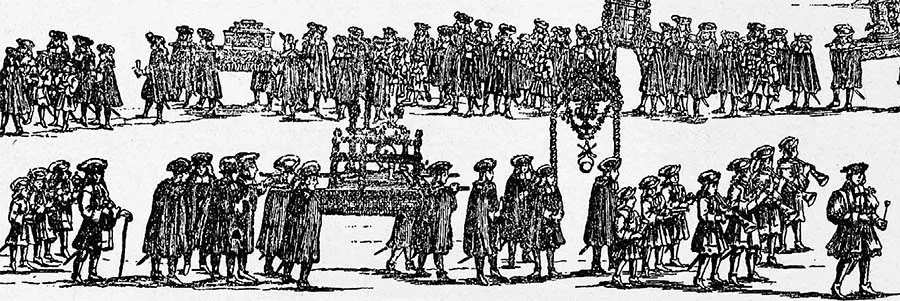
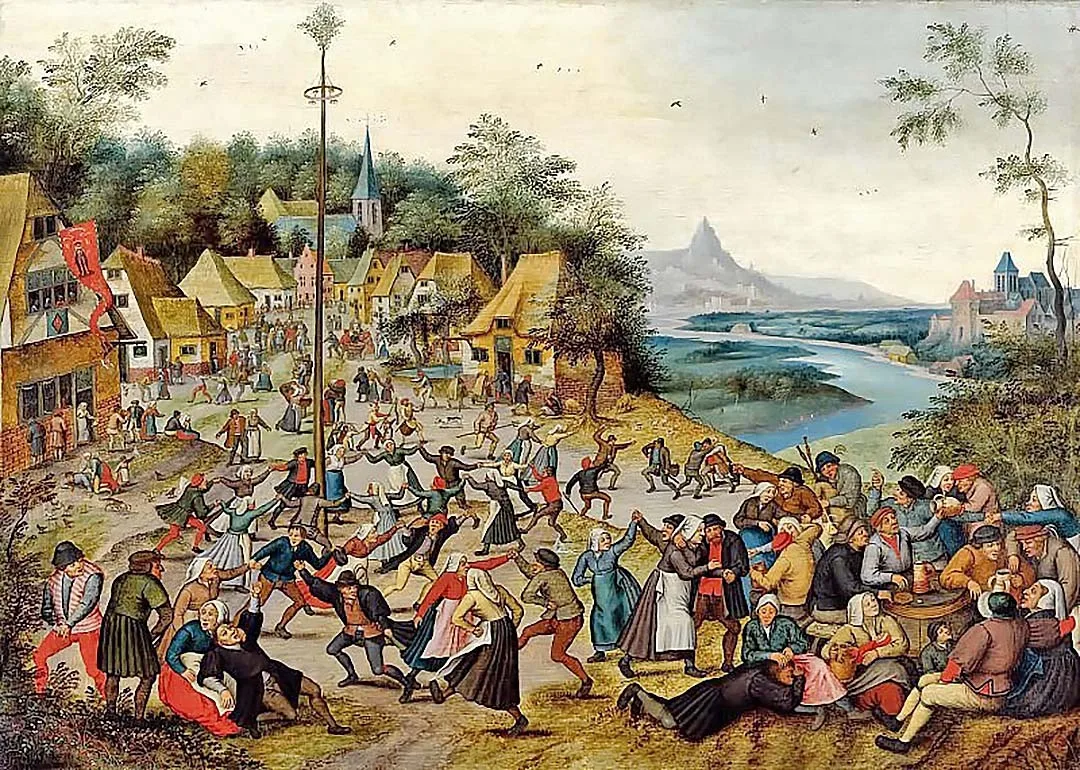
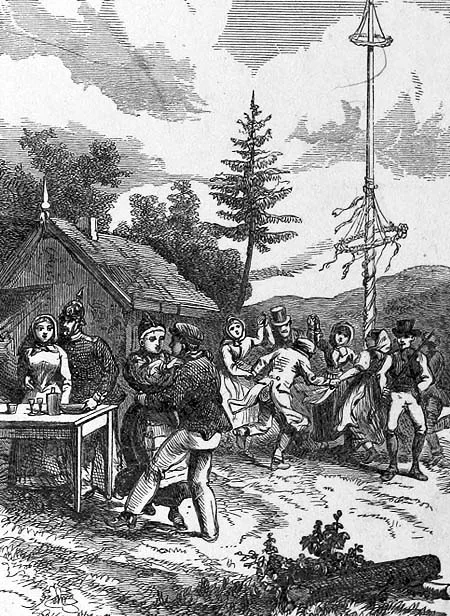
The popular festivities lasted a week that coincided with the Christian feast of Pentecost. During the celebrations, young men competed in contests of endurance, marksmanship and physical strength in order to find the strongest and most agile among them. In Königsberg, on 1 May (and later at the end of the month, at Pentecost), the men marched in full dress and under arms to military contests outside the city gates, where the so-called maypole (Maibaum) was set up on a specially prepared meadow and a festive tournament was held. The “tree”, which symbolized spring, the renewal of life and fertility, was decorated with greenery and coloured ribbons1. Once it had been raised, the merrymaking began.
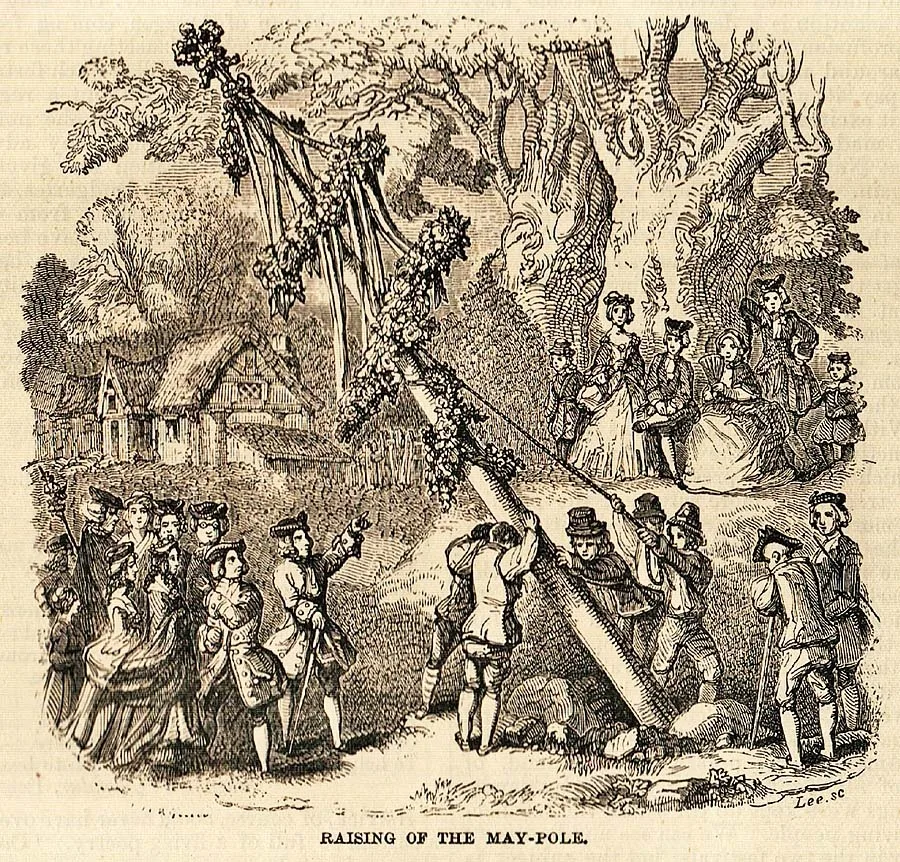 Raising the maypole. English illustration, 19th century.
At Pentecost the whole town was decorated with branches covered in tender spring green. As a rule these were birch branches, since the birch is the first tree to wake from its winter sleep.
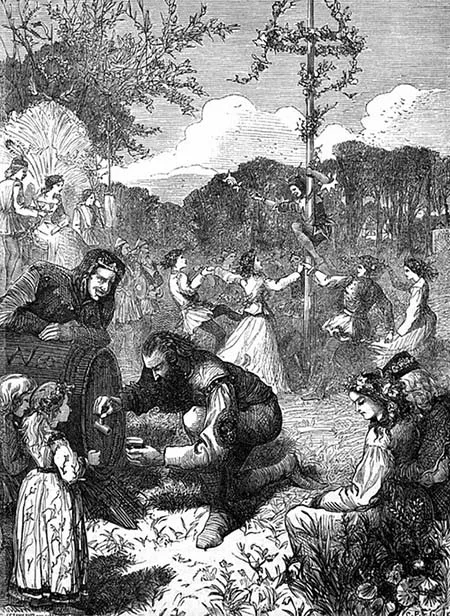
The green birch branches were called “Mays” (Maien), after the word “May”.
“Deck with Mays
The holy feast,
And scatter flowers,
Let the offerings burn.
For the Lord this day
Abides here with us.
Strew His path
With green boughs.”
* * *
“Schmückt das Fest mit Maien,
lasset Blumen streuen,
zündet Opfer an!
Denn der Geist der Gnaden
hat sich eingeladen,
machet ihm die Bahn!”
Church hymn (1715)
On the festive meadow, contests lasting several days were held – what we would now call military sports competitions – during which the local men chose the best of the best: the Maigraf. Members of the town council presented him with the May wreath (Maikranz). The Maigraf was then granted the right to choose a May Countess from among the maidens. He placed his May wreath on her head. In honour of the occasion there was dancing and refreshments were served.
The celebration ended with a ceremonial return to the town (Mairitt), during which the newly elected “Count” and “Countess” were escorted by members of the town council.
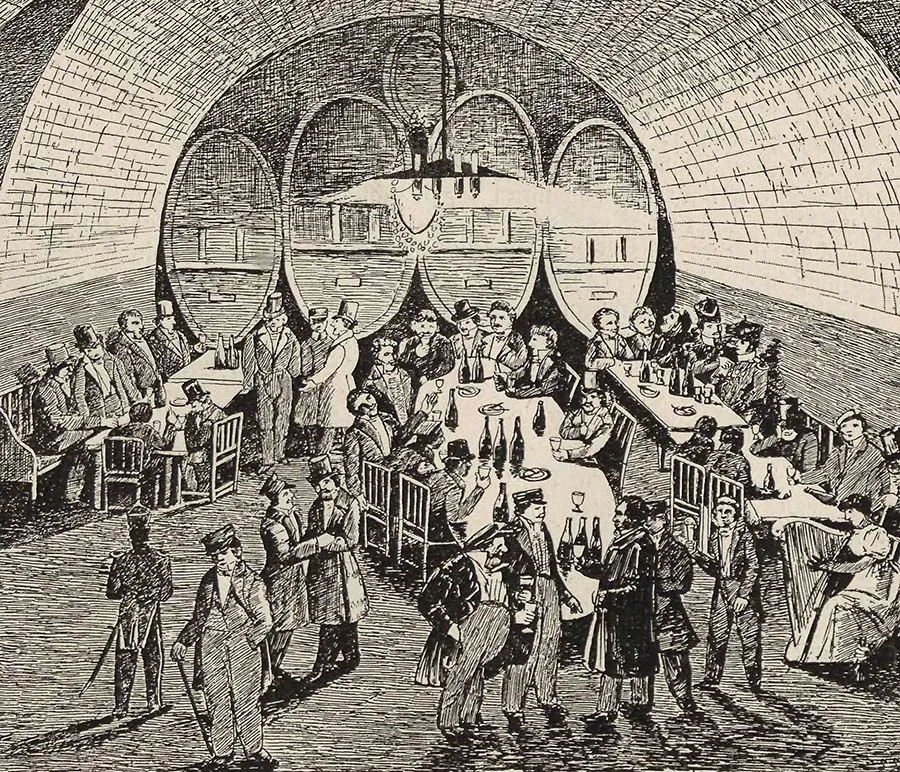
For a time, the Maigraf of Königsberg was elected in the Blutgericht wine restaurant, located in the cellar beneath the north wing of the castle.
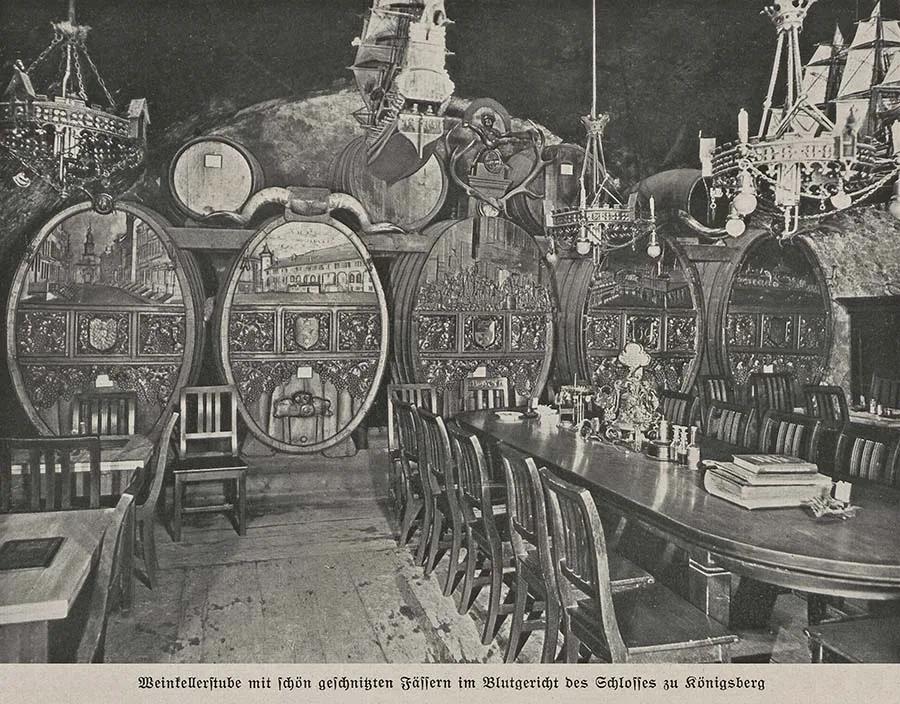 The famous halls of the Blutgericht were clearly not intended for running about and dancing.
However, moving the main action of the festival into a drinking establishment regularly led to spontaneous brawls and other disorderly conduct. In 1835, therefore, the town council ordered a return to the tradition of holding the election of the Maigraf on the festive meadow only, and banned elections in the wine cellar.
Closely linked to the May festivities was the tradition of making a special drink, formerly known as May wine. The most popular was May punch, a mixture of wine and sparkling wine. In East Prussia there was a version made with dark beer and schnapps. It should not, however, be confused with Maibock2 beer, or Heller Bock.
TRANSLATOR’S NOTES
1. The raising of a May tree, or maypole, was first documented in Aachen in 1224 by the monk Caesarius of Heisterbach (Caesarius von Heisterbach). In his chronicle he condemned it as a pagan ritual.
2. A German style of strong pale lager, traditionally brewed for spring (May). It differs from the classic dark bock in its paler colour (from golden to light amber), high drinkability, malty sweetness with bready/biscuity notes and a noticeable hop bitterness.
SOURCES
1. Gause Fritz. Geschichte der Stadt Königsberg. 1965;
2. Eduard Pabst. Der Maigraf und seine Feste;
3. Der Maigraf. Die Gartenlaube (1884). Heft 22

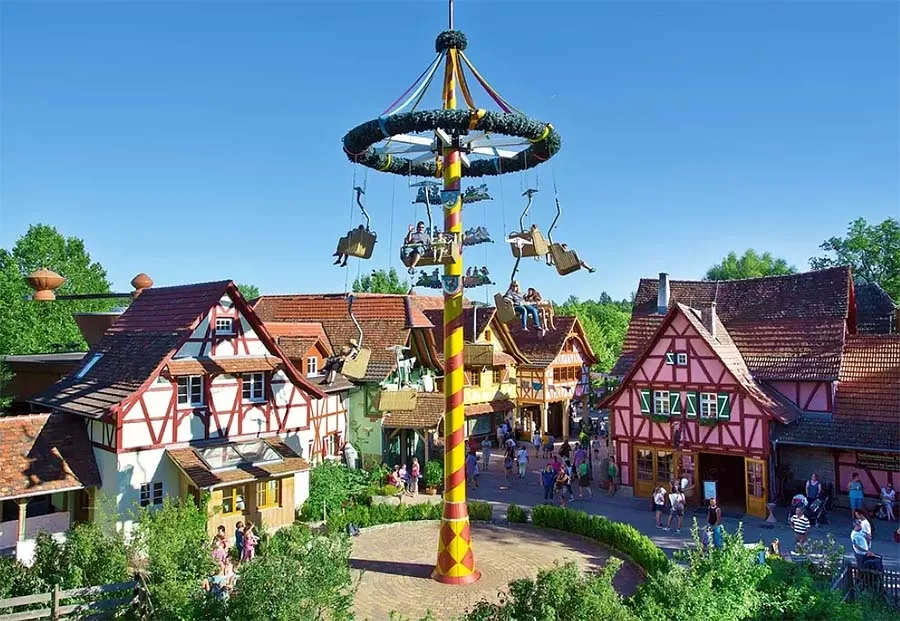 A modern take: a maypole and a ride at the Swabian amusement park Tripsdrill.
LINK
More information about this tradition can be found on Wikisource.
● Editor’s note: Read on VisitPrussia.com an interview with the translator of German and, in particular, Prussian fairy tales, our regular contributor Tatyana Kolivay, who runs her own blog, where countless other parables, legends and fairy tales in her translations have been published.
Translated from Russian with the help of AI (Claude, Anthropic), October 2026.