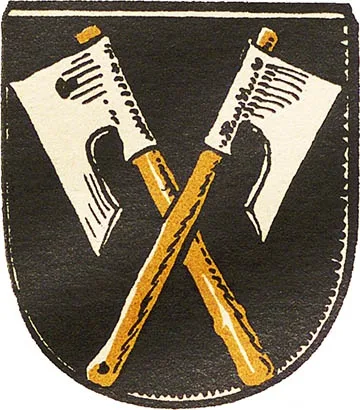
 Coat of arms
of Heiligenbeil
Before the arrival of the Teutonic Order in Prussia, from roughly the 4th–5th centuries, the site of present-day Mamonovo was occupied by the Prussian settlement of Swento Mest / Swento Mest, which can be translated as “holy settlement”, and the fortress of Svetopil. The first knights of the Order landed near here in 1238. Around 1272 the Teutonic Knights built a wooden fortress, next to which the town of Heiligenstadt / Heiligenstadt was founded in 1301 under Kulm law. In 1344 the town was renamed Heiligenbeil / Heiligenbeil. A church was built in 1349. In the 14th century the town was surrounded by defensive walls. In 1372 Grand Master Winrich von Kniprode founded an Augustinian monastery in Heiligenbeil (destroyed on 08.05.1520).
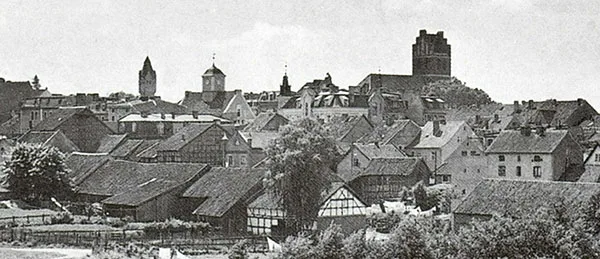
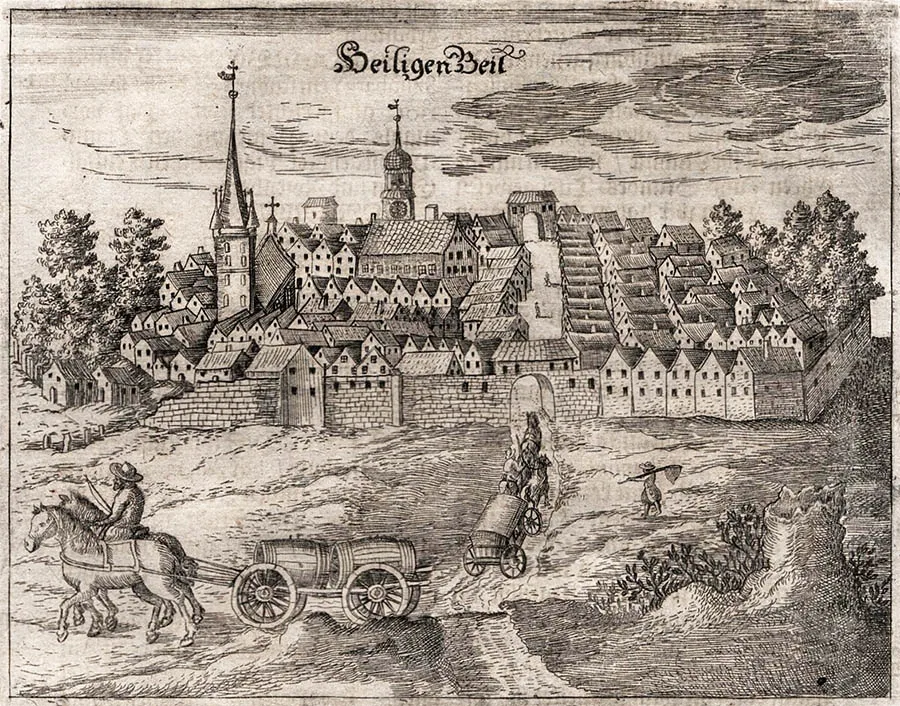 Heiligenbeil in an engraving by Christoph Hartknoch, 17th century.
In the 15th century around 20 windmills were built around Heiligenbeil; they survived, no longer in working order, until the early 20th century.
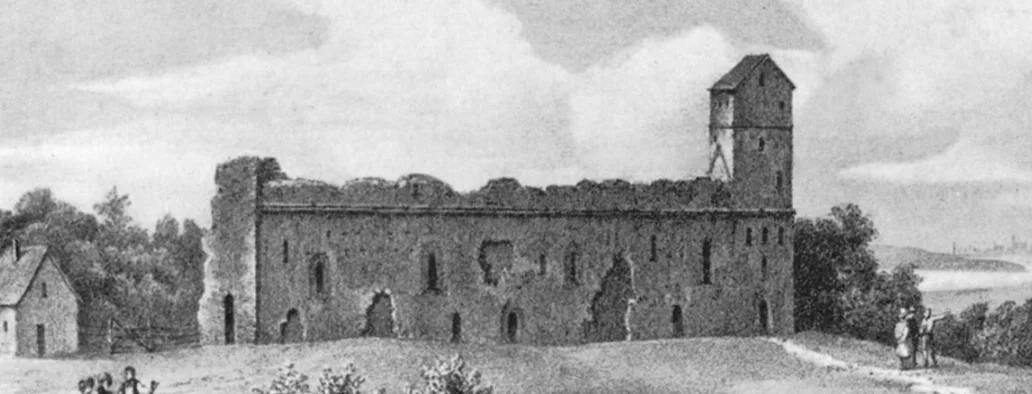
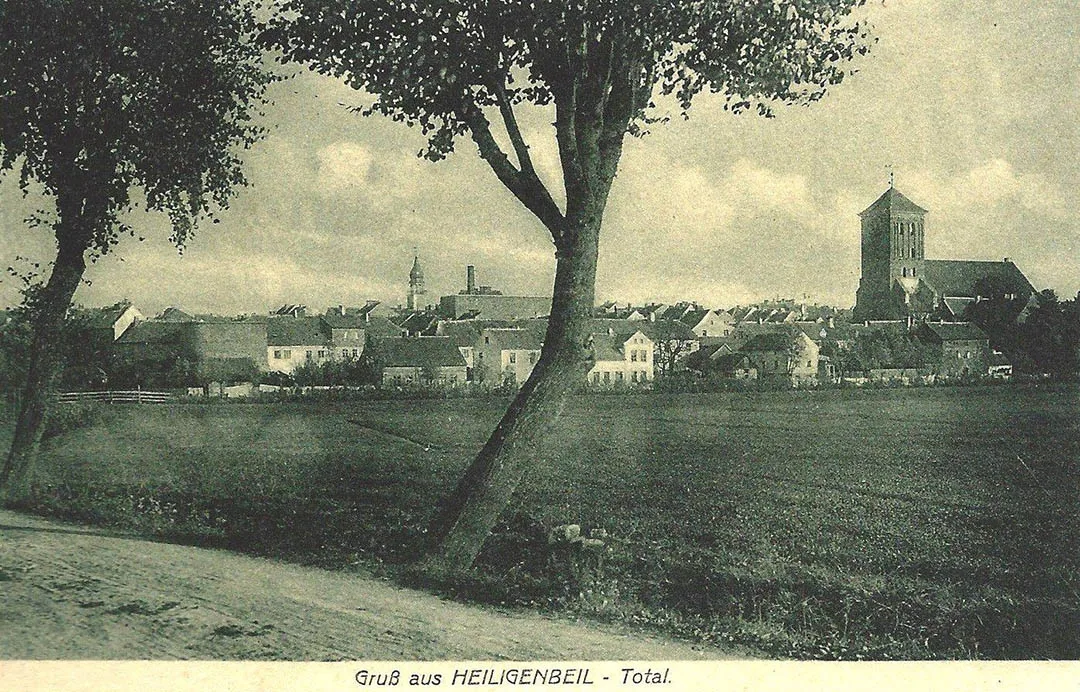
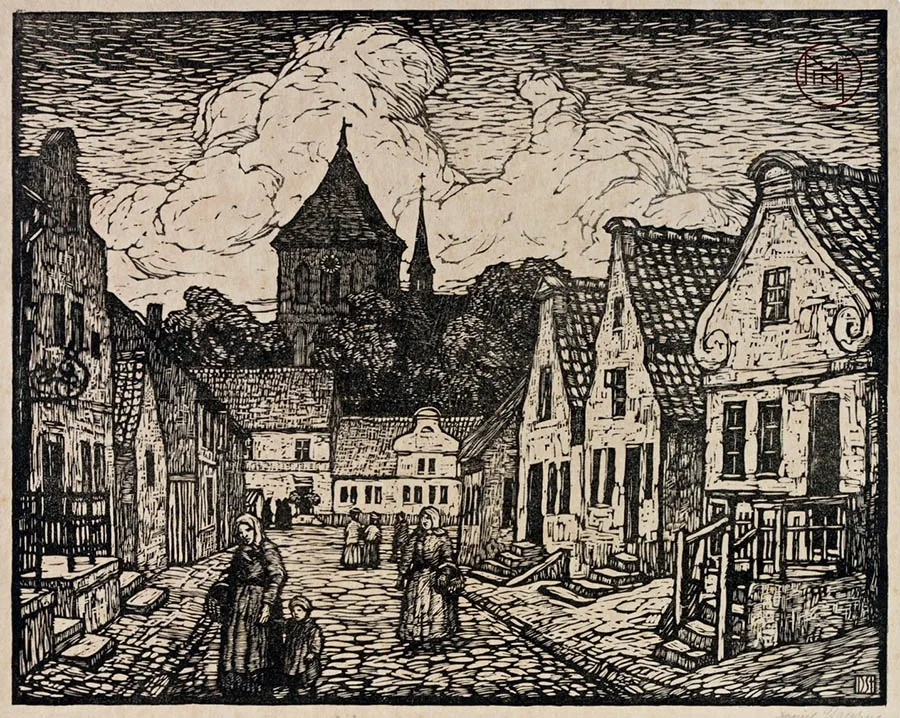 Heiligenbeil. Lithograph by Daniel Staschus, c. 1925.
In 1440 Heiligenbeil joined the Prussian Confederation. In 1445 troops of the Teutonic Order entered the town. During the Thirteen Years’ War (1454–66) Heiligenbeil was attacked twice by supporters of the Prussian Confederation: in 1462 its suburbs were burned, and in 1463 the town itself was destroyed. In 1464 the Order’s forces recaptured Heiligenbeil and stationed a Livonian garrison there. At the end of the 15th century the town had 88 households.
In 1519 a major fire broke out in Heiligenbeil, and the following year, 1520, during the Horsemen’s War, the town was captured by the Poles, who set a great fire and destroyed the Augustinian monastery. Further major fires struck Heiligenbeil in 1571 and 1677, when the entire town centre burned down, including the church, the school and the town hall.
On 24.11.1563 Duke Albrecht of Brandenburg founded the St. George’s Hospice in Heiligenbeil.
In 1629 Heiligenbeil suffered an outbreak of plague. The next epidemic came in 1709–10, when 1147 townspeople died. In 1736 Heiligenbeil was granted the right to hold fairs three times a year, replacing the fairs previously held in Bladiau. In 1750 the town was hit by another plague epidemic, which killed 1443 inhabitants.
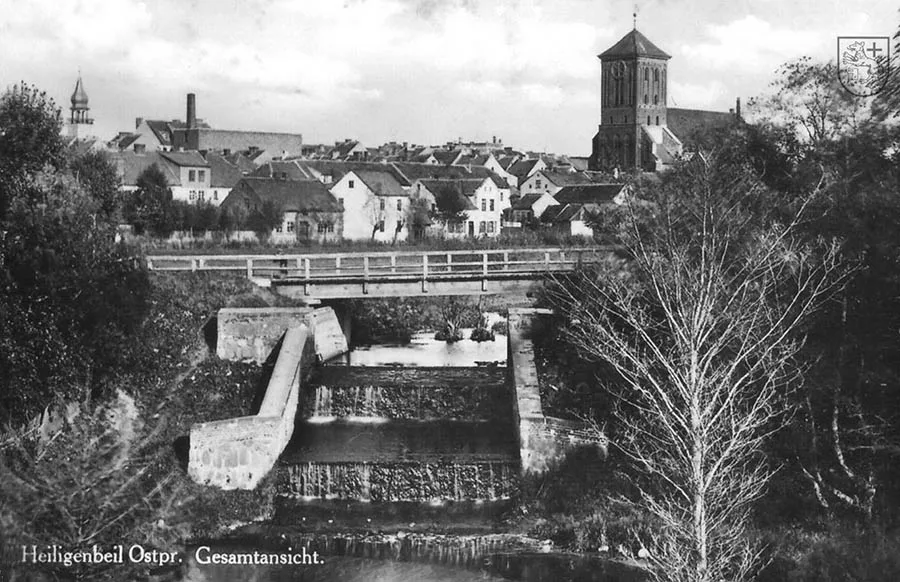
In the 18th century a Latin school was opened in Heiligenbeil, with three teachers.
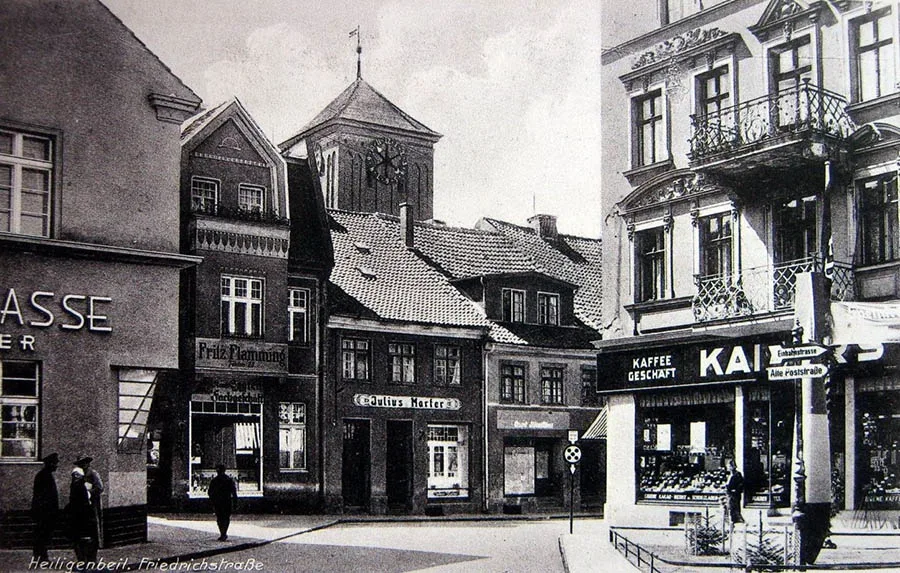
The townspeople lived mainly from agriculture and crafts. The town also brewed beer, which was sold throughout the surrounding area. In 1788 the Lutheran church was rebuilt.
Another fire struck Heiligenbeil in 1807, destroying 421 buildings, including 12 granaries, the town hall, the town gates and the fair pavilions.
From 1819 Heiligenbeil was the seat of a district (Landkreis). In 1821–24 a new town hall was built to replace the one that had burned down. In 1826 the town was connected to the Königsberg–Berlin road, and in 1853 the Königsberg–Braunsberg railway was laid through the town; it later became part of the Berlin–Eydtkuhnen / Eydtkuhnen (Chernyshevskoye) line. In 1842 the first district savings bank in East Prussia opened in Heiligenbeil. In 1865 the St. George’s Hospice moved into a new building, and on 18.10.1879 an agricultural school was opened. A post office was built in 1885 and a hospital in 1887. A Catholic church opened in 1891. In 1895 the East German Machine Factory / Ostdeutschen Maschinenfabrik began operating. In 1910 a Protestant parish building and a new school building were erected.
Before the war the town had an East Prussian engineering works producing implements, a steelworks, an aircraft repair plant and a gasworks, a machine factory, a steam sawmill, a brewery and a dairy, a pudding powder factory, furniture factories, a mill, and horse-breeding and beekeeping enterprises.
The town had a railway station, a goods station, railway workshops and two water towers. Heiligenbeil was home to municipal and district administrative bodies, financial institutions, a court, a land registry office, the district farmers’ association, the St. George’s Home for the Elderly, the district hospital, a municipal elementary school with a gymnasium, as well as secondary, agricultural and music schools. A garrison and a Luftwaffe school were stationed there, and the newspaper “Heiligenbeiler Zeitung” was published in the town.
On 01.10.1935 the village of Rosenberg / Rosenberg (Krasnoflotskoye) was incorporated into the municipality of Heiligenbeil. In 1938 the Heiligenbeil–Zinten / Zinten (Kornevo) railway was built.
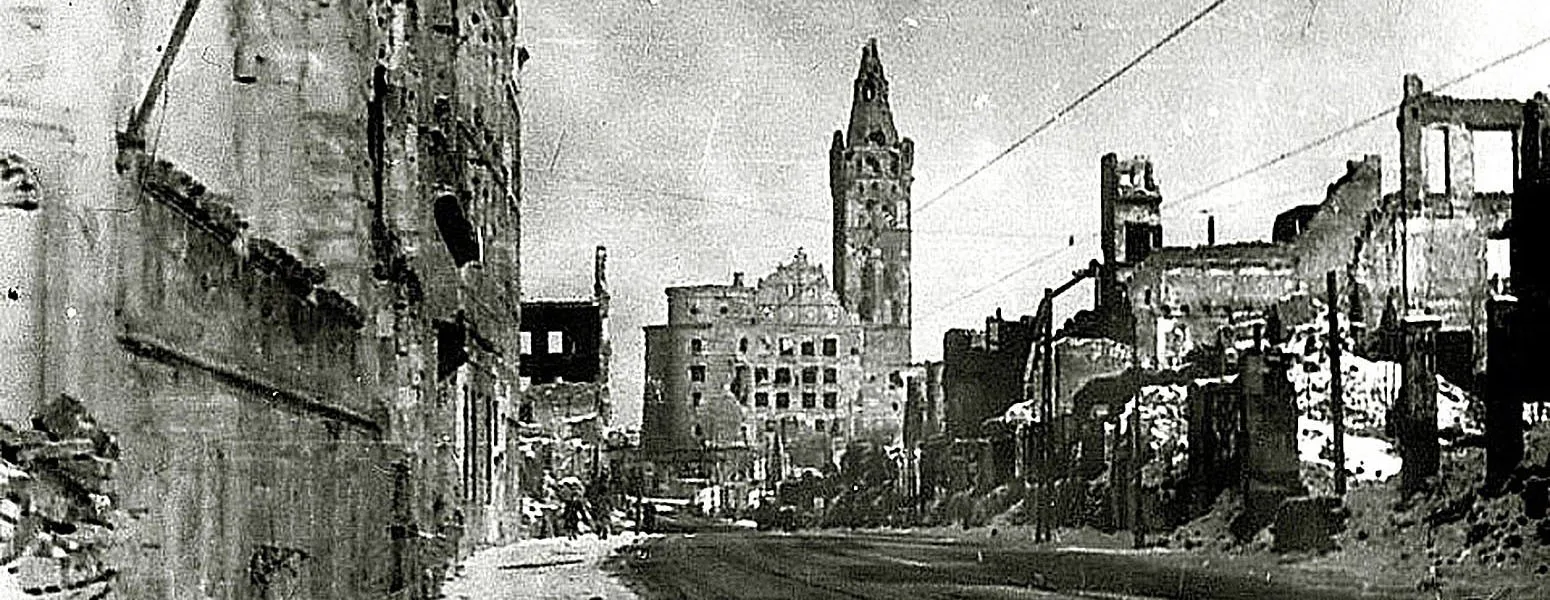
Fighting near Heiligenbeil began in February 1945. As a result of the battles of February–March 1945, the German 4th Army was encircled. On 13.03.1945 an operation to destroy the encircled group began. On 18.03.1945 the town of Heiligenbeil was completely cut off from the outside world. On 25.03.1945, after a seven-day assault, Heiligenbeil was taken by troops of the 3rd Belorussian Front. The town suffered extremely heavy damage.
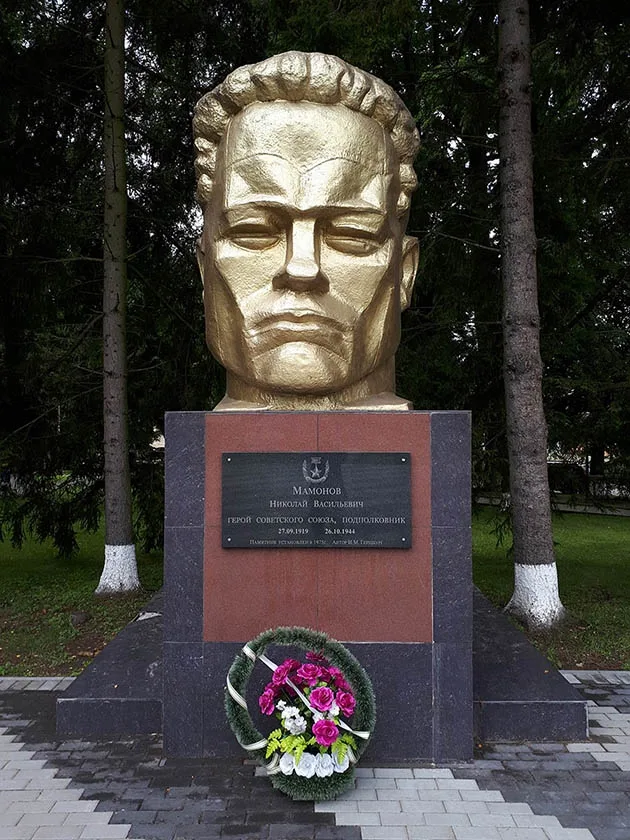
Bust of Hero of the Soviet Union Lieutenant Colonel Mamonov.
On 25.07.1947 Heiligenbeil was renamed in honour of N.V. Mamonov, who was killed in the fighting for East Prussia.
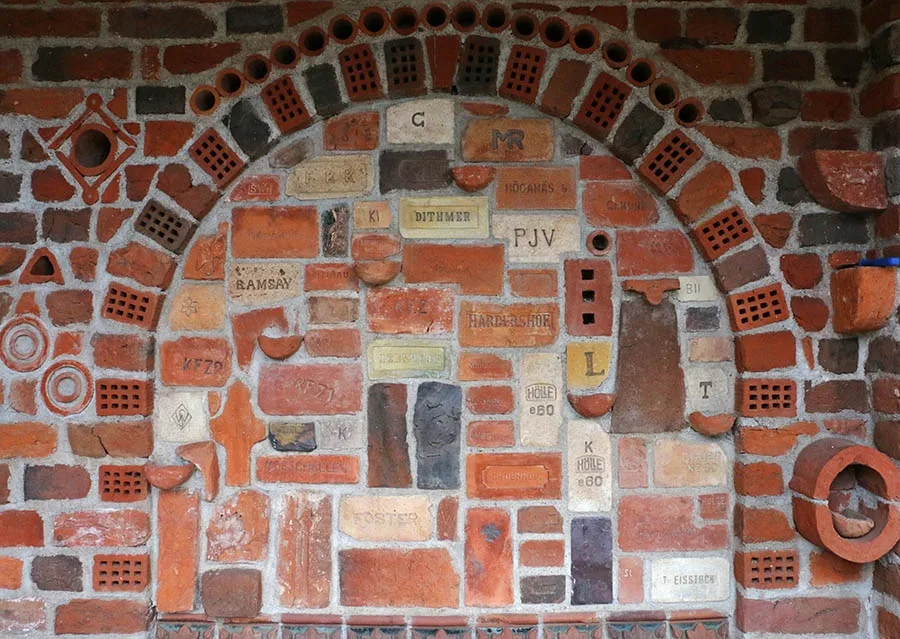 Decorative mosaic at the entrance to the private Prussian Brick Museum in Mamonovo.
At the same time the Mamonovo village council of Ladushkin District was established. By the end of 1947 a fishing collective farm and a motorised fishing station had been opened, and construction began on a fish-processing plant, which started operating in 1949. In 1951 Mamonovo received the status of a town of district subordination. From 1963 it belonged to the Bagrationovsk village council. Before 1975 the settlement of Krasnoflotskoye was incorporated into Mamonovo. In 1997 the town was separated from Bagrationovsk District as an independent municipality. Since 2004 it has had the status of an urban okrug. In 2011 the town museum was opened.
Sights: ruins of the town wall, ruins of the church, a waterfall, the water tower (1902), the post office building (1885), the hospital building (1887), St. George’s Hospice (1865), a memorial stone commemorating the 200th anniversary of the Kingdom of Prussia, a monument to Mayor Schröder, the private Prussian Brick Museum, a mass grave of Soviet soldiers (1420 people, memorial 1954), a mass grave of Russian, German and French soldiers killed in the First World War, a monument to sprats (2008), and more.
Population: 1782 – 1800, 1802 – 2013, 1810 – 1523, 1816 – 1692, 1821 – 2135, 1831 – 2468, 1858 — 2991, 1864 — 3224, 1875 — 3354, 1880 — 3430, 1890 — 3760, 1905 — 4553, 1910 — 4821, 1925 — 5180, 1933 – 6356, 1939 – 10,631, 1946 – 1608, 1947 – 2948, 1959 – 5459, 1970 – 7275, 1979 – 8001, 1989 – 7816, 2002 – 7393, 2010 – 7761, 2012 – 8055, 2013 – 8028, 2014 – 8105, 2015 – 8075, 2016 – 8084 inhabitants.
Contemporary photos by Mikhail Ogorodnikov.
Translated from Russian with the help of AI (Claude, Anthropic), October 2026.