LEGENDS OF PRUSSIA in the blog of Tatyana Kolivay.
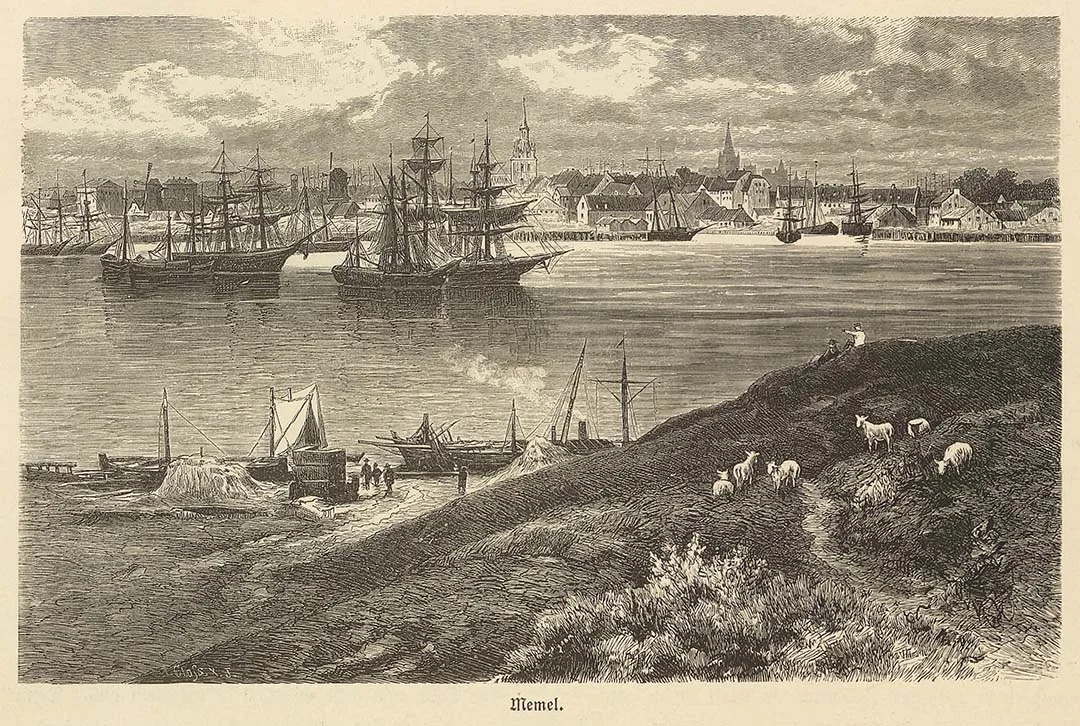
Felling timber and transporting it is a special art requiring particular skills and mastery. In Memel itself all the incoming timber is taken outside the city limits, debarked, stacked and sawn. In Schmelz, the southern suburb of Memel, such timber yards stretch for miles, and every plot has a windmill. Its sails turn and drive the circular saws. In this way the timber is prepared for shipment. So one may say that the wind is indispensable here. It is a kind of nervus rerum1.
Once, as we were walking along one of the main streets of the city, a sudden gust of wind tore our umbrellas from our hands. A Memeler who was with us then remarked that here, in his native town, this was not yet a wind but a light breeze, a zephyr.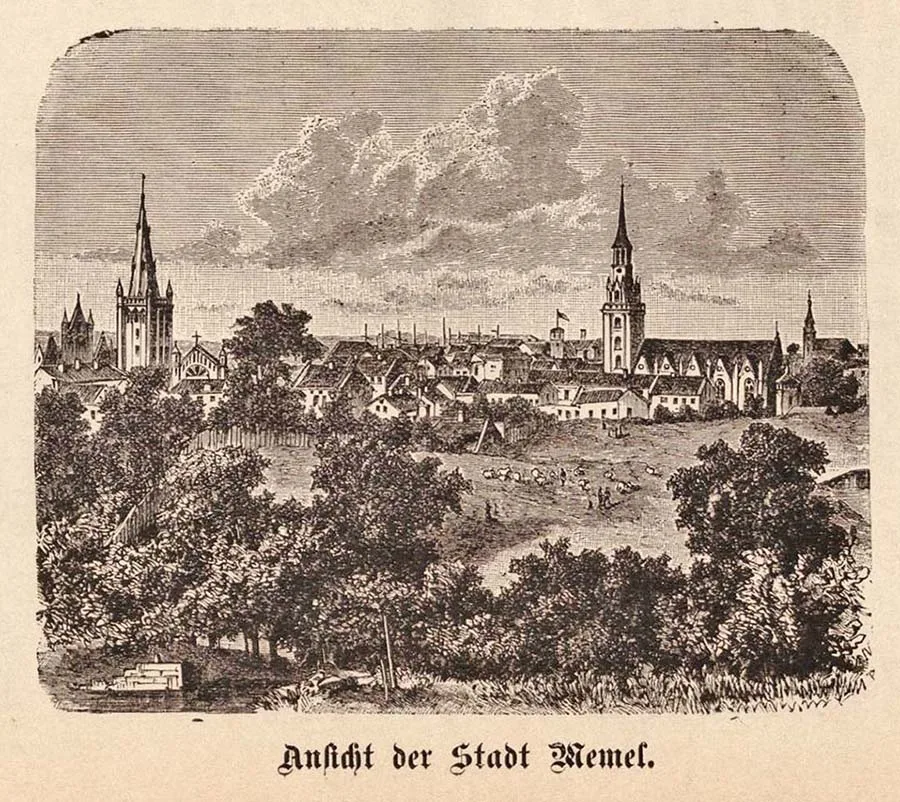
The second most important element here, in a seaside town, is undoubtedly water. There is the ever-changing sea with its storms, and sometimes the waters of the Dange River rise and overflow their banks. The third element of Memel is the sand from the Curonian Spit, which regularly silts up the fairway of the lagoon and the harbour itself. Often the sand also blows into the city streets in great clouds.
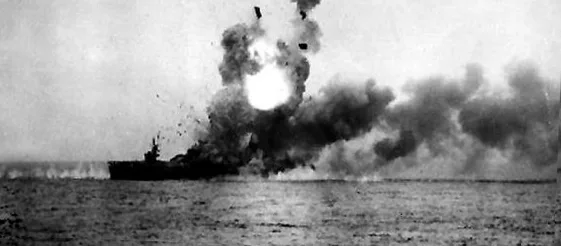
As for the fourth element, fire, a single spark is enough to start a blaze in the huge wooden warehouses, its glow shining far out to sea. And indeed, that is what happened in the terrible winter of 1854. At that time, during the Anglo-Russian war2, Memel was the only open port for traffic with Russia. Its warehouses were overflowing with goods, and the fire that broke out turned most of the city's warehouses and houses to ashes.
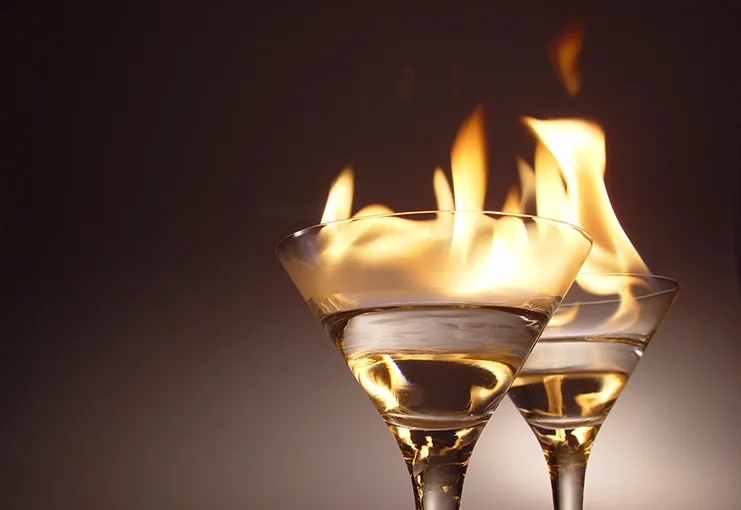
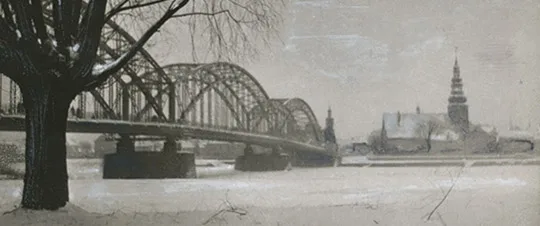
Since then Memel has once again become large and beautiful. Our "Little London" is cosily spread out on the eastern shore of a large lagoon which we hardly know what to call: the Curonian or the Memel Lagoon. Over the Dange River, which flows through the centre of the city and rises in the shady park of Tauerlauken (Lithuanian Tauralaukis), handsome bridges are thrown. Stately churches with tall spires have been built in the city: Lutheran, Reformed, Lithuanian, Catholic and English — for Memel, like most seaside towns, is visited by many newcomers of different faiths. As for everyday life, the English style prevails here: the townspeople prefer tea to coffee, and port and porter to French red wine and beer. Sometimes these alcoholic tastes are combined in the so-called "water punch". Its recipe comes from Russ's sawmill and runs as follows: a kettle of port is put on the fire, and cognac is slowly poured into it. Why the name? They say it is good to drink with water. At first a stranger finds it hard to get used to local life, until he has fully adapted to Memel's peculiarities.
The people of Memel are born merchants. A bookseller once complained to me that fiction was not in favour, and that practical publications were in demand: commercial pamphlets, manuals, guidebooks and so on. Nevertheless, our traders do not always sit in their counting houses. The city is rich in beautiful spots, and the Memelers love, if not to travel, then at least to take a stroll. The most beautiful place for walks here is the lighthouse, about three kilometres from the city. It lights up the "Tief" — the strait between the Curonian Lagoon and the Baltic Sea — and signals to seafarers that a quiet harbour and a friendly town are close at hand.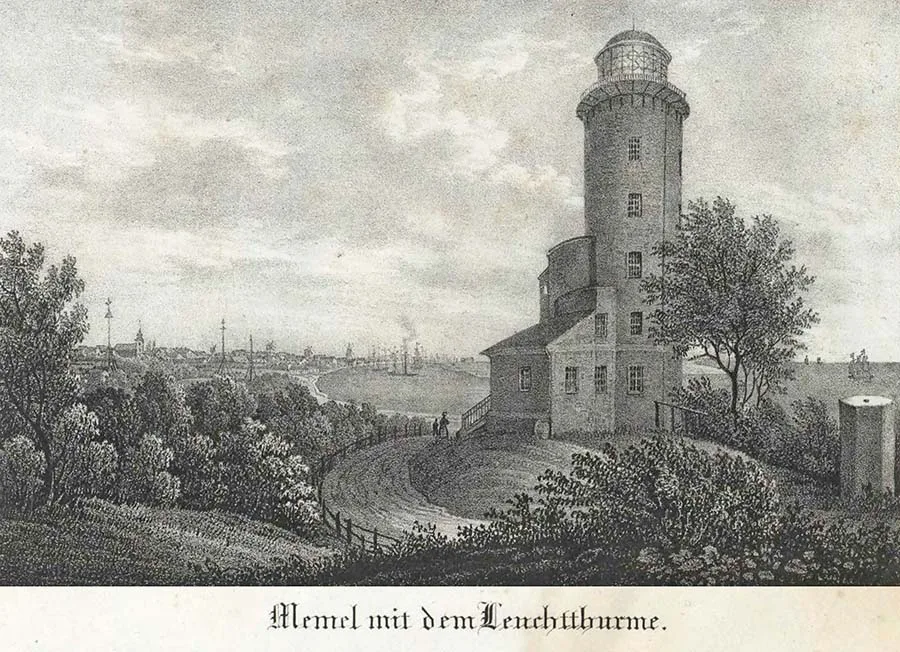
There are, of course, days when the storm is so violent that even the pilots cannot put out to sea. At such times hundreds of people stand on the shore by the lighthouse or on the Nordermole and watch the raging waves through which the ships have to make their way to reach the shore. How many ships lie here on the sea bed!
"Today from the lighthouse we watched an unfortunate ship sink. Thirteen people got into a boat, and then it capsized and they all drowned before our eyes", wrote Countess von Voss3 on 11 September 1807, in that ill-starred year when the Prussian royal court was in Memel.
In the spring of 1855 it was decided to begin rebuilding Memel, which had burned down the year before. For this purpose 300 bricklayers were hired in Belgium. A steamer was to bring them here. But it ran aground off the Nordermole (Nordermoole) and sank with the men and everything on board.
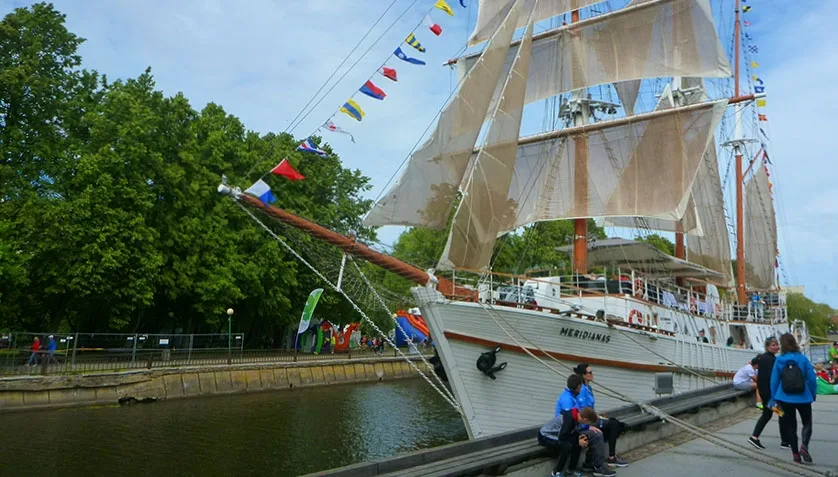
It must be said, however, that such disasters are rare. With what splendour most ships enter Memel's quiet harbour and lower sail after sail! Sometimes ships, pursued by a storm wind, fly into the port as swift as an arrow. Others run as if from a pack of wolves at their heels. When I last visited the lighthouse, I saw another delightful sight. An Estonian smuggler's vessel entered the port, presumably from the island of Saaremaa, light and elegant as a gull, entirely covered in sail, as if anxious not to let the slightest breeze go to waste. I have never seen a more charming ship. The comparison with a swan spreading its wings in the wind came to mind. And these vessels come many miles across the stormy sea to stock up on spirits in Memel and smuggle them into Russia.
They usually manage this either under cover of a dark night or by bribing Russian customs officers, who are partial to vodka and the clink of silver. If the smuggler is unlucky, he goes to Siberia. If he meets a Russian customs boat on the open sea, the soldier of fortune must get rid of his contraband as quickly as possible. The precious barrels of rum and port are thrown overboard: they were, so the story goes, carried off some ship by a storm wind and have been drifting on the open sea for several days.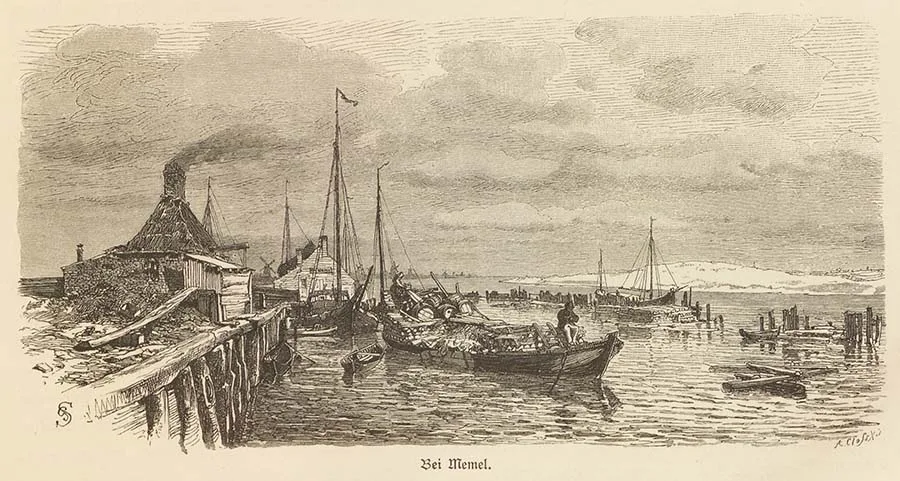
The customs men grin, fish out the floating barrels and — get roaring drunk. The hapless smugglers seize the moment and make off. These people speak only Estonian, a variety of Finnish, but there are a few people in Memel who understand their language.
Ah, if only there were no customs border with Russia, which, like the Great Wall of China, cuts off the northern tip of East Prussia from its natural hinterland and holds the city of Memel by the throat! What has not been said and written on this subject! But Russia gets its main revenue from customs duties, and as long as that is so, it will resist the free movement of goods across the border — which means that the Prussian smuggler, who despite all obstacles and risks manages to get contraband across the Russian border, will not die out.
At present this "Geschäft" is entirely in the hands of a certain Jew who keeps a tavern near the border, makes agreements with merchants, pays the smugglers, pays the customs officers, pays for everything. His connections on the Russian side would be the envy of the most seasoned diplomat.
A common way of deceiving the border guards is to light one of the signal torches set up along the border. While the Russians run towards the fire, the smugglers cross the border at an open stretch. If the border guards do manage to fall upon a gang of smugglers — usually on a tip-off from competitors on this side — a real battle ensues, in which the Russians often come off worse.
The operation is also carried out with refined cunning. Suppose, for example, you need to get a bale of fine leather gloves across the border. You pack the left-hand and right-hand gloves in separate bales and take them across the border at different points. If one of the bales is confiscated, someone in the know buys up the practically useless one-handed confiscated goods for next to nothing and then puts the gloves together in pairs.
Truly, the famous wily Odysseus is no match for the ingenuity of these smugglers, whose resourcefulness and cunning outshine all the tricks of the ancients!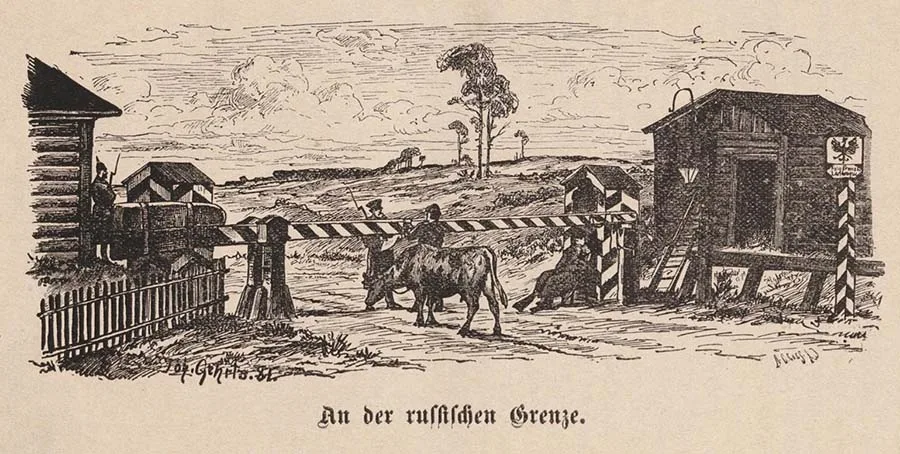
Recently the situation has changed. Germany has closed the border to imports of cattle and other animals to prevent the spread of plague. Instead of the manufactured goods that used to be smuggled into Russia, cattle are now smuggled out of Russia. And all the old schemes have to be changed in a hurry.
It is impossible to go into a single shop or a single eating house in Memel without hearing about the Russian customs border, or at least thinking about it.
To the west, however, everything lies free and open; the sea waves beat against the shore, and high-sided ships move to and fro. Their holds are filled with countless boards, beams, matchboarding and other sawn timber. Their destination is usually England, often Australia or South America.
Like a great white snake stretches the narrow strip of dunes of the Curonian Spit — a most peculiar world of sand, in which the dunes rise to a height of sixty metres, move constantly eastwards and finally sink into the lagoon. The fishermen call this "drowning". Life there is dead, and death is alive. But on the shores of the lagoon lies golden amber, which is extracted by large steam dredgers. At night the work is lit by electric incandescent lamps.
From the lighthouse we can also go further north, through an area where, near the so-called Forester's House, the people of Memel have built themselves charming villas, and the level sandy beach on the lake is ideal for bathing. Further north still lies the "Holländer Mütze" ("Dutchman's Cap") — a dark wooded height visible from afar.
Pages of Prussian history rise before our mind's eye in the shady park of Tauerlauken, where the Prussian royal family, forced to flee to the farthest corner of its monarchy, endured severe trials. The radiant figure of Queen Louise appears before our eyes. In our thoughts we return to Memel, to the dreamy Dange, to the shade of the white alders. According to the recollections of Countess Voss, the queen, whatever happened, always wanted her children to be near her. These young princes behaved like any other children: they danced, played music, went sledging and roasted potatoes in the ashes.
And few could then have imagined that one of these children was a future King of Prussia.
LEGENDS OF PRUSSIA in the blog of Tatyana Kolivay.
NOTES
1. Nervus rerum — the nerve of things; the most important thing, the essence of something.
2. This refers to the Crimean War of 1853–1856.
3. Countess von Voss — Mistress of the Robes to Louise of Mecklenburg, wife of King Frederick William III of Prussia.
Translated from Russian with the help of AI (Claude, Anthropic), October 2026.