The residents of Yantarny inherited this park, and that is why in 2007 it was named after its former owner and creator, the industrialist Moritz Becker. Whenever I read or hear that the locals have long called it Becker Park, I am genuinely surprised, because until the early 2000s nobody in the settlement had ever heard of Becker, and local people simply called it the park by the stadium. Even then, however, it was home to rare plants of a kind that perhaps only Kaliningrad's botanical garden and arboretum could boast.
Today's Yantarny is first mentioned in historical documents in 1389 as Palweniken, from the Old Prussian palwe – wasteland, treeless bog; later it came to be called in the German manner – Palmnicken. The official founding date of the settlement, however, is 1654. The inhabitants of Palmnicken (at first there were only 4 homesteads) lived by farming, fishing, trade and, naturally, amber extraction. That is the earliest history. Little changed over time, except that the number of homesteads grew. Everything continued to revolve around the "sun stone". In the nineteenth century the partners Stantien and Becker developed an open-pit method of amber mining, which brought their firm an annual income of 8 million gold marks, so Becker could afford to be not only a businessman but also a philanthropist.
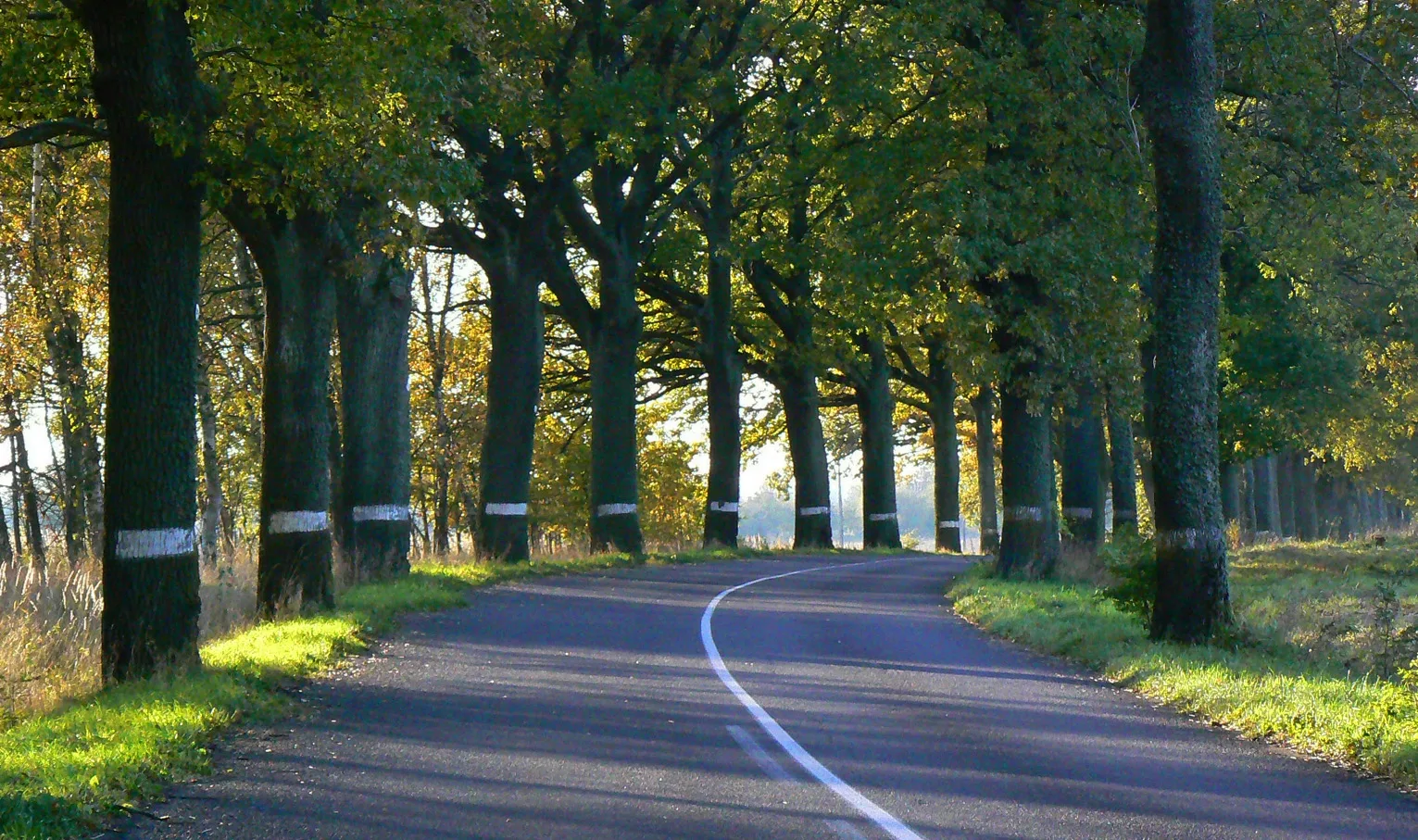
He invested a great deal in the development of the settlement, and in 1881 a park was laid out on the site of an old manor garden where horse chestnuts, large-leaved and small-leaved limes, European beeches, Norway and sycamore maples, white (silver) poplars, elms, hornbeams and ashes were already growing.
With the help of the industrialist's son, specimens of rare trees were planted: Sitka spruce, Weymouth pine, Douglas fir, katsura tree and tulip tree, which later became the symbol of Becker Park.
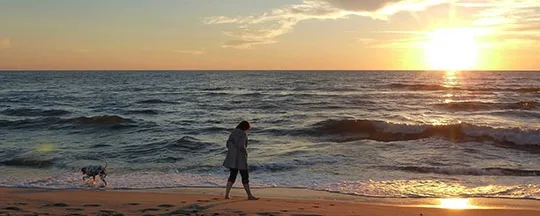
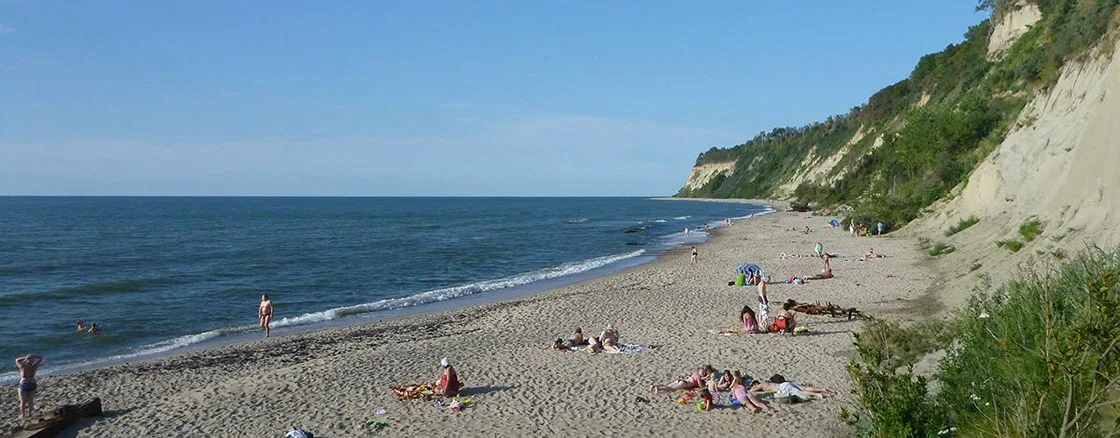
Now, as then, the park occupies a site of just over 10 hectares raised above the sea. It attracts tourists with its Amber Alley, a well-appointed viewing platform and a wooden staircase with handrails leading down to the two-kilometre promenade, which was finally completed in 2014. The park has plenty of benches where you can sit and contemplate the beautiful.
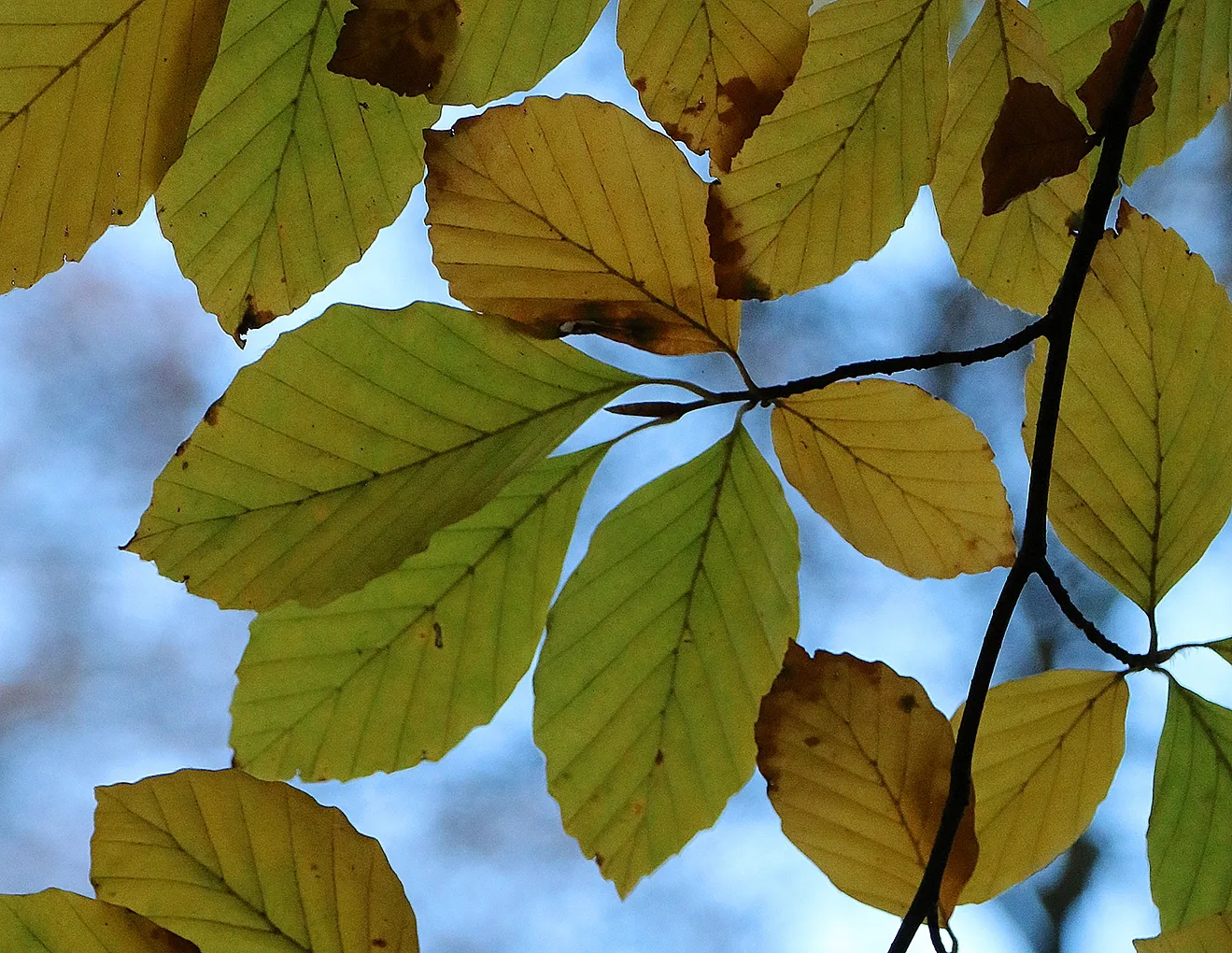
If you explore the arboretum of Moritz Becker Park, the first plant to catch your eye is the park's oldest resident – a European beech. It is more than three hundred years old. This noble tree keeps company with two slightly younger beeches. The European beech offers cool shade in summer, and in autumn it carpets the forest floor with leaves that rot over the winter and improve the soil; it yields nutritious nuts that feed the forest's inhabitants and could feed us too, if we needed them. A single beech 25 metres tall produces 17 kilograms of oxygen per hour. Nevertheless, the share of beech forests in the Kaliningrad Region is small. The huge beech forests that once covered almost all of Europe were destroyed by barbaric felling and by the world wars.
When you see giants like this three-hundred-year-old beech that has survived in Yantarny, you realise how majestic whole beech groves must have looked.
Here, too, to the left of Amber Alley, there are specimens of large-leaved lime, the oldest of them more than 200 years old. This lime usually grows in the forests of the Caucasus, Western Ukraine, Moldova and many European countries. It differs from the small-leaved lime in its larger heart-shaped leaves (up to 14 cm), darker on the upper side and lighter underneath, and it flowers several weeks earlier. This species of lime is highly ornamental, has a dense, compact crown and tolerates shade. Nevertheless, in central Russia the large-leaved lime is used only occasionally, just for planting in parks and public gardens, as it is less frost-hardy than the small-leaved lime. In the eastern part of the park grows a remarkable form of the large-leaved lime – the cut-leaved or laciniate lime. This tree is more than 70 years old, if one goes by the information on its sign (I think it is a little older). The plant astonishes with the bold texture of its crown: the leaves are so varied in shape – torn, cut, crumpled – that you could probably not find two alike. It is perhaps the most eccentric of all limes.
Next to the cut-leaved lime grows a tulip tree, or liriodendron. It too is of great age, but given that a liriodendron can live 500–600 years, this twenty-metre specimen is still a child. It has already formed a powerful oval crown and every year delights visitors to the park with its flowers: the blossoms of this plant really do resemble tulips in shape, only in a pale green colour rare for tulips, with orange spots at the base. The leaf of this plant, as one would expect from its name, is lyre-shaped.
The liriodendron deserves close attention as a tree for planting in the parks, squares and avenues of the towns of the Kaliningrad Region, so well does this plant, brought to us from North America, thrive in our climate.
Both trees in the park – the lime and the liriodendron – have similarly forked trunks; in this one can see the intention of the park's creator to draw the visitor's eye to these valuable plants, partly through their unusual shape.
The old katsura tree (more than a hundred years old) looks perhaps weaker than the park's other "exotics": it has lost one of its main limbs, though perhaps the dry summer has affected the plant's condition, as katsura trees are known to like plenty of water. Not far from it grows a hornbeam that cannot fail to attract attention: seven straight trunks spread out in all directions, forming a huge ball-shaped crown.
Among the conifers, the Sitka spruce perhaps deserves a special word. It is more than 150 years old and has already turned into exactly the kind of Christmas beauty that anyone would like to see at home on a winter evening – though, of course, many times smaller. This tree grows along the entire Pacific coast of North America from the southern states to Alaska; the maritime climate suits it very well, which is why in Moritz Becker Park in Yantarny it looks so "flourishing". It is echoed by the youngest of the old-timers, growing nearby – a European larch, a conifer that sheds its soft needles every year for the winter so as to grow new tender green ones in spring.
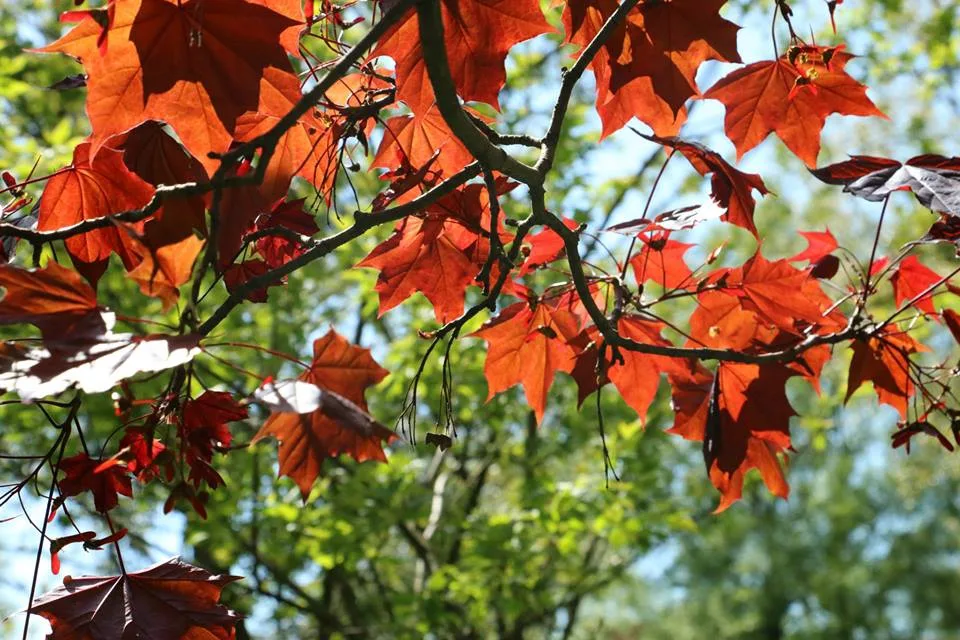
It must be said that the backbone of the park's vegetation consists of trees familiar to our eyes, many of them growing in small groups by species. Thus, to the west of Amber Alley there is a group of old horse chestnuts, a little further on several elder bushes, and in the southern part of the park old hornbeams and Norway maples of all ages. Incidentally, regular mowing of the grass under the tree canopy and sanitary felling help to keep the ubiquitous young maple growth in check. Closer to the cliff grow old ashes and white poplars, mighty trees with leaves similar in texture to those of coltsfoot (smooth on top and soft and downy underneath). There, too, one of the clearings has been taken over by common ivy, an evergreen woody climber with dense leaves. In some places this plant carpets the ground, in others it climbs up the trees.
When admiring the ivy, remember that this plant is listed in the Red Book of the Kaliningrad Region and needs protection.
To the right of the central alley, new plantings of exotic plants have appeared, partly duplicating the exotics planted in Moritz Becker's time. There is a young tulip tree in excellent condition, a katsura tree that catches the eye with its young, delicate foliage, and young ginkgos planted along one of the paths. The condition of the trees is encouraging: they have clearly all taken root, and of the nine ginkgos only one sapling has died. It must be said that, for all the enormous variety of tree species in the park, until recently there was still a noticeable lack of ginkgo. This tree, once discovered for Europe by Engelbert Kaempfer, a European physician attached to the Dutch embassy in Japan, who studied its properties and gave it its scientific name, cannot fail to amaze with its beauty and mystical power. The Japanese still plant ginkgo trees at Buddhist and Shinto temples and revere them as sacred; they eat its fruit, use its leaves as a medicine to improve brain function and indeed for every ailment, and also use them to tell fortunes and learn their fate. It was Kaempfer who first brought ginkgo seeds to Europe. This relict plant does splendidly in our climate, for over its long evolution (the ginkgo is the only species in its genus and in the family Ginkgoaceae) it has acquired not only resistance to all kinds of adverse influences – fire, pests, hard frosts and smog – but also longevity.
The ginkgo tree is believed to be able to live up to 2,000 years.
In my view, renewing the old trees of this park while preserving their species composition is of enormous importance, for the purpose of such an arboretum is not only to preserve trees that have reached a great age but also to grow replacements for them in case an old-timer dies. Yet the most important task is still the preservation of the park's exotic plants because of their enormous historical and biological value. These trees have seen a great deal and could tell us much, but their branches reach for the sky.
Translated from Russian with the help of AI (Claude, Anthropic), October 2026.