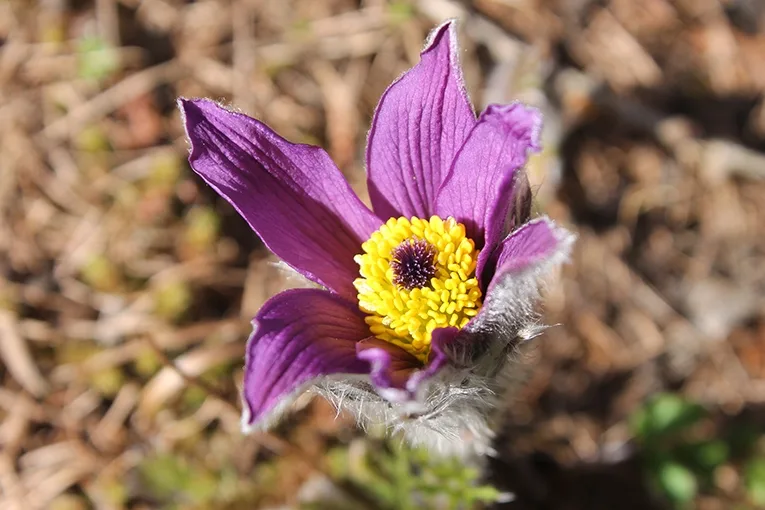
 1. The pasque flower, or pulsatilla (lat. Pulsatilla), is a perennial herbaceous plant whose Russian folk name, "sleep-grass", comes from its drooping, seemingly sleepy flowers. Preparations based on the pasque flower are known for their sedative effect. The species is thought to have originated in the Altai, but the plant can also be found in European Russia. In the Kaliningrad Region in particular, the small pasque flower grows on the edges of the (pine) forests of the Vistula Spit. The pasque flower begins to bloom in mid-April: the delicate down covering every part of the plant protects it from night frosts and late spring frosts, and its great hardiness allows even buds nipped by the spring cold to carry on with their early flowering. Remarkably, when most plants are only just beginning to bloom, the pasque flower is already setting seed.
Photo by Natalya Antonova.
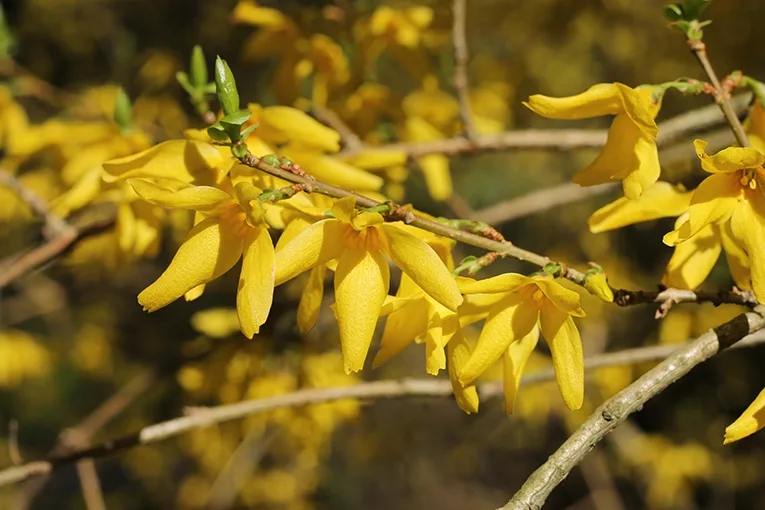 2. A frequent guest on Kaliningrad's spring streets is the shrub forsythia (lat. Forsythia), which begins to bloom with bright yellow bell-shaped flowers from mid-April. The flowering of this plant is all the more impressive because the flowers open on bare branches, and the leaves appear later. Magnificent specimens of forsythia adorn the city centre, Gogolya Street, Gorkogo Street, Krasnaya Street and many others.
Photo by Natalya Antonova.
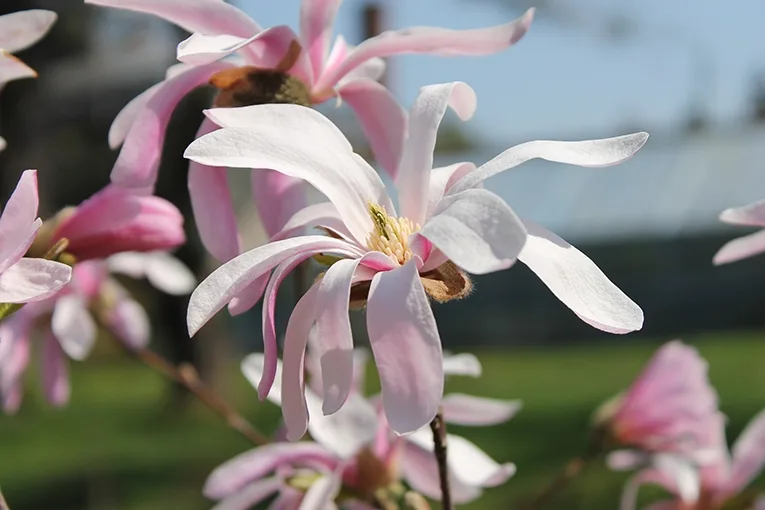 3. To admire magnolias (lat. Magnolia), among the most ancient flowering plants, you need not travel to countries with a warm climate. These exotic plants, with attractive large fragrant flowers that usually open in the last week of April, can be found in our city on Leonova Street, on the square in front of the Drama Theatre, on Nevskogo Street and in the Kaliningrad Botanical Garden, and outside Kaliningrad on the Curonian Spit and in the village of Otradnoye. Unusually shaped fruits of a bright red-orange colour appear on the magnolias in early autumn. Several species of magnolia grow in our region: the kobushi magnolia, the Yulan magnolia, the star magnolia, and the saucer magnolia, which grows in Kaliningrad on Dmitriya Donskogo Street and delights with its flowers twice a year — at the end of April and at the end of July. But the most original, in my view, is the lily magnolia, a low shrub that amazes with the impressive size of its pink or dark purple flowers, which open in mid-May. This magnolia is represented by a variety of cultivars in the Kaliningrad Botanical Garden.
Photo by Natalya Antonova.
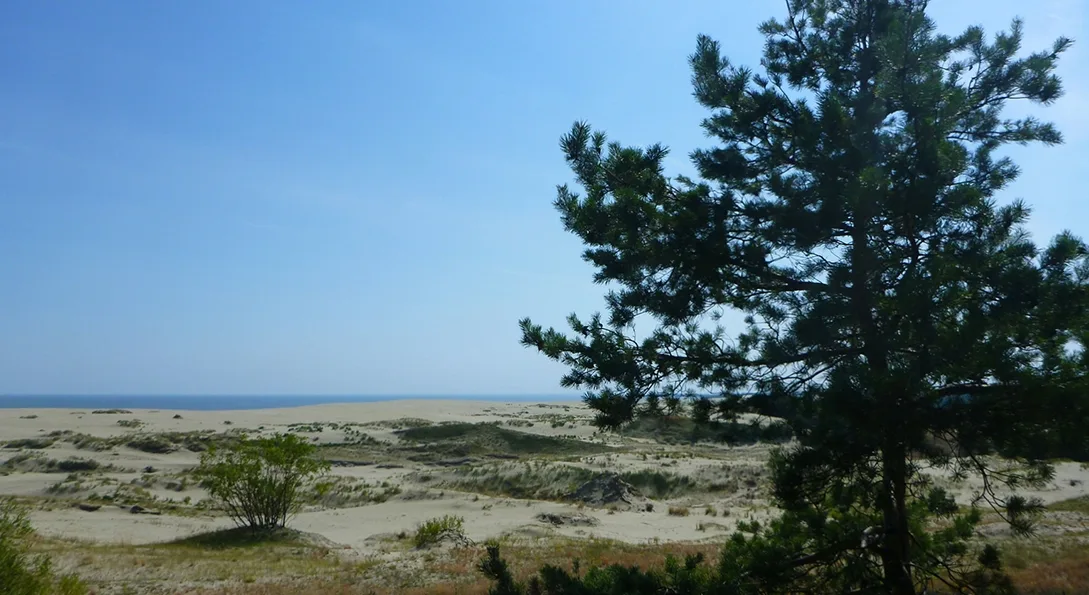
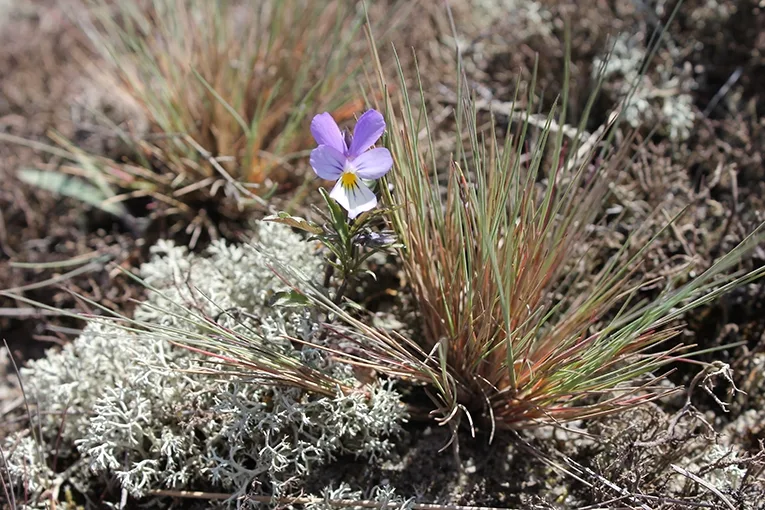 4. In the first truly sunny April days the seaside violet (lat. Viola maritima) awakens to life, adorning the whole coast of the Curonian Spit with its delicate lilac flowers. This fragile-looking plant, able to endure the most adverse conditions, is found both on the shifting sands of the dunes and on the edges of the nearby pine forests. And in the length of its flowering the seaside violet is a true record-holder: flowering specimens of this plant can be found even in December!
Photo by Natalya Antonova.
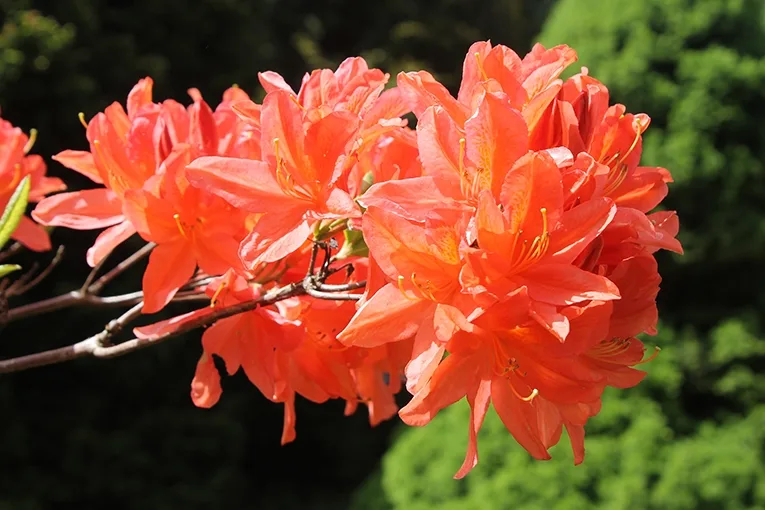 5. The favourable climate of the Kaliningrad Region also makes it possible to grow various species of rhododendron (lat. Rhododendron) here, many of which are very demanding as to soil composition and also have low winter hardiness. Nevertheless, mature bushes of the yellow azalea, the Japanese azalea and the Sikhote-Alin rhododendron, as well as the whole range of rhododendron cultivars (which are more ornamental than the original species, but far less resistant to disease), can be found in Kaliningrad around Pobedy Square and in the Kaliningrad Botanical Garden. In the resort towns of Svetlogorsk and Zelenogradsk these deciduous, branching shrubs delight with their flowering in May–June every year.
Photo by Natalya Antonova.
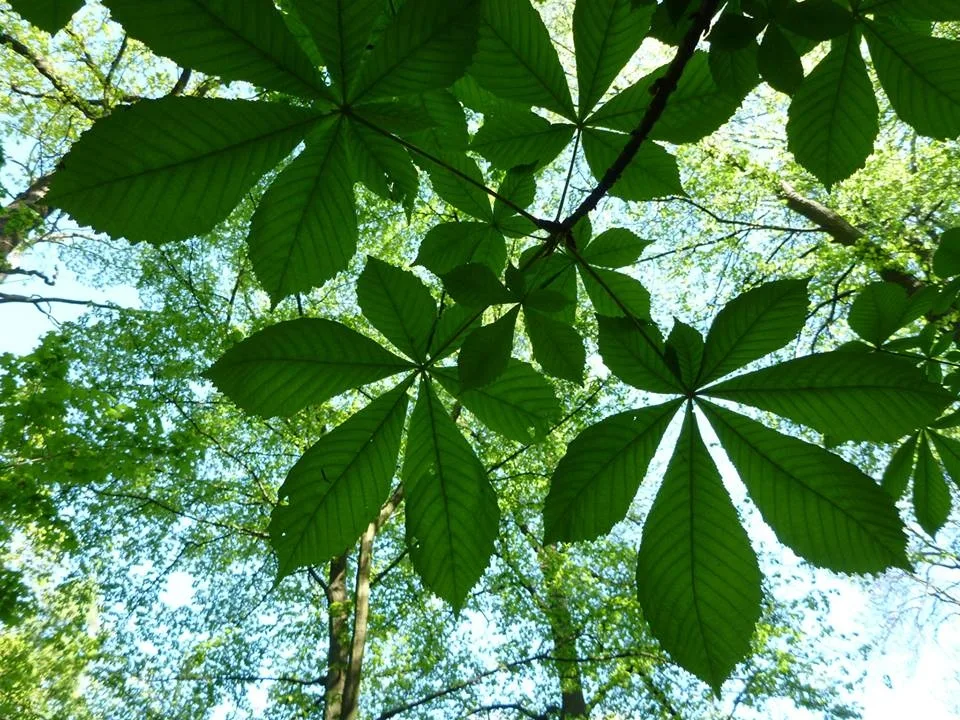
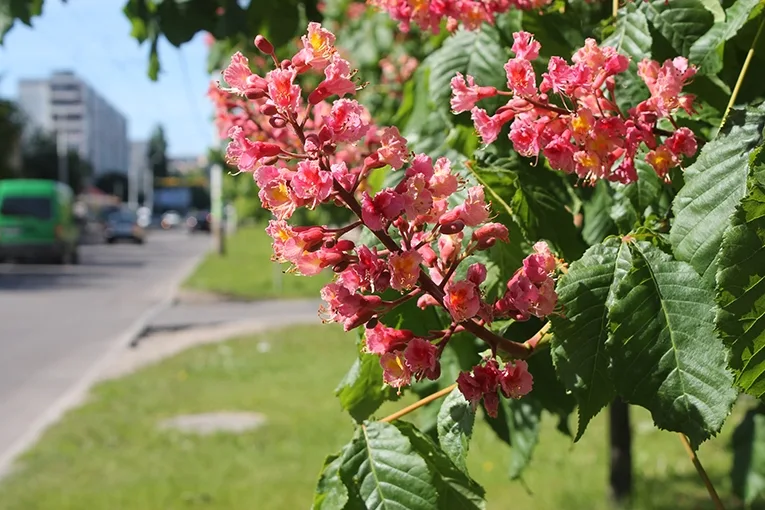 6. The unofficial tree-symbol of the city of Kaliningrad and the region is the chestnut (lat. Aesculus): numerous representatives of this species adorn the historic centre of Kaliningrad, where the Cathedral and the grave of Immanuel Kant are located. In the wild this plant is found in the mountain forests of the Balkan Peninsula; in Russia it has been cultivated since the 16th century, yet individual specimens regularly freeze in harsh winters (most often young trees). Only in the Kaliningrad Region, thanks to the favourable climate, does the horse chestnut thrive, and it is found everywhere in the greening of the region's towns. In mid-May mature trees put out upright pyramidal panicles of cream-coloured flowers. Recently the flesh-red horse chestnut has also begun to be grown in Kaliningrad (Gorkogo Street). Despite their unappealing name, these are very beautiful trees with an expressive crown and large candles covered with reddish-pink flowers, which appear on chestnuts of this species at the end of May.
Photo by Natalya Antonova.
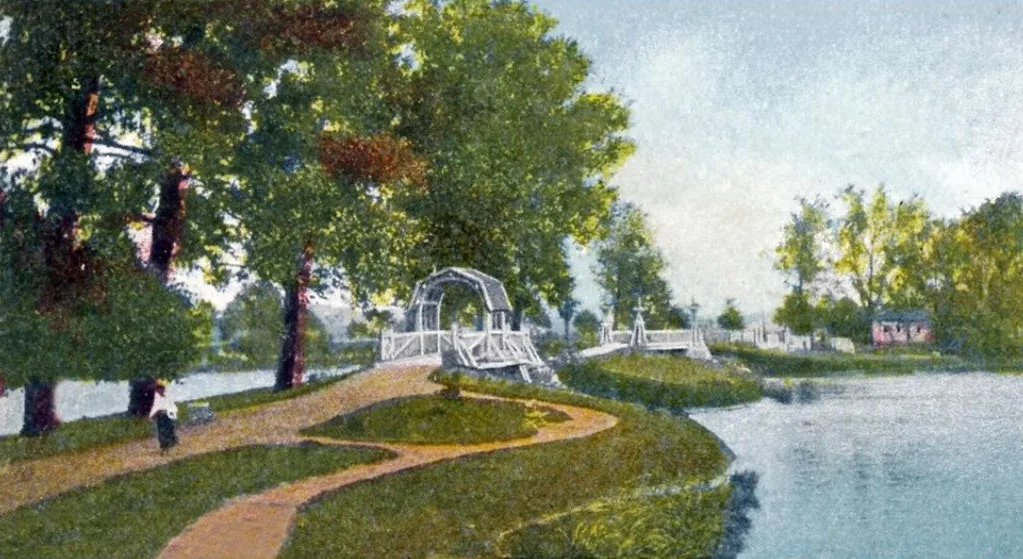
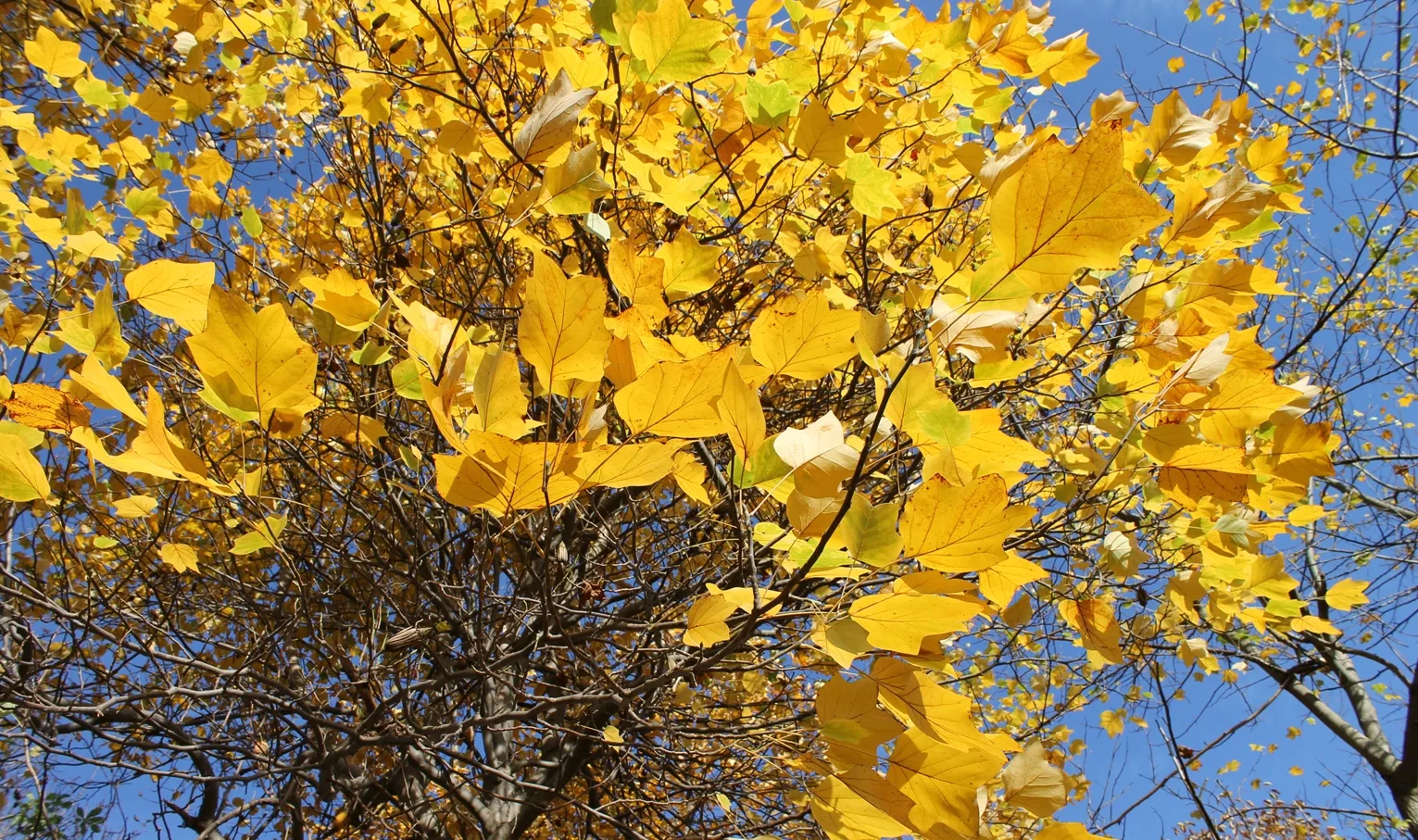
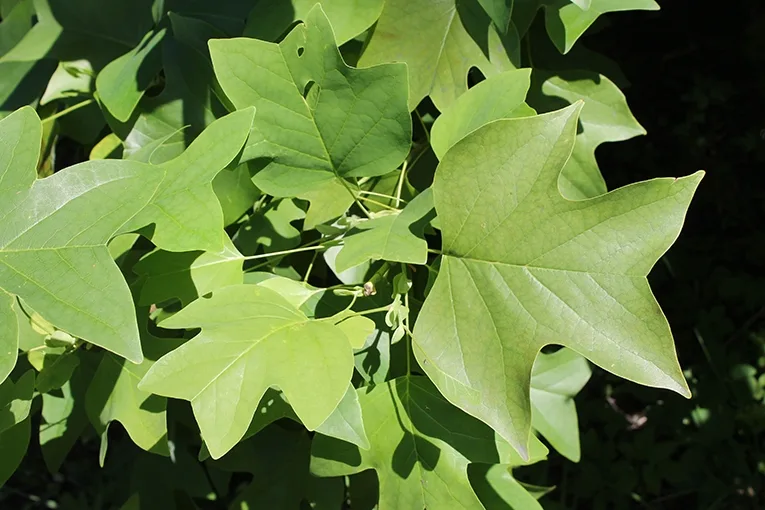 7. At the beginning of June the tulip tree (lat. Liriodendron tulipifera) comes into flower. In its natural habitat this tall deciduous tree with a mighty crown and large lyre-shaped leaves grows in the east of North America, but the mild climate of the Kaliningrad Region lets it feel at home here. The flowering of mature tulip trees can be admired at the beginning of June in Kaliningrad's Tsentralny Park, in the Kaliningrad Botanical Garden, by the Museum of the World Ocean, and in the Moritz Becker Park in the village of Yantarny.
Photo by Natalya Antonova.
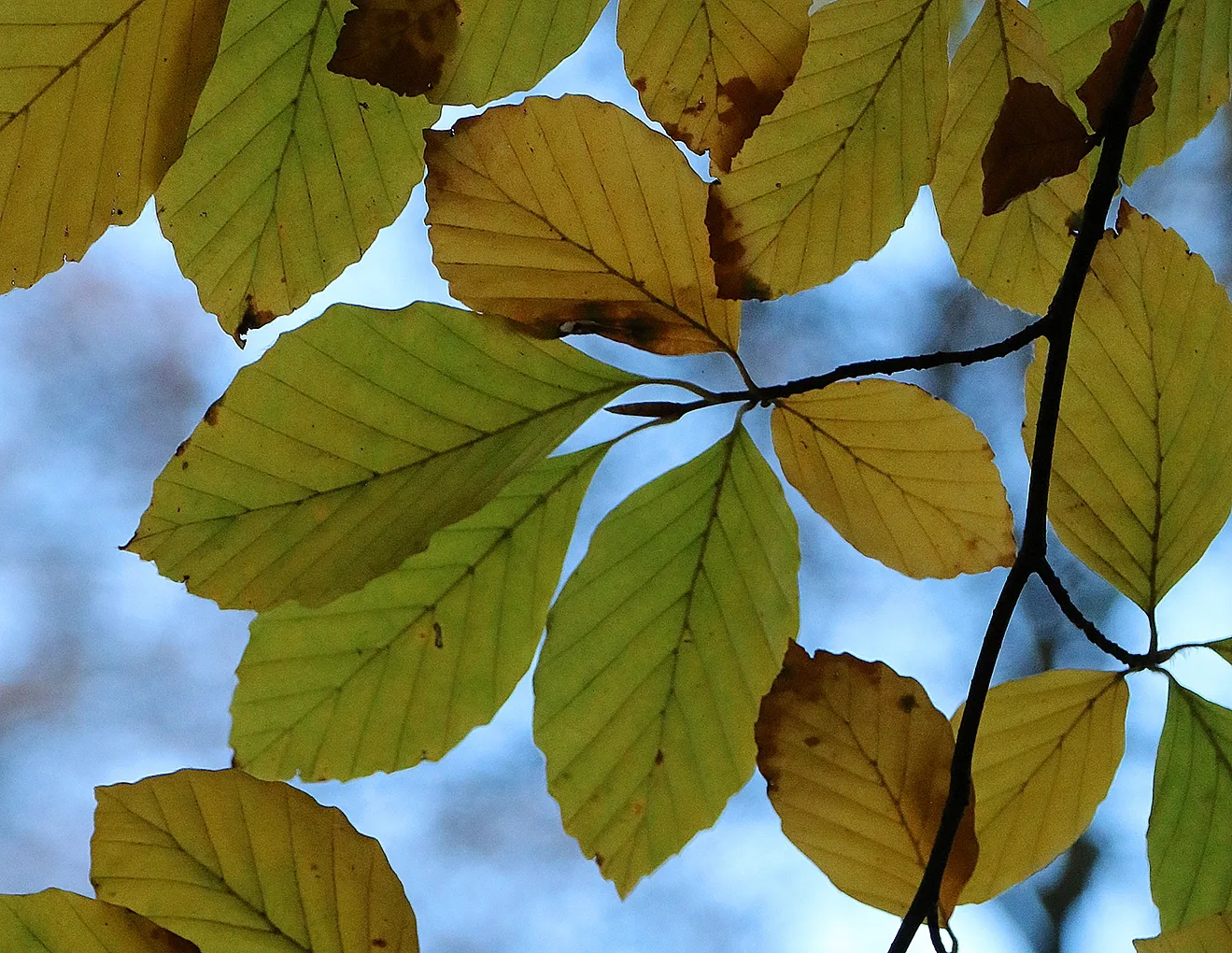
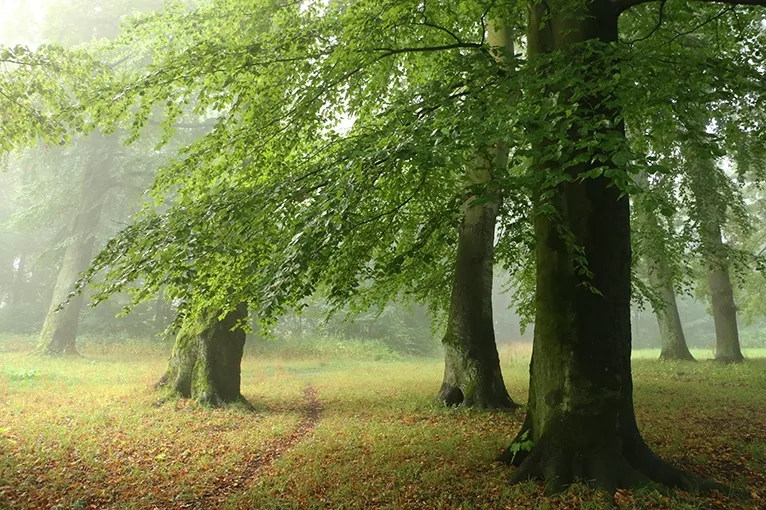 8. Beech forests once covered almost the whole of Europe, but they were almost entirely felled or destroyed by fire. Today few beech forests, consisting of European beech, or common beech (lat. Fagus sylvatica), remain in the Kaliningrad Region: individual stands can be found on the Vistula Spit, in the vicinity of the town of Ladushkin and near the village of Klintsovka in Zelenogradsk District, some of the trees being more than 400 years old; in the greening of the region's towns, however, this beautiful deciduous tree, which reaches 30 metres in height, is widespread. In ornamental value the noble dark green foliage of the European beech can be rivalled only by the copper leaves of the purple beech and the delicate yellow foliage of the golden beech, examples of which can be admired in the Kaliningrad Botanical Garden. Even rarer specimens of the cut-leaved beech can be found near the entrance to the Tsentralny Park of Culture and Leisure in Kaliningrad. It should be remembered that the European beech is included in the list of rare plants in need of protection in our region.
Photo by Mikhail Ogorodnikov.
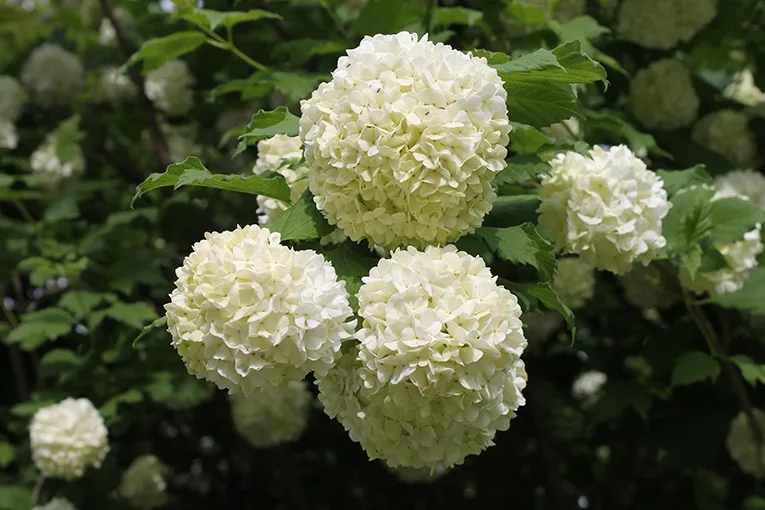 9. Viburnum (lat. Viburnum) is a widely known shrub, common in the forests of central Russia. Its garden form, however, is especially ornamental — the snowball viburnum, popularly known as the "snowball". Double white flowers gathered into spherical clusters appear on the plant in the first half of June. In Kaliningrad fine mature specimens of the snowball viburnum can be admired in the grounds of the Zoo and in the Kaliningrad Botanical Garden.
Photo by Natalya Antonova.
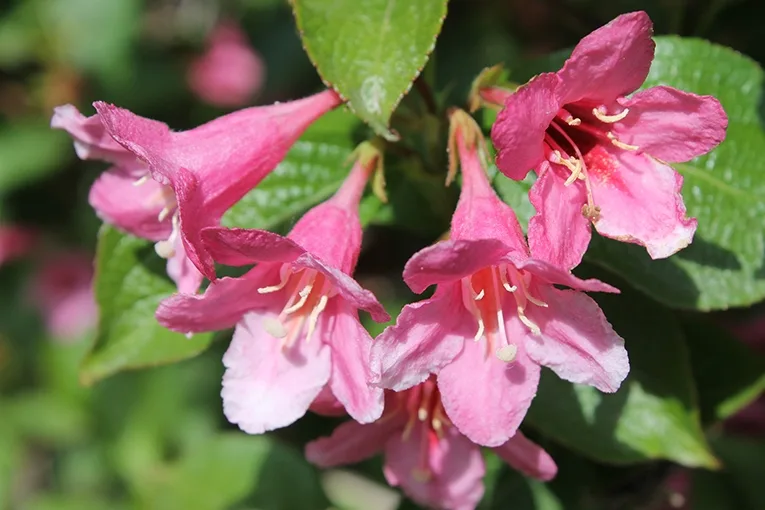 10. Few ornamental shrubs can rival weigela (lat. Weigela) in the beauty and length of its flowering, which may continue from May to July and recur in late summer and early autumn. During flowering the branches of the weigela droop under the abundance of blossoms, whose shades range from pale yellow and soft pink to deep burgundy. This undemanding plant is used extensively in the greening of the streets of Kaliningrad (mature bushes can be seen, for example, on Pervomayskaya and Ozernaya Streets) and of the region, especially in the resort towns of Svetlogorsk and Zelenogradsk, but the greatest variety of cultivars of this species is to be found in the Kaliningrad Botanical Garden.
Photo by Natalya Antonova.
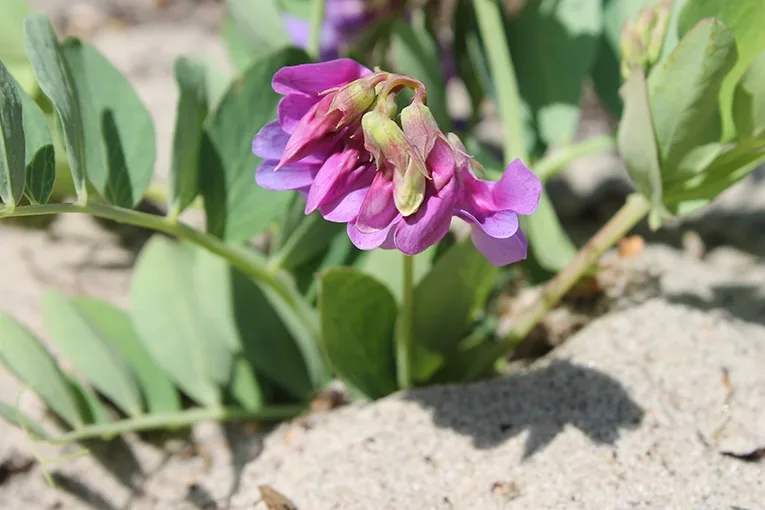 11. The plant with the unpretentious folk name "sea pea" bears the botanical name beach pea (lat. Lathyrus maritimus). This herbaceous plant is found everywhere in our region along the Baltic coast; it combines extreme hardiness with the ability to survive in harsh conditions — in strong wind and full sun. Features of its structure, in particular its creeping, branching rhizome, which conquers large areas for the plant's above-ground part, allow the "sea pea" to create green patches on bare sand, thereby stabilising these sands. The beach pea blooms from late spring to early autumn with bright crimson butterfly-shaped flowers, a form characteristic of all legumes (lat. Fabaceae).
Photo by Natalya Antonova.
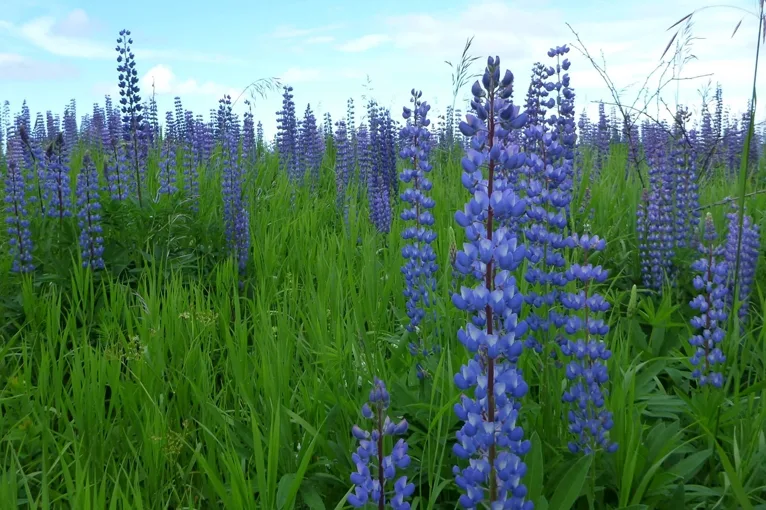 12. If in summer, while travelling around the Kaliningrad Region, you drive along the Kaliningrad–Svetlogorsk highway, you can see endless thickets of the large-leaved lupin (lat. Lupínus polyphýllus), a large perennial whose bright flower spikes create the sense of a boundless blue expanse. Familiar as it is to our eyes, this plant is nevertheless a native of the north-east of North America, and it feels splendid here. Breeders have developed a great variety of lupin cultivars, but even among the wild plants one can find specimens with white and pink flowers. Flowering begins in June and lasts at least a month.
Photo by Mikhail Ogorodnikov.
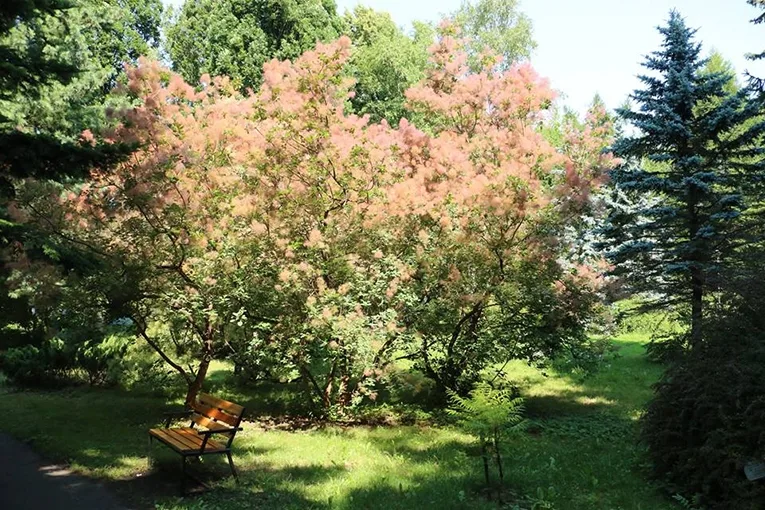 13. The smoke tree (lat. Cotinus coggygria), popularly called the "wig tree", hardly attracts attention with the beauty and lushness of its flowers; however, after flowering, at the beginning of July, the smoke tree, which takes the form of a tall shrub or small tree, becomes covered with elongated red and white flower stalks that make the bushes look like wigs. In addition, the smoke tree is distinguished by its bright autumn foliage, which is why the Curonian Spit, where this introduced species thrives, seems to blaze with fire in September. The smoke tree's high ornamental value throughout the growing season and its good resistance to adverse conditions allow it to be used in the landscaping of the streets and squares of Kaliningrad and the region.
Photo by Mikhail Ogorodnikov.
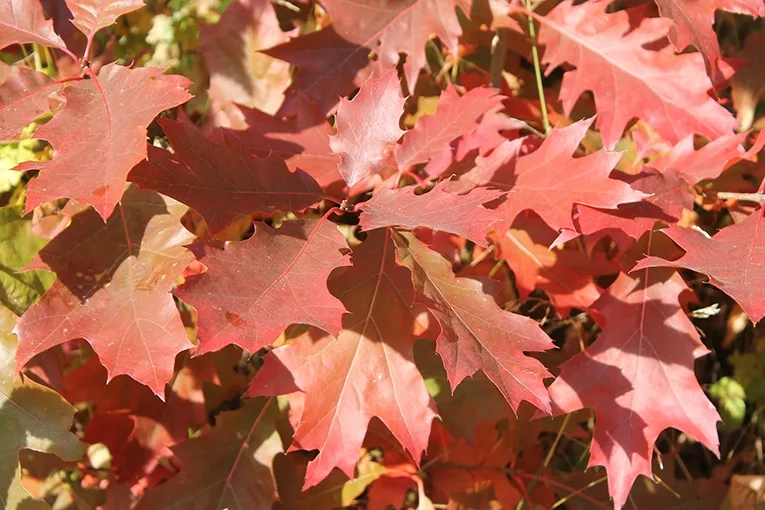 14. In 2014 the red oak (lat. Quercus rubra), an introduced plant brought to us from North America, became the plant symbol of the Kaliningrad Region. This tree can reach 25 metres in height and in our conditions has an enviable resistance to fungal and viral diseases, plus strong phytoncidal properties. Another distinctive feature is the enormous viability of its acorns: the ground under every mature red oak is usually completely covered with a young growth of one- and two-year-old oak saplings. Mature red oaks can be seen in the Max Aschmann Park in Kaliningrad and in the parks of the region's towns, for example in the main park of the village of Zheleznodorozhny.
Photo by Natalya Antonova.
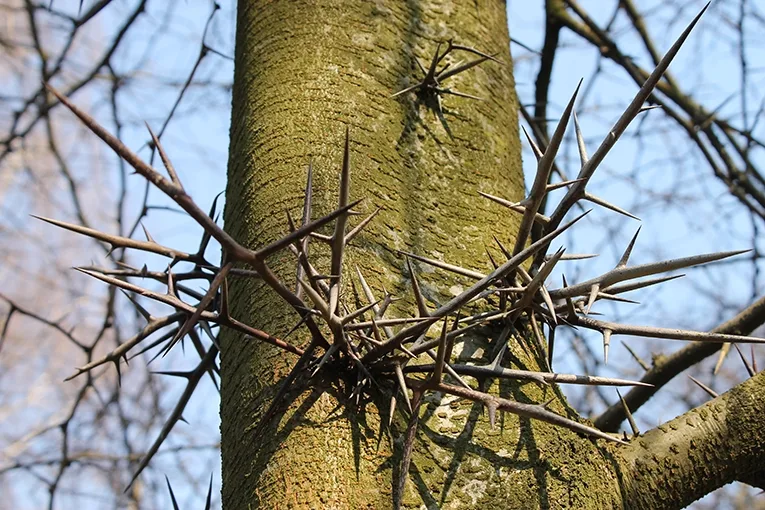 15. What strikes one first about the mighty honey locust (lat. Gleditsia triacanthos), a native of North America, is not its lacy crown, nor the greenish flowers that appear in mid-May, nor its curious fruits — long pods twisted into a spiral — but the powerful sharp thorns growing directly on the trunk. It is precisely because of this feature that these deciduous trees are recommended for hedges. Despite its modest requirements as to growing conditions, in the Kaliningrad Region the honey locust is represented by only a few specimens: in Kaliningrad on Serzhanta Shchedina Street, in the dendrological collection of the local botanical garden, and in the town of Sovetsk.
Photo by Natalya Antonova.
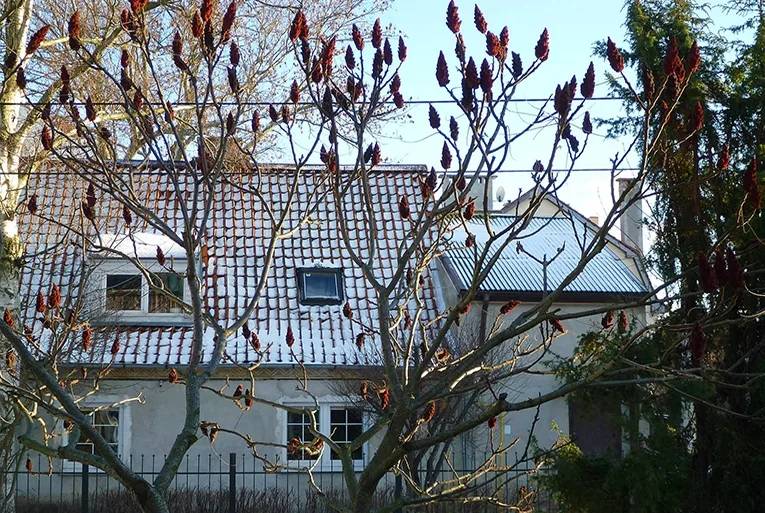 16. The staghorn sumac, also called the vinegar tree (lat. Rhus tuphina), is likewise a native of North America and a close relative of the mango. From a distance it resembles an elegant low palm with several trunks, and its dark green velvety leaves are lacy; but it is in autumn that the sumac becomes even more attractive, because its leaves take on every shade from scarlet to purple. It also matters a great deal that the plant remains ornamental in winter, thanks to the bright clusters of small dark red fruits. Perhaps that is why the staghorn sumac is gaining more and more popularity: in Kaliningrad it can be found on Partizanskaya, Lesnaya, Chekistov and Chkalova Streets, and in the region's towns as well: mature specimens of this tree grow in the town of Chernyakhovsk.
Photo by Mikhail Ogorodnikov.
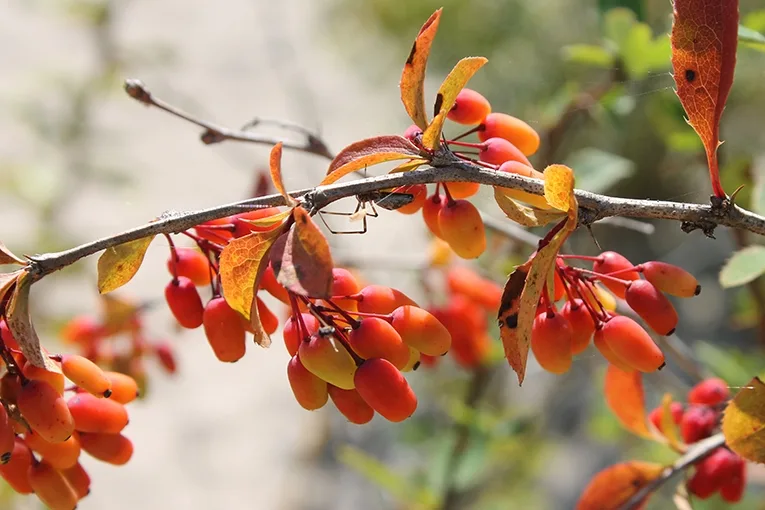 17. Barberry (lat. Berberis) is very ornamental, but prickly. This plant with bright sour berries has been familiar to us since childhood, not so much for its medicinal properties as for the name of a boiled sweet. The various species of barberry differ above all in the size of the bush: in nature and in horticulture there are dwarf forms (no more than 30–40 cm) and large bushes up to 2.5 metres tall. Unusual species of this plant are represented in our region by introduced species: the Amur barberry and Thunberg's barberry, natives of the Far East. During flowering, which usually begins together with that of the hawthorn in May, yellow fragrant flowers gathered in racemes appear on the barberry's branches; the fruit ripens in mid-August. Extensive barberry thickets can be found on the Curonian Spit.
Photo by Natalya Antonova.
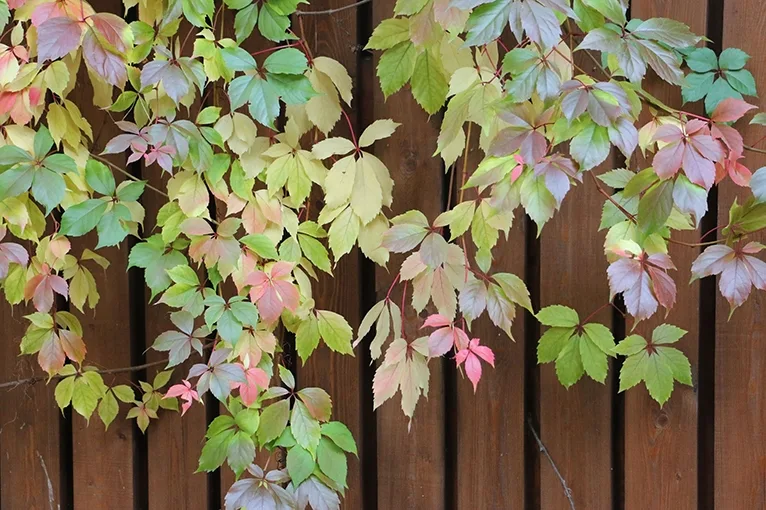 18. A hallmark of Kaliningrad and the region's towns are the buildings whose walls are climbed by Virginia creeper (lat. Parthenocissus quinquefolia). It covers the walls so densely that it often hides entire façades. In spring its young foliage delights the eye with lush green, while by autumn the leaves turn fiery red. The sightseeing photos taken by almost every tourist who comes to our region invariably include the tower and the building of the hydrotherapy centre, built in Svetlogorsk (then Rauschen) in 1908 and almost entirely entwined with Virginia creeper.
Photo by Mikhail Ogorodnikov.
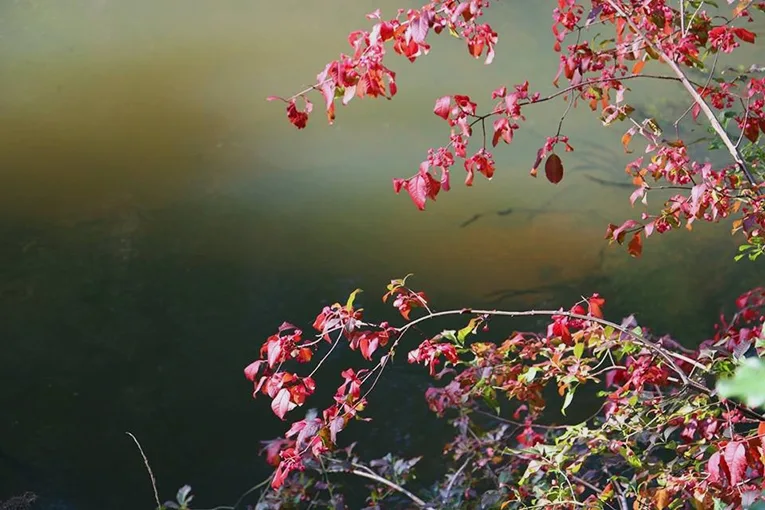 19. The European spindle (Euonymus europaeus), a familiar member of the spindle genus, usually grows in the understorey of broadleaved forests. This deciduous shrub or small tree blooms in April with white four-parted flowers, but it is memorable for the colour and shape of its orange seeds, which seem dressed in bright pink jackets, and for its red autumn foliage. While admiring the beauty of the spindle, one should remember that all its parts are poisonous. If you visit the Kaliningrad Botanical Garden in mid-September, you can find another very ornamental spindle species — the Far Eastern Maack's spindle, whose pointed leaves turn soft pink in autumn.
Photo by Mikhail Ogorodnikov.
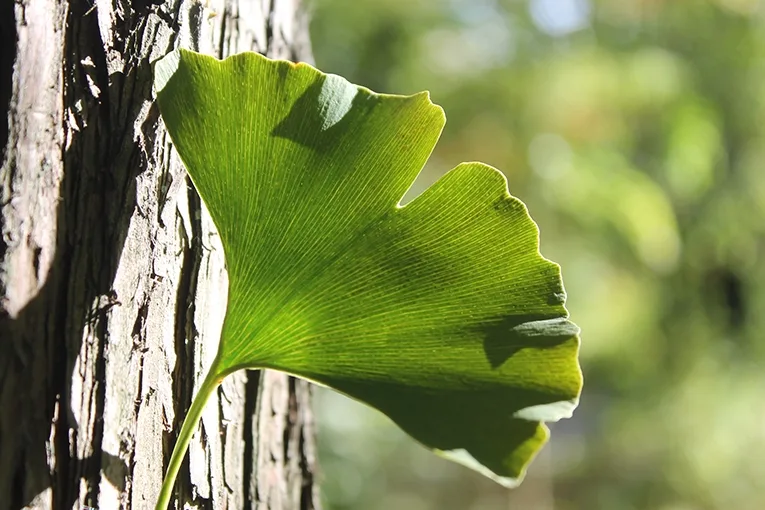 20. The sole representative of the monotypic class Ginkgoopsida, also called a living fossil, the ginkgo (lat. Ginkgo biloba) most probably no longer occurs in the wild anywhere on the planet. But these trees have conquered it a second time as an ornamental plant, which is also cultivated in Kaliningrad and the region. Ginkgos of various ages with graceful fan-shaped leaves can be found in the grounds of the Kaliningrad Zoo and of the Kaliningrad Children and Youth Centre for Ecology, in Kaliningrad's Tsentralny Park, on M. Raskovoy and Kutuzova Streets, in the Kaliningrad Botanical Garden, and in the Moritz Becker Park in the village of Yantarny. The plant is especially beautiful in September, when its leaves turn bright yellow and, as they fall, cover the ground with a golden carpet.
Photo by Natalya Antonova.
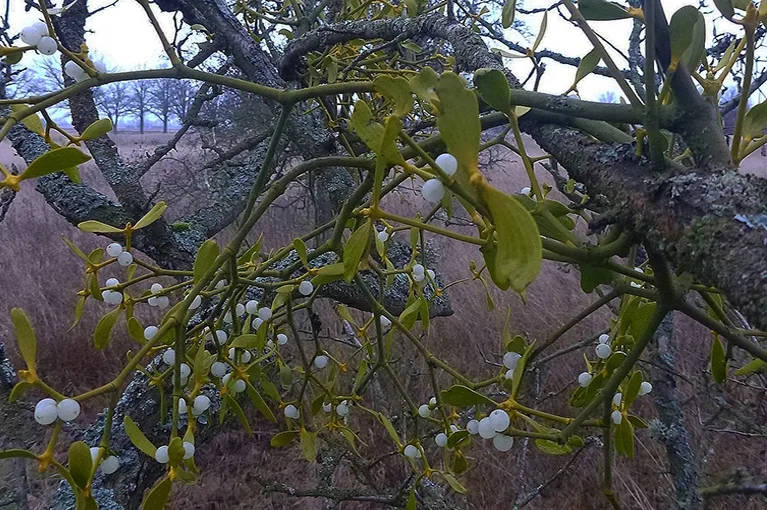 21. When studying the trees and shrubs of our region, one cannot fail to notice the large green balls growing right on the trees and decorating their bare trunks even in winter. This is mistletoe (lat. Viscum), an evergreen hemiparasite that lives partly at the expense of the tree on which it grows and partly synthesises the substances it needs for life on its own. It blooms with inconspicuous green flowers in early spring, and beautiful white berries appear on the mistletoe in late autumn. Mistletoe is a medicinal plant. It is beneficial, but poisonous if the exact dosage is not observed. In Scandinavian tradition mistletoe is a symbol of peace.
Photo by Mikhail Ogorodnikov.
Translated from Russian with the help of AI (Claude, Anthropic), October 2026.