In East Prussia, as in Russia, mushroom dishes were on the table all year round. Along with vegetables, mushrooms were considered good, wholesome food. The "humble hunt" (as the Russian writer Sergei Aksakov called mushroom picking) is not only a pleasure but also a way to vary one's diet and even save money.
The mushroom hunt in East Prussia began in April. The season was opened by morels. There were so many of them that there was enough both to eat yourself and to feed others.
Local housewives took the surplus to market, keeping to the strict rule that fresh mushrooms must not be stored. Pick them, prepare them – and onto the table. For safety's sake, mushroom dishes were never kept until the next day. Though, as a rule, there was nothing left to keep. They were too tasty.
Stewed Morels
1 kg fresh morels, 40 g butter, salt to taste, 250 ml meat stock.
For the gravy:
20 g butter, 1 tsp flour, chopped parsley.
Before cooking morels, wash them thoroughly, remove the stems and boil them twice. Tip the mushrooms into a colander and rinse them with boiled water to wash away all the sand. Let them drain. Then put the prepared morels into hot melted butter, stew for 15 minutes, pour in the meat stock and stew until done. Shortly before removing from the heat, add salt and the gravy made from butter, flour and stock. Sprinkle the finished dish with chopped parsley.
The gravy can also be made with stock and sour cream in equal proportions. Stewed morels go well with boiled potatoes. They were served on festive occasions, too: the morels were heaped in the centre of a large plate, surrounded by asparagus boiled in salted water with butter, boiled crayfish and potatoes.
Chanterelles with Smoked Bacon
1 kg chanterelles, 2 onions, 100 g smoked bacon, 1 tbsp butter. 2 tbsp flour. 250 g sour cream, lemon juice, salt, ground pepper and sugar to taste, 1 tbsp chopped parsley.
Wash the chanterelles thoroughly, dry and slice them. Leave small mushrooms whole. Chop the onions, dice the bacon and put them in a sauté pan with the butter. Fry the chanterelles for 15–20 minutes. You can add a couple of tablespoons of water so that they do not catch. Dust the mushrooms with flour, add the sour cream and fry a little longer. Season with salt, pepper, sugar and lemon juice. Before serving, sprinkle the chanterelles with chopped parsley.
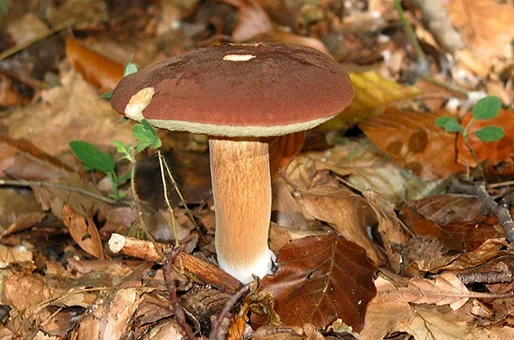
Mushroom Stew of Ceps, Birch Boletes, Kapuziner and Bay Boletes
1 kg mixed mushrooms, 1 onion, 3 tbsp chopped smoked bacon or smoked fatback, 3 tbsp butter. 1 tbsp starch, vinegar, salt and pepper to taste, a pinch of sugar, 1/8 l sour cream.
Sort, clean and wash the mushrooms thoroughly and cut them into pieces. Lightly fry the bacon and onion in butter and stew for 10–15 minutes under a lid. Then season lightly with salt and pepper, sprinkle with starch to absorb the liquid, dress with sour cream, and add a few drops of vinegar and a pinch of sugar. Serve with boiled potatoes or potato dumplings.
In East Prussia, "Kapuziner" was the name for hazel boletes of the genus Leccinum. They look similar to birch boletes.
Dried Mushroom Patties
60 g dried ceps, 40 g butter, 1 small onion, 100 g soaked white bread, 1 egg, salt to taste, a few breadcrumbs, 60–80 g fat or butter for frying.
Soak the dried mushrooms for 2–3 hours, then chop them finely, boil and fry them in butter. Let them cool a little, mix thoroughly with the soaked bread and the egg, add salt and parsley, and shape into patties. Coat them in breadcrumbs and fry in butter or fat.
Mushroom Soup
1 l water, 500 g ceps or chanterelles, 1 tsp finely chopped onion, 4 tbsp chopped parsley, 4 tbsp butter, 3 tbsp 30% sour cream, 3 tbsp flour, salt, pepper.
Clean the mushrooms and cut them into small pieces. Heat the butter in a sauté pan and stew the mushrooms in it with the onion and parsley. Lower the heat, dust the mushrooms with flour, stir quickly and pour in the water. Add salt and pepper and simmer gently until done. Before serving, add the sour cream to the soup and stir thoroughly. This soup can be served with chilled vodka, beer or dry white wine.
Mushroom Goulash
500 g fresh mushrooms, 200 g pork, 200 g beef, 80–100 g fat or butter, 1 large onion, 2 medium carrots, 750 g meat stock, 125 g white wine, 125 g sour cream, 1 tbsp starch, ground black pepper, salt and parsley to taste.
Fry the meat, cut into small pieces, in the fat, season with salt, and add pepper, the finely chopped onion, the sliced mushrooms, tomato purée and the carrots cut into matchsticks. Gradually pour in the hot stock and white wine, add the sour cream and stew over a low heat in a covered pan until done. Shortly before the end, mix the starch with cold water, stir it into the goulash, bring to the boil and remove from the heat at once. Sprinkle the goulash with chopped parsley when serving.
The history of eating mushrooms goes back to time immemorial. In some cultures mushrooms were thought to have come from God's spittle, in others to be the droppings of the rainbow... or, as the Tajiks suppose, they are heavenly lice that fell to earth when the "Great Mother" shook them out of her robe. (What kind of mushrooms do they eat?! – Ed.)
In Rus the "trophies of the quiet hunt" became popular with the adoption of Christianity in the 10th century, before the word "griby" (mushrooms) itself appeared. Mushrooms (then called "guby") were considered the ideal Lenten food. But by no means all of them were held in esteem by the Slavs. When they went into the forest to gather mushrooms ("to break guby", as they said), they passed over field mushrooms, parasols, puffballs and inkcaps.
As expert historians note, no other country had a mushroom trade like Russia's. When the mushroom harvest came, villagers went out en masse to gather them and then sent them – dried and salted – to the provincial and district towns.
Russia even had its own mushroom capital in Kostroma Governorate – the town of Sudislavl. Russian mushrooms were famous for their flavour, and the dishes made from them had no equal.
History records examples: at a banquet in 1699, Patriarch Adrian's tables groaned under mushroom delicacies: three mushroom pies, two pies with milk caps, cold mushrooms with oil, warmed milk caps with juice and oil, cabbage with mushrooms, mushroom dumplings for two "servings of mushrooms in dough"…
Different peoples, however, have their own attitudes to eating mushrooms. The Tatars, Yakuts and Nenets did not eat them at all. Jews ate only chanterelles, because they never have worms – non-kosher food was forbidden. In Western Europe mushrooms were considered poor man's meat; the nobility deigned to eat only truffles. Yet the truffle – "delight of youthful years, the finest bloom of French cuisine" – was not held in high regard by the ordinary Russian.
Even today, attitudes to mushrooms are mixed. In some Russian regions the woolly milk cap, the puffball and the honey fungus are not considered proper mushrooms, while in others people turn their noses up at birch boletes. The Germans eat mainly chanterelles. The aristocratic English recognise only button mushrooms, truffles and morels. To a Frenchman honey fungus is poison, and to an Italian slippery jacks are. As the saying goes, to each his own.
Sources:
Doennig Kochbuch
"Rezepte aus der guten Ostpreussischen Kueche" Margarete Haslinger, Ruth Maria Wagner
Translated from Russian with the help of AI (Claude, Anthropic), October 2026.