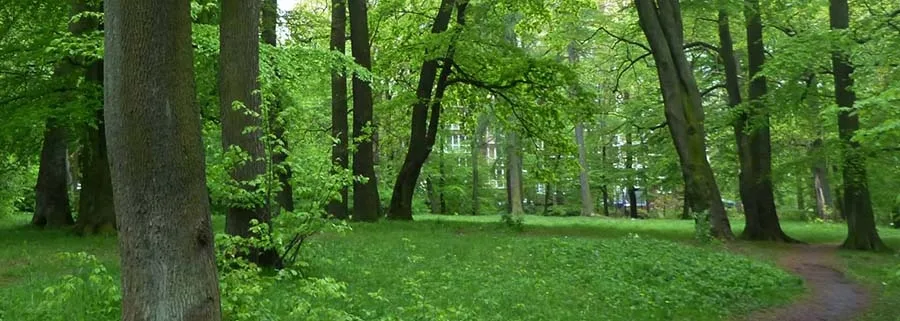
The history of Königsberg's green spaces is closely linked to the historical features of its urban development and falls into the period of the Inner City (Ihnen-Stadt), when gardens were mostly private and quite small, and the period of the Big City in Green (Groß Stadt in Grünen), which began in the 20th century, when the area occupied by gardens, public squares and the like increased sharply. Among the gardens of the Inner City, three of the earliest stand out: the Ducal, or Royal, Garden, the People's Garden and the Botanical Garden of Königsberg's Albertina University.
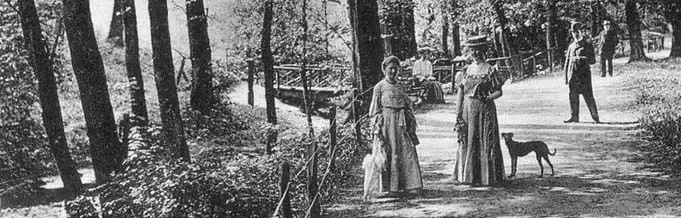
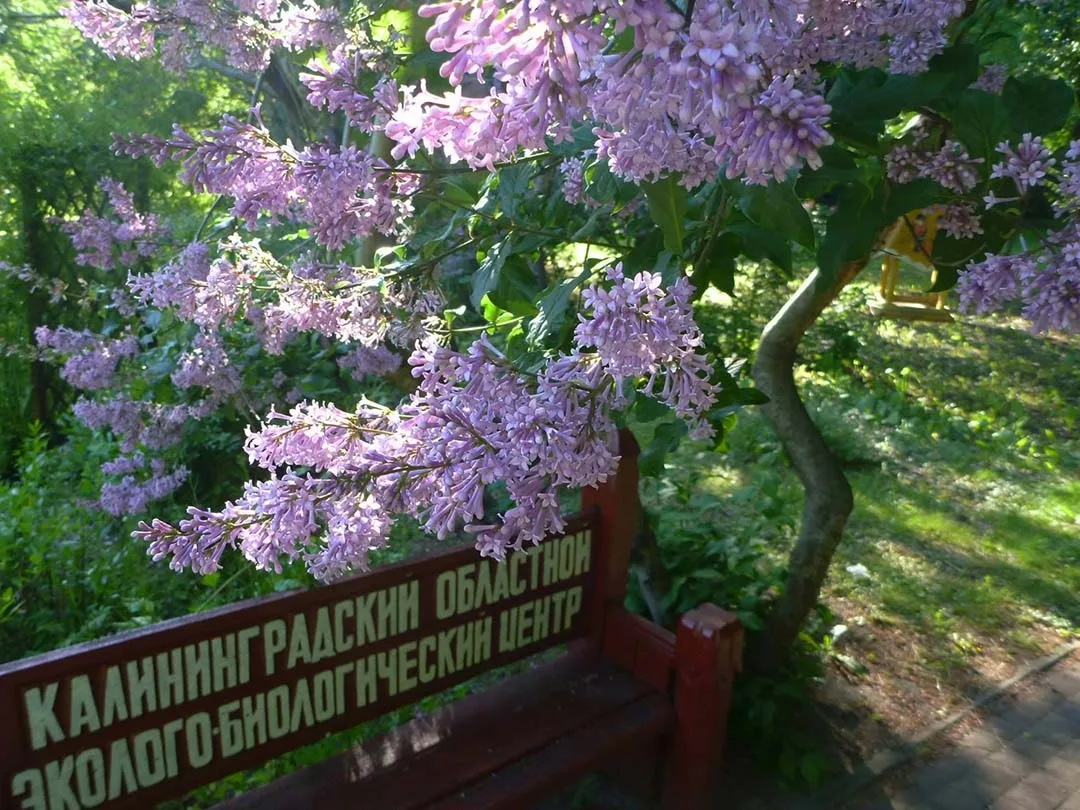
The Botanical Garden of Königsberg University on the western edge of the Inner City (today the Kaliningrad Regional Children's and Youth Centre for Ecology, Local History and Tourism is located here, on Botanicheskaya Street) was one of the most beautiful botanical gardens in Germany and, moreover, for more than a century it was a centre of scientific research in plant systematics, morphology, anatomy, physiology, breeding, introduction and geography, and by the beginning of the 20th century it was also a superbly laid-out landscape park, open to the public but small in area.
A 1910 guidebook to Königsberg lists among the city's sights the Albertina Botanical Garden, open to visitors from 1 May to 1 October from 12 noon to 6 p.m. The history of the garden goes back to the beginning of the 19th century, when the war councillor Johann Georg Scheffner (1736–1820) – a public figure well known in Königsberg, a somewhat egotistical man with a difficult character who loved success and a certain theatricality in his actions, a poet who published several collections of verse, some of them frivolous, such as "Naturalnesses of Sensual Love", a bibliophile, a writer, a member of the Masonic lodge "Of the Three Crowns", a friend of Theodor von Hippel and other influential people, a man with whom Queen Louise gladly corresponded, and a frequent table companion of Immanuel Kant – having received a considerable inheritance at the age of 60 and retired, bought in 1796 a house with a large garden on the western edge of Königsberg, in the Neurossgarten district, on the Butterberg hill, by the Neurossgarten Church (built in 1644–47; a school now stands on this hill). The new owner put the grounds in order, laid them out with great taste and knowledge, and then maintained and improved his garden for more than ten years.
It is believed that the plan for Scheffner's garden was drawn up by Gustav Schondorff, who later became director of the gardens in prosperous Oliva near Danzig (a district of Gdańsk).
Sketches of Schondorff's plan, probably sent to the director of the Berlin gardens and parks for advice, were later found among the papers of Peter Joseph Lenné, an outstanding landscape architect of the German school. But it remains unclear whether Lenné personally changed anything in this plan. All that is known for certain is that, according to Lenné's plans, a square was designed and planted in Königsberg on the site of the demolished, dilapidated Altstadt Church, and that at the king's request a design was prepared for a promenade around the Schlossteich (the Castle or Lower Pond).
King Frederick William III of Prussia (1770–1840), whose residence was in Königsberg in 1806–1807 owing to the occupation of Berlin by Napoleon's troops, proposed to J.G. Scheffner that he hand over his estate to Königsberg University in return for a royal life annuity of 700 thalers. Scheffner agreed, and as a result in 1809 the king presented Scheffner's former garden to the Albertina so that a Botanical Garden could be established there.
Since the Botanical Garden became part of the university, a few words about the university, the king and the state of society that preceded the vicissitudes of Scheffner's garden.
Under the last, thirty-seventh, Grand Master of the Teutonic Order and first Duke of Prussia, Albrecht of Brandenburg (1490–1568), founder of Königsberg University (the university's opening is dated 17 August 1544), the university enjoyed very high status: favourable conditions were created within its walls for the professors' work, and all estates, from the knighthood to the burghers, were obliged to support the university and uphold its interests.
For the upkeep of the university the duke assigned 3,000 marks, to be paid annually from the state treasury. In addition, annual payments to needy students amounted to 1,000 marks. Because the duke was constantly short of money, these sums were paid irregularly, and the professors petitioned the sovereign to show them "some kindness and provision of a secure income".
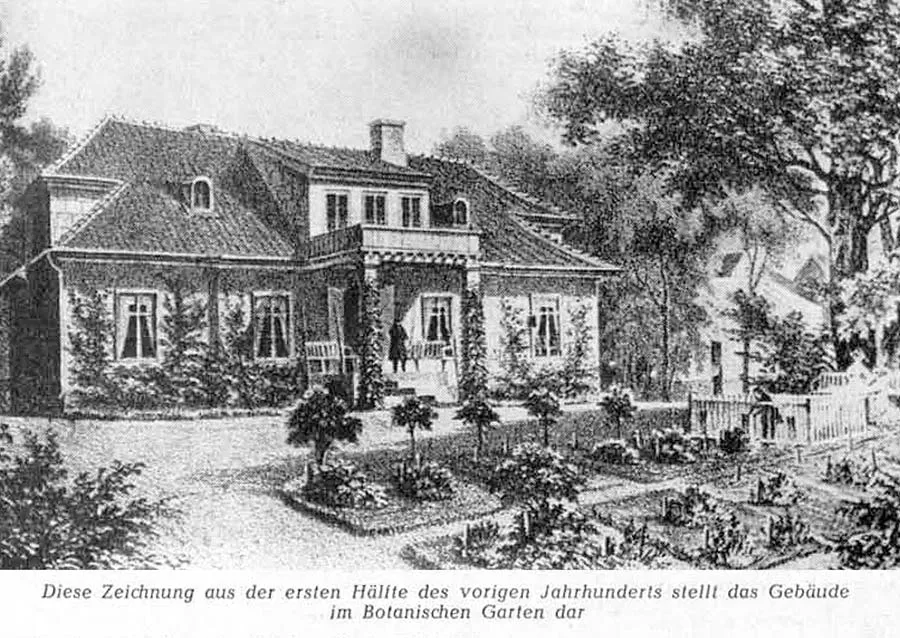 The Botanical Garden administration building in a drawing from the first half of the 19th century.
The duke then ordered that the annual payments of 4,000 marks to the university be provided by the domain of Fischhausen (now the town of Primorsk), which was the king's hereditary land and had formerly been the territory of a bishop's residence.
Fischhausen was also to supply the professors with rations in kind worth 528 marks. The rations included almost 47 tonnes of grain, about 24 tonnes of barley, 3.7 tonnes of peas and four barrels of butter, each worth 15 marks. These deliveries began in the autumn of 1556, but since a professor received only 150 marks a year, the duke waived the university's payment for the provisions, and their value was thereafter not deducted from the professors' salaries. This continued until 1725, when King Frederick William I ordered that the university's upkeep be paid by the Königsberg Rent Office. The deliveries in kind ceased, but instead the king paid the university 28,000 thalers a year.
The university's development was certainly difficult at times, but nevertheless during the 16th and 17th centuries the Albertina was the centre of Prussia's intellectual life. By the 18th century, however, it had gradually become a thoroughly provincial university, and over the course of that century it lost its grandeur and grew poorer; material hardship led to a shortage of scholarly literature, low professorial salaries, a lack of essential laboratories and a small number of chairs – such was the university until the beginning of the 19th century (in 1806, for example, only 332 students studied here, of whom three were mathematicians and eight medics). A phrase uttered by one of the professors, Christian Kraus (1753–1807) – "He who devotes himself to the University of Königsberg takes a vow of poverty" – remained very popular among the teaching staff for many years.
From December 1806 to January 1807, King Frederick William III and his family were forced to stay in Königsberg because Berlin had been surrendered to the French in October 1806 in the course of one of the Napoleonic wars; then, in the summer of 1807, Napoleon's troops entered Königsberg too. Only after the Peace of Tilsit was concluded between Napoleon and the Russian Emperor Alexander I – under which Prussia was left with only four of its provinces, and even that thanks to the Russian emperor's insistence, while the rest of its territory went to the Grand Duchy of Warsaw and the Kingdom of Westphalia – was the King of Prussia able to return to Königsberg, for the period from 15 January 1808 to 15 December 1809. Despite Prussia's grave post-war situation (the indemnity to be paid to France was 12 million francs, of which Königsberg alone had to pay 4 million francs, or 1,748,450 thalers), Prussian society saw a revival of intellectual life: by royal decree the estates were abolished, new trends were felt in science and the arts, and the progressive forces of society united and became more active.
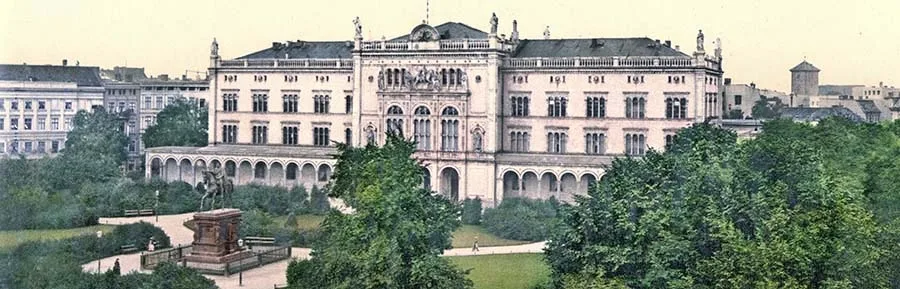
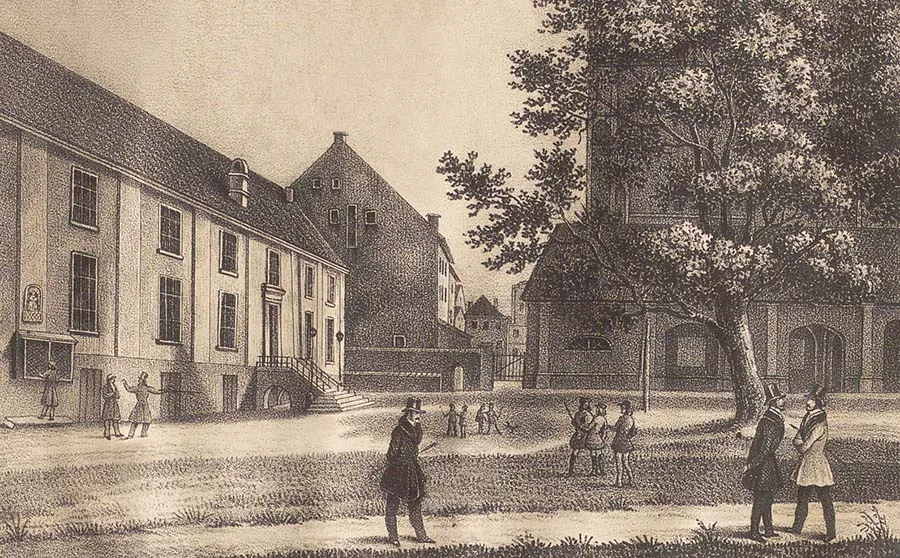 The courtyard of Königsberg's Albertina University in the 19th century.
Having spent almost two years in Königsberg in all, the king and his young wife Louise, who later came to be regarded as an idol, the "genius of Prussia", became closely acquainted with the city's intelligentsia, poets, scholars and aristocracy, and learned of the university's dire situation.
Perhaps that is why in 1809, when the huge payments to France were a catastrophic burden on the state, the king, who could not afford to buy Scheffner's garden, nevertheless acquired it on condition of paying the owner a life annuity. In that same year the university's budget was doubled, five new chairs were established, an observatory was built (1811–13), the university library was founded, and the natural sciences – mathematics, physics, chemistry, botany, zoology – which until the beginning of the century had been of secondary importance here, behind theology, law and philology, began to gain great significance. In this new period for the university, "mighty trees with strong roots were planted" in the soil of the Albertina: from 1810 Friedrich Bessel, the famous astronomer, began working here; from 1817 Karl Baer, the famous embryologist, the "father" of that science, founder of the local Zoological Museum, who stands in the ranks of the world's classic natural scientists; Ernst Meyer, the celebrated author of the "History of Botany", was invited to the university, as were many other scholars who were already well known or later became famous. The Neurossgarten district, where Scheffner's estate and later the Botanical Garden were located, gradually became something like the Latin Quarter of Paris – university life was in full swing here, since numerous medical clinics and laboratories and the pathological, geological and zoological museums were built.
The son of King Frederick William III and Queen Louise, King Frederick William IV, later the official honorary rector of the New University, laid the foundation stone of the new university building on Paradeplatz in 1844, where the university still stands today (2 Universitetskaya Street).
 King Frederick William III of Prussia and Queen Louise in the park of Charlottenburg (1799).
So, by the beginning of the 19th century almost every European university had a botanical garden, serving as a scientific centre and a practical laboratory for students, but Königsberg University lacked such an institution.
Long before Scheffner's estate was handed over to the university, Professor Karl Gottfried Hagen – a well-known botanist, pharmacist and medical councillor, owner of a library considered one of the best in Königsberg, teacher of almost all Königsberg's apothecaries, author of the "Textbook of the Apothecary's Art" (1805) and of "Prussian Flora" (1818), who was nicknamed behind his back "a whole (complete) faculty" (Komplette Fakultät) because he taught zoology, botany, mineralogy, physics and chemistry, and who in 1778 opened at his own expense a pharmaceutical laboratory for students in his own house – had raised the question of the urgent need to establish a botanical garden for the medical faculty. However, for various reasons, above all the university's lack of funds, the plan was repeatedly postponed. At last, in 1809, the university received land for the long-awaited botanical garden.
It was K.G. Hagen who carried out the first geobotanical survey and some of the most urgent alterations in the botanical garden, and very probably his opinion was decisive when the young botanist and physician Professor August Friedrich Schweigger (1783–1821), Doctor of Medicine, invited from Erlangen, was appointed first director of the Botanical Garden, which opened as a unit of the medical faculty. At the ceremonial handover of the garden to the university, the king charged the twenty-six-year-old scholar-director "…to create a botanical garden with all possible diligence for subsequent work in it using the achievements of science, and with constant care to maintain strict order there…".
Work on laying out the garden began in the spring of 1810 under the direction of Director Schweigger, with the help of the scholarly gardener Fintelmann, invited from Berlin. A year later, in 1811, thanks to the efforts of Hagen, Schweigger and Fintelmann, the former manor garden on the north-western outskirts of Königsberg was granted the status of a university botanical garden.
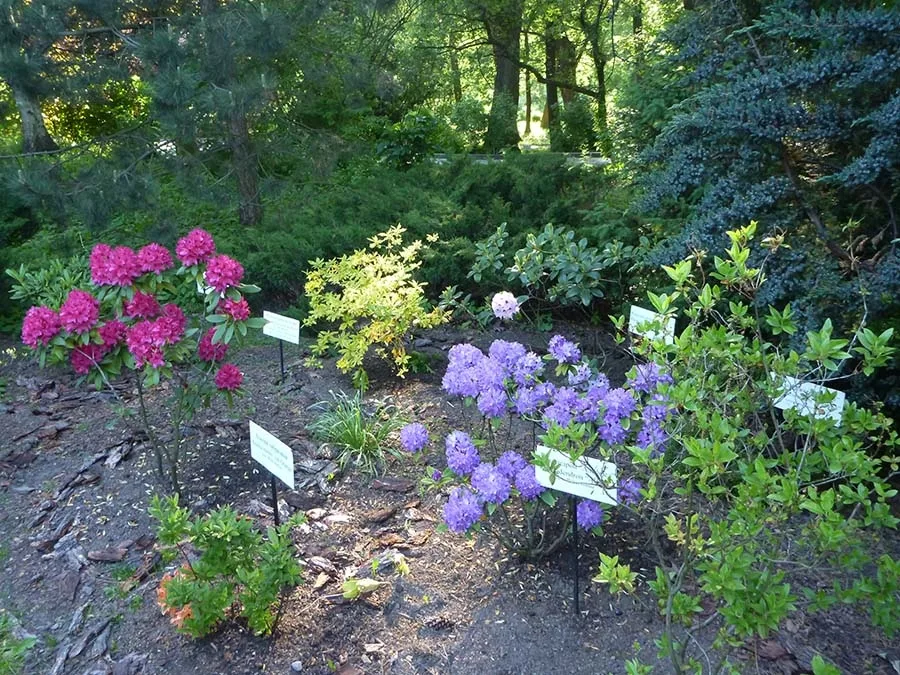
The garden landscape created under the war councillor, the owner of the estate, was quite interesting: a small pond in the south-western corner of the garden, towards which the whole higher northern part of the grounds descended in terraced steps with a network of intricate paths; but the area of the garden itself – only about 3 hectares – was clearly too small for building up a plant collection befitting the status of a botanical garden.
Perhaps that is why, in the first years of laying out the garden, Schweigger did not follow a strict system in the new plantings and did not create new landscapes; he simply tried to fit as many plant species as possible into the garden in order to build up an extensive systematic collection, arranging it in geometrically regular beds, as befits an apothecary's garden.
Such an arrangement is entirely understandable from a traditional historical point of view: this is how the very first botanical gardens at European universities were laid out in the late Middle Ages, becoming more widespread in the Renaissance and later in the Baroque era. One of the first gardens of the new type – Orti botanici, the botanical garden for studying and collecting plants – appeared in Italy, in Padua, at the first botanical faculty in Europe, where future physicians were taught the medicinal properties of plants. At the beginning of the 16th century the Padua garden (1.8 ha) was a symmetrical system of small beds making up larger, likewise symmetrical sectors – a square inscribed in a circle. The "apothecary's garden" with beds of herbaceous medicinal plants was surrounded by an arboretum – a collection of trees and shrubs.
By 1812 the first floristic register compiled by the garden's management already listed 2,367 plant species; over the following decade the number of species doubled and continued to grow. Building up the botanical garden's collection, which was to include plants from other climatic zones, was a very difficult task in the conditions of East Prussia, where at that time temperatures stayed below zero for more than 100 days a year, there were only 26 days a year with temperatures of +25 °C, late spring frosts were typical, and autumn brought gale-force winds.
In addition, because the garden lay in the southern part of the slope of the Pregel valley, its soils were for the most part clayey and wet, took a long time to dry out in spring, were noticeably waterlogged in the eastern part of the garden and were quite unsuitable for exotic foreign plants.
Already while the garden was being created, the marshy hollow in its eastern part was somewhat raised and levelled by filling it with large quantities of building waste and household rubbish, as a result of which light, permeable, "good" artificial soils later formed here.
North of the pond, the parent material of the soils was "blue" clay, that is, gleyed, heavy, wet ground. Naturally the soils inherited its poor permeability, difficulty of cultivation and lack of air. In the low-lying parts of the garden, especially in its southern part, "acid humus" typical of fens had formed; such soils are also unsuitable for most plants. Elsewhere in the garden the soils, besides being very moist, were also very poor in plant nutrients. Sand and gravel, without which it was impossible to develop land with heavy clay soils, were brought from distant parts of the city's surroundings at considerable expense.
Through Schweigger's efforts small plots were added to the garden, and by 1818 its area had reached 12 Morgen 142 Ruten, i.e. a little over three hectares (a Morgen is a quarter of a hectare). Even so, the Königsberg Botanical Garden remained small compared with other similar gardens in Germany, but its grounds were more interesting and varied than those of many other European botanical gardens.
The layout of the grounds under Schweigger was fully in keeping with the principles then accepted for "learned" botanical gardens: the collection represented the flora of six climatic zones of the world, four special houses were built for tropical and subtropical plants, as well as a house for the gardener (at that time Gerecke). The cost of the construction work and the laying out of the garden came to 14,523 thalers and 29 groschen.
After that, Dr Schweigger, the founder of the garden, was no longer able to devote himself to its planning and development. To enlarge the botanical collection, from 1811 onwards he made frequent scientific expeditions to Sweden, Denmark, England, France and Italy.
In 1819 the 38-year-old scholar set off for Greece and then for Sicily, where on 23 June 1821 he was brutally murdered by his guide.
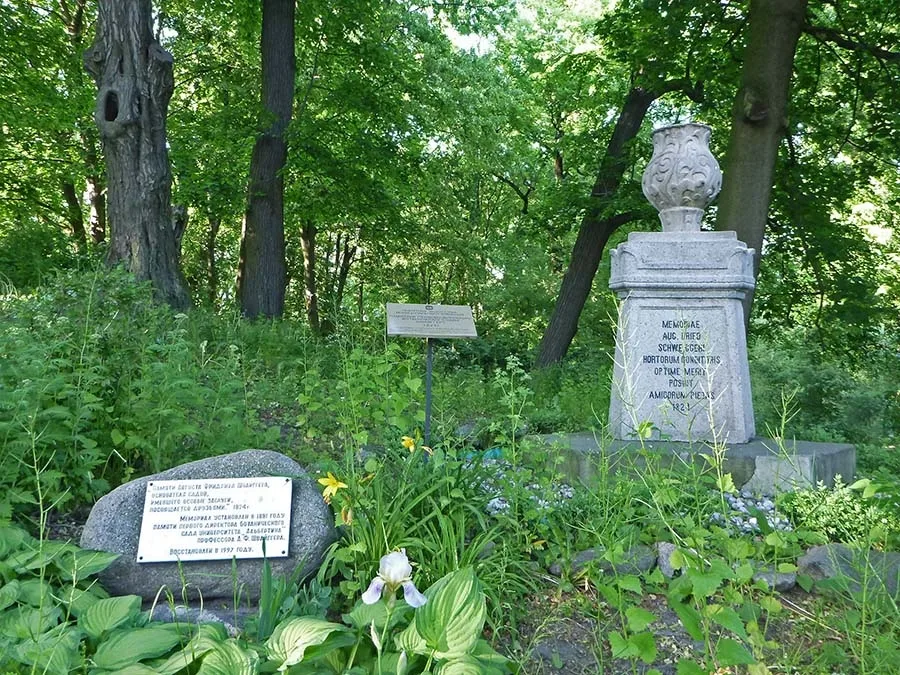
In his memory, his friends and university colleagues erected a monument on the hill in the north-western part of the garden, under limes and beeches: a pedestal crowned with two metal candelabra and a genuine marble vase from the Villa of Maecenas at Tivoli (a 1938 guidebook to Königsberg reported: "mit einer echten Vase aus der Villa des Mäcenas in Tivoli").
The pedestal bears the inscription: "To the memory of A.F. Schweigger, founder of the garden, of outstanding merit, erected by his friends. 1824". (The Latin text of the inscription reads: "MEMORIAE Aug. Friedr. Schweiggeri HORTORUM CONDITORIS OPTIME MERITI POSUIT AMICORUM PIETAS. MDCCCXXIV"). The monument was restored in 1881 under the garden's director R. Caspary; it disappeared after the Second World War, and only in 1997 was its pedestal re-erected in its original place, without the candelabra but with an imitation vase (made of cement).
After the death of the first director, the new head of the garden from 1821 to 1824 was the professor of botany K.W. Eyssenhardt, "a well-educated young naturalist of noble character". As early as 1821 the Botanical Garden drew up a list of the next necessary plant purchases and a schedule for planting; thereafter such lists became compulsory and were drawn up every year.
Later, owing to Eyssenhardt's illness, for a short period from 1824 to 1826 the duties of director were taken over by the famous Karl Ernst von Baer (1792–1876), a great scientist, anatomist, professor of zoology, the "father of embryology", founder of the Königsberg Zoological Museum and director of the university's Anatomical Institute, who worked in Königsberg from 1817 and later left for St Petersburg to work at the Russian Academy of Sciences (he left twice: in 1819 and, for good, in 1834).
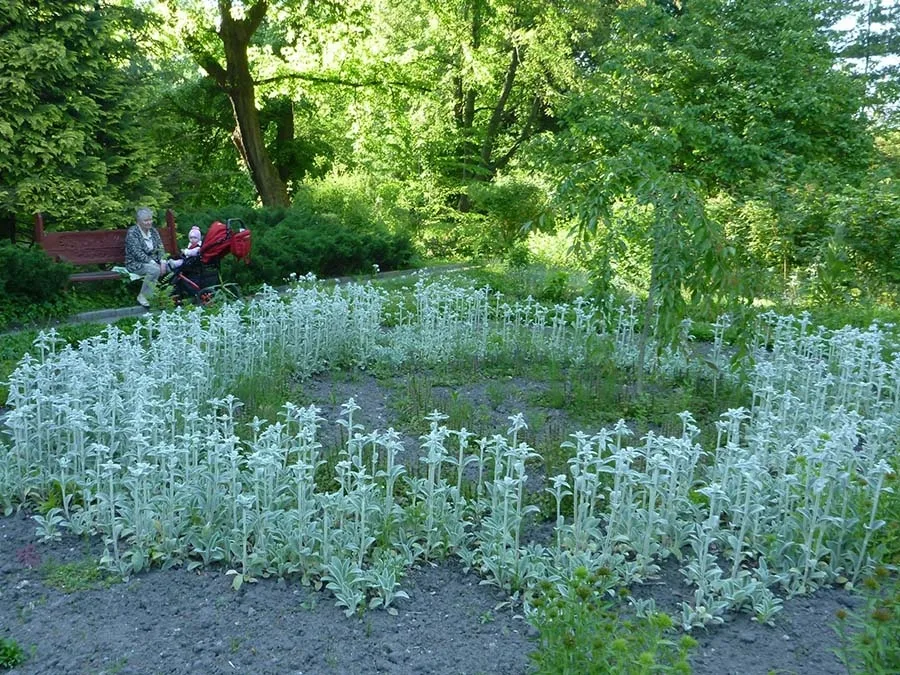
The famous zoologist wrote of his work in the Botanical Garden: "botanical excursions held a certain charm for me, and botany in general was for me a forgotten, but not finally rejected, sweetheart".
In 1826 a young Privatdozent from Göttingen, Ernst Meyer (1791–1858), who held a post in the chair of botany, was appointed director of the Botanical Garden; he later became a professor, was a convinced follower of J.W. Goethe's ideas in natural science and of his theory of metamorphosis (the main idea of this theory was Goethe's notion that all plant organs derive from the leaf), and later became the famous author of the "History of Botany". Ernst Meyer remained director for 32 years, until his death, and played a definite positive role in transforming the garden: he managed to enlarge its grounds a little further and to change the original layout "in the spirit of contemporary aesthetic trends close to his heart", i.e. to arrange the garden in accordance with the ideas of classicism in a landscape style close to nature, moving away from the Baroque, artificial, geometric layout typical of apothecaries' kitchen gardens and symbolising man's dominion over nature. In these years and afterwards the garden served not only as a base for the research of many well-known scientists (its rich plant collection attracted outstanding people – Professor K.F. Burdach and E. Burdach worked here, and it was visited by the naturalists A. Humboldt and H. Helmholtz, under whom the Russian students I.M. Sechenov, A.G. Stoletov, P.N. Lebedev and others studied) and as a laboratory for the scientific work of university students, but it also became a place of recreation for townspeople, already representing to a certain extent a very interesting display landscape park.
In 1858 the professor of botany Dr Robert Caspary (1818–1887) became director of the garden; an expert on the Prussian flora, he discovered 70 new plant species in East Prussia and wrote numerous works on plant geography. In 1862 Robert Caspary founded the Botanical Society, and in 1881 the Botanical Institute was built in the north-western part of the garden. By then the Zoological Museum, opened in 1830, had already stood for half a century beyond the northern fence of the garden (its upper floors were added much later). Previously one of Königsberg's plague houses (Pesthaus), where those who had caught that terrible disease were isolated, had stood on the site of the Zoological Museum, which is why part of Sternwartestraße, later Besselstraße, was then called Plague House Lane (Pesthausgasse, map of Königsberg of 1815).
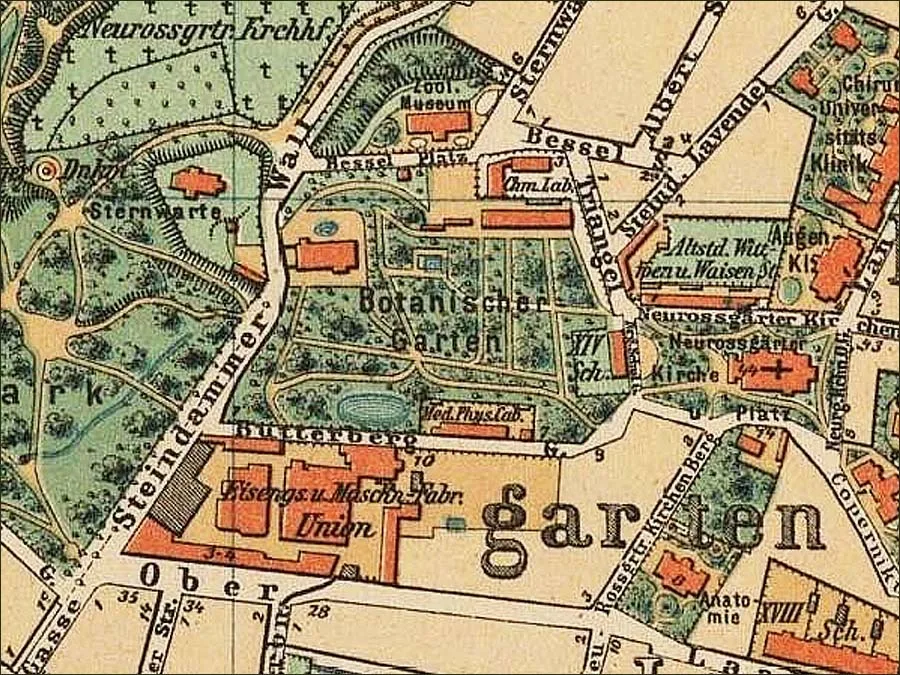 The Albertina Botanical Garden on an 1885 map of Königsberg.
The range of research at the Botanical Institute included plant anatomy, physiology and pathophysiology, as well as problems of geobotany and phytogeography.
Under R. Caspary the garden's area grew to 15 Morgen, i.e. almost 4 hectares; a large new greenhouse was built by the main northern entrance, and in the hollow of the garden, at the end of the "ravine" that ran from north to south a little east of the Botanical Institute, a large conservatory with a high glass dome was built for tropical aquatic plants, including Caspary's beloved lotuses. On the plot behind the Botanical Institute in the northern part of the garden, a collection of introduced conifers was planted, supplied by the firm of Peter Smith und Söhne of Hamburg and by E. Mosisch of Treptow, and later by Suker of Arklitten near Gerdauen (the settlement of Zheleznodorozhny). Deciduous plants from various countries were supplied by the nursery of the Mack family's Order estate at Althof-Ragnit (the settlement of Michurinsky near the town of Neman) and by the merchant John Reitenbach of Plicken; later (under Dr Lürssen) the suppliers were the firms owned by a certain Späth of Berlin and Rathke of Praust.
In the following years, under the garden's director, Privy Councillor Professor Ch. Lürssen (1843–1916), many changes took place, some of them negative. The glass conservatory and part of the large greenhouse were demolished in 1889. On the site of the glass conservatory for aquatic plants the director had a large pond dug, with a fountain and an artificial island, which some of his contemporary colleagues considered quite out of place and which, moreover, required considerable investment. This pond has survived to this day. The small marshy pond in the hollow of the south-western part of the garden, the very one that had existed in Scheffner's garden, was filled in and planted with specially selected shrubs. The tropical aquatic plants of the water-lily family that had been grown in the glass conservatory under Director Caspary were mostly sent to other botanical gardens; those that could survive in the open air were placed in the new, enlarged pond with the fountain. Under Ch. Lürssen, in 1899, the extremely dilapidated greenhouses of Schweigger's time were demolished and one new, quite small conservatory was built.
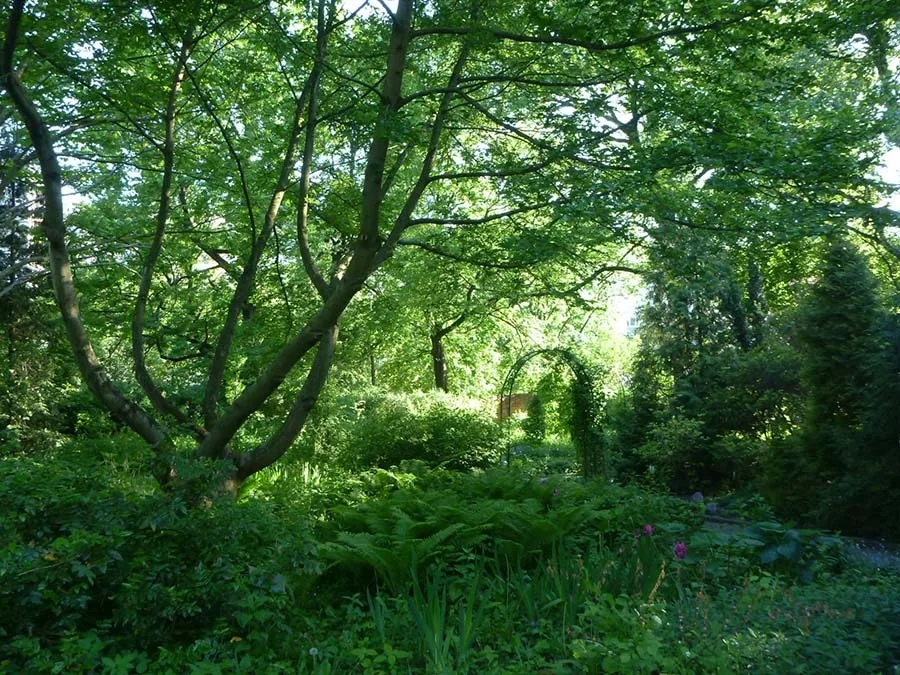
In 1908, to a plan by the garden inspector Buchholtz, work began on a rock garden on the southern slope of the hill with the Schweigger monument; it became another of the garden's attractions.
Creating a rock garden on this spot was fully justified, because the slope, which was fairly steep, suffered from severe sheet erosion, especially in spring, when meltwater cut deep gullies in the soil. Even planting on transverse beds did not prevent the erosion. To preserve the slope and make life easier for the plants, the rock garden was built using building stone – sandstone – which reinforced the ground and the soil itself.
On the northern side, in 1888, the garden was somewhat encroached upon by the university's chemical and pharmaceutical laboratory, built on its grounds east of the main northern entrance, with its front façade facing Besselstraße (now Besselya Street). On the southern boundary of the garden, as part of the expansion of the university's ophthalmological clinic, which stood a little east of the Neurossgarten Church, one of the clinic's laboratories was built, reducing the garden's area still further.
In 1910 the retiring director was succeeded by Dr Carl Mez, an erudite scholar and an energetic administrator. Under him important changes took place in the design of the garden's landscapes.
The plot south-east of the Schweigger monument was turned into a "lime garden" with a characteristic "chalk" flora consisting of calcicole plants, which in nature grow on limestone.
Thanks to skilful landscape design, the eastern slope between the Botanical Institute and the pond, where tall trees had long been growing, was given the character of rocky mountain terrain with Central European and American mountain forest flora (the so-called "America"), which incidentally helped to stabilise the soil layer on the slope.
In the hollow south of the pond an artificial typical raised bog was created with its characteristic flora: mosses, dwarf shrubs, sedges and so on. But this experiment was not entirely successful, because in the hollow the water came from below, from under the soil, whereas natural raised bogs are fed only by precipitation, which is poor in nutrients. The raised-bog plants found themselves in unsuitable conditions: the groundwater was oversaturated with plant nutrients, as a result of which the fen flora from further south penetrated the community of the artificial raised bog and gradually crowded out the oligotrophic species, i.e. plants of poor soils that make few demands on nutrients.
In the eastern part of the garden, more or less level ground was set aside for a collection of valuable plants, the so-called arboretum: various genera, species and forms of plants were planted here.
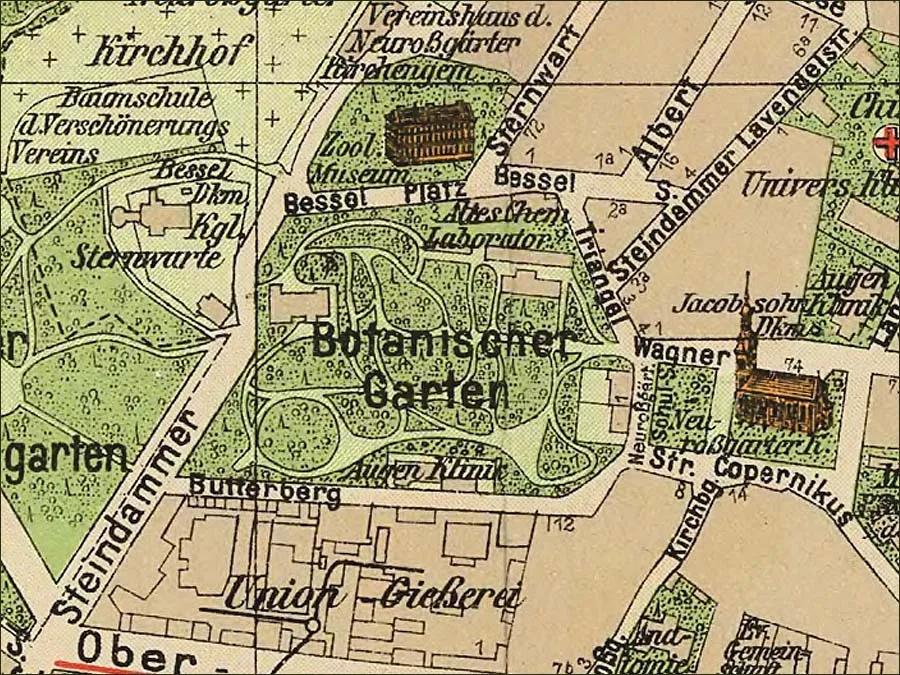 The Albertina Botanical Garden on a 1901 city map.
As an element of the East Prussian landscape, an artificial dune with sand-loving plants appeared in the garden, formed beneath one of the tall elms.
Ferns planted under the conifers in the north-western part of the garden, behind the Botanical Institute building, fitted very well into the garden's landscape scenes. After the weeds had been completely eradicated – an effort made by the garden inspectors Buchholtz and his successor Butz – the ferns spread freely and adorned various corners of the garden. In front of the greenhouse built under Director Lürssen in the north-eastern part of the garden, space was set aside for a display of tropical South American plants of the bromeliad family, among which there were many very rare species, since Professor K. Mez studied and described bromeliads in his scientific monograph.
According to contemporaries, in these years "the variety of landscapes and plant communities in the university botanical garden was astonishing".
From 1935 until the last days of Königsberg the botanical garden was headed by Professor Albin Kurt Mothes. By this time the collection of outdoor and greenhouse plants comprised almost 7,000 species, varieties and ornamental forms, accommodated on grounds of just under four hectares.
The war destroyed a considerable part of the Botanical Garden's collections. The northern part suffered particularly during the bombing: the Botanical Institute, the pharmaceutical laboratory and the Zoological Museum, which stood at Sternstraße 1 behind the northern wall of the Botanical Garden, were destroyed.
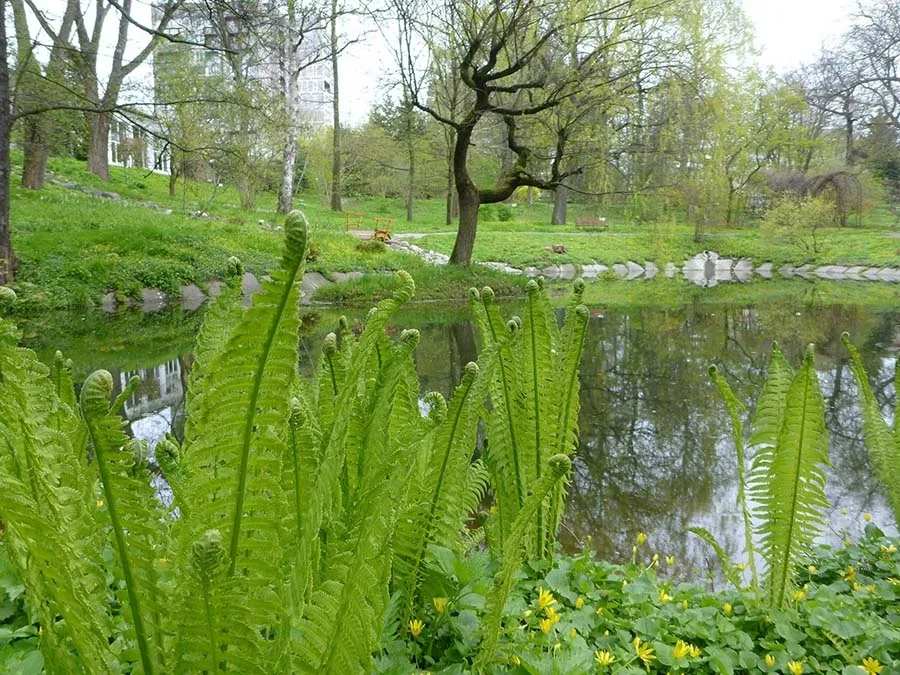
From 1945 to 1951 the garden had no owner and was left to itself, which undoubtedly had a negative effect on the species composition of the botanical collections.
…There was much of value in this garden: old trees from "Scheffner's garden", under whose crowns Immanuel Kant more than once rested as a guest (a one-leaved black locust standing by the northern wall of the garden next to a clipped yew hedge, a horse chestnut by the southern wall of the institute, a huge poplar by the "chaffinch path", and a Caucasian wingnut planted in 1835 in the south-eastern corner of the garden); a variety of tree species, above all foreign but also European, among them very old specimens (by 1922 already almost a hundred years old): black or Austrian pine, European larch, Caucasian wingnut, mountain pine, Siberian and balsam firs, monilifera poplar and another 120 taxa, mostly trees and shrubs, growing in various corners of the garden, as recorded in the material of an excursion that Johannes Abromeit (1857–1946), professor of applied botany and author of the fundamental scientific work "Flora of East and West Prussia", written over the years 1898–1940, led in the garden in 1922 for members of the German Dendrological Society. During the excursion the botanist noted the following species and forms:
- growing by the pond – eleutherococcus, Japanese and Amur katsura trees, weeping white willow and Koch's most elegant willow, Chinese angelica tree (Manchurian variety), Japanese tree lilac, Japanese alder, Ussurian pear, Erman's birch and yellow birch, Schrenk's spruce, Japanese larch, Kaempfer's golden larch, Tatarian maple, Greek fir, hickory, hybrid oak and others (24 species in all);
- trees "lined up in a row" by the northern wall of the garden – black pine (85 years old), European larch (110 years), tree of heaven, mountain pine (99 years), Siberian fir (110 years), yew (a clipped hedge, very old plants), glaucous blue spruce, white fir and others (17 species in all);
- by the Botanical Institute – Norway maple, balsam fir (very old) and grand fir, white spruce, Yezo spruce, Sitka spruce, Norway spruce 'Remontii', Pfitzer juniper, western red cedar, variegated hiba, ginkgo and others, mostly conifers (18 species in all);
- at the crossroads – Dahurian birch, Tatarian maple, Veitch's fir, rowan, Serbian spruce, multiflora rose, tree of heaven, oak and various species of spruce (11 species);
- the "perennial garden" – horse chestnut (110 years old), silver buffaloberry, Chinese plagiospermum, Lombardy black poplar, Canadian poplar, bigleaf maple, black walnut and heartnut, black chokeberry, paper birch, cut-leaved lime and others (15 species);
- the part of the garden on the eastern slope known as "America" – hybrid catalpa, or Bunge's catalpa, American elm and wych elm (scabra), white mulberry, red form, box elder, or ash-leaved maple, and its 'Wieri' form, purple-leaved European beech, Austrian oak, one-leaved ash, royal walnut and common walnut, black alder, one-leaved black locust, fig, Canadian poplar, Persian oak, Japanese katsura tree, large-leaved lime, cut-leaved black elder, Caucasian wingnut (86 years old) and others (25 species in all);
- an avenue of wild plums (5 species) with a very old poplar (more than 80 years old), hybrid elder and lime.
East of the garden, by the Neurossgarten Church, where the sports ground of School No. 23 is now, grew fine old specimens of honey locust, London plane, white mulberry, Manchurian aralia, oak and poplar.
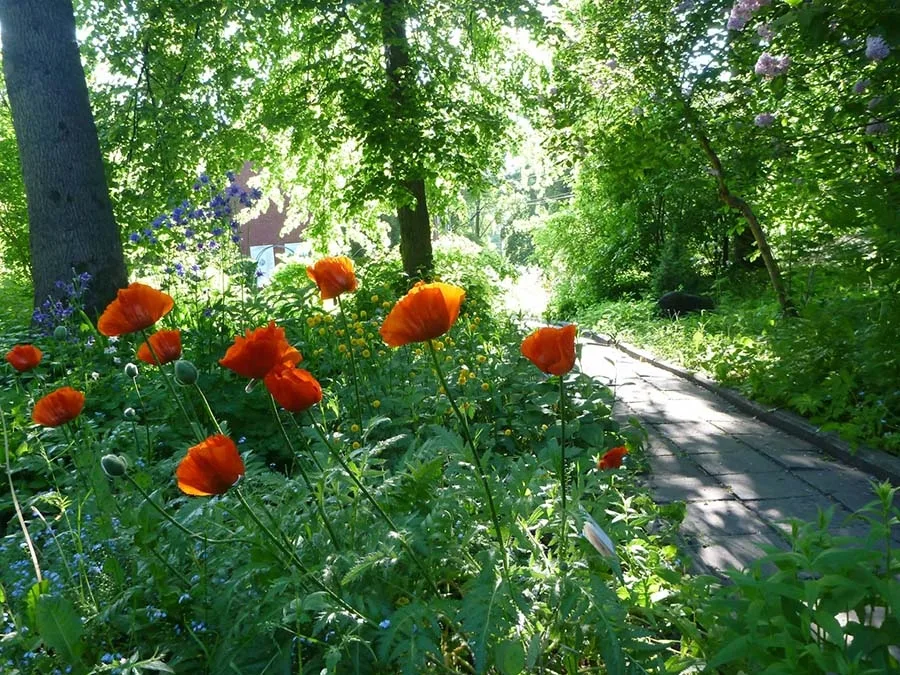
Besides the main northern entrance, the Botanical Garden had a western entrance from Steindammer Wall (now Gen. Galitskogo Street); through this gate a road led to the Sternwarte (Observatory Hill) and on to the Volksgarten (People's Garden) with its memorial to the victims of the Franco-Prussian War of 1870–1871 and the honorary professors' cemetery (Ehren Frdh.).
No less interesting than the botanical collection, which brought together the flora of various floristic regions of the world, were the variety of artificial landscapes created on the gently rolling relief of the slope of the Pregel valley and fitted into 4 hectares surrounded on all sides by the bustle of the city; the magnificent views that opened up from various viewpoints along a well-thought-out network of garden paths; and the very layout of this small but elegant display garden in a pronounced landscape style, which "surpassed many of the botanical gardens of Europe in the charm of its scenery": a pond with water lilies, a fen, a rock garden, mountain terrain, a dune, terraced slopes, a "lime garden", and conifer plantings with European and North American tree species.
In 1951 the grounds of the Botanical Garden of Königsberg University were transferred to the regional department of public education to set up a regional station for young naturalists, and in 1965, by decision of the Kaliningrad Regional Executive Committee, the park of the young naturalists' station was declared a protected natural monument. Since 1992 these grounds have housed the Kaliningrad Regional Ecological and Biological Centre for Schoolchildren, whose dendrological collection, according to the 1994 inventory, comprises 37 families, 87 genera, 146 species and 37 forms, hybrids and varieties, including 88 trees, 84 shrubs and 11 climbers – 183 taxa in all. By origin the trees, shrubs and climbers are distributed as follows: from Europe – 25% (47 species), from North America – 19.1% (35 species), from East Asia – 16.3% (30 species), from Eurasia – 8.1% (14 species), from the Crimea, the Caucasus and the Balkans – 8% (13 species), from Western and Central Asia – 4.1% (7 species); cultivated varieties, hybrids and forms make up 20.2% (37 items). The largest number of individual plants belongs to European species (Norway maple, common ash, black alder, small-leaved lime, black elder, common hawthorn, fly honeysuckle).
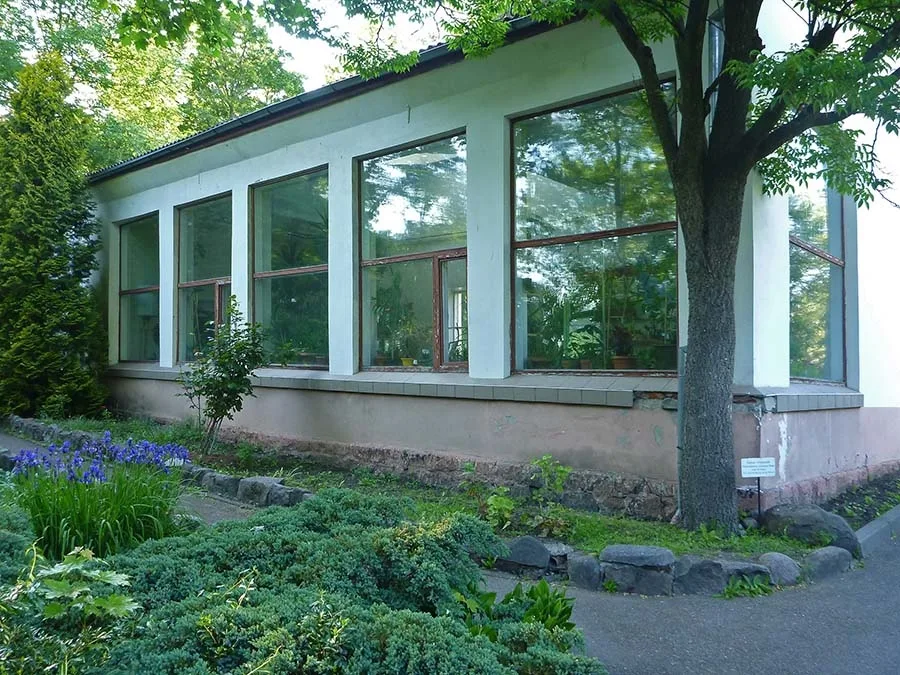
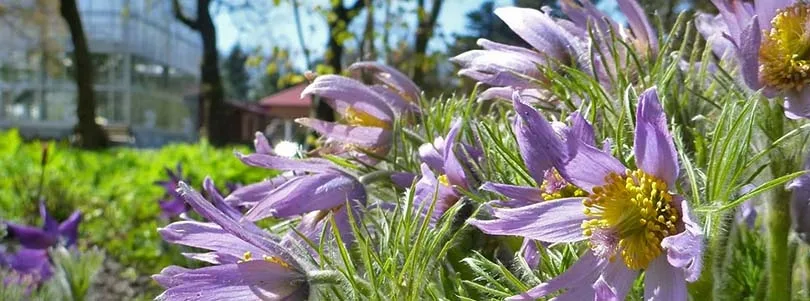
The greenhouse holds 129 plant taxa under glass. There are more than 150 taxa of ornamental flowering plants growing outdoors in the garden. Taken together, all the plants in the garden amount to less than 10% of the pre-war collection. [Data for 2004.]
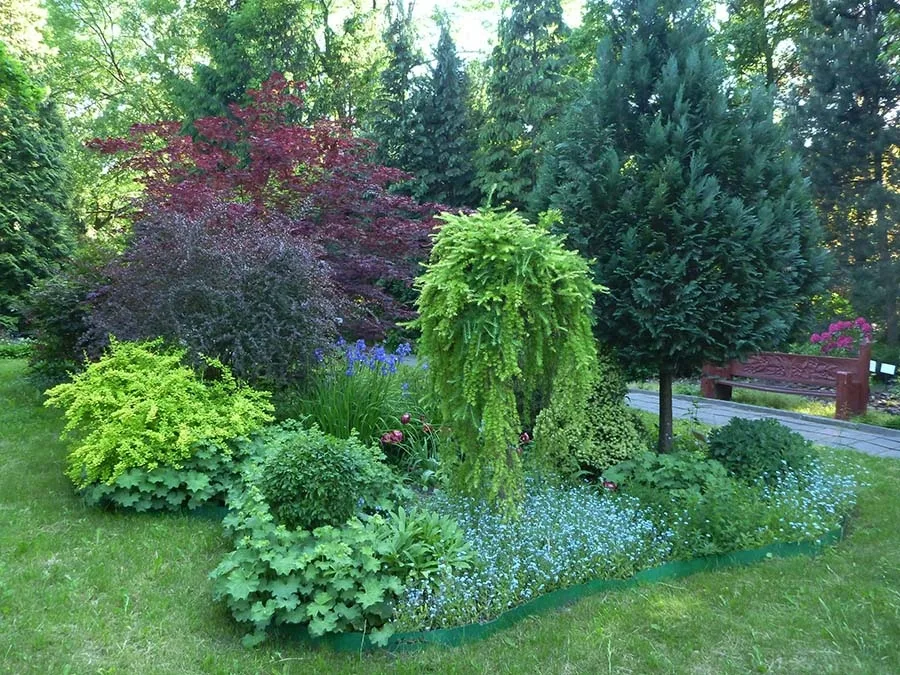
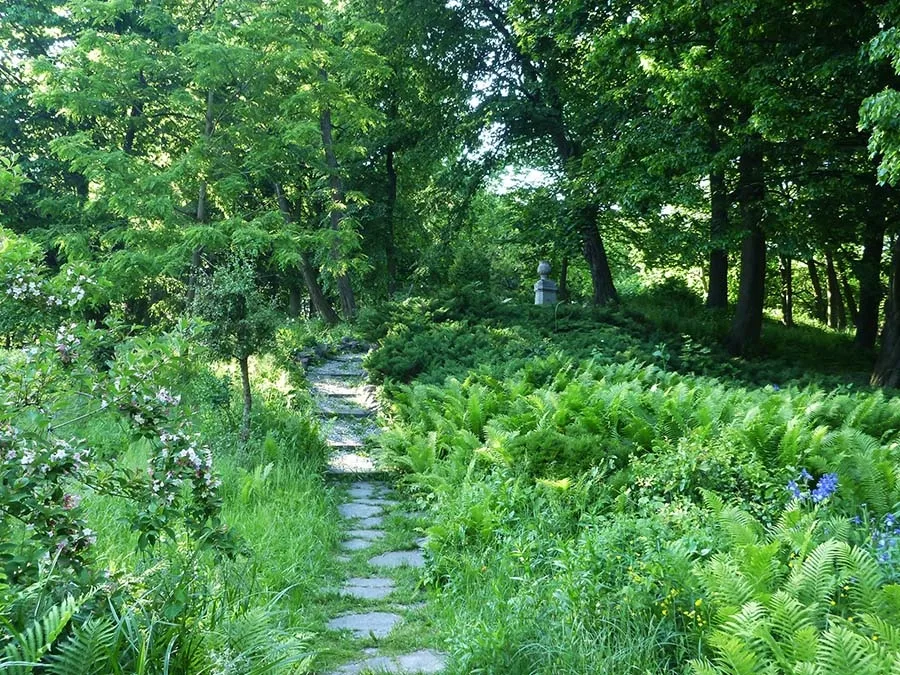
So, by the beginning of the 21st century the following outdoor trees, shrubs and climbers could be seen in the historic botanical garden: from the gymnosperms – ginkgo, English yew, common or white spruce, blue spruce (glaucous, blue and green forms), eastern hemlock, European larch, Scots pine, Weymouth pine, Austrian black pine, white cedar (spiral, cushion, white-tipped and 'Rheingold' forms), western red cedar or giant arborvitae, nodding Japanese hiba, Sawara cypress (thread-leaved and golden plume forms), savin juniper, eastern red cedar and common juniper in columnar form; from the angiosperms – kobus magnolia and saucer magnolia, Chinese magnolia vine, tree peony, traveller's joy and Jackman's clematis, Asian moonseed, katsura tree, Julian's, common and Japanese barberries, spiraeas of various species, common and black-fruited cotoneasters, cherries, common quince and Maule's quince, flowering almond, Niedzwetzky's apple, hawthorns, medlar, roses (climbing, hybrid tea and shrub roses), cherry laurel, apricot, mock oranges – sweet, Lewis's, large-flowered, broad-leaved, scentless and Gordon's – smooth hydrangea, variable gooseberry, American witch hazel, white false acacia (robinia), one-leaved false acacia, yellow acacia (caragana), Lonberg's yellow acacia, Turkestan peashrub, false indigo, Kentucky coffeetree, Chinese wisteria, small-leaved, large-leaved and long-stalked limes, common box, Amur cork tree, staghorn sumac or vinegar tree, maples – box elder, Norway, Amur, field, sycamore (common and purple-leaved forms), silver (sugar) maple, silver maple 'Wieri' – common horse chestnut, Ohio buckeye, red buckeye, Virginia creeper, Amur grape, riverbank grape, American bittersweet, Manchurian aralia, common ivy, cornelian cherry, cut-leaved black elder, honeysuckles – fly, Tatarian, blue and late – silver or white birch, paper birch, common hornbeam, Turkish hazel (bear's nut), black and grey alder, English oak and its pyramidal form, sessile oak, northern red oak, Persian oak, European beech and its dark purple form, common walnut, hybrid quadrangular walnut, butternut, Manchurian walnut, common or European ash, green or lance-leaved ash, lilacs – Hungarian, common, hairy, Zvyagintsev's and Amur – common privet, hybrid catalpa, tamarisk, yellow azalea, elms – European white, wych and hornbeam-leaved – mountain elm, white willow and its weeping form, globular crack willow, purple willow, poplars – bigleaf, white, Canadian 'Marilandica', eastern cottonwood and trembling poplar (aspen).
Among the trees and shrubs that live in the Ecological Centre for Schoolchildren today, one can see plants listed:
- in the Red Book of the planet: three regularly fruiting ginkgo specimens;
- in the Red Book of the USSR: Japanese walnut, Boston ivy, Hungarian lilac;
- in the Red Book of the Baltic Region: European beech.
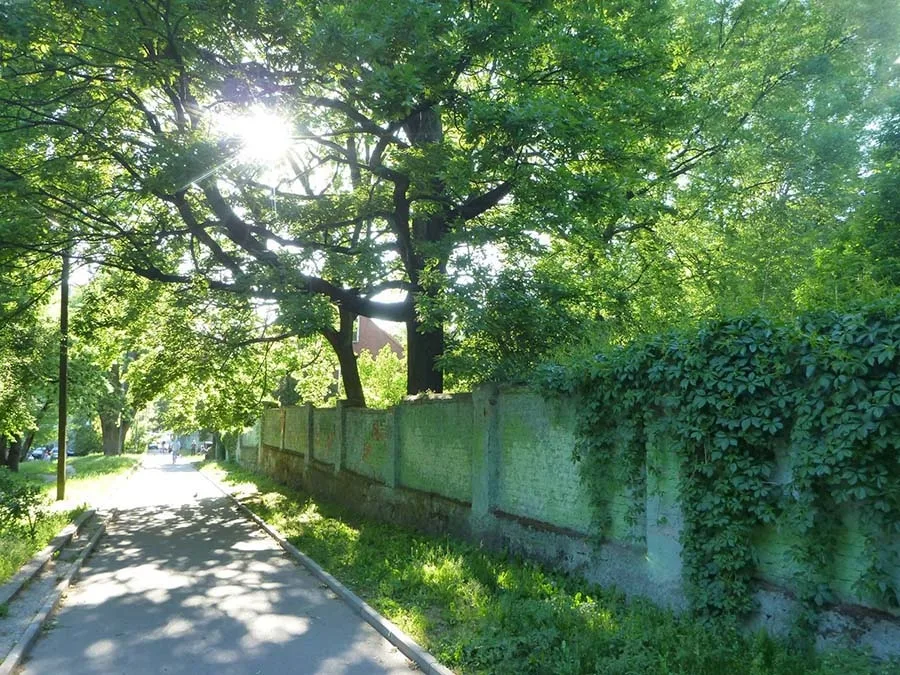 The garden fence on Botanicheskaya Street (Butterberg).
In addition, ornamental exotics from the pre-war period have survived here – katsura tree and Amur cork tree, one-leaved robinia, cut-leaved silver maple ('Wieri') – as well as Zvyagintsev's lilac and Kentucky coffeetree planted after the war.
…May the enthusiasm of the biology teachers who now devote their efforts to preserving and enriching the collection of the historic botanical garden never wane – all hope rests on them alone. Feci quod potui, faciant meliora potentes (I have done what I could; let those who can do better). The garden's charming landscapes, new yet rooted in history and all the more enticing for it, are today one of the few places where a bright feeling of "reverence for nature" takes shape in children's hearts, together with an understanding that work is the means of achieving the beautiful.
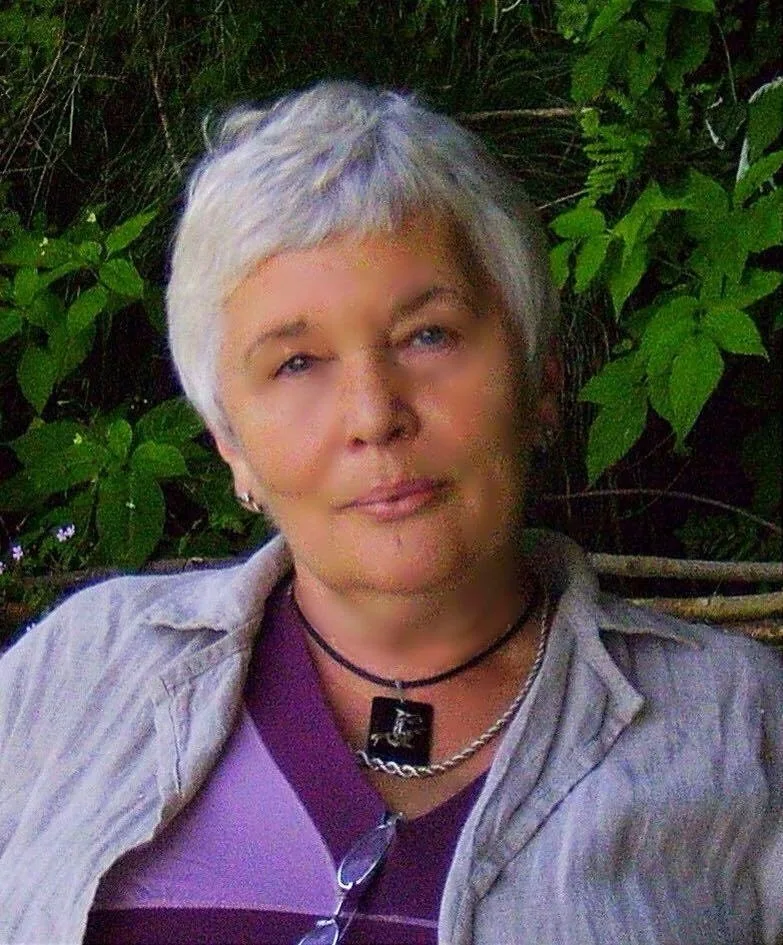
Illustrations and photos by Mikhail Ogorodnikov.
Translated from Russian with the help of AI (Claude, Anthropic), October 2026.