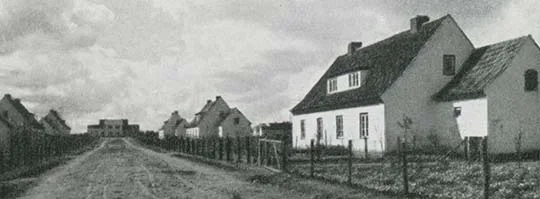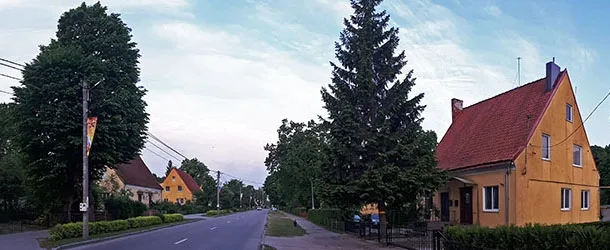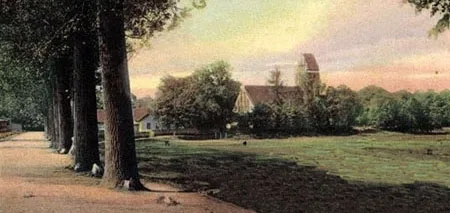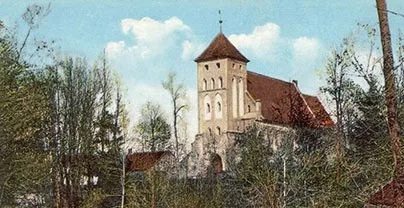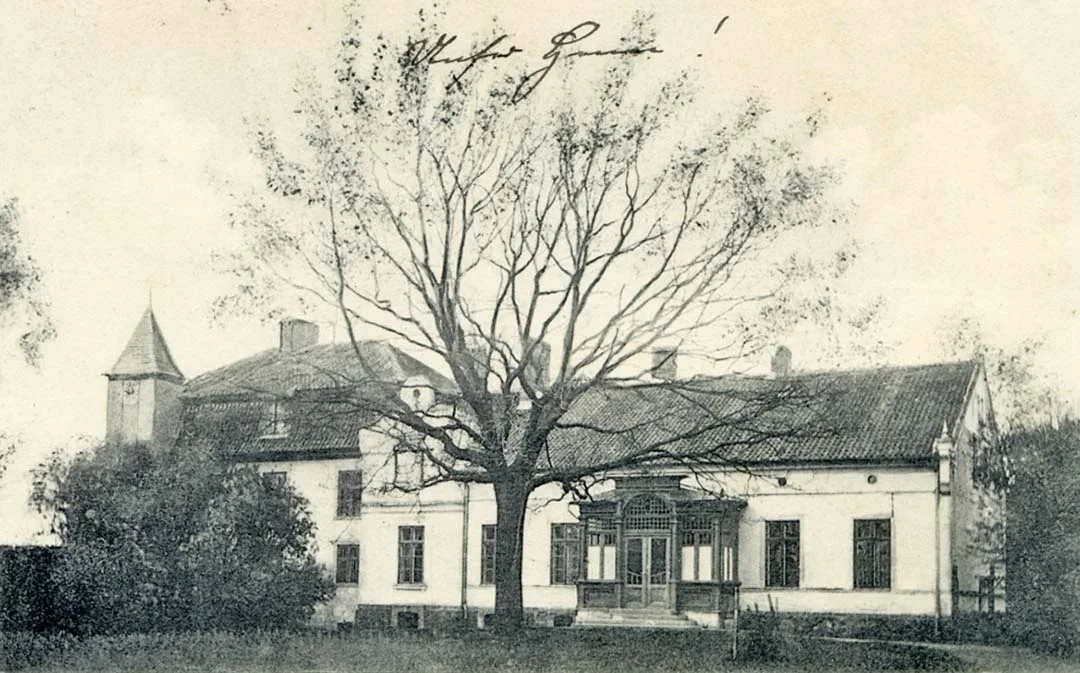
Palmburg got its name from the exotic palms planted here. In 1785 Palmburg is mentioned as an estate under Kulm law (Cöllmisch Gut) with five households. By 1818 the number of households had risen to six, and the estate was now classified as held in hereditary lease (Erbpacht Gut).
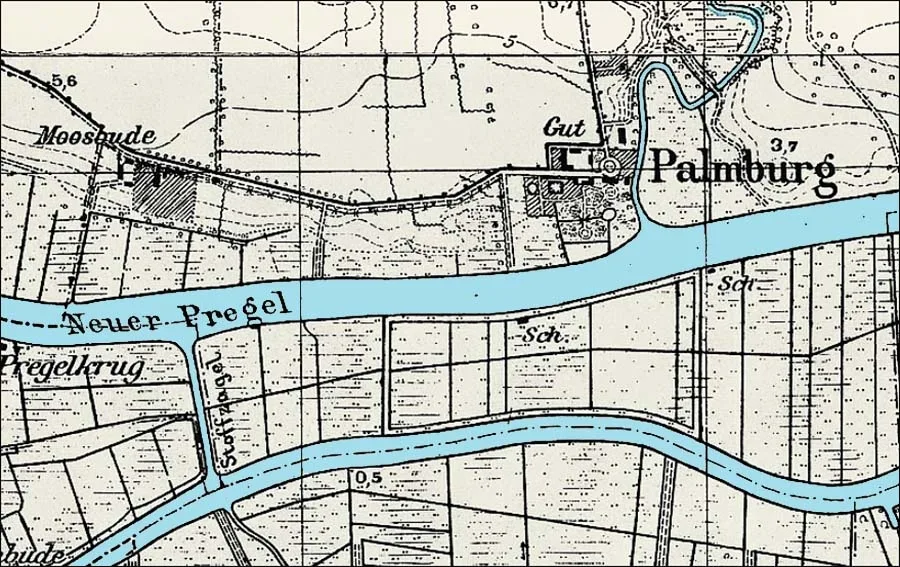 Palmburg on the map.
In the 19th century Palmburg was an estate within the Gutsbezirk of Devau / Devau (Rizhskoye, Kaliningrad). The estate belonged to the parish of Neuhausen / Neuhausen (Guryevsk).
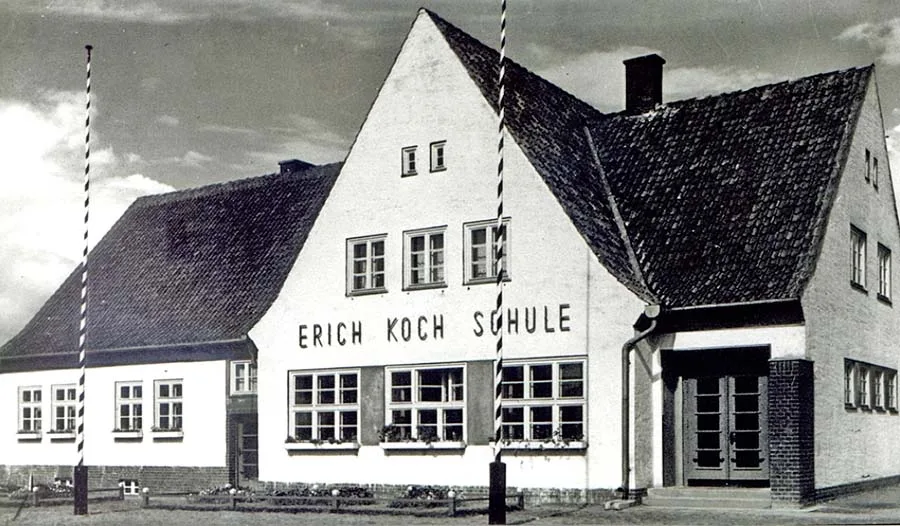 The local school bore the name of Erich Koch in the 1930s.
On 30 April 1874, as part of the Gutsbezirk of Devau, the Palmburg estate became part of the newly established Amtsbezirk of Kalthof / Kalthof (Rizhskoye, Kaliningrad). Subsequently the Gutsbezirk of Devau first became part of the municipality of Kalthof and then, on 1 April 1905, separated from it as an independent rural municipality. On 5 October 1905 the Gutsbezirk of Palmburg separated from the municipality of Devau and was at the same time included in the Amtsbezirk of Liep / Liep (Kaliningrad, the area of Yaltinskaya Street), which was renamed the Amtsbezirk of Lauth / Lauth (Bolshoye Isakovo) in 1927. On 16 June 1927 the Gutsbezirk of Palmburg was converted into a rural municipality, which also took in certain territories of the municipality of Lauth (Bolshoye Isakovo) and of the Gutsbezirke of Lapsau / Lapsau (Zaozyorye) and Liep (Kaliningrad, Yaltinskaya Street). On 30 September 1928 the Gutsbezirk of Lapsau (Zaozyorye) became part of the municipality of Palmburg. The municipality continued to expand: on 15 November 1928 it took in the Vorwerk of Wangnicken / Wangnicken (part of Zaozyorye), on 9 April 1930 territories of the municipality of Stiegehnen / Stiegehnen, and on 10 April 1931 the lands of Pregelwiesen / Pregelwiesen. In 1938 a road bridge over the Pregel was built near Palmburg. On 1 April 1939 the municipality of Palmburg became part of the Amtsbezirk of Arnau / Arnau (Rodniki). In 1945 the Palmburg Bridge was blown up by German soldiers to make it harder for the Red Army to cross the Pregel. The first line of the city's defences ran just beyond Palmburg.
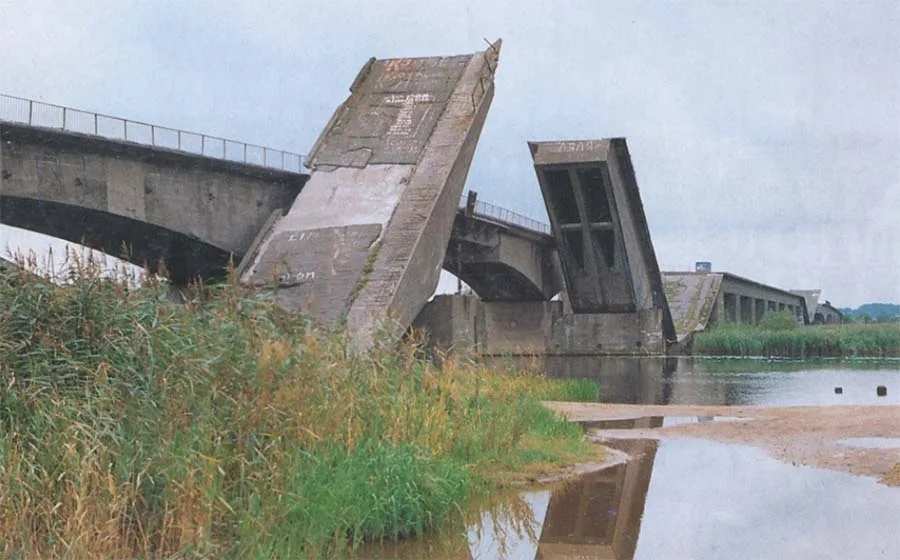 The Palmburg Bridge, also known as the Berlin Bridge.
On 17 November 1947 Palmburg was renamed the settlement of Pribrezhnoye. Initially the settlement was part of the Zaozyorye village council. In 1949 the view of the destroyed Palmburg Bridge was used in the shooting of the film "Meeting on the Elbe".
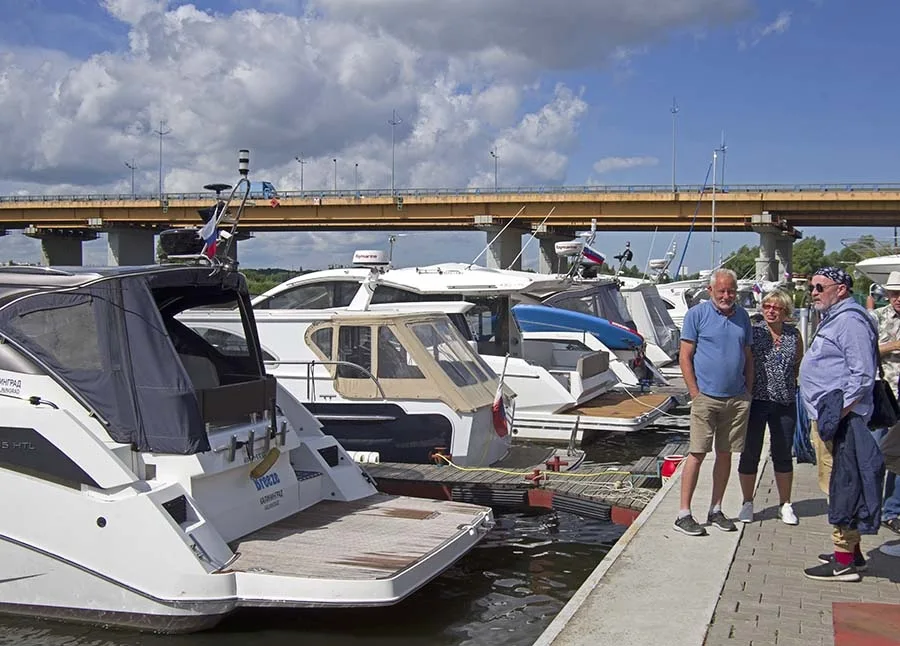 The "Palmburg" marina on the day of the 100th anniversary of the Port of Königsberg (13.06.24).
From 1954 it was part of the Nizovka village council. In 1955 and 1963 the settlement had 36 houses. In the 1950s the Palmburg Bridge was partly restored (one carriageway), while the other, in its destroyed state, became a local landmark. At that time a livestock state farm operated in Pribrezhnoye. In 1978 a training ground of the Kaliningrad Technical Institute (KTI) was opened at the mouth of the Mühlen river; it is now represented by three vessels: SRT-160, SRT-4127 "Mir" and SRTM "Monchegorsk". From the late 2010s the settlement began to be intensively built up with private houses, as a result of which Pribrezhnoye has long since spread beyond the boundaries of pre-war Palmburg. Pribrezhnoye has a hotel and a yacht marina with a restaurant.
Sights: the Palmburg Bridge (1938, demolished in 2014–16, replaced by a new bridge).
Population: 1818 – 63, 1905 – 79, 1982 – 180, 2002 – 314, 2010 – 444, 2012 – 473 inhabitants.
Population of the Gutsbezirk of Palmburg: 1905 – 79, 1910 – 43 inhabitants.
Population of the municipality of Palmburg: 1933 – 676, 1939 – 766 inhabitants.
Photos: Bildarchiv Ostpreußen, Mikhail Ogorodnikov.
Translated from Russian with the help of AI (Claude, Anthropic), October 2026.