The root of Germany's evil is Prussia
Reader
The words "The root of Germany's evil is Prussia" were spoken by Winston Churchill at the Tehran Conference on 1 December 1943.
"Born of Victory. The Kaliningrad Region: Studies, Documents, Materials" is the title of a popular-science book series whose publication was initiated by the regional administration. The first volume was presented in February 2005 under the title "At the Beginning of a New Path".
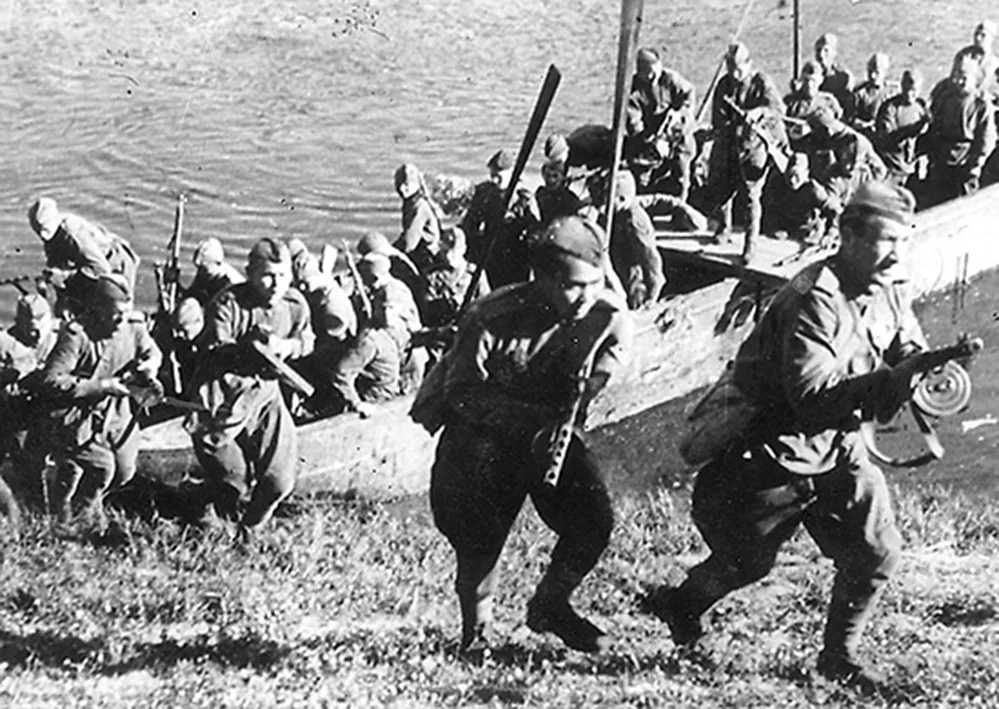
Russian military contacts with East Prussia have a long and rich history. Russian troops were in this territory several times. The last mass "acquaintance" with East Prussia came in 1944, when Soviet soldiers appeared "on the other side of Eydtkuhnen" (the village of Chernyshevskoye on the border with Lithuania). Before the start of the East Prussian Operation, as General Galitsky recalls, "lectures were given to them on the subject 'Features of Combat in East Prussia'", setting out the "combat and revolutionary traditions of the past" of the Russian army: the Seven Years' War, the First World War.
At the end of the war, during the East Prussian Operation, military propaganda created a grim image of East Prussia that steeled the fighters for battle with the enemy:
"…So here it is, the German land… Here, in these gloomy houses, the Germans raised hordes of murderers, arsonists and robbers. … Wrath and hatred seethe in my heart. Tremble, German beasts! … We will remind them of 1941. … We will crush and destroy the beast on German soil!" (Front-line newspaper "For the Motherland!", 1944).
For the first Soviet settlers in East Prussia, the Red Army soldiers, the official image of the fascist enemy and of his correspondingly grim lair determined to some extent their first steps in the new land. At the end of the 1960s, one of the settlers, sent in 1946 to the Kaliningrad Railway Car Plant, recalled:
"We had heard of Königsberg before. We knew that it was the former capital of East Prussia, a city that had been a stronghold of German militarism. And now we were to move there, to the farthest west of the country" (1967).
War and Victory are the central events in the picture of the history of the Kaliningrad Region. It is with a description of the war (of various episodes of the East Prussian Operation) that accounts of local history begin.
"The Breath of Victory"
The pre-war history of this land became closed to the settlers and their descendants. It was asserted that "from Adam to Potsdam" nothing worth remembering had happened in this land.
The history of the East Prussian Operation, by contrast, was widely popularized. It is imprinted everywhere: the city's first cinema was named "Pobeda" (Victory, in honour of the capture of Königsberg), the avenue on which it stands was named Victory Avenue. The square in the city centre was also named Victory Square.
The war is scattered across the territory of the Kaliningrad Region in hundreds of names: Armeyskoye, Krasnoarmeyskoye, Soldatskoye, Gvardeysk, Krasnoznamensk, Pobedino, Marshalskoye and so on. In the first post-war years, collective farms and agricultural artels bore the names of military commanders: Rokossovsky, Vasilevsky, Chernyakhovsky and others. The names of many streets, towns and villages are anthroponyms connected with the names of heroes who fell in the East Prussian Operation: Ladushkin, Nesterov, Gusev, Mamonovo, Chernyakhovsk, Gastello, Guryevsk and others. A considerable share of the region's Soviet-era tourist routes associated with culture and history were routes to memorial sites of the Great Patriotic War: "The Storming of Königsberg", "Airmen in the Königsberg Operation", "Fort No. 5: A Place of Mass Heroism of Soviet Soldiers", "Places of Glory of Russian and Soviet Arms", "Through Towns Bearing the Names of Heroes" and the like.
In today's Kaliningrad, as in Soviet Kaliningrad, there is quite a lot of "war". Besides the museums, it is scattered throughout the city in the form of names, monuments and memorial plaques, cannons and other weapons displayed in parks and at memorials.
In Soviet times, books devoted to the East Prussian Operation and the fighting in the Baltic were published in huge print runs. The first brochure1 on this subject was published in 1946 and contained three articles "on the features of the operation carried out by the troops of the 3rd and 2nd Belorussian Fronts". The combat operations of the Soviet troops were compared with those of the Russian troops in East Prussia in 1914.
Over the years, books were published "about soldiers whose names are permanently entered on the rolls of military units, after whom towns, villages and streets are named", and about participants of the East Prussian Operation awarded the highest decorations.
The storming of Königsberg became an important part of the picture of the history of the "new Soviet city". Over time, more and more details of the storming came to light. In the whole Soviet period of history, about forty different titles were published (small-circulation departmental publications are not counted here).
"Land stained with Russian blood"
The arguments justifying the annexation of part of East Prussia to the RSFSR are numerous and interesting. For example, Victory destroyed Evil. This is one of the justifications for why East Prussia had to be eliminated.
Let us confine ourselves to a cursory look at just one of the arguments. The phrase "stained with Russian blood"2, as a justification for the annexation of part of East Prussia to the Soviet Union, appears for the first time, oddly enough, in Churchill, in his letter to Stalin of 28 January 1944:
"…The land of this part of East Prussia is stained with Russian blood, generously shed for the common cause. Therefore the Russians have a historically well-founded claim to this German territory."
Subsequently this natural argument became one of the most widespread.
Implicitly, this argument was invoked in the debates on renaming the city by the opponents of the idea: the name "Kaliningrad" was bought with the blood of the fallen. Any renaming, let alone giving the city back its German name, was out of the question.
«Nomina sunt odiosa...»
After Stalin's death, Kaliningrad and the region slowly rid themselves of his images, monuments and his name, which had been imprinted in the names of a wide variety of objects: streets, enterprises, organizations.
The memorial to the 1,200 guardsmen of the 11th Guards Army who fell in the storming of Königsberg is the first monument erected in the USSR after the end of the war (unveiled in the autumn of 1945).
The medal "For the Victory over Germany in the Great Patriotic War of 1941–1945" with the profile of J. Stalin was engraved on the memorial's stele. In 1961, after the 20th Party Congress, by decision of the Kaliningrad regional committee of the CPSU, the reverse of the medal was engraved in place of the former image. In addition, the signature "Stalin" under the words "Our cause is just, we have won" was removed.
In 2005 the Committee of Veterans of War and Military Service put forward an initiative: "the medal should be as it was originally laid down in this design". In 2005, immediately before the celebration of the 60th anniversary of the Victory, the image was restored to its original form during repairs to the monument.
"From Victory to Victory"
The Soviet spring turned out to be very full of holidays. The most significant of them were: 8 March, International Women's Day; 22 April, V. I. Lenin's birthday; 1 May, International Workers' Day; 9 May, Victory Day. In the Kaliningrad Region one more date is added to this series: 9 April. Exactly one month before Victory Day comes the Day of the Storming and Capture of Königsberg.
It was this last circumstance that gave rise to the campaign "From Victory to Victory", held in the mid-2000s. These two spring holidays were preceded by Soviet Army and Navy Day (now Defender of the Fatherland Day), celebrated on 23 February. It was on this day that texts were published and events held which, with various variations, were repeated on 9 April and 9 May.
From the first years of the region's existence, meetings with participants in the storming of Königsberg and the battles in East Prussia were an indispensable part of the celebrations.
Such meetings of schoolchildren and young people with veterans were regarded in Soviet times as an important element of patriotic education.
The regional newspaper "Kaliningradskaya Pravda", which began publication in December 1946, contains an account of how Victory Day was celebrated in 1947:
"Kaliningrad joyfully celebrated Victory Day. At noon, mass festivities began in the park of culture and recreation. Brass bands played. Young people played volleyball and tennis. Many people gathered at the shooting gallery and in the zoo. The first football matches and sports games were held at the Dynamo stadium. In the evening the sky lit up with multicoloured lights as the artillery volleys of the festive salute thundered."
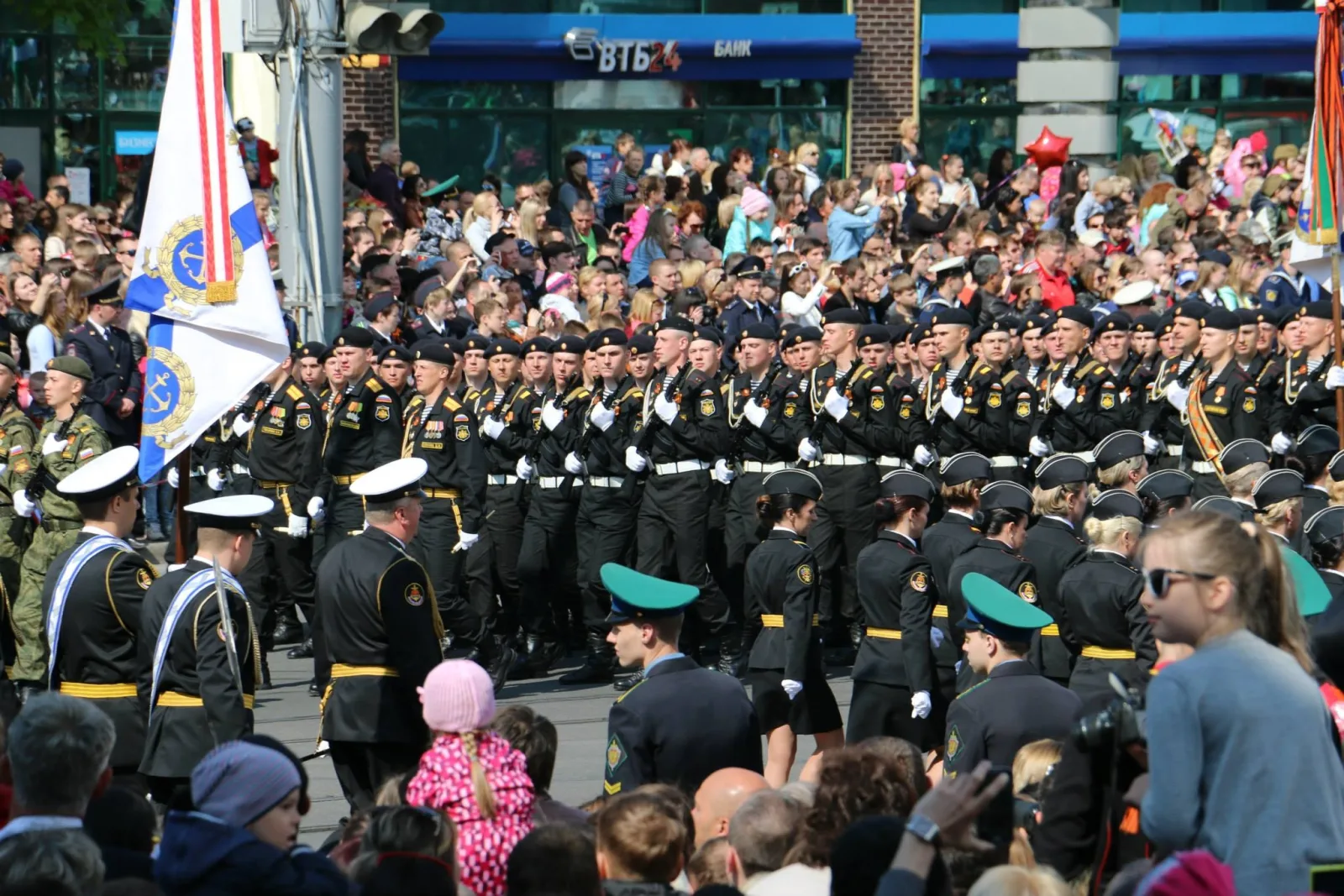
The status of Victory Day changed along with the domestic political situation. Until 1948 it was a public holiday, a day off work. From 1948 to 1965, Victory Day was an ordinary "red-letter day" on the calendar that did not give time off work. After 1965 a ritual of celebrating Victory Day emerged, with obligatory military parades. Victory Day became an important state holiday.
The significance of Soviet holidays connected with military history was heightened in the Kaliningrad Region by the presence of a large number of military personnel.
Regarding the celebration of Victory Day in post-Soviet Russia, one Russian author3 exclaims:
"Here is a strange discovery I made watching the May parades. Every year there are more words, more pomp. There is something strange in all this, something that defies the usual historical reckoning. One has the feeling that society considers the old Soviet holiday sacred, that it has become 'holiday number one' for the new Russia. … In the 9th of May the archetype of the Beginning has truly been recreated. Victory Day... But what victory?.. The one in '45?.. No, not only that. Victory in general. As an ontological fact of life. As a statement: we exist on this earth."
The theme of Victory gives rise to a multitude of texts of varying character and quality (newspapers, the Internet, street advertising and so on). Sometimes descriptions of the celebrations become absurd. Historical illiteracy and, to a certain extent, a lack of professionalism produced the following text (2006):
"On the Day of the Liberation of Tilsit (now Sovetsk, Kaliningrad Region), solemn events were held to honour the veteran liberators. Five veterans live in the town, and the celebration organized by the Town Council of Veterans was dedicated to them. After the concert, senior pupils and children from the 'Little Dolphin' shelter, who had won the school project competition 'A Gift for the New Year' run by the 'Kaliningrad' Community Foundation, presented knitted items to the veterans. On the same day, schoolchildren laid flowers at the memorial to the fallen soldiers."
This error, however, which consists in the improper use of the word "liberation", is quite common and is found in sources of different periods and kinds. For example (1951):
"In many districts, on the day of the liberation of the region from the German fascist troops, rallies are held at the mass graves."
Journalists' opportunistic play with the key themes of the Kaliningrad Region ("Germans", "import of used cars", "war", "Victory" and so on) sometimes produces such sad examples as the headline of this news item: "Veteran killed under the wheels of a German car on Victory Avenue".
Sociologists from the "Centre for International Sociological Research" conducted a survey in forty regions of Russia (including the Kaliningrad Region).
One of the questions was: "Do you agree that the 9 May holiday, 'Victory Day', is the most significant of the state holidays celebrated in Russia?" 62% of respondents answered "yes", 34% "no", and 4% "hard to say".
The holiday was interpreted in different ways. It is either a day of pride in the Fatherland that defended its independence, or a day of remembrance of relatives and loved ones who died in the war, or a day of triumph over fascism, or a day of remembrance of the joint victory of nations, or a day of the rescue of certain peoples (Jews, Roma and others) from annihilation, or simply a spring holiday.
In the Kaliningrad Region, Victory Day, like the Day of the Storming and Capture of Königsberg, has a special significance. The former Soviet history of the region has ceased to be relevant. The one being written now is, at its core, the history of the Russian presence in this land. The topos "Born of Victory" is once again a fundamental element here.
______________
1. Шиловский Е.А., Таленский Н.А., Васильев А.В. Восточно-Прусская операция Красной Армии 1945 года. — М.: Воениздат, 1946.
2. Переписка председателя Совета Министров СССР с президентами США и премьер-министром Великобритании во время Великой Отечественной войны 1941—1945 гг. Т. 1. М., 1976.
3. Новиков А. Праздник нового типа // Журнал «Знамя». № 6 за 2000 год.
Photo: Mikhail Ogorodnikov.
Translated from Russian with the help of AI (Claude, Anthropic), October 2026.