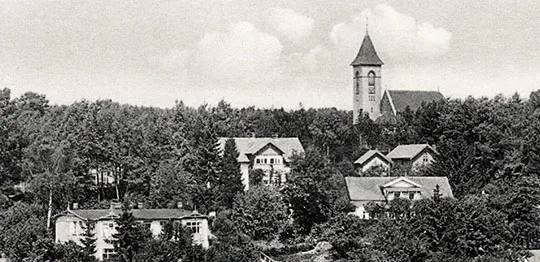
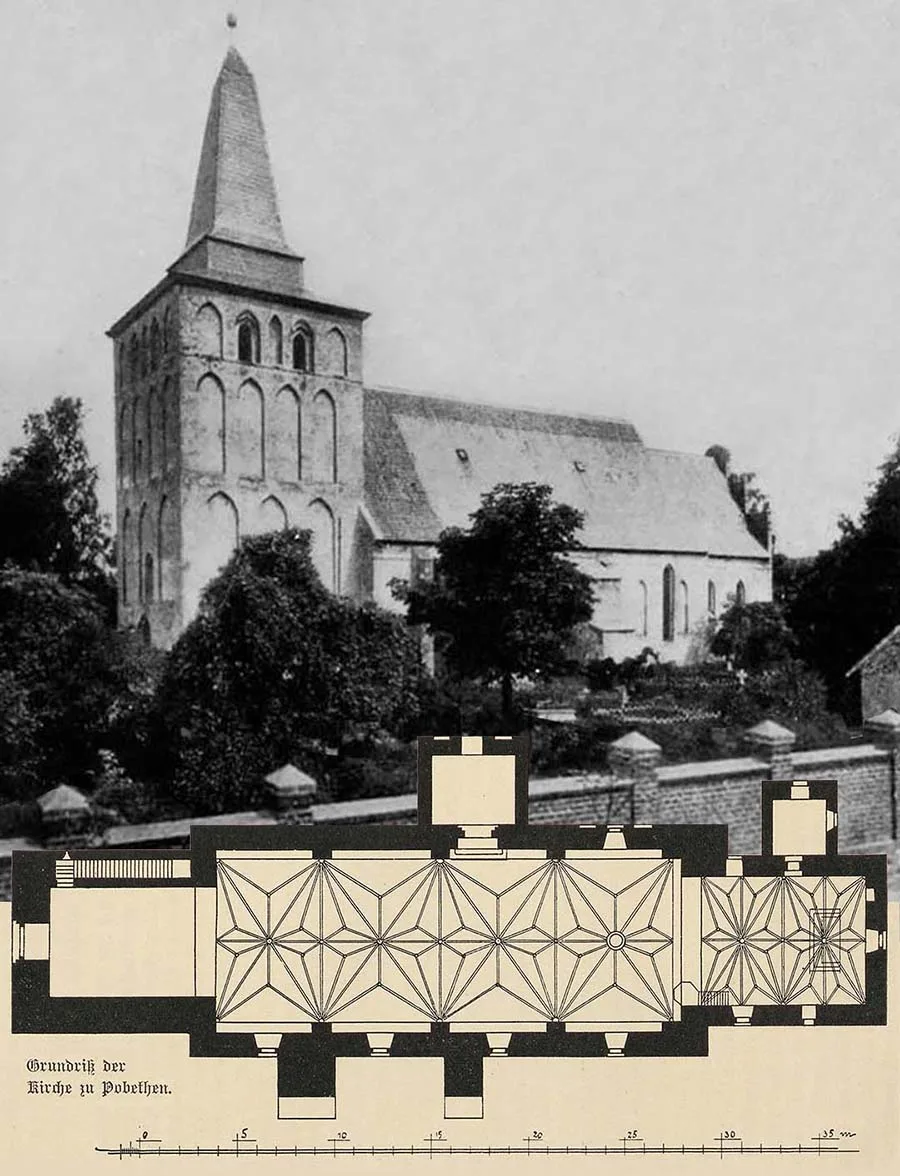
In 1773 the church was thoroughly restored without changes to its structure. In 1888 the whole building was stripped of plaster on the outside. Then, apparently in the 20th century, it was plastered again. The weather vane dates from 1823. The nave is rectangular, with a porch on the north. The sacristy is attached to the choir, also on the north. (According to A. Boetticher there were two buttresses on the south, but even in 1990 four buttresses were clearly visible; it is possible that the two eastern buttresses were added later.) The whole building is of boulders, with a small amount of brick framing the windows and doors, as well as the corners. Inside, the church was plastered and painted. The altar was of the 17th century (several tiers). Rich altar plate of the 17th–19th centuries. The pulpit dated from the late 17th century. The organ of 1680 was the work of Adam Gottlob Casparini (A. Boetticher; according to W. Hubatsch the organ dates from 1766). Three bells of 1835, 1845 and 1853.
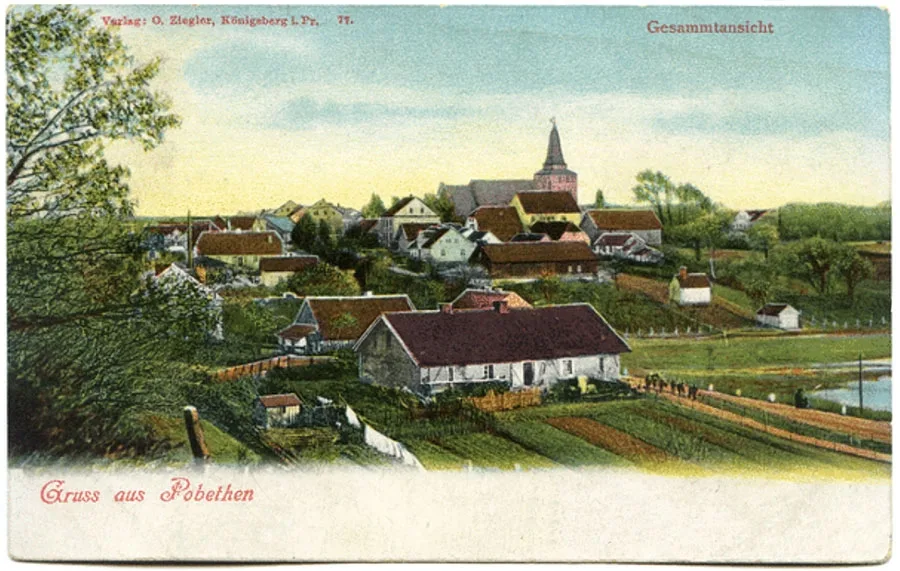
After 1945 the church remained intact. It was then used for utility purposes; in the 1980s chemical fertilisers were stored here. The lack of proper care led to the rapid deterioration of the building.
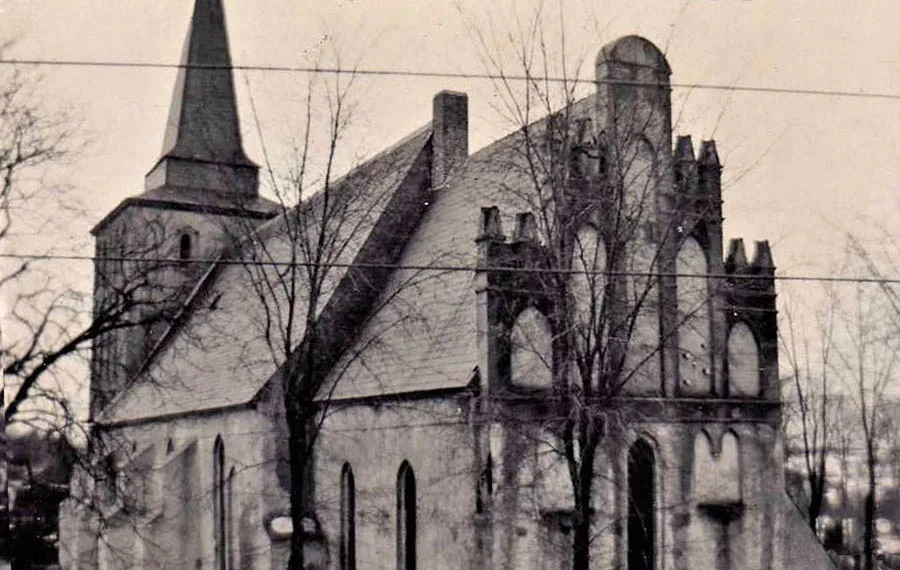
By 1988 the tower had been dismantled down to the height of the nave walls. The roof survived only over the choir and half of the nave. The porch had been destroyed. The sacristy and a structure added to the choir at a later period were in a dangerous condition. A large square doorway had been knocked through the east wall of the choir so that vehicles could drive inside. The vaults of the nave and choir had collapsed; chemical fertilisers were stored inside the nave.
1990. A decision was taken to hand the church over to the Orthodox Church. Active preparations for construction were carried out inside and outside. After 1991 everything was abandoned, and the church continues to fall into ruin.
Photos on this page: Bildarchiv Ostpreußen, bildarchiv-ostpreussen.de
Translated from Russian with the help of AI (Claude, Anthropic), October 2026.