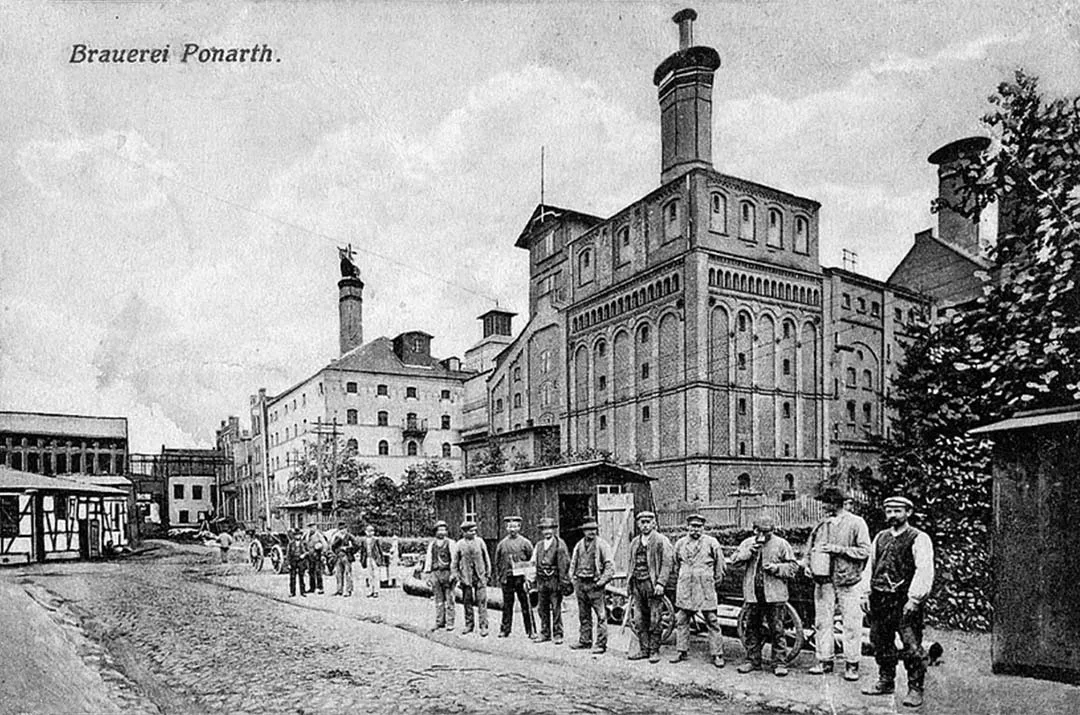
Ponarth is first mentioned as a locality in 1328 under the name Ponartten, when Brother Konrad of the Order was granted two Hufen of land here free of charge and appointed headman of this territory. In 1385 the settlement of Ponarten is mentioned for the first time. In 1520 the village of Ponarten was burned by the Poles during the so-called Horsemen's War (1519–21). The village was soon rebuilt, and in 1609 John Sigismund, Elector of Brandenburg, transferred Ponarth into the ownership of the municipality of Löbenicht. In January 1679, as the Swedish army under Field Marshal Henrik Horn (1618–93) advanced on Königsberg, the houses of Ponarth were burned to prevent the Swedes from quartering in them during the siege.
At the end of the 18th century Ponarth, along with other nearby villages, became a destination for Sunday and holiday walks by the people of Königsberg. Coffee houses and sweet stalls were set up in Ponarth for the visiting townsfolk.
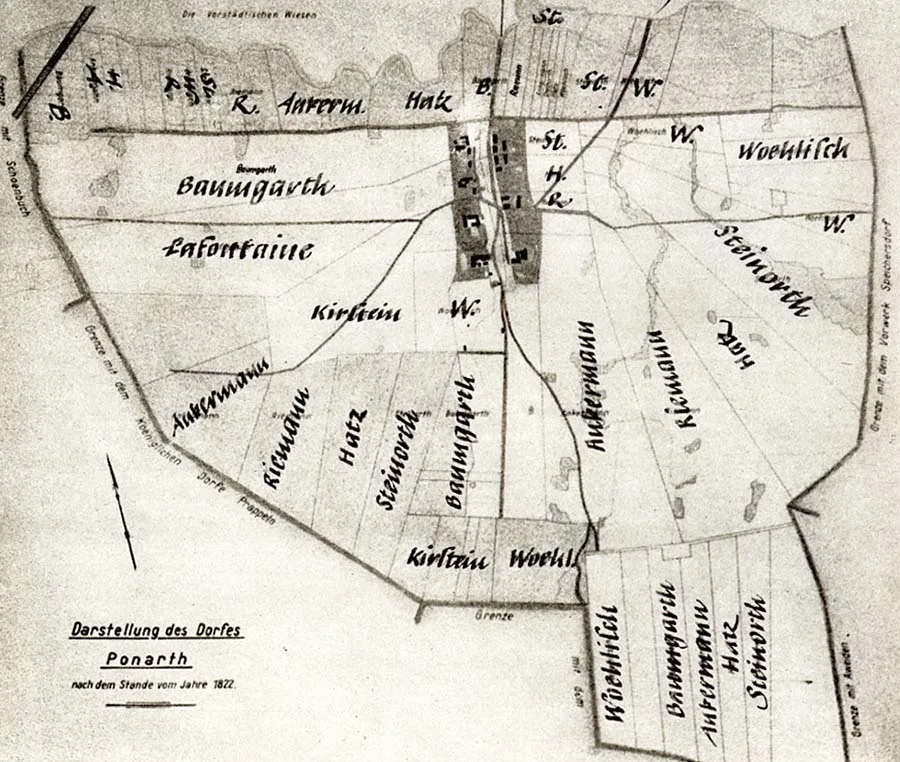 Map of the village of Ponarth as of 1822.
In 1812 the corps of the French Marshal Davout was quartered in Ponarth.
In the 19th century Ponarth was a village that from 1818 formed a rural municipality in the Landkreis Königsberg (in 1939 it became part of the Landkreis Samland). The village belonged to the parish of the Haberberg Church in Königsberg. In 1849 the brewery of Johann Philipp Schifferdecker (1811–87) was moved to Ponarth; it later became Ponarth's main "village-forming" enterprise. Under the terms on which the brewery was sited there, one-eighth of its output was handed over to the municipality of Ponarth, which indirectly contributed to the growth of the settlement.
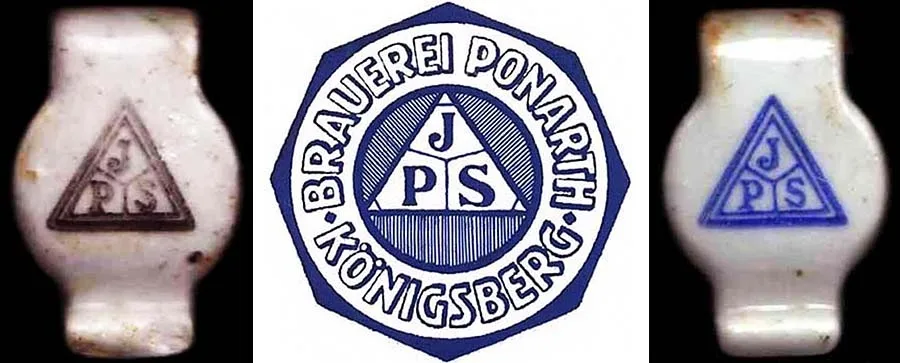
The letters JPS in the triangle of the company logo are the initials of its founder, Johann Philipp Schifferdecker.
By 1860 the Ponarth brewery was producing 20,000 tonnes a year.
In 1871 the village of Ponarth had 21 residential houses, home to 48 families and three single men. That same year, 1871, two residential buildings with 32 flats in total were built in Ponarth to house the brewery's workers. On 30 April 1874 the rural municipality of Ponarth was included in the newly established Amtsbezirk Ponarth. The brewer Georg Leopold Eduard Schifferdecker held the post of head of the Amtsbezirk from 1874 to 1906. On 14 October 1893 the Schönbusch estate, which until then had had the status of an independent Gutsbezirk, was incorporated into the rural municipality of Ponarth.
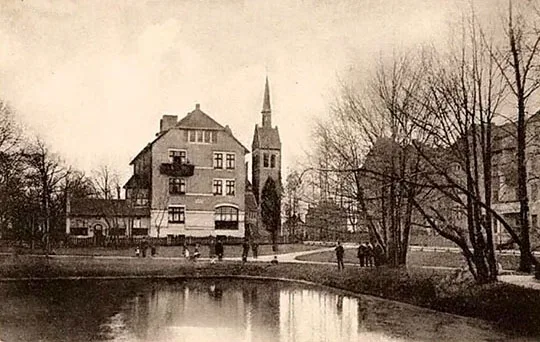
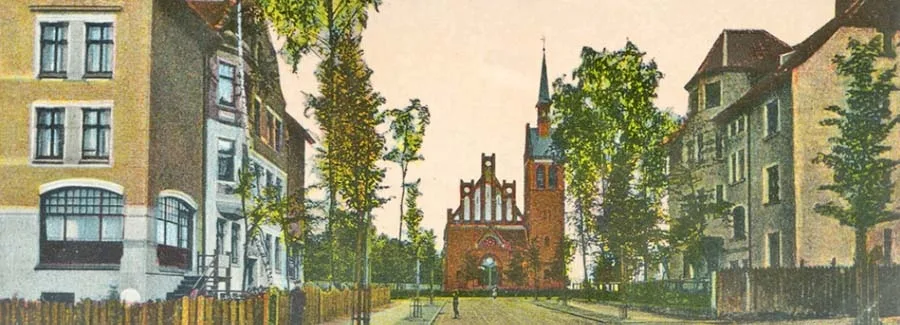
In 1897 a church was built in Ponarth in the Neo-Gothic style.
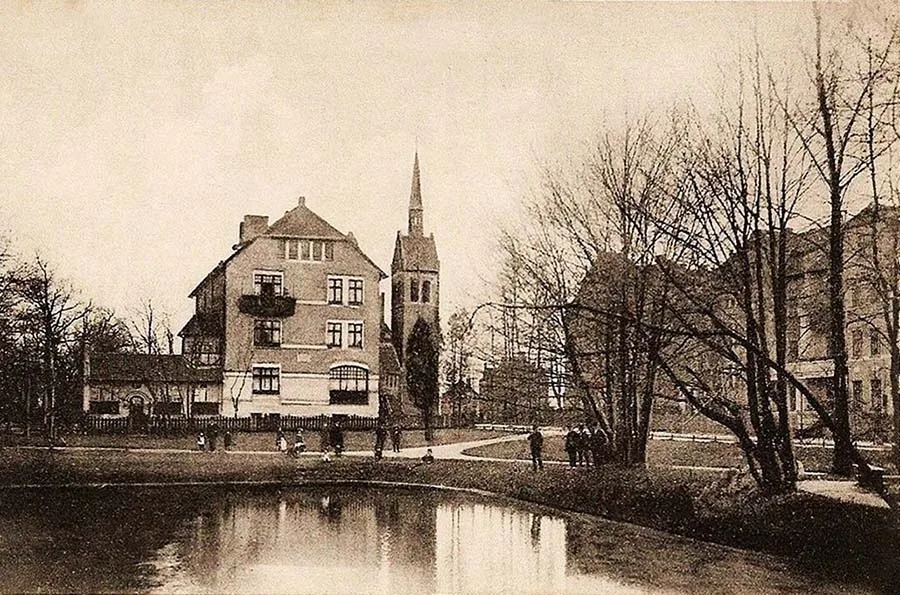
On 1 April 1905 Ponarth became part of the city of Königsberg as a city district.
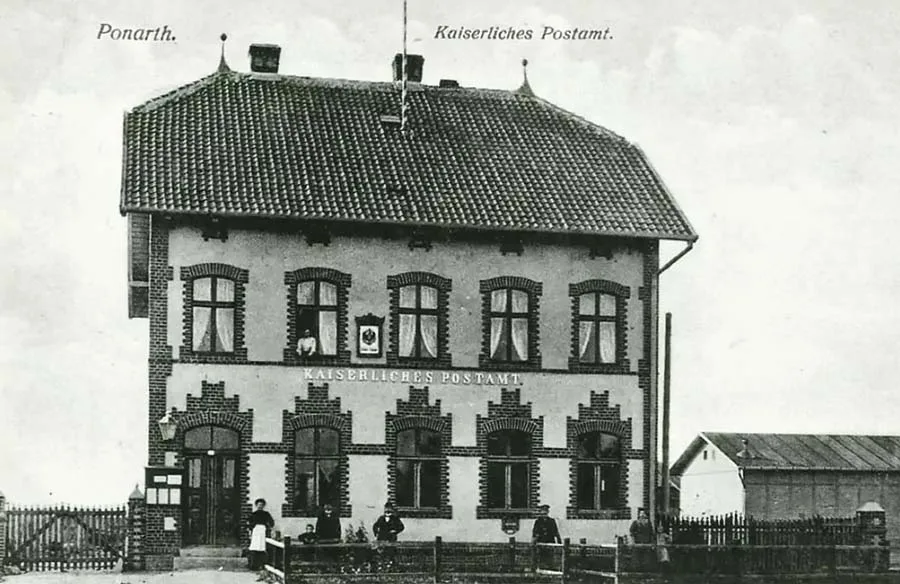 The Ponarth royal post office.
At the beginning of the 19th century, to harvest ice for the brewery's needs, the Hubertus pond (Lake Zimneye) was dug, and in 1911 the Schwanen pond (Lake Letneye) as well. Ponarth also had the Walpurgis pond (not preserved). At the same time the Schreber-Garten was laid out.
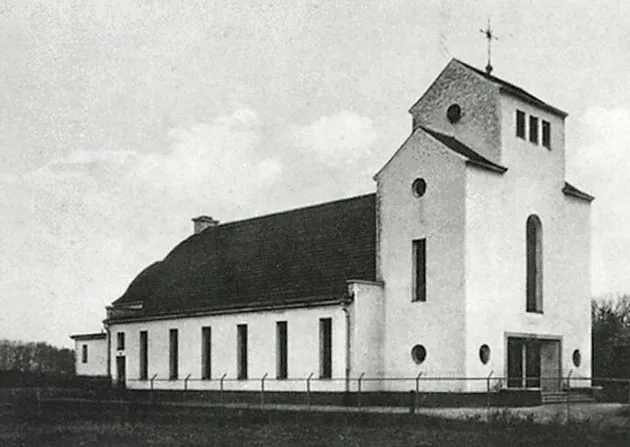
In 1926, after a bridge was built over the railway tracks, a tram line (No. 15) was laid to Ponarth. In 1932 the Catholic St Joseph's Church was consecrated. In 1936 the Lichtbildbühne cinema opened in Ponarth; besides a modern auditorium it had a library, a café and a tobacconist's. (In essence, a cultural centre — the media library of its day.)
Amtsbezirk Ponarth
On 30 April 1874 Amtsbezirk No. 11 Ponarth was established in the Landkreis Königsberg, comprising the rural municipality of Ponarth (Dimitrovo) and four Gutsbezirke: Groß Karschau (Vishenka gardening association, 54°39'39'' N 20°27'44'' E), Hoch Karschau (Novo-Dorozhny), Klein Karschau (Shosseyny settlement, Kashtanovaya Street) and Schönbusch (Dimitrovo). By 1883, under a new administrative arrangement, the composition of the Amtsbezirk had changed somewhat: the rural municipality of Ponarth and four Gutsbezirke — Contienen (Kaliningrad, grounds of the Yantar shipyard), Groß Karschau, Hoch Karschau (Novo-Dorozhny) and Schönbusch — plus, as separate entities, the artillery firing range and Fort No. 9 "Hoch Karschau" ("Dohna"). By then Klein Karschau no longer figured among the Gutsbezirke, and on 8 January 1893 the Neu Karschau farmstead (Shosseyny, Kashtanovaya Street) was incorporated into the Gutsbezirk of Groß Karschau (Vishenka gardening association). Meanwhile the Gutsbezirk of Contienen (grounds of the Yantar shipyard) was finally formed only on 1 September 1895, taking in Fort Contienen and the adjacent land. On 14 October 1893 the Gutsbezirk of Schönbusch (Dimitrovo) was abolished and incorporated into the rural municipality of Ponarth. On 1 April 1905 the rural municipality of Ponarth was abolished, and the settlements belonging to it passed to the municipality of Königsberg.
On 23 March 1906 the Amtsbezirk Ponarth was abolished, and its settlements became part of the new Amtsbezirk Groß Karschau created at the same time.
Schönbusch is mentioned before 1785 as an inn with the Niederkrug tavern. Then, until 1820, it was Düboisruh. In 1820–25 the place was called Leosruh. On 14 September 1825 it was renamed the Schönbusch estate.
On 14 October 1861, before their coronation in Königsberg, the future King William I and Queen Augusta paid a visit to the Schönbusch estate.
In the 19th century Schönbusch was an estate that from 1867 formed a Gutsbezirk in the Landkreis Königsberg (in 1939 it became part of the Landkreis Samland). The estate belonged to the parish of Haffstrom (Shosseyny, in part). In 1871 the Schönbusch estate had two residential houses, home to one family. In 1871 the owners of the Ponarth brewery founded the Schönbusch Joint-Stock Brewery, and that same year a brewery was built on the Schönbusch estate. A railway siding was even laid to the brewery to carry away its output. In 1879 the Schönbusch estate owned 25 hectares of land. On 14 October 1893 the Gutsbezirk of Schönbusch was abolished, and the Schönbusch estate became part of the rural municipality of Ponarth.
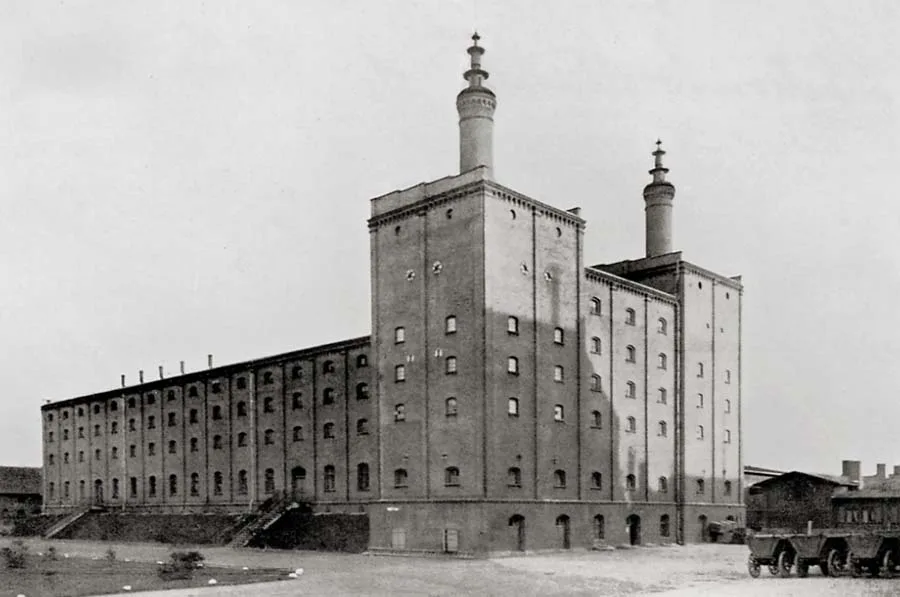 The Schönbusch brewery.
The exact date when Ponarth and Schönbusch were renamed the settlement of Dimitrovo is unknown; presumably it happened in 1946.
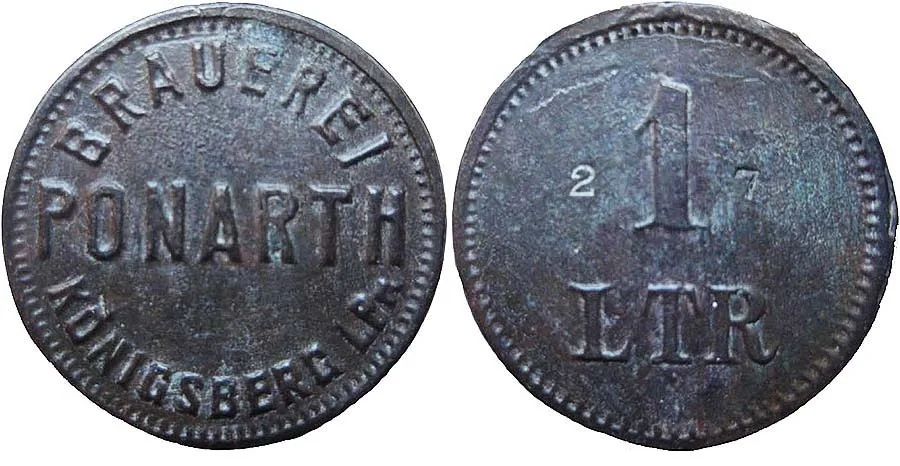 A token for a litre of Ponarth beer.
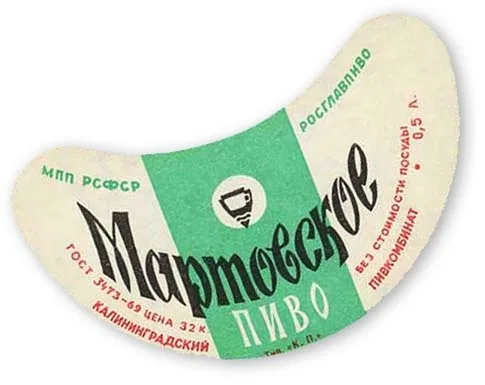
From 25 July 1947 the settlement of Dimitrovo became part of the newly formed Baltiysky district of Kaliningrad. On 21 October 1947 the first post-war film screening took place in the cinema, now renamed Rodina. In the 1950s a Rosbakaleya grocery wholesale depot occupied the site of the Schönbusch brewery. In the Ponarth brewery a malt plant was opened at first, bearing the name Kaliningrad Brewery Combine No. 2. Only in 1954 did it begin to turn out a finished product in the form of beer.
In 1952 the new Haberberg cemetery was turned into the Baltiysky District Park of Culture and Leisure (named after Yuri Gagarin since 1961).
In the 1970s–80s the cellars of the Ponarth brewery were examined by a special archaeological expedition searching for the Amber Room, as a possible site where bunkers for hiding cultural treasures were presumed to have been built. The rather superficial investigations revealed no significant finds.
Around 1986, amid the anti-alcohol campaign, Brewery No. 2 stopped producing alcoholic drinks. In 1993 it was transformed into Kaliningradminvody JSC (later Baltminvody JSC).
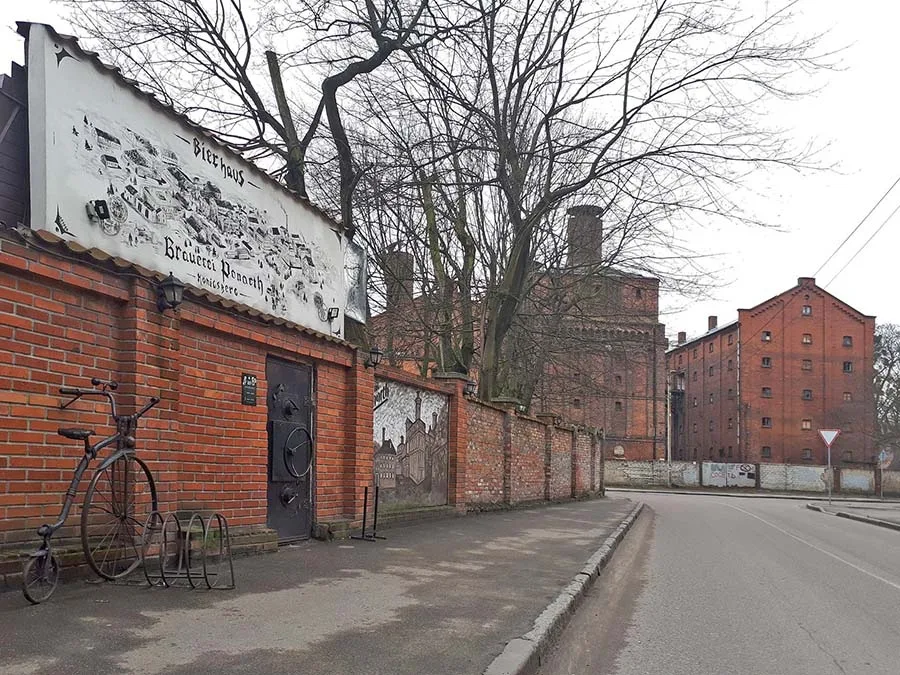 Entrance to the shop of the Ponarth brewery (2020).
In 2010, with the help of an investor, the revival of the Ponarth brewery began.
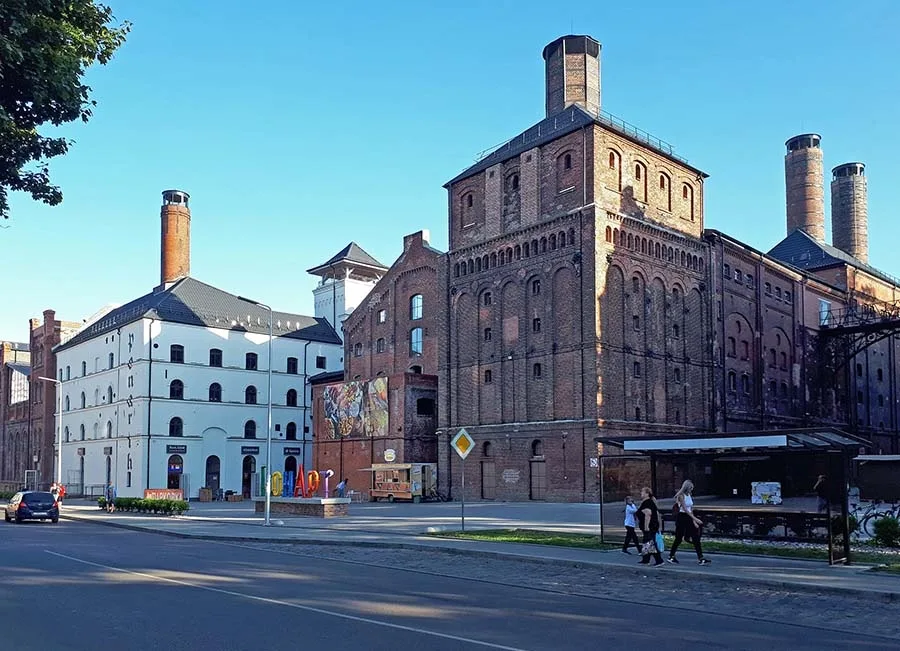 The Ponarth brewery (2023).
In 2011–13 the Rodina cinema was converted into the Kinolend entertainment complex. In the 21st century Ponarth is rapidly turning into a typical dormitory district, being built up with high-rise blocks. Ponarth today is a fairly large district of Kaliningrad. The site of Schönbusch is now occupied by warehouses and retail space of the Kamsky shopping complex, as well as Fire Station No. 4. As of 2022 the territory of the settlement of Dimitrovo had five schools and eight kindergartens, a general hospital with an outpatient clinic, a Russian Railways hospital and an FSB outpatient clinic. The settlement has the Baltiysky Market, the Deima hotel and the Gagarin Park of Culture and Leisure. At present (2023) the name Dimitrovo is not used for this part of the city.
Sights: the Ponarth brewery complex, the Ponarth Lutheran church (now the Orthodox Church of the Nativity of the Most Holy Theotokos), St Joseph's Church, and numerous pre-war houses.
Population of the Ponarth municipality: 1867 – 233, 1871 – 441, 1885 – 1,884, 1905 – 8,882 inhabitants.
Population of Schönbusch: 1867 – 3, 1871 – 3, 1885 – 82, 1905 – 154 inhabitants.
Population of Ponarth in 1871: Protestant Christians – 432, Catholics – 2, Jews – 7, children under 10 – 61, literate – 277 (73%).
Population of Schönbusch in 1871: three people, all three Protestant Christians; children under 10 – 0; literate – 3 (100%).
Modern photos: Mikhail Ogorodnikov.
Translated from Russian with the help of AI (Claude, Anthropic), October 2026.