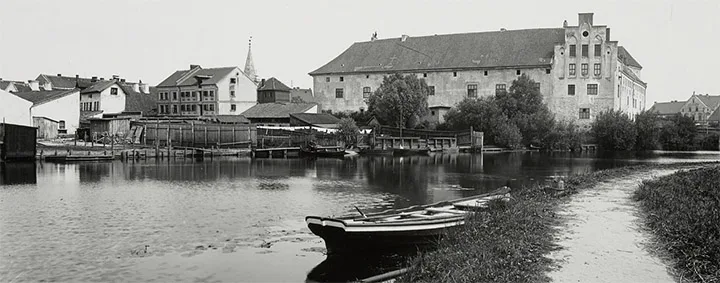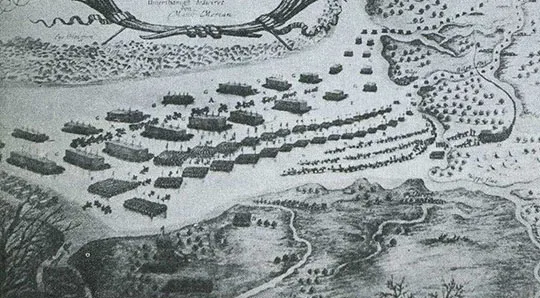
Postnicken was founded in 1405. Around 1540 it was called Postenik, in 1542 Postenicken, and in 1563–65 Postnick and Postnyck. After 1565 it was mentioned as Puschniken, and in 1785 as Pusteniken.
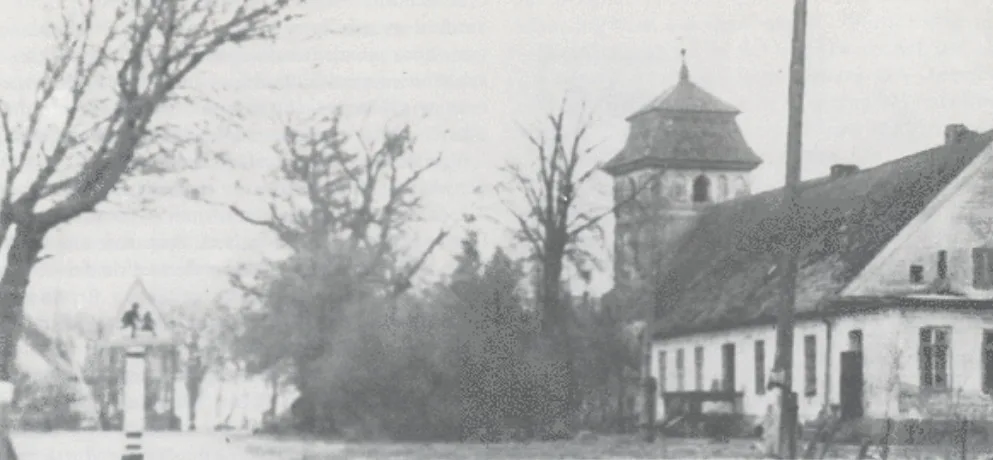
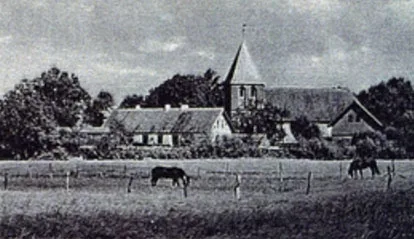
The church in Postnicken was built in the days of the Teutonic Order. In the 15th–16th centuries a tower was added. In the 16th century the church burned down, but it was rebuilt using the old masonry. In the 18th century Postnicken Church was under the patronage of the King of Prussia.
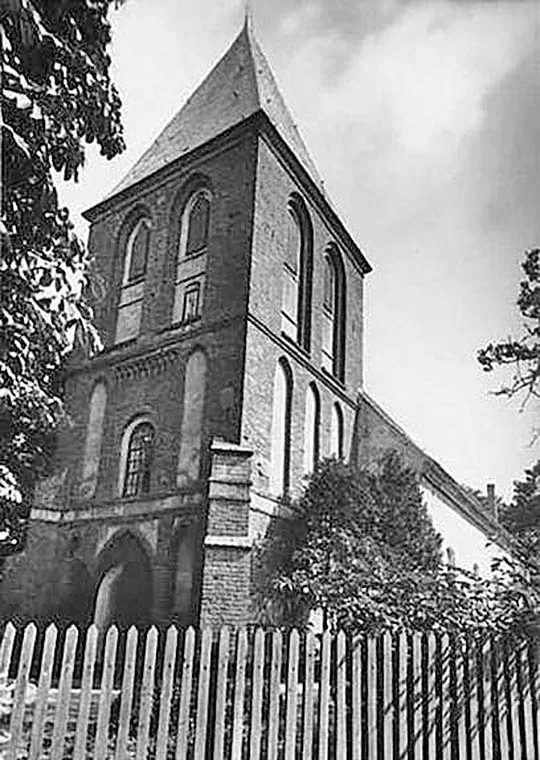
Postnicken Church.
In 1785 Postnicken was a village under Kulm law (Cöllmisch Dorf) with 40 households. In 1818 Postnicken was classified as a royal village under Kulm law (Königlich Cöllmisch Dorf). The number of households had increased to 42.
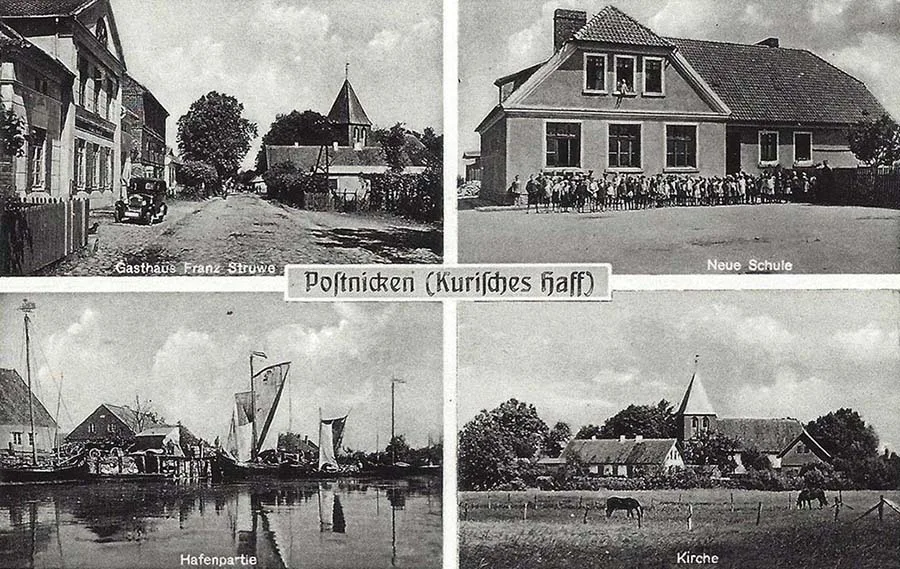 A postcard from Postnicken.
In the 19th century Postnicken was a village that from 1818 formed a rural community in Landkreis Königsberg (merged into Landkreis Samland in 1939). Postnicken Church was the parish church for the surrounding villages and estates. On 30.04.1874 the rural community of Postnicken was incorporated into the newly established Amtsbezirk of Postnicken. The heads of the Amtsbezirk in 1874–78 and 1885–1943 were the owners of the Postnicken estate, and in 1943–45 the burgomaster of Postnicken, Max Lemke.
No later than 1883 the Grünwalde estate (Zalivnoye, part) became part of the Postnicken community. By 1905 the rural community of Postnicken also included the villages of Eckergarten (54°54'36'' N 20°47'14'' E), Edelswalde (54°54'38'' N 20°48'13'' E), Möwenhof (Zalivnoye, part), Palve (Zalivnoye, part) and Mückenhof (Ruchyi).
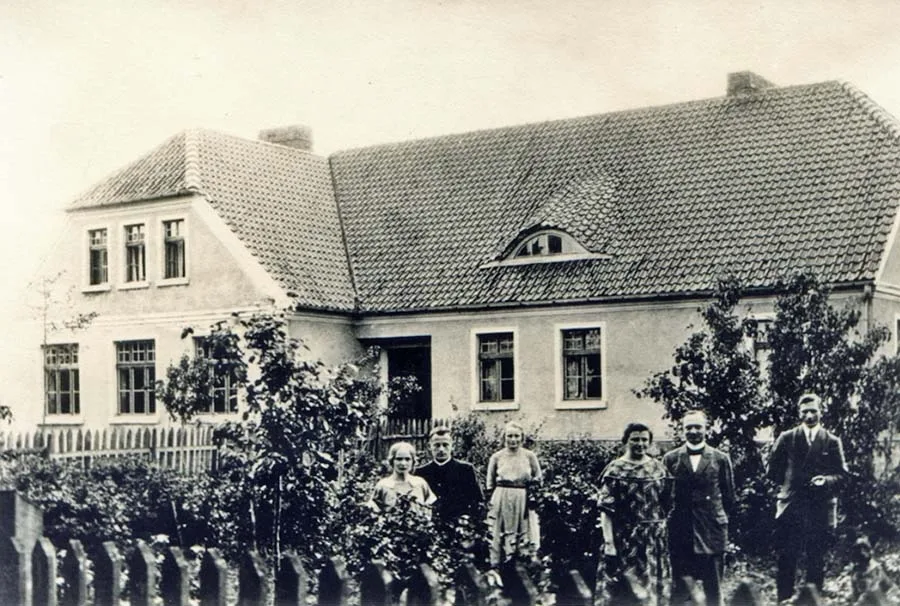 The teaching staff in the garden of the local school.
In the pre-war years a windmill worked on the southern edge of the village; it had stood on this spot since at least the end of the 19th century.
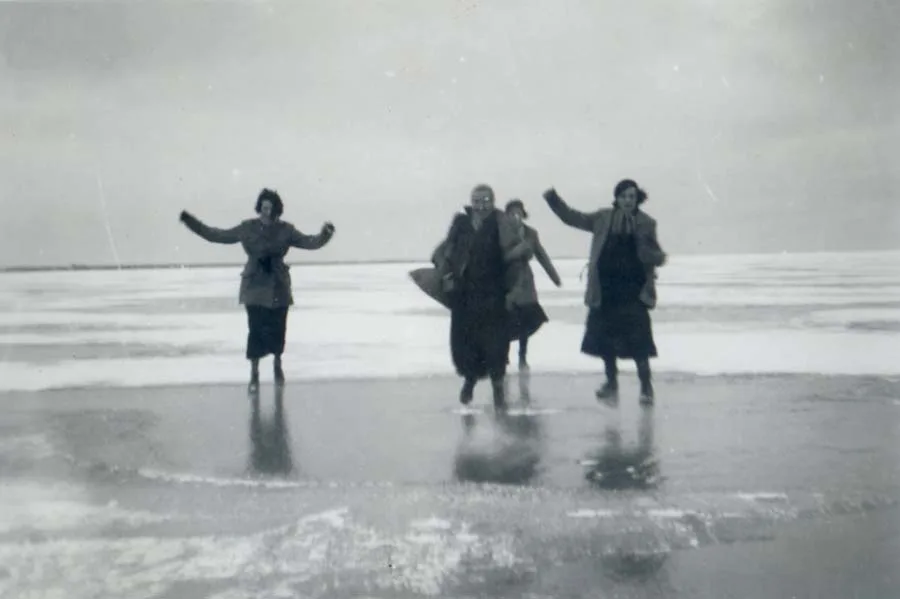 Women of Postnicken on the ice of the Curonian Lagoon.
The Amtsbezirk of Postnicken
On 30.04.1874 Amtsbezirk No. 42 Postnicken was established in Landkreis Königsberg. It comprised the rural community of Postnicken (Zalivnoye) and two Gutsbezirke: Grünwalde (Zalivnoye, part) and Jägerthal (Zalivnoye, part). Grünwalde soon became part of the rural community of Postnicken, and by 1883 the Amtsbezirk of Postnicken consisted of the rural community of Postnicken (Zalivnoye) and the Gutsbezirk of Jägerthal (Zalivnoye, part). On 30.09.1928 the Gutsbezirk of Jägerthal was abolished and incorporated into the Postnicken community. After that the composition of the Amtsbezirk did not change again until 1945.
Grünwalde was founded in 1836 and was an estate that from 1867 formed a Gutsbezirk in Landkreis Königsberg (merged into Landkreis Samland in 1939). The estate belonged to the Postnicken (Zalivnoye) parish. In 1871 Grünwalde had one dwelling house, in which three families lived. On 30.04.1874 the Gutsbezirk of Grünwalde was incorporated into the newly established Amtsbezirk of Postnicken (Zalivnoye). No later than 1883 the Gutsbezirk of Grünwalde was abolished and incorporated into the rural community of Postnicken. By 1905 it had become uninhabited.
Jägerthal in 1785 was described as a model estate on royal forest land (Chatoulgut) with three households. In 1818 it was classified as an estate under Kulm law (Cöllmisch Gut) with four households.
In the 19th century Jägerthal was an estate forming a Gutsbezirk in Landkreis Königsberg (merged into Landkreis Samland in 1939). The estate belonged to the Postnicken (Zalivnoye) parish. In 1871 Jägerthal had three dwelling houses, in which eight families lived. On 30.04.1874 the Gutsbezirk of Jägerthal was incorporated into the newly established Amtsbezirk of Postnicken (Zalivnoye). In 1879 the Jägerthal estate had 210 ha of land, and the estate's annual net profit amounted to 2,032 marks.
According to other sources, the Gutsbezirk of Jägerthal existed until 1874, became part of the Amtsbezirk of Postnicken, but was later abolished and attached to the Domänenamt of Schaaken. The Gutsbezirk (the Jägerthal estate and almost 206 ha of land) was separated from the Domänenamt of Schaaken (Nekrasovo) again only on 30.04.1910, and only after that did it rejoin the Amtsbezirk of Postnicken. However, this information needs to be verified.
On 30.09.1928 the Gutsbezirk of Jägerthal was abolished and incorporated into the rural community of Postnicken (Zalivnoye).
Möwenhof was a village within the rural community of Postnicken (Zalivnoye) in Landkreis Königsberg (merged into Landkreis Samland in 1939). The village belonged to the Postnicken (Zalivnoye) parish. As part of the rural community of Postnicken, the village of Möwenhof belonged to the Amtsbezirk of Postnicken.
Palve was a village within the rural community of Postnicken (Zalivnoye) in Landkreis Königsberg (merged into Landkreis Samland in 1939). The village belonged to the Postnicken (Zalivnoye) parish. As part of the rural community of Postnicken, the village of Palve belonged to the Amtsbezirk of Postnicken
Mückenhof was a village within the rural community of Postnicken (Zalivnoye) in Landkreis Königsberg (merged into Landkreis Samland in 1939). The village belonged to the Postnicken (Zalivnoye) parish. As part of the rural community of Postnicken, the village of Mückenhof belonged to the Amtsbezirk of Postnicken
Forsthaus Post was founded in 1902 and was part of the rural community of Postnicken (Zalivnoye) in Landkreis Königsberg. The forester's house belonged to the Postnicken (Zalivnoye) parish.
Forsthaus Brandt was founded no later than 1785 as an ordinary ("lower") forester's post (Unterförsterei). In 1800 it appears as a royal gamekeeper's establishment (königlich Hegemeisterei-Etablissement) with two households. In the 19th century Forsthaus Brandt belonged to the forest Gutsbezirk of Greiben, Oberförsterei-Anteil, in Landkreis Königsberg (merged into Landkreis Samland in 1939). The forester's house belonged to the Postnicken (Zalivnoye) parish. In 1871 Forsthaus Brandt had one dwelling house, in which one family lived.
The Amtsbezirk of Brandt
On 30.04.1874 Amtsbezirk No. 41 was established in Landkreis Königsberg. It comprised Forsthaus Brandt as the seat of the head of the Amtsbezirk and two Gutsbezirke: Julienhöh (Iyulskoye, part) and Willmanns (Iyulskoye, part). On 01.07.1891 the Gutsbezirke of Julienhöh and Willmanns were transferred to Kreis Labiau (Polessk). The Amtsbezirk of Brandt came to consist of Forsthaus Brandt with the forest areas under its jurisdiction. On 30.09.1928 Forsthaus Brandt was incorporated into the new rural community of Steinort (Primorskoye). The Amtsbezirk of Brandt was abolished.
On 17.06.1947 Postnicken was renamed the settlement of Zalivnoye. The Zalivnoye village council was created at the same time. Möwenhof, Palve, Grünwalde, Jägerthal and Forsthaus Post were not officially renamed and became parts of Zalivnoye de facto.
On 05.07.1950 Forsthaus Brandt was renamed the settlement of Glukharyovo, and Mückenhof the settlement of Ruchyi. Both settlements became part of the Zalivnoye village council. In 1954 the Zalivnoye village council was abolished, and the settlements of Zalivnoye, Glukharyovo and Ruchyi became part of the Marshalskoye village council. In 1955 Zalivnoye had 40 houses, while there were no longer any buildings in the former Möwenhof; the former Palve had two houses, Jägerthal 12 and Grünwalde two, and on the site of Forsthaus Post the Zalivnoye forestry now operated, with three houses. In the same year, 1955, Ruchyi had two houses and Glukharyovo three. In 1975 the number of houses in Zalivnoye rose to 52, and the settlement had a school. Ruchyi still had two houses, and there were no buildings left on the territory of Glukharyovo. The settlement itself had earlier been struck off the register and incorporated into Zalivnoye. In 1982 Ruchyi still appeared on maps, but no later than the end of the 1990s it was struck off the register and incorporated into Zalivnoye. As of 2011 Zalivnoye had 134 households. In 2018 the buildings of Zalivnoye stood on the territory of the former Postnicken, Jägerthal, Palve, Mückenhof and Forsthaus Post. In all, in 2021 Zalivnoye had 86 dwelling houses.
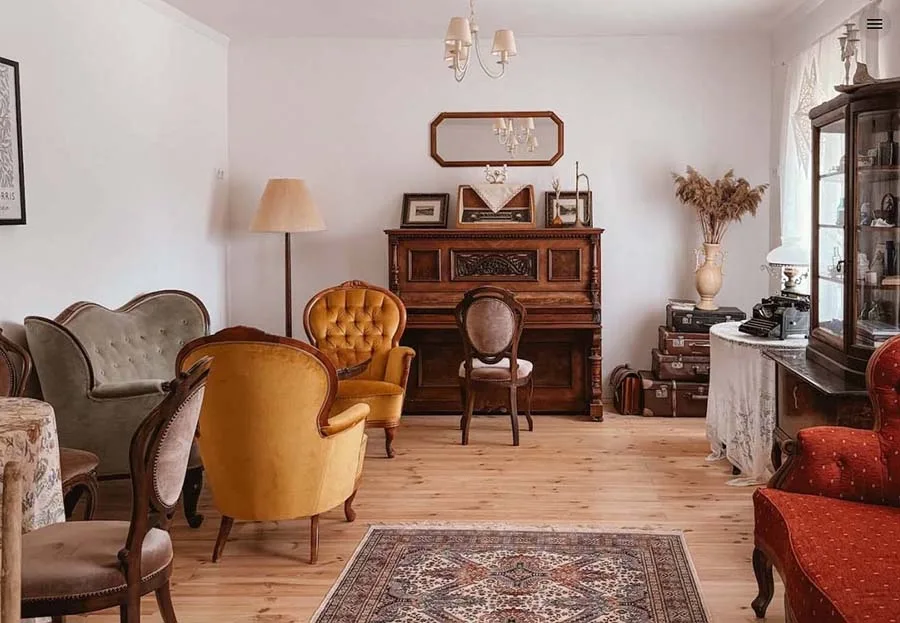
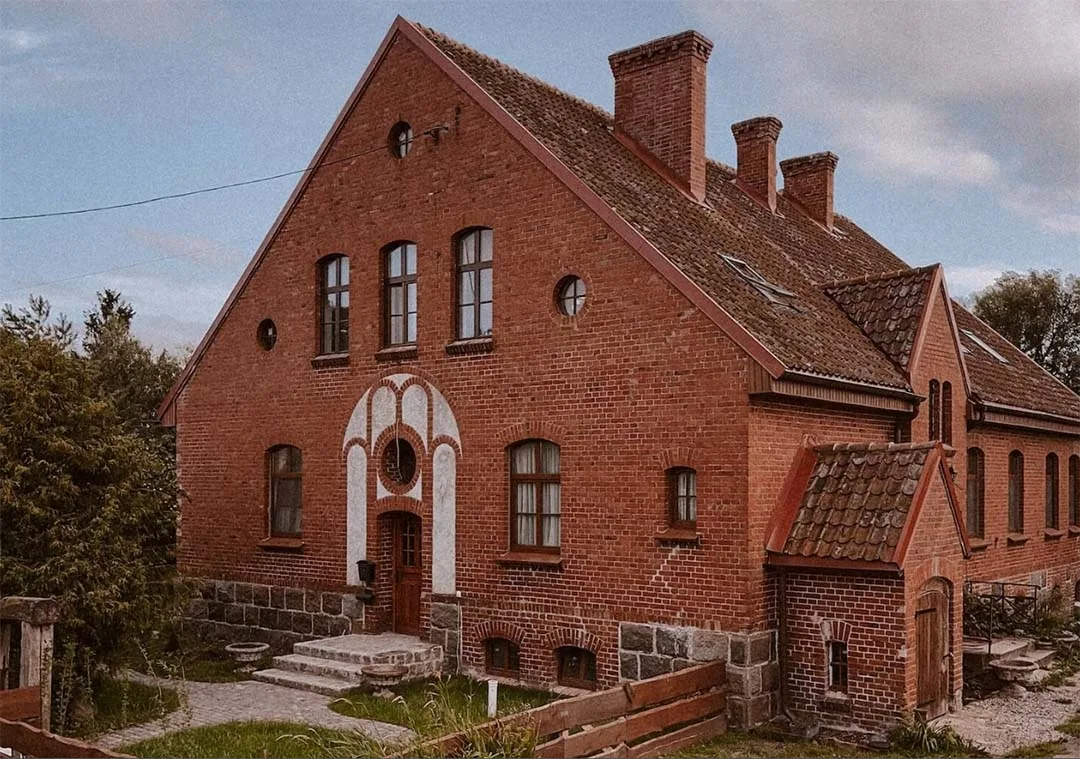
Today, through the efforts of the entrepreneur Oleg Barmin, a special retro-therapy zone for human souls is taking shape on the territory of Zalivnoye.
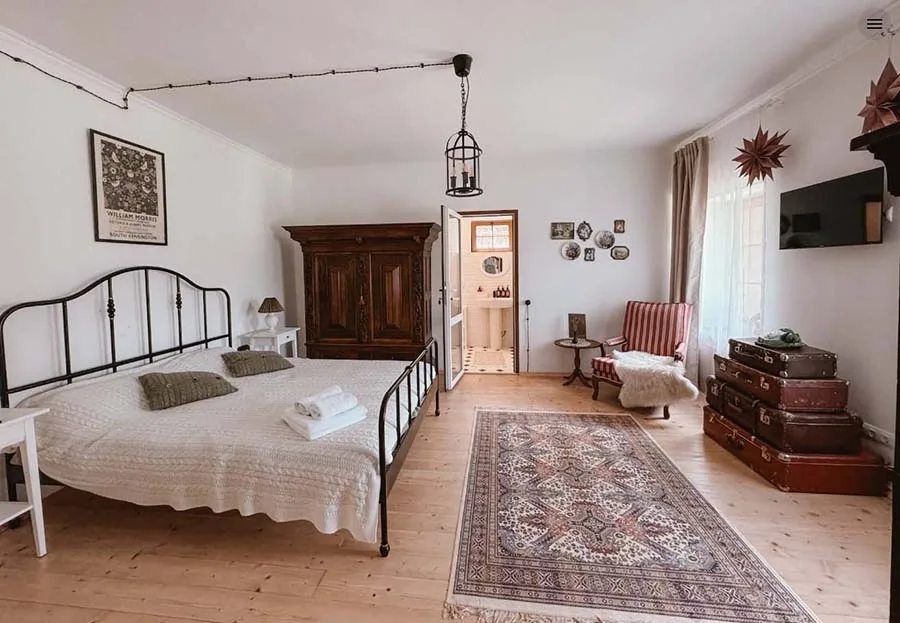 Interiors of "Granny's Guesthouse" in Zalivnoye. Photo: postnicken.ru.
For reference
Population of the community of Postnicken – Zalivnoye: 1818 – 589, 1867 – 668, 1871 – 766, 1885 – 780, 1905 – 790, 1910 – 735, 1925 – 779, 1933 – 890, 1939 – 847, 1982 – 260, 2002 – 360, 2010 – 323, 2012 – 332 inhabitants.
Coordinates of the settlement: 54°54'43'' N 20°49'52'' E (Postnicken), 54°53'56'' N 20°49'42'' E (Mückenhof), 54°54'53'' N 20°48'36'' E (Jägerthal), 54°54'51'' N 20°48'59'' E (Palve), 54°55'15'' N 20°49'23'' E (Möwenhof), 54°55'46'' N 20°48'15'' E (Grünwalde), 54°54'15'' N 20°50'18'' E (Forsthaus Post), 54°53'00'' N 20°50'14'' E (Forsthaus Brandt).
Population of the village of Postnicken: 1905 – 150 inhabitants.
Population of Möwenhof: 1905 – 18 inhabitants.
Population of Jägerthal: 1818 – 52, 1867 – 64, 1871 – 42, 1905 – 71, 1910 – 56 inhabitants.
Population of Grünwalde: 1867 – 11, 1871 – 12, 1885 – 18, 1905 – 0 inhabitants.
Population of Forsthaus Post: 1871 – 12, 1905 – 4 inhabitants.
Population of Forsthaus Brandt: 1818 – 10, 1867 – 7, 1871 – 8, 1905 – 7 inhabitants.
Population of Eckergarten: 1905 – 18 inhabitants.
Population of Edelswalde: 1905 – 6 inhabitants.
Composition of the population of Postnicken in 1871: Protestants – 765, Catholics – 1, children under 10 – 175, literate – 400 (68%), deaf-mute – 1.
Composition of the population of Grünwalde in 1871: all 12 – Protestants, children under 10 – 3, literate – 7 (78%).
Composition of the population of Jägerthal in 1871: all 42 – Protestants, children under 10 – 12, literate – 24 (of 29 surveyed, 83%).
Composition of the population of Forsthaus Brandt in 1871: all 8 – Protestants, children under 10 – 1, literate – 5 (71%)
The Postnicken parish: Bledau (Sosnovka), Brandt (Glukharyovo), Eckergarten (54°54'36'' N 20°47'14'' E), Edelswalde (54°54'38'' N 20°48'13'' E), Groß Post (54°56'00'' N 20°47'28'' E), Grünwalde (Zalivnoye, part), Hempelshube (54°52'04'' N 20°48'53'' E), Henselshöfchen (54°52'40'' N 20°48'39'' E), Jägerthal (Zalivnoye, part), Julienhöhe (Iyulskoye), Kungitten (Liski), Kropiens (Gayevo), Möwenhof (Zalivnoye, part), Mückenhof (Ruchyi), Neu Perwissau (Rozhkovo, part), Neu Rinau (54°51'43'' N 20°49'13'' E), Palve (Zalivnoye), Perwissau (Rozhkovo), Forsthaus Post (Zalivnoye, part), Postell (54°50'08'' N 20°48'16'' E), Rinau (Chaikino), Tellehnen (54°52'02'' N 20°48'21'' E), Waldstein (54°56'10'' N 20°47'04'' E), Willmanns (Iyulskoye).
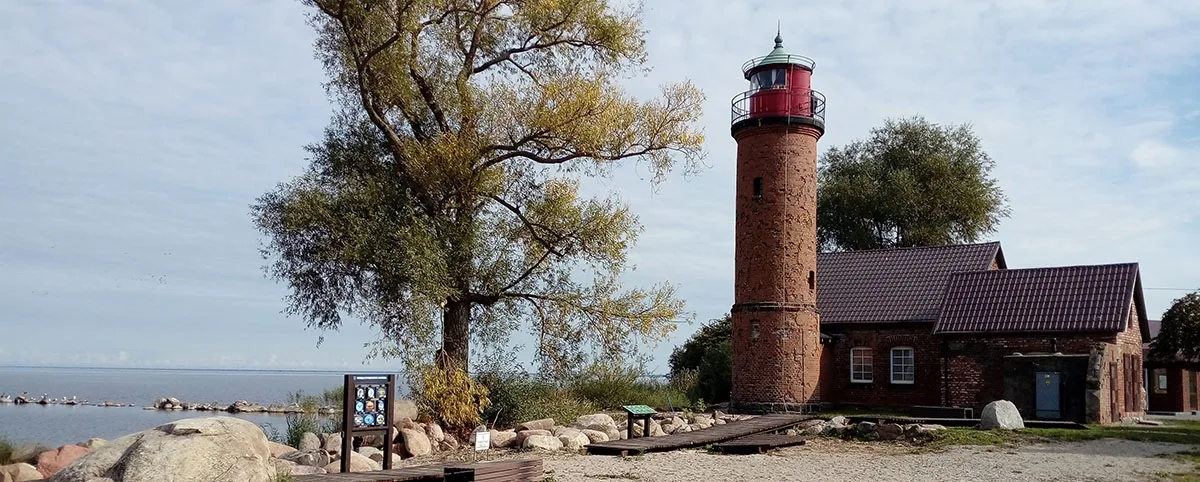
Modern photos: postnicken.ru.
Translated from Russian with the help of AI (Claude, Anthropic), October 2026.