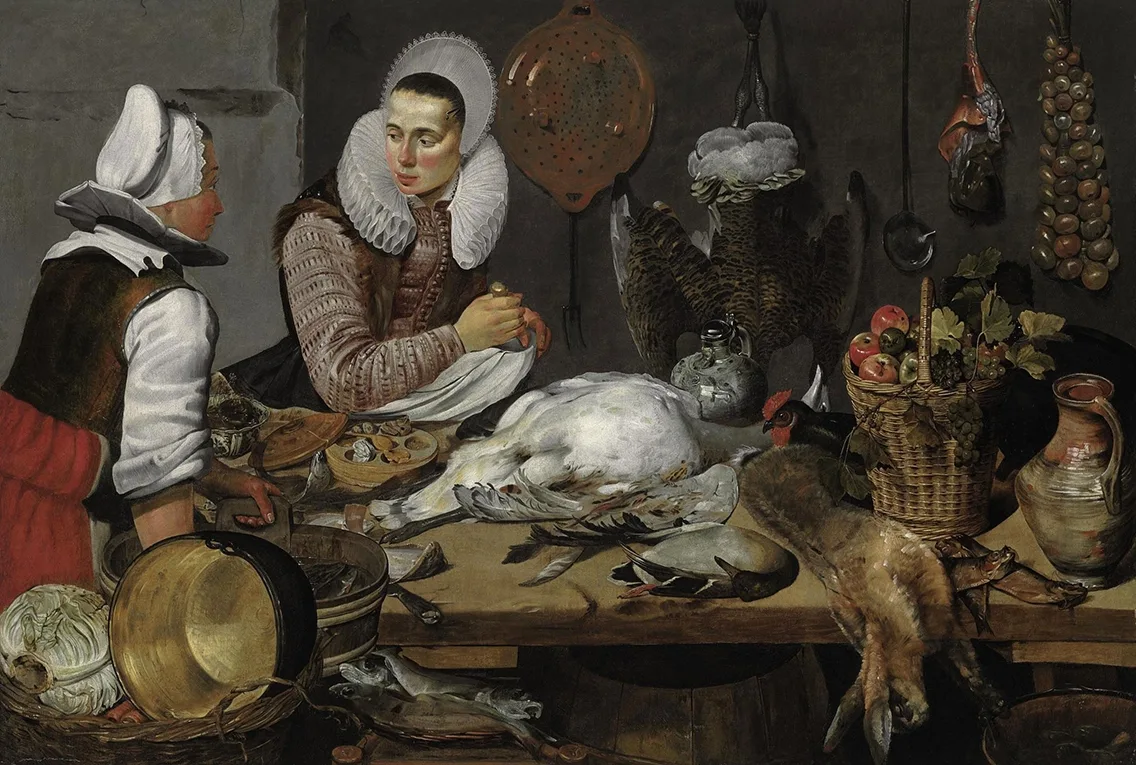
Capon was eaten more often before the early 20th century, chiefly in French cuisine. In Bresse (Burgundy) they are bred to this day, but nowadays this pleasure is far too expensive. Capons are pampered and looked after like newborn babies, protected from draughts, indulged with classical music… This carefree life usually ends on the Christmas table. And the rest of their menu is, of course, to match – only natural foods prepared with fresh milk, and no chemicals.
The same goes for the poularde. This fattened table hen was known not only in Europe but also in pre-revolutionary Russia (though its history there ended with the revolution of 1917). It is known, however, that poularde dishes were included in the coronation menu of Nicholas II.
To make the poularde's meat juicy and tender, it was fed on natural grain, dairy products and given massages.
In East Prussia few ventured to keep aristocratic, pampered capons and poulardes. Country people preferred geese: an undemanding bird, profitable and easy to raise. And tasty, too.
In her book "Traditional Dishes of East Prussia", Marion Lindt writes that she is still haunted by the inimitable aroma of a home-roasted goose stuffed with apples and marjoram. The large platter was set in the middle of the table, with delicious braised sauerkraut beside it. The goose was considered a true gift of God, but it was said to have one serious drawback: too much for one diner, and too little for two. This is an exaggeration, of course. Usually one three-kilogram goose fed 8 – 10 people.
Roast Goose
1 not-too-fatty goose, 3 kg, 20 g salt, ground black pepper to taste, 1 tsp ground marjoram, 10 small apples, 1 l water for basting, 1 tbsp starch, sugar to taste.
Mix together the salt, ground black pepper and marjoram, rub the inside of the goose with it and stuff it with apples (8 of them). Sew up the opening and salt the outside. Place the bird breast down in a roasting tin and put it in the oven. Roast over low heat, basting the back with water from time to time. After an hour, turn the goose over and roast for 2.5 – 3 hours until a brown, crisp crust forms, sprinkling with water now and then. Remove excess fat as it renders, and add hot water around the goose as needed. Stop adding water 15 minutes before the end of roasting. To make the skin of the finished goose crisp, you can sprinkle it with cold water. Transfer the goose to a warmed platter, take out the apples and arrange them around it.
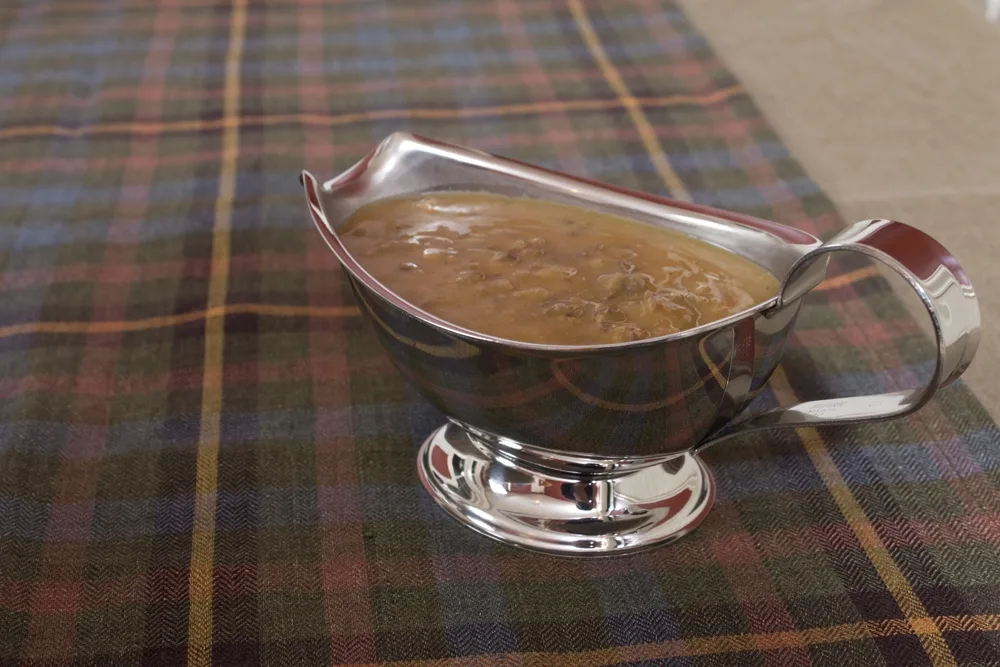
Make a sauce from the liquid left in the tin after roasting. Pour it into a saucepan, stew the remaining apples in it, add starch mixed with cold water and a pinch each of ground black pepper and sugar, season with salt and press through a sieve. Pour the sauce over the finished goose.
Goose Giblets
The mesentery, gizzard and heart of one goose, plus its small meaty parts (neck, wings, etc.), 1 bunch of soup greens, 4 allspice berries, 1 tsp mustard seeds, ½ bay leaf, 3 tbsp butter, 1 heaped tbsp flour, marjoram to taste.
Pour boiling water over the giblets and small pieces of goose and salt lightly. Add the soup greens (always including parsley and celeriac) and simmer over low heat for 70 – 80 minutes. Then pour the stock off into another pan. Remove any bones from the pieces of goose if necessary and cut them, together with the giblets, into small pieces. Make a roux from the flour and butter, thin it with the skimmed stock, season with salt and pepper and add the meat.
This dish was usually served with floury boiled potatoes.
Goose Liver Sausage
1 ¼ kg goose liver, 40 g goose fat for braising, 750 g raw pork fat, 1 calf's foot, 375 g boiled veal, 100 g onions, ¼ l rendered goose fat (about 200 g), 2.5 tsp ground marjoram, fine salt (to taste), pickled truffles (quantity at your discretion), ground black pepper (optional), stock (as needed), 3 – 4 m smooth pork or beef casing.
Cover the calf's foot and pork fat with water and boil with salt, pepper and spices until done. Strain the stock through a fine sieve. Put 450 g of the fat through the mincer once (trim off the tough rind first). Skim the fat off the cooled stock. Pour 4 ladles of stock into a pan, add 200 g goose fat and the onion and cook until done. Braise the liver in goose fat until half-cooked, then put it through the mincer three times together with the boiled onion and the boiled veal, mix thoroughly with the minced boiled pork fat and press through a colander. Then add to the forcemeat the fatty stock in which the onion was cooked, the marjoram, salt, pepper and finely chopped truffles, mix thoroughly and fill the casing.
Put the sausages (they can be made any size) into boiling water and cook for 1 hour, stirring. They should not be crowded. If clear fat runs out when a sausage is pricked with a fork, it is done.
Lift out the sausage and cool it in very cold water.
Capon with Rice
1 capon weighing 2.5 kg, 2 tbsp salt, 1 lemon, slices of fresh pork fat, water (as needed), soup greens (to taste), 1 onion, 127 g rice for the side dish.
For the sauce:
3 tbsp butter, 4 tbsp flour, 1 l stock, 2 raw egg yolks, 20 button mushrooms, lemon juice, salt and pepper to taste.
Rub the inside of the prepared bird with salt, put the liver, gizzard and heart inside and truss the legs. Rub the breast with lemon juice or cover it with lemon slices (without pips, pith or peel) and slices of pork fat. Place the capon in a pan of suitable size (sauté pan, saucepan) and pour in salted boiling water to halfway up the bird. Once it boils, add the soup greens and continue to cook, covered, over low heat. Take the bird out of the pan, cut it into pieces and pour the mushroom sauce over it.
For the sauce, boil the mushrooms, chop them finely and fry in butter. Then melt butter, mix it with the flour, pour in the stock left from cooking the bird and simmer for 10 minutes; add the yolks, stirring constantly, and put in the fried mushrooms. Season with salt and pepper to taste.
This dish was prepared only on major holidays, when some 8 – 10 people gathered at the table. A poularde, goose or duck can be cooked in exactly the same way.
Turkey Wings, Country-Manor Style
(Recipe by the Königsberg chef W. Meinhardt, 1880)
4 pairs of turkey wings, 1 l water, 1 tsp salt, 10 black peppercorns, 100 g fresh button mushrooms, 50 g flour for coating, 1 tbsp mild mustard, 50 g butter, fresh parsley, 1 lemon.
Wash the turkey wings thoroughly, simmer them lightly in a little water with salt and black peppercorns, and leave to cool on a rack.
Finely chop the fresh mushrooms and mix with the flour. Salt the cooled wings lightly, brush with mustard, toss with the mushrooms, sprinkle with melted butter and lay on a baking tray. Bake in an oven preheated to 180 degrees, checking constantly that the dish does not burn.
Arrange the finished wings on a large platter, sprinkle with chopped parsley and garnish with lemon wedges.
Young Turkey Stuffed with Truffles
(From W. Meinhardt's handwritten cookbook, 1900)
1 young turkey (about 2 kg), 400 g truffles, 500 g veal (neck), 500 g pork (with some fat), 4 egg yolks, ground black pepper, salt, 4 centilitres (40 ml) Madeira, 2 centilitres (20 ml) cognac, 1 turkey liver (about 250 g), 50 g butter, 150 g bacon, 1 l stock (turkey), 50 g flour.
Pluck and draw the young turkey. Make an incision in the neck and remove the bones of the throat right down to the backbone, along with the crop. Clean the truffles and divide them into two parts. Finely chop one half and set it aside in a dish; it will go into the stuffing. Cut the other half of the truffles coarsely.
Put the veal and pork through the mincer, add the 4 egg yolks and mince again (using the fine plate). Add salt and ground pepper to the forcemeat, pour in the Madeira and cognac and mix gently by hand. (Do not use an electric mixer, so as not to damage the pieces of truffle!) Dice the turkey liver. Fry it in butter until browned. Pour in a little Madeira, stir and add to the forcemeat.
Before stuffing the turkey, carefully cut into the skin over the breast and fill it with the coarsely cut truffles. The breast itself must remain whole and undamaged. Stuff the skin of the neck and head. Put the forcemeat and the remaining large pieces of truffle inside the turkey. Sew up the bird, cover it with thinly sliced bacon and put it into a preheated oven for an hour to an hour and a half. Roast at 200 degrees on a buttered tray.
The heavier and older the turkey, the longer it takes to cook. Thin the juices that form during roasting with stock, add flour, season with salt and pepper to taste, bring to the boil and serve hot.
In Königsberg, truffle-stuffed young turkey was usually served with braised red cabbage and boiled potatoes.
Turkey Stuffed with Sweet Chestnuts
(After a recipe by W. Meinhardt)
Peel 2 kg of chestnuts and boil them for 3 minutes in a deep fryer in boiling vegetable oil, taking care that the chestnuts do not fall apart. Then transfer them to a rack and leave to dry.
Put the pork through the mincer and press it through a horsehair sieve (you won't find one these days, so use a metal one – editor's note). Add salt, ground white pepper, the chestnuts and the fried, chopped turkey liver to the forcemeat.
Stuff the turkey, sew it up and cover it with thin slices of bacon to keep the skin soft. Roast in an oven preheated to 180 – 200 degrees on a buttered tray. Make a sauce from the juices left after roasting and pour it over the turkey before serving.
In his manuscripts, W. Meinhardt noted the places in Königsberg where the best sweet (edible) chestnuts grew. Soldiers of the 18th Battalion gathered them and brought them to the chef at his restaurant by the rucksackful. Meinhardt spent hours sorting through them, separating the sweet chestnuts from the inedible ones. Among those keen to earn some pocket money this way was a student, Bernhard Friedrich, who later wrote a cookbook that also included W. Meinhardt's recipes.
Roast Duck
1 young meat duck, 4 small aromatic apples, 2 sprigs of marjoram, pepper and salt to taste, 1 tbsp starch, 1 tbsp seedless raisins.
Rub the duck inside and out with salt and ground black pepper, stuff it with whole apples and the seasoning, and sew it up. If you like, the apples can be quartered. If the duck is lean, it is best to put 3 tbsp butter in the roasting tin; if it is fatty, pour in a cup of water. Lay the duck breast down in the tin and roast in a moderate oven. After an hour, turn it onto its back and increase the heat. As soon as the breast browns, lay pre-soaked caul fat over it and continue roasting. Cooking time depends on the size and age of the bird, but averages about an hour and a half. Sprinkle the finished duck with cold salted water, return it to the oven for a couple of minutes, then transfer to a plate and leave to rest for about 10 minutes. Strain the pan juices through a sieve, mix with the starch, add salt and pepper as needed, and pour over the duck.
Roast Pigeons
4 drawn pigeons, salt, ground black pepper, 2 onions, 2 carrots, 1 small celeriac, 60 g lard, 1 tbsp breadcrumbs, ¼ l chicken stock, 1 tsp flour, sour cream.
Wash and dry the pigeons. Rub the insides with salt and pepper, sew them up, brown them on all sides in the lard and set them on a plate. In the same fat fry the chopped onion, carrots and celeriac, add the breadcrumbs and braise briefly. Return the pigeons to the pan and roast in an oven preheated to 200 degrees for 30 – 40 minutes, basting them with fat from time to time. When they are done, take the pan out of the oven, pour in the chicken stock and braise for another 5 minutes. Strain the sauce and mix it with flour stirred into water, sour cream, salt and pepper.
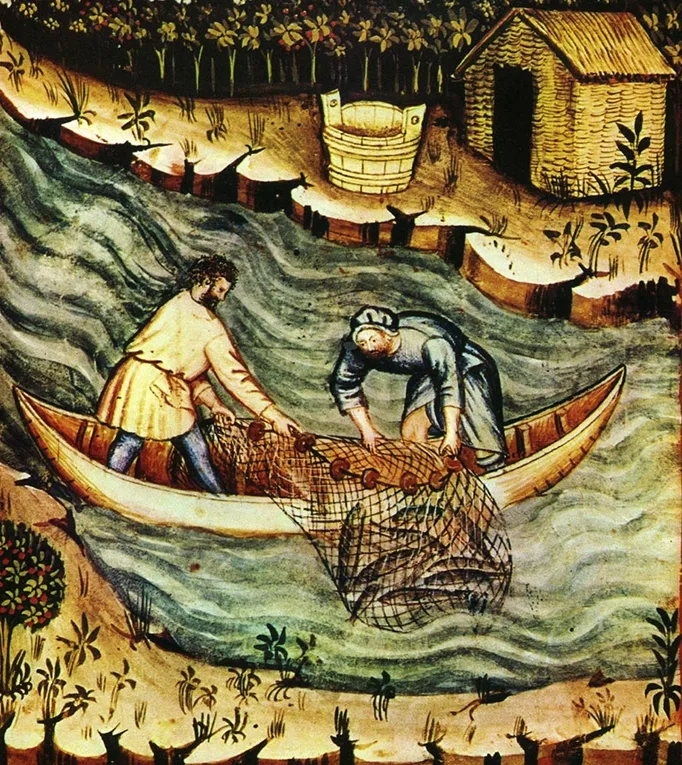
What breed of pigeon was served at the East Prussian table is not specified. One might suppose, of course, that meat pigeons were specially bred in the countryside, but this is unlikely. Why go to the trouble when the forests of East Prussia abounded in wood pigeons, turtle doves and other large species of pigeon? And these were clearly not the "Curonian Spit pigeons", which were in fact crows. Local people caught them with nets in autumn and salted them for the winter.
This "dish" appeared on the Curonian Spit in the 17th century and was considered food for poor fishermen in winter, when the lagoon froze over and fishing stopped...
The people engaged in this "crow trade" were called Krajebieter or Krähenbeißer – crow biters. The luckiest could catch up to 200 crows a day. The birds caught in the net were killed with a special bite to the skull.
And since one could catch some infection from the birds' feathers, a glass of schnapps had to be drunk from time to time as a disinfectant. The crow biters' wives could tell from their husbands' gait, while they were still far off, whether the hunt had been a success. Incidentally, a permit to catch crows had to be bought from the local forestry office.
By the way, the first to breed pigeons for meat were the peoples of the Mediterranean. The Greeks, Romans and Egyptians considered pigeon dishes a delicacy; they were served at the tables of emperors and the Roman nobility. Avicenna, too, wrote of the healing properties of lean pigeon meat.
In the USA and some European countries, pigeon breeding for meat appeared only at the beginning of the 20th century. In Russia it never became widespread: people there prefer racing and flying pigeons and value only the birds' beauty and flight.
Sources:
Das Beste aus der Ostpreußischen Küche. Susanne Rohner.
Alte Familienrezepte aus Ostpreußen. H. Saul.
Doennigs Kochbuch
Rezepte aus der guten ostpreußischen Küche. M. Haslinger, R.M. Wagner.
Spezialitaeten aus Ostpreußen. M.Lindt.
Translated from Russian with the help of AI (Claude, Anthropic), October 2026.