The law introduces the concept of "protective zones" for cultural heritage sites.
"The protective zones of cultural heritage sites are territories adjacent to monuments and ensembles included in the register (with the exception of the cultural heritage sites specified in paragraph 2 of this article), within whose boundaries, in order to ensure the preservation of cultural heritage sites and their compositional and visual connections (panoramas), the construction of capital construction projects and their reconstruction involving a change in their parameters (height, number of storeys, floor area) is prohibited, with the exception of the construction and reconstruction of linear facilities" (Article 341).
The previous version of the law contained only the concept of a "conservation zone", which was established on the basis of a historical and cultural assessment and lengthy approval procedures. The assessment has to be carried out by certified specialists and is expensive. As a result, more than 80% of monuments never received such conservation zones.
The bill provides for monuments and ensembles that lack conservation zones to be given temporary protective zones with a very strict regime prohibiting, within their boundaries, new construction and reconstruction involving changes in dimensions.
The boundaries of protective zones are set automatically: in populated areas, 100 metres from the boundary of a monument and 150 m from the boundary of an ensemble; outside populated areas, 150 and 250 metres respectively. If a monument or ensemble has no approved territory, the boundaries of the protective zones are measured from the outer wall of the monument or from the outer contour of the ensemble: 200 metres in populated areas and 300 outside them. The boundaries of protective zones must be entered into the State Real Estate Cadastre within 15 working days of receiving notification from the heritage protection authorities. Protective zones are not established for archaeological heritage sites, necropolises, works of monumental art, or for monuments and ensembles located within the boundaries of places of interest with approved regulations.
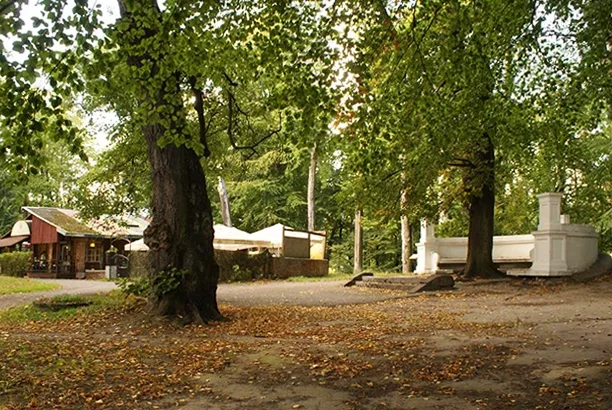
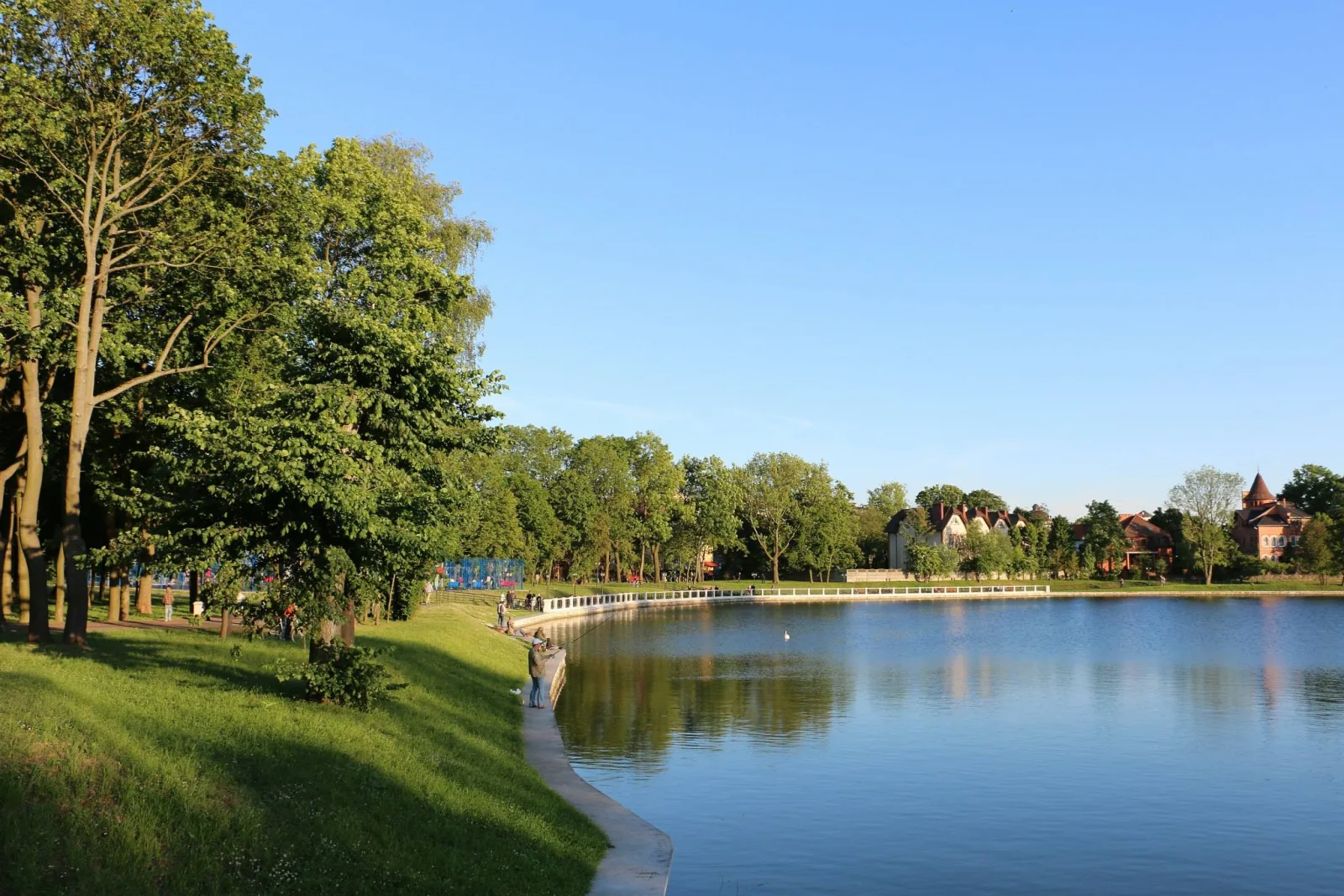
An unsightly dive in Kaliningrad's Central Park next to the semi-rotunda in memory of Queen Louise, which has the status of a cultural heritage site of local (municipal) significance.
Protective zones are intended, on the one hand, to put an end to arbitrary development in the immediate vicinity of monuments and ensembles and, on the other, to encourage the drafting and adoption of conservation zones for cultural heritage sites.
This amendment was prompted by the destruction of the cultural landscape of historic towns. In 1990, 426 towns, 54 urban-type settlements and 56 villages were included in the register of historic settlements. In July 2010 the list was cut to 41, with practically no large cities left on it (Kaliningrad was also removed).
In effect, this is an emergency law, prompted by the catastrophic situation in old towns that "have something to lose". Just think of "infill development", which not only disfigures the appearance of historic districts but also significantly worsens the quality of life of their residents (and of newcomers alike). The creation of protective zones should, on the one hand, lead to a ban on new construction that distorts the historic environment, or what is left of it, and, on the other, buy time for drafting permanent conservation zones.
I want to stress once again: more than 80% of monuments in the Russian Federation have no conservation zones (!), which developers shamelessly exploit, and which leads to the historic districts of old towns losing not only their appeal to tourists but often their appeal as places to live as well.
The bill has many opponents, above all among developers, and is therefore making slow progress – it passed its first reading in May 2015 and then "stalled"... The opposition's main argument is that the law will hinder urban development and come into conflict with the master plans now being adopted. The opponents' second, no less common argument is that it is a new corruption scheme expanding the field known as "trading in prohibitions". But you must agree: the ability to turn everything into a "corruption scheme" is a way of thinking and a behavioural trait, the "human factor" and a "non-legal mindset".
The following point is also worth noting: the law is being adopted with regard to future development, that is, it fixes the status quo, and it cannot be used as grounds to demolish existing buildings, even the most absurd and ugly ones. That still requires "political will".
Finally, one last remark: an important clarification has been made: "Decisions approving conservation zones for cultural heritage sites adopted in accordance with the legislation of the RSFSR and the Russian Federation before the date on which this Federal Law enters into force shall be deemed valid." This article puts a stop to attempts to challenge previously adopted conservation zones, especially those from the 1970s–1980s.
And the very last thing: we are waiting for the signature of the President of the Russian Federation.
Photo by Margarita Shashurina.
Translated from Russian with the help of AI (Claude, Anthropic), October 2026.