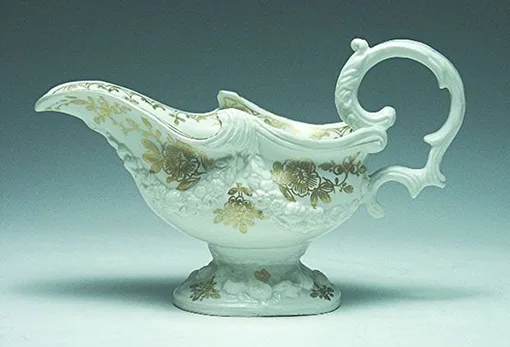
Sauces were used very widely in East Prussia, too. Boiled meat, ragouts, vegetables and potatoes, for example, were served with sauces made on a brown base. Fruit, vegetables, flour dishes, meat and fish were served with unthickened sauces. Egg dishes and macaroni came with milk, wine or fruit sauces. Butter sauces went with cold meat and fish starters, vegetables and salads.
A sauce is not a dish in its own right. It is a seasoning. Or, more precisely, a complex composition made up of a base — prepared from meat, vegetable, fish or mushroom stock, or from tomatoes for tomato sauces, fruit juices, milk, sour cream, vinegar… Flour, starch or egg yolk are added to the base as thickeners, and for taste and aroma all manner of spices: pepper, cloves, cinnamon, vanilla, ginger, marjoram, parsley, dill, onion, garlic, tarragon.
Every cuisine has its favourite spices that give a sauce its national character.
Incidentally, fragrant gravies were sometimes even used to "disguise" a dish that had gone off. But not in East Prussia. Here people knew a thing or two about sauces.
Sauces with a White Base
Anchovy Sauce
40 g butter, 40 g flour, 0.5 l stock, 1/8 l milk, 65 g finely chopped anchovies, salt and lemon juice to taste. 1–2 egg yolks may be added.
Make a base for a white sauce from the butter and flour. To do this, mix the melted butter with the flour and sauté lightly, then pour in strained hot meat or fish stock and warm milk. Simmer the sauce over a low heat for about 10 minutes. Then, stirring constantly, add the finely chopped anchovies diluted with a little water, the lemon juice and salt, and finally pour in, through a small sieve, the yolk beaten with a tablespoon of water.
In East Prussia housewives sometimes used a little trick when making this sauce — they replaced the anchovies with milk in which herring had been soaked.
Light Mustard Sauce
40 g butter. 40 g flour, 0.5 l stock, salt, sugar, vinegar or lemon juice to taste, 2–3 level tbsp mustard powder or mustard, 1–2 yolks if desired, soup vegetables.
Make a base for a white sauce from the butter and flour (mix the melted butter with the flour and sauté lightly), dilute with hot meat stock, add the mustard mixed with cold water and bring the sauce to the boil over a low heat, stirring constantly. Then add the soup vegetables, salt, sugar, vinegar or lemon juice and stir in the egg yolk. This sauce was served cold with cold salt meat, roasts or hard-boiled eggs. The sauce can be made a little thinner, as it becomes very thick when it cools.
Warm Horseradish Sauce
40 g butter, 40 g flour, 0.5 l meat stock, 1/8 l milk, sugar and salt to taste, 4 tbsp horseradish.
Peel the horseradish root very quickly and sprinkle it with vinegar, grate it finely and quickly mix it with a little milk so that it does not darken. Make a base for a white sauce from the butter and flour and dilute it with the meat stock and warm milk. Cook for 10 minutes, then remove from the heat and add the horseradish, salt and sugar.
Horseradish sauce was usually served hot with boiled salt meat and poultry.
Fish Sauce
40 g butter, 40 g flour, 0.5 l fish stock, 1/8 l whipping cream, 1–2 yolks (optional), salt to taste.
Make a base for a white sauce from the butter and flour, dilute with the fish stock and cream and simmer over a low heat for 10 minutes. If the sauce is a little thick, more stock can be added. Then add salt and the yolk (through a small sieve). The sauce can be given different flavours by adding chopped parsley, dill, chives, Parmesan or grated horseradish — as you prefer.
A fish sauce that was among the most popular in antiquity was called garum. Making it within a town was strictly forbidden because of its pungent smell. A large vat was filled with fish entrails, salted and left to ferment in the sun for several months. Once they had broken down, a smelly brown liquid was strained off from the vat. In those distant times garum was prized as highly as perfume.
Onion Sauce
½ l meat stock. ¼ l water, 4–5 medium onions, 2 tbsp breadcrumbs, 1–2 tbsp starch, salt to taste.
Put the onions, cut into wedges, and the breadcrumbs into the meat stock and bring to the boil over a low heat. If the sauce does not turn out thick enough, a little starch can be added; season with salt to taste.
This sauce goes well with goose and any meat, including boiled mutton.
Sauces with a Brown Base
To make a brown (dark) base, fry butter (or another fat) until it turns light brown. Then add flour, mix it well with the butter, fry until brown, dilute with hot meat stock and simmer over a low heat for 30–40 minutes. Before adding the flour, 80–90 g of soup vegetables and an onion cut into thick rings may be added to the butter. The onion will have to be removed afterwards, though, as it will burn. The flavour of the basic brown sauce can be varied with different ingredients.
Cucumber Sauce
2 fresh or salted cucumbers, 30–40 g butter, 60 g flour, ½–¾ l meat stock, sugar and vinegar to taste.
Peel the fresh cucumbers, cut them lengthwise into quarters, remove the seeds, cut into two-centimetre pieces, salt them and leave to stand for an hour. Make a base for a brown sauce from the butter, flour and stock and cook the cucumbers in it. Add salt, sugar and vinegar to taste. Your favourite spices may be added if desired.
Cucumber sauce was served with boiled potatoes. Salted cucumbers can also be used to make it. They should be peeled, cut into pieces (there is no need to remove the seeds) and cooked in the basic sauce.
Brown Herring Sauce
¾ l meat stock, 40 g butter, 60 g flour, the fillet of one herring, 1 onion, salt, sugar and vinegar to taste.
Make a base for a dark sauce, dilute it with stock, add the onion and cook for 15 minutes. Then add the finely chopped herring fillet, previously soaked in water, salt to taste, and add soup vegetables, spices and vinegar. Remove the sauce from the heat.
In East Prussia brown herring sauce was usually served with potatoes boiled in their jackets and with the meat in which the stock had been cooked.
Smoked Bacon Sauce
¾ l water, 70 g flour, 1 tsp sugar, 1 onion, 35 g smoked fatback or smoked streaky bacon, salt and vinegar to taste.
Cut the fatback into small cubes (or the bacon into strips) and fry with the finely chopped onion. Bring the water to the boil and add the flour thoroughly mixed with a little water, the sugar, vinegar, salt and the fat fried with the onion. When making this sauce, as a rule only the rendered fat was used from streaky bacon, while from fatback the fat was used together with the cracklings.
Smoked bacon sauce was served with flour dumplings, lentils, beans, stewed cucumbers, boiled potatoes and fried eggs.
"Seven Cups" Sauce
0.5 cup meat stock, 0.5 cup wine vinegar, 0.5 cup sugar, 1 cup egg yolks, ¼ cup mustard, ½ cup white wine, ¼ cup vegetable oil or butter, salt to taste. (1 cup = 1/8 l).
In a saucepan, mix the meat stock, wine vinegar, sugar, yolks, mustard, wine and a little salt with the melted butter or warmed oil and bring to the boil over a low heat, stirring constantly. This sauce was served chilled with cold meat.
Sweet Sauces
Vanilla Sauce
0.5 l milk, ½ vanilla pod or ½ packet vanilla sugar, a pinch of salt, 40 g sugar, 10 g potato starch, 15 g flour, 1–2 yolks.
Bring the milk to the boil with the vanilla and salt and thicken with the starch. Press the yolks, mixed with the flour and a little milk, through a sieve and cook over a low heat without letting it boil. Remove the vanilla pod from the sauce before serving.
Vanilla sauce was served with fruit or flour dishes.
Chocolate Sauce
0.5 l milk, 125 g chocolate or 60 g cocoa, ¼ vanilla pod, sugar to taste. 1–2 yolks, 10 g potato starch.
Melt the chocolate, broken into pieces, in a little hot water, mix with the milk and vanilla and cook. Add salt and thicken with the starch and yolks.
Chocolate sauce was served with puddings and poached pears.
Egg-and-Oil Sauces (Mayonnaises)
Egg-and-oil sauces (mayonnaises) were very popular in East Prussia. To make this sauce you must follow certain rules very carefully. For example, the oil is added to the eggs drop by drop and mixed thoroughly. For this the East Prussian housewife used a pipette or called for a helper. As a rule, besides oil and eggs, an egg-and-oil sauce contains vinegar or lemon juice, cayenne pepper or paprika, sugar and salt. Mayonnaises were made using cream and so-called flour paste (a cooked flour mixture) as a thickener.
To make the flour paste, sift half a glass of flour into a heavy-bottomed saucepan. Whisking, first pour half a glass of water into the flour and stir thoroughly until smooth. Then pour in another glass of water and stir again until smooth. Put the resulting mixture over a low heat and bring it to the first signs of boiling (it must not boil!) until it becomes a thick paste.
Cold-Made Mayonnaise
3–4 yolks, 1 tsp salt, 1–2 tbsp vinegar or tarragon vinegar, cayenne pepper, ¼ l best-quality vegetable oil, flour paste as required, a pinch of mustard powder, 1 tsp sugar.
Carefully separate the yolks from the whites and beat them in a porcelain bowl with 1 tsp salt (a small mixer can be used). It is best to stand the bowl in a dish of ice or cold water. Beating constantly, add the oil drop by drop at first, and once the sauce thickens it can be poured in a thin stream. Then add the flour paste (mix very thoroughly), mustard powder, pepper, sugar, salt and vinegar, and mix everything well. The sauce should not be hot, but it should have a slightly sour taste.
Whipped Mayonnaise
5–6 yolks or 3 whole eggs, 6 tbsp vegetable oil, 2 tbsp wine vinegar, 1/8 l water or meat stock. A pinch of starch, flour paste (as required), salt to taste, ground white pepper, a pinch each of mustard powder and sugar.
Whipped sauces are made in a bain-marie. Thoroughly mix the yolks or whole eggs with the oil, vinegar and water until smooth, place in a bain-marie and, whisking continuously, bring to the boil over a low heat and remove from the heat at once. The sauce must be stirred until it has cooled. Then mix it with the flour paste. Season with vinegar, pepper, mustard powder, salt and sugar.
Cooked Mayonnaise
2–3 whole eggs, 50 g flour, 6 tbsp vegetable oil, 2 tbsp wine vinegar, 1/8 l warm water or meat stock, a pinch of white pepper, a pinch each of mustard and sugar.
Mix the eggs with the oil, vinegar and water until smooth, pour into a heavy-bottomed frying pan and place over a low heat, stirring constantly. As soon as the mixture starts to catch, remove it from the heat, stir well, return it to the heat and cook until a thick, smooth mass forms, adding the remaining ingredients. If desired, it can be thinned a little with water or cream.
A sauce of egg yolks and olive oil, if historians of world cuisine are to be believed, was made as long ago as by the ancient Egyptians and Romans.
There are, however, several versions of the origin of mayonnaise as such. According to the first, we owe this sauce to the Duke Louis François Armand du Plessis de Richelieu, grand-nephew of the famous cardinal. This happened in 1757, when he and his companions were withstanding a long English siege in Mahón, the capital of the island of Minorca. When the town ran out of provisions, the cook was at his wits' end. All that remained to eat were eggs, lemons and olive oil. For the gourmet duke such a menu was harder to bear than the siege. The unfortunate cook, fearing his wrath, mixed olive oil with eggs, lemon juice and spices. The duke was delighted with the new taste. The sauce was named mayonnaise after the place of its "invention". What is not entirely clear in this story is what exactly Richelieu ate with the sauce. Surely not those same tiresome eggs?
Another version takes us back to Mahón again, but to the events of 1782, when the town was captured by the Spanish, commanded by the Frenchman the Duc de Crillon. To mark the victory he ordered his cooks to prepare something "quite special". And that was when the sauce appeared, made from the finest Provençal olive oil, eggs and lemon juice with red pepper. This seasoning of extraordinary flavour won worldwide fame under the name "Provençal sauce from Mahón".
The third version flatly refutes the previous two. It turns out, according to culinary experts, that mayonnaise had a direct ancestor — the pungent Spanish sauce "alioli" (Spanish for "garlic and oil"), known since time immemorial. Under the name "aïoli" this sauce has survived to the present day. And resourceful French noblemen in the 18th century made the old recipe public and called it "mayonnaise" (from the French "moyen" – yolk). Since then this sauce has become firmly established on the menu not only of European aristocrats but of all sections of society.
The history of sauces is like the history of fashion. And as always, the French were ahead of the rest of the world. They turned the making of sauces into an art.
Making an exquisite sauce is no easy task: it demands not only knowledge and skill but also a certain flair. That is why in France under King Louis XV the art of the saucier (a master of sauce-making) reached its true flowering.
The French certainly made a tangible contribution to the world's cookbook. But practically everything the modern culinary world possesses comes from antiquity. And sauces, too, are a legacy of ancient times.
Translated from Russian with the help of AI (Claude, Anthropic), October 2026.