LEGENDS OF PRUSSIA in the blog of Tatyana Kolivay.
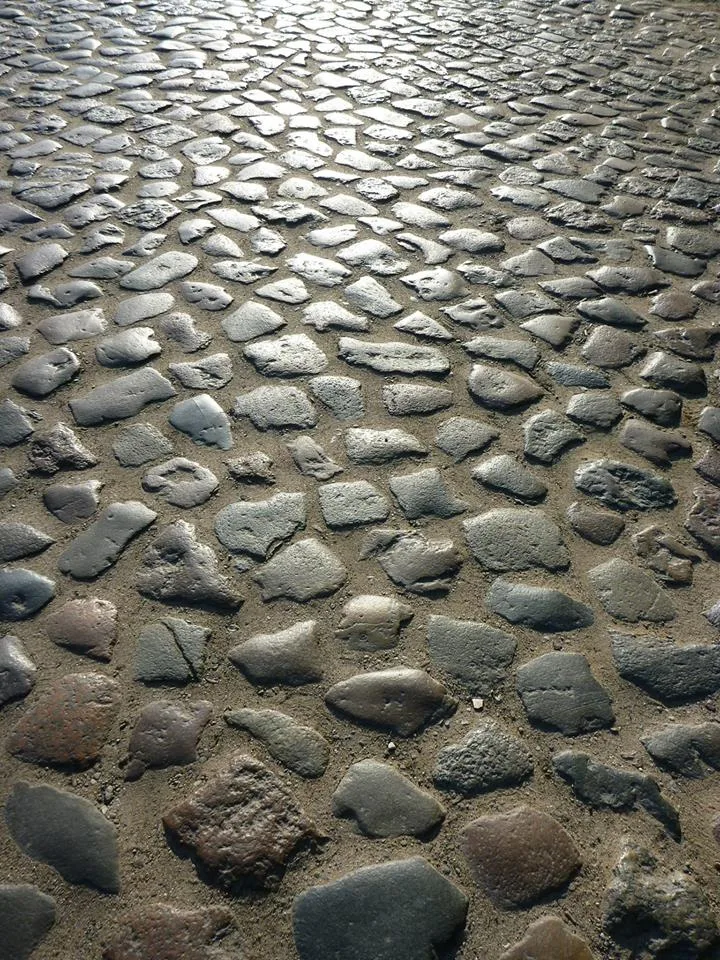
Until the end of the 18th century, anyone planning to travel from Berlin to Königsberg, the royal capital and metropolis of Prussia, had to bear in mind that transport between the two cities suffered from unreliability, irregularity and slowness. The blame lay with the terrible roads with their deep ruts, which in wet weather turned into a dreadful morass, almost a swamp. Broken axles, overturned carriages and injured passengers were commonplace. Sometimes even the heavy draught horses used on the East Prussian route could not stand the strain and died.
But the rulers of Brandenburg and Prussia had no interest in improving the roads. The deplorable state of the highways prevented invaders, who frequently entered Prussia from various directions, from marching to their goal; they could advance only at a snail's pace. This lesson, learned from the wars of the past, persuaded Frederick the Great — who in every other respect was enthusiastic about innovation — to remain indifferent to the state of Prussia's roads. And his grandfather, Frederick I, even said he would be glad if more of the carriages travelling the empire's bad roads got stuck on them. In his view this would increase the number of guests at the coaching inns, which meant additional taxes flowing into the state treasury.
The local authorities likewise did everything they could to avoid spending money on roads, for at that time building a hard-surfaced highway cost 40,000 thalers per mile (7.5 km).
The modernisation of the roads began only under Frederick William II. At the end of the 18th century the demands placed on transport and communications infrastructure grew. In particular, it finally became necessary to increase considerably the speed of the mail coaches that had been rolling across Prussia since 1670. They also carried passengers. So from 1788 onwards, on the initiative of the Prussian Minister of State Alexander Friedrich Georg Graf von der Schulenburg-Blumberg, the so-called Kunststrassen (German: Kunststraßen) began to be built — a term that can be rendered as "super-roads"1.
The first led from Magdeburg to Halle and on to the state border with Saxony, the second from Berlin to Potsdam. By the beginning of the War of the First Coalition against France in 1792, 212 kilometres of "super-roads" had been built. The construction programme was then suspended because of the military conflicts that broke out one after another.
"Super-roads" for safe travel
Their construction could only be resumed in 1814, as part of the Stein-Hardenberg reforms, which led to the rapid modernisation of Prussia. In accordance with the Instruction on the Construction and Maintenance of "Super-roads", they were laid between Berlin and Magdeburg and between Berlin and Königsberg. The latter, which received the name "Reichsstrasse No. 1", was opened to traffic in 1828.
From 1815 to 1845 the Prussian state invested a total of 35 million thalers in road building. This made travelling around the kingdom considerably easier, all the more so since berlines — four-seater carriages invented by the Brandenburg quartermaster general Philipp de Chiese — were a very suitable vehicle for the newly created super-highways.
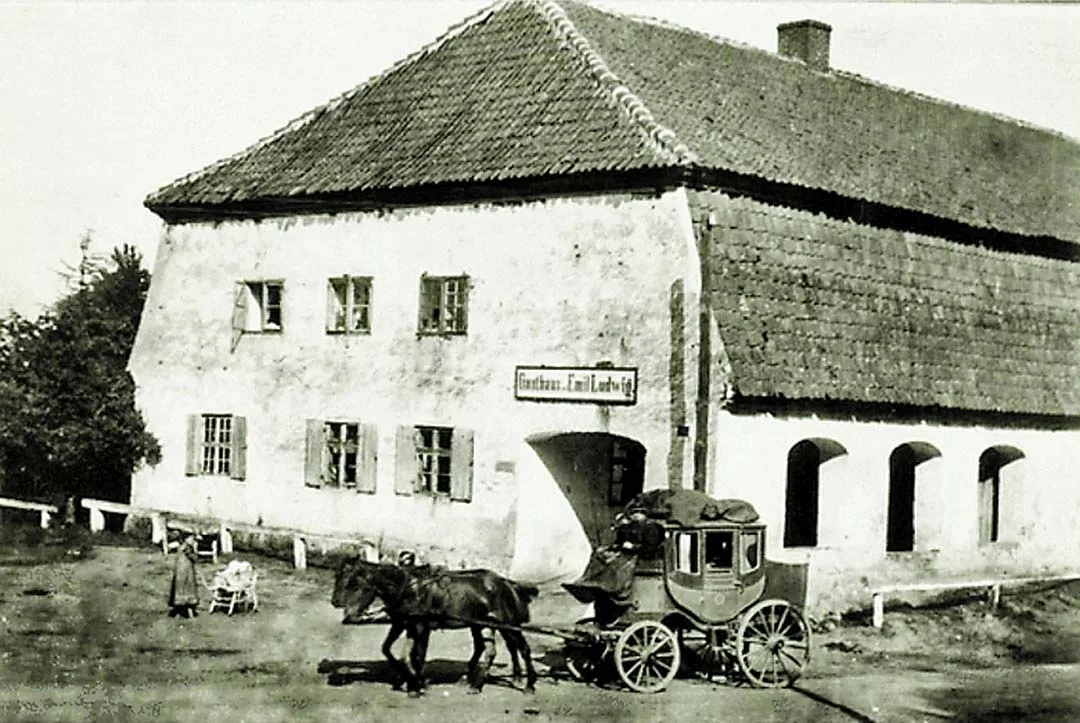
The berline, a comfortable carriage on suspension springs, quickly became extremely popular in Prussia. Berlines were used by the royal post, which carried passengers at the same time, and ran regularly on routes that included the 565-kilometre Berlin – Königsberg route.
The journey from one capital to the other took ten to eleven days. Nor were these journeys cheap: the relatively short trip from Berlin to Magdeburg cost four thalers, almost a village schoolteacher's entire monthly wage.
Further improvements came with the appearance in 1821 of the "Geschwind" mail coach2 (German: Geschwind-Postkutsche), or simply the diligence. This vehicle could carry up to 15 passengers and travelled at about ten kilometres an hour. So this diligence went twice as fast as the berline and five times as fast as the rough carts used before 1700. Distances of up to 100 kilometres could now be covered in a single day, so that the "Journal for Travel and Travellers" wrote enthusiastically: "One does not drive — one almost flies forward!" Added to this were a punctuality never seen before and the possibility of taking up to two hundredweight of luggage.
A few decades later, however, the "Geschwind" coach faced competition from the railways. From 12 October 1857 a passenger train began running between Berlin and Königsberg, covering the distance between the two cities in less than seven hours. It is no surprise, therefore, that this innovation marked the end of the "romantic era" of travel in Prussia. The age of coal and steam had begun.
Link to the page of the original text on PAZ.de
Von unbefestigten Pisten zur „Reichsstraße Nr. 1“
________________________________
The ideal road at the turn of the 18th and 19th centuries: the chaussée and the "super-highway"
Anyone at the turn of the 18th and 19th centuries who spoke of a good road meant a "chaussée" or a "super-road". Both names referred to the same type of road. In French sources "chaussée" and "grand route" were used as synonyms, with "grand route" merely denoting the structural features of the chaussée. Chaussée and super-road were the technical road-building terms of their time. In the 18th century the name "chaussée" was given to roads built on a principle developed in France in the age of Absolutism. The term "super-road" (Kunststrasse) appeared only in the 19th century. Initially the know-how, that is, the secret of construction, came from France, while in the 19th century German textbooks and training centres became increasingly important. According to the "Instruction on the Construction and Maintenance of Main and Suburban Roads" by Heinrich Freiherr von Pechmann of 1822, which became an important reference work in Europe, a "super-road" is a stable and durable road built according to definite rules derived from theory and experience.
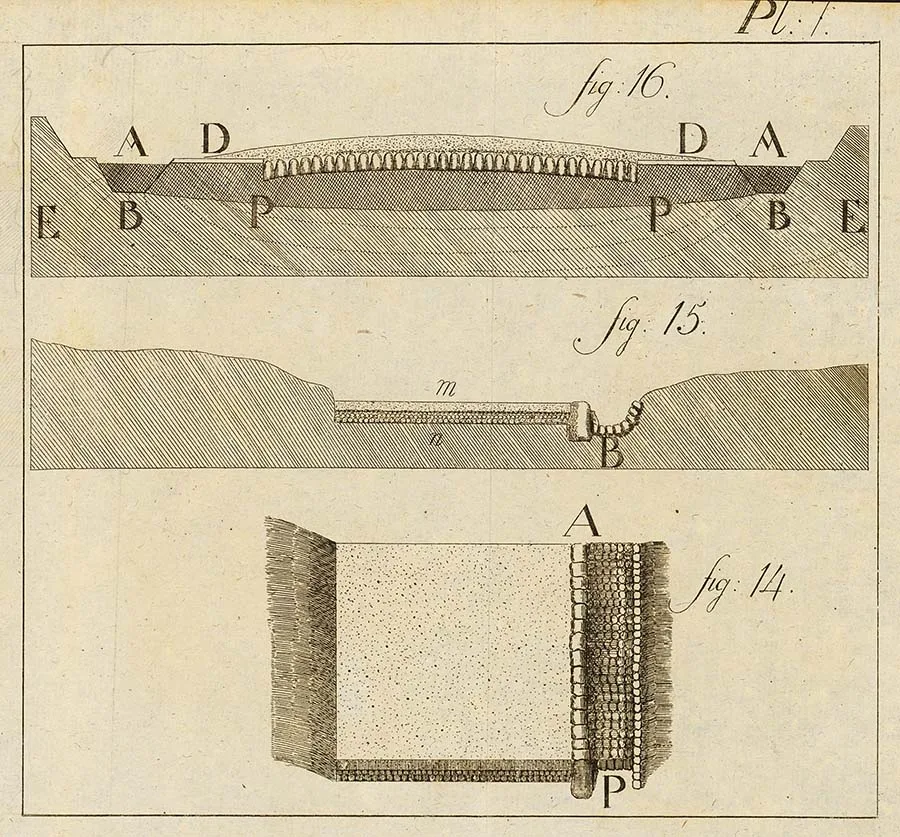
Cross-section of a "super-highway": the stone bed, the arched profile and the drains along the roadway.
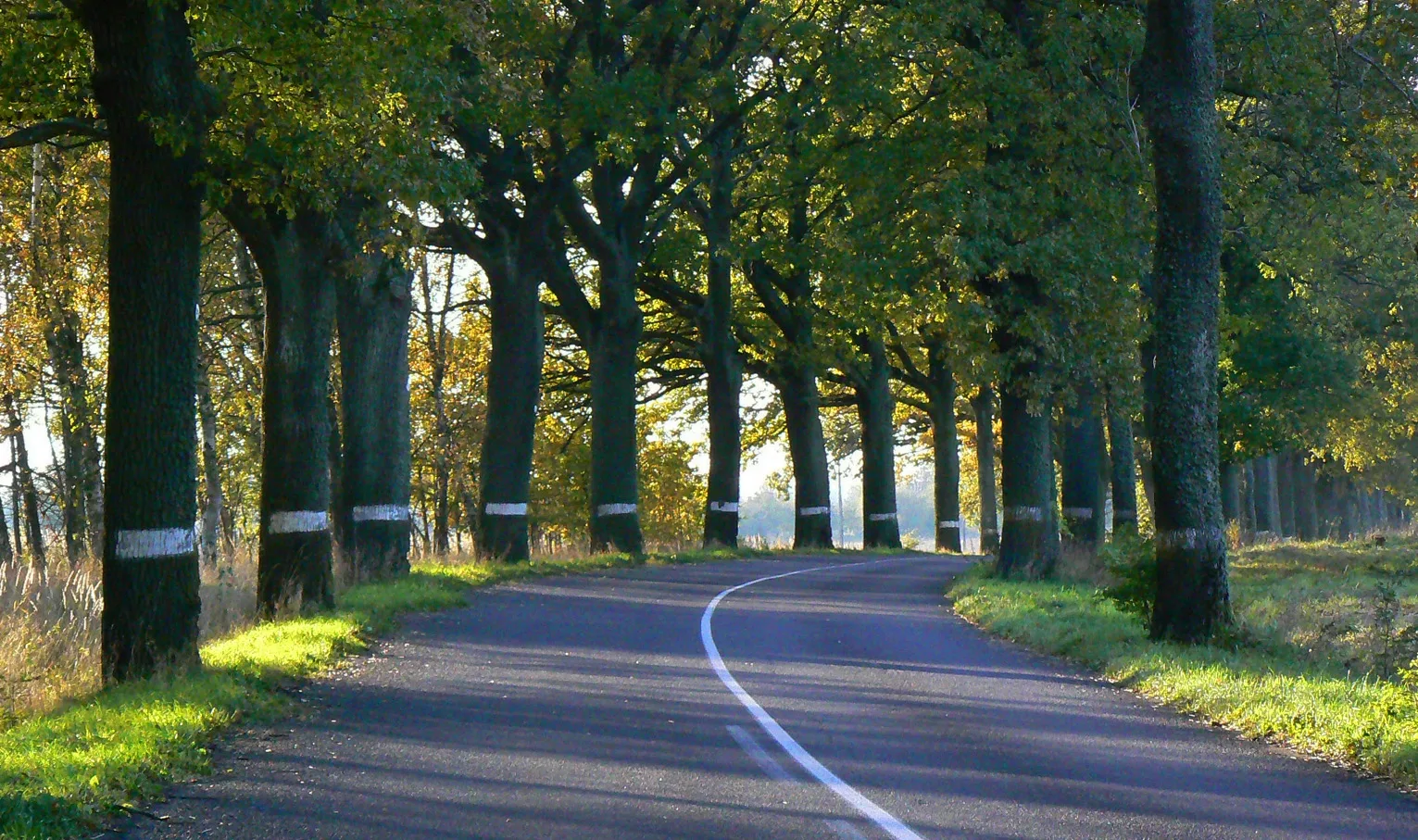
Chaussées and super-highways replaced the old winding country tracks.
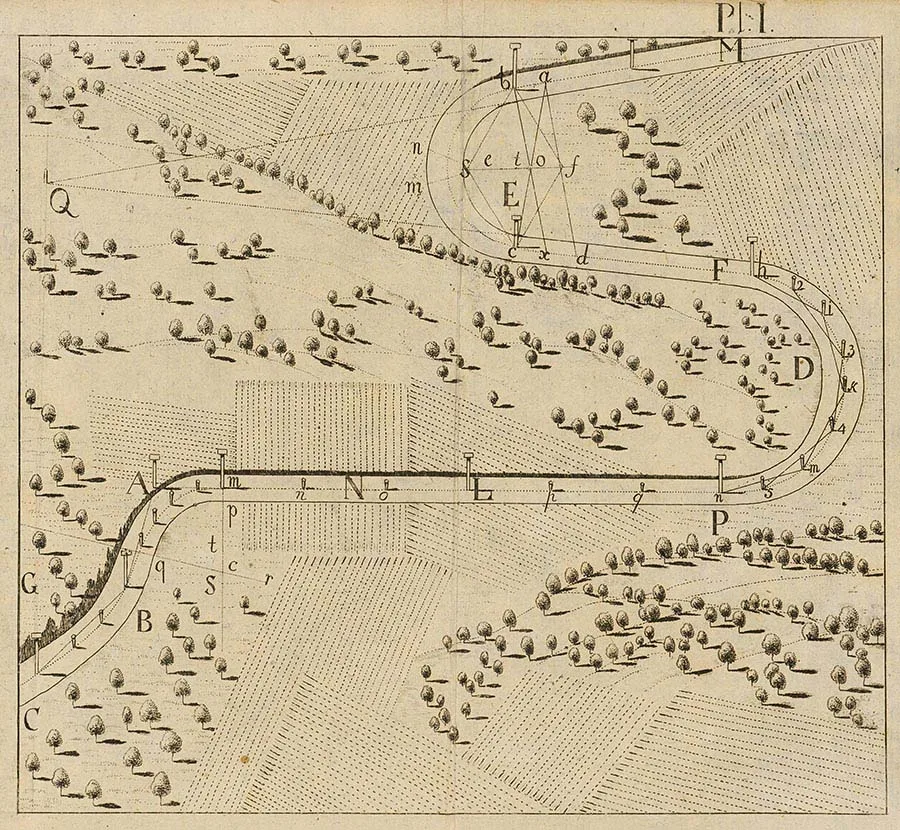
Maintaining even gradients, which did away with the need to harness extra horses, was an important task in building the "super-highways" of the 18th–19th centuries.
Their design was based on the principles of the straightest possible route, even road gradients that required no extra draught horses to be harnessed, drainage of water from the carriageway, and a compact, level road surface that absorbed the pressure of the wheels so that the carriage would not overturn. The condition of the roads depended on a wide variety of factors: the quality of the surfacing used and its maintenance, and also, to a large extent, the technical and administrative-organisational knowledge of the engineers, the organisation of construction and repair work, the intensity of traffic, the weight of the vehicles and the season.
One of the most important innovations was that modern chaussées, the super-roads, had to be planned and built as a single whole, according to uniform criteria, methods and solutions. They thus appear not merely as a previously unknown engineering structure but as a principle of state, a new spatial order characterised by great distances on the one hand and a strict hierarchy of all connections on the other.
Link to the page of the original text on Strassenenquete.ch
Das Ideal zeitgemässer Strassen: Chausseen und Kunststrassen
LEGENDS OF PRUSSIA in the blog of Tatyana Kolivay.
TRANSLATOR'S NOTES
1. Kunststraßen can also be rendered as "artful", "masterly" or "clever" roads.
2. "Geschwind" (German: geschwind) means fast, quick, nimble.
Translated from Russian with the help of AI (Claude, Anthropic), October 2026.