After the end of the First World War in 1918, inflation set in — the money allocated for construction lost its value, and only on 2 April 1925 did building resume. The contract was for 157,975 marks, excluding the cost of the altar, pulpit, organ and bells, but enlarging the confirmation hall and raising the height of the whole structure by a metre increased the cost to 187,000 marks.
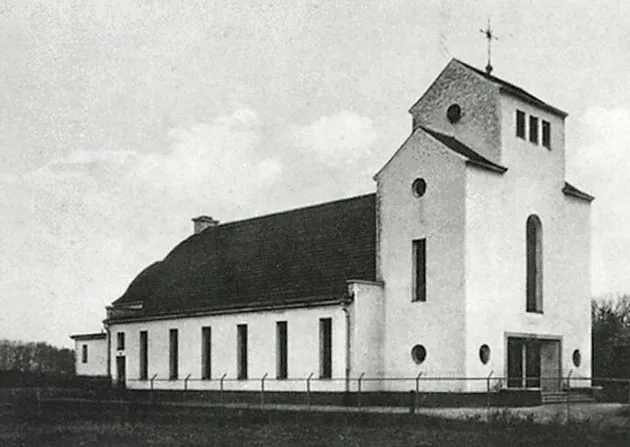
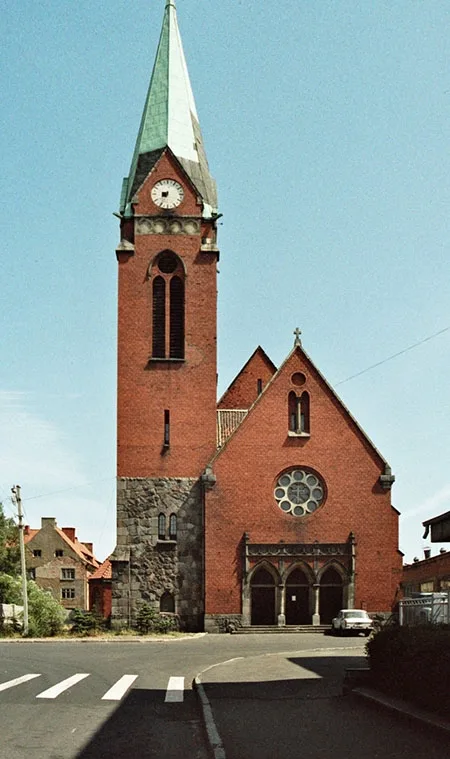
The church was consecrated on 12 December 1926. It was a Gothic-style building.
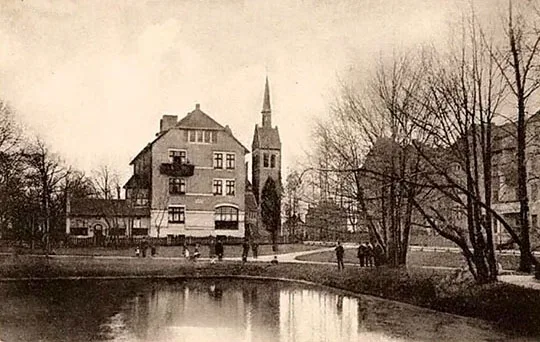
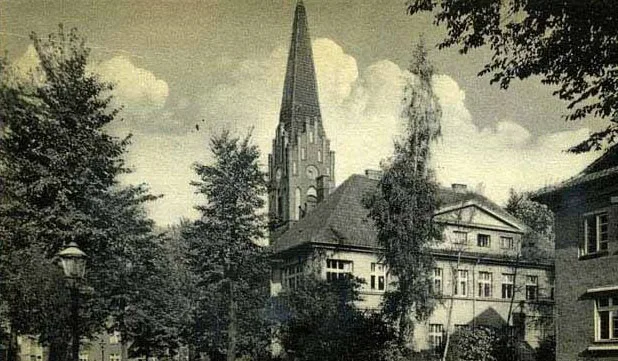
In the north-west corner stood a square four-storey tower with a clock, provided free of charge by the city magistrate in the person of its Lord Mayor. Below the clock ran a carved sandstone frieze. The porch was on the west and had a white sandstone portal whose three doors symbolised the Holy Trinity. All the windows of the church were pointed. On the west was the altar section, to which the confirmation hall was attached. The foundations rest on granite boulders.
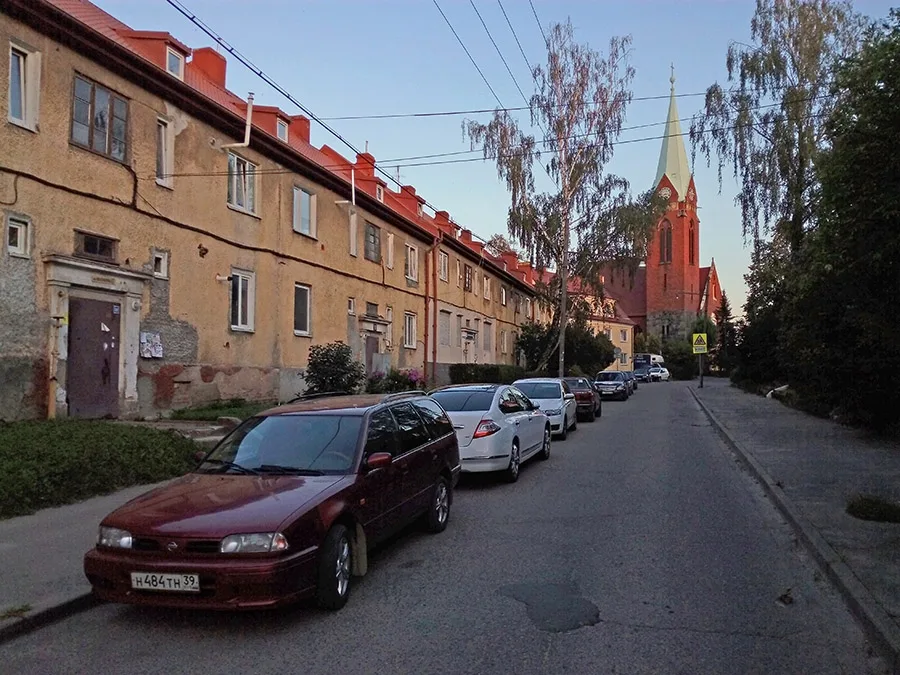
The church was damaged by artillery fire in 1945, but not badly. Immediately after the war, services were held in it for the remaining German population.
Then the church furnishings, the altar and the wooden pews were destroyed, and the piano installed by the Germans was taken away. A spare parts store for a military garage was set up in the church. Later the church was used as a warehouse. In 1990 it was decided to hand the church over to believers (Orthodox). After renovation in 1990–91 and consecration it has been used as the Orthodox Church of the Intercession of the Most Holy Theotokos.
Translated from Russian with the help of AI (Claude, Anthropic), October 2026.