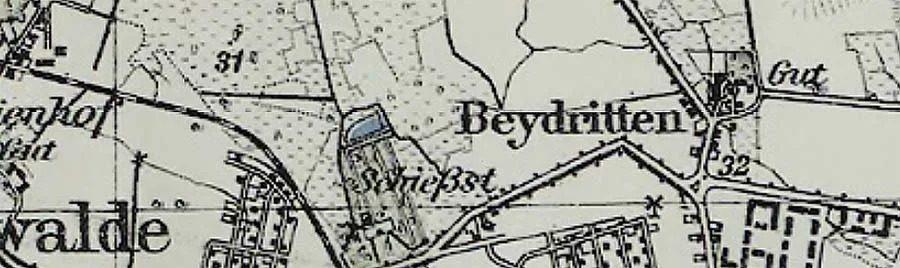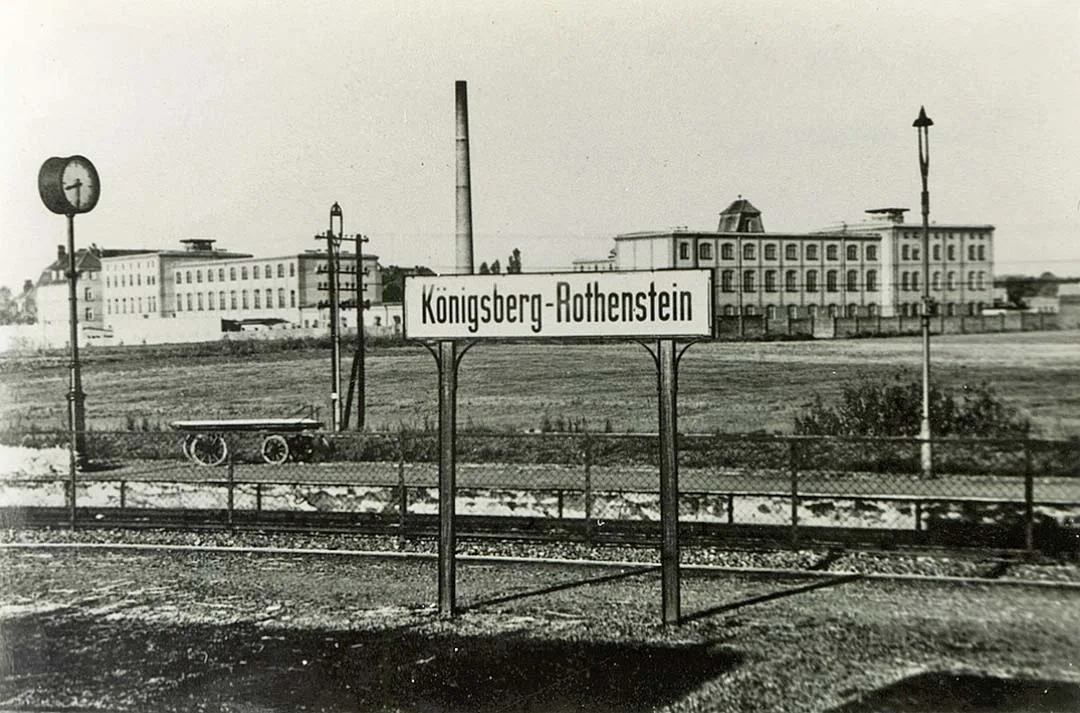
Rothenstein began as a brickworks belonging to the rural community of Quednau (Kaliningrad, the Severnaya Gora settlement) in the Landkreis Königsberg (merged into the Landkreis Samland in 1939). The settlement belonged to the parish of Quednau. In 1871 Rothenstein consisted of four dwelling houses. On 30.04.1874, as part of the rural community of Quednau, the village of Rothenstein was included in the newly established Amtsbezirk of Quednau. The manufacturer Dr Mattern of Rothenstein served as head of the Amtsbezirk in 1875–77. In 1885 traffic opened on the Königsberg – Cranz (Zelenogradsk) railway, on which a station was built in Rothenstein.
At the beginning of the 20th century there was an ammunition factory in Rothenstein. On 04.08.1916 an explosion occurred at the factory, killing 44 people and injuring another 95.
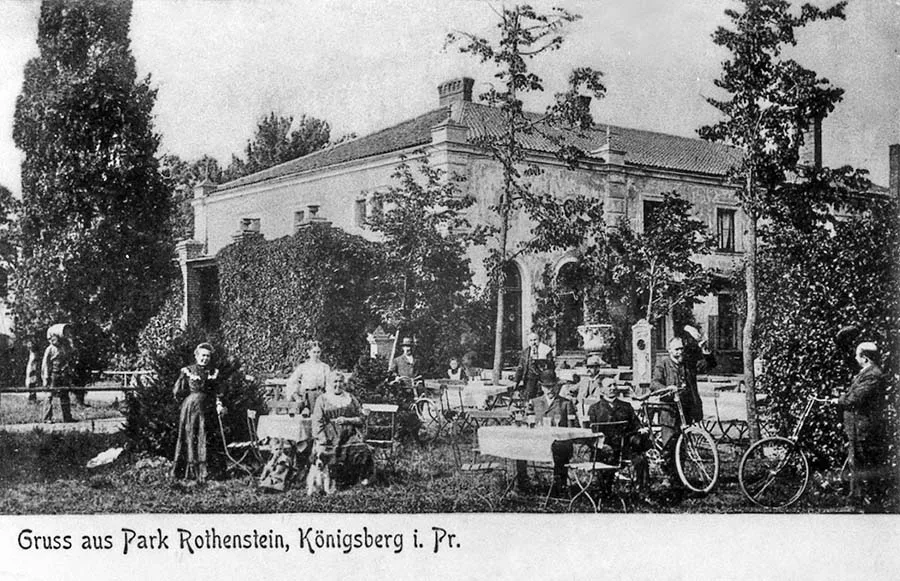
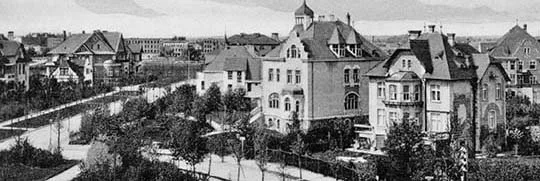
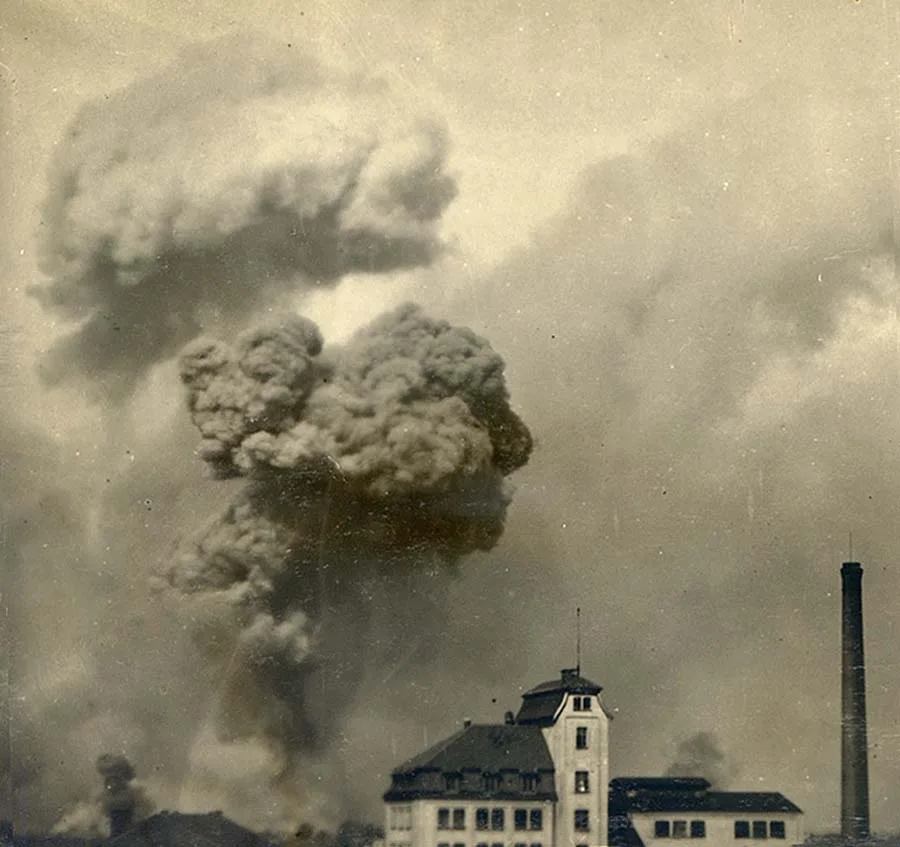
Another powerful explosion occurred at the factory on 10.04.1920 (pictured below). This time 205 people were killed and 283 injured. The explosion caused considerable damage to buildings in the city. In particular, the dome of the crematorium collapsed. After this, hazardous production was moved outside the city limits.
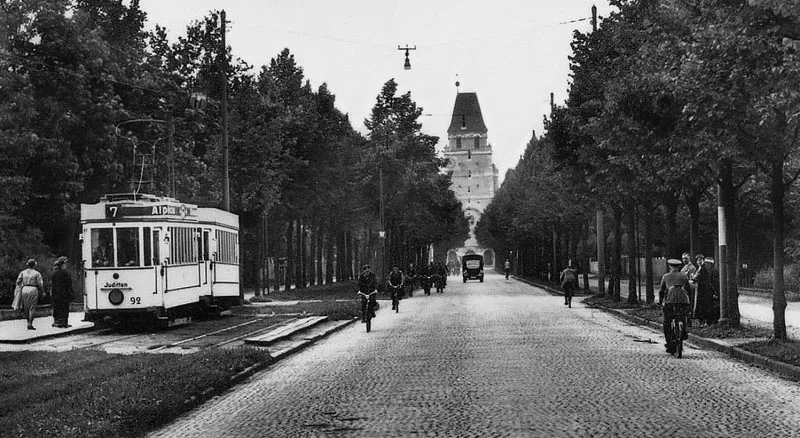
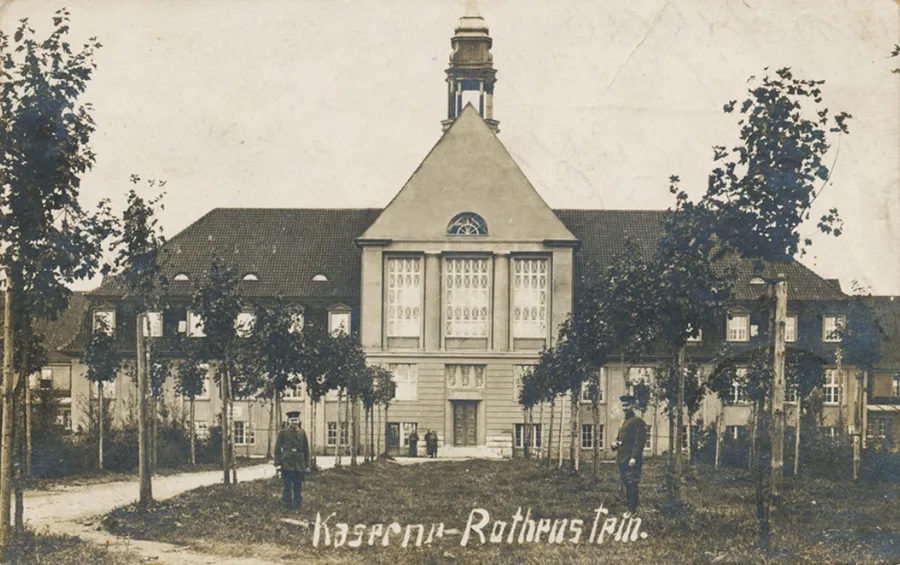
On 16.06.1927, together with the part of the Quednau community lying inside the ring road, Rothenstein was incorporated into the municipality of Königsberg. In the pre-war and war years three factories operated in Rothenstein: the Victoria iron foundry (Victoria Eisengiesserei), a metalworking and engineering plant, and a weapons repair plant. Rothenstein was also home to the garrison barracks of the 1st Regiment.
After the storming of Königsberg, an NKVD filtration camp was set up in Rothenstein; thousands of people passed through it, among them the writer Michael Wieck (1928–2021), author of the autobiographical novel "The Decline of Königsberg".
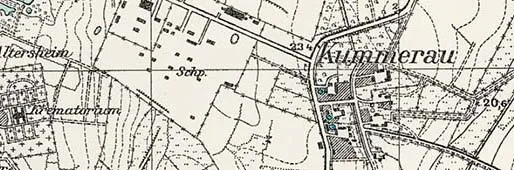
On 29.07.1948, by decision of the Kaliningrad City Executive Committee, the neighbouring city district of Kummerau was renamed Orudiyny Gorodok ("Gun Town"), which was part of the Leningradsky district of Kaliningrad. Rothenstein, for its part, was named Gorodok Metallistov ("Metalworkers' Town"). In fact, Orudiyny Gorodok took in a somewhat larger area than Kummerau had occupied; in particular, the eastern part of Rothenstein was included in it. By a new decision of 18.08.1949, Kummerau (Orudiyny Gorodok) was renamed once more, as the settlement of Aleksandro-Nevskoye, still in the same Leningradsky district. In addition, the Rothenstein station was renamed Aleksandro-Nevskoye station.
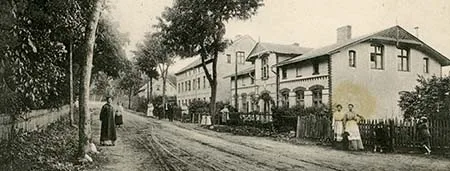
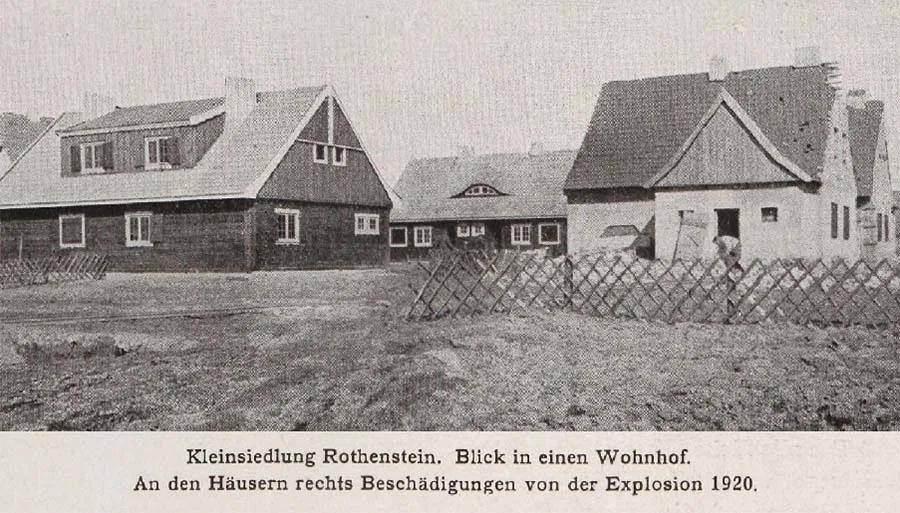 Houses in Rothenstein (right) damaged by the 1920 explosion (see above).
In October 1950 the part of the Aleksandro-Nevskoye settlement east of Orudiynaya and Starosapyornaya streets was separated off as an independent settlement of Aleksandro-Nevskoye in the Guryevsk district. The western part of the settlement remained within the city limits. Thus two settlements of the same name came to exist in immediate proximity to each other.
For a long time the settlement of Nevskoye in the Leningradsky district was a typical urban outskirt of private and small multi-family houses with gardens and vegetable plots. There were also a few apartment buildings of up to three storeys. Residents often kept farm animals and poultry in their household plots. There was practically no difference in way of life between the inhabitants of the urban settlement of Nevskoye and those of its rural twin. After 2010 intensive construction of detached, terraced and small multi-family houses began here, mainly on vacant lots, but also through the demolition of pre-war housing and "infill development". In the southern part several apartment buildings of up to ten storeys were built.
As of 2022, the settlement of Nevskoye in the Leningradsky district comprises the whole of Buketnaya, Vasnetsova, Vesennyaya, Divnaya, Zakatnaya, Krasnykh Zor, Pirogova, Staroorudiynaya, Surikova, Schastlivaya and Shakhmatnaya streets, part of Artilleriyskaya, Krasnokamennaya, Orlovskaya, Orudiynaya, Pekhotnaya and Starosapyornaya streets, and Starokamenny and Surikova lanes. The settlement has a kindergarten, a private medical facility, a hotel and shops. The name of the settlement, if it appears on city plans and maps at all, is most often shown with errors, owing to confusion with the settlement of Nevskoye in the Guryevsk district.
Photos on this page: Bildarchiv Ostpreußen / bildarchiv-ostpreussen.de
Translated from Russian with the help of AI (Claude, Anthropic), October 2026.