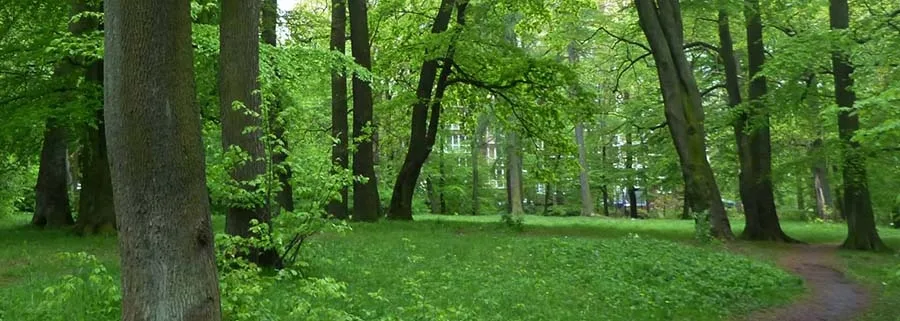
In bright, sunny radiance an immense grove opens up…
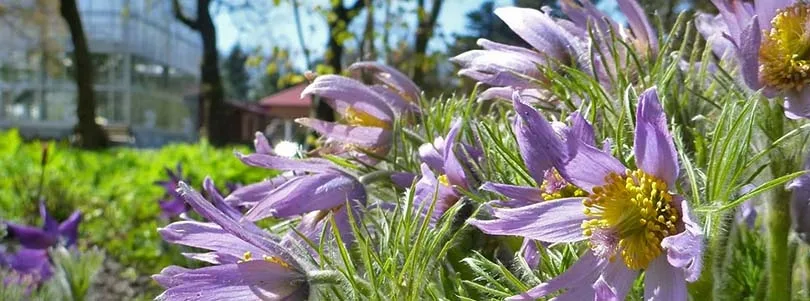
Fiery hyacinths, tulips and roses raise their lovely heads…
Dark bushes and tall trees rustle and whisper…
Brooks and springs splash and sparkle…
in a jubilant chorus bright-coloured little birds twitter and sing…
a merry, joyful, jubilant clamour in the air, in the waters, on the earth…
E. T. A. Hoffmann
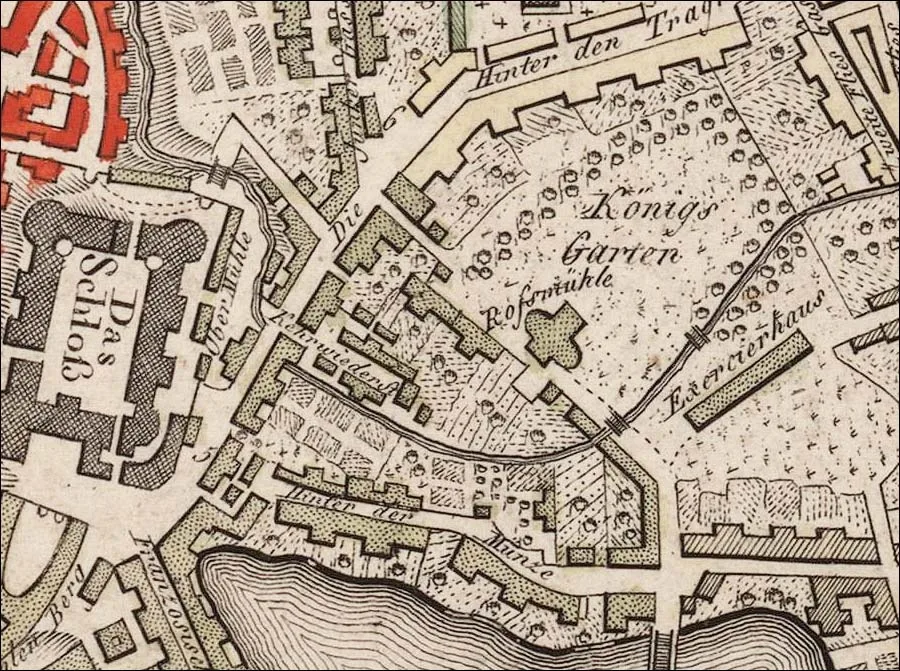
The first mention of the Ducal Garden (later called the Royal Garden) dates from 1509, when Grand Master Frederick of Saxony (Friedrich von Sachsen, reigned 1498–1510) ordered that "a garden be fenced in". Since the Castle was surrounded by moats, the garden lay somewhat further north, on the western shore of the Castle Pond, and covered quite a large area – from the pond almost to today's Leninsky Prospekt, while to the north its boundary ran a little beyond today's Professora Sevastyanova Street. The land was free of buildings; around the Castle Pond the terrain was marshy, with damp meadows, small pools and streams. The fenced Ducal Garden was no exception in this respect. Twenty years later, under the last Grand Master of the Teutonic Order and first Duke in Prussia, Albert of Brandenburg (reigned 1511–1568), the garden was drained by means of a pond dug on its grounds. Around 1560 Duke Albert ordered a wooden gallery-bridge to be built from the castle across the moats into the garden; it led from the eastern end of the castle's north wing across the Crooked Moats, which surrounded the eastern front of the Castle, to the Ballhausen (Ballhausen – ball house), which stood on the site of the later Münzplatz (Mint Square). Adjoining the garden was the so-called Hetzgarten (Hetzgarten), a hunting garden where the duke hunted close to home.
What the Ducal Garden was like in its layout, structure and range of plant species during the first sixty years of its existence is unclear; at any rate, no description of these features exists in the known sources.
Duke Albert left behind his fifteen-year-old son Albert Frederick (1553–1618), and by the duke's will four government councillors were to act as guardians of the under-age sovereign.
After the first years of his reign the young duke, who had shown great promise, fell – whether as a result of court intrigues or by the will of his own fate – into a deep melancholy that turned into an incurable mental illness, and the councillor-guardians rejected any attempt to treat the young sovereign. Duke Albert Frederick did, however, marry and have children, but he lived out his days at Fischhausen Castle (now the town of Primorsk) under constant supervision, and was thus kept away from governing the duchy. It is therefore entirely understandable that for some time after the death of Duke Albert, the first Duke in Prussia, the court garden was thoroughly neglected: the court was preoccupied with intrigues over the succession.
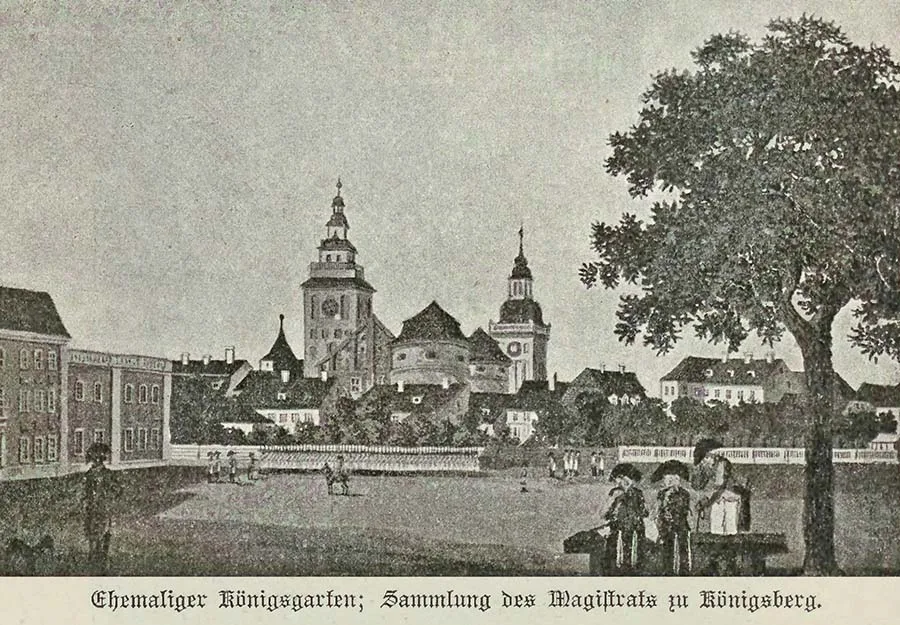
The garden's stock of foreign plants was small at that time, and it kept shrinking because guests behaved without restraint at feasts, breaking young trees and trampling the flower beds.
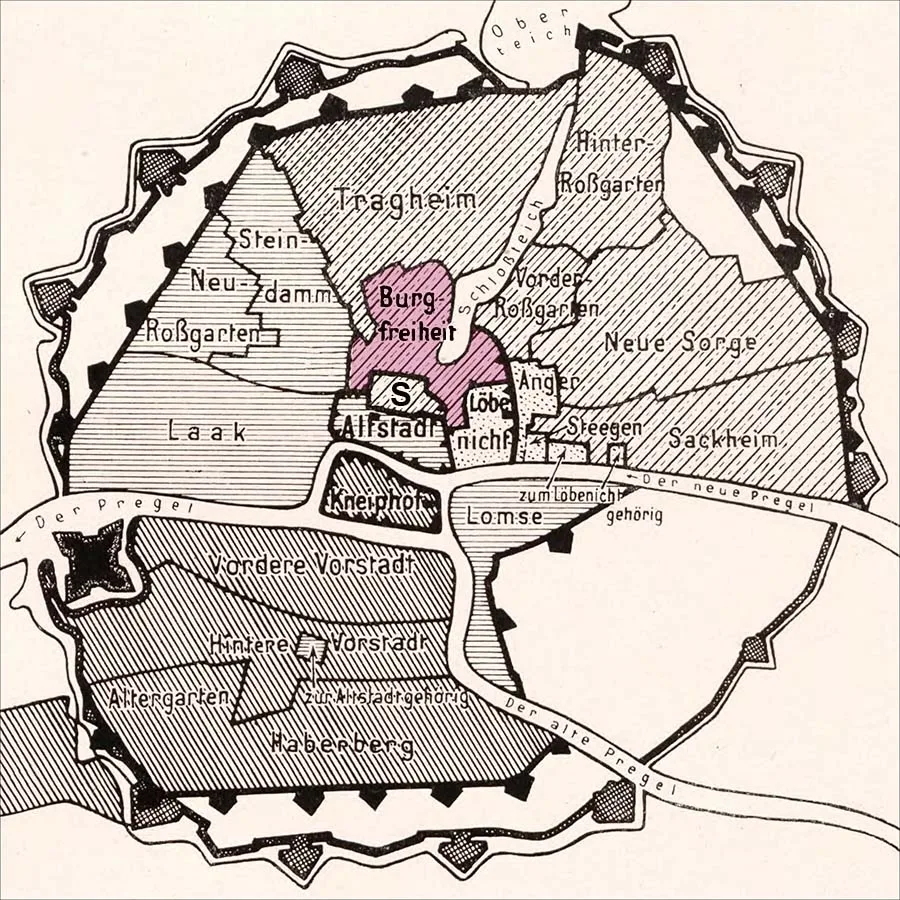 The Ducal, and later the Royal, Garden lay within the Castle Liberty (Burgfreiheit).
At any rate, these were precisely the circumstances complained of in 1593 by the gardener responsible for the garden and the physic garden, who did not last long in the post. That not only the garden but also the manners of the aristocracy had run wild is shown by the fact that in 1610 the gardener's duties included preventing people from firing guns in the garden.
At the same time, however, there was evidently a long period when the sick duke's first guardian, Margrave George Frederick of Brandenburg-Ansbach (Georg Friedrich von Brandenburg-Ansbach, reigned 1577–1603), paid great attention to the garden and laid it out with interest, so that it soon became well known and was evidently renewed in the best traditions of the garden art of the time. The sick duke's younger daughter Eleanor, who had grown up at the court in Königsberg and knew the features of the Castle Garden well, after her wedding to the sixty-year-old Elector Joachim Frederick of Brandenburg – her father's guardian from 1603 – brought with her from her East Prussian homeland new ideas for the Monbijou garden then being laid out in Berlin and gave her gardener instructions on how to arrange it (1604).
The guardian-regents – from 1603 Elector Joachim Frederick of Brandenburg, and then from 1609 to 1619 Elector John Sigismund, husband of Albert Frederick's eldest daughter Anna – did not neglect the garden, but in the very first year of Joachim Frederick's rule a devastating fire broke out during a firework display; it destroyed the "Ball House" built in the garden for entertainment and also did considerable damage to the whole garden.
During the rule of the regent Joachim Frederick and of Elector George William, who reigned after him (from 1619 to 1640), and despite the fact that this was a very unhappy time for Königsberg – the terrible plague epidemic of 1620–21 with its 15,000 victims; the dreadful flood at Easter 1621, never again repeated with such force – everything lost in the fire was nevertheless restored in the Ducal Garden; what is more, the garden was enlarged and enriched with plants from overseas, ponds stocked with fish, fountains, clipped hedges and niches of box and beech. The gardeners changed constantly. All these changes were the more remarkable because the residence of the Prussian electors had been moved to Berlin and they visited Königsberg Castle only from time to time. Nevertheless, in 1638, towards the end of the reign of Duke George William, there was a period in the garden's history when it was leased out because the court wanted to earn an income from it.
The large and small physic gardens and the Pleasure Garden (Lustgarten) were leased to the court gardener for 600 thalers a year. In return the gardener was obliged to put the garden in order, plant 60 trees every year and supply the court with flowers and fruit for payment. The elector and his household retained the right to walk in the garden.
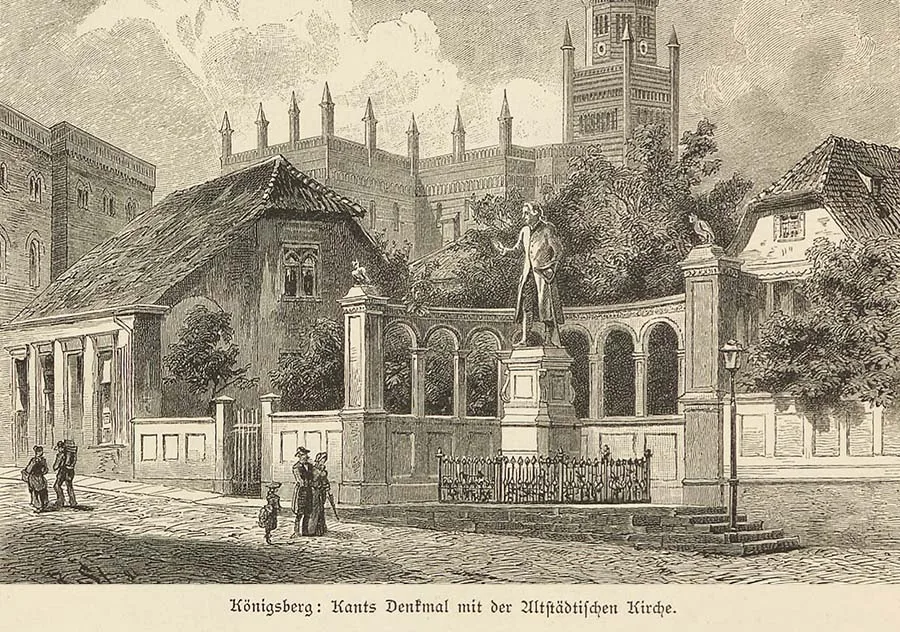 Rauch's monument to Kant originally stood in a semi-rotunda.
It is known that the Great Elector Frederick William (reigned 1640–1688) instructed the next gardener, Michael Hanff, who had previously laid out a pleasure garden for him in Berlin, to adorn the Castle Garden with many rare plants.
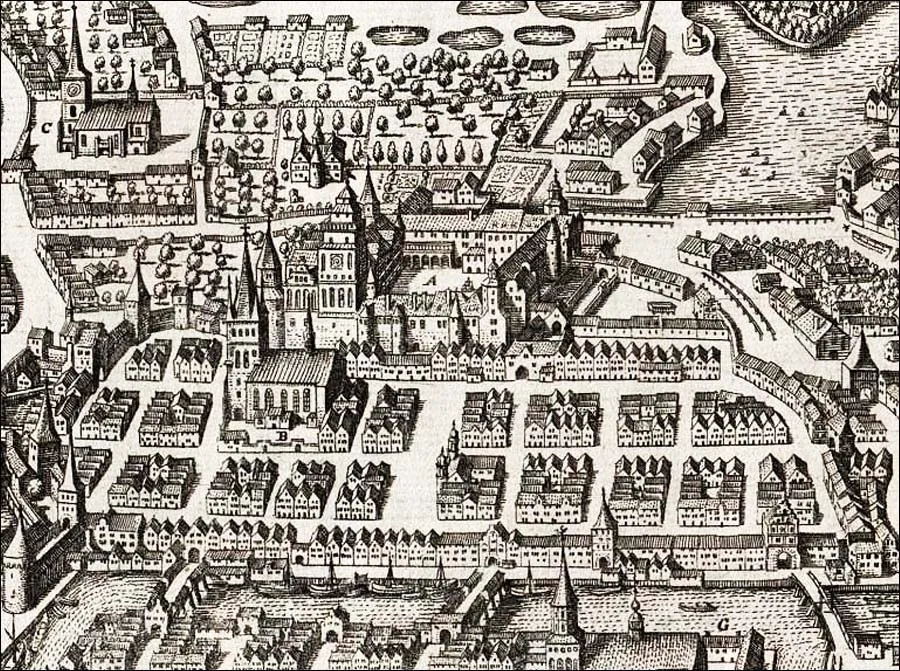 The Castle Liberty (top, Burgfreiheit) on a map of 1613.
Later, from 1679, Otto Dietrich Michelmann became court gardener in Königsberg.
In 1639–1642 the Garden of Amusements and Pleasures was replanned and enlarged, and buildings for the leisure of court society appeared around it: a riding hall, a racecourse, a bathhouse and a ball house – rebuilt after the fire before the other buildings, in 1623–1627 – where the dances and balls were first organised by Martin Hofmann and, from 1640, by a Frenchman named Collier. That same year, 1640, however, the Great Elector sharply cut the expenditure on the court and the garden, dismissing many servants, because he rarely came to Königsberg.
A description of the garden in the mid-17th century has come down to us thanks to the book "Peregrinator" written by the physician Caspar Stein (this source is cited by Ursula Gräfin zu Dohna in her book "Gärten und Parke in Ostpreußen", 1993).
Describing the Ducal Garden in the mid-17th century (in 1644), Caspar Stein writes that "a high wooden walkway led from the castle to the pleasure garden" (the covered walkway began behind a street that ran at that time roughly where the part of Shevchenko Street that turns into Leninsky Prospekt runs today), and then "delightful amusements, broad lawns, fish ponds, fountains, a bathhouse, attractive shady avenues, a ground for horse races, a walled enclosure for hunting bears, boars and other beasts, menagerie cages in which the animals intended for the hunt were kept locked up until the time came, semicircular clipped niches with benches, clipped beech hedges and figures of clipped beech, a multitude of native and foreign plants – trees and herbs, summer arbours, little houses for games and amusements, a meadow for exercising horses and a remarkable huge, thick linden (50 feet round), already old at that time, turned into a five-tiered tower, from whose wooden galleries birds were shot and from which there was a view over the whole garden, the swan pond and the castle of the Dukes of Prussia". Half a century later Chancellor von Creytzen gave a dinner for Elector Frederick III (reigned 1688–1713) and his retinue on the highest of the five wooden galleries built in this tree for shooting during the hunt and for feasting in unusual surroundings. The lowest gallery rested on 12 wooden supporting columns, and the whole linden with this complex structure resembled a living column.
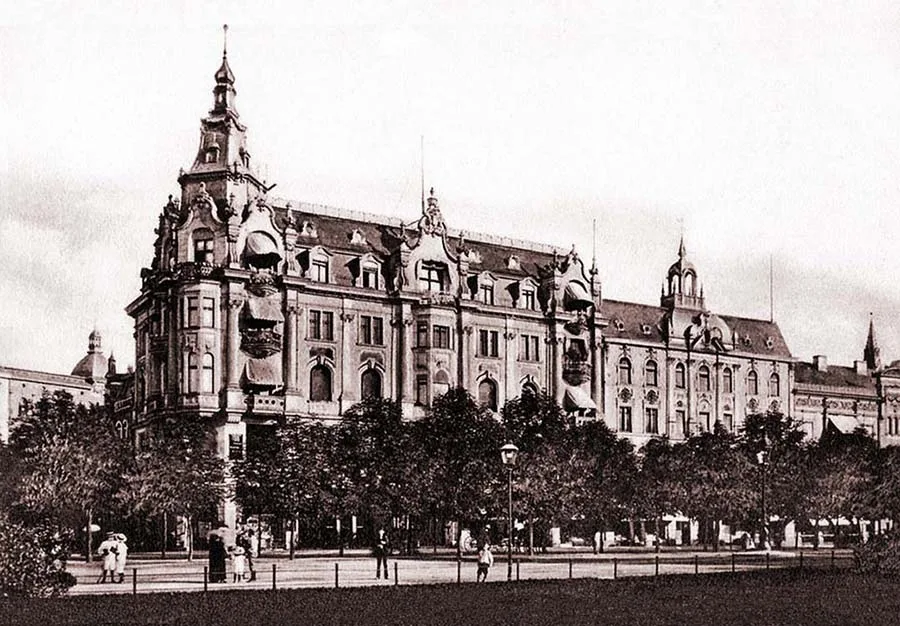 The bookshop and office of the Gräfe und Unzer publishing house on Parade Square.
In 1697 Elector Frederick III, who soon afterwards became the first King in Prussia, Frederick I, came to Königsberg on the occasion of a visit to the city by the Russian Tsar Peter I, who wished to remain incognito to everyone but, because of his great height and unusual appearance, was recognised by almost every inhabitant of Königsberg.
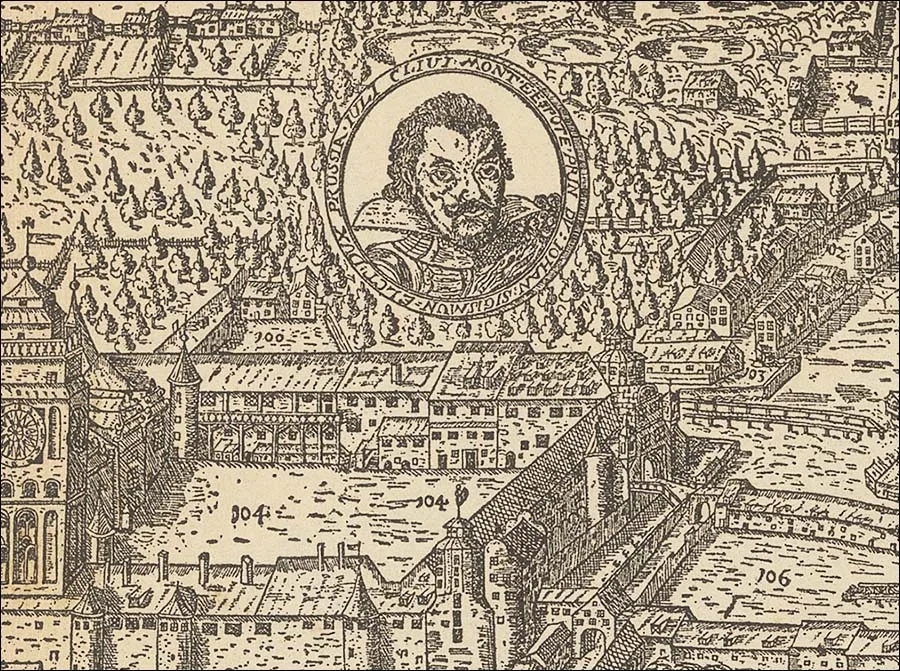 On Bering's plan of 1613 the future Ducal Garden is hidden behind the portrait of its owner.
In the end, on 21 August, a dinner was given by the great linden in the Ducal Garden in honour of the departure of the eminent Russian guest, who had spent four weeks in festivities and hunting in the Ducal Garden, and who later visited Königsberg three more times – in 1711, 1712 and 1713.
Besides the pleasure section, the Ducal Garden – in keeping with the European Baroque tradition so characteristic of the 17th century – had a large and a small garden of culinary and medicinal herbs.
Judging by the description of the highly learned physician and apothecary Stein, the following plants grew and flowered in the Royal Garden in 1644: "narrow-leaved Roman wormwood, Roman sorrel, St Christopher's herb or aethiopis, Venetian rose poplar, purple rosemary, dwarf almond tree, upright tragacanth or whorl-grass with triangular pods, garden orache, bear's ears, lady's balsam, moth herb, Peruvian spinach, mountain mint, Syrian thistle, common dandelion, globe thistle, tubular Egyptian cinnamon shrub, Spanish chervil, Roman camomiles, bee bread, lentil plant, blue-flowering bindweed, early crocus or saffron flower, Turkish blue cornflower, true Italian rush or cyperus grass, blue thorn apple, little Italian sun flowers, flowers of Tunis, Mexican wonder flowers – sunflowers, white and black Syrian tobacco, Indian daphne, little Indian figs, adonis flowers, cup grass, Indian millet, Spanish broom, English geranium, sweet root, variegated ornamental grasses, sweet clover – foreign manna, evening-blooming night violet, Venetian tobacco, hawkweed, Ethiopian measles herb, Spanish star hyacinths, white and yellow jasmine, blue and multicoloured Florentine and Persian irises, Spanish hare's-foot clover, blue and white lavender, dwarf laurel tree, vetchling, Spanish and American tobacco, large- and small-flowered 'snowball' plants, asphodels, blue lupins, fiery 'burning love' carnations, …apricot, peach and pomegranate trees, lemons – bitter oranges, scarlet Ethiopian mallows, Spanish myrrh, little myrtle trees, narcissi of various colours, black garden cumin from Damascus, white-flowered marjoram 'milk star', Indian pepper, tomatoes, alpine roses – rhododendrons, roses and tulips of all colours, Spanish scabious, Italian and Arabian lilacs, purple violets, grapevines and much, much more…”
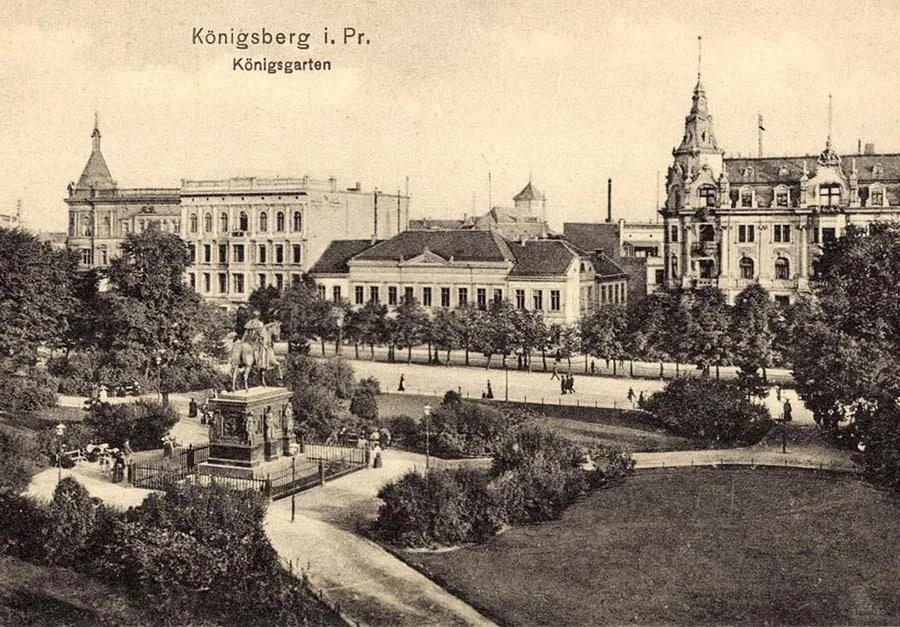 Parade Square in Königsberg was long called the Royal Garden out of habit.
The severe winter of 1708–09, when the Castle Pond froze to the bottom in January, had a devastating effect on the rich diversity of species in the Royal Garden.
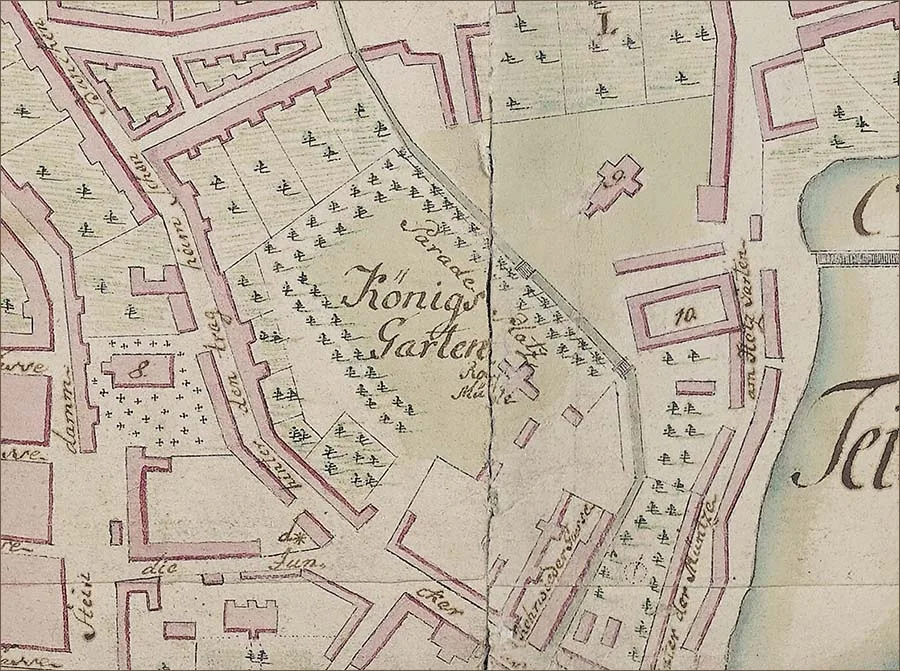 The Royal Garden and the Garrison Church on a map of 1790.
King Frederick I wanted to build a garrison church on the half-deserted grounds of the garden, but the site was so marshy that this, like the cost of construction, was out of the question. King Frederick William I (reigned 1713–1740), the Soldier King, for whom the army always came first, who struck all luxuries from his personal budget of only 50,000 thalers a year, who demonstrated his personal modesty to the people in every way and was busy shaping the ideology of "Prussianism" and collecting taxes from the population, did not revive the garden, which he evidently did not need; a considerable part of it was turned into a drill ground, later named Paradenplatz – Square of Parades, or Parade Square. Thus the territory of Königsberg's first garden was reduced for the first time…
As late as 1724 eighty lovely fruit trees still stood here, tended by a gardener. Then, in 1774, an Exerzierhaus intended for military exercises was built here.
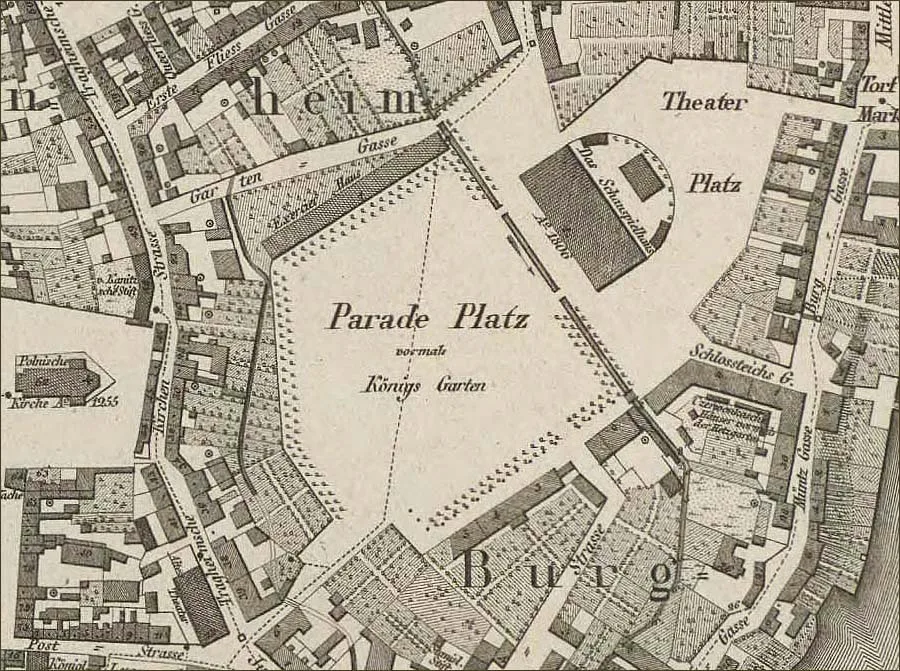
When in 1806 Königsberg planned to build a theatre, which the city had long needed, the Exerzierhaus was demolished, but what was erected on the site was not a theatre but the university building – and much later. A site and funds for this construction were sought for a long time; the building was needed because the old Albertina building by the Cathedral had long since ceased to meet the university's new aims and tasks. After Frederick William IV ascended the throne, the question of the site was finally settled in 1840. True, the plan for this grand architectural structure was approved only four years later, in 1844.
The ceremonial laying of the foundation stone of the university took place on 31 August 1844 in the presence of the king, who, after three blows of the hammer, declared: "The university must be a source of light; its motto is – Forward!"
 The Royal Garden on a map dated 1800.
… Construction took a long time, with lengthy interruptions, and was completed only in 1862, but by then Frederick William IV had already died, and the new building in the Italian Renaissance style was consecrated on 20 July by Crown Prince Frederick William. The university, which cost over a million to build, became the most beautiful building on Parade Square: 75 m long and 20 m wide; the corners of the roof were adorned with symbolic statues – Mathematics, Physics, Geography, Astronomy, Archaeology and Law; above the upper windows, thirteen medallions bore portraits of famous professors, including Kant, Hagen, Bessel, Jacobi and Dach, and the fourteenth medallion showed Georg Sabinus, the university's first rector; on the façade gleamed the gilded inscription Virtus, Pietas, Hilaritas, Sapientia (Latin for Virtue, Piety, Cheerfulness, Wisdom).
On the eastern side, where the main entrance was, the university façade was adorned with a vaulted gallery with sandstone columns (the design was by Friedrich August von Stüler, a well-known architect of the time and Privy Councillor).
Before the University was built, little attention was paid to the beauty of Parade Square; more urgent matters took priority – planning the urban landscape near it: in 1800 the Rotten Moats, which stretched behind the spot where the university was later built, were filled in, and here, north of the university, a new street, Gartenstraße, could be laid; in 1808 the mills on the pond were demolished, and Theaterstraße was extended to Parade Square. After the university was built, in 1878–81 the ugly Fließ (Fließ) stream, which carried sewage and crossed the whole of Parade Square, with its half-ruined bridge and half-withered poplars, was filled in; in 1884–1892 the history of the Crooked Moats on the southern side of Parade Square came to an end.
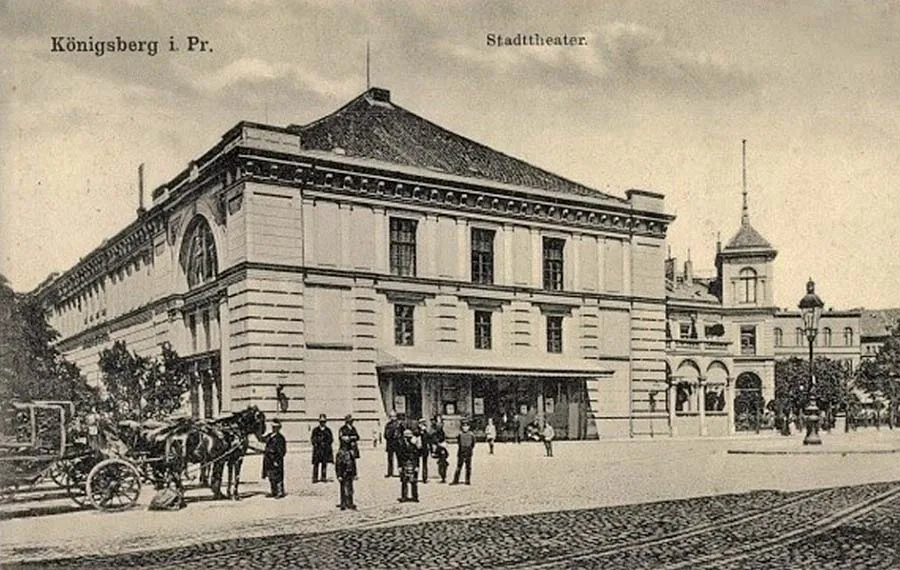 The Opera and Operetta Theatre on Parade Square.
The city around Parade Square was being transformed, closing in right up to it.
 Parade Square (the Royal Garden) on a map of 1815.
On the square itself, only the University rose in the north-western corner, while the north-eastern side was graced by the theatre building with 1,500–1,600 seats, completed by December 1809; it had been founded on 16 July 1806 on the foundations of the garrison church and was ceremonially opened in the presence of King Frederick William III and his consort Queen Louise in the hard times of defeat in the war with Napoleon in 1808 (construction was directed by the military and state councillor Johann Valerian Müller (Johann Valerian Müller, 1771–1839). In 1892–93 two wings with turrets were added to the building, which somewhat reduced the size of the auditorium. One turret served the needs of the theatre, while the other housed the restaurant that a theatre needs. The theatre was renovated once more in 1910, and at that time a monument to Johann Friedrich Schiller by the sculptor Stanislaus Cauer was erected on Theatre Square, in its right-hand corner, not far from the theatre entrance.
After the New Theatre on Hufenallee (1912) appeared in Königsberg, the theatre on Parade Square became the Opera House (1927). The Schiller monument was moved to a new site, by the theatre building on Hufenallee, where it still stands today.
The Opera House was surrounded by a luxuriant garden enclosed by a magnificent wrought-iron fence. Behind the theatre, from 1879, rose the Court building; among the other new buildings on Parade Square were expensive shops, some of which sold works of art, as well as a number of bookshops. Parade Square gained a great deal from being surrounded by luxurious new houses while the old ones were restored; moreover, the numerous ditches and marshy patches became a thing of the past.
Framed by prestigious buildings and new streets, Parade Square nevertheless remained a green area free of buildings. The secret of this lies in the fact that on 4 November 1809 King Frederick William III renounced all his royal privileges in Königsberg, that is, all the so-called "free" territories that belonged to him personally and had long been the property of the Dukes and Kings of Prussia. The Royal (formerly Ducal) Garden, which over time had been transformed into Parade Square, now became the property of the city.
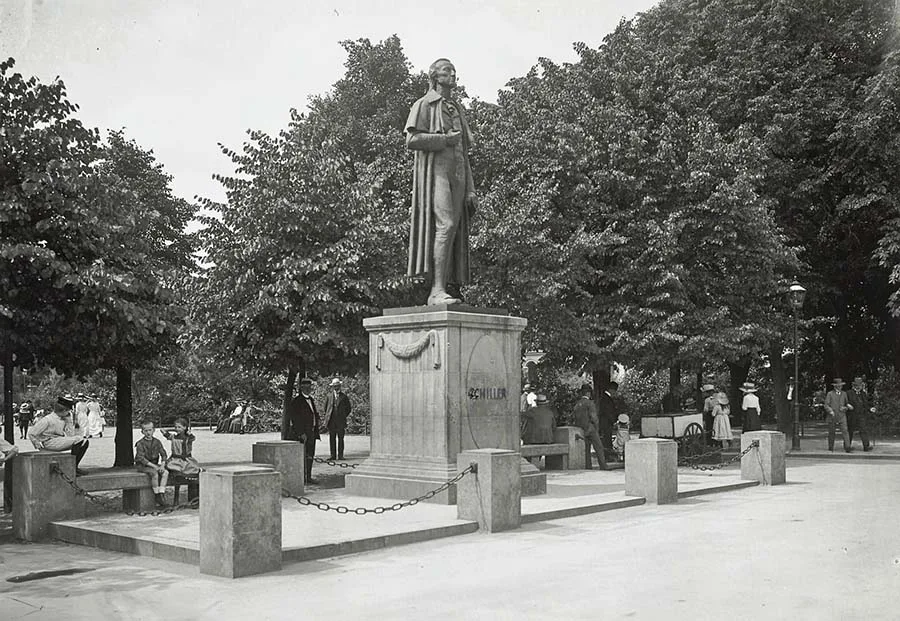 Monument to Schiller.
The king, respecting all the rights of the "free" urban territories, set only one condition: the Paradeplatz would remain free of buildings and would always belong to the city.
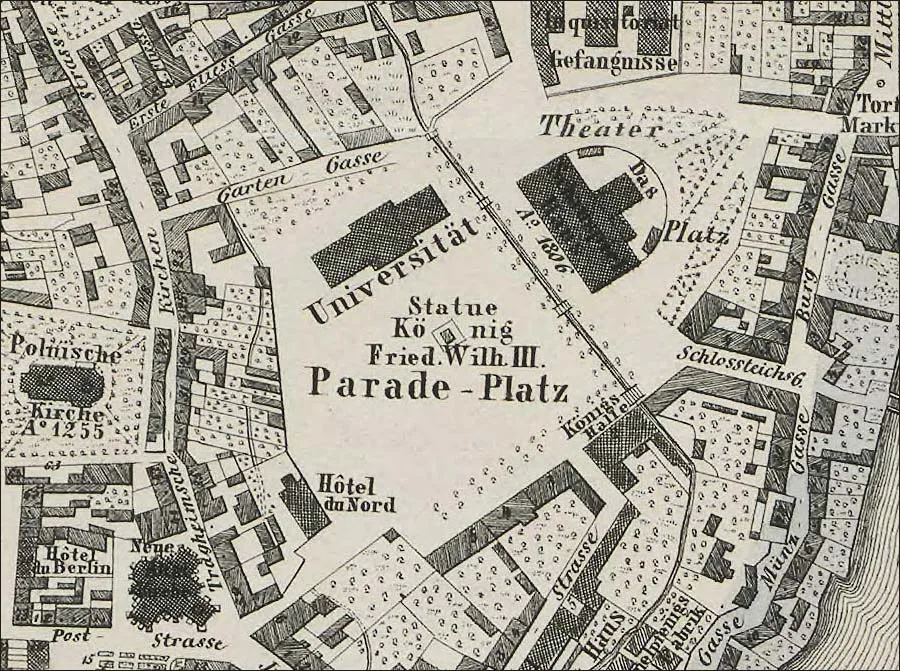 The University and Parade Square on a map of 1860.
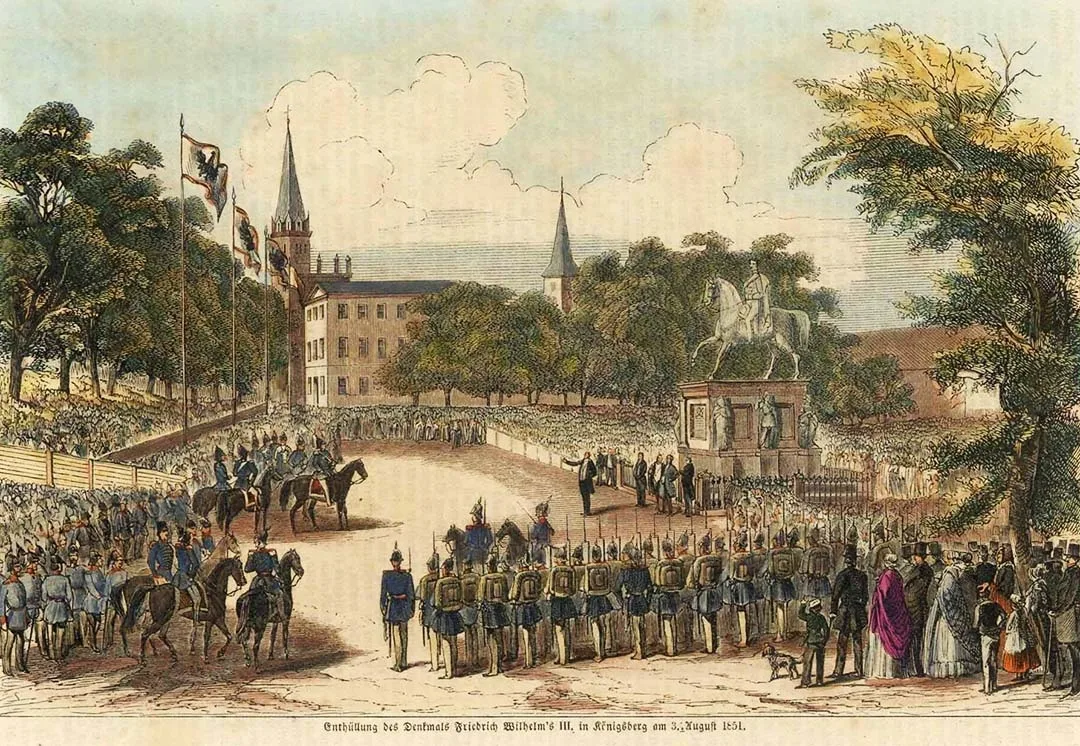
After the University was built, there was a great deal of open space between its new building and the Opera and Operetta Theatre, and for a long time city celebrations, exhibitions, meetings and even horse fairs were held here, but in the end Parade Square was laid out as a garden, with luxuriant trees and extensive flowering lawns. From 3 August 1851 the centre of the square was dominated by an equestrian statue of Frederick William III (the very one who proclaimed the motto Forward!), placed with its back to the university; it was made by the Berlin professor and sculptor August Kiss (August Kiss) and cast in foundry workshops in Lusatia. The monument to his father was unveiled by King Frederick William IV. The statue showed the king as a valiant horseman, crowned with a laurel wreath and wrapped in a mantle. The monument was 11 m high; the bronze pedestal bore a series of historical scenes from the life of the crowned head and pictures from the king's private life, each scene separated from the next by reliefs of female allegorical figures – Faith, Borussia (Prussia), Love, Justice, Blessing and Wisdom.
The steps to the monument were of polished granite, and the wrought-iron railing with images of an eagle and a laurel wreath embodied the gratitude of the people of Königsberg to the king with whom they had shared joy and sorrow in the hard times of the war with Napoleon: "To their King Frederick William III, the grateful people of Prussia, 1841".
A little south of the king's monument, not far from Prinzessinstraße, where from 1783 the philosopher Immanuel Kant (22.04.1724–12.02.1804) lived in a small house bought from the widow of the painter Becker, and where he died in 1804, a monument to the great thinker was erected on 18 October 1864 (his categorical imperative, "you can because you must", which expresses the moral law within man, still inspires thinking humanity, convincing it of the possibility of the endless self-perfection of a free being endowed with feelings and reason).
The monument to Kant is the work of the sculptor Christian Daniel Rauch; shortly before his death, which came in 1857, the bronze sculpture showing the Königsberg genius bareheaded, calmly striding into immortality, was cast at the foundry in Gladenbeck. The granite pedestal, polished and artificially aged, was made by the stonemason Müller and bears the simple, laconic inscription "Kant".
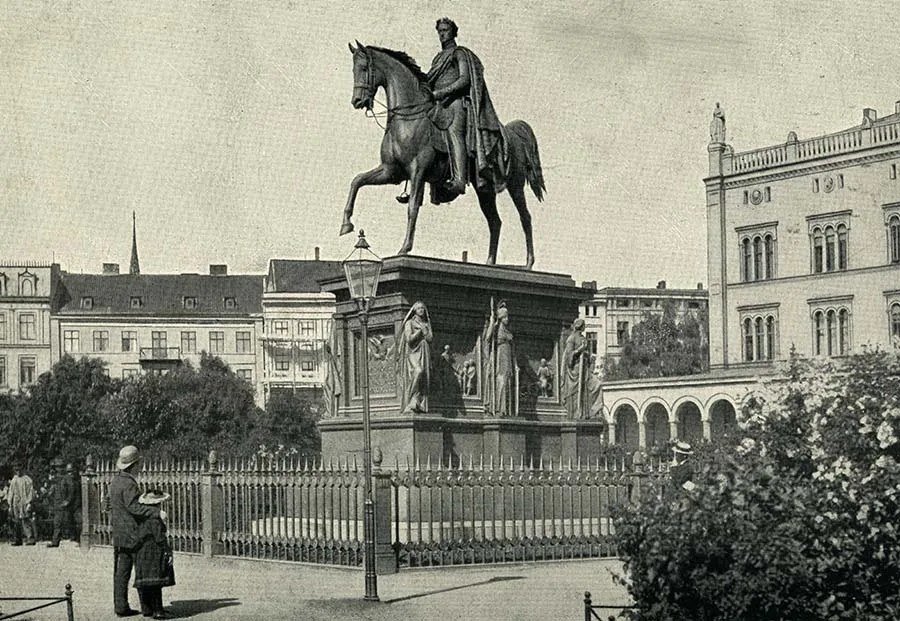 Monument to the Prussian King Frederick William III.
At that time the monument to the great philosopher was surrounded by a rotunda that crowned the new Kantstraße, which branched off Prinzessinstraße and led straight to the monument.
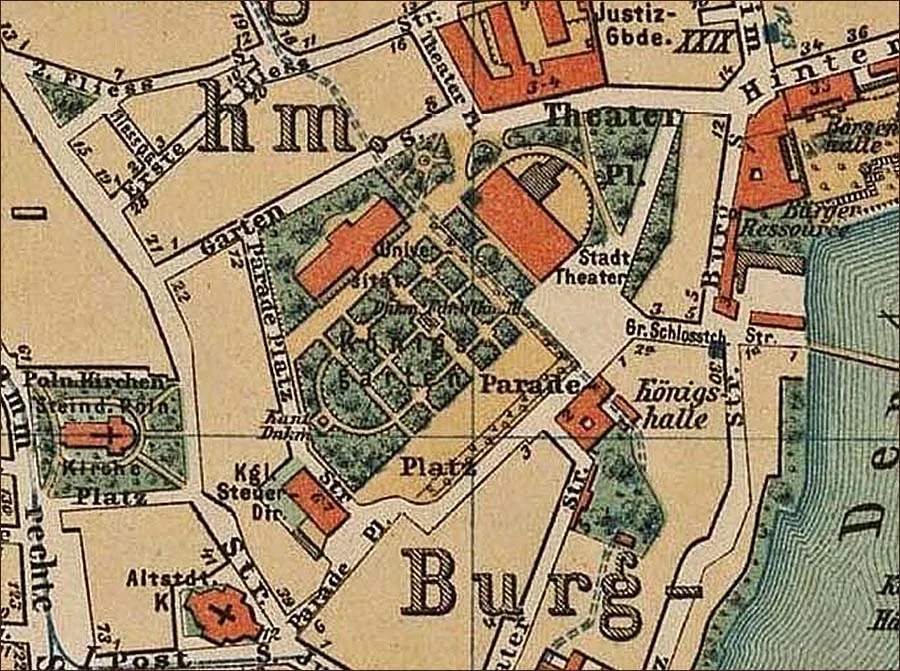 Parade Square on a map of Königsberg from 1885.
But when in time it came to laying out yet another street – Schlossenstraße, running round the northern walls of the Castle – the monument had to be moved to the south-western part of the Royal Garden, as people in Königsberg stubbornly continued to call Parade Square. In 1885 the monument was restored and went on standing modestly to one side, at the edge of the square, while the statue of the king stood in the centre – very characteristic of a society with an Old Prussian hierarchical order, in which the king mattered far more than a philosopher of world renown. At the end of the Second World War the Kant monument was sent to Friedrichstein, the estate of the Dönhoff family (the village of Kamenka, Guryevsk District), because a bunker shelter had been built on Parade Square on the site of the sculpture, in which, after the surrender of Königsberg, the documents on the capitulation of the garrison were signed.
Today the fate of the king's monument is unknown, but the Kant monument, also lost after the war, was recreated in the 1990s by the German sculptor Harald Haacke, installed in 1992 on its original pedestal, and adorns the square in front of the university.
This is the third, entirely new site in the monument's history – the northern part of the square, not far from where the Königsberg opera house stood. Behind Kant's back [in 2005] there are two historic trees – a linden and a huge old willow; it is hard to say how old it is – perhaps they knew each other in the philosopher's lifetime… Weary of life, having lost most of its branches, the willow nevertheless heroically guards the monument from the rear.
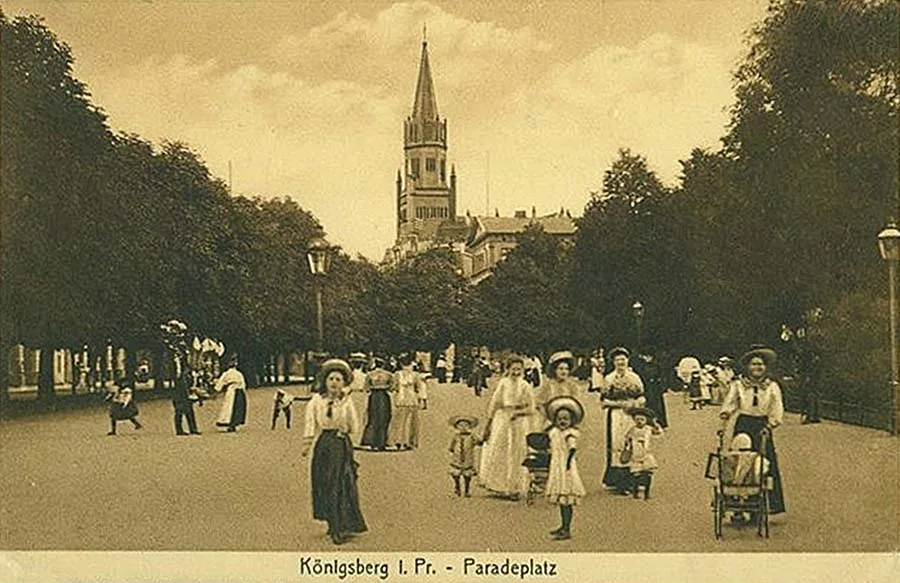
The layout of the square changed more than once, and over time, by the end of the 19th century, it had become an elegant English-style public garden with lush green rectangular and triangular lawns and separate groups of trees bordered by neat, evenly trimmed shrubs, with the main paths radiating from the king's monument and numerous additional walkways. With its monuments, flower beds and the handsome, mostly new buildings around it, the square looked highly respectable and became a favourite place for townspeople to stroll and relax, especially as festivals and numerous exhibitions were still often held here. On warm days it was always full of people, and the Society for the Beautification of the City set up playgrounds and benches on the square.
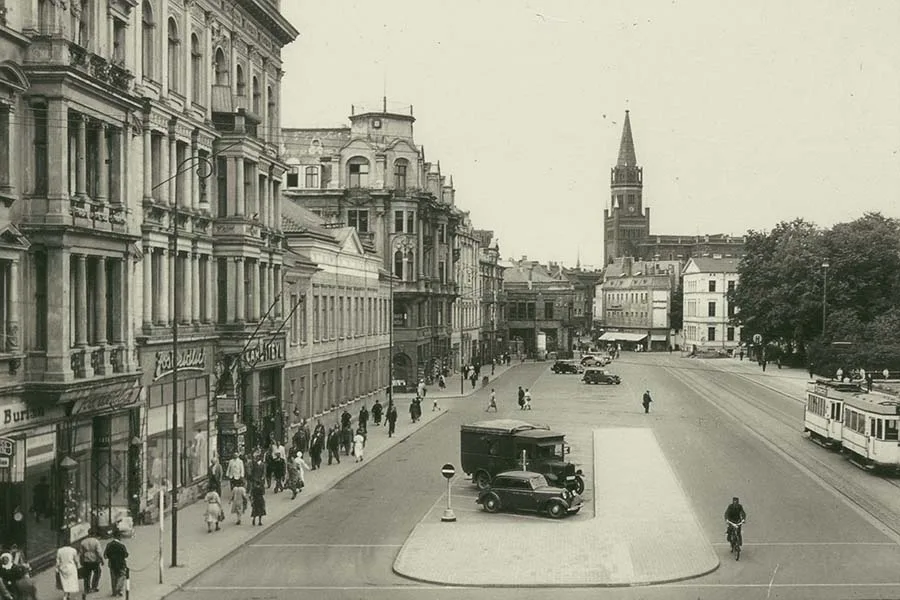 Parade Square in its heyday.
In 1910 a guidebook to Königsberg announces: "The most beautiful square in the city… Every Sunday from 12 to 1 o'clock a military band plays…".
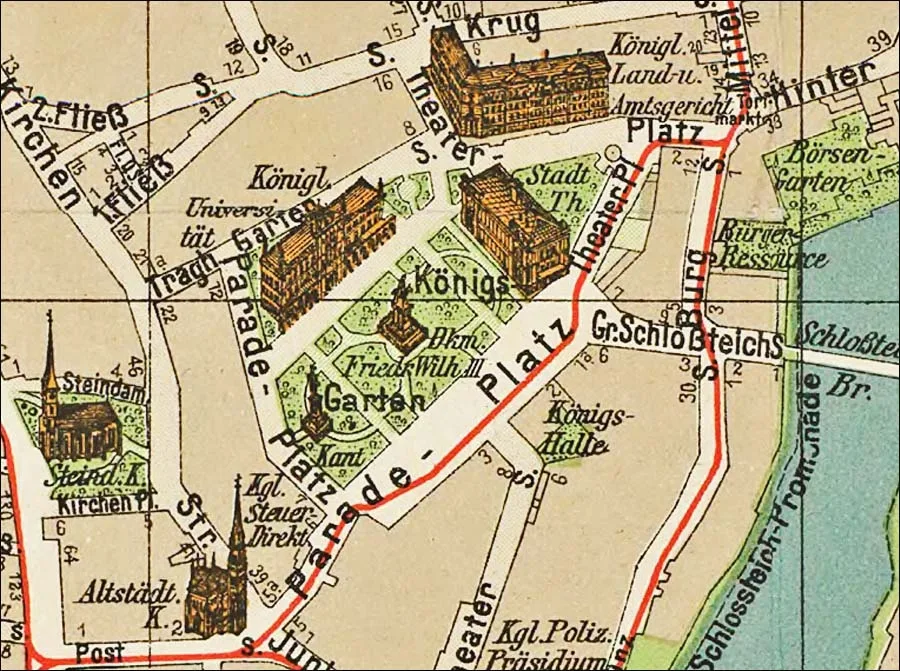 Parade Square on a city map of 1901.
Parade Square, or the Royal Garden, after a long history that began in the first years of the 16th century, lost much of its territory but nevertheless remained Königsberg's calling card, where the green vignettes of its attire were framed by handsome buildings that emphasised its long history and lent the space weight and grandeur.
In 1924 the square was replanned in line with the new trends in city landscaping characteristic of the "era" of Ernst Schneider. The English-style public garden with its abundance of lush grass lawns was replaced by a broad open space with neat, small clipped lawns, better suited to the architecture of the university building in the Italian Renaissance style: thirteen square lawns placed on either side of a large rectangular lawn in whose centre rose the equestrian statue of the king (four lawns on one side, nine on the other), and two irregularly shaped lawns in the southern part of the square, which is precisely where the Kant monument stood. The square was still lined with trees, but now the full splendour of the university building could be clearly seen, and the centre of the square was sharply accentuated by the bronze statue of the royal personage.
The square looked as if it had been washed and combed; it became more official and striking, but unfortunately part of it was once again taken for building when the street running round the Royal Garden on the south was widened.
In 1937 the square was remodelled once again. Today the small green space with a round flower bed and new plantings of blue spruces, Swedish whitebeam, maples and chestnuts, with no definite style, is a courtyard in front of the university at 2 Universitetskaya Street, surrounded by five-storey residential buildings built after the Second World War.
In addition, in the 1980s the space of the square was encroached upon by a polyclinic building, for whose construction a post-war orchard of Niedzwetzky's apple trees was cut down – charming wild fruit trees native to the Tian Shan which at any time of year display crimson-purple colouring in various shades, the most beautiful and rarest of our country's wild apple trees, listed in the Red Book as an endangered species. The saplings of this exotic apple tree had been grown in the nursery of the Kaliningrad Botanical Garden… A snack bar near the university, wet, trampled ground rutted by vehicles, broken asphalt left by the construction of a new large shop building on Leninsky Prospekt – this is how the former Parade Square looked in 2004, at the beginning of the 21st century.
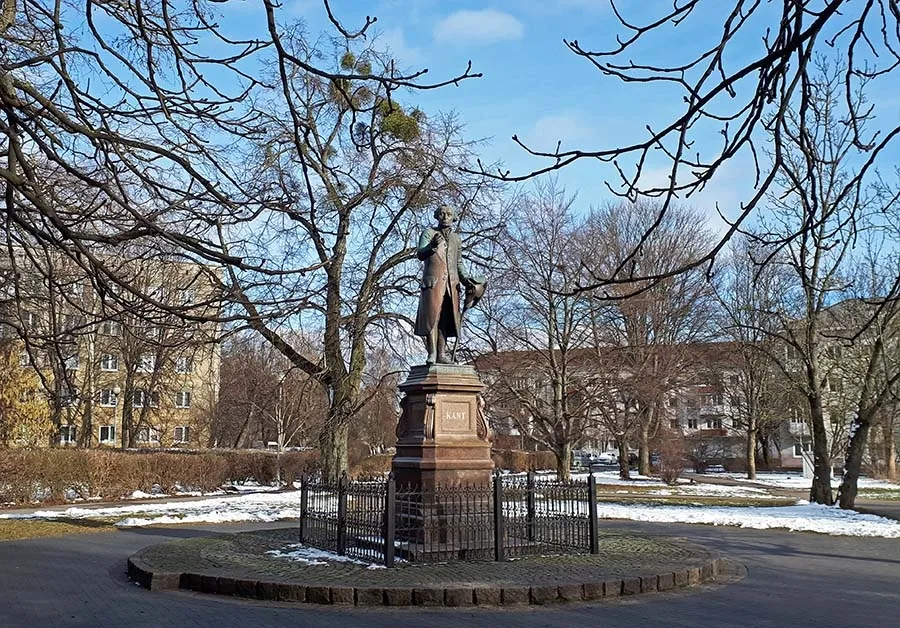 The Kant monument today on Universitetskaya Street.
Sapere aude – have the courage to use your own understanding…
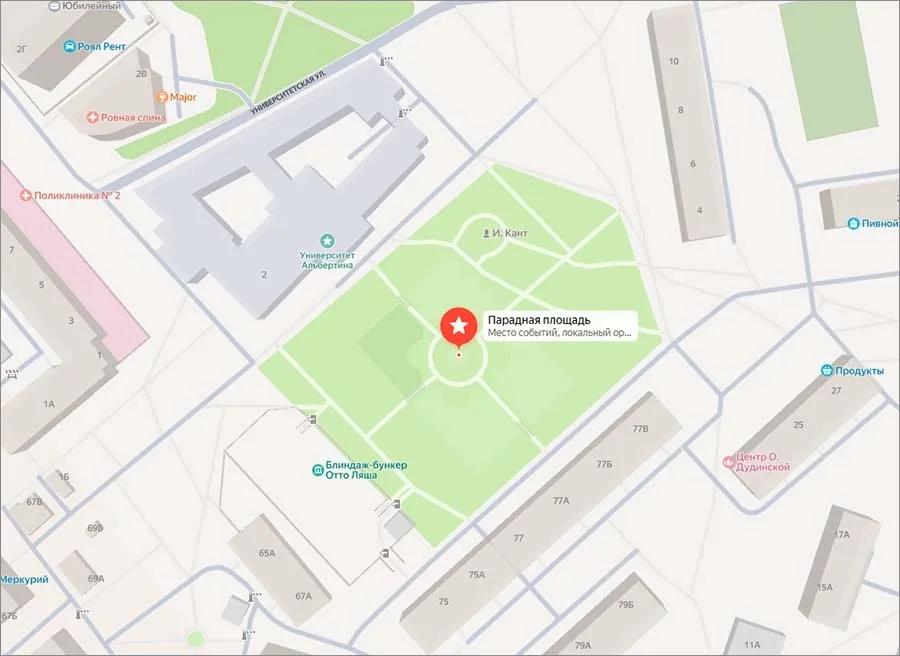 The Albertina University, Otto Lasch's bunker and Parade Square on Yandex Maps (2024).
In fairness it must be said that the history of the Royal Garden – which gradually turned into Parade Square, a space that in its struggle with the streets and encroaching houses barely managed to remain, if not a garden, then at least a public garden – went through various stages: on carefully comparing the dates of the main milestones of its history, it is easy to see that there were long periods when the Royal Garden's landscape was well tended; times of neglect, of empty, unimproved spaces, loss of purpose, the triumph of drill-sergeant mentality, and the proximity of the Crooked and Rotten Moats, marshy meadows and a foul-smelling stream; there were periods of compromise, when the University as a centre of culture, the pompous monument to the king, Theatre Square and horse fairs existed side by side; but there were also moments of truth, the intervention of landscape architects, periods of beauty and of popularity with the townspeople. Perhaps the moment of truth for the former Parade Square – which has not existed on the map of Kaliningrad for more than half a century, but which, as Universitetskaya Street, is trying to remain a public garden – has been postponed indefinitely. At best…
Illustrations and photographs by Mikhail Ogorodnikov.
Translated from Russian with the help of AI (Claude, Anthropic), October 2026.