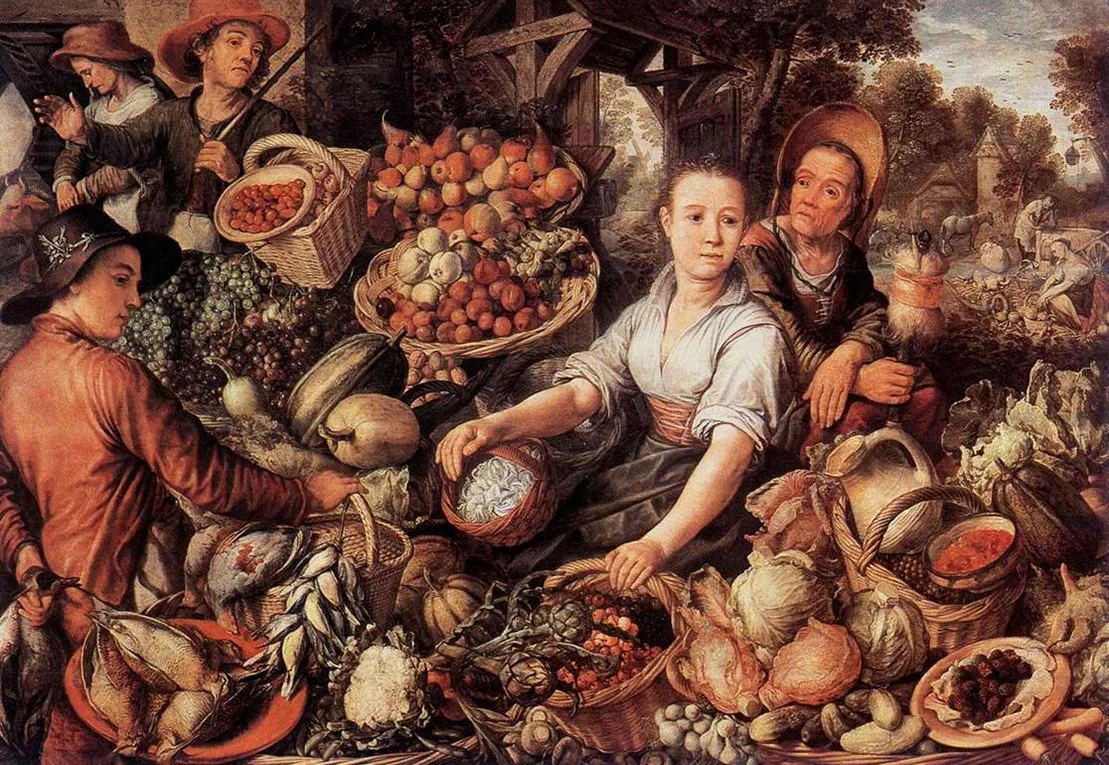
The French were the first to taste this "refined dish". They served it with roast meat. Later, salads were enriched with dandelion leaves, chicory, orache and other herbs, and later still with cabbage, celery, green peppers, fresh cucumbers, asparagus, artichokes… In the 18th–19th centuries boiled root vegetables were added to the dish. Salads also became more filling thanks to high-calorie dressings — mayonnaise and various sauces. In addition, the French introduced lettuce into salads — the familiar leaf lettuce that is the first to spring up in allotment gardens. The ancient Greeks used lettuce in various rituals, while the Romans used its milky sap as a medicine.
Thus France became the trendsetter of "salad fashion". Russia and Germany (somewhat later, admittedly) went even further: they began adding pickled mushrooms and herring to their mixed vegetable salads.
The traditional salad of any nation is a balanced dish that takes into account both the flavours of its ingredients and how well they go together.
Potato salads are a classic of East Prussian cuisine (as indeed of German cuisine as a whole). There are dozens of recipes for them (if not more!). "Every housewife has her own potato salad," people used to say in East Prussia. And it really was so, because it can be made with cucumber, onion, speck, sausage, apple, any herbs, spices and sauces. Incidentally, the right potato for salad is one that does not fall apart when cooked – the so-called "waxy" kind – and it is best boiled in its skin.
Yet however tasty and nourishing the elaborate, heavy salads might be, the place of honour on the East Prussian table belonged to just two kinds: green salad with sour cream and cucumber salad with sour cream. After the heavy winter fare the body craved vitamins. People waited impatiently for spring and the first greens in their vegetable beds. And while these were growing, children gathered tender young dandelion and nettle leaves in the meadows for salad, spicy field clover and, of course, sorrel. An unforgettable taste!
And before you know it, the lettuce is ready, and so is that early "upstart", chives. All that is left is simple: wash a couple of heads of lettuce and a bunch of chives thoroughly, be sure to dry them, chop them – and into the salad bowl. Then just season with salt, the juice of half a lemon, a teaspoon of sugar and sour cream (about ¼ l, 24% fat). Any other herbs can be added if desired.
Cucumber salad is just as easy to make: 2 green cucumbers, ¼ l sour cream (24% fat), 2 tbsp vinegar or lemon juice, 1 tsp sugar, 1 tbsp chopped dill. All that remains is to mix everything and serve.
In some East Prussian families these two green salads were a perfect classic side dish for roast chicken or fish.
Incidentally, while in the old days the menu followed the seasons, today such salads are easy to make at any time of year. They are especially good for giving the body a rest after all the New Year excesses. And until spring and the real first greens arrive, the table can be varied with excellent and extremely filling potato, meat, fish and sausage salads, of which there are plenty in the family cookbooks of every East Prussian housewife. What is more, they "invented" new salads, combining seemingly incompatible ingredients. Naturally, they never gave away the secrets of their culinary fantasies. But every secret (in time!) comes out:
Herring salad
It is hard to say how many variations of it exist. In East Prussia it was usually made when guests were coming over for a glass or two of beer. It is a dish that never fails. You will need: 5 eggs, 2–3 large, lightly salted fatty herrings, 500 g boiled potatoes, 250 g roast veal, 2 sour apples, 1 pickled cucumber, 1 onion, 1 tsp mustard, 3 tbsp vegetable oil, sugar — to taste, ground black pepper – to taste, lemon juice — to taste, 1 soup cup of 24% sour cream, 100 g boiled pork belly (or bacon), 1 tomato, capers — optional, 1 lemon, 1 small head of lettuce, parsley.
Hard-boil the eggs. Clean the herring, remove the bones and chop finely. Also cut 3 of the eggs, the peeled potatoes, roast veal, apples, pickled cucumber and onion into small cubes. Add the mustard and vegetable oil, a pinch of sugar, pepper and lemon juice to the salad. Then add the sour cream, mix everything well and leave overnight to steep. Before serving, taste and, if necessary, add a little sugar, salt or pepper; turn out onto a large dish (or salad bowl) and garnish with the remaining eggs rolled up (or crumbled on top), pieces of bacon, thin slices of tomato, lemon and pickled cucumber, capers and small lettuce leaves. Finally, sprinkle chopped parsley over everything. Such a hearty salad was usually served with grain schnapps and beer.
Meat salad
500 g boiled ham or boiled sausage, 2 tbsp vinegar, ½ cup stock, 2 pickled cucumbers, 3 tbsp finely chopped white onion, ground pepper — to taste, a pinch of sugar, 2 sour apples, 1 small green pepper, 1 tsp mustard, tinned celery, sour cream and mayonnaise — to taste.
Cut the not-too-fatty ham (or sausage), pickled cucumbers and apples into thin strips, add the chopped celery, pour over warm stock and leave for a few minutes. Mix the mayonnaise with the sour cream, vinegar, mustard, ground pepper and sugar, and salt to taste. Pour the sauce over the salad, mix and set aside in a cool place for a short while. Before serving, garnish with tomato wedges and slices of hard-boiled egg; sprinkle with chopped onion if desired. The ingredients can be varied to taste.
Poultry salad
500 g boiled poultry, a little mixed vegetables, button mushrooms, 2 apples, 4 walnuts, 1 jar mayonnaise, lemon juice, 1 cup sour cream, mustard, ground pepper and salt — to taste, 1 small gherkin.
Cut the poultry and apple into small cubes or strips and dress with the juice of half a lemon. Stew the vegetables and mushrooms, chop them and add to the meat. Mix the mayonnaise with the sour cream (or yoghurt), add mustard, the finely chopped gherkin and seasoning. Mix the salad thoroughly and put it in a cold place. On festive occasions each plate can be sprinkled with lemon juice and topped with a green lettuce leaf, with the salad laid on it and garnished with walnuts.
Wiener sausage salad
400 g Wiener sausages (or boiled sausage), 1 green pepper, 1 red pepper, 4 tomatoes, 2 apples, 1 orange, 3 tbsp vegetable oil (or a cup of sour cream, or a jar of mayonnaise), 3 tbsp vinegar, 1 onion, ground pepper — to taste, a pinch of sugar.
Boil the sausages for 10 minutes, skin them and cut into cubes. Deseed the peppers and cut into thin strips. Dice the onion, apples and orange. Mix everything with the vegetable oil and vinegar (or with sour cream or mayonnaise). Leave to steep for a little while and add the seasoning.
Zander salad
1 kg zander, lemon juice, 1 very sour apple, 1 gherkin, 1–2 capers, 1 tsp mustard, ground black pepper — to taste, a pinch of sugar, 1 jar mayonnaise, 1 cup sour cream, herbs.
Gut the fish and poach it in a little water. When it is done, remove the skin and bones, cut into small pieces and marinate in the juice of one lemon, with salt and pepper. Finely chop the apple and gherkin, mix and add the capers. Mix the mayonnaise, sour cream, mustard and chopped herbs, adding salt if needed. Carefully combine everything with the fish and put in a cool place. A handful of small crabs will make a lovely garnish for the result. The dish used to be served with toast and a glass of chilled wine.
Potato salad
1 kg potatoes, 1 cup stock, 1/8 l thick sour cream, 1 tsp mustard, ground pepper, 1 pickled cucumber, 2 tsp mixed pickles, 2 hard-boiled eggs, 2 tbsp chopped boiled sausage or meat, ½ sweet red pepper (paprika).
Boil small potatoes in their skins and peel them. Cover with stock, add salt, sugar and finely chopped onion. Put on the heat and cook a little longer. Drain off the stock and, once the potatoes have cooled, place them in a bowl and add the pickled vegetables, eggs, sausage or meat and fresh pepper. Carefully mix the salad with the sour cream and mustard, add pepper and salt as needed, and garnish with an egg cut into 8 wedges and mixed pickles.
White cabbage salad
1 small head of cabbage, salt — to taste, 1 onion, 2 apples, 2 tbsp vegetable oil, 250 g cream, ½ tsp sugar, ground black pepper.
Cut the cabbage in half, remove the core, shred finely, mix with salt and leave to stand for an hour. Chop the onion; peel and core the apples, grate the flesh and add it to the cabbage. Mix the oil and cream and season with sugar, salt and pepper. Pour this dressing over the cabbage salad and mix thoroughly. After 30 minutes the dish is ready to serve.
Sauerkraut salad
500 g sauerkraut, 2 apples, 2 tbsp vegetable oil, 1 tbsp lemon juice, a pinch of sugar.
Chop the sauerkraut finely and grate the apples. Mix the ingredients and leave in a cool place for a couple of hours.
In East Prussia this salad was dressed with a small cup of sour cream (about ⅛ l), with chopped onion and a pinch of sugar added. Later, the apples came to be replaced with pineapple – fresh or tinned.
Tomato salad
8–10 firm tomatoes, 2 tbsp vegetable oil, 2 tbsp vinegar or lemon juice, 2 onions, a pinch of sugar, ground pepper — to taste, chives — to taste.
Halve the tomatoes, remove the seeds, cut into wedges or strips and add the chopped onion. Make a dressing from the vegetable oil and vinegar or lemon juice, season with salt and pepper and mix with the tomatoes. Chill briefly and sprinkle with chopped chives. If desired, the vegetable oil can be replaced with sour cream, and finely chopped green pepper can be used instead of chives.
Beetroot and celery salad
1 celeriac, 2 beetroots, 3 tbsp wine vinegar, a pinch of sugar, salt — to taste, 2 tbsp vegetable oil or a cup of sour cream.
Peel the celeriac, cut into cubes and steam in a little water with wine vinegar (and with vegetable oil if you are not using sour cream), adding salt and sugar. Boil the beetroots, cool, peel, dice and mix with the celery. Dress the salad with sour cream.
Bon appétit!
Sources:
«Rezepte aus der guten ostpreußischen Küche» Margarete Haslinger
«Das Beste aus Ostpreußischen Küche» Rohner Susanne
"Doennigs KOCHBUCH. Der Küchen-Klassiker aus Ostpreußen"
Translated from Russian with the help of AI (Claude, Anthropic), October 2026.