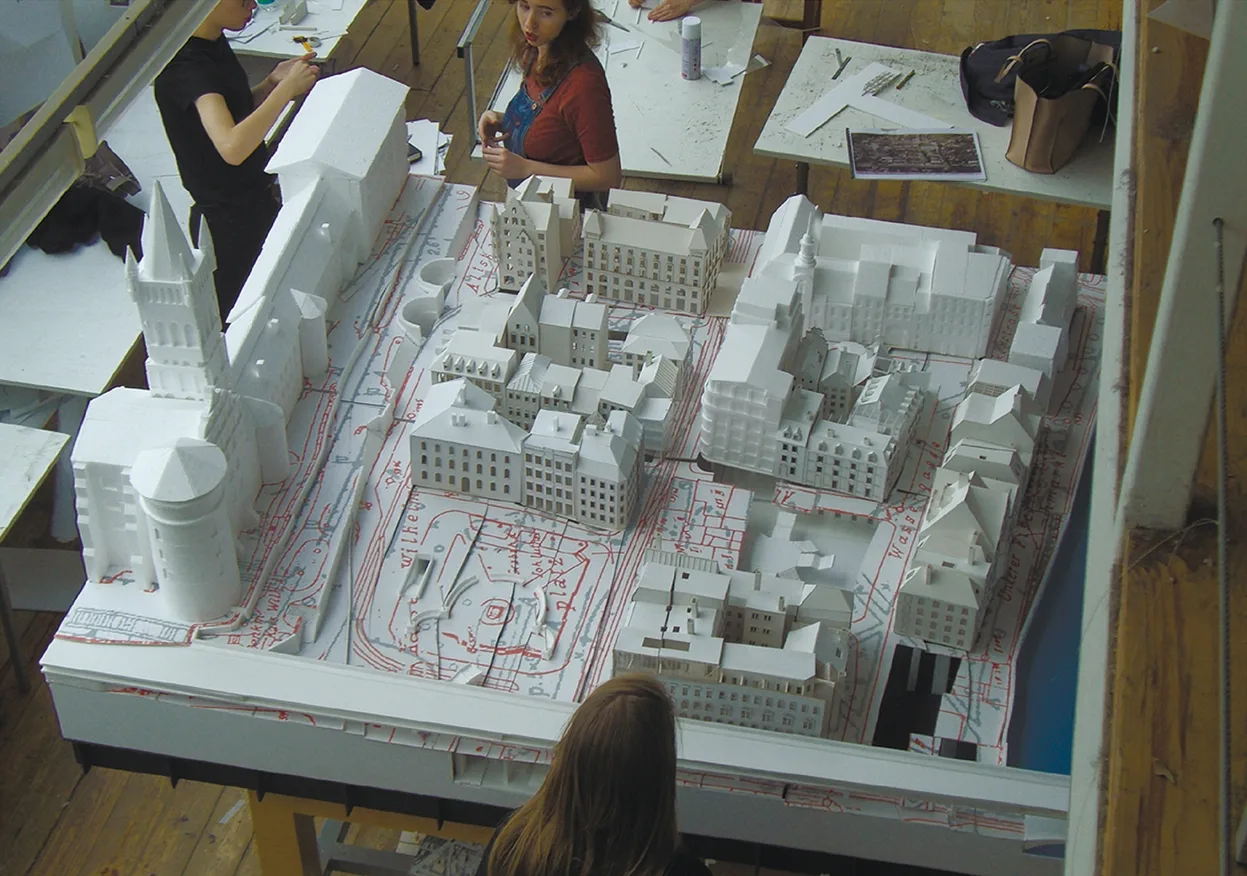
Frankly, the outcome came as a surprise to hardly anyone. Objectively, Sarnitz's project was the most striking, the most carefully thought out and the most hard-won. A parallel vote was held on one of Kaliningrad's most popular web portals, and there the result was even more impressive: Sarnitz's project won with five times as many votes as its nearest rival.
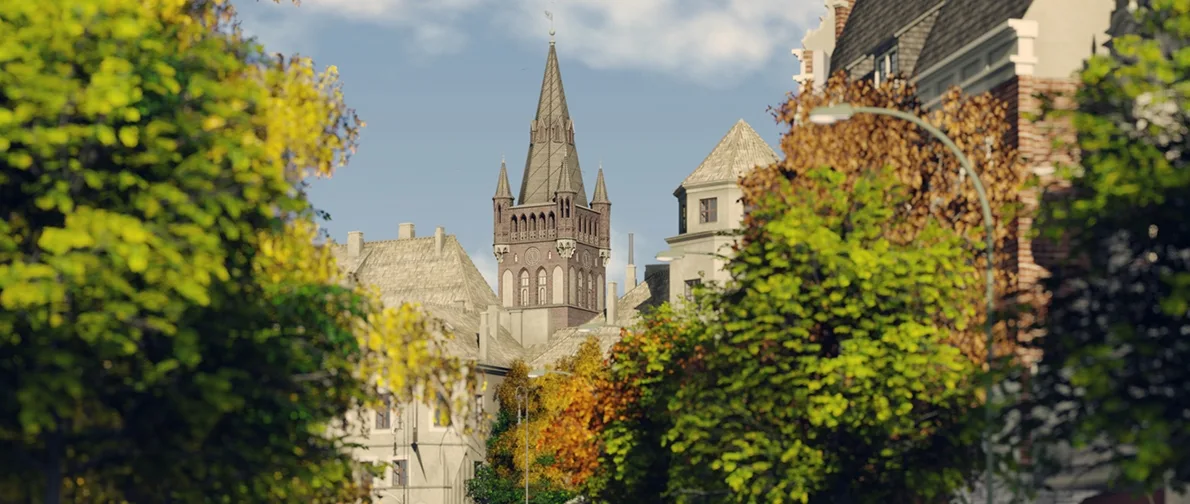
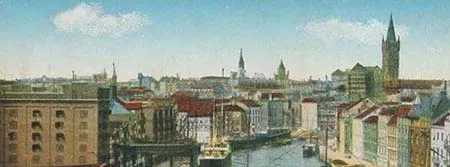
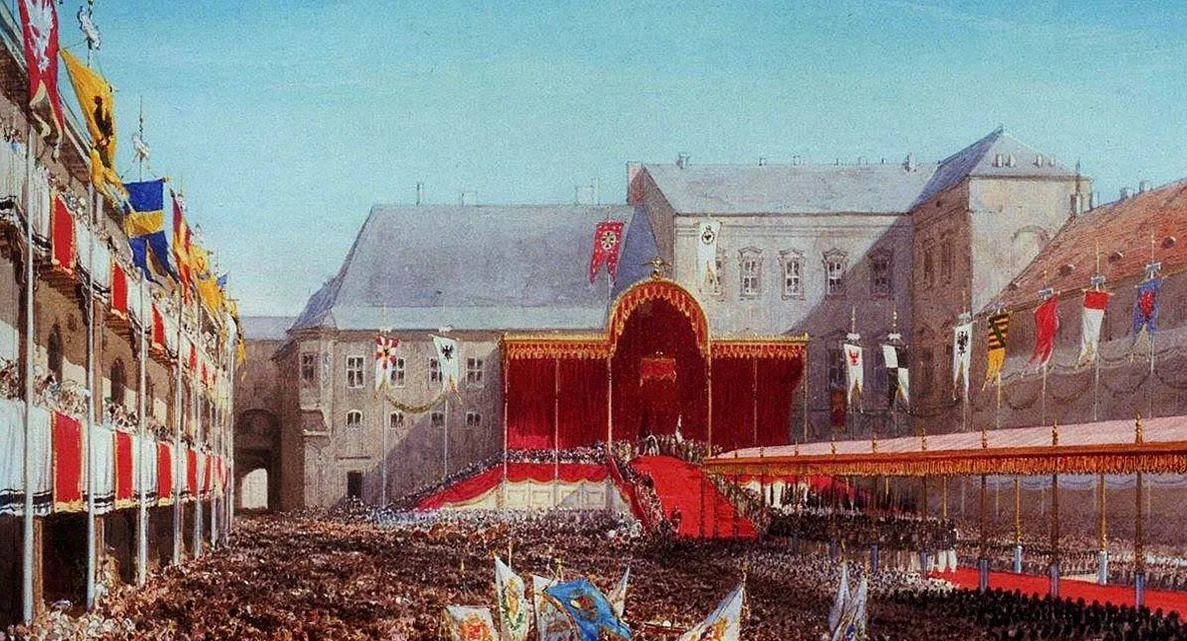
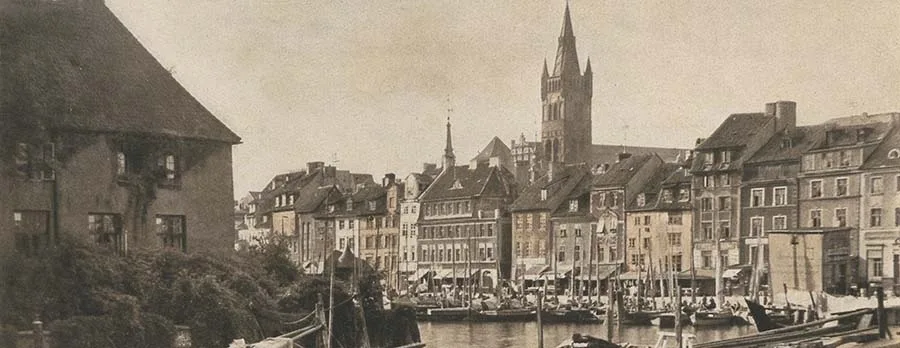
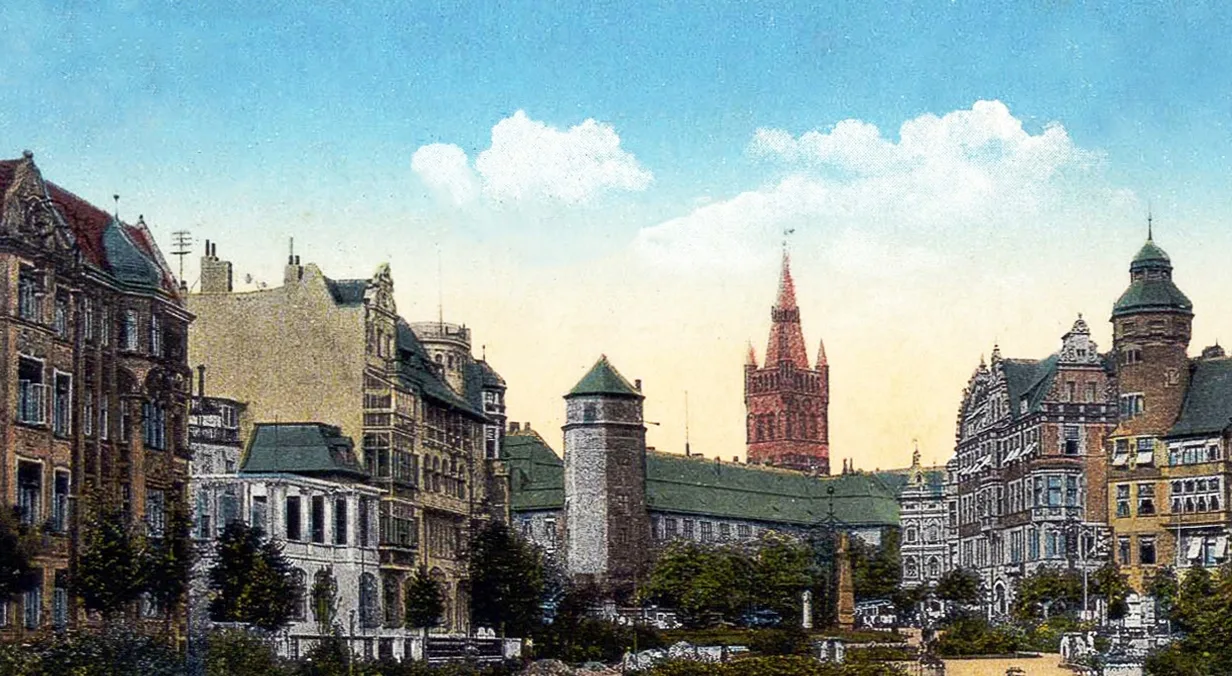
The city that he and his like-minded colleagues have created in 3D is spellbinding. On the one hand, it is the familiar Kaliningrad, with the hotel of the same name, the Plaza and the Rostelecom building; on the other, it is the pre-war Königsberg seen a thousand times in photographs, with the Royal Castle and the historic quarters surrounding it.
And, strange as it may seem, the combination looks quite organic and natural.
It must be said that old black-and-white photographs have taught us to think of Königsberg as a city from a long-vanished era.
This impression owes much to the people dressed in the fashions of the first half of the last century, to the antediluvian cars, and even to the horses harnessed to carts.
Sarnitz and his colleagues deliberately filled their Kaliningrad-Königsberg with modern cars and passers-by in jeans and trainers. Surprisingly, this radically changes how the architectural space is perceived. You look at these people, at these cars, and you realise that the castle walls do not reject them; on the contrary, they form a single whole with them. And so Königsberg, for all its medieval antiquity, all its cobblestones and all the frills on its façades, looks remarkably modern.
…We met Arthur Sarnitz after the results of the online votes had been announced and asked him a few questions.
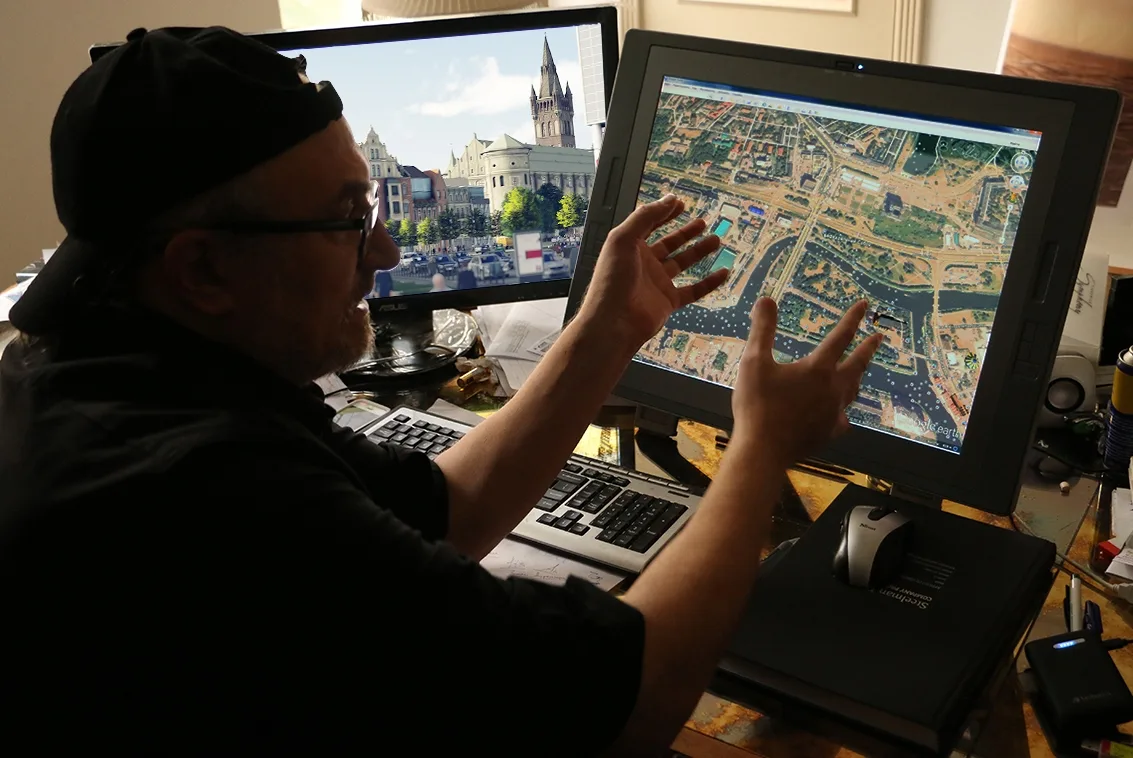
– Artur Arturovich, in debates about Kaliningrad's future one often hears the view that Königsberg is dead. And if so, there is no point even trying to recreate its centre.
– Well, if someone thinks so, that's their business. When I was younger, I used to argue until I was hoarse, trying to prove to people that Königsberg looks at us from every tiled roof, that its silhouettes are reflected in the wet cobblestones, that the noise of its streets can be heard in the rustle of autumn leaves underfoot. Now I try not to get drawn into discussions of that kind. To me it is perfectly obvious that Königsberg is alive. What's more, I am convinced it would stay alive even if the bulldozers went over it a few more times, as they did in Soviet times. As for whether the centre should be recreated or not, I don't think any special arguments are needed there either. It's enough to look at what was and what has become of it. We're not all blind, after all…
And that is why I have not a second's doubt that sooner or later the historic centre of Königsberg in general, and the castle in particular, will be restored.
That is the logic of historical development: after all, many European cities shared a similar fate. First they were struck by the plague of fascism, then they were destroyed, but in the end they were carefully restored.
– How long did you work on the project?
– I should say right away that I didn't work alone. I have many like-minded colleagues, young architects. These guys – Ilya Kiselev, Oleg Sura, Valery Shcherbatykh and others – are deeply passionate people, true Königsberg enthusiasts who literally nurture its heritage…
It all began ten years ago with gathering material. Using drawings, photographs and cadastral maps, we recreated the appearance of Königsberg in the greatest detail. Today I can say that I know my way around its centre very well. That applies in particular to the Kneiphof, partly to the Laak, and a little to the Lastadie. I know everything down to the size of the windows. That gives me the right to discuss the question of the city's architectural future at all. ... When people say that Sarnitz is trying to recreate Königsberg exactly as it was, to be honest I don't know whether to take it as a compliment or a reproach.
The thing is, I am not recreating Königsberg exactly as it was, but I am trying to create that impression, carefully using the fabric woven over ten years. If I remember correctly, I reproduced only six façades exactly. Everything else is a creative reworking.
It is an attempt to see Königsberg as it might have become today had it not been destroyed.
On the whole, my aim is to start a great and beautiful undertaking that will unite us all, regardless of how we feel about today's political situation, about the wars of recent years, about Crimea and so on. More than that, this project could bring Europe and Russia closer together, which, you will agree, would not go amiss right now…
– Be that as it may, the jury of the "Post-Castle" competition awarded first prize not to you but to the young architect Anton Sagal, who proposed keeping the House of Soviets and only partially restoring the castle, supplementing it with modern buildings.
– Well, that's not surprising at all. The thing is, in my opinion this competition was organised by people who, for the most part, want our city to have as little of Königsberg as possible. And for that reason I am a very inconvenient person for them. Besides, I can't be manipulated or used, because I am financially independent and self-sufficient.
As for the winning project, if it were carried out it would be a disaster. And it's not even that the author, by including modernist elements in the complex, is trying to combine the incompatible. Nor is it that, having designated the castle's main tower as the architectural focal point, he failed to show how the city should develop. The saddest thing is that this project discredits the very idea of restoring the castle. I'm afraid that if it were carried out, everything would later have to be redone.
… Personally, I don't see it as a great misfortune that our project wasn't declared the winner. But my young colleagues, the guys I worked with, were very upset. They understood perfectly well that our proposal was the most thoroughly worked out, and they believed we weren't knocking on closed doors. But it turned out we were.
Still, I am very glad that our work took first place in the online vote. More than three thousand people voted for Kaliningrad to become a beautiful European city. That's not so little…
– The project looks enormous in scale. I imagine you have already heard people say that this is precisely why it can't be realised.
– Of course I've heard it. And read it. To me, putting the question that way seems more than strange. It's like saying: "You know, this is too beautiful for us. We are so poor and wretched that we won't be able to build all this. And if we could, we simply wouldn't be allowed to. So leave us that dreadful House of Soviets, we'll live with it." That is the attitude of people who have never tasted anything sweeter than a radish. And the saddest thing is that they don't want to try anything else. Yet if you think about it, everything depends on us, the residents of the city.
If we want to recreate the historic centre of Königsberg – and I mean really want to – then nobody will be able to stop us.
Politicians, both local and in Moscow, will pick up the signals from below and quickly change course. Everyone will instantly become a supporter of restoring the castle. And if Putin says even a single word in favour, officials will be racing each other to haul stones to the building site.
And carrying out the project is not as difficult as many people think – it's not like building a station on Mars. It's ordinary brickwork. Nor will it cost as much as some suppose. At the "Post-Castle" competition, many proposed building such huge towers that the change left over from those projects could probably pay for two Royal Castles.
– Even so, what do you think the sources of funding might be?
– This site has enormous potential for large-scale investment. Very serious investors are already reaching out to me through acquaintances, and a project price tag of two billion euros doesn't scare them. “Oh, how interesting all this is, oh, how much romance there is here,” they say. “But let's try running this romance through the economic numbers. How many square metres of housing? Five million? Excellent! What else is there? Ground floors, hotels, shops?” When an investor learns that the streets in the new district add up to ten kilometres, his eyes light up, because he realises how much can be put there and how much he stands to make from it.
All in all, finding the money to carry out the project is not such an insurmountable task. The main thing, I repeat, is that we ourselves should want to build a city that is comfortable for us to live in and where we would not be ashamed to welcome guests.
Translated from Russian with the help of AI (Claude, Anthropic), October 2026.