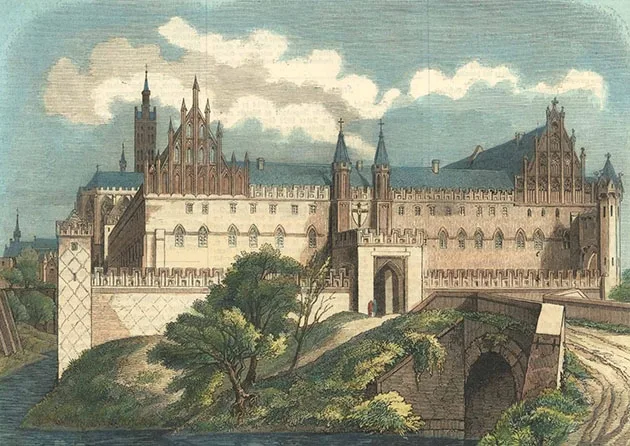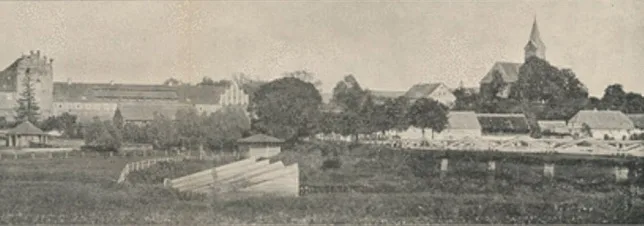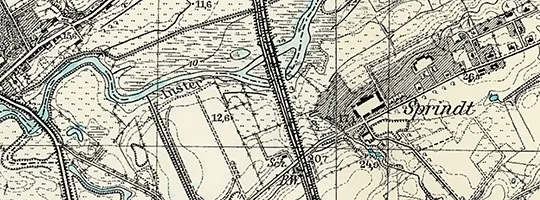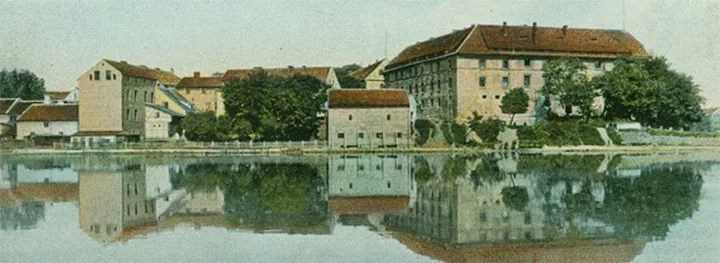
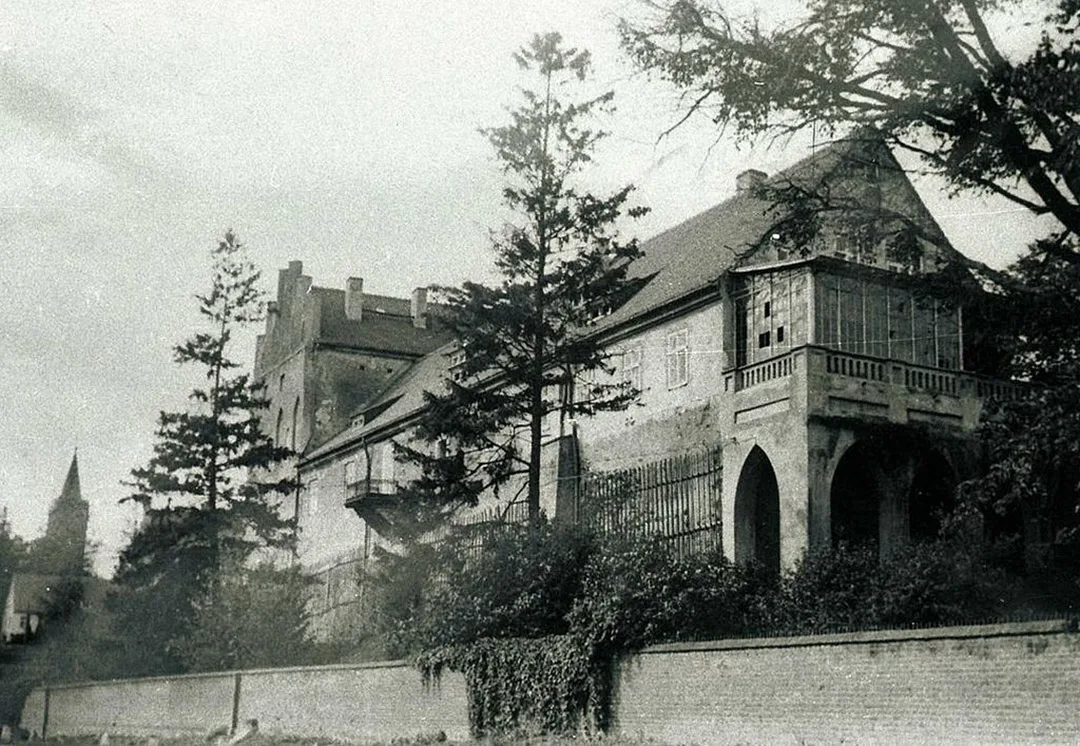
It was probably burned to the ground during a Lithuanian raid in 1347, but as early as 1350 a timber-and-earth castle was built in its place on the orders of Master Winrich von Kniprode. In 1352 the land on which Georgenburg stood passed to the Bishop of Samland. The wooden castle was burned by the Lithuanians in 1376, after which, in 1385, construction in stone began, this time at the bishop's expense. The bishopric was evidently not short of money, for the castle turned out even larger than Insterburg Castle — 58x56 m. Adjoining the castle was a Vorburg roughly one and a half times its size. Yet while Insterburg held out against the army of the Lithuanian Grand Duke Vytautas in 1403, Georgenburg was taken. The castle fell not because it lacked strength, but because its garrison was too small.
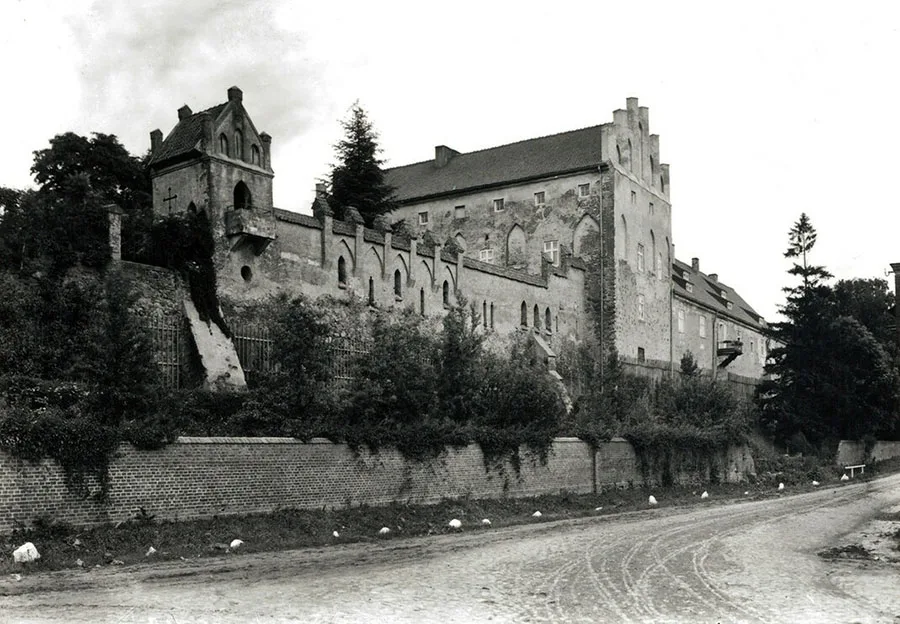
After the secularization of the Order, Georgenburg became ducal property. As in Insterburg, a Kammeramt was set up here to administer the surrounding territory. During the Polish–Swedish wars of the 17th century the castle was occupied first by the Tatars in 1656 and later by the Swedes in 1679. If we add that the commander of the Russian army, Apraksin, stayed at Georgenburg in 1757, and the headquarters of the French Marshal Davout in 1807, Georgenburg becomes something of a record-holder in this category.
After the Napoleonic Wars the castle was sold into private hands. In 1828 it was bought by the Scottish Simpson family, who established a horse-breeding estate at Georgenburg; at the turn of the 20th century the state bought it from them.
After the Second World War the castle passed to the Soviet settlers in fairly decent condition. First a military hospital was set up there, and later a civilian hospital. The castle buildings were then used as housing, and the Vorburg partly for administrative purposes as well. Like the other castles, Georgenburg was never repaired while in use, which led to the collapse and demolition of the north wing and the tower. Even so, in the early 2000s Georgenburg, together with Waldau, still impressed with how well it had survived compared with the region's other castles of the Order. In 2010 the castle was handed over to the Russian Orthodox Church, after which — just before the last residents were moved out — a fire broke out that virtually destroyed one of the two surviving wings. The "reconstruction" work being carried out here raises serious fears that we will soon lose this castle too, receiving in its place a replica made of foam concrete blocks and topped with metal roof tiles.
Illustrations: Bildarchiv Ostpreußen, bildarchiv-ostpreussen.de
Translated from Russian with the help of AI (Claude, Anthropic), October 2026.