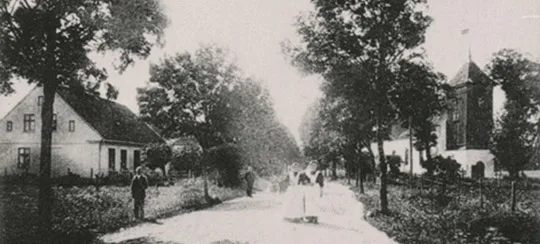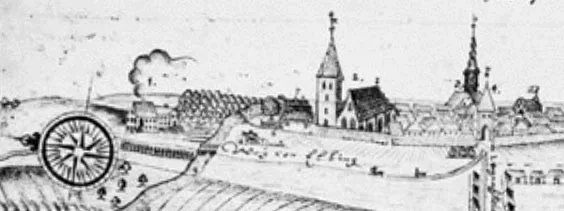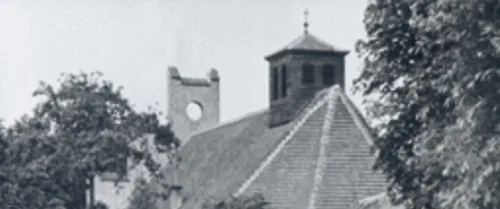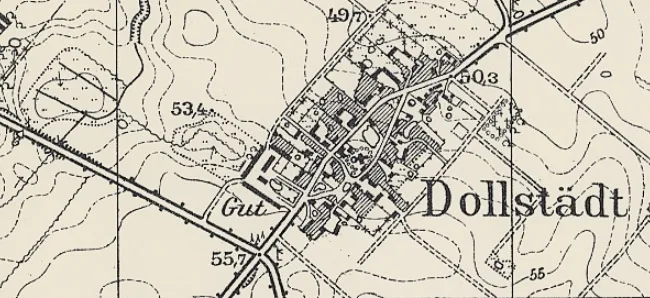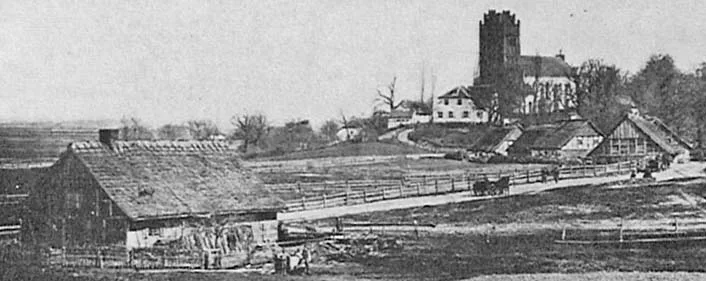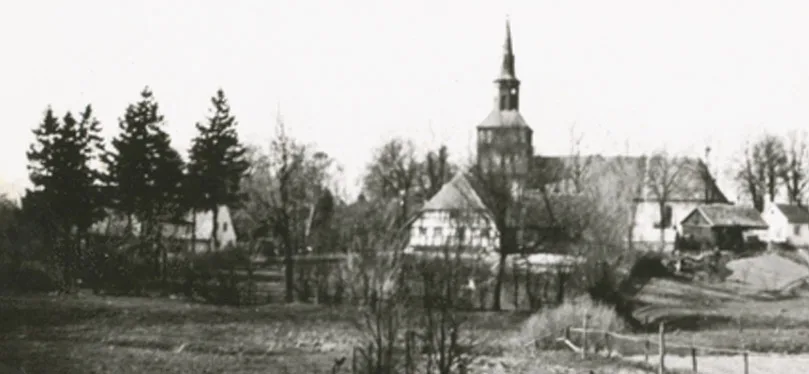
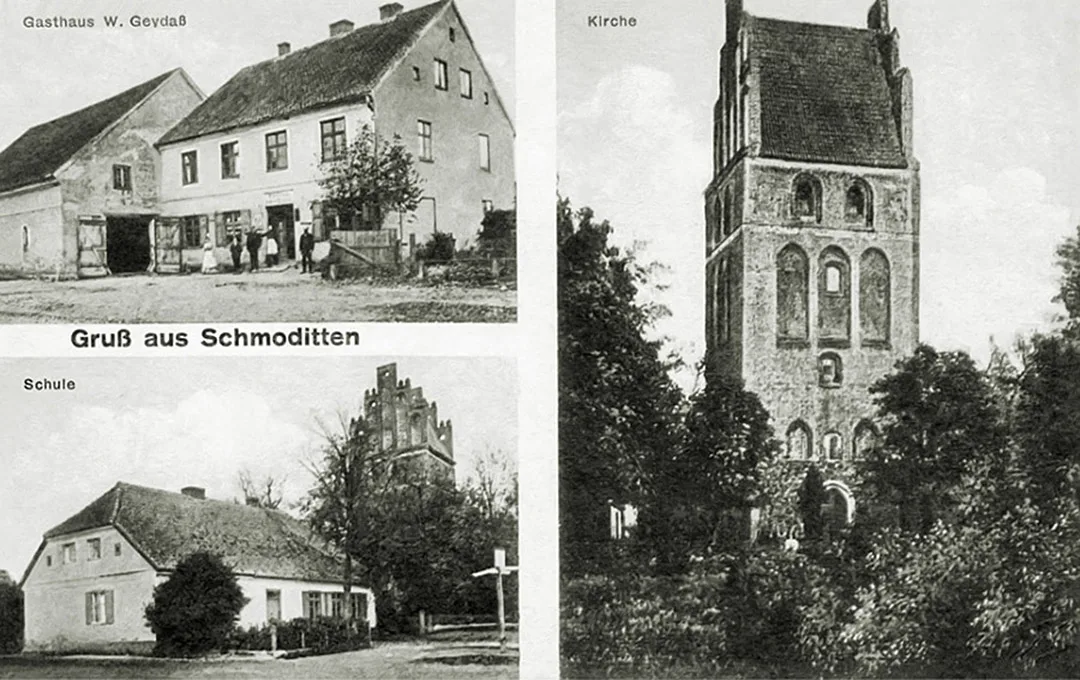
This church was heavily rebuilt in 1843; of the medieval church only the beautiful tower remained. The outward appearance of the church was plain. There were three diagonal buttresses at the corners, and the north-east corner was propped up by the sacristy. On the south, a porch (entrance) added in the 17th century. In front of it stood a red granite holy-water stoup; on the north-west, a hereditary burial vault was added.
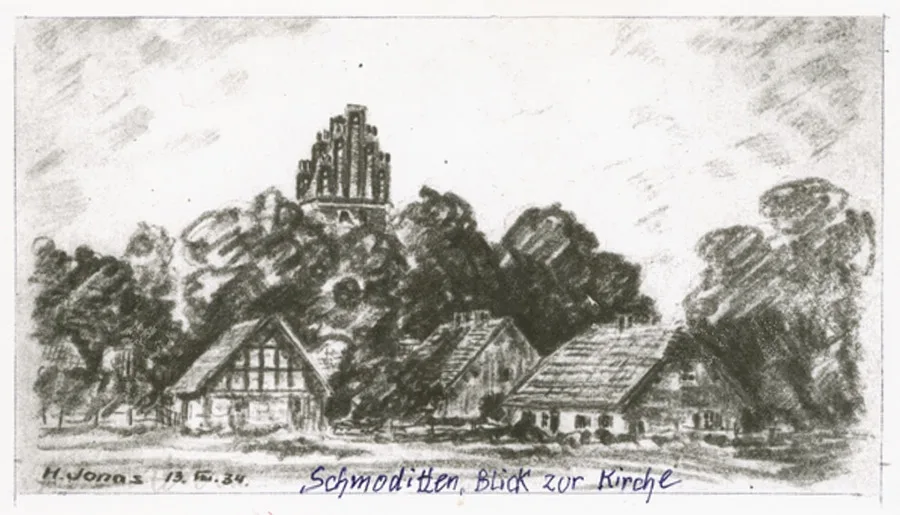
The massive tower is square, 9.73 m on each side, with its buttresses preserved. Inside the church, at the sides, there were flat ceilings, which in the central nave turned into massive vaults.
The main building had no chancel. The altar was made in 1679 and combined with the pulpit in 1843. A silver altar candlestick of 1731. A silver chalice with flowers and angels' heads. A small silver chalice of 1650. A small silver vessel dated 1625. A silver vessel given to the church by the millers' guild in 1713. A silver wafer box of 1634. A Baroque organ. Bells of 1713, 1817 and 1864 (W. Hubatsch). One of the bells is of 1541 (A. Boetticher).
After the Second World War the first settlers from Russia found the church still intact, with bells in the tower and "icons" at the altar. By the end of the 1960s only the walls of the church remained. Weeds and shrubs grew inside and out. By 1970 the remains of the church had been blown up by the military, and the rubble and debris were carted away to repair roads.
Photos on this page: Bildarchiv Ostpreußen, bildarchiv-ostpreussen.de
Translated from Russian with the help of AI (Claude, Anthropic), October 2026.