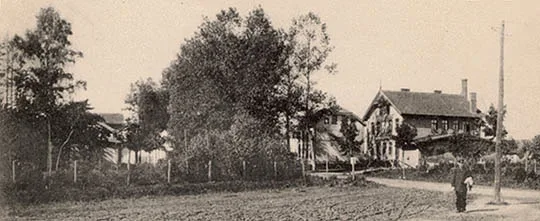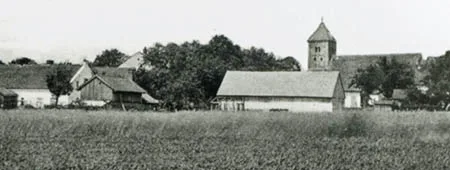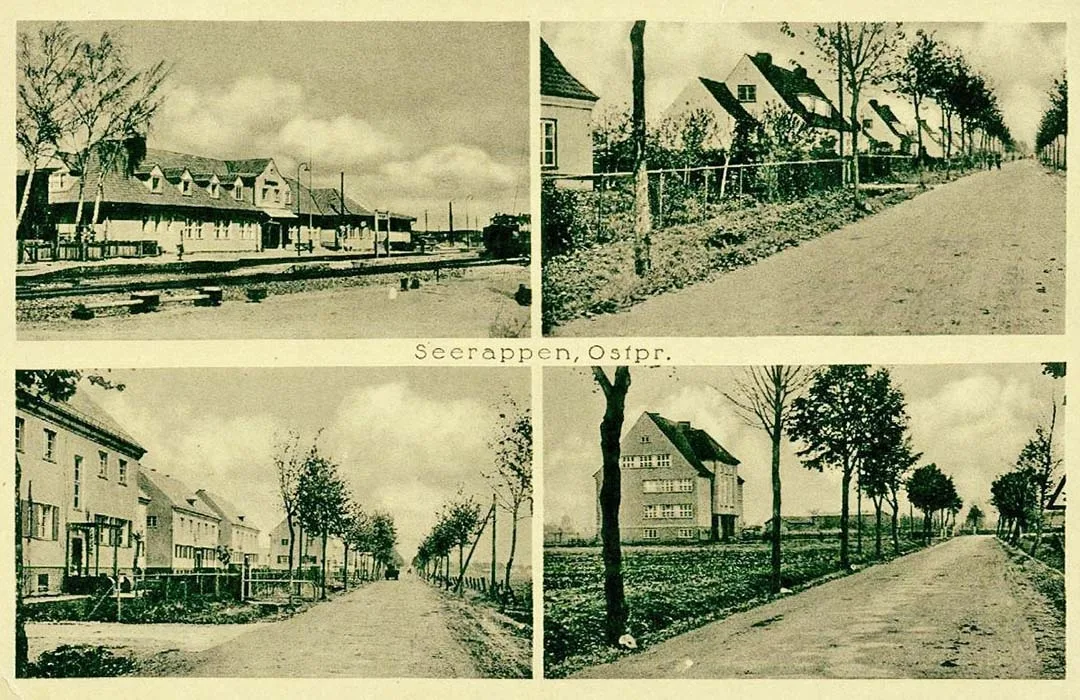
Seerappen was founded in 1400 as Serephin. In 1500 it is mentioned as Zereppe, in 1525 as Saurappen. After 1542 it was called Seuerappen, after 1785 Serappen. In 1820 it is also mentioned as Zerappe.
In 1785 Seerappen was classified as a royal village (königlich Dorf). In 1818 it appears in the gazetteer of localities as a Kulm-law and peasant village (Cölmisches und Bauer-Dorf) with thirteen households.
In the 19th century Seerappen was a village which from 1818 formed a rural community in the Kreis of Fischhausen (Primorsk; in 1939 merged into the Landkreis of Samland). The village belonged to the parish of Wargen (Kotelnikovo).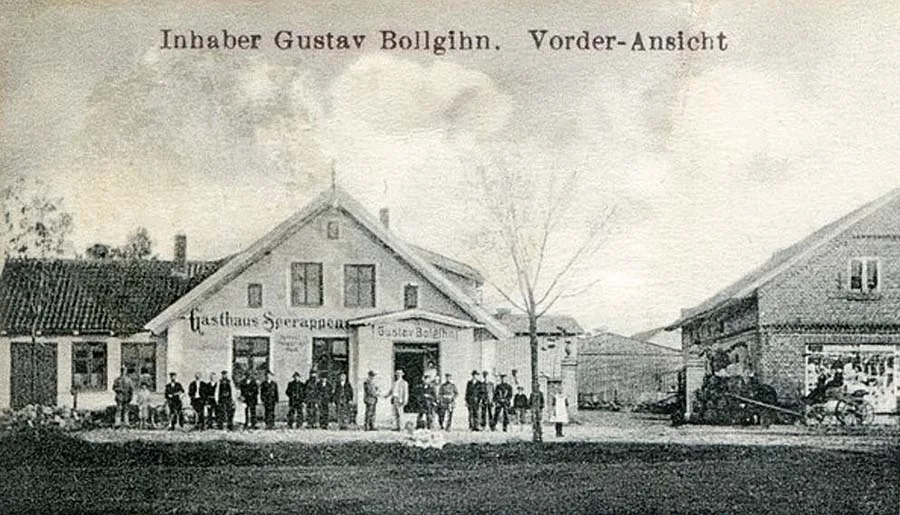 Gustav Bolgin's guest house in Seerappen.
In 1865 the Königsberg–Pillau railway was built, and Seerappen station was opened on it.
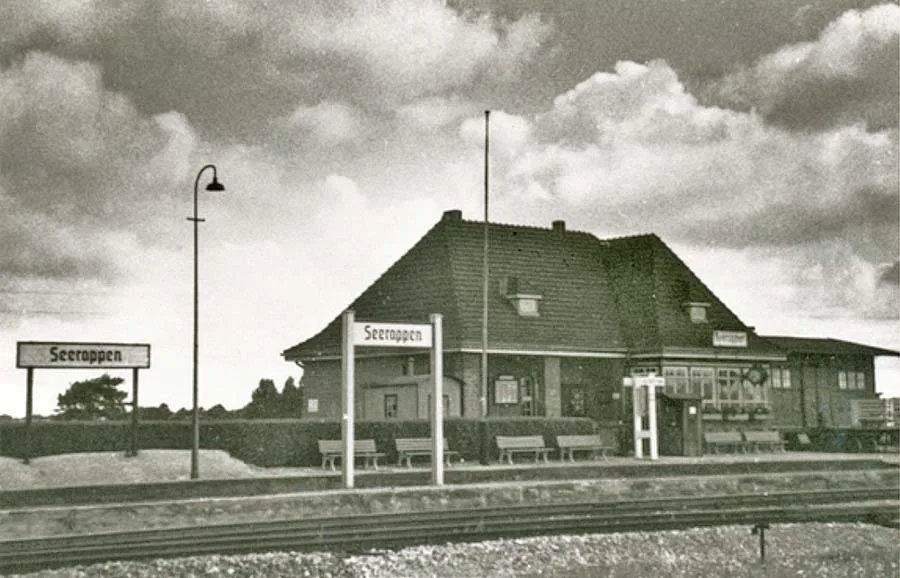 Seerappen station.
By 1871 the community of Seerappen comprised, besides the village itself, a Vorwerk, outlying farmsteads (Abbau) and a trackmen's house. In 1871 the rural community of Seerappen had 24 residential houses, occupied by 37 families and one single person. Of these, 21 houses were in the village itself, and the Vorwerk, the Abbau and the trackmen's house had one residential house each. On 13.06.1874 the rural community of Seerappen was included in the newly established Amtsbezirk of Rogehnen, renamed the Amtsbezirk of Seerappen in 1930.
From 1919 onwards the heads of the Amtsbezirk of Seerappen were representatives of the village of the same name. On 27.07.1891 the Seerappen Vorwerk (54°44'53'' N 20°17'38'' E) passed from the community of Seerappen to the Gutsbezirk of Korniten (Lyublino).
By 1895 the community of Seerappen comprised only the village of Seerappen itself; the community's landholdings amounted to 355.7 ha. The village had 26 residential houses, and the population consisted of 42 families.
By 1905 one public building had been added to the village's 26 residential houses, and the population consisted of 43 families and five people without families. Property tax revenue per 1 ha of land amounted to 13.36 marks, which was 18% above the average for the communities of the Kreis of Fischhausen.
On 30.09.1928 the abolished Gutsbezirke of Laserkeim (54°46'03'' N 20°17'02'' E), Rogehnen (54°45'15'' N 20°16'01'' E) and Korniten (Lyublino) were incorporated into the community of Seerappen. The community of Seerappen now consisted of the village of Seerappen (Lyublino), the Seerappen Vorwerk, the Laserkeim estate, the Korniten estate (Lyublino), the Rogehnen estate and the Korkehnen Vorwerk (Lyublino, part). The total landholdings of the community of Seerappen grew to 1,354.6 ha (1930). The community had 65 residential houses and 156 other buildings.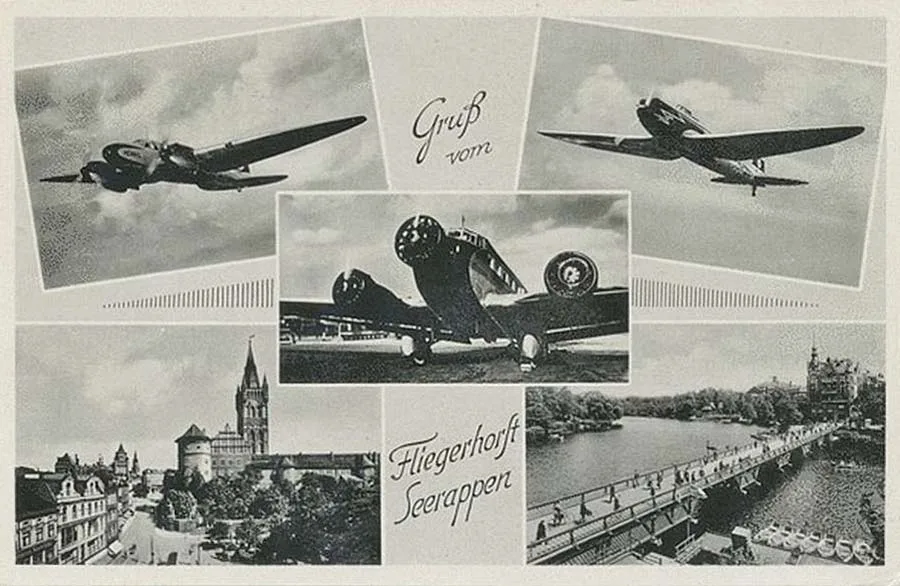 Postcard "Greetings from the Seerappen air base!"
In 1915–17 Seerappen housed an airfield and the airship headquarters of the German Navy in the eastern Baltic. A hangar with an area of 7,200 sq. m and a height of 70 m was built to house the airships. Later the airfield was used for aeroplanes.
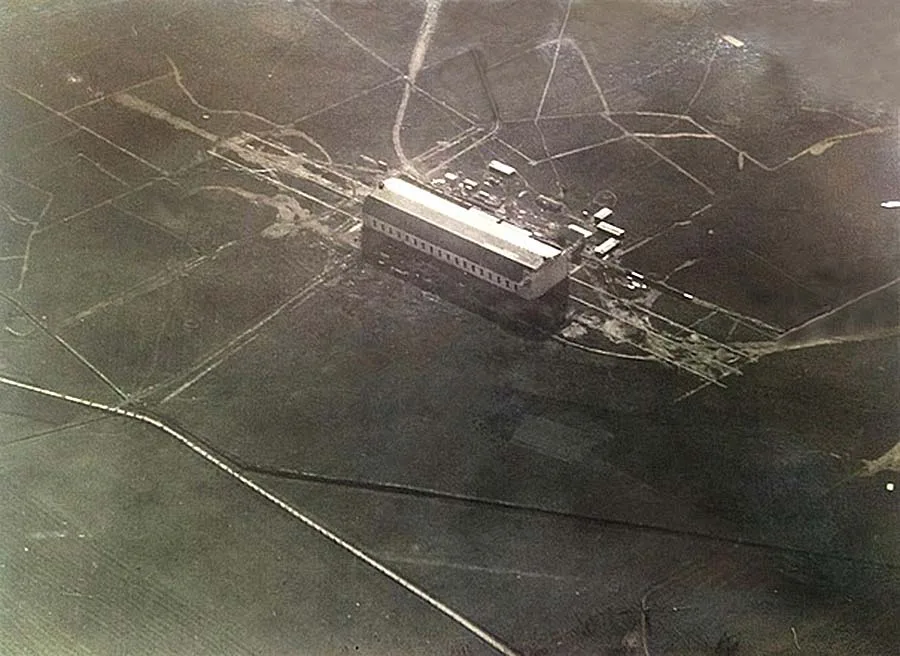 The airship hangar in Seerappen.
From the beginning of 1940 the following were based here: the 2nd flight of the 76th interceptor squadron, the headquarters of the 1st bomber squadron, an anti-aircraft transport battalion, an instrument flying school and flying school B38.
Korniten was founded in 1405 as Karhithen. Around 1539 it is mentioned as Carnitten, in 1785 as Cornietten, around 1820 as Kornieten, in 1860 as Cornieten.
In 1785 and 1818 Korniten is described as a noble estate (adelich Gut and adliches Gut) with two households.
In the second half of the 19th century Korniten was a knightly estate (Rittergut), which from 1867 formed a Gutsbezirk in the Kreis of Fischhausen. The estate belonged to the parish of Wargen.
By 1871 the Gutsbezirk of Korniten included, besides the estate itself, the Korkehnen school (Schulhaus Korkehnen; Lyublino, part) and a "forest house" (Waldhaus). In 1871 the Gutsbezirk of Korniten had 10 residential houses, occupied by 22 families and one bachelor. On 13.06.1874 the Gutsbezirk of Korniten was included in the newly established Amtsbezirk of Rogehnen, renamed the Amtsbezirk of Seerappen (Lyublino) in 1930. In 1879 the landholdings of the Korniten estate amounted to 291 ha (58th–59th place among the 140 Gutsbezirke of the Kreis of Fischhausen), and property tax revenue to 4,802 marks (36th place in the Kreis). On 27.07.1891 the Seerappen Vorwerk passed from the community of Seerappen (Lyublino) to the Gutsbezirk of Korniten.
As of 1895 the Gutsbezirk of Korniten owned 308.8 ha of land. Besides the estate itself, the Gutsbezirk included the Seerappen and Korkehnen Vorwerke.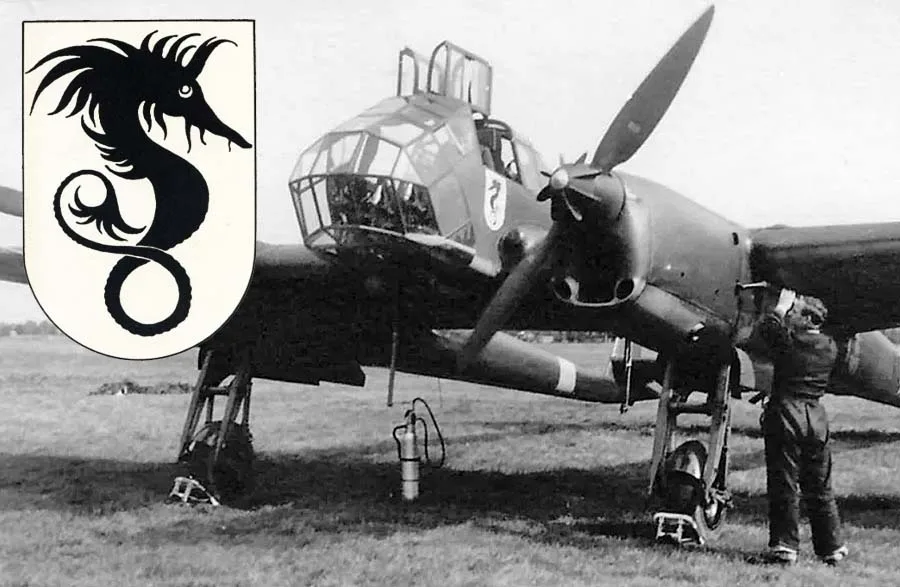 The emblem used to mark the aircraft based in Seerappen.
In total the Gutsbezirk had 10 residential houses, occupied by 25 families. Eight houses belonged to the estate itself, and each of the Vorwerke had one house. In addition, there was a school building in Korkehnen.
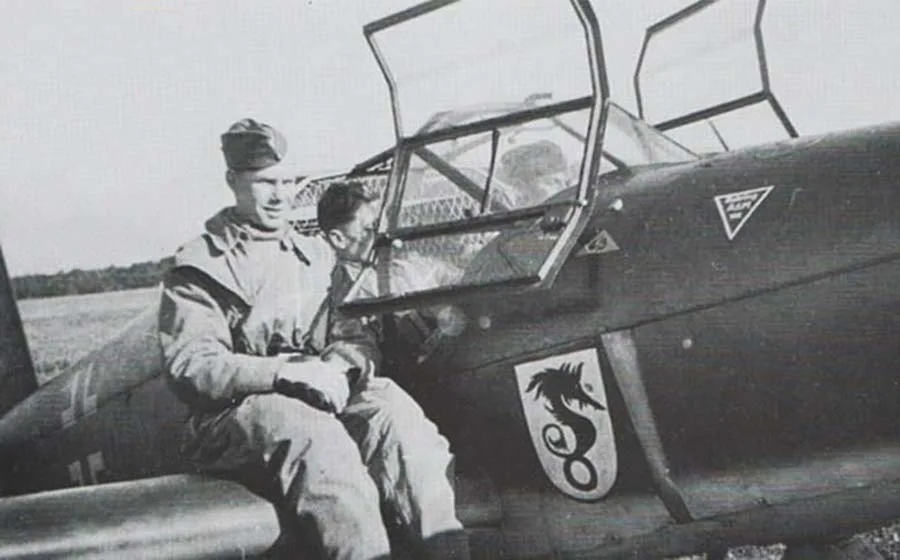 A mechanic on the wing of an aeroplane on the Seerappen airfield.
By 1905 the number of residential houses in the Gutsbezirk had fallen to eight, and the number of families living in them to 23. As before, the Seerappen and Korkehnen Vorwerke had one house each.
As of 1905 the Gutsbezirk of Korniten paid a record-high tax of 28.27 marks per 1 ha of land — 286% of the average property tax per 1 ha of landholdings for the Gutsbezirke of the Kreis of Fischhausen.
On 30.09.1928 the Gutsbezirk of Korniten was abolished and incorporated into the rural community of Seerappen (Lyublino).
Korkehnen was founded in 1261. Until the beginning of the 16th century it was called Karkainis. Around 1524 it appears as Carckeim, around 1539 as Carkem, around 1542 as Corkeim. By 1820 the spelling Karkahnen had become established.
In the 19th century Korkehnen was a Vorwerk in the Gutsbezirk of Korniten (Lyublino, part) in the Kreis of Fischhausen. The Vorwerk belonged to the parish of Wargen.
In 1871 the Vorwerk housed a school, which is why it was also called Korkehnen School (Schulhaus Korkehnen). At that time and later the Vorwerk had only one residential house. On 13.08.1874 the Korkehnen Vorwerk, as part of the Gutsbezirk of Korniten (Lyublino), was included in the newly established Amtsbezirk of Rogehnen, renamed the Amtsbezirk of Seerappen (Lyublino) in 1930. On 30.09.1928, owing to the abolition of the Gutsbezirk of Korniten, the Korkehnen Vorwerk became part of the rural community of Seerappen (Lyublino).
Seerappen was taken by troops of the 39th Army on 13.01.1945. On 19–22.02.1945 it was recaptured by the Germans during the relief of Königsberg. It was taken for the second time on 13.04.1945 by soldiers of the 192nd Rifle Division of the 113th Rifle Corps of the 39th Army.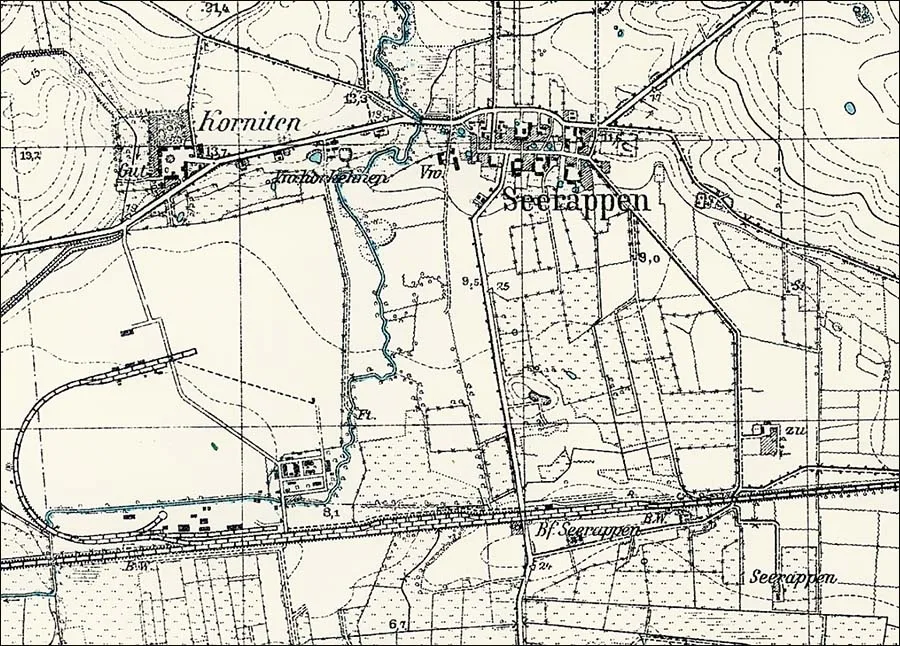 Seerappen and its surroundings on a topographic map of East Prussia (1933).
On 17.11.1947 Seerappen was renamed the settlement of Lyublino. Korniten and Korkehnen were not officially renamed and became part of the settlement of Lyublino de facto.
Initially the settlement became part of the Vzmorye village soviet of Primorsk District. From 1954 it was in the Logvino village soviet. In 1955 the settlement had 52 houses. From 1963 Lyublino belonged to the Pereslavskoye village soviet of Zelenogradsk District. Around 1975 Lyublino came under the Volochayevskoye village soviet of Guryevsk District. As of 2018 the settlement had a medical post, a kindergarten, a children's art school, a post office and a canteen.
Sights: mass grave of Soviet soldiers (1,074 people, memorial 1948).
Population: 1984 – 1,200, 2002 – 1,822, 2010 – 1,606, 2012 – 1,651 inhabitants.
Population of the Seerappen community: 1818 – 104, 1867 – 205, 1871 – 202, 1885 – 218, 1895 – 208, 1905 – 208, 1910 – 185, 1919 – 209, 1925 – 705, 1933 – 891, 1939 – 1,731 inhabitants.
Composition of the population of Seerappen in 1871: Protestant Christians – 197, other Christians (excluding Catholics) – 5, children under 10 – 46, literate – 131 (86%), deaf-mute – 1.
Composition of the population of the Gutsbezirk of Korniten in 1871: all 114 Protestant Christians, children under 10 – 35, literate – 63 (79%).
For reference
Population of the Gutsbezirk of Korniten: 1867 – 127, 1871 – 114, 1885 – 134, 1895 – 140, 1905 – 120, 1910 – 112 inhabitants.
Population of the Korniten estate: 1871 – 97, 1895 – 126, 1905 – 109 inhabitants.
Population of Korkehnen: 1818 – 63, 1871 – 6, 1895 – 5, 1905 – 5 inhabitants.
Population of the Seerappen Vorwerk: 1871 – 10, 1895 – 9, 1905 – 6 inhabitants.
Population of the trackmen's house: 1871 – 4 inhabitants.
Population of Abbau Seerappen: 1871 – 8 inhabitants.
Population of Waldhaus Korniten: 1871 – 11 inhabitants.
Population of the Rogehnen estate: 1867 – 169, 1871 – 151, 1885 – 151, 1905 – 150, 1910 – 138 inhabitants.
Population of the Laserkeim estate: 1867 – 76, 1871 – 70, 1885 – 71, 1905 – 74, 1910 – 65 inhabitants.
Composition of the population of Rogehnen in 1871: all 151 Protestant Christians, children under 10 – 37, literate – 91 (81%), deaf-mute – 1.
Composition of the population of Laserkeim in 1871: all 70 Protestant Christians, children under 10 – 21, literate – 41 (84%).
Translated from Russian with the help of AI (Claude, Anthropic), October 2026.