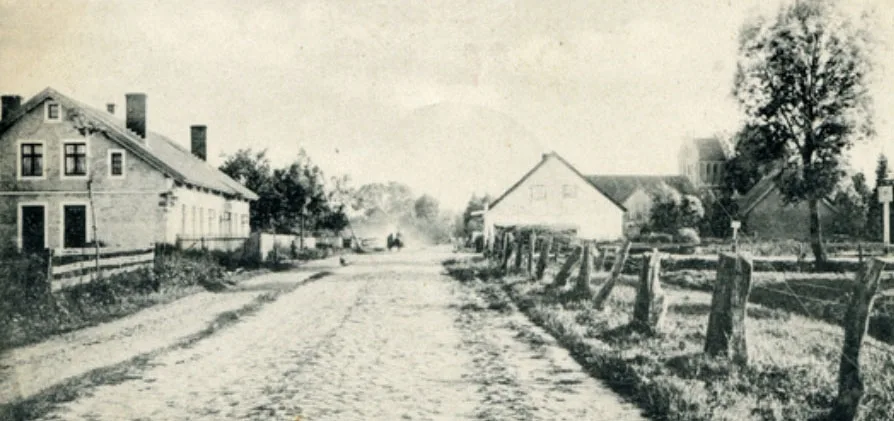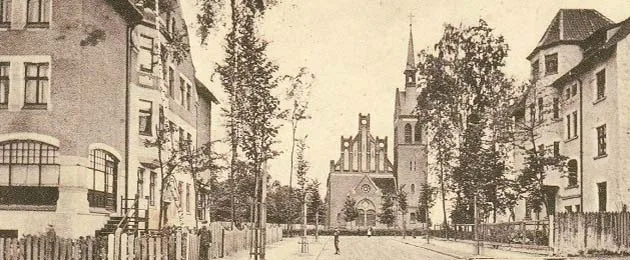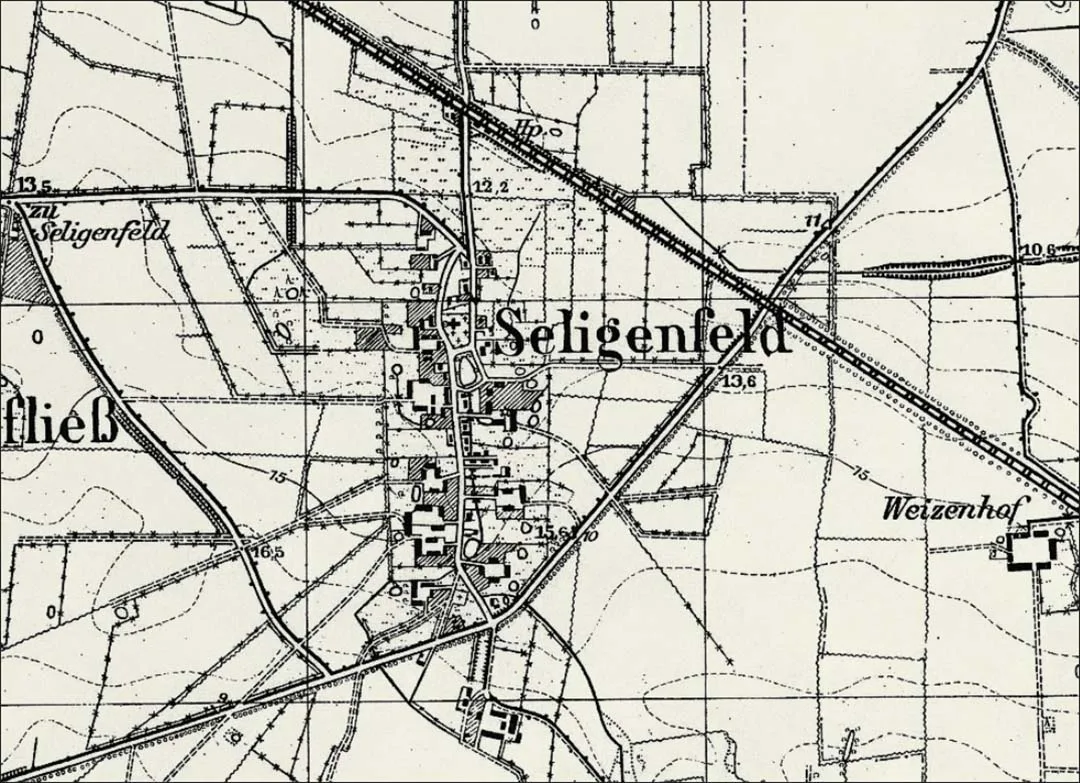
It was originally called Selig. At the end of the 19th century it was called Seeligenfeld or Seeligenfeldt.
In the first half of the 15th century a church was built in Seligenfeld and a parish was founded. The village itself was granted to the Benedictine convent in Löbenicht. In 1693 the church was rebuilt.
In 1785 Seligenfeld was classified as a noble village (Adelich Dorf) with 25 households and a church. By 1818 the village’s status had not changed, but the number of households had fallen from a quarter of a hundred to a score.
From 1818 Seligenfeld formed a rural municipality in the Landkreis Königsberg (merged into the Landkreis Samland in 1939).
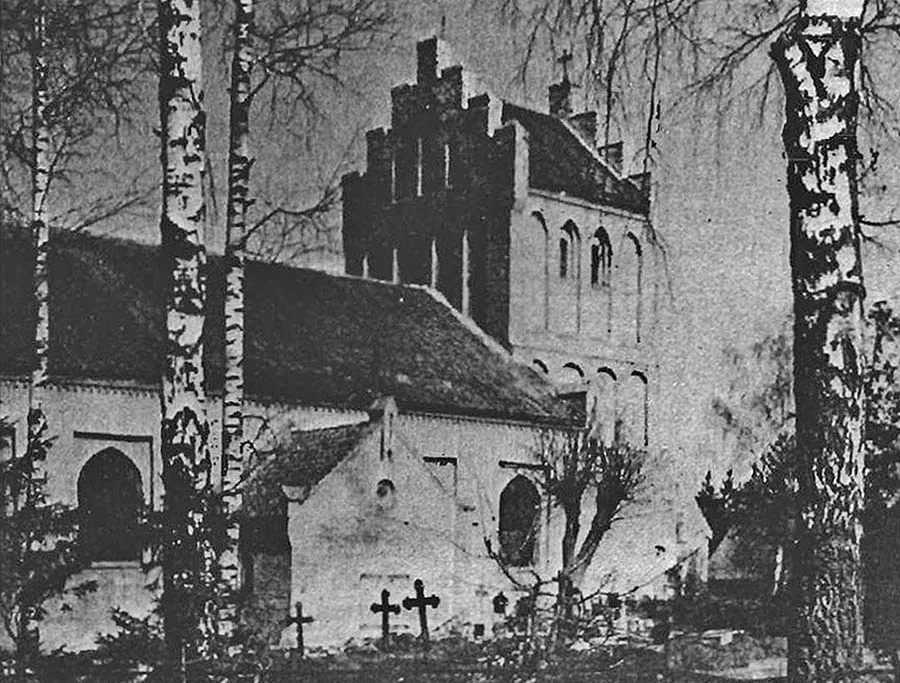
The church in Seligenfeld was the parish church for the surrounding villages and estates. On 01.10.1845 the church burned down after a lightning strike. On 02.08.1853 the Braunsberg (Braniewo) – Königsberg railway (a section of the Prussian Eastern Railway, Preußische Ostbahn) was opened, and a passenger platform was opened on it in the village.
In 1871 Seligenfeld had 39 residential buildings, home to 73 families and one single man. On 30.04.1874 the rural municipality of Seligenfeld was incorporated into the newly established Amtsbezirk (administrative district) of Seeligenfeldt.
In 1927 a school was operating in Seligenfeld. On 14.05.1930 the Seligenfeld Amtsbezirk was abolished, and the municipality of Seligenfeld became part of the new Amtsbezirk of Adlig Neuendorf (Rzhevskoye). On 01.04.1939 the municipality of Seligenfeld lost its independence and was annexed to the municipality of Königsberg.
The Seeligenfeldt Amtsbezirk
On 30.04.1874 Amtsbezirk No. 7 Seeligenfeldt was formed in the Landkreis Königsberg. It comprised two rural municipalities, Schönfließ (Komsomolskoye) and Seligenfeld (Dalnoye), as well as the Gutsbezirk (estate district) of Jerusalem (Moskovskoye). Residents of Seligenfeld held the post of head of the Amtsbezirk in 1898–1908 (the estate owner Kunz) and in 1929–39 (Rogall). On 15.11.1928 the Jerusalem Gutsbezirk (Moskovskoye) was abolished and incorporated into the municipality of Königsberg. On 14.05.1930 the Seligenfeld Amtsbezirk was abolished together with another Amtsbezirk, Neuendorf, which consisted of a single rural municipality, Adlig Neuendorf (Rzhevskoye). At the same time the rural municipalities of Seligenfeld (Dalnoye), Schönfließ (Komsomolskoye) and Adlig Neuendorf (Rzhevskoye) were united into the new Amtsbezirk of Adlig Neuendorf.
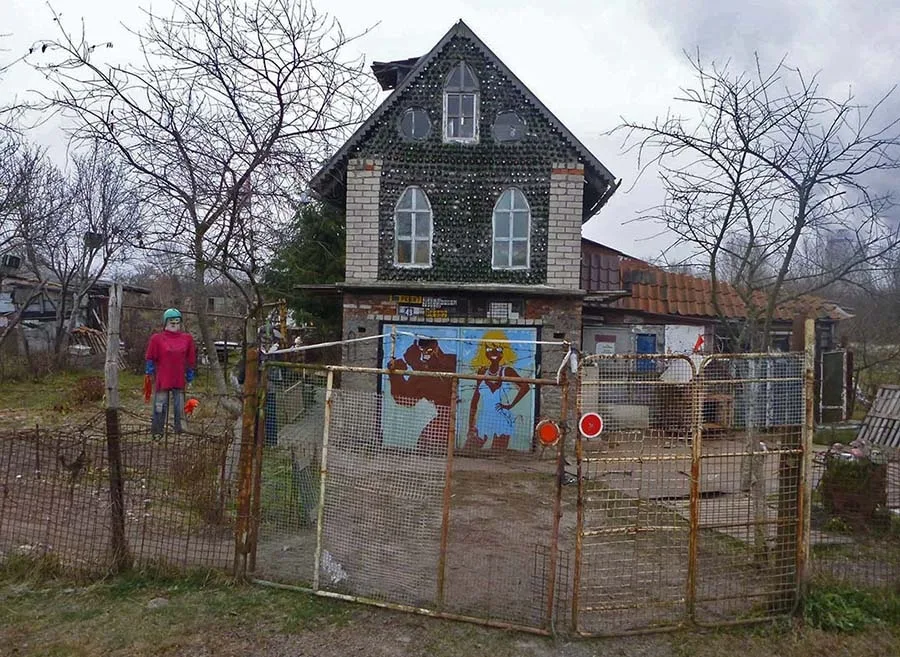 A modern local landmark: the Bottle House.
On 29.07.1948, by decision of the Kaliningrad City Executive Committee, the German districts of Seligenfeld and Jerusalem were renamed Dalny Gorodok in the Moskovsky District of Kaliningrad. By a new decision of 18.08.1949, Seligenfeld was renamed the settlement of Dalnoye, and Jerusalem the settlement of Moskovskoye.
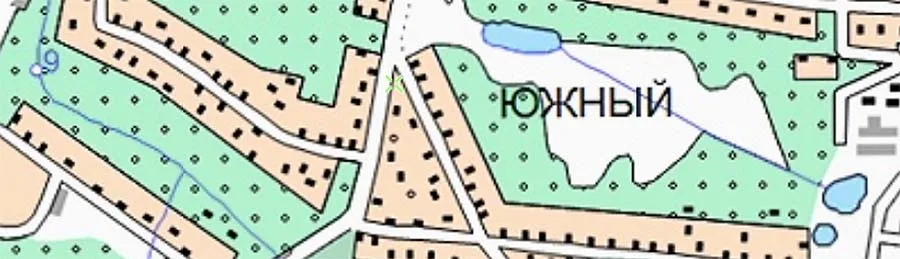
Both settlements became part of the Moskovsky District of Kaliningrad. The name Dalnoye appeared on Soviet maps but was not popular with the population. The church in Seligenfeld was demolished in Soviet times. In 2014 its foundations could still be seen. Today the name Dalnoye is not used, and Seligenfeld itself is merely part of the Moskovsky District of Kaliningrad. At present the settlement of Dalnoye includes Ivana Zemnukhova Street (part), Dalnyaya, Energetikov (part), Yamskaya Streets and Yamskoy Lane, as well as the streets of the Zheleznodorozhnik garden cooperative: 6-ya Liniya, Abrikosovaya, Vasilkovaya, Zelyonaya, Koltsevoy Lane, Ozyornaya (part), Ozyorny Lane, Oranzhevaya, Oranzhevy Lane, Polevaya, Polevoy Lane, Provodnikovaya, Rybnaya, Tenistaya, Tupikovy Lane, Yuzhnaya, Yuzhny Lane.
Population of the Seligenfeld municipality: 1818 – 170, 1867 – 495, 1871 – 461, 1885 – 583, 1905 – 550, 1910 – 474, 1925 – 537, 1939 – 741 inhabitants.
Composition of the population of Seligenfeld in 1871: Protestants – 460, Catholics – 1, children under 10 – 109, literate – 290 (84%), blind – 1, deaf-mute – 1, insane – 2.
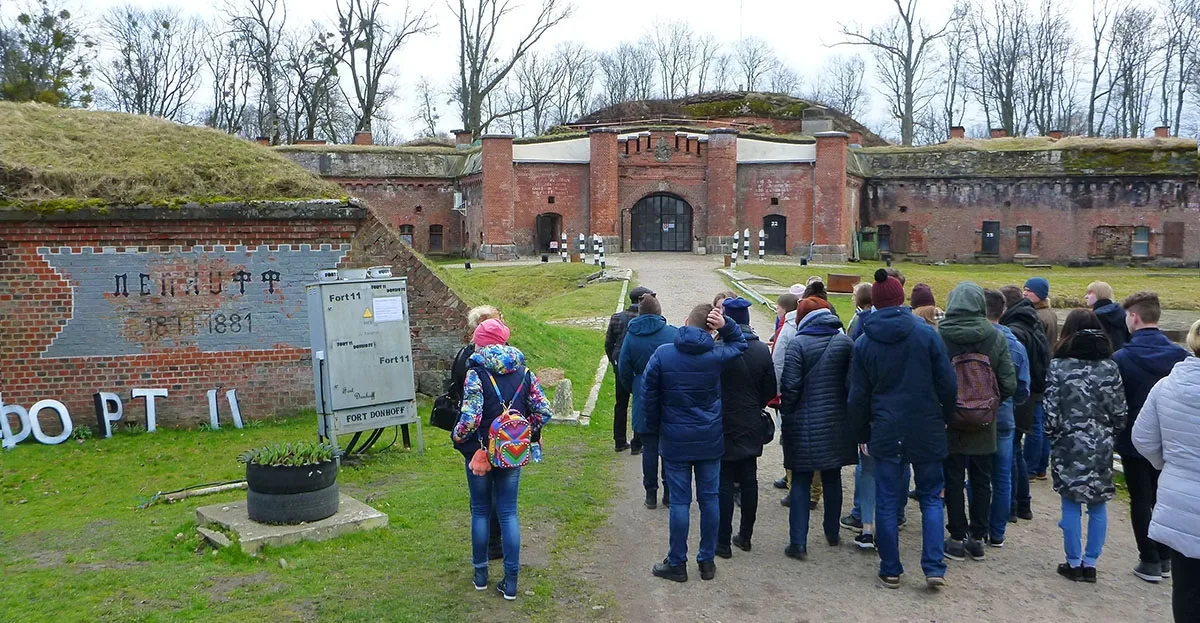
Population of Fort XI: 1905 – 7 inhabitants.
Seligenfeld parish: Aweiden (Yuzhny), Dalheim (Roshchino), Jerusalem (Moskovskoye), Schönfließ (Komsomolskoye), Seligenfeld (Dalnoye), Speicherdorf (Yuzhny).
Photos: Mikhail Ogorodnikov
Translated from Russian with the help of AI (Claude, Anthropic), October 2026.