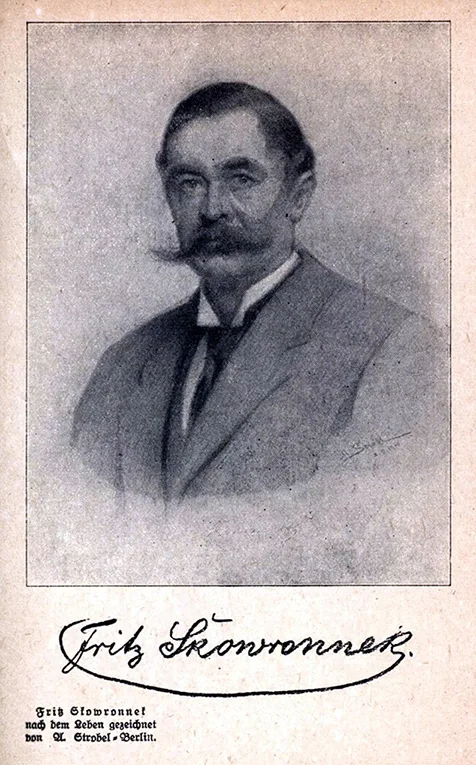
Together with his younger brother, Fritz attended the royal gymnasium in Lyck (now Ełk, Poland) and went on to study philology and philosophy at the University of Königsberg. In the early 1890s he moved to Berlin, where he worked first as a journalist and freelance author for several publishing houses, and later as editor-in-chief of the newspaper Breslauer Morgenzeitung. From the late 1890s he also began to make a name for himself as a playwright.
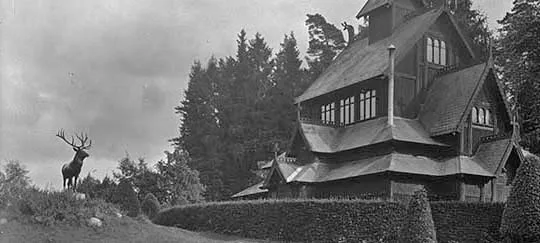
 The Skowronnek house in Schuiken.
Yet Skowronnek gained his greatest fame as a writer who celebrated the Masurian land and the distinctive character of its local culture.
A passionate hunter and angler, Skowronnek had known Masurian customs, tales and legends since childhood, and they later found their way into his hunting stories, Das Masurenbuch and other works of his Masurian cycle. His vivid descriptions of the Masurian landscape, its hills and lakes, its forests and their inhabitants, allow the reader to sense the author's bond with his native land.
In his works he also depicted the events of the First World War, both those that took place in East Prussia and those that unfolded across Germany as a whole.
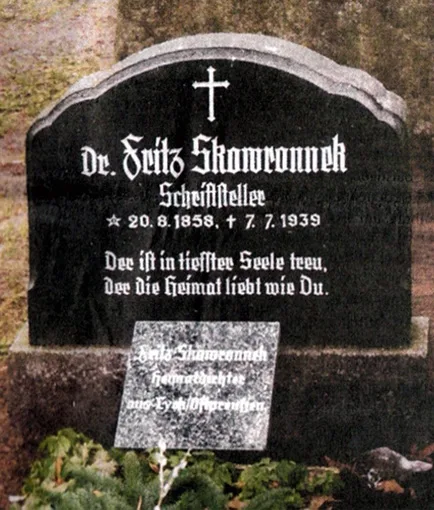
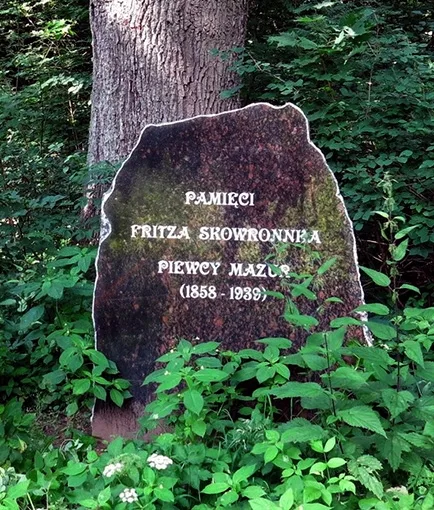
Fritz Skowronnek died in 1939 in Oranienburg, where his grave with its restored gravestone survives in the local cemetery to this day. In 2013 a memorial stone was set up on the north-eastern shore of Lake Goldap, not far from the author's birthplace, bearing the inscription: To Fritz Skowronnek, the bard of Masuria.
Below is a translation of one chapter from the Polish edition of Fritz Skowronnek's Das Masurenbuch. The events it describes very nearly led to the complete destruction of this majestic and picturesque forest, which to this day leaves an unforgettable impression on visitors with its stories and its beauty.
Fritz Skowronnek, “The Rominten Heath”
(an excerpt from Das Masurenbuch)
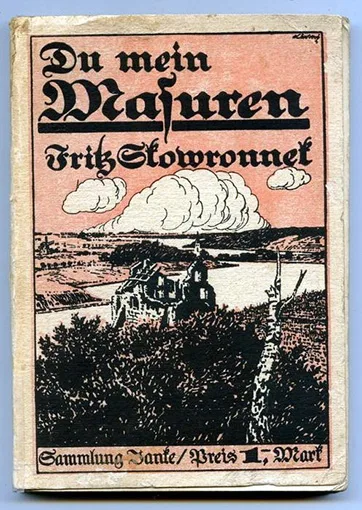
As a rule, few people know what wonders of landscape lie hidden in the Rominten Heath. It does not lie on a plain; on the contrary, it covers a chain of hills that in places rise to a considerable height of 250 to 280 metres. On the so-called King's Hill stands an observation tower offering a splendid view over the billowing sea of forest and the ridges along the very horizon. From there one can also see the shimmering surfaces of lakes: to the east the vast Lake Wystiter, to the west Lake Goldap, and to the south, already beyond the Russian border, a whole group of medium-sized lakes. There are a few lakes within the forest itself, though smaller ones. Its chief ornament, however, is the river Rominte with its four tributaries, fed by the waters of countless springs.
They do not meander lazily but drop steeply into the valleys, and their cold, clear waters hide countless trout, for whose breeding conditions here are simply ideal.
In many places these streams have patiently carved out their beds and rush noisily between steep banks, often a hundred feet high, so that at times it is difficult to get across them.
The bulk of the forest consists of pines and spruces. In the south and east, broadleaf woodland predominates. In 1852–1858 the forest suffered an invasion of the nun moth, which destroyed the greater part of it.
For two and a half months, from May until mid-July, the caterpillars fed. Had this calamity lasted any longer, the entire timber stock of the forest would have been wiped out. The nun moth infestation of 1852–1858 was described for us in detail by a well-known forester from Saxony, who was sent to East Prussia to study the phenomenon. According to him, the nun moth appeared in great numbers in 1850 and 1851, first south of the border, in the Polish forests. By 1852 it had already destroyed entire woods, whose owners ordered fires to be lit to burn it out completely, since they could make no use of the damaged timber. This did not get rid of the pest at all but merely drove it off, and in 1852 it turned up again in vast numbers on Prussian territory. The moths flew in clouds that defy description. The forestry buildings were completely covered with the insects, and on the surface of Lake Pillwung drowned moths lay like a thick layer of foam. The forest looked as if it were in the grip of a fierce blizzard, the trees seemed buried in snow, so densely were their branches covered with nun moths.
In the first years attempts were still made to put an end to this plague by human effort.
It was decided to kill the moths before they laid their eggs, and also to destroy the egg clusters. Around a million moths were caught and some 150 million eggs collected.
“Despite these vigorous measures,” the report states, “the following spring (1853) the same quantity of eggs was again found, even in places that had been cleared three and four times, which shows that barely half of the eggs laid had been collected. This is hardly surprising, for the nun moth, contrary to earlier research and observations, had laid its eggs even among the roots and moss of the forest floor, as well as in the crowns of the spruces right up to their very tops, which made collecting them extremely difficult. In addition, the administration ordered that the caterpillars which had hatched but still remained in dense clusters be crushed, and in the forests around Rothebude this was indeed done until 18 May, though with very limited manpower.”
Since it was discovered that the caterpillars did not move from burnt-out areas into untouched ones, but instead fell exhausted to the ground and stayed there, this was put to use in the battle against the moths.
“To exterminate the moths, large fires were set in many places as early as their first swarming, from 29 July to 3 August 1853, and again in 1854. Although great numbers of moths perished in the flames, they had managed to lay so many eggs that collecting them had to be abandoned, for the spruces were not only plastered with clutches tucked between layers of bark but literally encrusted all over with eggs lying side by side and one on top of another. The workers could brush them off by hand, at least from the stumps, which had been stripped of bark for this very purpose back in winter, but on which the nun moth had laid its eggs all the same.
In May 1855 the feeding of the caterpillars reached a scale probably unknown since time immemorial. By 27 June, in the forests surrounding Rothebude, more than 10,000 morgs (a unit of area equal to approximately 0.56 ha. — Translator's note) of trees stood bare, and about 5,000 morgs had been damaged. Yet this plague exceeded even far worse expectations. By the end of July the trees on an area of 16,354 morgs had been completely destroyed, and on 5,841 morgs they had been damaged so badly that they had to be felled. It no longer mattered to the caterpillars whether they devoured conifers or broadleaf trees. Nor did the age of the trees make any difference, for they also swarmed over and devoured spruce plantations consisting entirely of seedlings from the previous year and the current one! The tops of young spruces and pines bent under the weight of the clouds of caterpillars sitting on them. Their droppings, which in the end covered the entire forest floor in a layer two to three inches deep, and in some places up to six inches, fell from the treetops in an endless shower, and soon, as far as the eye could see, not a single green leaf, not a single blade remained.”
After the nun moths came the longhorn beetles, which destroyed what was left. By then the workers could no longer keep up with felling and hauling away the dead trees, even though anyone was free to take as much timber as he wanted. The remaining trees fell of their own accord, toppled by a moderate wind into tangled heaps, and on the stripped stumps a white mould formed that glimmered eerily in the dark. Two feet above the ground, the trunk from which the bark had crumbled away was covered with a thin white film that glowed so brightly it could be clearly seen from a hundred metres away. On the rotting trees there also grew a hard bracket fungus that can be hung on the wall like a little shelf. Half a dozen fine specimens adorn the wall of my study.
The Rominten Heath was the favourite hunting ground of Prince Friedrich Karl (Friedrich Karl Nikolaus, Prince of Prussia, 1828–1885. — Translator's note) from 1868 until his death.
The Kaiser first came here in 1890 for a ten-day visit. The following year he ordered a small wooden hunting lodge to be built in the Norwegian style, where every year he spent two weeks or longer during the red deer rut.
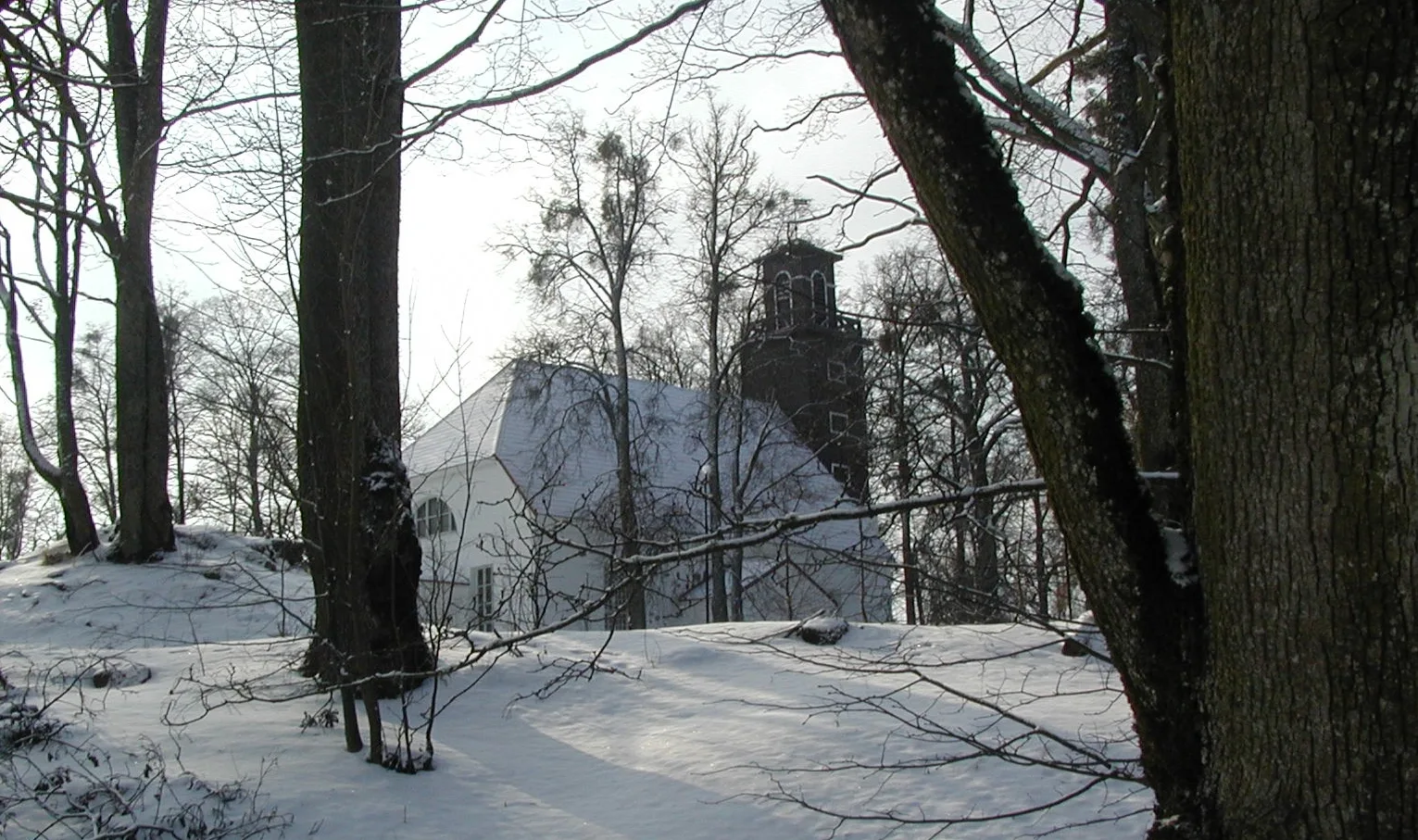
In 1893 a wooden chapel, likewise in the Norwegian style, was built and dedicated to the Chapel of St. Hubert (located in Amboise, France; according to legend, Leonardo da Vinci is buried there. — Translator's note). The Kaiser usually came to Rominten with a small retinue in the last week of September. In later years his constant companion was the Empress, for whom a hunting lodge similar to the Kaiser's was also built.
Naturally, for the most exalted of hunters, who could spare only a few days for the chase, all manner of preparations had to be made to ease the undertaking. As early as August the hauling of timber was halted, so that there would be time to level the rutted roads. Many bogs and marshes were drained and turned into splendid meadows, which the game was glad to visit. Around each such meadow, at a suitable distance, ran a stalking path, which was cleared of dry branches before the Kaiser's arrival.
So that the animals could emerge from their cover, paths screened with brushwood led to the meadow from every side. The foresters knew their game very well. They got to know it best at the feeding stations, where deer and other animals came out without fear, following the sledge of the forester, whom they regarded as their benefactor. In later years large shelters were built for them, where they could take refuge in bad weather, for winters in East Prussia are long and harsh, and especially hard on the young animals, even though they were given extra feed. Not infrequently a lingering winter raged on until the stags had already grown antlers a foot long.
The Empress, too, came to love the Rominter Heide and accompanied the Kaiser on his visits.
Thus, in the easternmost corner of the empire, the Kaiser enjoyed two weeks of family life and genuine rest, which also included successful hunting outings.
At times the Kaiser put hunting before rest; he would rise so early that by half past three he had already breakfasted and was ready to set off. In the last years of his reign he gave up distant outings altogether and slept longer. One morning he was informed that a large stag with sixteen points in its crown had been sighted nearby. Being in good spirits, the Kaiser decided that the stag could wait! And indeed the stag went on grazing in the forest clearing for another two hours or so, and then at last ambled unhurriedly away.
In Rominten the Kaiser was informed only of the most important political events; even so, he could not withdraw entirely from his duties and sometimes worked late into the night. Ministers and state secretaries arrived with reports, the telegraph clattered incessantly, and postmen were forever hurrying between the post office and the lodge. Several telephone lines connected this place, cut off from the world, directly with Berlin, so that the monarch could confer with his ministers.
The Kaiser loved long walks. In Rominten he would sometimes wander quite alone through the park, or go down into the valley and strike up conversations with the worthy peasants working in the fields. All the while he smoked incessantly, though exclusively a light, mild Dutch tobacco costing no more than a pfennig. On long outings he puffed on short little pipes, originally decorated with hunting motifs, and in the lodge he would occasionally take out a cigarette.
This picture would be incomplete without mentioning the warm affection between the people of Rominten and the imperial couple. The lord of the Rominten estate took good care of his workers. He built them sturdy houses, furnished throughout.
The Empress showed them even greater care. Small children not yet of school age were placed in the charge of a nursing sister, who could give them first aid if they fell ill, so that no doctor was needed. Schoolchildren were given books and exercise books, and at Christmas everyone, young and old, received useful presents chosen for them by the Empress herself. Every local resident was a guest of the “Kaisers” at least once. They were given biscuits and chocolate, and during the reception the Kaiser had all sorts of refreshments served as well. Many a time he checked in person whether the Bunken, as children were called in East Prussia, were studying diligently at school. He would arrive at the school very early and listen to a lesson for half an hour. The children, for their part, seemed not the least bit abashed in the presence of this local school inspector. As if at the wave of a wand, every hand shot up, and forty pairs of eyes burned with the desire to give the right answer.
A delightful picture! In this, Kaiser Wilhelm II was continuing the long-standing traditions of his house. One need only recall Friedrich Wilhelm III and Kaiser Friedrich! And anyone who had the chance to observe the imperial family in Rominten came away convinced that release from exhausting duties and a return to the carefree naturalness of being with one's nearest and dearest is surely the best rest of all.
Translated by Sergey Mikhaylov. Photos: Ostpreussen.net.
Translated from Russian with the help of AI (Claude, Anthropic), October 2026.