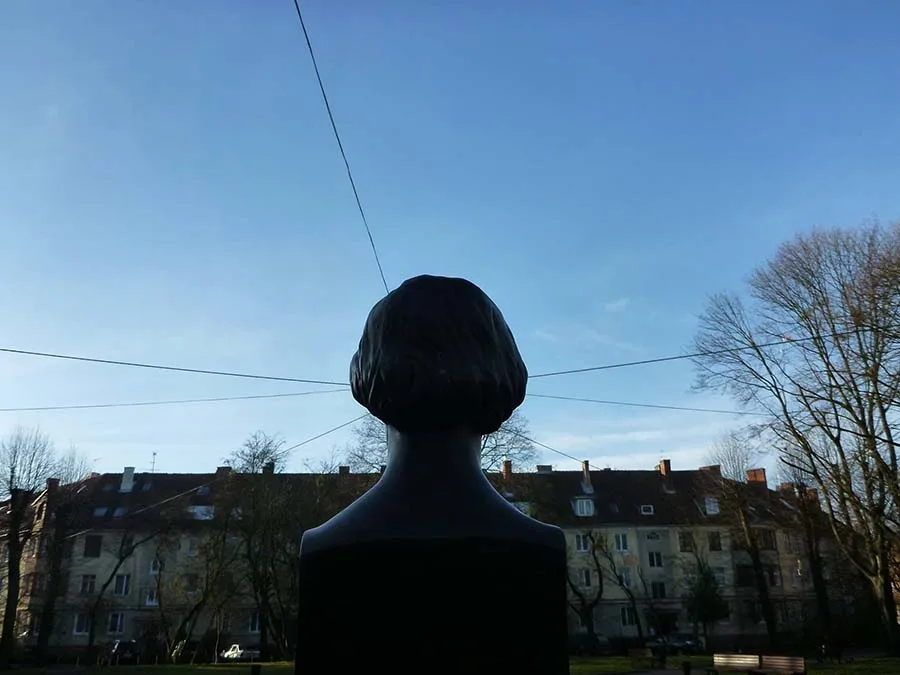
One day I borrowed her mask and went out into the city. I sat down on the white bench that used to bear a quote from Woody Allen; it was vandalised and had to be painted over, and now there is a quote from Oleg Gruz there.
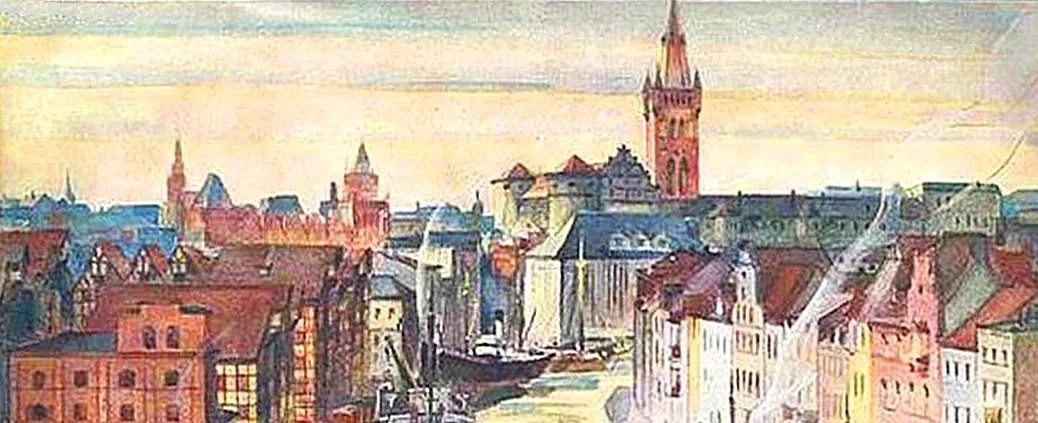
In front of me is Prospekt Mira, the very centre of the city. The place I call the Liver of the city, and that is a much fairer name than the “Heart”, filled with nothing but vacuum. All the nightclubs, restaurants, bars and cafés are here. Here, on the night from Friday to Saturday, your liver feels it is being taken tremendous care of. Here it lives, here it dies.
I pulled the mask down over my eyes. Darkness in the middle of a sunny day means panic. But panic not because you are afraid of the dark, but because this darkness is full of terrifying sounds.
These are the sounds of my city! This is how it sounds! Switch off your iPod and listen some time. Sometimes sounds can tell you more than pictures.
First you hear the cars
The cars drive over the cobblestones. It is such a rough, juicy sound. It makes you feel good and somehow calm in a thousand-year-old way, but then the brakes join in. All the cars slow down, and most of them are due to have their brakes replaced, greased, cured; they make a sound that resonates somewhere in your chest, as if you were being cut to pieces, having your teeth drilled, or hearing metal scraped across glass. They slow down because the cobbles are uneven, full of holes; they were relaid, but for some reason nobody managed to do it evenly, the road heaves like the Baltic Sea, and the cars are like the little ship on the city hall logo.
Of course, it is a very creative idea – to lay the cobblestones so that even in the centre you feel you are in a seaside city and that somewhere here, thirty minutes’ drive away, you can go down to the beach and admire the surf.
But then it should be stated openly! There’s no need to be shy about our original ideas. We should put up some special, beautiful sign saying that this stretch of road is an original urban solution, a special environment, a kind of city beach where you can wash your cars and feel what it is like to take a run-up and dash into the sea. We must love what we have and advertise our successes!
The next sound is doors slamming
The doors slam with a merciless metallic sound: BOOMPH!!!
These are the steel security doors we inherited from the 90s. Back then, home really did become a fortress for many people. And it had to be protected with moats, drawbridges and steel doors. The word has stuck to this day. I even remember how, in my friend’s building on Leonova Street, some up-and-coming politician, without asking, simply to do a good and safe deed, replaced a magnificent German door with an iron one and stuck stickers with his first and last name on top. So that people would know whom to thank at the moment when BOOMPH rings out and the whole building shudders, the whole street shudders, the roads crack, pensioners reach into their handbags for pills and cats involuntarily leap up into the trees.
I listen to these doors. They remind me of the hatches into a tank. But in tanks they are justified, in tanks they save lives – what are they doing in the centre of my city? I don’t understand it. But they certainly divide people.
In a city of iron doors, it is very hard to smile at the people coming towards you.
After all, go to Chaikovskogo Street: there is the Tchaikovsky Hotel there, and next to the hotel an exhibition of beautiful doors. Just look at them. Imagine the sound they make opening and closing, what it is like to hold their handles, how much warmth human hands have put into them. BOOMPH.
The next thing I hear is the wind
The wind is our most penetrating sound. The city’s calling card. I am surprised we keep quiet about it. I remember visiting Essaouira. That is in Morocco. There the African continent makes a slight bend. Because of it, the place is very fashionable among surfers; Bob Marley and Jim Morrissey hung out there in their day, all because of the wind. The town is even called that – the city of winds. The locals are not afraid to admit it.
I talked to the owner of a little restaurant and asked: “Do you have winds in summer too?” He said yes, in summer too, a bit warmer, a bit calmer, but there is always wind. It is like the city’s breath; if it stops, the city will simply cease to exist. And we are just the same: without wind we would decide that very second that the sea had left us – had simply flowed away somewhere to another country or to Piter. We vitally need the wind, we should be proud of it, we should get into the habit of going outside and simply listening to the wind for a few seconds, catching its rhythm, and living the whole day to that rhythm.
We must learn to be in harmony with our city.
I go to Dmitriya Donskogo Street, to the spot where the road curves very picturesquely and the asphalt suddenly turns into cobblestones. And I listen. That very moment when a car’s wheel rolls off the asphalt onto the cobbles. That click is our signature sound. On asphalt a car sounds very cheap. It is the cheap sound of a rattletrap. I am not saying all of ours are like that, but that is the sound map. Listen for yourself. And suddenly – click – the car is on the cobbles, and the sound becomes bourgeois, straight out of Stirlitz.
But now I want to hear the birds
Something happened to our birds long ago. They disappeared. Some think it is the environment. That is quite possible. Because once we drove out to Krasnolesye, and in the middle of a country road we came across bullfinches. The real red of bullfinches! It is wonderful. I hadn’t seen them since childhood, nor the blue of the tits my grandmother once showed me. I was about 7–8, we were sitting in the kitchen of our flat on Koloskova Street, and she says:
– Look, tits! – and her eyes grew moist, as if it were some unprecedented miracle, and now I understand that that is exactly what it is, an unprecedented miracle. Now I appreciate it.
And I also remember how, as a child, I threw bread to the birds and how those “rats with wings” called pigeons snatched the breadcrumbs from the little sparrows. And I felt so sorry for them that I wanted to stamp on the asphalt in anger.
And now I am walking towards the Baltika stadium. You know, there is a spot where billboards used to hang along the stadium, with the Drama Theatre opposite. That is where the rooks settle. There are black clouds of them there. I am not very good at telling rooks from ravens, but once someone told me how. Flocks are always rooks, and loners are ravens. It is an amazing place. I call it “50 metres of bird shit”. Try walking through it. It starts almost right at the stadium entrance and runs all the way to the crossroads. The entire asphalt is struck down with bird runes. You have to manoeuvre, but you can listen to the birds there – perhaps the only place in the city for that. It is very beautiful, like listening to an expensive soundtrack to a new Tim Burton film. Such an otherworldly CAW-CAW from the very sky.
The city’s palette of sounds
I have long proposed abolishing the priority of sight over hearing. It is not only the architecture of the buildings in your city that matters; the palette of sounds matters too. What matters is what you hear as you walk. Look at the people with iPods. They are 13 to 30 years old, they go out already wearing headphones, they are protecting themselves from the sounds of our city. These sounds blow up and break their world. Sounds are extremely important. Your mother’s voice is the very first thing you learn about life. Your mother’s voice and bright light. And only after that everything else. Your home town must sound comfortable and free of aggression; it will affect every sphere of activity, it will affect people, buildings and clothes.
We need not only a chief designer for the city, but also a chief sound engineer.
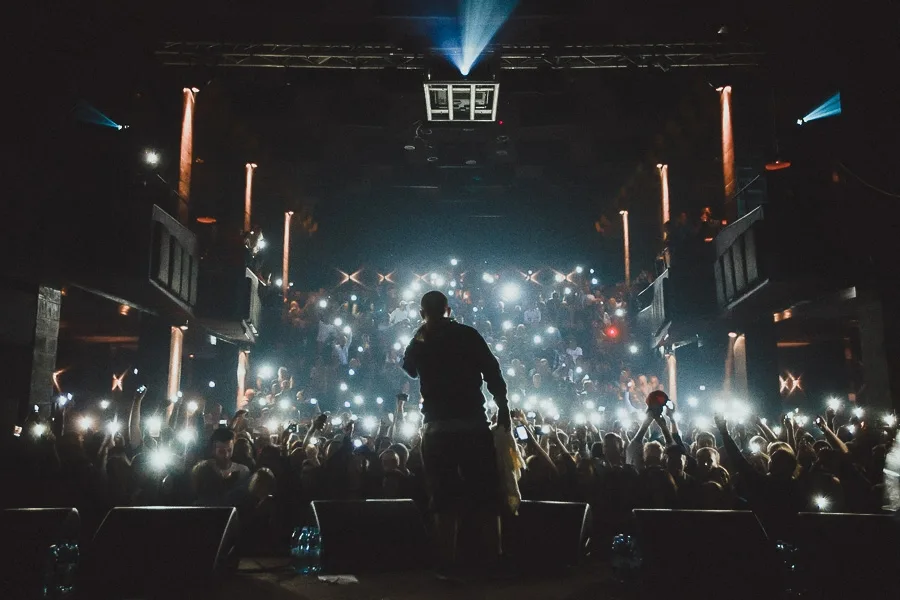
And it is high time conductors were brought out of the concert halls onto the streets. Streets are on trend right now. Street culture rules everything now. Let a conductor stand at the crossroads by the Schiller monument and conduct. Just like that, in his proper tailcoat and with his baton. He simply stands on a platform and conducts the cars, the brakes, the rooks, the iron doors, the winds and the people talking to one another. At least once a week, on Sundays. Just imagine the spectacle. But for now...
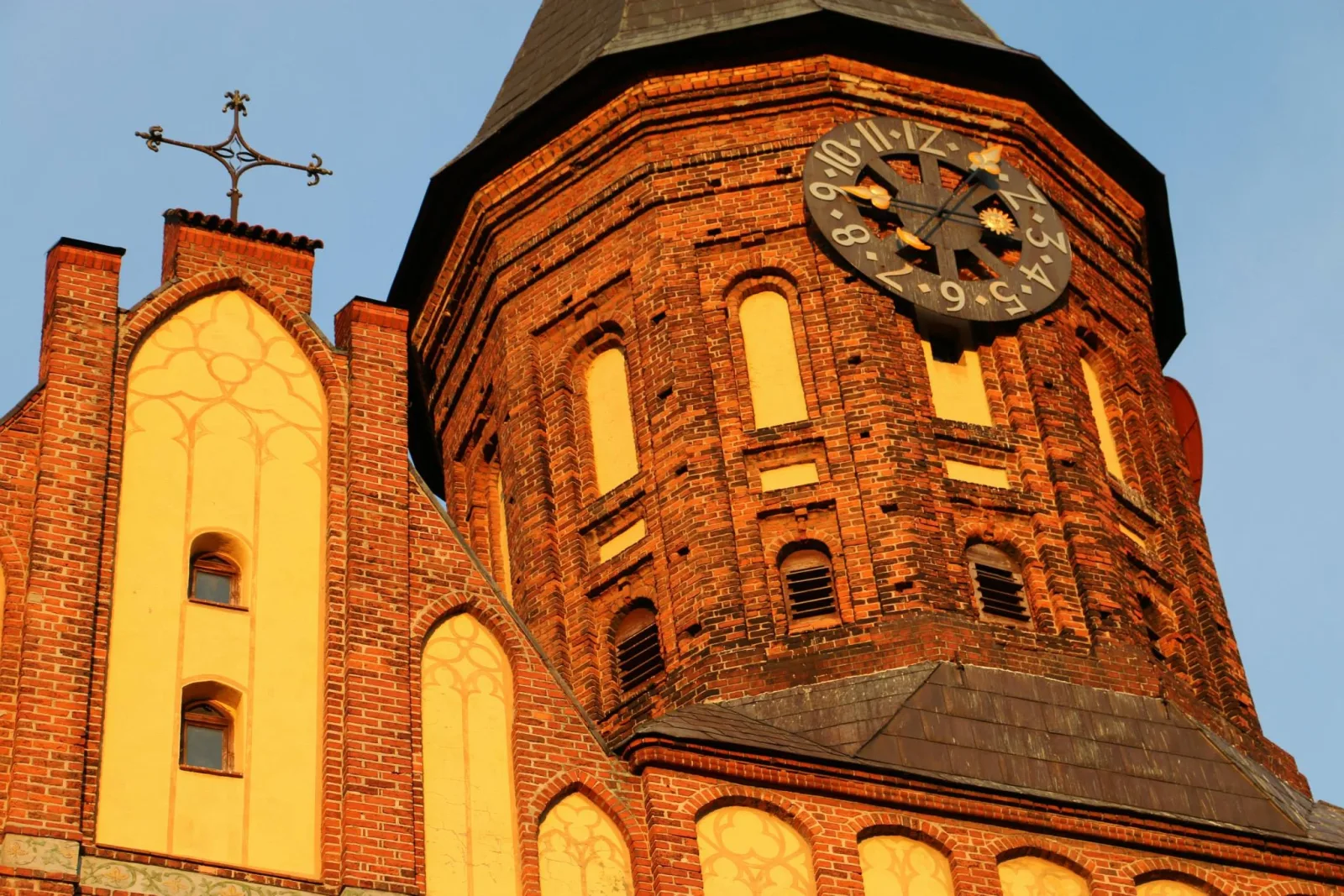
Tomorrow, when I go out into the city again, I will prepare properly. I will take three things: a sleep mask, earplugs and a golf club to feel ahead of me for the holes in the pavement, which I proposed long, long ago to declare architectural monuments, fence off with posts, hang plaques about their history and bring busloads of tourists to straight after a visit to the Cathedral.
I see nothing, I hear nothing, but I can speak. I love my city!
Translated from Russian with the help of AI (Claude, Anthropic), October 2026.