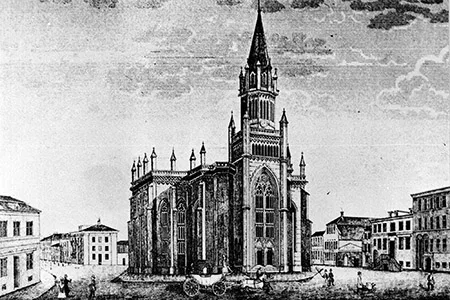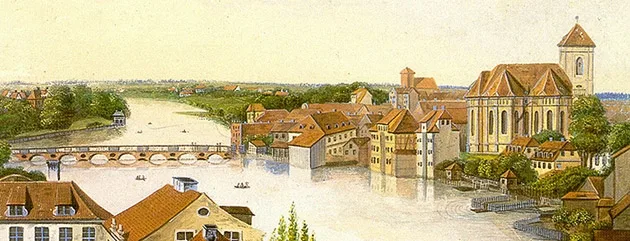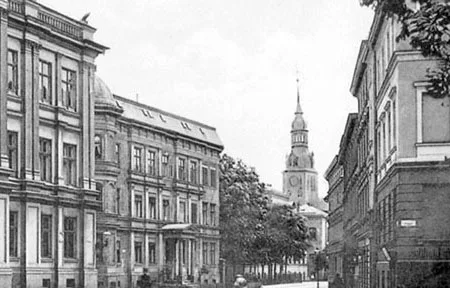
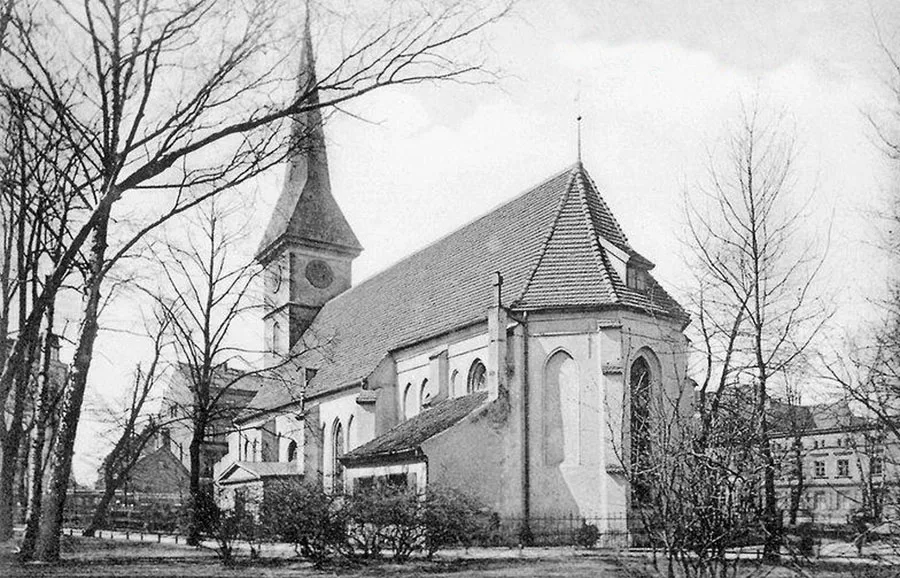
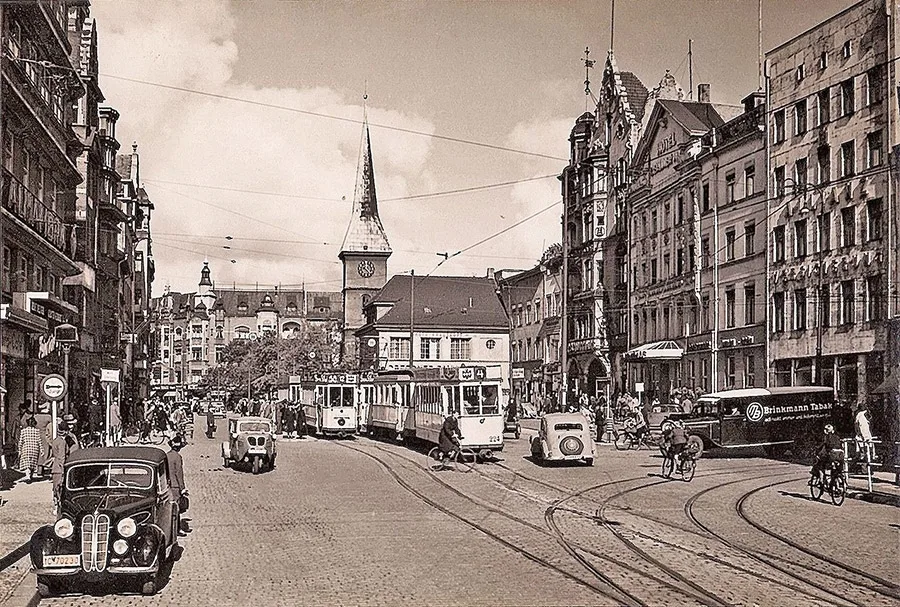
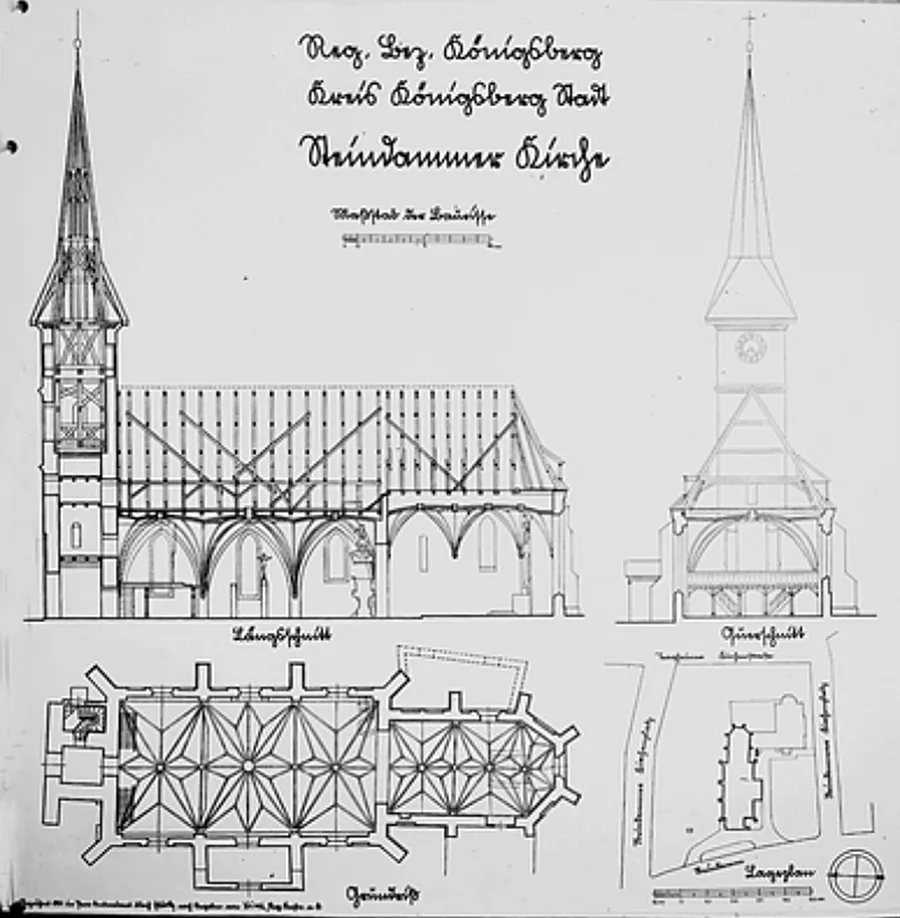
The Steindamm Church was destroyed during the Second Prussian Uprising in 1263. Then, in the first quarter of the 14th century, a new massive building of fired brick was erected on the same site, making use of the remains of the old walls: the lower part of the south-west wall with a plinth cornice of plain bricks. Its dimensions were approx. 41 m long, 11.3 m wide and 8 m high. Above the lower portal (entrance) was a round window with the moulded brick surround typical of the late 13th century.
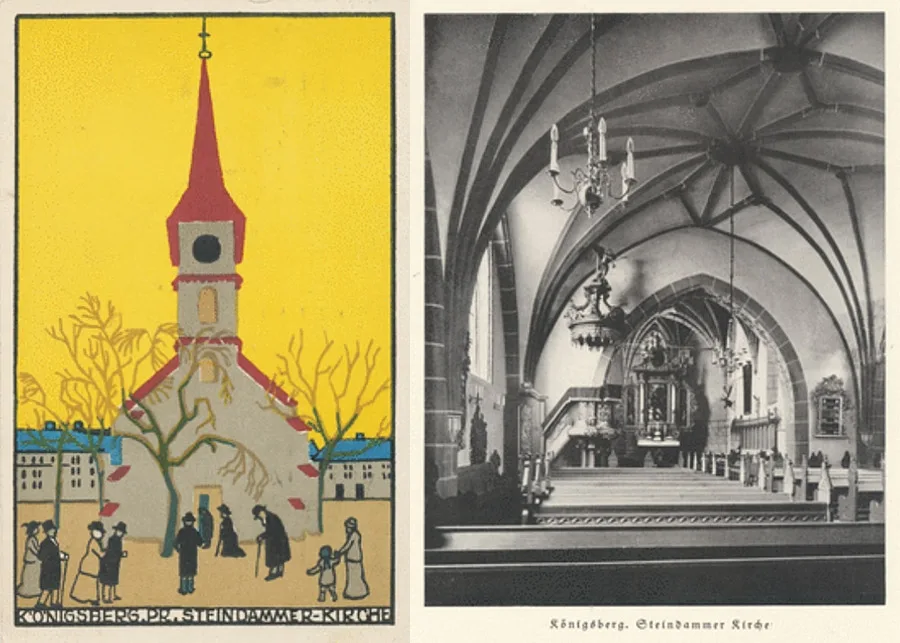
The brick tower on the west was built in the 15th century; its upper part was rebuilt in 1572 and renewed in the 19th century. The church itself had a single nave of three bays of different lengths, with buttresses.
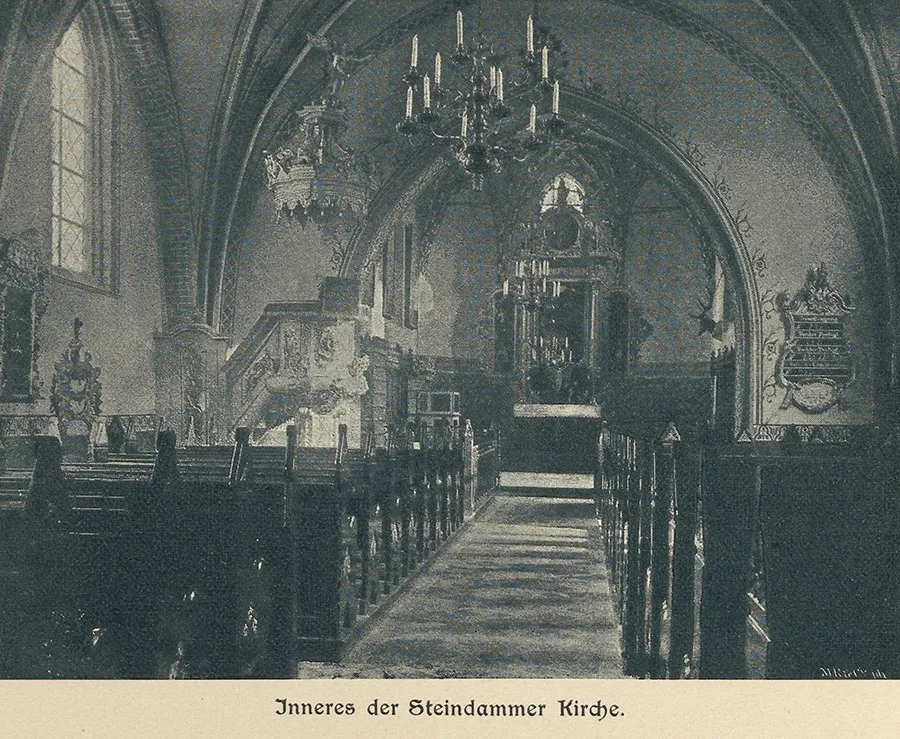
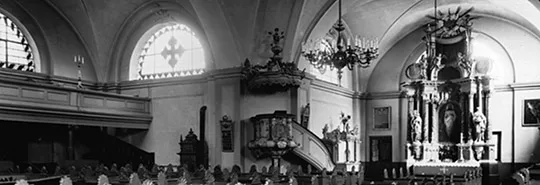
The elongated choir with a three-sided end was separated from the nave by a low pointed arch. At first the ceiling was flat; later star vaults were built. The corbels were of plaster, with ancient austere posts beneath them. The windows were originally smaller and were later enlarged.
The altar was rebuilt anew in 1670. Its main section held Anton Möller's painting "The Last Judgement", showing scenes of resurrection and of the casting down into hell.
This painting marked the beginning of his career and at the same time remained this master's most unified work.
The pulpit, with Baroque ornament, stood on the left side of the arch. The granite font dated from the Late Gothic period. A chandelier in the form of a deer's head, 17th century. The confessional dated from 1662, the crucifix from 1706, the altar crucifix from about 1700, the altar plate from the 17th–18th centuries.
The church bells were made in 1714 and 1763. Outside stood the gravestone of the city executioner G. Growert, 1716.
After the Reformation this church served the Poles and Lithuanians. During the Seven Years' War, in 1760, the Russians used it as an Orthodox church.
The church was also used as a military hospital and a guardhouse and, finally, as a garrison and university church. In the course of its rich history it was thoroughly renovated several times.
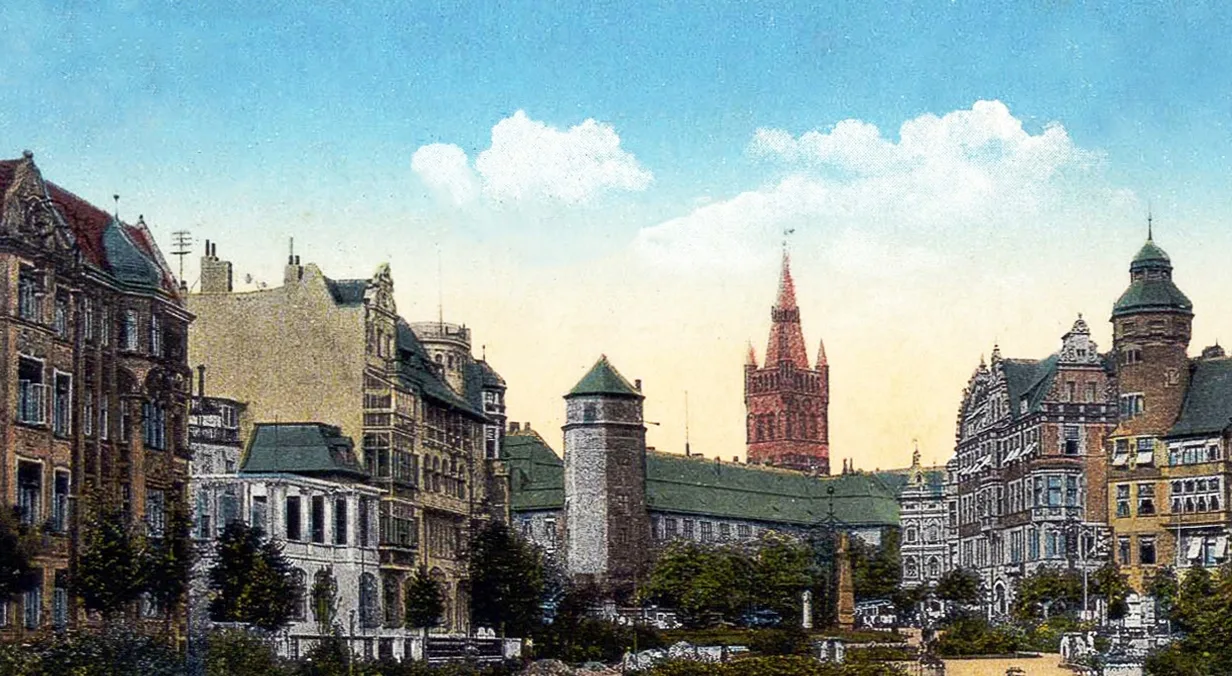
During the Second World War it was badly destroyed. In the 1950s it was finally demolished when Leninsky Prospekt was laid out. Today the roadway runs over the site of the church.
Translated from Russian with the help of AI (Claude, Anthropic), October 2026.