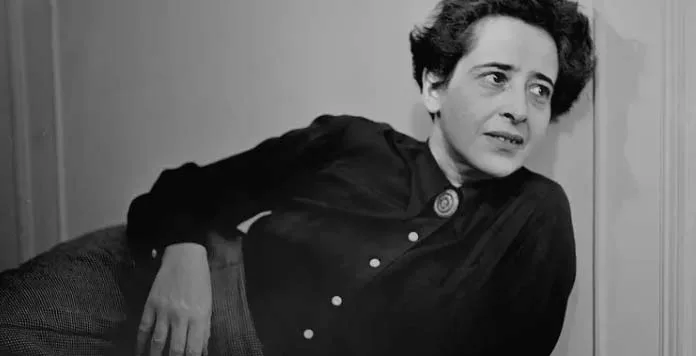
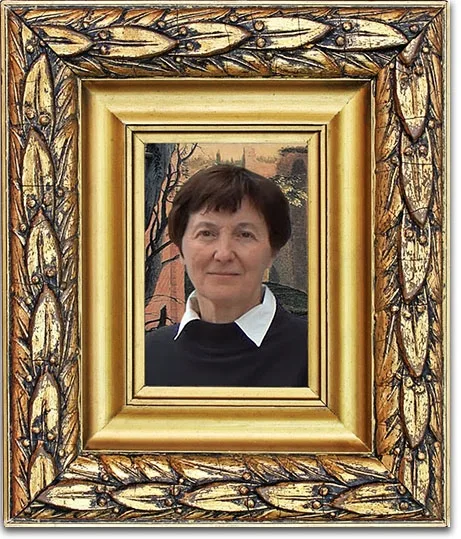
– Tatyana, how did the “Tales of Germany” project come about?
– When I first set about creating my blog in January 2016, I simply wanted to correct what was then an “injustice”: many wonderful German fairy tales were unknown to our readers. Nor were they familiar with the names of many outstanding German writers of fairy tales. Every region of Germany has a wealth of legends and tales: there are tales and legends of Prussia, of Mecklenburg and Pomerania, tales of the Black Forest, legends of the Harz, of Bavaria… The German literary fairy tale is also little known here in present-day Russia. We know only a handful of names: the Brothers Grimm, Wilhelm Hauff, Ernst Theodor Amadeus Hoffmann, perhaps Clemens Brentano and Ludwig Tieck… Yet a collector of tales as remarkable as Ludwig Bechstein, who stands on a par with the Brothers Grimm, was last published in Russia in 1913. Since then, only individual tales have appeared in anthologies. Johann Musäus, with his marvellous “Folk Tales of the Germans”, is likewise little known here today.
– It's true that few people in Russia know the German literary fairy tale today. And yet there was a time when the authors and collectors of German folklore were at the height of their popularity.
– Of course. Educated Russians of the 19th century knew Musäus, and Bechstein too, very well. Throughout the 19th century and into the early twentieth, Russian translators translated the Germans extensively and with enthusiasm. Many of those translations remain the only ones to this day, still existing in the form in which they were made long ago, sometimes as early as the beginning of the 19th century. In those days we were practically “kindred peoples”, and the elites of Russia and Germany often lived between the two countries. There are countless examples from the literary sphere alone: in Russia, Denis Ivanovich Fonvizin, Vasily Andreyevich Zhukovsky, Wilhelm Karlovich Küchelbecker, Ivan Sergeyevich Turgenev, Vladimir Ivanovich Dal, Zinaida Nikolayevna Gippius, Anatoly Borisovich Mariengof… In Germany, August Kotzebue, Adelbert von Chamisso, Alexander Ungern-Sternberg, Rainer Maria Rilke...
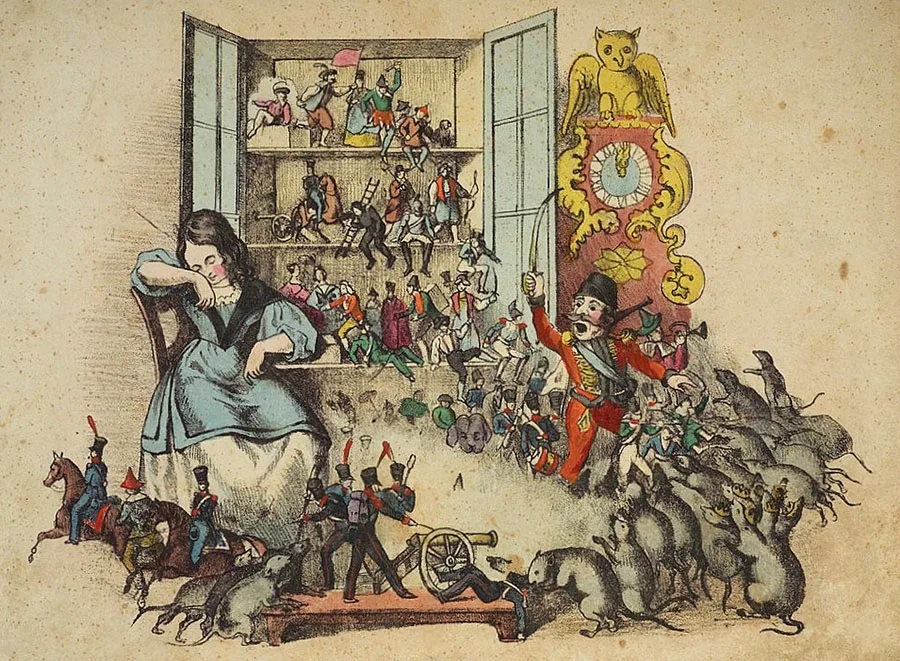
Peter Carl Geissler “The Nutcracker” (c. 1870).
The centre of German literature in Russia was St Petersburg.
Germans in Russia headed all the major publishing houses: Adolf Fyodorovich Marx, a native of Stettin, ran the illustrated magazine “Niva”; Hermann Dmitrievich Hoppe ran the magazine “Vsemirnaya Illyustratsiya” (“World Illustration”); Alfred Fyodorovich Devrient was the first to publish Ludwig Bechstein's “Book of Fairy Tales” in Russia; and there were many others. One might also recall Anton Gotthelf Dietrich, a German psychiatrist (who had been physician-in-ordinary to the poet Konstantin Nikolayevich Batyushkov) and at the same time a man of letters and a translator. He was the author of a large collection of “Russian Folk Tales”, which he gathered during his many years in Russia, translated into German and published in Germany with a preface by Jacob Grimm.
Be that as it may, the general reader in Russia is entirely unfamiliar with the wonderful literary fairy tales of such 19th-century writers as Heinrich Seidel, Wilhelm Hackländer, Paul Heyse and many more besides. The names of the German writers who collected and published anthologies of legends and lore from the various regions of Germany are virtually unknown: Johann Grässe (“The Book of Legends of the Prussian State”), Heinrich Pröhle (“Harz Legends”), Wilhelm Ruland (“Legends and Lore of the Rhine”), Josef Haltrich (“Legends of Saxony”)… That is why, from the very beginning, I was clear about what my blog would be about and what content I would fill it with.
I limited myself to the period from the late 18th to the early 20th century — mainly Romanticism and Biedermeier.
– You have translated quite a lot of tales, legends and myths of East Prussia, including “The Legend of Saint Adalbert”, “The White Maiden of Kreuzburg”, “The Column of the Four Brothers” and “The Knights and Nuns of Kreuzburg” from Johann Georg Theodor Grässe's “Book of Legends of the Prussian State”; “The Sacrificial Stone on Mount Rombinus”, “The Flying Dead” and “The Amber Law” from Ludwig Bechstein's “German Book of Legends”, and others. Your blog also features folk tales from Mecklenburg-Western Pomerania, such as “The Maiden of the Stubbenkammer Cliffs”, “The Klabautermann”, “The Three Godparents”… So what's next?
– East Prussia has a great many tales, legends and lore. (I should point out that some of them migrate from one collection to another, varying slightly in their details.) Among the best-known books that bring together the very finest of them are “Legends of East Prussia” by Hermann Jantzen, “Legends of East Prussia” by Erich Pohl, “Folk Legends and Lore of Pomerania and Rügen” by Jodocus Temme, and “Tales and Legends of Western Pomerania and the Island of Rügen” by Ernst Moritz Arndt.
I have translated six tales from Arndt's collection: “Princess Svanvithe”, “The Silver Bell”, “The False Oath”, “The Glass Slipper”, “The Snake King” and “Birlibi the Rat King”. They are all on my blog. Admittedly, some of the tales are written in the local dialect, but they can be deciphered.
Another writer and Romantic poet, Joseph von Eichendorff, hardly needs an introduction. He was born and grew up in Silesia, which at that time belonged to Prussia. My blog features an article I wrote about his life, as well as my translation of his fairy tale “Autumn Sorcery”.
The remarkable 19th-century novella writer Paul Heyse may also be called a Prussian writer: he was born in Berlin, though he spent his whole life in Munich. He also wrote several collections of fairy tales. Three of them, “The Fountain of Youth”, “Midsummer Night” and “Holdrio, or The Tale of the Well-Mannered King’s Son”, I have translated into Russian and published on the blog.
The German poet and writer Heinrich Seidel from Perlin (Pomerania) left several collections of wonderful, highly original fairy tales. So far I have translated only one of them, “Herr Zuckermann, the Sorcerer”, as well as one tale by the German fairy-tale writer Hans Hoffmann (also a native of Pomerania), “The Ugly Little Mermaid”. My project is still growing and, like any unfinished undertaking, it is far from perfect. At the same time, I am well aware that I will never manage to accomplish everything I would like to — the task is simply too vast. It is hardly something one person can manage alone.
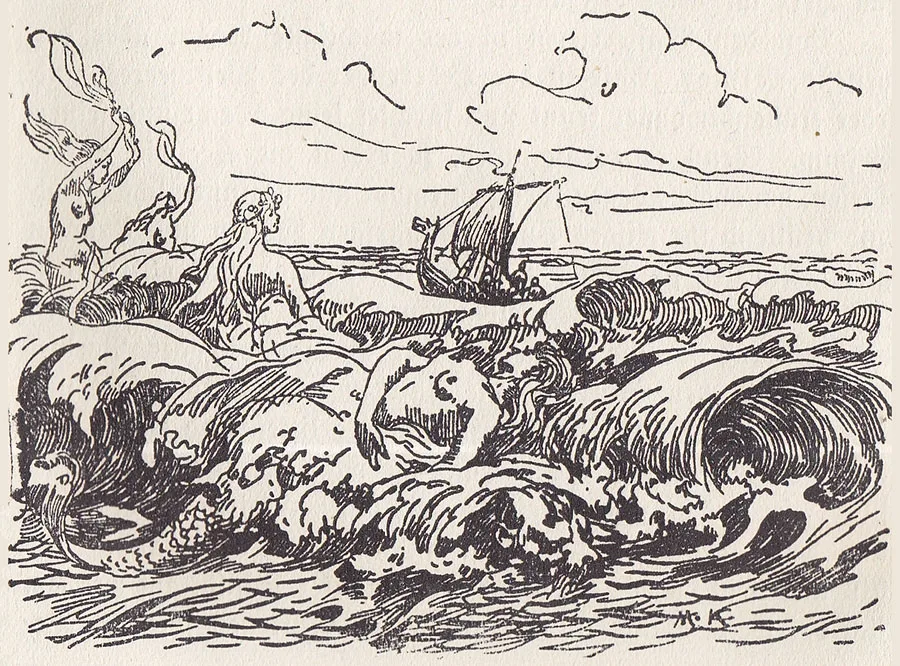
Max Koch “Valhalla” (1925).
– Do you have many more surprises in store for Russian-speaking lovers of the genre? What comes next?
– Well, East Prussia has a great many legends: “The Devil’s Stone near Wehlau”, “The Siege of Fischhausen”, “The Sacred Axe”, “A Feast at the Devil’s”, “The Homing Pigeon from Königsberg”, “The Singing Sea Maiden”, “The Holy Well in Königsberg”, “The Hunger Dungeon in Tapiau”, “The Ghost of Schlodien Castle”, “The Little Man of Allenstein”, Heinrich Tobal’s “Legends and Schwänke of East Prussia” and many others.
One day the caring eye of some translator will fall on them, and after hours upon hours of painstaking work a full-fledged collection of East Prussian legends and tales will come into being in Russian.
So there is plenty of potential for surprises. The only problem is: how do I find the time to do it all? I would need at least another couple of lifetimes! But seriously, the blog could develop in several directions.
First, I can stay within the bounds of “enlightenment” and write about German fairy-tale writers who are completely unknown here. As a rule, in such cases I put together a short biography and translate one or two of their most interesting tales.
Second, I can move from “enlightenment” to “populism” and take a fresh look at poets and writers already well known here, drawing mainly on foreign sources. For example, Wilhelm and Jacob Grimm, Heinrich Heine, and even Hans Christian Andersen (he was Danish, of course, not German, but it is all very close. Besides, he drew on motifs from Germanic and Scandinavian mythology in his tales).
I could continue the series “Figures of Germanic Fairy-Tale Mythology”. Three parts have been written so far, but there is a wealth of material here, enough to last a long time.
Finally, I could concentrate on the folk tales of the various (historical) regions of Germany, telling readers along the way about their main “fairy-tale sights”. In fact, I have already started down this road with the series “Baden-Baden and Its Legends”, “The Harz and Its Legends”, “Legends of the Rhine” and so on.
A small separate line of work for me has been translating poems by German poets and writers.
At first I did this out of necessity, since the texts of fairy tales very often contain verse insertions, and even complete poems. I translated many poems by German classics while writing various articles about them. Be that as it may, I am no poet at all. It is just that sometimes you come across a gem in a foreign language that you simply cannot pass by, and so... you put it into rhyme. Recently I gathered most of my verse translations on a separate page of the blog.
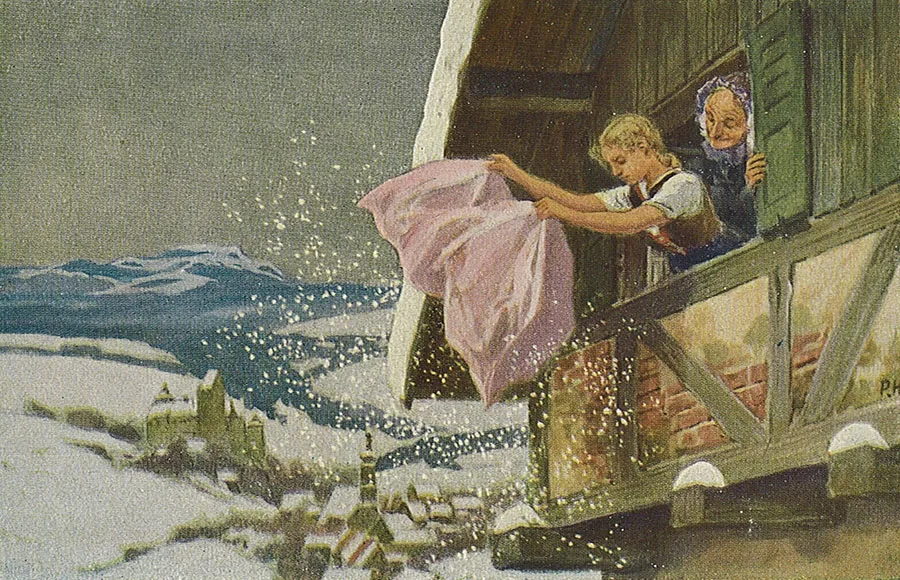
Paul Hey “Mother Holle” (1949).
– Tatyana, do you run into translation difficulties when working with your sources?
– Working with the German vocabulary of past centuries is fascinating rather than difficult. But translating tales written in dialects (Frisian, Swabian, Allgäu, Pomeranian) is hard. I come up against this quite often. When I take one on, I manage somehow. Besides, on the German internet there are online translators from these dialects into standard German, since communication is a problem for Germans too. Incidentally, there are plenty of original German fairy tales and legends online, including literary ones. The thing is, the Germans are trying to digitise every surviving copy of rare editions from past centuries. So all that remains is to take a thoughtful, systematic approach and painstakingly select the material. And there is a great deal of it. In short, there are three key words here: concentration (on what you are searching for), persistence and patience. And, like Newton, I
“…seem to myself merely a child playing on the seashore, amusing myself by now and then finding a pebble more colourful than usual, or a pretty shell, while the great ocean… stretches out before me, boundless…”.
– Surely some of the works you translate and publish on your blog have been translated into Russian before …
– Yes. There are many such examples. First of all, there are the tales from “Dreams by French Firesides”, a collection by the German writer and surgeon Richard von Volkmann-Leander. Translations of a few individual tales appeared in Russian in the late 19th and early 20th centuries. These are “The Forgotten Grave”, a Russianised retelling of the tale “A Children’s Story” by Vasily Petrovich Avenarius (1885), and “The King and the Queen”, retold in 1923 by the Russian poet Sasha Chorny, by then already in emigration. In 2013 the Holy St. Elisabeth Convent in Belarus published “Tales from the Magic Chest”, which included nine of the twenty-two tales in Volkmann-Leander’s collection, translated by Robert Balakshin. After reading them, I decided to try my own hand, and the blog now features fourteen tales by Volkmann-Leander in my translation. I also translated Joseph von Eichendorff’s “Autumn Sorcery”, although a Russian translation of it already exists. Recently I finished translating Hermann Hesse’s “The Dwarf”. It, too, had been translated here before.
– Tatyana, why did you choose fairy tales, legends and folk tales to translate into Russian, rather than, say, fiction or detective novels?
— Well, who isn’t translating detective novels and women’s romances these days!? But seriously, the fairy tale is a genre close to my heart.
There are wonderful works of foreign literature from past centuries. And they are unknown here. People simply don’t know them.
And our readers, when they discover modern German writers of fairy tales such as Michael Ende or Otfried Preussler, often fail to realise that what they are reading is, in fact, derivative, a kind of remake or modern imitation (take Preussler’s “Krabat”, for instance), while the original sources from not-so-distant centuries remain unknown. Yet they deserve to be known, especially when they are incomparably better than their imitations and are, in fact, classics. For example, the famous German Romantic writer Ludwig Tieck wrote not only the magnificent tale “The Elves” (which, to my utter astonishment, I could not find in Russian translation; I found no mention of one at all, apart from a very old translation from 1830, lost in the depths of time, made by the poet and friend of Pushkin Aleksandr Ardalionovich Shishkov), but also another wonderful fairy-tale novella, “The Guardian Spirit”. I read it, I read “The Elves” too, and realised that both of them are simply wonderful. I took “The Elves” and began translating it; it is already on my blog, but Tieck’s second tale is not there yet.
Other examples are “The Story of the Beautiful Water Nymph Lau” by Eduard Mörike and “Regentrude” by Theodor Storm. “Regentrude”, for instance, long ago became a standard text in the West, yet here it was completely unknown. All we knew was the film of the same name, loosely based on Storm’s tale and made in 1976 at the DEFA studios (GDR). But the film is a separate work which, unfortunately, has little in common with the original, famous as it is. The main problem is not even that the screenplay strays far from the author’s text: the film loses the poetry and originality of Storm’s tale. It is an ordinary fairy-tale film of the kind DEFA made in great numbers. I have translated “Regentrude”, and it is now on the blog, together with a separate article I wrote about it.
To sum up, I can say that, with very rare exceptions, I find the tales written by modern authors boring to read: I always see in them their “origins”, reflections of the long-faded genius of past centuries. Here, however, I should make one reservation: I do not mean the fantasy genre, which, although it emerged long ago, took on its present magnificent form only in the 20th century.
– The fairy tales of any country distil the wisdom of its people, perhaps even its national idea. According to that very idea, they ought to teach goodness, instil an understanding of universal human values and reflect the life of society. What can be said about German fairy tales, including those of East Prussia? How, in your view, do they differ from Russian ones? Do Kant’s words about “the moral law within” find confirmation in German fairy-tale folklore?
– They say that the fairy tale is the soul of a people. It expresses that people’s “collective unconscious”. And so one can say that German and Russian fairy tales differ from each other just as a Russian differs from a German. A tale like “At the Pike’s Behest”, for example, could never have arisen on German soil. National traits, customs, ways of seeing the world, a unique history of one’s own: all of this has been reflected since time immemorial in folk tales, and after them in literary tales inspired by folklore.
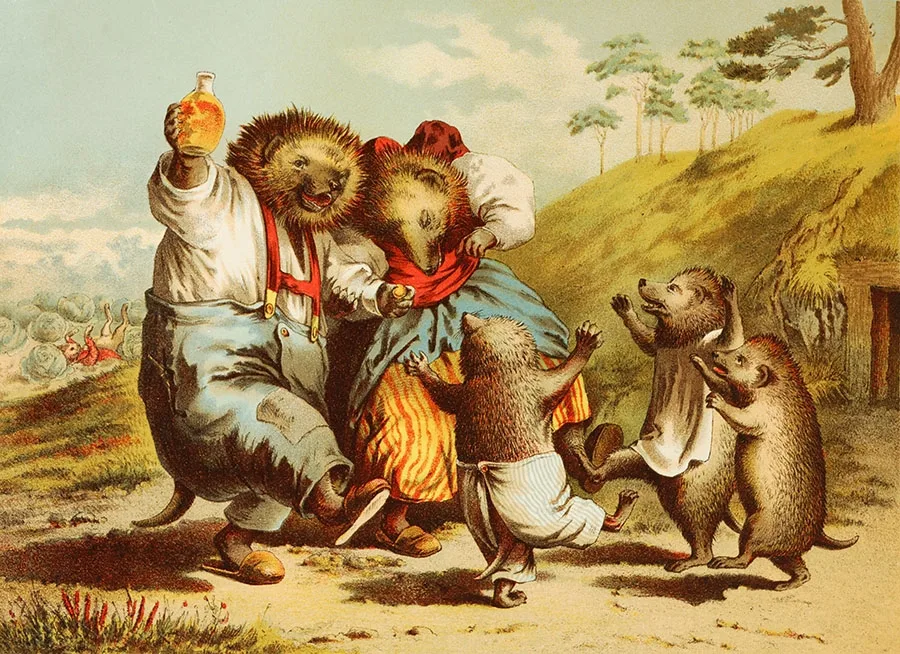
Heinrich Leutemann “The Hedgehog and the Hare” (late 19th century).
The destinies of the German and Russian peoples, close neighbours, have been tightly intertwined throughout world history. This applies above all to the part of Germany called Prussia, our nearest German neighbour.
If we look at the peoples of the Baltic coast (East Prussia, Mecklenburg, Pomerania, the island of Rügen), the similarities are even greater, since “at the dawn of time” these lands were the Slavic Porussia – Prussia – Pomorye: they were inhabited by tribes that were either Slavic or of an ethnic origin very close to the Slavs. As is well known, before the coming of Christianity and Germanisation, the Baltic tribes worshipped the same gods as the Rus, and the cult of Perun was especially powerful. In this connection, Ernst Moritz Arndt’s tale “Princess Svanvithe” from his collection “Tales of Pomerania and the Island of Rügen” is perhaps very telling. It is a legend about a beautiful, sorrowful princess, based on an ancient, ancient tradition: the barely audible echoes of the voices of the Slavic tribe of the Rani, who once lived in Pomerania, that is, Pomorye, on Rügen, the legendary Russian island of Buyan. Indeed, it opens by recounting the tragic story of how the Germans began to destroy pagan Slavdom and Christianise the island.
“You have probably heard the old tale that here, near Garz, where the rampart now rises above the lake, there stood many thousands of years ago a great and beautiful castle of the heathens. There were magnificent buildings there too, and temples in which they prayed to their gods. Long, long ago the Christians captured this castle. All the heathens were killed, the temples destroyed, and the images of the gods that stood in them were burned. And nothing now remains there of the former splendour but the old rampart and a few stories that people tell one another. One of them is about a horseman in armour and helmet who often rides on a white horse over the town and the lake. Those who have seen him at night claim that he is the old king of the castle and that he wears his golden crown. But that is all idle talk. Yet that at Christmas and on Midsummer Night the chiming of church bells can be heard from the lake – that is true. Many people have heard it, my father among them. It is a church that sank into the lake. Some say it is that very heathen temple, but I do not believe it: why would heathens ring bells on Christian feast days?..”
How much is said in this short passage! First of all, it speaks of the destruction by the Danes of Arkona, the chief town of the Rani who inhabited Rügen, and of the annihilation of their famous sanctuary of the god Svantevit. The ringing of bells from the lake immediately calls to mind the invisible city of Kitezh from Russian legend, which sank beneath the waters and, having become unreachable for its enemies, invisibly lives on. These lines also carry the narrator’s wistful irony: “...why would heathens ring bells on Christian feast days?..” – for Midsummer Night was never a Christian feast, and Christmas, too, does not owe its origin to the birth of Jesus but is a continuation of pagan rituals.
Finally, Arndt mentions here another important mythological figure of the North German epic, the Rider on the White Horse, so poetically described later by the German writer Theodor Storm in his novella of the same name. East Prussia has its own legend about him too, “The Wishing Horse”:
“…In the forests of East Prussia there lives a magic horse. It appears to those people who are in great need of help. But they must wish with all their heart to receive that help. It is a stately white stallion, the one on which Vogt Dietrich once rode to Drago, chief of the Prussians, to persuade him to abandon an old heathen custom among the Prussians, who killed every white horse as soon as it was born...”
And how many mentions of Rügen – Ruyan – Buyan there are in Russian folklore, in fairy tales, incantations, love charms and sayings!..
"On the sea, on the ocean, on the island of Buyan
There lies a white burning stone,
On that stone there stands a throne table,
The stone is called Alatyr, and no one knows it..."
Another ancient figure shared by the folklore of the Prussians and the Rus is the Serpent King. Aleksandr Nikolayevich Afanasyev’s collection includes a record of the Russian tale “The Grass Snake (The Serpent King)”; the Lithuanian folk tale “Spruce /Eglė/, Queen of the Grass Snakes” is widely known. Arndt, who lovingly collected the legends of his native land, could not pass over this fairy-tale figure either:
“On a remote, uninhabited island in the Baltic Sea, somewhere near Denmark, the Serpent King lived in his castle. In the middle of this island, like a little box inside a larger one, lay another tiny islet, surrounded on all sides by a lake. It was there that the Serpent King’s castle stood. Inside, all was splendour: the sumptuous chambers glittered and sparkled with gold, silver and precious stones. There dwelt the Serpent King, a poor enchanted prince, waiting to be set free…” (“The Serpent King”, 1818).
This motif is considered one of the most ancient in Russian and Baltic folklore.
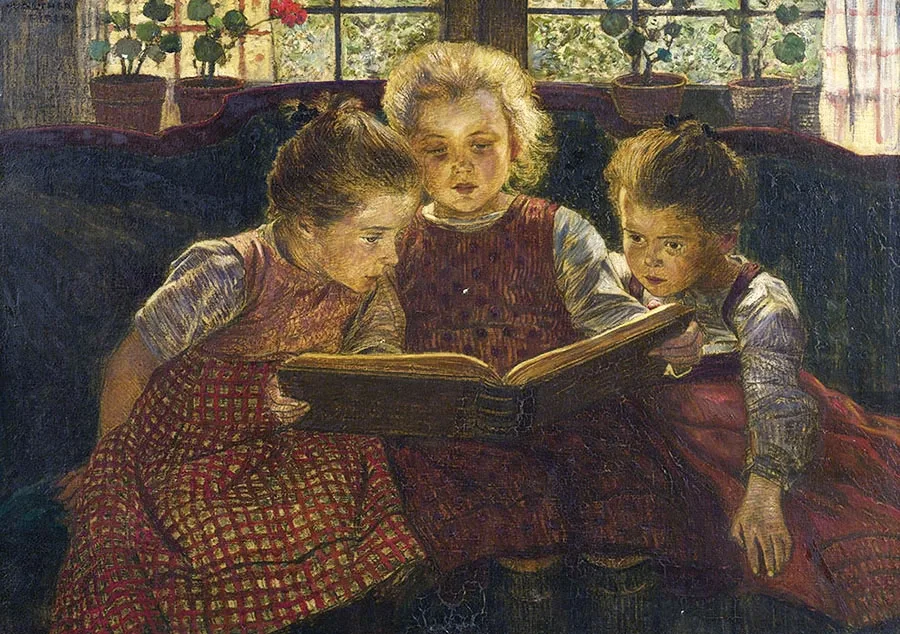 Walter Firle, “The Fairy Tale” (c. 1900).
– Russian fairy tales are usually divided into three groups: tales of everyday life, magic tales and animal tales…
– I would say that the tales of East Prussia are divided differently. Let us attempt a classification. First of all, the first group consists of the myths proper: “The Saga of Neringa”, “The Saga of Ragaina”, “The Origin of the Prussians”, “The Gods and Festivals of the Prussians” and so on. Closely related to them are the legends that have come down to us from the depths of the centuries, based on particular historical events and accounts of the past: “Legends of King Waidewut”, “The Sacred Oak of Romove”, “The Legend of Saint Adalbert”, “The Column of the Four Brothers”, “The Sacrificial Stone on the Rombinus”, “Tales of the Pirate Störtebeker”…
The next group is made up of a vast body of urban legends (invariably with a mystical tinge): “Cat Alley in Königsberg”, “The Twelve Johanns”, “How the Devil Carried Off the Apprentice”, “The Milk Witch”... Within this group one can single out legends that I would call Gothic: “The Skater of Labiau”, “The Knights and Nuns of Kreuzburg”, the countless legends of the White Lady, “The Maiden of the Stubbenkammer Cliffs” (Rügen) and others.
The fourth group consists of everyday sketches of bygone times: “The Foreigners of Zinten”, “The Giant Sausages and Loaves of Königsberg”, “The Russian Cossack and the Baker”…
And finally, the last group is made up of sea tales and legends. There are a great many of them. Several collections of such tales about the seas, seafarers and fabulous sea creatures, compiled by nineteenth-century German writers (Heinrich Smidt, Alexander von Ungern-Sternberg, Johann Mayer and others), have come down to us: “The Rose of Zealand”, “The Sea King’s Daughter”, “The Sea Fairy”, “The Ship of the Dead”, “The Glow of the Sea”…
Still, whichever group a tale belongs to, they are all about people (even when their heroes are animals), about truth and falsehood, about how good must triumph over evil. In Russian tales good, as a rule, does triumph. The overwhelming majority of them have a happy ending. German tales are more true to life in this respect, and they do not always end with the victory of good. Unlike Russian tales, they are also crueller and are often full of “gory details”. Such are, for example, the German versions of “Cinderella”, “Little Red Riding Hood”, “Sleeping Beauty” and “Snow White”. Russian tales are kinder; they are more “childlike”, if you like…
Moreover, German tales lack the opening formula, the traditional preamble and the closing formula so typical of Russian tales. The action begins with the very first lines: as a rule, the place is named and the main characters introduced straight away.
For example: “Long, long ago there lived in Mecklenburg a poor sweeper who, like every poor man the world over, had to earn his crust of bread by hard toil every day. The Lord had blessed him with a great many children, and apart from them he had no other blessing from God...” (the folk tale “The Three Godparents”).
Or: “In the village of Altenkamp, which lies between Garz and Putbus, a little off to the side on the coast, there once lived a rich peasant named Hans Burwitz…” (Ernst Moritz Arndt, “Birlibi the Rat King”).
Another example: “There has never been so hot a summer since as there was then, a hundred years ago. There was scarcely any green to be seen; exhausted livestock lay in the fields side by side with wild beasts…” (Theodor Storm, “Regentrude”).
Nor do German tales have the pronounced number symbolism so characteristic of Russian folklore (“beyond thrice nine lands”, three sons, the seven Simeons and so on).
– And what about so-called “scary stories”? Being superstitious, Russian people were rather wary of making up tales about coffins, graves and ghosts, although such tales do exist…
– If we take Afanasyev’s three-volume collection of Russian folk tales, we will immediately see in the table of contents “Tales of the Dead”, “Tales of Witches”, “The Vampire”, “The Miser’s Death”, “The Fiddler in Hell” and “The Dead Body”. There are many such tales in southern Russian folklore. But it is also true that stories of ghosts, “flying dead men”, phantoms guarding forgotten treasures in castle ruins and white ladies of the dungeons are incomparably more numerous, particularly in the lore of East Prussia. Legends featuring ghosts, phantoms or maras are generally very characteristic of German folklore. (For example, the legends of Baden: “The Dead Bride”, “The Knight of Iburg” and so on.) Incidentally, in the nineteenth century the writing of mystical stories about ghosts and supernatural phenomena developed in Germany (and indeed throughout Europe) into a separate and very popular literary genre, which produced excellent works that have become classics. But that is a subject for another conversation.
The myths, legends and tales of any country hold the wisdom of its people and, without doubt, its national idea. So Kant was right!
Without any doubt, children should be read the tales of every people from the earliest age: tales of everyday life, magic tales, animal tales, legends and traditions, parables, byliny and skazy. Every child, depending on their age, will hear something of their own in them and take it to heart. Can we say that fairy tales teach goodness? Probably, yes. It would be more accurate to say that they simply teach. They teach us about life and the right attitude towards it. And, perhaps most importantly, through the voices of our departed ancestors they tell us about our native land and our roots, and explain who we are on this Earth and why we must try not to live our lives on it in vain.
LEGENDS OF PRUSSIA on the blog of Tatyana Kolivay.
Translated from Russian with the help of AI (Claude, Anthropic), October 2026.