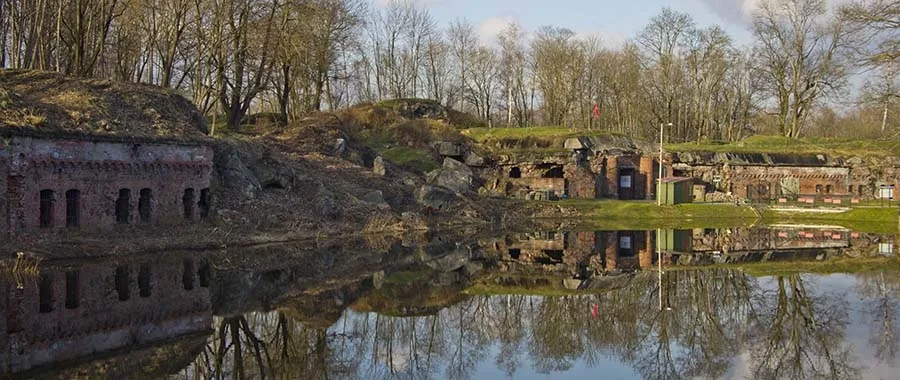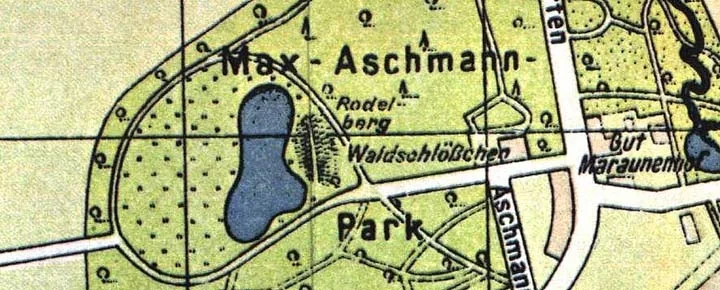
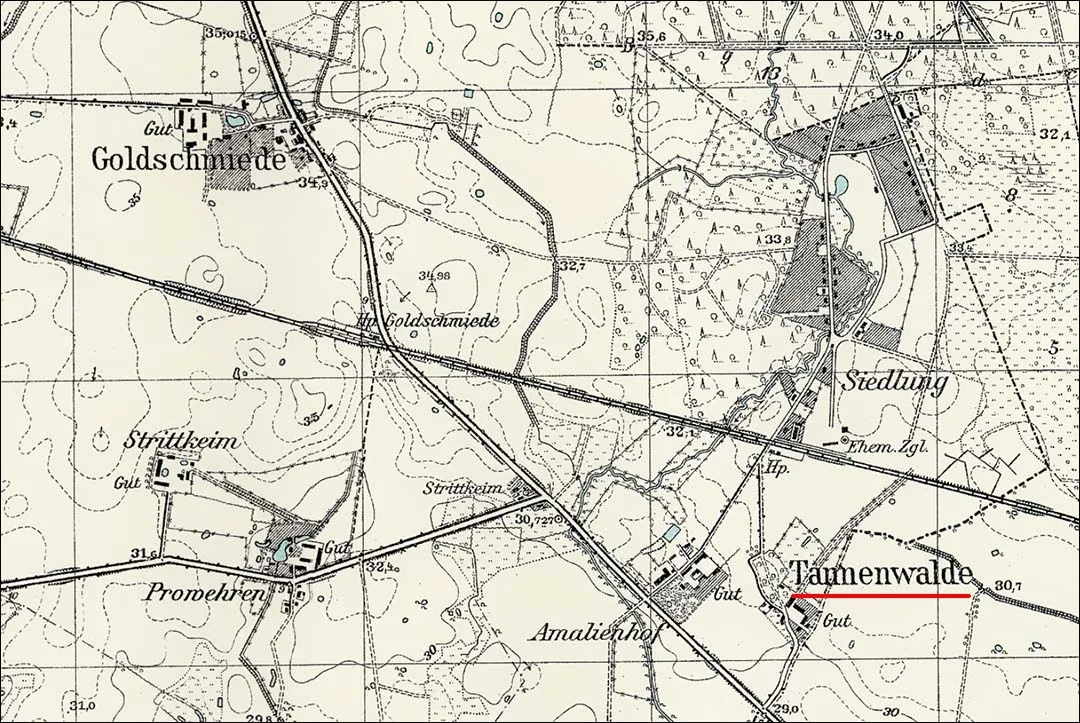
Tannenwalde
Tannenwalde was first mentioned in 1807. It was originally called Trenker Waldhaus and was an estate forming a Gutsbezirk (manorial district) in Kreis Fischhausen (Primorsk; merged into Landkreis Samland in 1939). The estate belonged to the parish of Wargen (Kotelnikovo). In 1871 Trenker Waldhaus had four dwelling houses, home to 10 families. Under the reform of 1874 the Gutsbezirk of Trenker Waldhaus was abolished, and the Trenker Waldhaus estate became part of the Gutsbezirk of Trenk (54°45'34'' N 20°23'05'' E). On 13 June 1874 the Gutsbezirk of Trenk was incorporated into the newly established Amtsbezirk of Landkeim, which was renamed Amtsbezirk Wargen (Kotelnikovo) in 1930. On 21 June 1878 the former Gutsbezirk of Trenker Waldhaus was separated from the Gutsbezirk of Trenk to form the independent Gutsbezirk of Tannenwalde under Kulm law (cöllmisch), which became part of the Amtsbezirk of Goldschmiede (Kaliningrad, Dimitrovo). In 1879 Tannenwalde's landholdings amounted to 84 hectares, and its annual net profit was 495 marks.
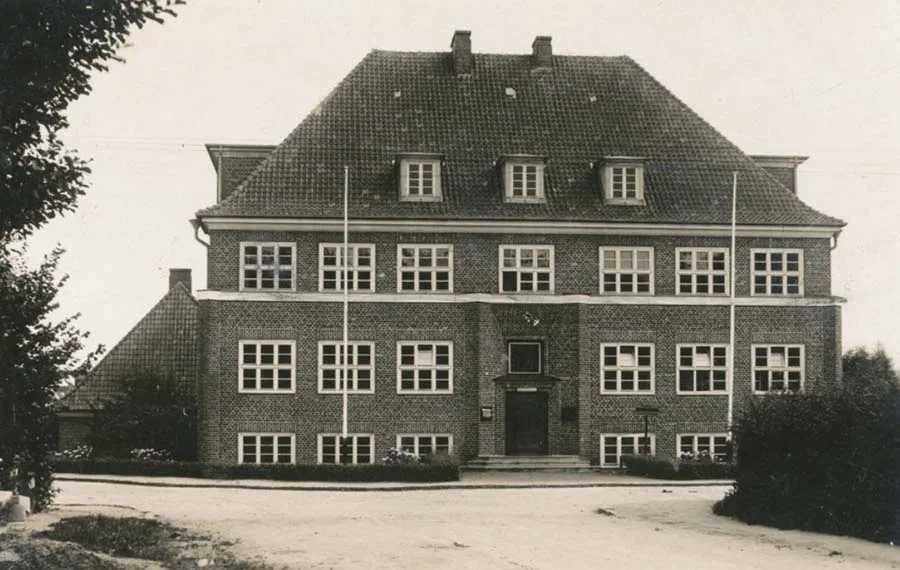 School in Tannenwalde.
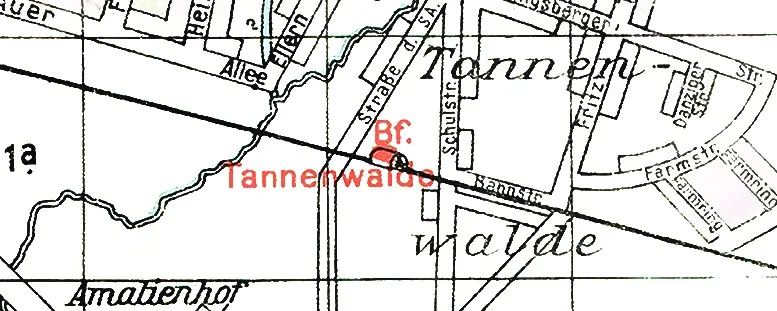
On 14 July 1900 traffic opened on the Samland Railway (Samlandbahn), which ran north of the Tannenwalde estate. A station named Tannenwalde (Chkalovsk-Zapadny) was built on the line for the estate's residents. A brickworks and a restaurant operated near the station.
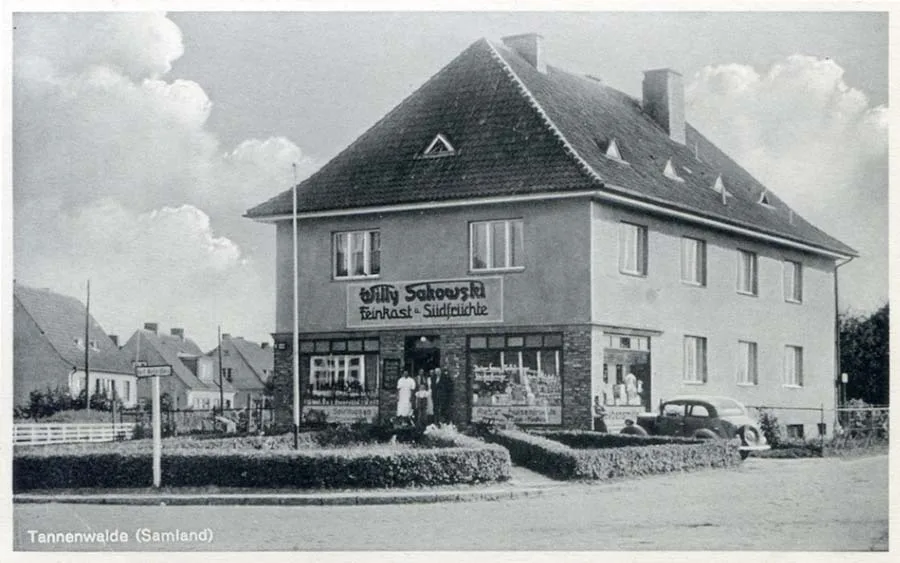 Grocery store of Willi Sakowski in Tannenwalde.
On 17 September 1919 the Gutsbezirk of Tannenwalde was converted into a rural municipality of the same name. At the same time construction began on the Siedlung settlement. In 1925 a sanatorium with an adjoining park was built in Tannenwalde. On 30 September 1928 the abolished Gutsbezirk of Amalienhof (part of Chkalovsk) was incorporated into the rural municipality of Tannenwalde. By 1929 Tannenwalde already had 377 houses and flats, including 10 social housing flats for people who had fallen on hard times. That same year a school opened in the village, named after the Prussian Minister-President Otto Braun (1872–1955). Given such a considerable expansion of the settlement, a church was built in 1929, where services were held by visiting clergy. On 1 April 1930 Tannenwalde received its own parish. By 1933 Tannenwalde had a doctor's surgery and a dental practice, a midwifery post, a food factory, a post office (from 1931), a volunteer fire brigade, several shops, a pharmacy with a filling station, a sports club and a male choral society. On 1 April 1939 the municipality of Tannenwalde was incorporated into the city of Königsberg.
Strittkeim
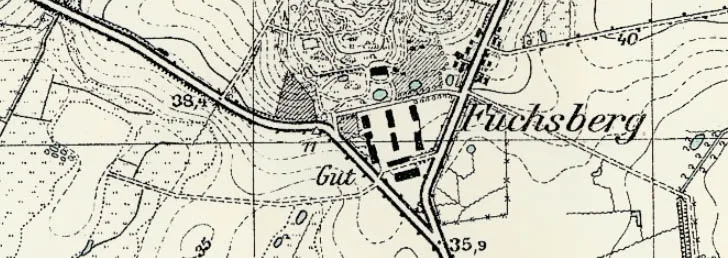
In 1785 Strittkeim was classified as a noble Vorwerk, or outlying farm (Adelich Vorwerk), with six households. In 1818 Strittkeim is mentioned as a noble estate (Adliches Gut) with four households. In the mid-19th century Strittkeim was a Vorwerk within the Gutsbezirk of Amalienhof (part of Chkalovsk). The Vorwerk belonged to the parish of Wargen (Kotelnikovo). In 1871 the Strittkeim Vorwerk had three dwelling houses. On 13 June 1874 the Strittkeim Vorwerk, as part of the Gutsbezirk of Amalienhof, was incorporated into the newly established Amtsbezirk of Goldschmiede. On 20 April 1905 Strittkeim became an independent estate, forming a Gutsbezirk in the Amtsbezirk of Goldschmiede in Kreis Fischhausen (Primorsk; merged into Landkreis Samland in 1939). On 30 September 1928 the Gutsbezirk of Strittkeim was abolished and incorporated into the rural municipality of Goldschmiede (Kaliningrad, Dimitrovo).
Prowehren
Prowehren is mentioned in 1785 and 1818 as a noble estate (Adelich Gut) with five households. In the mid-19th century Prowehren was a knight's estate (Rittergut) forming a Gutsbezirk in Kreis Fischhausen (Primorsk; merged into Landkreis Samland in 1939). The estate belonged to the parish of Wargen (Kotelnikovo). On 13 June 1874 the Gutsbezirk of Prowehren was incorporated into the newly established Amtsbezirk of Goldschmiede (Kaliningrad, Dimitrovo). In 1879 the Gutsbezirk of Prowehren owned 195 hectares of land, and the estate's annual net profit was 2993 marks. On 30 September 1928 the Gutsbezirk of Prowehren was abolished and incorporated into the rural municipality of Goldschmiede (Kaliningrad, Dimitrovo). In 1935 a military airfield of the same name was built near Prowehren.
Amalienhof
Amalienhof is mentioned in 1818 as a noble Vorwerk (Adliches Vorwerk) with two households. In the mid-19th century Amalienhof was a knight's estate (Rittergut) forming a Gutsbezirk in Kreis Fischhausen (Primorsk; merged into Landkreis Samland in 1939). The estate belonged to the parish of Wargen (Kotelnikovo). The Gutsbezirk of Amalienhof also included the Strittkeim Vorwerk (part of Chkalovsk). In 1871 the Gutsbezirk of Amalienhof had seven dwelling houses, home to 21 families; four of the houses belonged to the Amalienhof estate itself and three to the Strittkeim Vorwerk. On 13 June 1874 the Gutsbezirk of Amalienhof was incorporated into the newly established Amtsbezirk of Goldschmiede (Kaliningrad, Dimitrovo). In 1879 the Gutsbezirk of Amalienhof owned 319 hectares of land, and the estate's annual net profit was 4745 marks. On 30 September 1928 the Gutsbezirk of Amalienhof was abolished and incorporated into the rural municipality of Tannenwalde (part of Chkalovsk). On 1 April 1939 Amalienhof, together with the entire municipality of Tannenwalde, was incorporated into the city of Königsberg.
On 28 January 1945 Tannenwalde and the other villages on the site of present-day Chkalovsk were taken by Red Army units.
The territory of the former German settlements was immediately regarded as part of Königsberg, and after 1946 as part of Kaliningrad.
In 1947 Primary School No. 11 was opened; older children had to attend Secondary School No. 20 on Krasnaya Street. On 29 July 1948, by decision of the Kaliningrad City Executive Committee, Tannenwalde, Siedlung, Strittkeim and Prowehren were merged and renamed Chkalovsky Gorodok. A further decision of 18 August 1949 changed the name of the settlement to Chkalovo.
In 1953 the local school became a seven-year school. In 1958 the school was given its present building at 1 Mira Street, with room for 700 pupils.
Until the 1960s the families who had resettled here (mostly pilots and airfield service personnel) made do with restored pre-war houses. A few houses were built in the village in the 1960s, and a considerable number in the 1970s and 80s. In 1968 the Tannenwalde church burned down and was subsequently dismantled. In 1975 a memorial to fallen Soviet soldiers was erected on its site.
On 7 November 1975 the first trolleybus route opened, allowing Kaliningrad residents to travel as far as the turn-off to Chkalovsk. The trolleybus was not extended into Chkalovsk itself, as it was impossible to cross the railway line.
Housing construction in Chkalovsk continued in the 1980s and 90s, but the largest building boom took place in 2009–15. Many pre-war two-storey private houses and small blocks of flats were demolished at that time. In 2013–18 Chkalovsk airfield was reconstructed, after which it returned to active use.
 Monument to reconnaissance aviation pilots.
Today Chkalovsk occupies the territory of the former village of Tannenwalde; the Navigator hotel stands on the site of Amalienhof, Chkalovsk airfield on the site of Strittkeim and Prowehren, while nothing remains standing on the site of the Tannenwalde estate.
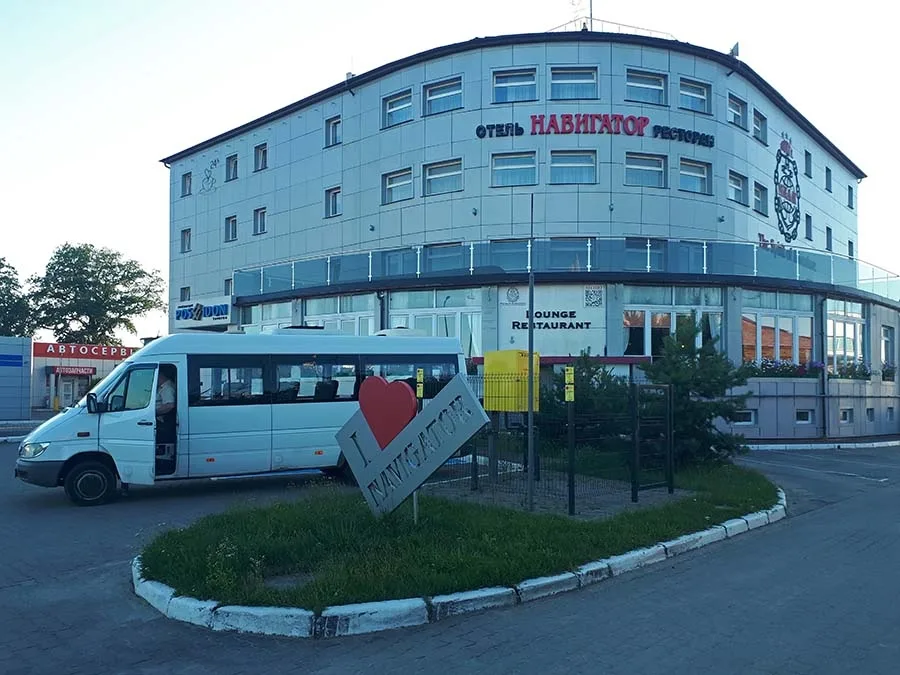 Hotel “Navigator”.
Chkalovsk has a school, a kindergarten (in three buildings) and an outpatient clinic. There is also a shopping centre, a House of Culture and a church.
Sights: a mass grave of Soviet soldiers (2,014 people), a monument to reconnaissance aviation pilots featuring an Il-28 aircraft and ten busts of Heroes of the Soviet Union, and the pre-war school building (now the “Chkalovsky” House of Culture).
Population history of Tannenwalde: 1867 – 36, 1871 – 53, 1885 – 49, 1905 – 43, 1910 – 51 inhabitants.
Population history of the Tannenwalde municipality: 1919 – 432, 1925 – 1,001, 1933 – 2,669 inhabitants.
Population history of Strittkeim: 1818 – 60, 1871 – 67, 1905 – 62 inhabitants.
Population history of Prowehren: 1818 – 44, 1867 – 67, 1871 – 62, 1885 – 61, 1905 – 66, 1910 – 76 inhabitants.
Population history of Amalienhof: 1818 – 19, 1871 – 65, 1905 – 97, 1910 – 82 inhabitants.
Population history of the Amalienhof Gutsbezirk: 1867 – 93, 1871 – 132, 1885 – 140, 1905 – 97, 1910 – 82 inhabitants.
Population of Tannenwalde in 1871: all 53 were Protestant Christians; children under 10 – 22; literate – 27 (87%).
Population of Prowehren in 1871: all 62 were Protestant Christians; children under 10 – 16; literate – 29 (63%).
Population of the Amalienhof Gutsbezirk in 1871: all 132 were Protestant Christians; children under 10 – 44; literate – 61 (69%).
Photos on this page: Bildarchiv Ostpreußen, Mikhail Ogorodnikov.
Translated from Russian with the help of AI (Claude, Anthropic), October 2026.